-
Hiding in Plain Sight
Read more: Hiding in Plain SightIn the time of their visitation they will shine forth, and will run like sparks through the stubble. (Wisdom 3:7) ____ The story is told of St. Macarius that he was falsely accused of fathering a child by a young woman in the village. After being beaten and humiliated by the people there, he returned […]
-
Angels Sing! Christ is Born!
Read more: Angels Sing! Christ is Born!A Serbian Christmas Song – lyrics by St. Nikolai Velimirovich Andjeli Pevaju Noć prekrasna i noć tija, nad pećinom zvezda sija, u pećini mati spi, nad Isusom andjel bdi. Andjeli pevaju, pastiri sviraju, andjeli pevaju mudraci javljaju: Što narodi čekaše, što proroci rekoše, evo sad se u svet javi, u svet javi i objavi: […]
-
The Last Christmas – Ever
Read more: The Last Christmas – EverThis Christmas was the last Christmas – ever. Christ is the Alpha and the Omega, the Beginning and the End. Wherever He is, there is the beginning and the end of all things. If Christ is truly present in this year’s Christmas, then it is the last Christmas – and the first Christmas. And if […]
-
I’ll Be Small for Christmas
Read more: I’ll Be Small for ChristmasChildren today are raised with dreams of greatness. Cultural affirmations of our limitless potential, well-intentioned, have not produced a generation of over-achievers, but have indeed brought forth hordes of great dreams. This is nothing new in American culture. We are the world’s longest sustained pep-talk. Ronald Reagan loved to quote the 1945 Johnny Mercer hit: […]
-
Looking Like Christmas
Read more: Looking Like ChristmasOne of the most striking features of the Gospels is the frequent response of the Disciples after the resurrection of Christ: doubt. I have always been sympathetic to the doubts and hesitations that accompanied the Disciples’ experience during the ministry of Christ. They are almost endearing in their inability to grasp what Christ is all […]
-
The Christmas Play
Read more: The Christmas PlayI was sick last week (stomach bug – my least favorite illness). It cost me a trip to Memphis where we were to spend a few days with family and the joy of watching two of my daughters singing in an Advent Festival. My many years of ministry have put me in some diverse places […]
-
When Your Ancestors Came to Church
Read more: When Your Ancestors Came to ChurchHuman beings carry within them a burden of time. We are not “fresh starts” as we come into existence. There is an inheritance that seems to carry even more than our genes. Some few years ago, I visited with my father’s oldest surviving cousin. She had known both of my parents across the years, and […]
-
The Life of the Cosmos
Read more: The Life of the CosmosThis is a reprint from 2016. I ran across it this morning and found it speaking very much of where my mind and heart have been of late. May it be of use to you. What does it mean to be alive? This is a question whose answer would seem so obvious that it is […]
-
The Gratuitous Wonder of Unbounded Joy
Read more: The Gratuitous Wonder of Unbounded JoyAny number of Orthodox conversations turn around the topic of “theosis” (to become “like God”). I’m never quite sure what people have in mind when they invoke the term. Do they imagine divine power or a transfiguration in divine light? In a culture marked by success stories, it’s easy to imagine theosis as just that. […]
-
The Communion of Giving Thanks
Read more: The Communion of Giving ThanksWhom should I thank? The question is normally a matter of polite acknowledgement. A gift was given and received. Who gave it? Whom should I thank? It is inherently the nature of giving thanks that thanks must be given to someone. I cannot give thanks to nothing or no one. As such, the giving of […]
Subscribe to blog via email
Support the work
Your generous support for Glory to God for All Things will help maintain and expand the work of Fr. Stephen. This ministry continues to grow and your help is important. Thank you for your prayers and encouragement!
Latest Comments
Hi Fr Stephen, I too live in an area with lots of noisy cars (bass, mufflers, aggressive driving etc) and…
Thanks everyone. Mark: Thanks so much. I guess I need to seek out poets that might gel with me. I…
Mark, thank you for the link! Matthew I share your struggle. I was introduced to Orthodoxy from the cradle, but…
Matthew, While we are all “wired” differently – I think that the heart (nous) has a “poetic” aspect of its…


Read my books

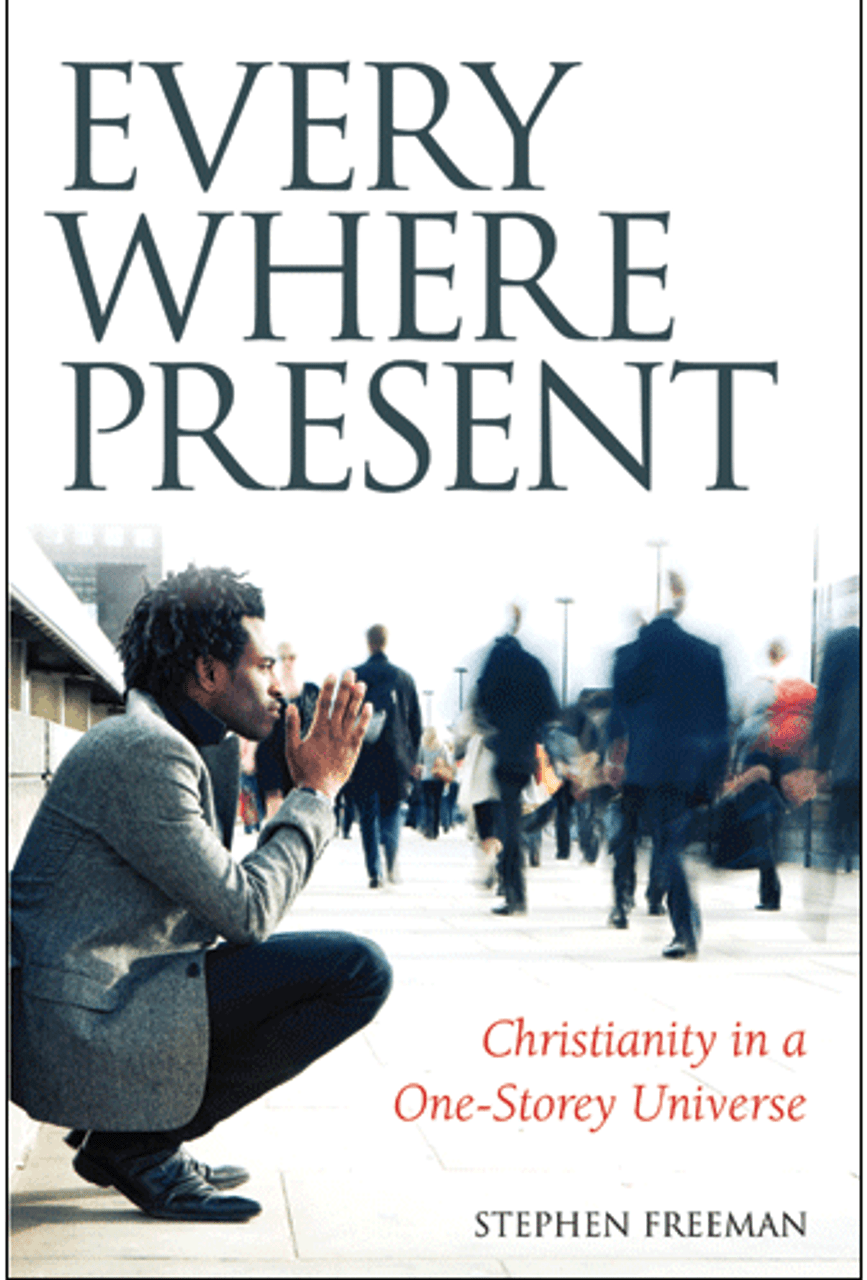
Listen to my podcast
Please Read
Categories
Archives
Father, What a beautiful post. It causes me to want to respond with something equally beautiful, but I can’t articulate…