Bearing Shame With Christ

Public shaming is a commonplace in our culture. Public stocks and tar-and-feathering have disappeared, but shaming itself is as up-to-date as the internet itself. I well imagine that some view the use of ridicule and derision as an inherent part of public life. Those who enjoy the accolades of crowds must be prepared to endure their opprobrium. Of course, for those who live anonymous lives, such public shaming is about other people.  The quiet sense (and sometimes not so quiet) that “they had it coming to them” is the strange pleasure of envy, a subset of shame. These are among the darkest parts of our public life.

Of course, there is nothing new about shame and envy. That our digital world is infected with them is nothing more than a manifestation of an ancient social contagion. It was envy that drove Cain to kill his brother. It continues to drive murders to this day.

It is deeply significant that the gospel account of Christ’s Passion includes ample descriptions of the shame and envy that permeated that event. Indeed, St. Mark’s gospel tells us that Christ perceived that it was “out of envy that the chief priests had delivered Him up” (Mark 15:10). I have noticed, across the years, that the texts for the services of Holy Week make far more mention of shame and envy (the “mocking and the spitting”) than they do of the specific suffering of the crucifixion itself. Crucifixion is not about the pain (the Romans had far more painful options at their employ). Crucifixion is specifically about the shame – it was considered the lowest form of execution – particularly suited for slaves.

St. Paul said, “I am crucified with Christ, nevertheless, I live…” Our attention is drawn to the Cross and its nails. However, if crucifixion is primarily an act of public shaming, then we have far more literal opportunities to be crucified with Christ. The mocking and the spitting, if only in their lesser forms, are likely common to us all.

Of course, there’s a very quiet crucifixion of shame endured by many: the torturous voices that haunt our lives, whispering in the dark. The insidious power of such shame makes us want to hide (hiding is in the very nature of shame). It attacks more than our actions – it goes for our very self.

We hear this in the mocking words hurled at Christ: “If you are the Son of God, come down from the cross…” A similar taunt was spoken by the devil in the temptations in the wilderness. “If you…”

The taunts within us take on their own form – but are almost always aimed at “who we are,” or “what kind” of person we imagine ourselves to be. They are likely the deepest source of pain in our lives.

If it is true that we are “crucified with Christ,” then it is also true that Christ is crucified “with us.” The mocking and the spitting that we undergo in our own minds and lives is something that Christ has made His own. We are not alone. This is at the very heart of God’s love. In my pastoral experience through the years, I see that we doubt the love of God. We are unworthy (of course). We fail to love Him in return (of course). There is something within us, I think, that makes us give greater weight to the words and thoughts of shame than we do to the assurance of God’s love.

Our brains are wired for protection (for which we give thanks). However, that same wiring tends to give greater emphasis to dangers and warnings than to joy and celebration. Christ knows this very aspect of our being:

“Inasmuch then as the children have partaken of flesh and blood, He Himself likewise shared in the same, that through death He might destroy him who had the power of death, that is, the devil, and release those who through fear of death were all their lifetime subject to bondage.”(Heb. 2:14–15)

I am aware of this, particularly, in the sacrament of confession, when the epitrahelion (stole) of the priest is placed over my head and I hear the soothing words that assure me of God’s forgiveness:

…May that same God forgive you all things, through me a sinner, both in this present world, and in that which is to come, and set you uncondemned before His dread Judgment Seat. And now, having no further care for the sins which you have declared, depart in peace.

I think of that space beneath the epitrahelion as the “secret place of the Most High.”

St. Paul wrote:

The Spirit Himself bears witness with our spirit that we are children of God, and if children, then heirs—heirs of God and joint heirs with Christ, if indeed we suffer with Him, that we may also be glorified together. (Rom. 8:17)

I suspect we often externalize this verse and presume that it refers only to those who endure physical torture. However, its focus is found in the phrase, “with Him.” We unite our sufferings (even our self-inflicted mental tortures) with Him with as small a phrase as, “Lord, have mercy!” I have also been taught to pray, “O God, comfort me!”

In these things, with Christ, we are “more than conquerors.”

Let us die with Christ in the Jerusalem of our minds, that we may reign with Him in the New Jerusalem of His Kingdom!

___

Image: a detail from Christ Carrying the Cross by Hieronymous Bosch, ca. 1515.
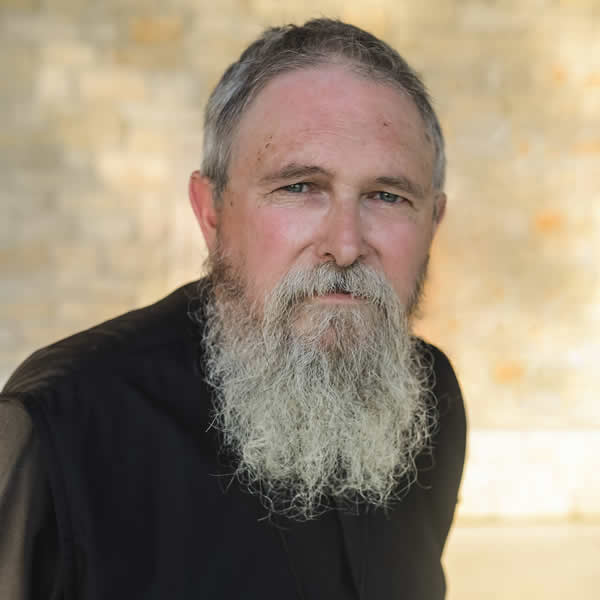
About Fr. Stephen Freeman

Fr. Stephen is a retired Archpriest of the Orthodox Church in America. He is also author of Everywhere Present: Christianity in a One-Storey Universe, and Face to Face: Knowing God Beyond Our Shame, as well as the Glory to God podcast series on Ancient Faith Radio.


Posted

in

, ,

by

Comments

24 responses to “Bearing Shame With Christ”

  1. Helen Avatar
    Helen

    Oh Father, a comforting image that just came to me: if we are crucified with Him, then we are pressed up against Him and He to us. An eternal embrace. Blessed truly are the poor in spirit.

  2. Matthew Avatar
    Matthew

    Dread judgment seat? I believe I found the Beautiful Gospel in Orthodoxy – but the words and phrases I sometimes read from the liturgies, in books and now in the words of absolution seem not so beautiful at all …

  3. Andrew Avatar
    Andrew

    Matthew, in the Canon of Preparation for Holy Communion, we also refer to the Mysteries (The Body of Blood of Christ) as ‘dread’:

    “Count me not unworthy, O Christ, to receive now the Bread which is Thy Body, and Thy divine Blood, and to partake, O Master, of Thy most pure and dread Mysteries, wretched though I be.”

    I think there’s an extended definition of ‘dread’ the includes the idea of awe. Interestingly, that word too can be interpreted negatively or positively. I often encounter the word “awful” and only hear its negative interpretation, forgetting that it’s literally “Awe – Full” or “full of awe”.

  4. Kenneth Avatar
    Kenneth

    In the Psalms, the vast majority (perhaps all?) of references to “judgment” are positive. For example:

    “Save me, O God, by thy name, and judge me by thy strength.” (Ps 54:1 KJV)

    “Judge me, O God, and plead my cause against an ungodly nation: O deliver me from the deceitful and unjust man.” (Ps 43:1 KJV)

    “Therefore the ungodly will not stand in the judgment, nor sinners in the congregation of the righteous.” (Ps 1:5 KJV)

    Many, many others.

  5. Kenneth Avatar
    Kenneth

    Andrew is also right: The older meaning of “dread” is “regarded with awe” or “greatly revered.”

  6. Cindy Avatar
    Cindy

    Thank you. Thank you. You have no idea how much i needed to read this today!
    Lord have mercy

  7. Fr. Stephen Avatar

    Helen,
    Indeed!

  8. Fr. Stephen Avatar

    Matthew,
    You have to allow your ear to be more poetic. What you hear are the echoes of an angry God. His Judgment Seat is also identified in the Liturgies as the Cross itself. It is “dread,” sometimes translated as “fearful,” because it is awesome and we behold the truth of all things (including ourselves) spoken there with clarity. It is “dread” just as a surgery would be for a disease that would be otherwise terminal. It is the kindness and gentleness of God, before which our own meanness and envy are revealed to be what they are. But it is a place of healing and redemption.

    I pray that the Spirit of God will increasingly heal the dark fear in your soul and give it the light of God’s poesis.

  9. Dee of Sts Herman and Olga Avatar
    Dee of Sts Herman and Olga

    Father,
    Similar associations with the heresy of the angry God, occur with the interpretation of Christ’s words, ” If anyone desires to come after Me, let him deny himself, and take up his cross and follow Me. For whoever desires to save his life will lose it, but whoever loses his life for My sake will find it.” (Matthew 16: 24-25)

    Such words do not look like love in uninitiated eyes.

    In context, before Christ said these words, he also said: “Satan get behind me, for you are not mindful of the things of God but of the things of men”. These last words beg the reader to go more deeply into God’s words of salvation. And they appear in Matthew just before the description of the Transfiguration. In my experience, my understanding of scripture (its deeper meanings) is highly dependent on the received in-person experience of the ethos of the Orthodox Church. It isn’t something that can be grasped intellectually or within the mores of our culture of modernity.

    I am struck by the story of Job, where his friends sat with him for several days before speaking. As a general rule, we don’t exhibit such empathy or ethos.

    And for various reasons of late, it is more than possible that many of us bear shame of circumstances not of our own making, especially involving economics and job security. It is easy to envy others who do not have to have such experiences.

    As you say, Father, May God comfort us.

  10. Fr. Stephen Avatar

    Dee,
    Golgotha lives in our heads…

  11. Nicholas Avatar
    Nicholas

    I don’t think I’ve ever noticed how breezily dismissive the language of absolution is until it was quoted here. “Having no further care for the sins…” Like a billionaire signing a check — or, better, like a daddy telling his child not to worry, he’ll clean it up.

    Thank you, Father. Pray for me and my children.

  12. Matthew Avatar
    Matthew

    Thanks so much Fr. Stephen.

    What you pray is very much my prayer too and the absolute goal of my spiritual journey.

    Peace to you.

  13. Matthew Avatar
    Matthew

    I have never been very good with poetry … neither understanding it nor writing it.

  14. Mark Spurlock Avatar
    Mark Spurlock

    Matthew:

    You may have not yet come across the right poet who speaks to you 🙂 Cf. the vast art encompassed by music and whether you would like or dislike music if you’d been exposed only to certain artists or genres.

    Regarding the dread judgement seat, I found this previous article by Father Stephen: https://glory2godforallthings.com/2017/08/23/judgment-seat-christ/

  15. Fr. Stephen Avatar

    Matthew,
    While we are all “wired” differently – I think that the heart (nous) has a “poetic” aspect of its perception. It often gets too little exercise or use. As Mark suggests, music is another part of this poetic faculty. A little bit at a time…may God give you grace in this.

  16. Helen Avatar
    Helen

    Mark, thank you for the link!

    Matthew I share your struggle. I was introduced to Orthodoxy from the cradle, but it was not the same Orthodoxy I am now understanding. What has been helping me is recognizing that some words/practices/ disciplines were misunderstood and misrepresented, words like shame, suffering, fasting, praying,… I think there is a “healthy ” and life-giving approach to each and also a “toxic” and life-draining approach. It helps me to recognize that and try to be patient with myself until I understand better.

  17. Matthew Avatar
    Matthew

    Thanks everyone.

    Mark: Thanks so much. I guess I need to seek out poets that might gel with me. I get frustrated with lyrical music sometimes because I want to understand the artist´s meaning, but I simply do not. Same with poetry very often. Thanks also for the link to Fr. Stephen´s “dread judgment” article.

    Helen: I need to find that place of peace in understanding such things in a healthy rather than toxic way. I was for many years in toxic theological environments.

    Fr. Stephen: I still muck around in the intellect and the brain. I know almost nothing about the nous.

    I suppose anything evil or bad should expect a dread judgment, but as it seems to me now – the judgment itself is healing and restorative, not retributive.

  18. Jenny Avatar
    Jenny

    Father,

    What a beautiful post. It causes me to want to respond with something equally beautiful, but I can’t articulate it. It’s like hearing a song on the radio and immediately one is trying to sing along to the chorus, even if you don’t know all the words. But I can share my homework lately.

    My children have the stomach bug, so I’ve been spending a lot of time cleaning the same things again, including the children. Never have I been so thankful for the washing machine.

    They are on the mend now, praise God, but for the last few days I’ve been able to say to the Lord- let’s take care of the children. It’s a joy it is to say and to do that because there is so much that I cannot take care of.

    But at the very least, to be able to keep two children clean and dry and hydrated is a gift. I keep offering this comfort to the Lord in all that I am doing. This helps when it is one o’clock in the morning and everything has to be washed all over again.

    This morning I forgot to pray. The prayer card is tucked inside of the cupboard door where I keep medications. I was getting out mine for the morning, and my attention was drawn to the card.

    And I was irritated at the Lord! Irritated at Him for reminding me to do something when I had my mind focused on a hundred other things I had to do in quick order. I didn’t want Him interrupting my plans and telling me what to do.

    So embarrassing, to have this response. But that is not the worst thought that I have sometimes. The worst is to think that it’s boring to choose the same thing every time- always the same Person, always the same story, doing always the same thing.

    It’s not so much the thought itself that is the most offensive, it’s the fact that I can be moved by this, tempted by it. That’s the most humiliating part.

    But I must confess and then ask Jesus utterly to destroy the thought, to pay no attention to it and to make me His captive forever and to forgive me for ever thinking Him boring, which I know will be an incomprehensible thought if I were to see Him as He is.

    That is how, these days, the Lord helps me to confess to Him and come out from the shame of my thoughts, which certainly would torment me if I tried to deal with them on my own, unconfessed to Him.

    But when I was coming to know Him, I lived in that Jerusalem all the time and it was agonizing because I hadn’t learned how to trust Him with all myself. I would try so hard to fix what I was ashamed of before turning towards Him, but of course, that never worked.

    And because at that time the Lord was causing me always to know that He was always there, I could not hide freely m Him. I could not hide in distractions or forgetfulness.

    I tried to do that sometimes, but I knew that I was being just like a child who puts their hands over their eyes so they can disappear. In reality of course, He Himself is the best place to hide. (How beautiful a picture that is, of being hidden under the epitrahelion!) But first one must turn to Him.

    Once around that time I got into a terrible argument with my husband and failed in every way to be like Jesus and made a complete mess of it, all knowing that Jesus was right there.

    I was so disgusted with everything, myself most of all. I went storming away and slammed a door behind me (as though that could be a barrier!) and I cried out to Jesus, “Don’t talk to me! I can’t take anymore of Your grace! Why don’t You leave me? Why won’t You leave me when I’m this way?”

    And He replied right back, with almost as much intensity, that He hadn’t come because of my good behavior in the first place.

    I stood there stunned for a moment or two. How true that was! How true it was not just of myself, but of humanity. He hadn’t come to us because of our good behavior, but while we were still sinners He died for us.

    And this verse from a hymn came back to me-
    Just as I am, without one plea,
    But that Thy blood was shed for me,
    And that Thou bid’st me come to Thee,
    O Lamb of God, I come! I come!

    So then I did not reject His grace any further that time. But I had to keep relearning this lesson for years- not to try and hide from Him in my shame.

    But I did not know that it was possible to share in Christ’s shame until I found this quote from Thomas Merton:

    “Suffering, therefore, must make sense to us not as a vague universal necessity, but as something demanded by our own personal destiny.  When I see my trials not as the collision of my life with a blind machine called fate, but as the sacramental gift of Christ’s love, given to me by God the Father along with my identity and my very name, then I can consecrate them and myself with them to God.  For then I realize that my suffering is not my own.  It is the Passion of Christ, stretching out its tendrils into my life in order to bear rich clusters of grapes, making my soul dizzy with the wine of Christ’s love, and pouring that wine as strong as fire upon the whole world.”

    This captivated me. I longed for it to be true. I thought, what a vision for suffering to mean and to do! I was already frequently dizzy with the love of Christ. I had so much suffering that could be offered up or understood in this way, and if it could be transformed like this…!

    Over time, the Lord kept showing me His suffering. He showed me that my suffering was like a window into His own, because it was a shared experience.

    When I understood this, I cherished my suffering. If I had to do my life over again, I would not wish to give up any of it. I wish I could talk more specifically about sharing the shame, but I still haven’t figured out the words to that chorus. But I know the melody very well and it moves my heart the most.

    Well, Father, as I’ve been writing this I have been getting sicker and I’m afraid it’s my turn to get the bug, so I will post this as it is. I don’t mind for myself because I can hide myself in the Lord and spend a lot of time that way quietly whenever I get sick, but pray for my poor husband! He’s going to need a lot of grace. Fortunately the kids are mostly better and keeping things down now.

  19. Ansel Ross Avatar
    Ansel Ross

    I think we more often doubt the love of God’s people rather than the love of God. Or that could be just me.

  20. Christa Avatar
    Christa

    I love that quote by Thomas Merton,”when I see my trials … as the sacramental gift of Christ’s love.” Homework indeed.

  21. Anna Avatar
    Anna

    Thank you Father !
    Just what me heart and tortured mind needed to hear !
    Lord have mercy and comfort me .
    Powerful !

  22. Dee of Sts Herman and Olga Avatar
    Dee of Sts Herman and Olga

    On the idea of scripture as a kind of poetry, just today I read in Andrew Louth’s book, “Discerning the Mystery”: “…we must have the courage to conclude that God Himself is also a poet.”(pg112) Quoting H.I. Marrou’s “Saint Augustine et la fin de la culture antique”

  23. Drewster2000 Avatar
    Drewster2000

    Jenny,

    If you’re still listening, thank you so much for sharing your heart and your experiences. They come from a childlike soul and touched me deeply.

    When you speak of doing the “same old thing” and learning to embrace that practice, I am once again reminded of Bill Murray in Groundhog Day. It was not until he embraced his reality that he began to find fulfillment in it – and simultaneously began to fill the lives of others with good things.

    May God continue to bless you in your journey.

  24. Jenny Avatar
    Jenny

    Drewster,

    I am still here and thank you for saying so! That is such a good movie. I wish I could do even half the things he does by the end. 🙂 May God bless you.

Leave a Reply

Your email address will not be published. Required fields are marked *


Subscribe to blog via email

Support the work

Your generous support for Glory to God for All Things will help maintain and expand the work of Fr. Stephen. This ministry continues to grow and your help is important. Thank you for your prayers and encouragement!


Latest Comments

  1. “a blind pig finds an acorn” Amen and amen! And I would go further to say that the pig who…

  2. Fr. Stephen, So true. I shall trust that you go down there to meet some of your readers and that…


Read my books

Everywhere Present by Stephen Freeman

Listen to my podcast


Categories


Archives