Hiding in Plain Sight

In the time of their visitation they will shine forth, and will run like sparks through the stubble. (Wisdom 3:7)

____

The story is told of St. Macarius that he was falsely accused of fathering a child by a young woman in the village. After being beaten and humiliated by the people there, he returned to his cell and gathered all of the mats and baskets he had made and gave instructions that they were to be sold, and the money given “to my wife.” In time, he was vindicated of the crime for which he had been falsely accused.

St. Francis’ disciple, Brother Juniper, was falsely accused of theft, murder and a number of such crimes. He immediately confessed that he was guilty of everything. He was rescued at the last minute from hanging through the intercession of the friars.

All of us stand falsely accused.

That might sound surprising, since most of us carry some constant level of moderate guilt. And though we wouldn’t dare go as far as Brother Juniper and submit to hanging, or agree to support a child for whom we have no responsibility, nonetheless, we generally agree to some level of guilt and quietly task ourselves with improving.

“I can’t believe I did that! What must I have been thinking?”

Our lives are a strange mix of virtue and vice. Alexander Solzhenitsyn said that the line between good and evil did not run between nations, nor even between groups or individuals, but within every human heart. Some portion of our heart accuses the other, and with just cause. But we also stand falsely accused.

Our passions cloud our judgment (and guilt can indeed act like a passion). We cannot accurately judge ourselves because we do not see the truth (not even of ourselves). By the same token, we do not and cannot judge others rightly. We are simply incompetent as judges.

Solzhenitsyn is right, however. The dividing line does not run between us, but within us. Sergius Bulgakov once suggested that the parable of the sheep and the goats is incorrectly applied to individual versus individual, and should be applied instead within the heart of each individual. This coincides with St. Gregory of Nyssa’s thoughts on salvation in which the judgment exists to destroy our sins and faults and restore us to our true nature. I will leave that argument to others (for there are so many who rise to great eloquence on the topic).

I have wandered within the heart for a very long time, both my own as well as others. If you suspend judgment, you find a vast reality, both good and bad, dark and light. I have never encountered a heart that is entirely dark, though I have been in some where the light was indeed quite dim and isolated. I always try to remind myself that Christ is the Light and that darkness does not overcome Him. Christ is the Shepherd of the light. An early Christian title for believers was “children of the light.”

Christ knows His sheep and calls us each by name. Most of us don’t know our names yet. Helping someone learn their name (and learning it myself) is the pastoral art. It is the work of Jesus.

Those whom we cannot love are strangers to us. When we are not able to recognize another, it is simply a symptom that we are seeing them through the darkness of our own heart. Christ knows His sheep and sees the truth of our being.

The hiddenness of the human life is often obscured by our modern understanding. In many contemporary Christian treatments, we are viewed as an intellect with a will. We think. We choose. And many are quick to pronounce judgments on others on account of their choices or their thoughts. Indeed, for some, the last choice in life supersedes all earlier choices: “as a tree falls, so it lies.” It is a deeply reductionistic approach to human beings, rendering us flat, with no depth beyond the most cursory surface of our decisions.

The Scriptures suggest something quite different. We are told that our life is “hid with Christ in God” (Col. 3:3). We are told that what we shall be “does not yet appear” (1 John 3:2). We are told that we will receive “a new name written on a stone which no one knows except him who receives it” (Rev. 2:17). This hiddenness is similar to other themes in the New Testament. The gospel itself is a mystery, hidden from the ages, etc. Christianity is “apocalyptic” in character, that is, it is revelatory, making known that which is hidden.

Of course, it’s difficult to live in a world in which the truth of its reality is hidden.

There is a theme, not restricted to Christianity alone, that sees spiritual awareness as “waking up.”

Therefore it is said, “Awake, O sleeper, and arise from the dead, and Christ shall give you light.” (Eph 5:14)

To wake up is both to see what is there, but to discern what might be hidden. A true watchman has to engage in more than a cursory glance.

Life in a world whose truth is hidden is often quiet. It is marked far more by listening than speaking. It presumes its own ignorance and waits in wonder for what it does not know. It is frequently surprised.

Consider the soul of St. Macarius. Confronted with a false accuser, he responds with extreme humility and agrees to bear the unjust consequences. What kind of a soul can do such a thing? It means not only enduring a financial burden (tough on a desert monk), but silently bearing the condemnation of the entire community. (This scenario becomes part of the final trial of the protagonist in the recent Russian novel, Laurus). In truth, had Macarius acted out of noble intentions, he would easily have done damage to his soul (and that of his accuser). Rather, within himself, he recognizes, or becomes the sinner whom he is accused to be. This is true, even within Christ, when rightly understood.

Christ does not simply die on our behalf, or instead of us, He becomes sin in order to destroy sin (2 Cor. 5:22). Christ is without sin, and yet He becomes sin. There is nothing “noble” in such an action; nobility would be a deeply unjust accusation. It is self-emptying love.

St. Macarius emptied himself of all claims to righteousness in embracing the false accusation, and in doing so, destroyed that which was false. He embraces the unrighteousness that is hidden within himself, that God might vindicate him with His own righteousness. That is the nature of the true, hidden life.

That which is most obvious is never the full story, either about ourselves or others. Christ invites us into the fullness of His life, to live in union with the full story, no matter how deeply it might be hidden. At the very depth of the soul is a song of unbounded thanksgiving.
About Fr. Stephen Freeman

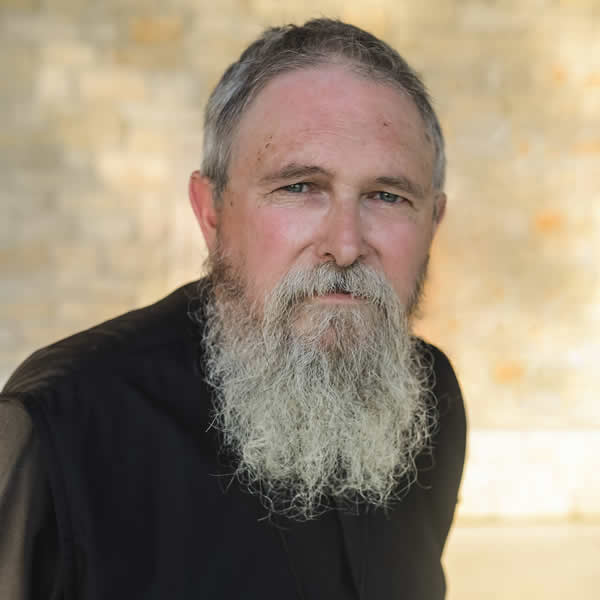
Fr. Stephen is a retired Archpriest of the Orthodox Church in America. He is also author of Everywhere Present: Christianity in a One-Storey Universe, and Face to Face: Knowing God Beyond Our Shame, as well as the Glory to God podcast series on Ancient Faith Radio.


Posted

in

,

by

Comments

28 responses to “Hiding in Plain Sight”

  1. Margaret Avatar
    Margaret

    Thank you Fr. Stephen

  2. Alix Avatar
    Alix

    Thank you for this reflection, father. It is good incendiary material for my legal-reformed old mind.
    Have you heard the idea of the “sin” actually being a hebraism for “sin offering”, like “fridge” for “refrigerator”? So He becomes a reconcilation offering, the Repentance of God and of man, maybe, rather than becoming ontologically unified with sin. St Paul is using Greek vocabulary but Hebrew idioms because he is discussing the Hebrew religion. I think it is the other fr Stephen that makes this point.
    I’ve been wondering for years about the way anxiety masquerades as the voice of conscience…the “You may not remember having done x but you probably did knowing you!” kind of voice. Do you have an ideas for how to hear the difference? The path of healing for me has often been to say, no I didn’t! I refuse the false guilt! But it makes good intuitive sense that on some level, that only keeps us stuck in the cycle of having to assign blame somewhere, stuck in the mode of accusation and therefore not healed at all.

  3. Christian Hollums Avatar
    Christian Hollums

    I’m living through a situation right now where care is required for my adopted father, but the surrounding moral framework keeps asking the wrong questions: Who chose this? Who is technically responsible since he caused the strokes from drug abuse? Who is closest? Who is obligated?

    This way of thinking cannot recognize the hidden life. It cannot see responsibility that arises not from guilt or fault, but from communion. It cannot imagine bearing a burden that one did not choose without first narrating it as injustice or coercion. And so, it quietly trains us to step back rather than step in. Sadly, I’m seeing this within my own family.

    It is heartbreaking when your own family can’t see the deeper truth of shared humanity. That kind of responsibility is unintelligible to my family. As a result my sister and I who have the least amount of time and financial resources bear the full burden of caring for my father who can’t walk and is bedridden. Meanwhile my mother (whom I love deeply) has roughly half a million dollars’ worth of art hanging on her walls, other members of my family live in gated communities and are buying homes for AirBnB so they can make more money.

    I do not judge them but my heart breaks over this way of seeing the world.

  4. Fr. Stephen Avatar

    Alix,
    I disagree with hamartia being translated as “sin offering.” I frankly think “sin offering” would be a translation driven by Reform thought rather than the reading of the Eastern Fathers. It is very unclear that St. Paul “thinks” in Hebrew idioms. Instead, he seems to use the Septuagint, is clearly familiar with a number of Hellenistic ideas and imagery. Indeed, I think that it’s quite possible to distort its meaning by suggesting that it should be thought of as “sin offering.” It is certainly not how I have received Orthodox teaching on the nature of sin.

    Battling with anxious thoughts is tricky, and depends very much on the nature and character of their origin in an individual’s life. But – if you find something that “works” – I’d be hesitant to throw it away.

    It is a difficult and highly speculative thing to posit what a Biblical author has as a mindset when they’re writing. There is only debateable evidence for such speculation. It is better that we read the Scriptures through the eyes of the Church – by seeing how it has been read and treated and developed in the Fathers and in the liturgical use in the Church.

    Protestantism has no shortage of such speculative readings – with very disastrous fruit. We do not need to follow that path.

  5. Kathryn Leskosky Avatar
    Kathryn Leskosky

    Would you consider publishing, in book form, all, or at least your favorite, blogs?
    If so, and I hope so, please include, “Hiding in Plain Sight”. In fact, make it the title. This is a valuable essay, as so many of your works are.

  6. Fr. Stephen Avatar

    Kathryn,
    This has been a project that I’ve been thinking about. I appreciate the encouragement!

  7. Fr. Stephen Avatar

    Christian,
    That is difficult, no doubt. When responsibility is seen through a lens of “justice/responsibility” – it generally falls far short of love. Only communion fulfills love. It’s also difficult.

  8. Eric Dunn Avatar
    Eric Dunn

    Life and death are mysteries. What you said gives life.

  9. Andrew Avatar
    Andrew

    Ditto what Kathryn said! Pretty please!

  10. Matthew Avatar
    Matthew

    Ditto Kathryn and Andrew!

  11. Fr. Stephen Avatar

    I will give this my deep consideration – I have little excuse (maybe none at all) not to do it!

  12. Margaret Sarah Avatar
    Margaret Sarah

    Father,
    Regarding a published book of articles, perhaps you could organize the articles with the liturgical year. That’s a great benefit of the current structure of your blog.

    That organization may help encourage the book to be read more slowly (throughout a year) rather than binged (I plead guilty of that front).

  13. Matthew Avatar
    Matthew

    These publishing ideas are getting better and better … 🙂

  14. Fr. Stephen Avatar

    Margaret Sarah,
    But everything is always about Pascha! (wink)

  15. Helen Avatar
    Helen

    Father, it seems there’s a relationship to “bearing a little shame” in this.

  16. Gisele Avatar
    Gisele

    Thank you, Father Stephen – there is much to reflect and meditate on. I am not sure that I fully I understand Christ “becoming sin” – beyond the idea that the plenitude of God contains all. (I think it was St. Augustin who phrased it in terms of a sponge containing holes that are part of the sponge itself [?]. The holes – non-being – cannot exist without the “positive” substance of the sponge”, but the sponge contains the substance and the void.) Nevertheless, when you tell the story of St. Macarius, it seems like forgiveness might be an “interim” step in understanding this idea? In other words, forgiving the lie and the betrayal – or “absorbing” the untruth – brings a person into the fullness of being?

    Separately, when it comes to the divide between darkness and light existing in each human heart, I read a homily of a French Orthodox bishop (Monseigneur Jean/Eugraph Kovalevsky) who spoke of the invisible world in each of us. That is, when we meet and interact with another person, we are confronting so much more than a personality, but all of the forces vying for that person’s soul. And each of us has the ability in the instant to tip things in favor of the light or the dark by how we behave. I found this image added a very helpful dimension to “do unto others” because ultimately it relates to the care we ought to have and would like for our soul and its salvation.

  17. Fr. Stephen Avatar

    Helen,
    Indeed. The humility that makes it possible to accept a false accusation and bear it is likely prepared by an earlier acceptance and bearing of a little shame that was “just.”

  18. Fr. Stephen Avatar

    Gisele,
    What a profound insight from Bishop Jean.

    I think that when Christ “becomes sin” – it could also be stated as entering fully into the hell which we have created for ourselves.

  19. Ann Dibble Avatar
    Ann Dibble

    There is nothing of greater value than an undivided heart.

    I know you said much more, but that is where I stopped.

  20. Gisele Avatar
    Gisele

    Thank you, Father Stephen – “the hell we created for ourselves” makes things very, very clear!

  21. Lyra Josefsson Avatar
    Lyra Josefsson

    So hard on some levels to comprehend… Lord, help our ignorance with real comprehension!

  22. Elias Avatar

    Thank you for your narrative gift of revealing the deep and difficult with accessible understanding!

  23. Simon Avatar
    Simon

    I have been thinking about this post the last day or so. It is interesting that St. Macarius was able to bear the consequences of actions not his own. Not just the shame, but the burden or responsibility for character flaws he didn’t have. I used to rationalize these stories as just so much monkish piety or that monks are practice extreme obedience and submission so that he did this was maybe not so surprising. I really couldn’t see any way that this could have any practical application. I can think of a half dozen sins against children I would fight to the end in order to exonerate myself from. If you are married, it behooves you to defend your fidelity if you have not been unfaithful. What if someone accuses us of owing them money? Are we going to take food out of our children’s mouths to feed a predator?

    It is unclear to me the degree to which we should allow people to yoke us with the burden of guilt or shame and any subsequent responsibilities that might entail.

    On the other hand, it seems like this understanding of Christ becoming sin underscores the ontological dimension of ‘destroying sin.’ Perhaps the ego is the single barrier to ontological experience, and when that barrier is removed, as it vigorously would be in monastic life, then the ontological becomes more apparent.

    Regardless, I think that extreme such as this holds potential to teach us something, but I struggle to understand what it is.

  24. Fr. Stephen Avatar

    Simon,
    Serious thoughts here. I think one of the first things that comes to mind with the example of St. Macarius is the “injustice” involved. He did nothing wrong. He “had no sin.” He was willing to “bear the shame” and accepted to bear the burden for which he was accused. I think that a married man with children might well have treated the accusation differently. Nevertheless, I think the example of bearing an unjust burden comes to us all (potentially). And we sometimes bear those burdens for various reasons (to keep peace around the house occurs to me). But the burdens that are not of our own making (and thus unjust) still present the occasion for bearing with them.

    I’ve thought about long, festering wars. Both sides have their complaints. “An eye for an eye and the whole world’s blind,” it is said. At some point, healing is only possible because someone forgives – and, it seems to me – that forgiveness when it starts is always a matter of injustice. Someone has to say, “I forgive and will not demand a payment.”

    I read the other day that total world indebtedness is over $300 Trillion dollars. That monetary amount is merely a sacramental sign of the unforgiveness that we extend towards one another across the world.

    Also, it came to my mind (re: St. Macarius), that the character Laurus, in the book by that name, re-enacts bearing this same false charge like St. Macarius. No doubt, it was the pattern for his last acceptance.

    Happy New Year, my friend!

  25. Simon Avatar
    Simon

    Happy New Year, Father Stephen!!

    I think I see where you are going with this! The verse in Matthew 5 says “Blessed are the peacemakers for they shall be called children of God.” So, peacemakers accept the burdens of insult and injury, and offer forgiveness. What a marvelous thought to begin my new year with.

    My time with the JWs left me with actual physical scars. But, if it wasn’t for those scars I wouldn’t have my son or my daughter–both of whom have saved me in some fashion, especially my son. That seems like grace. What was intended to harm me God meant for good, or at least God makes it work for good. That’s probably the faith and confidence you need to have just to get on in the world without losing your mind.

  26. Matthew Avatar
    Matthew

    Simon said:

    “Perhaps the ego is the single barrier to ontological experience, and when that barrier is removed, as it vigorously would be in monastic life, then the ontological becomes more apparent.”

    I think there is so much truth in this statement. I am personally not satisified with my progress regarding the taming of the ego and the removing of its barrier. When I hear stories like the one about St. Macarius, or of course the stories of Jesus, I think to myself that imitating their actions is nearly impossible (even with God´s grace). Couple this with all the societal pressure around me that points to solutions designed to build up the ego rather than take it down – man – the ontological seems like a Middle Earth fantasy.

  27. Ann Dibble Avatar
    Ann Dibble

    ‘So, peacemakers accept the burdens of insult and injury, and offer forgiveness.’ Yes, a marvelous thought for my new year, too.

    It is not as if we are going to escape suffering by turning AWAY from God!

  28. panayiota Avatar
    panayiota

    Happy New Year, Father Stephen.
    Thank you for all you do.

Leave a Reply

Your email address will not be published. Required fields are marked *


Subscribe to blog via email

Support the work

Your generous support for Glory to God for All Things will help maintain and expand the work of Fr. Stephen. This ministry continues to grow and your help is important. Thank you for your prayers and encouragement!


Latest Comments

  1. Thanks for that great advice, Fr Stephen. The Fathers and others writing before 1500 would surely be the best resources.…

  2. Dear Fr Stephen Thank you for another great article. This article is interestingly timed. In just over a week, I…

  3. This is the actual quote for those who are wondering, the one that is circulating on the internet and appears…


Read my books

Everywhere Present by Stephen Freeman

Listen to my podcast


Categories


Archives