The Secular Mind Versus the Whole Heart

Thinking is among the most misleading things in the modern world, or, to be more precise, thinking about thinking is misleading. For a culture that puts such a great emphasis on materiality, our thinking about thought is decidedly spooky. The philosophy underlying our strangely-constructed modernity is called nominalism (of which there are many formal varieties). Its imaginary construct of the world consists of decidedly separate objects, united only by our thinking about them. There are things, and then are thoughts about things. But the thoughts have nothing to do with the things, except in our heads.

The result is the strange contradiction of living in a world we conceive of as sheer material, while only truly valuing thoughts, ideas and feelings that we conceive of as existing in our heads. I have described this in numerous articles and a book as the “two-storey universe.” We are certain of the material world, and though we only value the world of ideas and feelings, we’re not so sure that they really exist. We are indeed a troubled mind.

A much older way of experiencing the world understands our existence as one of actual communion. And, strangely, this way of thinking gives far more respect and attention to materiality. Nowhere is this more evident than in the contrast between ancient Christian thought and modern Christian thought.

Some examples:

Modern Christianity (which has been around for some few hundreds of years) views the death of Christ primarily in terms of the ideas associated with it. Human beings, through their breaking of God’s commandments (ideas), incurred an infinite debt (ideas), requiring their punishment (oops! This is eternal torment in hell). Note that this is purely an idea. Christ becomes man, and on the Cross suffers and pays the debt (again an idea). Those who now trust in Him (again an idea), are forgiven (another idea).

The only value placed on the Crucifixion of Christ is an abstraction. The action itself gains value only through how it is considered by God. But this abstraction ignores the deeply literal treatments referring to the blood of Christ and His flesh. The event of Christ’s suffering, death and resurrection gain their value precisely in their materiality and of God’s interaction and communion with materiality. Something happens on the Cross that is not simply in the mind of God.

Modern memorialism is the teaching that the Eucharist is simply a memorial meal, an event in which we have certain ideas about the death of Christ. But Christ says, “Take, eat!” and “Drink ye, all of this!” The “remembrance of Him” is not in our minds – it’s in our bodies and our blood. We become one flesh with Him.

It is very troubling to some when they begin to read the Church Fathers’ teachings on the heart (nous). The Fathers were well aware of the connection between brain and thinking (any number of ancient head injuries had taught them as much). But the Fathers disturbingly (for a modern) insist on locating the heart (nous) in the physical heart itself. Most moderns quickly dismiss this as some form of ancient nonsense. But it holds a very serious insight. True knowledge and communion are not abstractions. Using the example of eating, when I consume a sandwich, I could be said to “know” it. Where does this knowing occur? My stomach knows it. My blood stream knows it. In truth, the whole of me “knows” the sandwich. It is a much broader understanding of knowing than the reductionist notions of modernity.

The Whole Heart

This far more “wholistic” understanding of human existence and knowing is actually much more sophisticated than modern two-storey notions. Modern abstractions about thinking and knowing have resulted in a fragmentation of our consciousness in which we ignore the larger part of what we actually know. We have been taught to attend to our thoughts, as though we had a disembodied existence. And to make matters worse, we have a very false, abstract notion about what thoughts themselves are.

We are material beings. We are not souls that have bodies, or bodies that have souls. The soul is the “life” of the body, but is not, strictly speaking, a thing in itself. Most moderns mistake the soul for consciousness, and they imagine that at death their consciousness migrates somewhere else (to heaven, etc). And, we do not care very much about what then happens to the body, so long as our precious consciousness abides. This, I might add, is the mythology of Star Trek, where in at least several episodes, Spock’s consciousness is deposited in various other places. It is not, however, true Christianity.

The Christian faith holds to the resurrection of the body and the soul’s proper life within that glorified body. After death, God sustains our souls (life) in existence, but this is a great mystery for which words are inadequate. It is not our proper existence nor the fullness of our being. If you ask, “But what exactly is the soul?” You will get no answer. It is the “life of the body”.

The thing which we call consciousness is itself problematic. Much of it is simply the noisy artifacts of various neuroses, and even the sound that the body itself makes. It is not unusual for modern Christians suffering from depression, for example, to reject medication declaring that they want a “spiritual solution.” This two-storey approach is itself a strange superstition in which we imagine that our “spiritual life” is somehow not physical. [see the recent articles on anxiety and depression]

Modern consciousness is nurtured by modern media. So long as we have the “sight” of something, it is enough. Even pornography is a strangely disembodied experience of an intensely embodied reality, something that adds to its perversity.

Orthodox liturgy, on the other hand, is pointedly sensual. It smells and tastes. It is physically exhausting. It engages the whole of our being. Of course, moderns are particularly troubled and report (as sin) that their “minds wander.” They will even declare that this makes them “not present” in the service. I was asked a while back about how “to be present.” I responded that you actually have no choice. Present is what you are. I have yet to have anyone confess as sin that one of their feet “fell asleep” during Liturgy. It’s much the same thing, only we have a strange perception that it’s different.

I tell newcomers to the Church that they should be prepared to be bored in services. It is not designed for the entertainment of the false consciousness, unlike so much else. It is an encounter with God, not an encounter with thinking or emoting about God.

The true spiritual life includes a recovery of the fullness of our being. St. Paul speaks of the “renewing of the mind” (nous) in Romans 12. Today, it not only needs renewing, but discovery. That discovery is not found in the maze of our thoughts. Rather, it is found moment by moment in paying attention to the whole self. As we withdraw from the noise of our false mind generated by the cacophony of our consumer world, we work slowly at encountering the world in true communion. Live slower. “Whatsoever you do, in thought, word and deed, do it as unto the Lord.” This does not mean ignoring your activity and “thinking about God.” It means, when you walk, walk with God. When you eat, eat with God in thanksgiving. Give your body as much credit as you’ve been giving to your mind. I strongly expect that the nature of our activities would change if this were so.

Some complain about their minds wandering when they pray. I have ADHD, my “mind” always “wanders.” But I don’t worry so much about it. When I pray, I stand before the icons. If my mind wanders, I remain standing. The icons have been given to us for “communion,” and that communion is real regardless of the noise of my mind. The noise is not me; it’s noise.

Our glorification of ideas perverts our Christian understanding. Christ said, “Where your treasure is, there will your heart be also.” But we distort this and think it means, “Your treasure will be where your heart is.” We think that the thought is what matters. But Christ was quite materialist (wholistic) about the matter. Your treasure (your stuff) controls your thoughts. If you say you care about the poor, give them some of your stuff. If you don’t care about them, give them some of your stuff. If you give enough, over time you will come to care. The heart follows.

Prayer is very much like this as well. We imagine prayer to be some sort of mental force. Thus, when a matter seems desperate, we call on others to pray with us and for us, imagining that the more minds we can join in prayer, the more powerful the prayer becomes. This is simply secular nonsense. Of course, we properly desire communion with others in our prayers – to share our need and concern and to have their support. However, if you want powerful prayer, I would suggest that you do as the Fathers did, fast and give alms. Deny yourself, and give stuff away to the poor. Ask the poor who benefit from your generosity to pray for you. They will with glad hearts.

I will praise you with my whole heart. (Psalm 138:1)

You shall love the Lord your God with all your heart… (Matt. 22:37)

The heart itself is but a small vessel, yet dragons are there, and there are also lions; there are poisonous beasts and all the treasures of evil. But there too is God, the angels, the life and the kingdom, the light and the apostles, the heavenly cities and the treasuries of grace—all things are there. St. Macarius

Quit thinking so much. It’s beside the point.
About Fr. Stephen Freeman

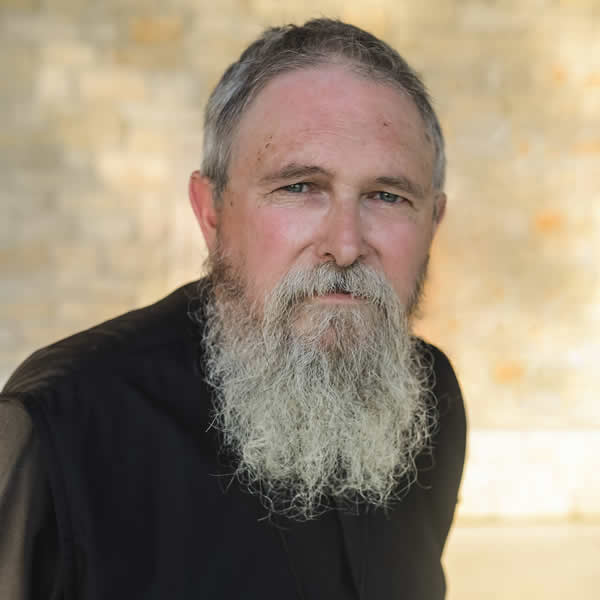
Fr. Stephen is a retired Archpriest of the Orthodox Church in America. He is also author of Everywhere Present: Christianity in a One-Storey Universe, and Face to Face: Knowing God Beyond Our Shame, as well as the Glory to God podcast series on Ancient Faith Radio.


Posted

in

by

Comments

121 responses to “The Secular Mind Versus the Whole Heart”

  1. Anna Avatar
    Anna

    Father, boy did I need to read this today. I’m forever lost in my thoughts and thus not present in what I’m doing. Thank you, Anna.

  2. Ann Dibble Avatar
    Ann Dibble

    Yahoo!

  3. Matthew Avatar
    Matthew

    How can one have a disembodied experience of an intensely embodied reality?

  4. Paul Hughes Avatar

    Knowledge is interactive relationship, not intellectual apprehension. Once I got this, all the ‘knowing’ in scripture — we know God and we know our spouse? we know a meal? — and elsewhere fell into place. Well … of course there’s still work needing doing [knowing work, not thinking work], but I cd see what it looks like.

    Interestingly, that first step involves the mind [both thoughts and feelings] as also our brain [which we think ‘mind’ is / means] of course. But then we err, mistaking that for the whole thing.

    A comment here asks how to have a disembodied experience of embodied reality and this seems fairly simple since it’s the question in reverse so to speak, or as we consider the ones we do have: a really good meal, sex with our spouse, or ‘getting’ something about God [in Holy Communion, say] or others [in conversation, e.g.].

  5. Aidan Avatar
    Aidan

    First time commenting here, but I always benefit from your articles, Father. Quick question, given the “when two or three are gathered together” verse, wouldn’t it be beneficial to have multiple people praying for a certain prayer request? Can you elaborate a little more on that?

  6. Dino Avatar
    Dino

    It’s crazy how abstraction is almost the opposite to communion/union, it’s thinking divides…

  7. Fr. Stephen Avatar

    Aidan,
    I think your question makes a good point that I overlooked. Having others pray with us often strengthens us and draws us into communion – it becomes a shared effort of prayer. I will probably amend the article to reflect this. There’s a distinction between our proper desire for strength and communion in our prayers and the almost manic drive to get as many people as possible praying about something – with no real communion taking place – just numbers.

  8. Matthew Avatar
    Matthew

    There is a tree.
    I think about the tree. From a nominalist perspective, what do my thoughts about the tree say about the material existence of the tree?

  9. Ivona Avatar
    Ivona

    Again, “food” for the body and mind — thank you, Father. If you could post this on X/Twitter so we can share it, that would be great. Every time I read your reflections, I think about how wonderful it would be for others who would appreciate them, but aren’t subscribed to your blog, to have the chance to read them. Thank you!

  10. Margaret Avatar
    Margaret

    Dear Fr. Stephen please let us know if you amend your article — I’ve read it twice and do not see any change. I want to share it with my husband after you amend, if you decide to do so, thank you! God bless you and all you love always!

  11. Fr. Stephen Avatar

    Margaret,
    It’s amended. Hope it’s an improvement.

  12. Fr. Stephen Avatar

    Ivona,
    I’ve now posted it to X. I’ll try to do that regularly.

  13. Owen Kelly Avatar
    Owen Kelly

    What is the place of attention, particularly within the life of prayer?

    I understand attention to be basically synonymous with love. For instance, if I give my wife my undivided attention, free from distraction, then we are united in love in that moment. Conversely, if I’m thinking about other things, that is, giving my attention to my thoughts about other things, then a wall of separation is built between us; I am not truly present with her, no matter my bodily proximity.

    I believe this is why clergy say, Let us attend! in the church. Attention is the basis of true knowledge. In the case of the sandwich, I don’t really “know” the food I am eating if I am scrolling the Internet during my lunch. Another example is texting and driving. In the same way, the desert fathers (especially) tell us to lay aside our thoughts in prayer. Pure attention = pure prayer = pure love.

    “Attending to God with all the heart, mind, soul and strength” seems to be another way to state the greatest commandment. And the practice of laying aside thoughts in prayer (i.e. meditation) would seem to be paramount in fulfilling this command, indeed transforming us to fulfill it in all of our material life.

  14. Fr. Stephen Avatar

    Owen,
    I agree that “love” is a proper and helpful way to understand “attention.” For one, love is not a thought. It is an “adherence.” There are any number of physical actions that help us with this: prostrations, crossing ourselves (with attentiveness), looking at an icon, etc. Again, giving alms helps and is important.

    I’m a bit dubious about the pure attention=pure love. It has the potential of reducing everything to a thought and I find that problematic.

    It is a reason that I say, “Do the next good thing.” That’s very different than thinking about the next good thing.

  15. Owen Kelly Avatar
    Owen Kelly

    Thanks for the feedback, Father. It’s helpful.

  16. Mark Spurlock Avatar
    Mark Spurlock

    Owen,

    I’ll add that one of the most effective attention grabbers is physical pain–so much so, that pain can make it almost impossible to focus on anything else. Hence, whereas attention might be a necessary quality of love, the converse is not true (meaning, therefore, the relationship is not an identity.

  17. Matthew Avatar
    Matthew

    What makes the material world real and not simply imagined?

  18. Sharon (Australia) Avatar
    Sharon (Australia)

    Father Stephen, I don’t have a question, I just want to thank you for such enlightening words (as always!). As I was reading, I remembered what I felt when I was young in a Baptist church and trying to think spiritual thoughts and feel “spiritual” at the time of “The Lords Supper” and how empty and frustrated I ended up feeling and how annoyed I became at that form of worship. It was filled with ideas/thoughts exactly as you describe. For me, this “doing the next right thing” instead of being in my head is a daily re-learning. Thank you for your encouragement.

  19. Fr. Stephen Avatar

    Matthew,
    I’m not a philosopher, so the philosophical case for proving that there’s a world outside our head is beyond my competency. However, everytime I bump my head, feel gravity, share experience with others. If the world outside our head is imaginary, that would say that everyone outside our head is imaginary as well. So, just being a normal kind of guy, I trust that my experience of the world outside my mind is outside and real.

  20. Fr. Stephen Avatar

    Sharon,
    May God bless your daily learning!

  21. Margaret Sarah Avatar
    Margaret Sarah

    Matthew,

    Perhaps you are addressing Father, but I’m jumping in – forgive me 🙂

    How could we ever know? One thing that I feel pretty certain of is that whoever is doing the imagining surely isn’t me. The material world, by all appearances and experience, is “other”, and the very apparatus by which I apprehend and experience its otherness exists in the same mode. If all exists from the mind of God, still it apparently exists in a way that is utterly different than the way that things exist in my mind.

    My brain likes to get anxious about these things, but I’ve come to appreciate a little “epistemological idealism”. Apparently Lewis went from popular realism, to philosophical idealism, to pantheism on his journey to Christianity. I think it can help to shake us out of a comfortable notion that “stuff exists” and gets us to re-examine why we assume it exists. We are utterly dependent on the experience of “stuff” in order to know that the “stuff” exists – we can’t get behind or beyond the experience to know what it “really is”. Knowledge is participatory and gratuitous.

    Sometimes I think that if people re-examined why and how they believe that the material world exists, belief in God would be a lot more reasonable. There is a sort of qualitative leap of faith in believing in the material world.

    I’m curious to know what you mean by “real”, though, as opposed to “simply imagined”. Maybe I’m misunderstanding the question!

  22. Owen Kelly Avatar
    Owen Kelly

    Mark,
    Thanks for the reply. Just to clarify what I mean, I would say that love is not just a feeling we have; it is a specific quality of attention we give. Maybe there is not an exact identity between love and attention. But deep attentiveness to another person or some aspect of nature does makes us forget ourselves. You stop thinking about how you feel or what you want – even if momentarily – and truly acknowledge the existence of the other, without inserting yourself.

    “To pay attention, this is our endless and proper work.” —Mary Oliver

  23. Fr. Stephen Avatar

    Margaret Sarah, Matthew,
    I’ve been around, here and there, though mostly in Christian directions. For whatever reason, I’ve never been tempted with idealism and such. I’m a pretty concrete guy, raised by farmers and mechanics – people who got dirty for a living. Interesting.

  24. Margaret Sarah Avatar
    Margaret Sarah

    Father,

    I’m actually a farmer myself. It’s likely that I’ve gone on a few too many laps around a bumpy field on a tractor, and it’s rattled my sanity.

    However, I’m always interested to listen to the way that farmers around me approach life – I do think that farming forces experience and participation to be primary, not the thing-in-itself. Perhaps large scale industrial agriculture asks animals, plants, and land to act like numbers and “things”, but to do so wastes a lot of energy and effort. It’s better to let things be.

    Is the sun a ball of plasma and nuclear fusion, or is it the source of the warmth and strength we see and live by? Perhaps the former is “real” in some sense, but my vote goes to the latter as being far more real.

    Now, mechanics I can see being a little more mechanical in their approach.

  25. Michael Bauman Avatar
    Michael Bauman

    Joy is how God communicate’s to me even in the midst of personal darkness. It is not an emotion but a personal presence

  26. Matthew Avatar
    Matthew

    Thanks so much Fr. Stephen and Margaret Sarah.

    I´m not a philosopher either, though I sometimes think I am 🙂

    I´m still attempting to wrap my head around nominalism and how that differs from the ancient understanding of interaction with the material world as an act of communion.

    The sandwich example helped a lot I think. I can look at a sandwich. I can hold a sandwich. I can smell a sandwich … but until I actually taste the sandwich my only understanding of it is in my mind. I suppose communal relationship is something like this … especially in the Eucharist. Thoughts about Jesus are simply thoughts, but actually consuming Jesus is something altogether different.

    Margaret Sarah:

    I´m not sure either what I meant by “real” as opposed to “simply imagined”. My interest is simply to better understand the material realm in light of my Christian faith.

  27. Owen Kelly Avatar
    Owen Kelly

    Matthew,
    Actually, even when you taste the sandwich, it is only in the scope of “mind” that you experience it. Indeed, every experience we have ever had and ever will have is had within consciousness (“mind”). It’s inescapable; just try to have an experience outside of consciousness; it’s impossible. This is why metaphysical idealism makes the most sense to me. Mind does not derive from matter, but rather matter derives from Mind. “In him we live and move and have our being .” What is matter even? Nobody knows. But I like to think it is a simply phase of mind, a manifestation of and within the Mind of God.

  28. Matthew Avatar
    Matthew

    Would you say the same thing about the Eucharist, Owen — that the experience is only in the scope of the mind?

    I think too much. For many years I studied theology like a nerd. I was also in heavily charismatic circles where so much was emotion (though maybe works of the Holy Spirit??). What I am looking for is a real experience of God that is not rational and academic but that is also not overly emotional. I have no idea if such an experience can actually be had (Fr. Thomas Keating speaks of centering prayer being beyond experience … but what does that really mean??) though I continue to take the Eucharist which I believe has had a positive effect on my life.

  29. Fr. Stephen Avatar

    Owen,
    I think that it’s quite possible to say too much in this direction (viz. consciousness). My body “knows” many things that are not conscious. They’re so real that one or two of them will eventually kill me. I do see that going too far in the direction of consciousness (“mind”) easily takes you into a sort of solipcism. Following the lead of the Fathers and the practice of the faith, I find it good to be grounded in the body and in the world around me (whether conscious or not) and to avoid becoming too abstract. As to expressions such as the “Mind of God” – I am apophatic. I cannot presume to speak of what I do not know.

  30. Margaret Sarah Avatar
    Margaret Sarah

    Owen,
    Could we amend Matthew’s sandwich example to say that we do not fully “know the sandwich” until we “live the sandwich?” I think that’s what I’m trying to say about experience and participation being primary – not the thing going on in our mind or our merely our observations of otherness. I share Father’s concern in leaving the reality of embodiment. I suspect that once we set up mind as something over and above matter, we create a dichotomy that we can never fully understand as bodied creatures.

  31. Fr. Stephen Avatar

    Margaret,
    I really like “live the sandwich.” I think I want a t-shirt that says that!

    But, further, I believe it’s possible to “read too much” (or spend too much time on our screens). It warps our sense of reality – giving primacy to what’s going on in our head. For roughly 8 hours a day, we sleep. Which is to say that we spend about a third of our lives unconscious (on some level). Also, there is a tendency in modern culture to devalue the “non-thinkers” – babies, dementia patients, etc. Consciousness is a thing – an artifact of our existence. It is not, however, the whole of our existence.

    At age 58, I had a sort of crisis in which I got some very heavy-level treatment for an anxiety/panic disorder. A very healthy part of that treatment (which was quite successful – I’ve not had a panic attack since then) was learning to pay much better attention to my body – to “get back into” my body.

    Our abstractions are, to my mind, making true ever more difficult. I recommend Kingsnorth’s Against the Machine.

  32. Owen Kelly Avatar
    Owen Kelly

    Fr. Stephen et al,
    Thank you all for the thoughtful responses. The question about the Eucharist and the comment regarding “body knowledge” both exemplify, I think, a common assumption that whatever exists in consciousness is not real (and not deadly!). But metaphysical idealism argues that whatever is real, everything that exists, exists in consciousness.

    Take the example of the body’s knowledge. I completely agree that it truly exists. But not outside of consciousness. We may intuit or “feel” that our body knows things which our rational mind does not. Or, medical experts may inform us. Either way, we only know about the body’s knowledge in consciousness. A similar argument applies to the Eucharist. We only know/experience ourselves, the reality of our embodiment, other bodies and the entire world – every single thing – in consciousness. Forgive my bluntness, but there never has been nor ever will be a counterexample to this. Look carefully at your experience and see if it is true.

    The failure of solipsism results from the conclusion that consciousness is restricted to the diameter of my skull. But matter (or, the brain) does not produce mind in this understanding, as it does in the materialist worldview; rather mind has ontological priority over matter. That is, consciousness comes “first” in the order of being, and all things exist in consciousness. To me, this is just another way of saying, “He is before all things, and in Him all things hold together” (Col 1:17).

  33. Andrew Avatar
    Andrew

    Thank for you this Father. 12 years in the Church and I still so often feel like I’ve barely begun to begin! So much baggage, inherited and unevaluated presuppositions cloud my perspective on things. But, if I am understanding you correctly – the solution is not more/better thinking per se, it’s embodied action. Your comment about our misapprehension of what Christ is actually saying about our treasure and our hearts and relationship there is much appreciated. Also, your comments about learning to love the poor brought to mind a quote from St. Ambrose of Optina that seems to perfectly align with the drive point of your post:

    “If you find that there is no love in you, but you want to have it, then do deeds of love, even though you do them without love in the beginning. The Lord will see your desire and striving and will put love in your heart.”

  34. Fr. Stephen Avatar

    Owen,
    Thank you for sharing your thoughts on metaphysical idealism. It is not the grammar of the Orthodox faith. The Word became flesh is both a dogmatic statement, as well as one that carries some metaphysical implications. But, it’s not something that I wish to argue – as I said earlier – I’m not a philosopher. But you have also noted that the boundaries of Orthodoxy are not something you necessarily accept.

  35. Fr. Stephen Avatar

    Andrew,
    Yes. Great quote as well!

  36. Fr. Stephen Avatar

    Michael,
    May God preserve you in His joy!!!

  37. Margaret Avatar
    Margaret

    So good to see this comment from you, Michael Bauman, thank you:
    “Joy is how God communicate’s to me even in the midst of personal darkness. It is not an emotion but a personal presence”

  38. Owen Kelly Avatar
    Owen Kelly

    Thank you for allowing me to share an alternative perspective, Father. Your hospitality means a lot.

  39. Margaret Sarah Avatar
    Margaret Sarah

    Owen,
    Bearing in mind my vast ignorance of philosophy, I’m sympathetic to idealism – its reasoning is so perfectly circular and tidy, and intellectually satisfying. You say “We only know about the body’s knowledge in consciousness”, and it makes a lot of sense. However, that assertion does assume that knowledge=consciousness=experience. It’s like saying “we are only conscious of our subconsciousness when we are conscious of it”.

    I was reflecting your comment today while working, and thought of two passages:“Forgive them, for they know not what they do” as well as “everyone who loves knows God”. I may be totally off on my interpretation, but the first seems to be referencing knowledge as awareness, and the second seems to be referencing knowledge as communion and participation.

    We could say that stuff exists, and we are aware of it. Or we could say that we are aware of stuff, and therefore must assume that awareness is primary. Either assumption seems to blunt the possibility of true knowledge in communion. I’m holding out hope for a knowledge that is more than awareness, consciousness, or passive experience. That leaves me in the absurd position of rejecting both assumptions. We’ll see where it leads! 🙂

    I’m glad to hear your thoughts, though. It’s comforting to know that people can have fundamentally different views of this world we live in – and still we all can make sufficient sense to make a sandwich.

  40. Matthew Avatar
    Matthew

    However I might experience something … in the mind, in the subconscious, in both places, wherever – I simply hope I can experience God in a new way, especially beyond the intellectual and the rational. I would like to share the following quote from May Weber:

    “The fate of our times is characterized by rationalization and intellectualization and, above all, by the disenchantment of the world.”

  41. Matthew Avatar
    Matthew

    Max Weber

  42. Michael Bauman Avatar
    Michael Bauman

    It is God’s presence/Joy that brings the real

  43. Owen Kelly Avatar
    Owen Kelly

    Margaret Sarah,
    Thank you for the kind words. I am glad to read your thoughts as well. You seem to have a philosophical bent to your thinking. Greetings! 🤓 If you haven’t already, you may find it useful to do an AI search to compare the three major ontologies: materialism, substance dualism, and idealism. In the main, Christians have traditionally held to some form of substance dualism. But there have been exceptions. Most notably for me is Saint Gregory of Nyssa, an idealist before it ever became an -ism.

    I think I know what you mean about knowledge as participation and communion, and I would agree. When Adam united with Eve to become one flesh, he “knew” her. Thus, “everyone who loves knows God”: i.e. they demonstrate their intrinsic union with God by extending love to all God’s creatures. People do the opposite when they are ignorant of their fundamental unity with God, as in your other verse: “forgive them, for they know not what they do.” Their deeds betray a certain lack of conscious awareness that the ground of our being is God, being nailed to the cross by their very own hands.

    My own view of consciousness is that there are levels; some creatures are more conscious, others less. What we call the rational mind can be of help, but it often gets in the way. I would say that it’s a good servant but a terrible master. Learning to detach from the constant stream of thoughts in our mind is key, I believe. But the majority of this thinking often has to do with ourself, and this what is most imprisoning. Those constant self-referential thoughts – I want, I like, I dislike, etc. – form an illusory wall of separation between us and the real world. We do need an ego, but it must be reborn in Christ to be healthy, so that we may be aware, truly conscious of our fundamental unity with God and all that is in Him.

  44. Fr. Stephen Avatar

    Owen,
    When something fails to be adopted into the mainstream of Orthodox understanding, I take it as an important signal that a boundary has been established that is worth noting. Metaphysical idealism is an example. Errors that do not appear immediately (given our own limitations) appear over time. It is the advantage of the Tradition – it points to what works (at the very least).

    I write and struggle to live within the boundaries of Orthodox tradition. It produces saints. When I stated earlier that metaphysical idealism is not consistent with Orthodox grammar – I meant to be raising a flag. I would ask that we not go further with this conversation topic. It can happen elsewhere if a reader wants to share an email address and carry that on off-platform.

    I don’t mean to run an air-tight ship – but there are a lot of inquiring readers for whom I bear a responsibility. Please respect this boundary.

    Forgive me.

  45. Owen Kelly Avatar
    Owen Kelly

    Thank you, Father. I understand.

    rokelly at rocketmail dot com

  46. Dee of Sts Herman and Olga Avatar
    Dee of Sts Herman and Olga

    Amen Michael, beloved brother.

  47. Dee of Sts Herman and Olga Avatar
    Dee of Sts Herman and Olga

    Father,
    Is Being as Communion ( J. Zizioulas) a helpful book to read? Who might benefit and who might not so much?

  48. Fr. Stephen Avatar

    Dee,
    It’s a good book – though not an easy read. It’s particularly good for thinking about communion as such.

  49. Dee of Sts Herman and Olga Avatar
    Dee of Sts Herman and Olga

    Thank you, Father!

  50. Jenny Avatar
    Jenny

    Father (And Dee!)

    I am getting your book, Face to Face, for my birthday and I can get one more. Which one would it be? I have saved Writing from the Philokalia: The Prayer of the Heart saved as an option, but I’ve also read samples of books about Elder Sophrany’s teaching, for example, Remember Your First Love.

    Which would you recommend I purchase? I can’t decide because I don’t know enough about them.

  51. Simon Avatar
    Simon

    Dee,

    I’ve read it—many parts of it several times. It completely changed how I think about the fundamental nature of hypostasis and its relation to Being.

    In the West, we usually imagine the universe and matter as necessary antecedents to the existence of persons: space → stuff → persons. Reality becomes a stage, the galaxies and planets the props, and finally—enter the players.

    Being as Communion reverses that perspective. To exist—to truly be—means to exist as hypostasis, as person. BUT, a hypostasis never exists in isolation—like a Cartesian ghost; it exists only in relation, only in communion.

    In that sense, hypostatic ontology—as Zizioulas frames is—is fundamentally Eucharistic: being itself is gift, participation, and self-offering. Existence is not something we possess—it’s something we receive and share.

    So, at its deepest level, Being is both Eucharistic and hypostatic—to be is to give and to be given.

  52. Fr. Stephen Avatar

    Jenny,
    Of Fr. Zachariah’s books, my favorite is The Enlargement of the Heart.

  53. Jenny Avatar
    Jenny

    Thank you, Father! That book was also one of the samples I had saved. I have purchased it.

  54. Margaret Sarah Avatar
    Margaret Sarah

    Micheal, Matthew, Owen, et al,
    Thank you for the reminder: joy, and the hope for joy. While considering this conversation, the two words that kept coming back to mind were “mystery” and “wonder”.

    Today I finished Andrew Louth’s essay, Discerning the Mystery: “philosophy, in its traditional sense begins in wonder, as man, impelled by his love for wisdom, penetrates more and more deeply into the mystery of reality. […] to think of God is not to solve the problem of existence (as Heidegger thought it did when he maintained that theism was a way of evading the ultimate metaphysical question – Why is there anything and not rather nothing? – by giving a simple ‘answer’), but to hold us before the mystery of being.”

    I appreciate all of you, your thoughtfulness and sincerity. Thank you, Father Stephen, for holding this space!

  55. Sharon Ah Sam Avatar
    Sharon Ah Sam

    Father,
    Right off topic but since there’s a few book recommendations being asked about.
    Can you recommend a helpful Orthodox book on fasting please? I’m completely a novice. Thanks

  56. Dee of Sts Herman and Olga Avatar
    Dee of Sts Herman and Olga

    Thanks Simon! I’ve started to read it, but it is definitely not nighttime reading for me. I appreciate your summary.

  57. Matthew Avatar
    Matthew

    Thanks so much Margaret Sarah.

    I too want to be held before the mystery of Being.

  58. Jenny Avatar
    Jenny

    Father,

    If we belong to Christ, aren’t we always being held before the mystery of Being? God has made Himself known through our Lord Jesus Christ. In this way, hasn’t the mystery been made known to us?

    We can know Him specifically and personally through His Gospels, through Communion, through faith that participates with the Truth as revealed in Jesus Christ and preserved in His Church.

    Personally and truly, I have always been very afraid of participating in some kind of spiritual mystery. I have only ever wanted to know and worship the Lord Jesus Christ. I don’t even want to begin to contemplate anything else.

    That is another reason why I read the Gospels over and over again- so I know how He speaks, what He says, what He praises, what He rebukes. The angels told the watching disciples that this same Jesus Who was taken up will return to them.

    One of the things that worries me always is allowing a desire for spiritual experiences to draw me away from the good will of my Lord. It’s not possible to force His hand. But there are other things, things with which I want nothing to do, that might be willing to answer if I became restless and determined in receiving something the Lord had not given. God forbid!

    Longing for the Lord is a gift- eros, in Orthodoxy. But it must be crucified to be a path to the Lord, don’t you think, Father? That is, one longs to be with the Lord. But if He says, “not now, or “not in this way,” then I lay down my desire and do His will, even if that is something I must live out day by day- that is, day by day, accepting His answer and accepting His will.

    Besides this, there are powerful truths which are deeply satisfying for any heart longing for the true presence of our Lord Jesus Christ. The Liturgy and the Eucharist are the most central and immediate.

    But the other is always to know that we are with Him now and He with us, moment by moment in our daily lives. One can give thanks for all things, to do everything with the Lord Jesus and for Him. And when we forget, which we will do, we confess, repent and get back up again.

    This does not require emotion or philosophy or mystery. It just requires a simple faith that participates with the Truth as we live it in our lives in the light of our Lord Jesus Christ.

  59. Matthew Avatar
    Matthew

    Thanks so much Jenny! The experience I am looking for may very well be misguided.

  60. Jenny Avatar
    Jenny

    Matthew,

    I so empathize with you, and if you will forgive me for saying so, your spirit is so childlike in your wanting answers and the Lord that I worried for you the same things I have worried about for myself! Even if we have to wait the whole of our mortal life, in the end, we will see Him face to face. May God give us grace. He is a very good Shepherd and takes good care of us.

  61. Simon Avatar
    Simon

    Owen,

    I’m not sure I completely understand the objection to metaphysical idealism. Of course, there are plenty of things that might be true which the Church hasn’t formally adopted, and I get that Father Stephen has to keep the conversation grounded. With such a wide readership—people at all different stages in life and Orthodoxy—it’s important that the threads don’t drift too far into speculation. And when Father Stephen feels a discussion has gone far enough, he draws a line. That’s fair.

    Still, it’s worth noting that the very language of the Trinity grew out of a philosophical world shaped by Plotinus’ Enneads, with its triad of the One, the Intellect (Nous), and the Soul (Psyche). The Orthodox understanding of being and knowledge obviously isn’t Neoplatonic, but some of that metaphysical vocabulary seems baked into the tradition.

    I’ve always thought that if we can read Origen, Augustine, and the Cappadocians—all of whom operated within some form of idealist framework—and still find their work foundational, then maybe metaphysical idealism isn’t so foreign to the grammar of Orthodoxy after all.

  62. Matthew Avatar
    Matthew

    Thanks Jenny

  63. Matthew Avatar
    Matthew

    Yes … a childlike spirit which loves God and wants answers and experience.

    Maybe I have never really grown up.

  64. Jenny Avatar
    Jenny

    Matthew,

    The Lord has a lot of beautiful things to say about the childlike, the one I love the most being not to hinder them, but to let them come to Him. I love this saying of His very much, because I myself can’t presume to come to Him because of virtue or wisdom or understanding or any other thing that I do not presume to think I have. But, a childlike heart can always come close to Him with confidence. I am myself very grateful for this grace on His part. And He watches over those hearts carefully and lovingly.

  65. Matthew Avatar
    Matthew

    Thank you Jenny.

  66. Margaret Sarah Avatar
    Margaret Sarah

    Jenny,
    I was hoping that Father would respond, but I thought you may want to read the rest of the passage from Discerning the Mystery. It continues:

    “Christians do not simply believe in the mystery of God, but the mystery of God in Christ: they believe that in the life and death of a man called Jesus of Nazareth, God lived among us a human life. The mystery of God is not simply the problem of transcendence, nor is it even simply the mystery of immanence- the mystery of intimations of the beyond in the here and now; rather the mystery of God is disclosed in a human life that was lived in history. The life and death and resurrection of Jesus of Nazareth is the place where we meet with the mystery of God. ‘Immensity cloister’d in thy dear womb’ – the mystery of the ultimate is met with in the particular: (…) present actively, seeking us out, making itself known to us. Here, more than anywhere else, we realize the true character of mystery: mystery not just as the focus for our questioning and investigating, but mystery as that which questions us, which calls us to account.”

    In my concern for brevity, I quoted only the first part of the paragraph which referenced the “wonder” and “mystery of being”. Please forgive me if the omission caused confusion or anxiety!

    Have you read Father’s post “The Mystery of ‘Mystery’”? We often think of mystery as “unknowable” or, worse, “a puzzle”. I don’t think it is used like that in Orthodoxy.

    https://glory2godforallthings.com/2021/03/01/the-mystery-of-mystery-2/

  67. Jenny Avatar
    Jenny

    Thank you, Margaret Sarah! That context does help me to discern that particular mystery. 🙂

  68. Fr. Stephen Avatar

    Simon,
    Sorry to be delayed in answering your question/observation. I’ve been out of town and on the road all day.

    It’s quite true that the language used in the Trinity, as well as a number of other significant doctrines, was drawn out of the vocabulary of neo-platonism. However, equally significant, is that terms were often re-defined and re-purposed. What is clear is that Orthodox Christian doctrine is not a Christianized Neo-Platonism (though there are some in the West who would use that as a cudgel against Orthodoxy once-upon-a-time). So, that vocabulary does not give the metaphysical world of Neo-Platonism an imprimatur.

    As far as the grammar of Orthodoxy in question – the distinction between matter and spirit, of thought and the material world, is inherent in the teaching of the Church. The notion of everything being a form of consciousness, regardless of how interesting it might be, is simply not part of received Orthodox teaching.

    Now, if our comments section of the blog were a sort of graduate-level seminar in which anything and everything was on the table for exploration, metaphysical idealism would be an interesting discussion. But, given the purpose of the blog, it’s simply not suitable – and, in my own thinking, potentially confusing and misleading for some.

    So, that’s my thinking. Some of the “terms” of metaphysical idealism might be found within Orthodoxy – but that’s not at all the same thing as its grammar. The grammar has to do with its most fundamental rules of speech (not just vocabulary). But, also, “consciousness” is simply not a consideration in Orthodox speech. And even when we speak of “mind” – there’s a much broader vocabulary (nous, logos, etc.). Not even “logos” can be translated as “mind.”

    But, again, that’s how I thinking about this.

  69. Fr. Stephen Avatar

    Jenny,
    Sorry to be so slow in responding…I’ve been out of town on a speaking engagement and just got back home…

    I think your instincts are spot-on. Orthodoxy uses the word “mystery” (a New Testament word) almost in a sense that is similar to “gospel.” But it has a sense about it that suggests levels, and some things that are “hidden” that are to be made “known.” I believe that hiddenness is woven throughout the gospels. For example, you rightly see Christ as the point of the gospels. But, if they were merely read “historically,” without longing to know Christ Himself – then the “mystery” would remain hidden. Christ Himself is the “mystery” within the gospel.

    And, when we see and encounter Him there, it is also possible to see and encounter Him elsewhere as well. But, I think all of this happens in the context of the Church – there is no “private” Christianity, no “private” Jesus. And so, what we encounter and experience we also share with His Body, the Church, and hear how the mystery has been and is being perceived by our brothers and sisters in Christ, including those who have gone before us.

    The quote that Margaret Sarah shared is excellent as well. That’s one of my favorite articles (Andrew Louth’s).

  70. Owen Kelly Avatar
    Owen Kelly

    Simon,
    Thanks for following up. I won’t say much here; maybe we can discuss elsewhere. I’ll just highlight one thing, that locating Orthodoxy within one of the major (western) ontologies is made more difficult by the fact that the primary divide is not so much between matter and mind/spirit but between created and uncreated. Orthodoxy normally sees an infinite ontological abyss between these two, a fundamental, absolute distinction. Historically, this distinction was upheld because of the Incarnation, the Resurrection and the Ascension.

    For Gregory of Nyssa, matter was a collection of God’s thoughts, a “bundle of ideas” (qualities like shape, color, weight) in the Divine mind. Maximus the Confessor adopted Gregory’s structure, but updated the specific location of the ideas, in the logoi. For Maximus, a tree is not just a bundle of “green + tall + wood.” It is a concrete expression of a specific will (logos) of God. And because the logoi are eternally held within the Second Person of the Trinity, the physical world is not just a “mental projection” but a Divine Liturgy.

    Thus, while Gregory sometimes spoke of matter as if it might just evaporate back into God, Maximus was fiercely protective of the permanent reality of the physical body. If matter was just a temporary bundle of ideas, then perhaps Jesus sheds his body after the Ascension. In this way, it seems to me, Maximus takes up Gregory’s idealism and gives it a more permanent solidity. Since the Word became flesh, the latter is now permanent category in the Trinity.

  71. Fr. Stephen Avatar

    Owen,
    Thank you.

  72. Owen Kelly Avatar
    Owen Kelly

    Father Stephen,
    You’re welcome. And thank you again for hosting me here at your blog. I do not intend to be a perpetual gadfly. (It didn’t end well for Socrates.) Please forgive any offense I have caused.

  73. Fr. Stephen Avatar

    Owen,
    No offense. I would be glad to continue the conversation off-blog (email hidden; JavaScript is required). I have questions and observations.

  74. Byron Avatar
    Byron

    When Jesus resurrected, He revealed Himself to the disciples. He appeared among them, ate with them, walked with them, and talked with them (although they did not always recognize Him) in His glorified body. This is the same body that is “everywhere present, filling all things”, sustaining all things, recreating (or, if you prefer, “renewing” or “transforming”) all things, and revealing Himself in all things. This is what is sometimes referred to as the “inbreaking of the Kingdom into the world”; that the glorified Christ reveals Himself throughout His creation. As I understand it, this is the difference between Idea and Incarnation. This is why we can say with confidence, beyond just quoting a Bible verse, that the Eucharist is indeed the Body and Blood of Jesus–not just a “remembering” while eating a cracker and grape juice. The practices of the Church (fasting, almsgiving, confession, etc.) are to transform us so that we are able to see (like Motovilov seeing Saint Seraphim and the Uncreated Light) Christ in all things.

    This is simplistic, I know. But is it correct, Father? Or am I running off the rails a bit here?

  75. Fr. Stephen Avatar

    Byron,
    On the rails. In some manner, the gospel needs to be simple enough to preach to peasants. I working on my inner peasant lately. Thanks!

  76. Dee of Sts Herman and Olga Avatar
    Dee of Sts Herman and Olga

    Byron,
    Thank you so much for your comment. I will not preempt Father, but as far as I remember what I was taught, you are correct.

    Father your thoughts and corrections?

  77. Dee of Sts Herman and Okga Avatar
    Dee of Sts Herman and Okga

    Oops you answered already! Thank you Father!

    From another peasant!!

  78. Fr. Stephen Avatar

    Dee, Byron,
    It’s good by me. I just finished reading a couple of article on the “Covidians” – a nickname for those who seem stuck in the Covid moment, believing with all their heart that we’re still in it, and raging that people aren’t listening and behaving accordingly. It’s just one of many strange features we have as a lingering social damage of that strange period. Beneath much of it is a result of a world that moved “online,” that made the internet and its unceasing thoughts, the “safe place” of our planet.

    I am convinced that we’ve become far too abstracted in our lives and that the abstraction of this culture we have tragic consequences. Perhaps the most essential inheritance of our traditioned existence is our embodiment and life among the things that surround us. That Christ commanded us to eat and to drink – and that this utterly essential embodied experience is described as “for the remembrance of Me…” carries a world of understanding within it.

    On any given Sunday, as I stand at the altar, my thoughts might be deeply centered in what lies before me. It might also be wandering in the unending maze of ADHD land. What I take for granted, and live by, is that the act of eating and drinking, despite my thoughts – not because of them – remembers the Risen Christ – not as a thought, nor even as a consciousness – but that “He dwells in me and I in Him.”

    Memorialism (we remember Christ in the Eucharist but it’s not His Body and Blood) is a heresy. I do not want to live my life in the manner of memorialism, but in the manner of eating and drinking God. It’s possible, of course, to think about all this. But what takes priority is that we do this.

  79. Byron Avatar
    Byron

    Thank you Father and Dee! I tend to think in simplistic terms as I worked for a very long time with children. Breaking things down for them is a long-standing practice in my life.

    Father, I very much think the same things concerning abstraction and generalities in our lives.

  80. Matthew Avatar
    Matthew

    I am a peasant man living in a remote village somewhere in the world.

    What is the Gospel I humbly ask?

  81. Simon Avatar
    Simon

    Owen,

    I sometimes wonder to what extent people—two thousand years ago, or even two hundred—understood that our physical bodies are made of recycled parts. There’s no telling where our atoms have been, what they once belonged to, or where they’ll go next. The idea that this exact physical body will be resurrected seems problematic when we’re constantly shuffling molecules in and out of ourselves. The notion of the body as a fixed, discrete entity is misleading—when I die, parts of me may end up scattered across the earth.

    For this and other reasons, I’ve always felt there are deep flaws in dualism. My knee-jerk association is with Descartes, though the problem obviously runs deeper.

    Of course, many things could be true that we may never see or even think to ask about. The Church, for its part, guards certain truths carefully. Once a council has spoken, the matter tends to be settled. So what, exactly, is being protected? From what I can tell, it’s identity—and that’s no small thing.

    Guardrails are interesting in that way. Ideological or philosophical truth isn’t the same as hypostatic truth. The ascetic and hesychastic disciplines seem designed to cultivate and protect that hypostatic truth, which is non-ideological. They also preserve Eucharistic truth, which is likewise hypostatic. In that sense, the Church’s guardrails serve a vital purpose: the preservation of being itself.

    My own view is this: the Truth doesn’t teach everything that can be known—it teaches what protects hypostatic truth, the truth of God and man, as man exists as an expression of God’s will.

  82. Fr. Stephen Avatar

    Matthew,
    That the God who made all things has become flesh, has become a man, that we might know God. This same man died for our sins, becoming all that we are that we might become what He is. God has reconciled us to Himself in Him.

    Or something like that.

    You’re making me work hard today.

  83. Jenny Avatar
    Jenny

    Father,

    I hope your talk and trip went well! I was making whole roast chicken with stuffing and gravy, which is something I’ve been trying to learn. I think I’m getting there, but I soaked the gravy by over basting the bird. Oh well, next time. 🙂

    When I was first learning to be the Lord’s disciple, I did have a secret hope that He might teach me everything Himself, but of course He did not. He did the opposite, by again and again showing me that the answers I wanted to know about Him were to be found in the teaching of His other disciples, almost all of whom had been following Him much longer than I had, and who knew much more about Him.

    You are one of those people. I began to read your blog in those first few years- somewhere between 2011 and 2013. I bought a copy of the Divine Liturgy at that time, but it was opaque to me. Naturally I could not understand it by reading it alone, as it is not meant to be understood or lived that way.

    I was also trying to learn from persons like Brother Lawrence, Amy Carmichael, C.S. Lewis, St John of the Cross, St Theresa of Avila and St. Therese of Lisieux’s The Little Way.

    I was also following Richard Rohr. I had purchased his book, “Things Hidden: Scripture as Spirituality.” But after a while, I began to be uneasy whenever he spoke of the universal Christ. I myself did not want to become untethered to the Lord Jesus and I felt that I would be if I kept following a path towards a kind of universal spirituality.

    At the same time, my father was very active on a Facebook group called Free Believers. It was full of interesting, intellectual persons who were creative, eclectic and fascinating. I was drawn to them.

    My father’s approval was very important to me at the time. I dreaded conflict, and there was never conflict among these persons, because they could agree with everything if it was about Love or Light. For them, nothing could be known for certain, everything was a beautiful mystery of Love.

    I’m a creative person myself, and I longed to create beautiful pictures or poems of short writings that would be full of the kind of spirituality that these persons, including my father, so valued and were sharing among themselves.

    But I knew the Person I was following was the Lord Jesus Christ. He was specific. His words were specific. To use His name in that group would be an offense to their idea of universal mystery.

    I sat on the fence a long time. I wrote and shared things without using the Lord’s name, though I knew it was about Him.

    But my conscience was not clear. I began to realize that I was acting as if I were ashamed of the Lord and unwilling to pay the cost to follow Him. Eventually, I counted the cost and at least I was at peace with Him.

    That is the point of my life that my thoughts jumped toward when I heard the phrase, “the mystery of Being.” It triggered those memories.

    But the Orthodox understanding of that phrase is truly beautiful and how grateful I am for that mystery and that the Gospels are not merely historical documents. I would be miserable with longing to meet with Him, if I were merely reading about Him as a far away person in a story.

    Increasingly I am drawn toward Orthodoxy because of the depth of truth which is preserved there regarding the Lord. It feels like being rightly centered. But I cannot convert now. My husband loves our current church. I’ve read him some of your blogs and of course my icon is on the kitchen shelf where I can see it when I work, and he got me your book as a present, so he is aware that I am moving in this direction, but to him it is a foreign language.

    In no way would he be willing for me to go to another church an hour away while he and our two young children went to our church of 8 years that is five minutes down the road. I know him well enough not even to suggest the idea, and I wouldn’t be happy with it either.

    So in this, as in many others things, I must pray and wait patiently on the Lord to see when and how He will open the door. I’m hoping with the growth of Orthodoxy, that maybe a new church will open that is closer and maybe by then my husband will be drawn to Orthodoxy as well. It would be very nice if it happened like that, but I know the Lord will work everything out well in His own way.

  84. Fr. Stephen Avatar

    Simon,
    Interestingly, the ancients did ponder the question about our bodies and the resurrection – though I don’t remember who or where it was that I read this. But the question centered on digested bodies of the martyrs (fed to lions). The conclusion, as I recall, was that God gathers together the elements for the resurrection. In the case of Christ, we see an empty tomb – the body that was there is the basis of the resurrected Christ. But, of course, we are told that we are dust and that we return to dust. We do not practice Egyptian burial practices in order to guarantee the stuff of the resurrection. We leave our dust in the hands of God and let it go at that.

    I think it is a way of saying that the hypostatic existence towards which we move is not unrelated to the life we live at present.

  85. Byron Avatar
    Byron

    That’s quite a story, Jenny! God grant you patience and reveal Himself to your family.

  86. Simon Avatar
    Simon

    Father Stephen,

    The idea that God simply gathers our elements back together doesn’t seem to resolve much. We know that the material composition of our bodies is constantly changing—it’s estimated that roughly 98 percent of our atoms are replaced each year through cellular turnover. Over time, countless versions of “our body” have already been dispersed into the world. Except perhaps for the enamel in our teeth, none of the atoms we were born with remain.

    So which of these atoms will God gather at the resurrection?

    The pre-Socratic philosophers were not ignorant of such questions. The very word atom comes from them, and their reflections on change, time, and the elements were remarkably sophisticated. What they lacked was our empirical understanding—that the constancy we perceive exists only at the scale of human perception. At another scale, our bodies are in constant motion, a field of vibrating exchange.

    Forgive me for pressing the point, but it seems naïve to imagine the resurrection as the simple reassembly of this body. By next year, even in purely biological terms, “this” body will no longer exist. The substance changes; what persists must be something deeper than matter—perhaps the personal form, the hypostasis, through which God restores and glorifies creation.

  87. Fr. Stephen Avatar

    Simon,
    I’m not committed (nor do I think we need to be) to specific atoms that have passed and been my body at some point in time. I’ll leave the mystery of the work to God – understanding that what I am now has a relationship to what will be. It’s enough for me.

  88. Jenny Avatar
    Jenny

    Thank you, Byron. That’s a lovely prayer.

  89. Fr. Stephen Avatar

    Jenny,
    I think you’re thinking clearly. I wasn’t received into the Church until seven years after I’d made that decision (in its rough form). There were so many things to work out. What I did at first was simply to tell God what I wanted: “Make me Orthodox,” was my prayer. By that, I meant two things. First, “I want to be Orthodox,” and second, “You’ll have to make me!” It was a core moment – that allowed something in me to change. Again, a great deal took place over that time – in me, in my wife, in our family (I had four children).

    But God is patient as well. You are in my prayers. Thank you for sharing some of your story! I think the focus on the particular rather than generalized notions is excellent.

  90. Owen Kelly Avatar
    Owen Kelly

    Simon, you wrote:

    “Ideological or philosophical truth isn’t the same as hypostatic truth. The ascetic and hesychastic disciplines seem designed to cultivate and protect that hypostatic truth, which is non-ideological.”

    I think I completely agree, although I’m not really sure what “hypostatic truth” means. Is it like intuitive truth, or contemplative truth? A pre-conceptual, non-discursive truth? Is the rational intellect discounted in your view?

    “I’ve always felt there are deep flaws in dualism.”

    Yes.

  91. Margaret Sarah Avatar
    Margaret Sarah

    Jenny, Matthew,

    One of the most striking things when initially encountering Orthodoxy was its accessibility, without being reductionist or “simplistic”. Intuitively, if there is a good God who wants to be known, the faith would need to be communicable and practicable to the illiterate and uneducated. A good God would surely not limit salvation to only those with the education, inclination, and time to study their way to “faith”.

    Going to Liturgy, listening attentively, engaging truly with icons, living with the calendar… I suspect the entirety of the Orthodox way of life is the way that the Gospel is truly communicated to any of us (including us peasants). The “wholeness” refuses to be reduced (except, perhaps, by the the Paschal hymn).

    “Christ is risen from the dead, trampling down death by Death”

  92. Owen Kelly Avatar
    Owen Kelly

    Byron,
    Preached to the peasant or just the poor in spirit – your description of the Resurrection is good! Really well said from the whole heart.

  93. Simon Avatar
    Simon

    Owen,

    Jesus says, “I am the way, I am the truth, I am the life.”

    That is hypostatic truth.

    In my limited view intuition, contemplation, pre-conceptual, and non-discursive are beside the point.

    We can turn those words into a set of propositions and then elaborate with very technical exegesis on what they mean, which has been done many, many times. But, does that get us closer to the hypostatic dimension that permeate these statements?

    As we approach union with Christ we should also be able to say “I am the way, I am the truth, I am the life.” The intellect alone is inadequate to the task, ergo the title of this page. The question for me at this time in my life is “How do we enter into communion with Christ such that our hypostatic nature is revealed (remade, transformed, your-favorite-verb-here) to be more and more in his image such that we can rightly say ‘I am the way, I am the truth, I am the life’?”

    Look at all that is presupposed by that question. I am presupposing an understanding of communion, who Christ is, who the Church is, and on and on. The Church has taught me that language. The Church has taught me that grammar. When I use those words the only way they make sense is if there is an accompanying syntax. I’ve learned that from the Church, too.

    What’s the point? There are things that cannot be known apart from the disciplines of the Church and apart from the communion with Christ that it mediates.

  94. Dee of Sts Herman and Olga Avatar
    Dee of Sts Herman and Olga

    Byron,
    You said:

    I tend to think in simplistic terms as I worked for a very long time with children. Breaking things down for them is a long-standing practice in my life.

    It seems this is the way for us adults too, as Christ said: “Truly I say to you, unless you turn and become like children, you will never enter the kingdom of heaven. Whoever humbles himself like this child, he is the greatest in the kingdom of heaven”. (Matthew 18:3-4)

    I’m constantly trying to figure things out and control/navigate around pitfalls. It can be exhausting. I pray that I, too, may humble myself and be more like a child, God willing. Our salvation depends on it.

  95. Matthew Avatar
    Matthew

    Thanks so much Margaret Sarah. I feel the same way about the Catholic liturgy. It is also not reductionist and there seems to be a fullness there that didn’t exist in my Protestant life.

  96. Matthew Avatar
    Matthew

    Thanks so much Fr. Stephen. Your hard work has paid off! I accept the Gospel as you have preached it! My whole village has accepted the Gospel! What a beautiful Gospel!

    🙂

  97. Jenny Avatar
    Jenny

    Father,

    Thank you for your prayers! I will pray that as well.

    I have been reading The Enlargement of the Heart. That book is astonishing. Just last night I came to this passage:

    “Who is man to stand before God and utter such a word? It is a very dangerous thing to do. We cannot enter into judgment with Him. He is always victorious. But those who are humble are happy to be defeated by Him.”

    Excerpt From
    The Enlargement of the Heart
    Archimandrite Zacharias (Zacharou)
    https://books.apple.com/us/book/the-enlargement-of-the-heart/id1489518567
    This material may be protected by copyright.

    How wonderful is that statement! “Those who are humble are happy to be defeated by Him.”

    My goodness. May the Lord always defeat me and make me His captive forever.

  98. Fr. Stephen Avatar

    Jenny,
    It is, indeed, an astanishing read. Fr. Zacharias is one of the great treasures of the Church in our time.

  99. Owen Kelly Avatar
    Owen Kelly

    Simon,
    Fascinating. Thank you!
    Hypostatic truth sounds like the reality of experiencing union with Christ. It also sounds like it’s only available within the Orthodox Church. Is that fair to say?

  100. Fr. Stephen Avatar

    Owen,
    The term “hypostatic” is used by St. Sophrony of Essex. He contrasts it with “psychological” – which is not a bad term – but a term that describes our normal mental/emotional reality. Hypostatic is something he uses to describe a reality that transcends that – that embodies union with Christ and is a fullness of that reality (in some sense).

    What its ecclesial limits might be is known to God.

Leave a Reply

Your email address will not be published. Required fields are marked *


Subscribe to blog via email

Support the work

Your generous support for Glory to God for All Things will help maintain and expand the work of Fr. Stephen. This ministry continues to grow and your help is important. Thank you for your prayers and encouragement!


Latest Comments

  1. Thank you, Father. I heard from an Orthodox priest who is an OT scholar that the “sin” that St. Paul…

  2. It’s interesting that Maximus notes a division in the earthly creation, “between paradise and the inhabited world.” I wonder if…

  3. You’re welcome, Matthew…happy you enjoyed it. I find her performance there movingly beautiful. And whereas it’s about not being able…


Read my books

Everywhere Present by Stephen Freeman

Listen to my podcast


Categories


Archives