Playing with God

There are things that children understand instinctively. And the things that children know and understand are worth consideration. They have much to teach us.

Among the most natural things children do is play. Depending on how you define play, it is among the first activities in which we engage. It comes to dominate the lives of children and is the hallmark of their existence. Play is what children do.

It is quite interesting to read discussions about the theory of play. Why do children do it?  Developmental theorists (Piaget most famously) see play as essential for children’s growth and maturation. My own observation of these theories is their drive to discover some utility for play. All of their explanations seek to find a purpose for play beyond itself. Children play in order to do or become something else.

All of us as adults probably remember the end of childhood. Play became less and less possible as school and more “serious” activities became more demanding. Most adults have not lost their capacity for play. But they have little time for it and frequently consider it a luxury, even a frivolous waste of time.

I would like to suggest quite the opposite. Play is among the most essential of human activities and is extremely important in our relationship with God.

We were created for play because God Himself likes to play.

This last statement will (obviously) require some support. I will get to that later in the article. But first, we return to children.

What are children doing when they play? Clearly they are “having fun,” but their “fun” can often be quite serious. Play frequently has rules – indeed no football fan is more insisting on correct observance of the rules than a child at play.

But what is a child doing?

In simple, straightforward terms, a child at play is a child engaging in ritual activities. Rituals have rules, meaning, purpose, even repetition. It is not childish – it is merely human.

I first began to think about this as I watched children in Church. Unlike the nervous self-consciousness of Orthodox inquirers, children take to the ritual life of the Church as though they were born to it. They understand kissing icons, bowing, censing, pretty much the whole of a Divine Liturgy, without so much as a question (for they seem to understand it long before they are capable of speech).

Unlike most adult activities (particularly modern adult activities) ritual is not driven so much by word as by action. Its words themselves are ritualized (not unlike a children’s rhyme). And the actions often speak for themselves.

Many priests have noticed in their parishes young children who “play Church.” I have seen children (including a grandson) grab a small toy at the end of a string, begin to swing it and “cense.” I have served liturgies where a young child has brought his own censer to the service so he can “cense along.” Worried mothers have sometimes asked, “Is this ok?” I not only think it’s ok. I’m flattered and welcome the company.

In our Cathedral in Dallas (I was once told) there was a teenage boy who was mentally handicapped, who would go up on the solea when the bishop was censing, and swing his own “play” censer. A number of the parishioners were alarmed, but Archbishop Dmitri (of blessed memory) assured them that everything was fine. Vladyka’s story about this gave me the assurance to be patient with children myself.

It is adults who do not understand liturgy and ritual. Some adults, having lost their true humanity, even use phrases such as “empty ritual.” Like many other enemies of tradition, they eradicate all the truly human pursuits in the name of “higher” rational activities, invented only in the last few hundred years.

Play is a primary form of human learning, an activity in which we engage in the patterning required in our lives. Like the early babbling of a child by which they slowly learn to replicate the sounds of the adults around them, play establishes the same thing for other activities. And this form of learning apparently extends to things divine.

Those who utter phrases such as “empty ritual” (something I’ve heard all my life) forget that it is God who first gave ritual to the people of Israel. This primary story about the faith runs counter to modern intuitions. For we presume that real things and true things are in the mind. It is thought and sentiment that we consider to hold the lofty place of the holy. But it is ritual that is given this place in the Scriptures.

In the later chapters of Exodus, we are told of Moses’ 40 days on the mountain in the presence of the Lord. During that time he is shown “the pattern” of all the furnishings of the Tabernacle. He is given the “pattern” of worship as well – the ritual of Israel. Christian understanding from the New Testament forward has always seen these patterns as a foreshadowing of Christ and His Pascha. The gospel was hidden in the patterns given to Moses.

I will stretch this a bit and suggest that God taught Moses how to “play Pascha.” For, like a child whose games foreshadow its later life (dolls, playing house, etc.), so the rituals of Israel foreshadowed the mystery of the Kingdom revealed in the death and resurrection of Christ.

The foreshadowing is nothing new – it is my suggestion that we place this in the category of “play” that might seem shocking. This is because we imagine “play” to be somehow of little value, a diminutive activity that reduces the importance of its subject. But this is a deep distortion of play. As the primary focus of children, play is among the most important of all human activities. We do not disparage the importance of a child’s learning to walk. Play is just as essential – and perhaps for a greater purpose than learning.

The activity of play is falsely seen as the sole province of children. Human beings never cease to play. And though modern culture sees play as frivolous and even wasteful (productivity of things is given the highest value), we nevertheless devote a significant amount of money to play.

Not all play is equal, of course. Some play is frivolous, or even destructive of our humanity. Much of the play in our meaning-starved culture is a thin substitute for the authentic rituals of faith. It is not absurd when people observe the near religious status of public sport in many areas of the world. Such games seek to fill a deep religious need in the heart of modern culture. That they fall so far short of true transcendence, failing even to rise to the nobility of the game being played, is simply part of the tragedy of the modern world.

But the “game” of the Divine Liturgy is something else. There the presence of God is so profound that we hesitate to use the word “game” to describe the ritual play of the service. But we are indeed children, who, though having transcended the revelation given on Mt. Sinai, nevertheless continue to point beyond ourselves towards something that is mystically made present in the ritual action of the Eucharistic assembly.

St. Paul notes:

When I was a child, I spoke as a child, I understood as a child, I thought as a child; but when I became a man, I put away childish things. For now we see in a mirror, dimly, but then face to face. Now I know in part, but then I shall know just as I also am known. (1Co 13:11-12)

The maturity to which he refers, when childish things are at last put away, is not a phenomenon of this age – it belongs to the age to come when “we shall know just as we are known.” But in this age, we continue as children, playing at Pascha, until Pascha itself swallows us into the complete maturity of our humanity.

Photo by Edi Libedinsky on Unsplash
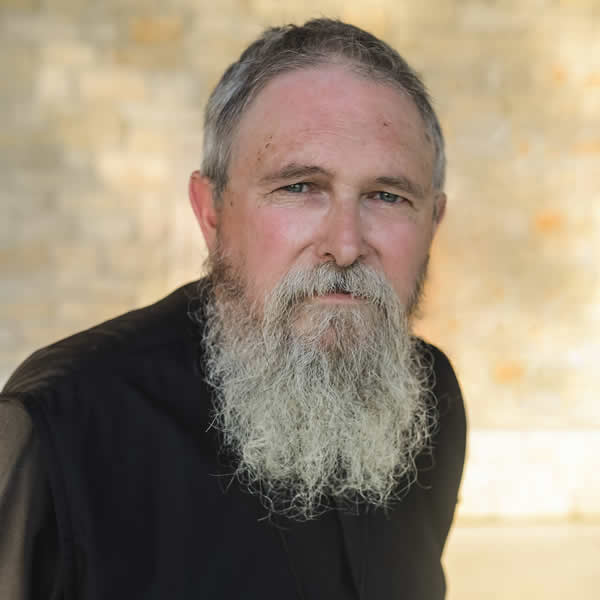
About Fr. Stephen Freeman

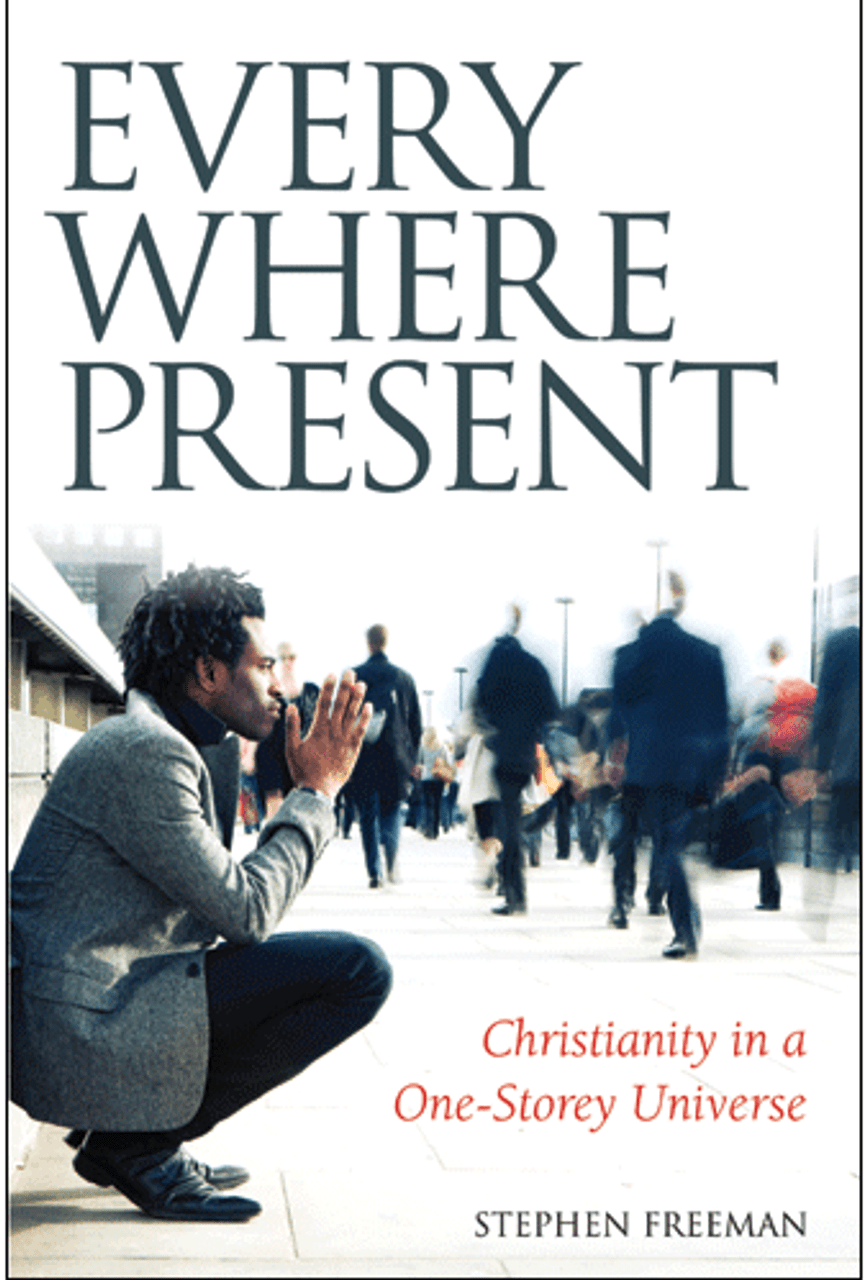
Fr. Stephen is a retired Archpriest of the Orthodox Church in America. He is also author of Everywhere Present: Christianity in a One-Storey Universe, and Face to Face: Knowing God Beyond Our Shame, as well as the Glory to God podcast series on Ancient Faith Radio.


Posted

in

by

Comments

21 responses to “Playing with God”

  1. Ann Dibble Avatar
    Ann Dibble

    Wow. Once I have absorbed this it is going to ease my understanding of what I’m up to.

    Thanks for this.

  2. Helen Avatar
    Helen

    Father,

    There is an online available course from St. Vladimir titled something about God’s playing hide-n-seek. It’s intrigued me and I have been planning to enroll. Your post may have just been the catalyst I needed.

    In corporate America I’ve seen the most engaging of all presentations and training events involve some type of game. It’s often cloaked as “competition ” but the childlike enjoyment of the attendees is evident. And it’s most effective in retention too!

  3. Dee of Sts Herman and Olga Avatar
    Dee of Sts Herman and Olga

    This article points to the importance of participation in Divine Liturgy. So much happens when one is truly present. Our minds need to be cultivated to receive.

  4. Mrs Mutton Avatar
    Mrs Mutton

    As I read, I was reminded of my Roman Catholic childhood, when we would routinely gather during summer vacation to play Mass. We’d take white bread, cut the crusts off, mash it flat, and cut circles with the rims of glasses. One boy would be the “priest”, one or two others would be the acolytes, and we girls would pin kerchiefs to our heads and be the nuns. I’m not sure God wasn’t more pleased with our honest attempt at “Mass” than He was by the priests we were imitating.

  5. Mallory Avatar
    Mallory

    What a beautiful essay! I have been thinking so much about this subject as a mother with a daughter who only has two modes: “mama, pretend…!” or sleep. I used to work in theater, where I always felt everyone in the rehearsal room was just a grown up who yearned to return to the play-pretend of childhood, and this reminded me of what one of my favorite teachers used to say, as their only “rule” for storytelling: “there must be a ritual, and the ritual must be broken” It is all deeply human and can save lives. Thank you!

  6. Fran Prestash Avatar
    Fran Prestash

    Fr. Stephen, could it be that pretend or play , prepares us to make choices as responsible adults. We also learn to be capable and respond to others in friendship and love as children. As we grow into adults, this love draws us to the source of love, Christ! 🤗❤️☦️
    As a teacher of littles, I was blessed to see this each day. 😊Glory to God! ☦️

  7. Matthew Avatar
    Matthew

    Fr. Stephen wrote:

    “Not all play is equal, of course. Some play is frivolous, or even destructive of our humanity.”

    When I read this I thought about young boys playing with toy soldiers and tanks as well as with toy guns and swords. Years ago I would have accepted this kind of play as completely normal and in keeping with bringing up boys who will eventually become men. Now I wonder if encouraging such play doesn´t also encourage more violence and the banal acceptance of war and conflict between people and nations.

    Children need to be traditioned into a healthy ritual of play I think. As you wrote, Fr. Stephen, not all play is equal.

  8. curatemike Avatar
    curatemike

    Thank you for the reminder, Fr Stephen. It reminded me of one of my favorite quotes from Chesterton (Orthodoxy):

    “Because children have abounding vitality, because they are in spirit fierce and free, therefore they want things repeated and unchanged. They always say, ‘Do it again’; and the grown-up person does it again until he is nearly dead. For grown-up people are not strong enough to exult in monotony. But perhaps God is strong enough to exult in monotony. It is possible that God says every morning, ‘Do it again’ to the sun; and every evening, ‘Do it again’ to the moon. It may not be automatic necessity that makes all daisies alike; it may be that God makes every daisy separately, but has never got tired of making them. It may be that He has the eternal appetite of infancy; for we have sinned and grown old, and our Father is younger than we. The repetition in Nature may not be a mere recurrence; it may be a theatrical encore.”

  9. Fr George Elliott Avatar
    Fr George Elliott

    This probably explains why I still have a collection of slot cars and I run an orphanage for abandoned vintage bicycles that are too tall for anyone else. When I was preparing for a career in teaching, I read a lot of Jean Piaget. I liked his approach to learning modalities.

  10. Dee of Sts Herman and Olga Avatar
    Dee of Sts Herman and Olga

    Those who utter phrases such as “empty ritual” (something I’ve heard all my life) forget that it is God who first gave ritual to the people of Israel. This primary story about the faith runs counter to modern intuitions. For we presume that real things and true things are in the mind. It is thought and sentiment that we consider to hold the lofty place of the holy. But it is ritual that is given this place in the Scriptures.

    My relative (of Protestant leanings) once expressed criticism about the prayer of both Catholics and Orthodox because these Christians “say the same prayers written by someone else over and over again”. In other words, he didn’t appreciate ritual and deemed the prayers nonauthentic. To him, authentic prayer is what one says when we construct our own words. This occurred when another relative, who is Catholic, prayed at the dinner table; it was not made up, but they repeated a Catholic prayer instead.

    I tried to explain the importance of sacrament and ritual, but he seemed to think they were devoid of authenticity. “Just going through the motions”. In some respects, I think this aspect of ‘play’ in action is at work in their thought, but it is difficult to convey its importance and what is going on until one fully participates.

    Sometimes I wish I had the words to explain. But they do not come. Perhaps this is because I’m attempting to defend rather than explain. And I have no defense but love.

  11. Dee of Sts Herman and Olga Avatar
    Dee of Sts Herman and Olga

    BTW, when I use “games” to teach chemistry, the concepts seem to ‘stick’. There’s an intricate social aspect to learning, practicing (with body and hands), and conducting chemistry. However, some say one can learn everything one needs to know about chemistry online. While I disagree, here again, the best way to demonstrate the distinction is through an in-person, in-body experience to contrast with the other.

  12. Lynne Avatar
    Lynne

    I was conversing with someone who was involved with contemporary Protestant worship music, and he criticized the written prayers of the Orthodox Church because they were simply repeated and weren’t heart-felt, and therefore, they were not genuine.
    I asked him if the groups of singers and instrumentalists ever got up and spontaneously started singing music and making up the words and melody as they were moved by the Spirit.
    He didn’t answer.
    But he didn’t bring up his criticism again.

  13. Fr. Stephen Avatar

    Lynne,
    The prayer-as-spontaneous-expression rather than being read is simply an old canard for attacking Catholicism (strangely, this sort of thing was the basis for many stock items in early Protestant teachings). The point of Protestantism was to not be Catholic. But, we do well to remember that when asked to “teach us to pray,” Christ taught a prayer – which we still repeat (the “Lord’s Prayer”). Let them argue with Jesus. I daresay the very same people love the Pledge of Allegiance.

  14. Rob Avatar
    Rob

    Father Stephen,

    “God make me Orthodox”. I came across this prayer you prayed earlier in life in your interview with Paul Kingsnorth. What you described there, both the reluctance and desire, is the prayer of my heart right now. Thank you for being open and honest with all of that. You gave me the words for it.

  15. Fr. Stephen Avatar

    Rob,
    I’m the poster child for reluctance and desire… 🙂

  16. Dee of Sts Herman and Olga Avatar
    Dee of Sts Herman and Olga

    Father and Rob,
    Ditto. Lord, have mercy on us.

  17. Dee of Sts Herman and Olga Avatar
    Dee of Sts Herman and Olga

    We stand in the Lord’s fire. Not an easy place to stand, but with the grace of God, despair not.

  18. Matthew Avatar
    Matthew

    Hello Dee.

    Did you write a comment about a short course at St. Vladimir´s Seminary re: playing hide and seek with God?

    If so, can you provide a link? My wife is very interested yet her internet search yielded nothing.

    Thanks so much!

  19. Helen Avatar
    Helen

    Hi Matthew,
    I had mentioned the course. Here is the link. Interestingly, “hide-n-seek” is not the title; I only remembered it that way.
    https://svots.thinkific.com/courses/cant-you-catch-hold-of-me

  20. Matthew Avatar
    Matthew

    Thanks so much Helen.

  21. Helen Avatar
    Helen

    You’re welcome Matthew!

Leave a Reply

Your email address will not be published. Required fields are marked *


Subscribe to blog via email

Support the work

Your generous support for Glory to God for All Things will help maintain and expand the work of Fr. Stephen. This ministry continues to grow and your help is important. Thank you for your prayers and encouragement!


Latest Comments

  1. Father When I first understood that the saints pray for us, one of my first thoughts was to see if…

  2. The idea of asymmetry is illuminating! With friends it’s mutual. With the saints and especially with Christ, the asymmetry is…

  3. Thanks so much Fr. Stephen and Dee. This morning I tried to perceive the green leaves I have been looking…

  4. Dear Father, I guess there is asymmetry in communion. As an example, I once had occasional contact with the business…


Read my books

Everywhere Present by Stephen Freeman

Listen to my podcast


Categories


Archives