The Secular Mind Versus the Whole Heart

Thinking is among the most misleading things in the modern world, or, to be more precise, thinking about thinking is misleading. For a culture that puts such a great emphasis on materiality, our thinking about thought is decidedly spooky. The philosophy underlying our strangely-constructed modernity is called nominalism (of which there are many formal varieties). Its imaginary construct of the world consists of decidedly separate objects, united only by our thinking about them. There are things, and then are thoughts about things. But the thoughts have nothing to do with the things, except in our heads.

The result is the strange contradiction of living in a world we conceive of as sheer material, while only truly valuing thoughts, ideas and feelings that we conceive of as existing in our heads. I have described this in numerous articles and a book as the “two-storey universe.” We are certain of the material world, and though we only value the world of ideas and feelings, we’re not so sure that they really exist. We are indeed a troubled mind.

A much older way of experiencing the world understands our existence as one of actual communion. And, strangely, this way of thinking gives far more respect and attention to materiality. Nowhere is this more evident than in the contrast between ancient Christian thought and modern Christian thought.

Some examples:

Modern Christianity (which has been around for some few hundreds of years) views the death of Christ primarily in terms of the ideas associated with it. Human beings, through their breaking of God’s commandments (ideas), incurred an infinite debt (ideas), requiring their punishment (oops! This is eternal torment in hell). Note that this is purely an idea. Christ becomes man, and on the Cross suffers and pays the debt (again an idea). Those who now trust in Him (again an idea), are forgiven (another idea).

The only value placed on the Crucifixion of Christ is an abstraction. The action itself gains value only through how it is considered by God. But this abstraction ignores the deeply literal treatments referring to the blood of Christ and His flesh. The event of Christ’s suffering, death and resurrection gain their value precisely in their materiality and of God’s interaction and communion with materiality. Something happens on the Cross that is not simply in the mind of God.

Modern memorialism is the teaching that the Eucharist is simply a memorial meal, an event in which we have certain ideas about the death of Christ. But Christ says, “Take, eat!” and “Drink ye, all of this!” The “remembrance of Him” is not in our minds – it’s in our bodies and our blood. We become one flesh with Him.

It is very troubling to some when they begin to read the Church Fathers’ teachings on the heart (nous). The Fathers were well aware of the connection between brain and thinking (any number of ancient head injuries had taught them as much). But the Fathers disturbingly (for a modern) insist on locating the heart (nous) in the physical heart itself. Most moderns quickly dismiss this as some form of ancient nonsense. But it holds a very serious insight. True knowledge and communion are not abstractions. Using the example of eating, when I consume a sandwich, I could be said to “know” it. Where does this knowing occur? My stomach knows it. My blood stream knows it. In truth, the whole of me “knows” the sandwich. It is a much broader understanding of knowing than the reductionist notions of modernity.

The Whole Heart

This far more “wholistic” understanding of human existence and knowing is actually much more sophisticated than modern two-storey notions. Modern abstractions about thinking and knowing have resulted in a fragmentation of our consciousness in which we ignore the larger part of what we actually know. We have been taught to attend to our thoughts, as though we had a disembodied existence. And to make matters worse, we have a very false, abstract notion about what thoughts themselves are.

We are material beings. We are not souls that have bodies, or bodies that have souls. The soul is the “life” of the body, but is not, strictly speaking, a thing in itself. Most moderns mistake the soul for consciousness, and they imagine that at death their consciousness migrates somewhere else (to heaven, etc). And, we do not care very much about what then happens to the body, so long as our precious consciousness abides. This, I might add, is the mythology of Star Trek, where in at least several episodes, Spock’s consciousness is deposited in various other places. It is not, however, true Christianity.

The Christian faith holds to the resurrection of the body and the soul’s proper life within that glorified body. After death, God sustains our souls (life) in existence, but this is a great mystery for which words are inadequate. It is not our proper existence nor the fullness of our being. If you ask, “But what exactly is the soul?” You will get no answer. It is the “life of the body”.

The thing which we call consciousness is itself problematic. Much of it is simply the noisy artifacts of various neuroses, and even the sound that the body itself makes. It is not unusual for modern Christians suffering from depression, for example, to reject medication declaring that they want a “spiritual solution.” This two-storey approach is itself a strange superstition in which we imagine that our “spiritual life” is somehow not physical. [see the recent articles on anxiety and depression]

Modern consciousness is nurtured by modern media. So long as we have the “sight” of something, it is enough. Even pornography is a strangely disembodied experience of an intensely embodied reality, something that adds to its perversity.

Orthodox liturgy, on the other hand, is pointedly sensual. It smells and tastes. It is physically exhausting. It engages the whole of our being. Of course, moderns are particularly troubled and report (as sin) that their “minds wander.” They will even declare that this makes them “not present” in the service. I was asked a while back about how “to be present.” I responded that you actually have no choice. Present is what you are. I have yet to have anyone confess as sin that one of their feet “fell asleep” during Liturgy. It’s much the same thing, only we have a strange perception that it’s different.

I tell newcomers to the Church that they should be prepared to be bored in services. It is not designed for the entertainment of the false consciousness, unlike so much else. It is an encounter with God, not an encounter with thinking or emoting about God.

The true spiritual life includes a recovery of the fullness of our being. St. Paul speaks of the “renewing of the mind” (nous) in Romans 12. Today, it not only needs renewing, but discovery. That discovery is not found in the maze of our thoughts. Rather, it is found moment by moment in paying attention to the whole self. As we withdraw from the noise of our false mind generated by the cacophony of our consumer world, we work slowly at encountering the world in true communion. Live slower. “Whatsoever you do, in thought, word and deed, do it as unto the Lord.” This does not mean ignoring your activity and “thinking about God.” It means, when you walk, walk with God. When you eat, eat with God in thanksgiving. Give your body as much credit as you’ve been giving to your mind. I strongly expect that the nature of our activities would change if this were so.

Some complain about their minds wandering when they pray. I have ADHD, my “mind” always “wanders.” But I don’t worry so much about it. When I pray, I stand before the icons. If my mind wanders, I remain standing. The icons have been given to us for “communion,” and that communion is real regardless of the noise of my mind. The noise is not me; it’s noise.

Our glorification of ideas perverts our Christian understanding. Christ said, “Where your treasure is, there will your heart be also.” But we distort this and think it means, “Your treasure will be where your heart is.” We think that the thought is what matters. But Christ was quite materialist (wholistic) about the matter. Your treasure (your stuff) controls your thoughts. If you say you care about the poor, give them some of your stuff. If you don’t care about them, give them some of your stuff. If you give enough, over time you will come to care. The heart follows.

Prayer is very much like this as well. We imagine prayer to be some sort of mental force. Thus, when a matter seems desperate, we call on others to pray with us and for us, imagining that the more minds we can join in prayer, the more powerful the prayer becomes. This is simply secular nonsense. Of course, we properly desire communion with others in our prayers – to share our need and concern and to have their support. However, if you want powerful prayer, I would suggest that you do as the Fathers did, fast and give alms. Deny yourself, and give stuff away to the poor. Ask the poor who benefit from your generosity to pray for you. They will with glad hearts.

I will praise you with my whole heart. (Psalm 138:1)

You shall love the Lord your God with all your heart… (Matt. 22:37)

The heart itself is but a small vessel, yet dragons are there, and there are also lions; there are poisonous beasts and all the treasures of evil. But there too is God, the angels, the life and the kingdom, the light and the apostles, the heavenly cities and the treasuries of grace—all things are there. St. Macarius

Quit thinking so much. It’s beside the point.
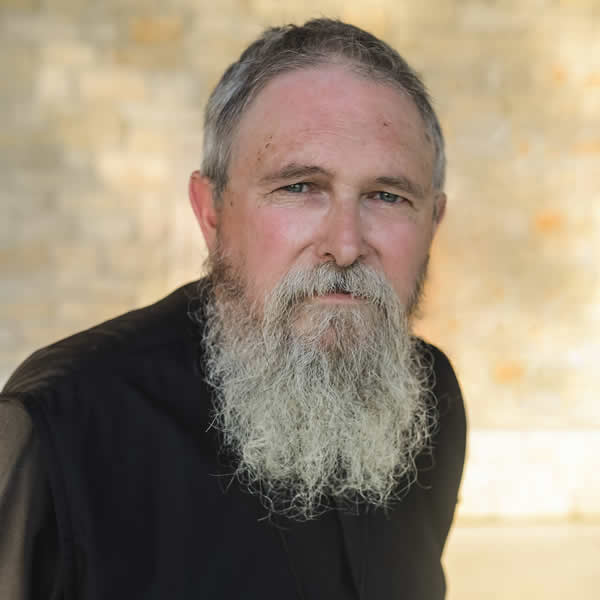
About Fr. Stephen Freeman

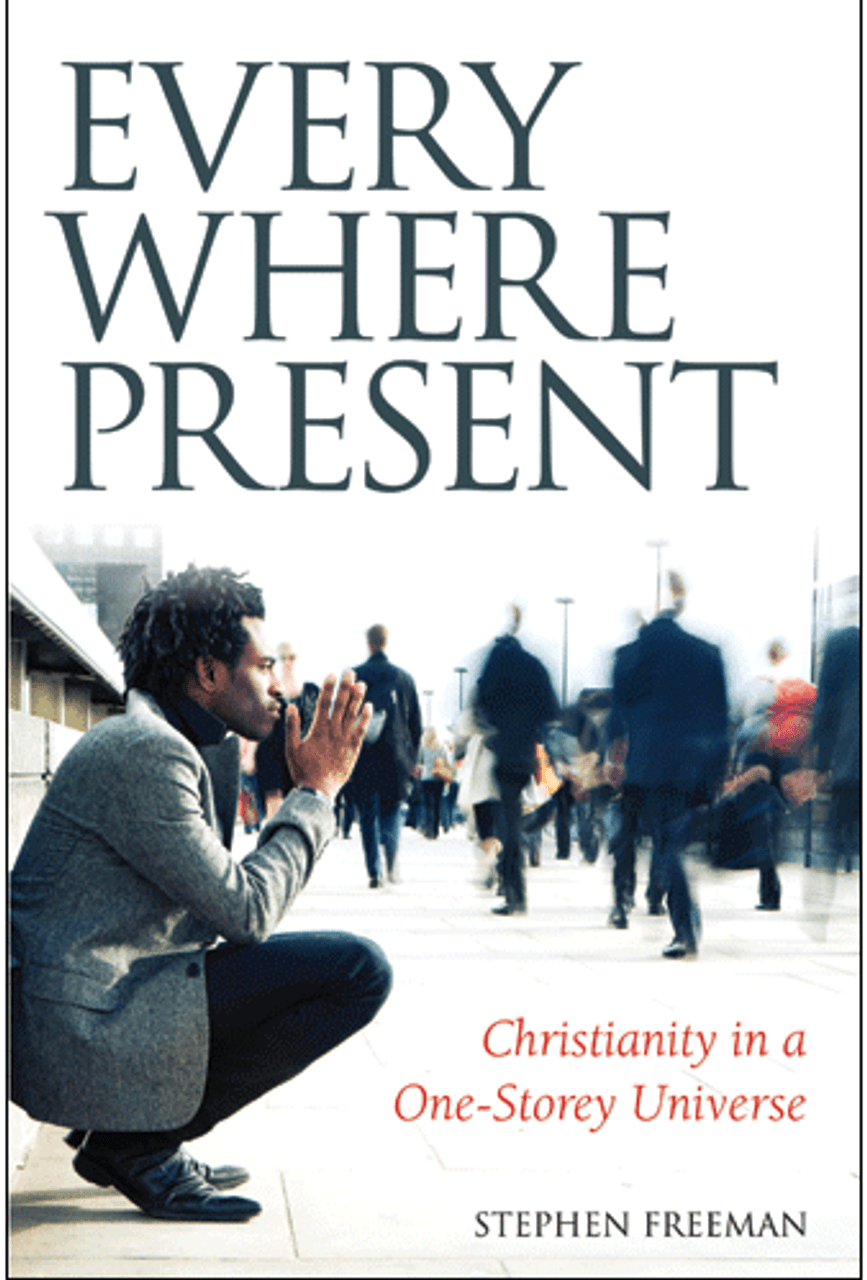
Fr. Stephen is a retired Archpriest of the Orthodox Church in America. He is also author of Everywhere Present: Christianity in a One-Storey Universe, and Face to Face: Knowing God Beyond Our Shame, as well as the Glory to God podcast series on Ancient Faith Radio.


Posted

in

by

Comments

121 responses to “The Secular Mind Versus the Whole Heart”

  1. Simon Avatar
    Simon

    Owen,

    I know I make it sound very definite, but I’m only speaking from my own experience.

    If I have a strong conviction here, it’s because it reflects the way I’m actually wired. Take it for what it’s worth. The human psyche simply doesn’t function well with over-parameterized models. To act in the real world, we need decision-making frameworks that reduce complexity, not amplify it. Real human choices are almost always made in a compressed space, a kind of intuitive dimensionality reduction.

    For me, Orthodoxy functions like a kind of principal components analysis. In my more earthly, analytic moments, the Church feels like an algorithm trained on two millennia of lived spiritual data and what it hands us are the principal components of hypostatic transformation.

    I don’t have to reinvent the wheel or build a massive model on my own. My “system” doesn’t have the GPUs for that. The tradition gives me a compressed, distilled set of patterns that actually work in practice.

    As a side point, while we are speaking the language of machine learning, I would think of heresy as catastrophic overfitting.

    Ideas I had distilled from Plotinus and later refined through St. Maximus about the foundational nature of hypostasis resonated with me and I later found these in St. Sophrony through Father Stephen’s recommendation. For St. Maximus the psychological self is ruled by the gnomic will while the hypostatic self lives from the natural will. The hypostasis is the “real person” emerging through synergy. Maximus says that the human being’s true identity–the hypostasis–stands underneath the psychological chaos, waiting to be unveiled through ascetic struggle, purification of the passions, etc. And so it seems the spiritual journey is from gnomic fragmentation to hypostatic personhood.

  2. Owen Kelly Avatar
    Owen Kelly

    Simon,
    I appreciate this reflection in light of your technical know-how. Thank you.

  3. Dee of Sts Herman and Olga Avatar
    Dee of Sts Herman and Olga

    I was curious after this conversation about cellular turnover about why our bodies maintain scars in tissues and bones, why we have memory, and how we experience memory loss and then regain it. So, I looked things up for a while since I don’t have much background in human physiology. The results were interesting.

    Personally, I don’t equate our body functions with machines, although we have built a Western-influenced medical industry that does treat the body in this way. We also treat the natural places of our lives, our ecosystems (itself a western-perceived notion), similarly, as machines with inputs and outputs. This is also another Western-science approach to the creation.

    I’ve been steeped in it since I was trained in science. I’m still steeped in it. But something in my heart resists what feels like an imposed truncation of life.

    Please forgive me if I seem impertinent. I speak of the resistance within my heart that I struggle with mightily these days due to my working life.

  4. Fr. Stephen Avatar

    Dee,
    I suppose that very small things, even like proteins and the like, have a “machine-like” function (based on pictures I’ve seen), but it begs the question when the “machine” is a living thing. In our experience, machines are not alive. So, it’s more the case that a “machine” can mimic a living thing rather than the other way around.

    The anti-religious agenda that came with certain schools of science (and is still there) desperately wanted and wants to describe everything without a mystery – for life itself to be just an amazing machine process so that we can give an account of it without reference to God. As such, “life” becomes just a complex machine. We have repeatedly seen the results of godless regimes. Heck, even the regimes that pay lip-service to God are often bad enough. The powers-that-be seem to authorize killing with incredible ease – making me think that they only believe in power but not in God.

    It troubles me.

  5. Dee of Sts Herman and Olga Avatar
    Dee of Sts Herman and Olga

    Dear Father,
    I too and troubled by these things. Thank you for your words.

  6. Simon Avatar
    Simon

    Father, Dee.

    Paul said, “I could not speak to you as to spiritual people but as to carnal, as to babes in Christ. I fed you with milk and not with solid food; for until now you were not able to receive it, and even now you are still not able.

    The idea of looking at physical systems as machines is simply looking at the system at a given scale. It looks at the deterministic forces in biophysics, like electrical potentials, ground states, etc and then tries to understand the behavior of biological systems given the dynamics. **That’s only one level of analysis**. No one who understands the scientific method EVER says that any given level of description is complete. That is an impossible assertion to make. At scale all these systems are probabilistic. So, good scientists think in terms of models. That’s the bottom line.

    When I am talking to people about faith I have found that engaging critical thinkers with how models are used in science and then using that as a way to think about Taoism, Buddhism, and Orthodoxy is very helpful. Is it the meat of the faith? No. Is it even milk? No. BUT, it is a language that can be used to bridge religious categories without getting lost in the weeds of “Well, how do you know that’s true?” For what it is worth, I have found it helpful to introduce religious categories as models of the world.

    The disciples at the time of Christ’s death were like “Well, there’s an empty tomb (observation). What do you think that means? (starting point of inference)” If I am discussing the resurrection, I try to avoid getting bogged down with ‘how do you know the resurrection happened?’ and simply propose the resurrection as a model for how the world is.

    In order to do science it requires a considerable degree of dimensionality reduction. That is a matter of necessity. Some mistake that as saying reduction is how the world is. But, really good scientists remember the reduction is a pragmatic measure in order to be able to crank out statistics about whether or not a given stimulus or treatment proved to be a difference that actually makes a difference.

  7. Fr. Stephen Avatar

    Simon,
    Cogent and helpful. Thanks.

  8. Fr. Stephen Avatar

    Simon, I very much appreciated the reminder about “scale.” “At scale all these systems are probabilistic.” I had a professor in my college astronomy class (retired from the lab in Oak Ridge), who said, “The further you go in physics, the more theological the questions become.” He drew no conclusions from that, nor did he press the point. He was helping us move past one “model of scale” to something much deeper.

    Today I sit with wonder.

  9. Matthew Avatar
    Matthew

    I am very much a novice when it comes to science and the scientific method, but such doesn´t preclude me from asking:

    When engaging people from the world of science about religious matters, it seems that mentioning anything supernatural is a genuine non-starter for most. If this is an accurate observation, then how can we begin to propose the resurrection as a model for how the world is to people with a purely scientific worldview? Am I missing something?

    My interests lie in the theological, not the scientific, but I do not want to be ignorant when dealing with people from the scientific world – hence my questions.

  10. Simon Avatar
    Simon

    Matthew,

    There are plenty of religious men and women science. It only comes as a surprise because of the loudest voices effect. I have seen and heard very intelligent defences of creation based on just the computed ground states of molecules.

    You’re not wrong in noting the resurrection is a non-starter. That’s why a) I never start conversations any more–EVER. And b) I would never lead with the resurrection.

  11. Dee of Sts Herman and Olga Avatar
    Dee of Sts Herman and Olga

    Matthew,
    If we were all humble scientists, we would all say we were novices when it comes to describing God’s creation.

  12. Dee of Sts Herman and Olga Avatar
    Dee of Sts Herman and Olga

    Simon,
    I find your application of the terms scale and model a useful framework for weaving scientific and religious thought. For me, such words invite ‘going in deeper’, inferring the experience of icon and type.

  13. Dee of Sts Herman and Olga Avatar
    Dee of Sts Herman and Olga

    Matthew,
    I think sometimes the best way to “preach Christ” is to love our brothers and sisters, no matter what their walk of life. And I realize this might be just my perspective alone, but I think we might learn more from each other through our behavior than through our words. Scientists are accustomed to arguing with each other, especially if they are confronted with a different viewpoint (or different experimental result). So I wouldn’t encourage a debate or head-on approach to proselytization where you start a conversation about your beliefs in Christ. I suspect that would be the quickest way to receive a brush-off.

  14. Dee of Sts Herman and Olga Avatar
    Dee of Sts Herman and Olga

    This is just a story, but one that buoys my heart. A young, budding Alaska Native scientist expressed concern about the devastation in western Alaska and mentioned how it was that some people were so tied to the land in their hearts that they would not leave. That conversation drifted ever so gently to faith and spirituality. For the first time after that, she boldly wore a cross, and not a tiny one! I’m so grateful for the gifts the Lord gives us.

  15. Matthew Avatar
    Matthew

    Thanks so much Simon and Dee.

  16. Simon Avatar
    Simon

    Dee,

    Scientists aren’t the only ones nor are they unique in being prone to argue, or frustrated when presented with a contrary viewpoint. That is how 95% of the people are.

  17. Bonnie Avatar
    Bonnie

    As an artist who loves science, I rejoice in two characteristics of Creation which excite me and fill me with thankfulness, wonder and delight. They are Order and Beauty. Whether examining things at the atomic level or gazing at photos of distant galaxies we see both those characteristics. Perhaps we are hard-wired to recognize and look deeper into such things. I believe God has made us able to perceive and enjoy these qualities because we are made in His image. (“…and God saw that it was good.”)

    If we consider time as part of Creation, the question of who owns the materials that make up a human body becomes less perplexing. Doubtless we share the use of atoms that may have been part of a whale or a chicken turd at some time. Our resurrection depends on the Lord, who is not limited by time or atoms. We might think of time as something He made and carries in His pocket. Eternity is “outside of time,” not “a very long time.”

    My late husband knew someone who experienced a remarkable event. They both worked as electrical engineers for the provincial power authority. This man had gone to inspect an unmanned transformer station beside a rural road. He brought instruments to evaluate the functioning of the bank of huge transformers in a graveled enclosure.

    This transformer array was surrounded by a ten foot chain-link fence topped by multiple strands of barbed wire. Danger, High Voltage, and No Trespassing signs were posted along the fence to discourage the curious and foolhardy. The engineer set up a table inside this enclosure and began arranging his instruments and charts on it. He heard an odd sound behind him.

    Instantly he found himself outside the fence, running as hard as he could. The transformer behind him had exploded, and the large volume of oil contained in its external casing was on fire. The flames had already consumed both the table and the instruments, leaving only a large black mark on the ground. The man was unharmed.

    He could not have scaled the fence without injuries from the barbed wire; and there had been no time even if he had tried. He had instantly been moved. This engineer gave credit and thanks to God for having saved him, and continued to share his experience of this grace with others.

  18. Fr. Stephen Avatar

    Bonnie,
    What an amazing story!

  19. Dee of Sts Herman and Olga Avatar
    Dee of Sts Herman and Olga

    Bonnie!
    Thank you so much for sharing this beautiful witness! You made my day!

  20. Matthew Avatar
    Matthew

    Simon said:

    “Scientists aren’t the only ones nor are they unique in being prone to argue, or frustrated when presented with a contrary viewpoint. That is how 95% of the people are.”

    No wonder Thanksgiving dinners in the U.S. can be so complicated!

    🙂

  21. Matthew Avatar
    Matthew

    I thank you as well Bonnie.

Leave a Reply

Your email address will not be published. Required fields are marked *


Subscribe to blog via email

Support the work

Your generous support for Glory to God for All Things will help maintain and expand the work of Fr. Stephen. This ministry continues to grow and your help is important. Thank you for your prayers and encouragement!


Latest Comments

  1. Thank you, Father. Indeed, acedia is a major issue. The prayer of St. Ephrem is very helpful, and not just…


Read my books

Everywhere Present by Stephen Freeman

Listen to my podcast


Categories


Archives