Mary: The Blessing of All Generations

In my childhood, it was not unusual to hear someone ask, “Who are your people?” It was a semi-polite, Southernism designed to elicit essential information about a person’s social background. The assumption was that you, at best, could only be an example of your “people.” It ignored the common individualism of the wider culture, preferring the more family or clan-centered existence of an older time. It was possible to be “good people” who had fallen on hard times, just as it was possible to be “bad people” who were flourishing. Good people were always to be preferred.

I am aware of the darker elements of this Southern instinct so foreign to today’s mainstream culture. I am also aware that within it, there is an inescapable part of reality: human beings never enter this world without baggage. The baggage is an inheritance, both cultural and biological that shapes the ground we walk on and the challenges we will inevitably confront. Fr. Alexander Schmemann is reported to have said that the spiritual life consists in “how we deal with what we’ve been dealt.” In some families, it seems that no matter how many times the deck is shuffled, the same hand (or close to it) appears.

The Scriptures are rife with this element of our reality. It is a story of fathers and sons, mothers and daughters, tribal destiny and inherited blessings. Two of the gospels give a chapter to rehearse the genealogy of Christ. Modern thought wants to imagine each human being entering the world as a blank slate whose life will be formed and shaped by their desires and choices. This is our imaginative version of freedom and we work to maximize its reality.

Nevertheless, human experience continues to be doggedly familial. Those who do family therapy carefully ask questions about the generations that have gone before. The battles of our lives are not about theory, but the cold hard truth of what has been given to us.

The Scriptures relate the stories of families, including their tragedies and horrific crimes. No Southern novelist ever did more than echo the iconic behaviors of Biblical failure.

This familial treatment is intentional and tracks the truth of our existence. There is never a pain as deep as that inflicted by someone who is supposed to love you.  Such injuries echo through the years and the generations. The face that stares back at us in the mirror is easily a fractal of someone whose actions power our own insanity. We can hate a parent, only to be haunted by their constant presence in us.

This, of course, is only the negative, darker side of things. Blessings echo in us as well. In the delusion of modern individuality we blithely assume that we act alone in all we do. Life is so much more complicated!

What I am certain of, in the midst of all this, is that our struggle against sin and the besetting issues of our lives is never just about ourselves. If we inherit a burden within our life, so our salvation, our struggles with that burden, involve not only ourselves but those who have gone before as well as those who come after. We struggle as the “Whole Adam” (in the phrase of St. Silouan).

There is an Athonite saying: “A monk heals his family for seven generations.” When I first heard this, my thought was, “In which direction?” The answer, I think, is every direction. We are always healing the family tree as we embrace the path of salvation, monk or layman. Our lives are just that connected.

When the Virgin Mary sings her hymn of praise to God, she says, “All generations will call me blessed.” This expresses far more than the sentiment that she will be famous (how shallow). It has echoes of God’s word to Abraham, “In you, all the families of the earth shall be blessed” (Gen. 12:3). It is in the Offspring of Mary that the word to Abraham is fulfilled. In the Scriptures, God is pleased to be named the “God of Abraham.” That His name is tied to that of a human being brings no offense. Indeed, paradise itself is called the “bosom of Abraham.” It is right and proper that Christians should see the same treatment in the Virgin, the one in whom all these things are fulfilled.

“All generations” is a term that includes everyone – not just those who would come after her. For the salvation of the human race, in all places and at all times, is found only in Jesus, the Offspring of Mary. She is “Theotokos,” the “Birthgiver of God.” Mary is exalted in the bosom of Abraham.

When I look in the mirror these days, I see the unmistakable reflection of my father. No doubt, his reflection is seen elsewhere in my life, both for good and ill. I’m aware that some of my struggles are with “my daddy’s demons.” Of course, my vision is limited to just a few generations. I see my own struggles reflected in the lives of my children (for which I often want to apologize). I do not see the link that runs throughout all generations – throughout all the offspring of Adam – it is too large to grasp. What I do see, however, is the singular moment, the linchpin of all generations that is the Mother of God. In her person we see all generations gathered together. Her “be it unto me according to your word” resounds in the heart of every believer, uniting them to her heart whose flesh unites us to God.

Across the world, the myriad generations of Christians have sung ever since:

My soul doth magnify the Lord.
And my spirit hath rejoiced in God my Savior.
For he hath regarded the lowliness of his handmaiden.
For behold, from henceforth all generations shall call me blessed.

To which we add:

More honorable than cherubim,
And more glorious beyond compare than the seraphim,
Without corruption you gave birth to God the Word,
True Theotokos, we magnify you!

We are her people. Glory to God!
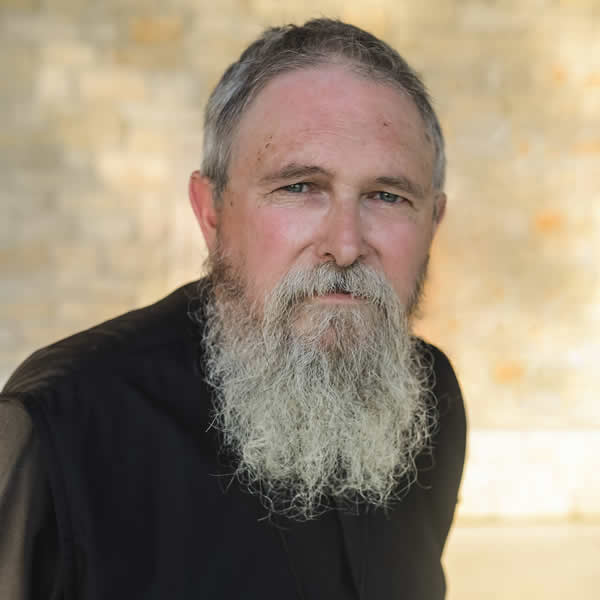
About Fr. Stephen Freeman

Fr. Stephen is a retired Archpriest of the Orthodox Church in America. He is also author of Everywhere Present: Christianity in a One-Storey Universe, and Face to Face: Knowing God Beyond Our Shame, as well as the Glory to God podcast series on Ancient Faith Radio.


Posted

in

by

Comments

38 responses to “Mary: The Blessing of All Generations”

  1. Matthew Avatar
    Matthew

    So even salvation is communal – both backward and forward in time?

  2. Kristan Hagel Avatar
    Kristan Hagel

    This is a great summation that we are all stories and community. We see this from Genesis throughout the Revelation. Of feels interior and God ordained. Love to read your words and so does Cybie.

  3. Fr. Stephen Avatar

    Matthew,
    Somehow, yes. Our culture has a very transactional view of life (because it’s a culture built on money-thought) and cannot comprehend the true nature of salvation in Christ. It is the same reason that our culture fails to understand love.

  4. Matthew Avatar
    Matthew

    Thanks Fr. Stephen. So … my salvation is somehow helping my father who died some years ago as well as my mother who is still alive??

  5. Carmelita Lindner Avatar
    Carmelita Lindner

    Thank you Fr. Freeman. Your writings touched my heart in a very especial way. I was friends with you on Facebook. But I lost Facebook in my move to Indianapolis. Just a note to say, and thank for all your writings. Your messages always give a reason to look ahead and keep on walking. Thank you.

  6. Matthew Avatar
    Matthew

    How?

  7. Dee of Sts Herman and Olga Avatar
    Dee of Sts Herman and Olga

    Matthew,
    The Orthodox are taught to be content with some of God’s mysteries. —Sometimes a difficult proposition for inquiring minds such as mine.

    The How question might be one of those. But we know the ‘how’ involves God’s love and grace.

  8. Dee of Sts Herman and Olga Avatar
    Dee of Sts Herman and Olga

    I’m remembering the Theotokos asking the angel ‘how?’. “Through the Holy Spirit” pretty much summed up the angel’s answer.

  9. Colin Avatar
    Colin

    Thank you Father. As a Protestant I feel somewhat embarrassed and diminished in my faith by my neglect of the treasures within the Blessed Theotokos but those final two prayers really shifted something within me.

  10. Fr. Stephen Avatar

    How,
    I have no definitive answer – it’s something that the formal teaching of the Church largely passes over in silence. For example, with regard to the departed, we are told, formally, that our prayers for them “are of benefit.”

    But, speaking from my own understanding, I would note that none of us are biologically independent of others. I see my parent, grandparents in me, and in my cousins. We “rhyme” with one another. The Kingdom of God extends throughout all time, backwards and forwards, and transcends the easily understood boundaries of cause-and-effect. Protestants, for example, won’t acknowledge it, but there are many things within their world that have been bequeathed to them from medieval Catholic centuries and people. We speak about “Western Civilization” – the better part of which was not built by us, but unherited by us.

    I think that the connection between the living and the departed is far more alive than we suspect. If God is the God of “Abraham, Isaac, and Jacob,” and not the God of the dead but of the living – then Abraham, Isaac, and Jacob remain a living, influential presence in the Kingdom. If you “do the math” from that small item alone, then we see much that might seem hidden. As to “how” – I’ll leave that math to God.

    But, the “Great Cloud of Witnesses” is not looking at us because they want to be spectators. They are with us and in us as participants in the battle. If our warfare is in the heavens (as the Scriptures teach) then of course we have heavenly comrades who are battling on our behalf – including in us.

    There is a mystery hidden in earthly kingship, the concept of royalty. The Reformation, and then the more radical forms of Protestantism, swept the true notion of royalty away – and it remains only as a vague reminder (and tourist attraction) of a different world.

    But the notion of a kingly line, of “royal blood” is not just a myth. There’s something to it. I am certain that most royals fail to rightly fulfill their calling, for a variety of reasons. But, I suspect there is much there that we do not know.

    “Elites” are one of the curses of our day and time, but you cannot rid the world of that concept without plunging it into terrible chaos. Our problem today is not that we have an elite, but that our elite is incompetent and immoral. They are not only as bad as we are, they are not as good as we are. Such are the times we live in.

    But we are connected. Communion is a reality whether we accept it or not. Accepting it is simply living with reality in a proper way.

  11. Fr. Stephen Avatar

    Colin,
    She prays for us all.

  12. Fr. Stephen Avatar

    Colin,
    I grew up Baptist and became a (more or less) high church Anglican as a teenager. I began some devotion to Mary in my early 20’s, and it grew slowly in my life. I became Orthodox at age 44. The liturgy within Orthodoxy (every service) has a very natural devotion to Mary – she’s utterly woven into the life of Christ. She never draws me away from Him, but deeper within Him, and in ways I would not have imagined without her (I think).

    In particular, the notion of communion is deepened. In many corners of the West, there’s a tendency to make the faith to be very juridical, or, perhaps, “relational,” but in a manner that is mostly just psychological. Orthodoxy speaks frequently about communion – He dwells in us, and we in Him. His life is my life and my life is His, etc.

    In Mary, the Theotokos, this becomes even clearer. Watching my wife carry our five children – and watching the communion – bone of bone and flesh of flesh – that is pregnancy – and realizing that this was the profound beginning of Mary’s life with and in Christ. Nursing Him how many times a day, face-to-face, etc. On and on. She knows Him as no one else will ever know Him.

    And she is mother of us all (for so I understand Christ’s words to St. John at the Cross, “Behold your mother.”). She shows me Jesus. Almost every icon that the Church has of her, she is holding Christ. How could she be without Him? He is her life.

    Just some thoughts.

  13. Colin Avatar
    Colin

    Thank you Father . Much appreciated and significant. At age 67 I am still learning and experiencing a deeper communion.

  14. Simon Avatar
    Simon

    Father Stephen,

    Your words reminded me of Romans 4 “God, who gives life to the dead and calls those things which do not exist as though they did.” We understandably think of this as referring to the future, to things that are yet to be. But, what why couldn’t it be that the “things which do not exist” refer also to “things that have not yet been” referring to the things of the past? Not being dogmatics about it. Just wondering out loud.

  15. Ruth L Devoe Avatar
    Ruth L Devoe

    Amen 🙏

  16. Matthew Avatar
    Matthew

    Thanks so much Fr. Stephen.

    I hadn´t really thought of salvation in such a deeply communal way before.

  17. Fr. Stephen Avatar

    Matthew,
    I think of the example of salt. Christ tells us that we are salt. The purpose of salt is not just flavor, but primarily as a preservative (particularly at the time of the NT) – that is – it is a “saving.” And, in its work of saving, it is spread throughout the food. It is as a “communion” that it saves what is around it. So, Christ gives an illustration in which our very presence (as we are in Him) saves the world around us.

    I think that in the evangelical mind, we are “salt” because we tell other people about Jesus and salvation is still a strictly individual thing. The Orthodox understanding, rooted in communion, has always seen this saying of Christ in its “preservative” understanding.

    It is said that God upholds the universe through the hidden prayers of but three saints. Of course, it could be more than that, but three is apparently enough. I can see that the salvation that works in my life (to whatever measure) was utterly not of my own making. It was preserved, intact, in the life of the Church and had been sustaining me already.

  18. Fr. Stephen Avatar

    Simon,
    I had a friend among the Jesus Freaks, back in the day, who would pray for St. Paul. I asked him why he did this (we were protestants). He said, “Because Paul asked us to pray for him.” I loved him for that answer – and for many others.

  19. Matthew Avatar
    Matthew

    Thanks Fr. Stephen.

    I know one thing I like very much about both Catholic and Orthodox Masses/Divine Liturgies is watching everyone going up to partake of the Eucharist together. It is a very special moment for me in the Catholic Mass, for example, when the line moves forward and the music is playing and the shoes shuffle and the people look humble walking toward their Lord. It is sincerely a communal moment for me and it says a lot about communal salvation.

    In my Protestant days, community meant what took place at coffee hour not at the altar.

    Interesting.

  20. Fr. Stephen Avatar

    Matthew,
    I have been ordained since 1980, first as Anglican, then as Orthodox. One aspect of that reality is the experience of distributing communion to people in the Liturgy. It is profound. There’s no conversation, no greeting, just the words that accompany the distribution. They come in faith and, face to face, I see their hunger for Christ. It has been something that sustains me for these nearly 50 years. Though I’m retired, many Sundays I’m still privileged to take part in distributing communion. From any perspective, it is profoundly moving.

  21. Matthew Avatar
    Matthew

    Fr. Stephen said:

    “Though I’m retired, many Sundays I’m still privileged to take part in distributing communion. From any perspective, it is profoundly moving.”

    I imagine it is profoundly moving.

  22. Michele McDaniel Avatar
    Michele McDaniel

    Raised Protestant, I never really was taught to focus on Mary. This really spoke to my spiritual understanding of her song of praise.

  23. Fr. Stephen Avatar

    Michele,
    Many things were overlooked in the upbringing of Protestants (I was one, myself). There are lots of unintentional things about that – but it is good to begin to discover the riches that our ancestors in the faith knew and taught for the first thousand years of the Church. It is our inheritance.

  24. Simon Avatar
    Simon

    Mary is more real to me than my own self.

    Heart of my heart.

    Maybe the only pure love I actually have.

  25. Matthew Avatar
    Matthew

    I ignored Mary.
    I theologically erased Mary.
    I misunderstood Mary.

    I reconsidered Mary.
    I grew closer to Mary.
    I accept the doctrines (Catholic) about Mary.

    All that said, I still have this thinking which asks why go through a call screener when I can go directly to the on air host? Shouldn´t my deepest love and committment be given to Mary´s child and not to Mary herself?

    Just what I am chewing on as I continue to consider the place Mary should have in my personal spiritual life.

  26. Kevin Avatar
    Kevin

    Matthew, when I listen to Orthodoxy Live, I’m pretty sure Fr Evan is very happy to have Matushka Trudy or whomever screening the calls that get through to him 😉

  27. Fr. Stephen Avatar

    Matthew,
    You haven’t learned to practice Marian devotion yet if you using her as a “call screener.” There is nothing whatsoever in either Orthodox or Catholic doctrine that suggests any necessity in “going through” saints in order to speak to God. Virtually all the prayers of the Church in the liturgy are addressed to the Father, through the Son, by the Holy Spirit. The devotions to Christ Himself are utterly abundant.

    I would suggest discovering more about devotion (veneration) of the saints. They are not call screening.

  28. Fr. Stephen Avatar

    Fr. Stephen,
    Matthew, another way I might phrase this is that what I want from Mary is Mary-knowledge. I want to know/to commune with what she knows of her Son, and what she knows of me (and others). I do not need her to be a God, or a go-between. We can always speak freely with God. But there is a fullness which God gives us in giving us His mother, or our brothers and sisters in Christ. The hand cannot say to the ear, “I have no need of you.” Though God can “do it all,” it pleases Him to share. He loves communion, because He is Love.

    Mostly, I would say that as I’ve come to know the Mother of God through the years, I have come to love her. I honor her because she is “more honorable than the cherubim, more glorious beyond compare than the seraphim…” It just is what it is.

    Protestantism short-changed us and did not give us the fullness…it did not know the fullness.

  29. Simon Avatar
    Simon

    My devotion to Mary has taught me tenderness–especially tenderness toward my family, and tenderness towards other people.

    My devotion to Mary has taught me shame. I sometimes feel shame when I think about how I have spoken to her sons andcdaughters and how she must feel about that. I get a sense of her tenderness from time to time. For me to accept that while being stingy with tenderness toward others makes me feel shame. I am genuinely sorry.

    I love Mary and I hope she finds joy in me.

  30. Dana Ames Avatar
    Dana Ames

    Father, one of the most profound (and helpful) things you ever wrote was that Jesus was “bone of Mary’s bone and flesh of her flesh”. I haven’t gotten to the bottom of considering and pondering that (don’t think we are ever really meant to) – but it has changed something in the way I know the Mother of God, much for the better, making knowing her – and the Lord, too – more real somehow.

    Dana

  31. Colin Avatar
    Colin

    Yes it strikes me as ironic that as Protestants we highly venerate those who produced the written word ( Bible) but almost ignore the one who produced the Word made flesh.

  32. Matthew Avatar
    Matthew

    Forgive me Fr. Stephen. I didn´t mean to be unkind toward Mary or anyone who venerates her with my call screener example. I only wanted to express some of my current frustrations.

    Thanks also for your explanation about devotion to Mary within the context of communion with what she knows about her Son. This helps me greatly and sparks my interest to go deeper. It seems you are saying that Mary is like a person who introduces us to someone they know well so that we too may eventually get to know that person well.

    Colin: Excellent point. Thank you.

  33. Joanie Miller Avatar
    Joanie Miller

    I turn 61 today and have been a Orthodox Christian for only 3 years. I was Protestant from childhood. I was short changed but in reality they didnt have it to give the fullness of the faith . I didnt know what an Orthodox Christian was. I was just doing life. Im still trying to understand how to understand the relationship we have with the saints. But I believe in this reality more everyday . I think sometimes why me God? Out of all my more Godly protestant relatives and friends that have died why did I get the opportunity to begin to be a part of the Church ? Most of my Protestant friends never ask why did you convert . I wonder why that is? I think if I were them I would ask why ? Thanks for your insights Father Stephen

  34. Fr. Stephen Avatar

    Joanie,
    I believe that we have each been foreseen and intended to live in this very moment (“before I formed you in the womb I knew you,” God said to Jeremiah). I also believe that we each carry within us all that have come before us – we are the offspring of Adam and Eve (and all the Adam’s and Eve’s that have ever been in-between). We are told in Hebrews that Levi “paid tithes to Melchizedek while he (Levi) was still in his father’s (Abraham’s) loins” (Hebrews 7). That’s a very strange statement, but it emphasizes the common life we live in each other.

    What is true is that though we live this common life, gathering into ourselves and being gathered into others, we are seldom aware of it. This is particularly true in a culture that over-emphasizes the individualized experience that is also real. But, we all partake of One Cup, one singular Cup that is always the same Cup, and that Cup is Christ, the fullness of His Body and Blood. And though my Protestant ancestors (who have only been a sort of interruption in this regard) did not themselves partake of that Cup (not being Orthodox), nonetheless, in me and my children they now have a share, however mysticially, in that very Cup. And, truth be told, their ancestors had long before had a share in that Cup, in that we were all Orthodox at some point (those of us with Christian ancestry). And, when it is all said and done, all of us will be Orthodox in that “God is gathering together in One, all things in Christ Jesus, things in heaven and things on earth” (Ephesians 1).

    We see such an infinitely small slice of existence. All of this has been fulfilled in Christ. As we allow ourselves to see that fulness expressed in the lives of the saints, or focused in the expression that is the Mother of God, we’re able to see it a bit more widely, occasionally seeing that we are all related – that we share a common life – and that this common life is the Life of Christ – breathed into us at the very beginning.

    Blessed be His name!

  35. Lynne Avatar
    Lynne

    “O Heavenly King, the Comforter”…. “Comforter.” That word stopped me in my tracks when I first heard this prayer, 23 years ago.
    The Lord is my Comforter?
    I can receive comfort?

    Lately, I’ve read that some people who were not comforted as children prefer solitude to socialization.

    This could very well describe me. If we had families who were unable to comfort us, then we don’t know what that means.

    I am slowly learning to allow the Theotokos and the saints to comfort me.
    Is this veneration? Is it praying to them? I don’t know. I just know that I am learning to allow them to comfort me.

  36. Fr. Stephen Avatar

    Lynne,
    Yes to this.

  37. Cainnech Avatar
    Cainnech

    Joanie: You mentioned that your Protestant friends don’t ask why you converted to Orthodoxy. I’ve experienced that as well. I’ve had many conversations with myself in which I work out how I would explain this. Yet I don’t think my Protestant family members have ever asked a single time. I’ve often wondered why and am still not sure.

    Fr. Stephen: Thanks so much for your helpful comments on the ancestors of Protestants partaking of the Cup because they were Orthodox. You also said “when it is all said and done, all of us will be Orthodox…” (cf. Ephesians 1). When I first met with an Orthodox priest to express interest in converting, I told him that for me “it’s the Orthodox Church or nothing.” But I also realized that this statement is existentially true. It’s a statement about the entire universe. I hope that is not too bold, but I think it’s in line with your comments.

  38. Fr. Stephen Avatar

    Cainnech,
    I was once invited to speak to a group of Anglican clergy (both US and Canada) who were interested in Orthodoxy. I was one of about 4 or 5 speakers and was in the “clean-up” position (speaking last). I didn’t just want to give them one more “conversion” story. So, this is what I said:

    “You might not have known this – but I was born Orthodox…” (sort of quiet stirring, and interested looks appearing). “I was born Orthodox but I lived in schism from myself for 44 years.”

    I think it pretty much sums it up. If Orthodoxy is what it says it as (and it truly is), then we should not speak of ourselves as though we were one among many denominations.

Leave a Reply

Your email address will not be published. Required fields are marked *


Subscribe to blog via email

Support the work

Your generous support for Glory to God for All Things will help maintain and expand the work of Fr. Stephen. This ministry continues to grow and your help is important. Thank you for your prayers and encouragement!


Latest Comments

  1. Dee of Sts Herman and Olga on Come Home

    Andrew, I think you’re correct about the need for vigilance. In this culture, it is so easy to be distracted…

  2. I’ve been thinking about St. Augustine’s famous line about rest in God in a new light recently. I’ve typically thought…

  3. Reader John, My 7 year-old experience was almost a one-off. My family was not particularly pious (there was no prayer…


Read my books

Everywhere Present by Stephen Freeman

Listen to my podcast


Categories


Archives