As the End Draws Near – Silence

St. John the Baptist said of Christ that His “winnowing fork is in His hand.” (Lk 3:17) That farm implement is a tool for separating the wheat from the chaff, that is, to separate the edible part of the wheat from the husk that is to be discarded. It is, in that sense, an instrument of judgment. The character of Christ, who is the Image according to which we are created, is such that human beings are more fully revealed to be what they are as they draw near to Him (or as He himself draws near to us). There was a point in time when the eleven disciples did not know Judas to be a traitor-in-waiting. Indeed, they trusted him enough that he served as their treasurer. Christ, we are told, always knew Judas to be what he was, but patiently bore with him until he was revealed as a betrayer.

In a similar manner, I think, there is evidence that Christ also saw the other disciples to be what they were to become. Simon is named “Peter” long before he evidenced anything of a “rock-like” character. He was loud, opinionated, capable of trying to correct Christ at any number of points. There’s nothing rock-like in such behavior. Nevertheless, I suspect that, in the presence of Christ, Peter felt some stirring of the rock within himself. In His presence, those who could not walk felt the stirring of strength in their limbs, just as blind eyes strained towards the light of sight. Unbelieving individuals discovered an ability to believe they would have thought impossible. Christ’s presence reveals us.

That the winds and the seas obeyed Christ’s voice was not contrary to their nature – it was the fulfillment of their nature – as they at long last heard again the voice of Adam (now the Second instead of the First) command them. They groaned and travailed across the ages, waiting for the glorious liberty of obedience. At the voice of Christ, the winds and sea became their true selves.

I have no words of wisdom about those who are revealed to be “lost” in some manner, those for whom the presence of Christ seems to reveal their alienation from God. In my experience, this has not been a common thing. Goodness, though it seems fragile, is, in fact, quite strong and frequently victorious. That which has been alienated from God has no grace to sustain it. Nothing “energizes” it. Nevertheless, there is something of an ontological entropy that sets in from time to time, a “falling” into nothing. I recall, in the face of that, Christ’s descent into the lowest Hades so that in the furthest reaches of that dark entropy a redeeming light shines.

On any given day, I dare not think long or hard about this entropy. The very remembrance of it can come as an invitation to join its downward spiral. Christ warns in Scripture that the “last days” will be so difficult that very few will retain faith. I suspect that the culprit will not be pain or suffering, but simple despair. Even now, I hear its fearful, tired voice in the complaints of many.

Are we in the “last days”? In the first week of Great Lent, we sing:

My soul, my soul, arise! Why are you sleeping?
The end is drawing near, and you will be confounded.
Awake, then, and be watchful, that Christ our God may spare you,
Who is everywhere present and fills all things.

+ The First Week of Great Lent, Kontakion, Tone 6

The “end” that is drawing near is Christ Himself. It is not the machinations of governments and hidden cabals that mark the last days. That evil becomes more manifest is a secondary effect of the “drawing near” of Christ. Human events in no way determine God’s timing. If we are watching such events, our eyes are being distracted and we are likely living in delusion. Writings about such things are usually accompanied with the admonition to take care for our soul.

St. Paul’s last letter was written to the Philippians from prison. He is hopeful that he will be released, but he is also uncertain about the outcome that awaits him (he was executed). (Phil. 1:20) It is of great note that this is called his “epistle of joy.” As the end is drawing near, the brightness of his soul is increasing. He offers this advice:

Finally, brethren, whatever things are true, whatever things are noble, whatever things are just, whatever things are pure, whatever things are lovely, whatever things are of good report, if there is any virtue and if there is anything praiseworthy—meditate on these things. (Phil 4:8)

This admonition is far more than the Apostle urging us towards pleasant things. There is nothing naive within his spiritual life. This is a direction for the heart, a specific instruction that allows us to prepare ourselves for the end. Those who think on the ugliness of the world, or the rumors of terrible things and intentions, are, in fact, sleeping. It is a sleep that lulls us into a despair that will make shipwreck of our faith in ways that we cannot imagine.

There is a great spiritual battle that is being waged in the human heart. It is the battle of the true, the noble, the just, the pure, the lovely, the good report, the virtues, and the praiseworthy, all of which have true being and are upheld by the hand of God, versus the lies, the fears, the imagined danger, the ugly and the dark, all of which ultimately have no substance and will pass away like the wind. This battle is the true struggle of our time. These adversaries are the “spiritual wickedness in the heavenly places” that St. Paul describes in Ephesians 6.

There is a reason that St. Seraphim of Sarov says, “Acquire the Spirit of Peace and thousands around you will be saved.” We have, in large part, exchanged the true spiritual warfare of the heart for the ideological struggles of our age. As such, we place ourselves on a level playing field with every secular argument and action. Political temptations abound because we remain within the delusion that things of great value are being established in that process. The delusion is that so long as our goals are noble and stated correctly, the result will be equally noble and correct. St. Paul warns: “For the kingdom of God is not in word but in power.” (1 Cor. 4:20) The power (clearly referenced by St. Seraphim) is not in our arguments but in the quiet victory gained through union with the in-dwelling Christ.

It was this same power that raised Christ from the dead.

But if the Spirit of Him who raised Jesus from the dead dwells in you, He who raised Christ from the dead will also give life to your mortal bodies through His Spirit who dwells in you. (Rom. 8:11)

This is the life that saves thousands around us. I find that every time I write in this vein, there is a pushback from some that accuse me of “Quietism,” which is an odd critique from the Orthodox. “Hesychasm” is the Greek form of the same word, and is seen as the very heart of the faith – in belief and practice. The history of “Quietism” in the West is not the same as Hesychasm in the East. Still, it seems to be an easy target for criticism. We believe in our politics.

Here is a word that is worth pondering. It is from Alexander Kalomiros, the author of the article, “The River of Fire.”

Hesychasm is the deepest characteristic of Orthodox life, the sign of Orthodox genuineness, the premise of right thinking and right belief and glory, the paradigm of faith and Orthodoxy. In all of the Church’s internal and external battles, we had the hesychasts on one side and the anti-hesychasts on the other.

The very fabric of heresy is anti-hesychastic.

Again, Hesychasm is found in practice, not in rhetoric. I believe that it was Hesychasm that parted the waters of the Red Sea. It caused the walls of Jericho to fall. It has raised the dead and cleansed lepers. Demons tremble in its presence.

The Lord is in His holy temple. Let all the earth keep silence before Him.
About Fr. Stephen Freeman

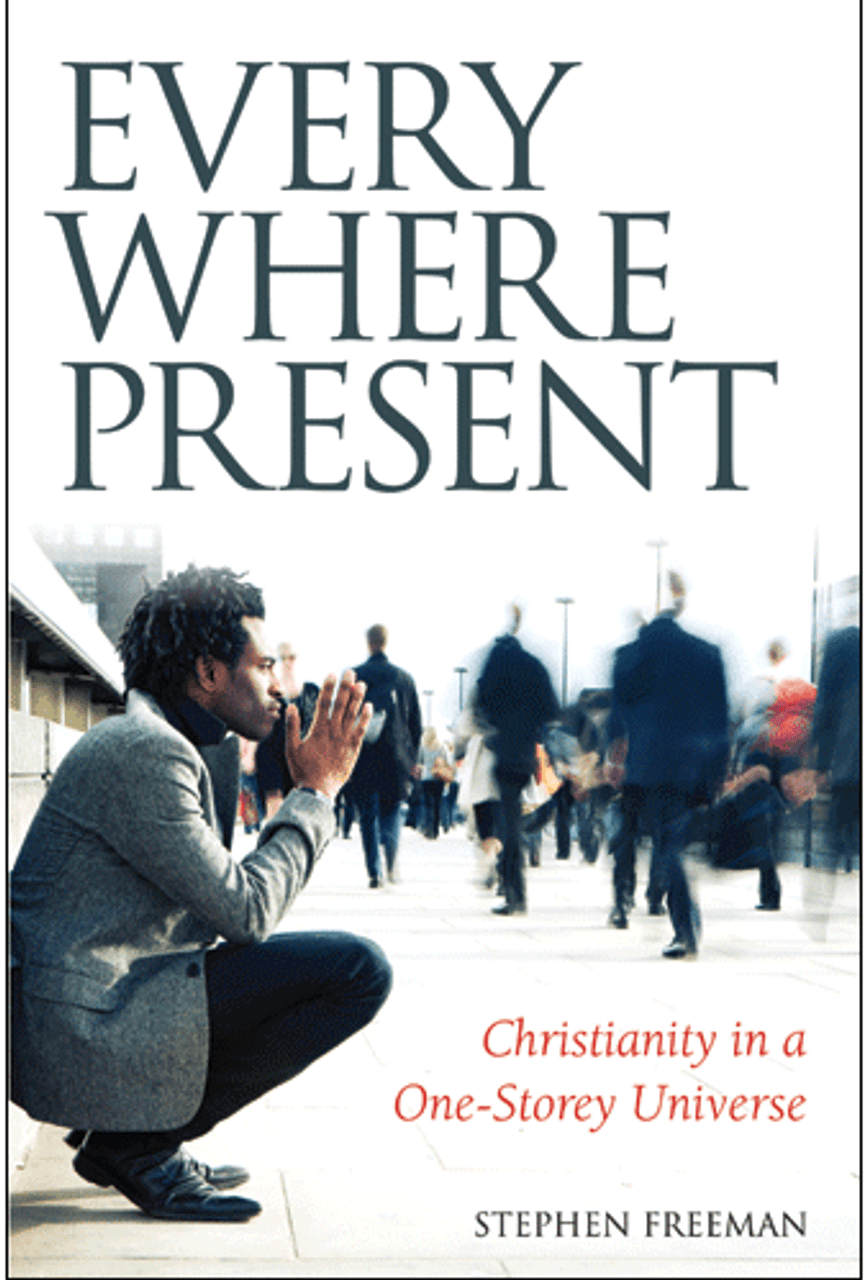
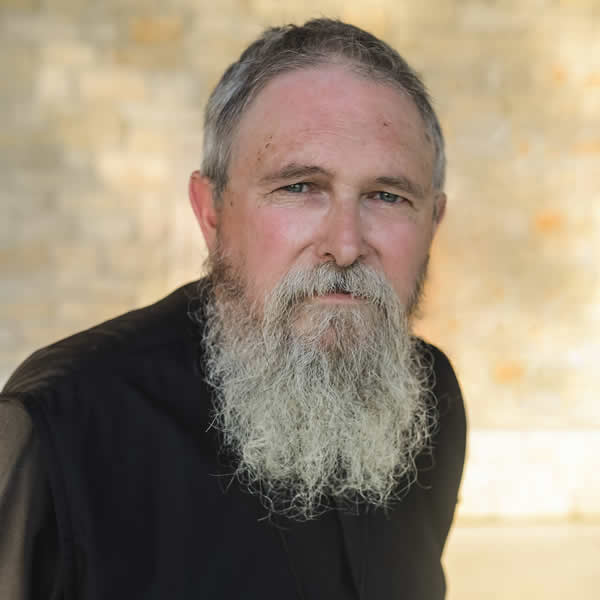
Fr. Stephen is a retired Archpriest of the Orthodox Church in America. He is also author of Everywhere Present: Christianity in a One-Storey Universe, and Face to Face: Knowing God Beyond Our Shame, as well as the Glory to God podcast series on Ancient Faith Radio.


Posted

in

by

Comments

31 responses to “As the End Draws Near – Silence”

  1. Matthew Avatar
    Matthew

    Fr. Stephen wrote:

    “We have, in large part, exchanged the true spiritual warfare of the heart for the ideological struggles of our age. As such, we place ourselves on a level playing field with every secular argument and action.”

    I can´t help but think many people who know me well think I have completely given up when I express my indifference toward political solutions and secular social reengineering as the elixir(s) for all our worldy ills.

    I haven´t become lazy. It´s not that I don´t care. It´s just that I really believe until we get at the core issue, we´re just spinning our wheels.

  2. Margaret Avatar
    Margaret

    Thank you Fr. Stephen! There is so much here that my heart needed for my eyes to read! God bless all you do! Glory to God for ALL Things!

  3. Fr. Stephen Avatar

    Matthew,
    You said: “I can´t help but think many people who know me well think I have completely given up when I express my indifference toward political solutions and secular social reengineering as the elixir(s) for all our worldy ills.”

    It seems to me that these conversations that people have are just more aspects of the algorithms that crank us along through the internet. They’re not “real” conversations – in that nothing happens. Modernity is flush with sentiments but disengaged from living. The next good thing (which has no algorithm) is where true life resides.

  4. Laura Avatar
    Laura

    Thank you, Fr Stephen! These words resonate in me- and I pray I can keep them in my mind as I encounter the world around me trying to pull me away from true reality!
    And for those in my life who find importance in keeping up with the machinations of the world- what can I say? Is there any value in “knowing what is going on”? Will it help us “be prepared”, or is it really all vanity that will lead us astray? I think you were implying (or saying) that these things will lead is astray. Is it in the watching of these things, or more in the worrying?
    Thanks! Glory to God for all things!

  5. Fr. Stephen Avatar

    Laura,
    Answering your question: the “things” are designed (that is, in now they are presented to us) to make us worry. There’s a simple science behind the “public” face of the world. The question has to do with what parts of the brain are most excitable, and the most easily excited. Worry, anger, fear, etc., are all emotions or reactions that are built into us as protections. They are useful and necessary. We need to respond quickly to such things (when they are real). However, we live in a culture in which everything(!) is monetized. What we pay attention to is how money is generated. Our reactions are the foundation of mammon’s empire. That being the case, everything is engineered to excite our most excitable reactions.

    In truth, though things going on aut there are “real” (after a fashion), they’re not real in another sense – they are not about what they say they’re about.

    May God protect us and keep us by His grace.

  6. Anthony Avatar
    Anthony

    Amen, Father.

  7. Dino Avatar
    Dino

    Father, this is a beautiful reminder that Christ comes to reveal, not merely to judge. The heart that keeps silence before Him discovers the world’s noise has no lasting substance, while even a small measure of His peace becomes life for self and for many others. Thus hope is not naïve optimism, but the discerning fragrance of the Kingdom already dawning among us.

  8. Sandy/Olga Avatar
    Sandy/Olga

    Thank you Fr. Stephen. This speaks volumes to the heart and perspective to the mind. Glory to God.

  9. Boyd Avatar

    Much to ponder. Thank you for this.

  10. Matthew Avatar
    Matthew

    Thanks Fr. Stephen. I will continue to try my best to do the next good thing.

  11. Ilya Sterie Avatar
    Ilya Sterie

    Thank you, Father. I needed to read this today. I’m fighting despair in my marriage – 30 years with a man who has deep childhood trauma and would not let go of his toxic family, on the contrary he still entertains close relations with all of them and always takes their side against me even when they are blatantly wrong. It is hard to keep faith.

  12. Eric Kyte Avatar
    Eric Kyte

    Thank you Father Stephen
    As one also accused of quietism I appreciate this
    (Although a little ‘quiet’ wouldn’t go amiss!)
    Kindest regards

  13. Fr. Stephen Avatar

    Ilya,
    May God preserve you!

  14. Fr. George Washburn, SS Peter & Paul AOC, Ben Lomond Avatar
    Fr. George Washburn, SS Peter & Paul AOC, Ben Lomond

    Here’s one voice from the bleacher seats to affirm your take on things!

  15. Betty Lillios Avatar
    Betty Lillios

    How beautiful! Thank you…

  16. Simon Avatar
    Simon

    There are the demons that have haunted me for decades: Despair, bitterness, anger, hate.

    I think we all know what hell is. We have already lived it one way or the other. It is the alienation, dis-integration, and chaos that results when we let the demons demons feed on the soul. I believe I have been dwelling in something of a hell of my own making. We say that God made hell. I think God makes possibilities. Communion is one possibility. Hell is another. Both are possibilities that follow from our nature as human beings. What is our nature? Our nature in essence is love. We pray of the Holy Spirit that He “is everywhere present and fills all things” and confess that there is “One God and Father of all, who is above all, and through all, and in all.” What is God? “God is Love.” The very nature of anything that God creates is Love, and that nature has the natural activity toward communion—that is heaven. But our creatureliness entails the possibility of acting otherwise—that is hell. Love is communion. Love is heaven. Hell is alienation, despair, bitterness, anger, and hate. Love can only experience these hell because they are unnatural and contrary to Love.

    Heaven is something we make of ourselves, and so is hell. Both are what we make of ourselves.

    I can only speak from my experience and then assume that I am one among many that there is something of my experience that generalizes. Of course, there are victims that have had no real freedom to do or do otherwise. And that is why I love in the liturgy that we pray, “Thine own of Thine own, we offer unto Thee on behalf of all and for all.” Orthodoxy would be reduced to narcissistic rope twirling if it were not practiced “on behalf of all” with absolute faith in a God “who is Good and loves mankind.”

    Hesychasm and silence, the mindful withdrawal from despair, chaos, and alienation—hell, are appropriate responses in a very loud world where words stir the passions, cloud the mind, and fuel the demons.

  17. Fr. Stephen Avatar

    Simon,
    “Hell of our own making” pretty much describes what I believe hell to “be” (though “being,” in its proper sense, is not really accurate). “Hell” is our alienation from God, something which has no true substance, no true foundation. In my own experience, it feels real enough when I find myself in that position. I think on so many things, however, such as the Prodigal Son, whose Father ran out to meet him. I think of the Lost Coin whose owner swept the house clean in order to find and restore it, etc. (so much else in this vein). Without a doubt, my favorite icon is that of Christ’s Descent into Hell (from Pascha). I note that He takes Adam and Eve by the arm (not by the hand) and pulls them out. I note that it is not “by the hand” in that this would imply a sort of equality – that our salvation from hell depends as much on us as it does on Him – something that is simply not true.

    “While we were yet sinners, Christ died for us.” Or, I would say, even while I was dwelling in a hell of my own making, Christ came to drag me out. I’m well aware of those who will insist that our power to create hell is always present. If that is so, then God knows, I don’t. What I do know is what the Gospel tells me – that Christ is dragging me out of my self-imposed alienation. “God was in Christ reconciling the world to Himself.”

    Each of us, I suspect, has our own unique wounds that contribute to the staying-power of our self-creation. I’m also convinced, based on years of ministering to souls, that some large amount of those wounds will only be healed in the age to come. For now, we have the “earnest” of that healing.

    That we can speak of love, and know some small intimation of it – is a token of what will be and what will cleanse us of all impurity, saving our souls!

    Glory to God.

  18. Margaret Avatar
    Margaret

    Thanks so much for your words directed to Simon here on July 10, 2026! I agree with what you say and have found much comfort as I have been a Catechist of the Good Shepherd for a few years now and we introduce children to the parables of Our Lord as The Found Coin and the Found Sheep, etc. God is so very good!

    Dear Fr. Stephen, have you any thoughts about writing a book focusing on how the human being prepares for and passes from this life. I’m thinking about your experience through your years as hospice chaplain, as well as all your experience ministering to souls?

  19. Margaret Sarah Avatar
    Margaret Sarah

    Father,

    This last comment of yours is hopeful.

    I’m always a little confused, however, when I hear about “autoexousia” being one of the aspects of the Image of God in mankind. Does Christ save us whether we refuse it or not? What does it mean to be bound to a nature which is inherently free? To put it bluntly, where do Calvinists get it wrong?

  20. Fr. Stephen Avatar

    Margaret,
    I’m not secure enough in the topic to take on a book. Today, I have been thinking about doing a book on providence though. More to chew on.

  21. Fr. Stephen Avatar

    Margaret,
    We do have freedom, although I think that the true nature of freedom is the freedom to act in accordance with our nature. This is called the “natural will.” There is also the “gnomic” will, which is the deliberative will of the human person (hypostasis). It is this latter that is fragmented somewhat, not acting in union with the natural will. Thus, “though I want to do the good (that’s the natural will), I do what is not good (the gnomic will).” St. Paul describes this as “sin which dwells in me.” Sin is that fragmentation.

    To be healed, is for the healing of the human person.

    The Calvinist, in my understanding, tend to be too mechanical and lacking in understanding. They are voluntaristic when speaking about the human will (so they just shut it down). But to be truly and fully human includes the healing of the person (fully, gnomic will included).

    I think of this as like a dance. God acts, we react, and so on. If we are all to be saved (as some hold), then it is not because God forces all to be saved, but because, when all is said and done, He woos us as a Lover until we love in return. “Love never fails.”

    If all are not saved, then it is the case that Love has failed to woo us from our wounded brokenness. Some insist that this is possible.

    I think that what none of us can truly say is that we know which of the two is the final case. I like what Met. Kallistos Ware says, “We dare hope.”

    What is certain is that is “Love fails” it won’t be for lack of trying – it will not be God writing anyone off.

  22. Matthew Avatar
    Matthew

    Love wins

  23. Dee of Sts Herman and Olga Avatar
    Dee of Sts Herman and Olga

    Father,
    Here’s a second request for a book on providence. I have seen the grace in the rear view mirror as you say. It’s not the stuff I often hear about in other confessions. Sometimes a situation feels like hell only to see the grace of God years down the road.

  24. Fr. Stephen Avatar

    Dee,
    In its broadest sense, it is the proper answer to the challenge of modernity. I was reading today, doing some thinking for a couple of talks coming up in the Fall on the topic of providence, and I came across this astounding statement: “Providence is God so far as the creature is concerned…” It’s from Abp. Alexander Golitzin’s book on St. Dionysius the Areopagite. It’s a statement that requires a lot of unpacking – but it is essentially making the point that providence, God’s creation and sustaining all things in His goodness and by His goodness – is that very point where we encounter Him everywhere and at all times.

    This is actually pretty common stuff in the mystical fathers (like Dionysius, or St. Maximus, etc.). It’s a bedrock part of Orthodox understanding but is generally overlooked in a lot of Orthodox discussions these days. Again, Calvinism sort of poisoned the topic for many. But, I’m right now just thinking about what the chapters of such a book might be. We’ll see.

  25. Dee of Sts Herman and Olga Avatar
    Dee of Sts Herman and Olga

    Thank you Father! Indeed your response gives me a lot to think and pray about to unpack. I’ll read the book!

    And I wonder if there might be a recording of your talk that your readers might listen to when the time comes?

    Christ is in our midst!

  26. Joanie Miller Avatar
    Joanie Miller

    Thanks .

  27. Jenny Avatar
    Jenny

    July 12, 2026
    You wrote: “There is a great spiritual battle that is being waged in the human heart. It is the battle of the true, the noble, the just, the pure, the lovely, the good report, the virtues, and the praiseworthy, all of which have true being and are upheld by the hand of God, versus the lies, the fears, the imagined danger, the ugly and the dark, all of which ultimately have no substance and will pass away like the wind. This battle is the true struggle of our time.”
    I don’t know enough about Hesychasm to write about it or to think that I might be approaching it. But I do know what it is like to have a battled waged in the heart.
    When I heard about the death of Henry Nowak, just such a battle went on. I mentioned it in passing in a previous comment when I said that I was struggling to pray through waves of grief and horror and they were sweeping me off balance. It was this that was causing it.
    During those days, grief, rage and horror would pass over me such that I would be held physically immobile by the intensity, tears running down my face. Certain specific aspects of his death- that he was left slowly to die. That no one had mercy on him, not even the police. That his mother had to watch this on video, watch her son dying and no one helping and she could not go to him to help him, because it was too late and she couldn’t rescue him. That he struggled to breathe. That he struggled to say this to the police, who had no idea what was really happening, blinded by presuppositions and they ignored him, dragged him over the pavement and handcuffed him in the last moments of his life.
    When I would be in the grip of these things, all I could do was cry out to the Lord to have mercy on me, have mercy on us, like someone that is being dragged out in the deep water. I felt so much rage. I didn’t know what to do or to think.
    I was caught on the barbed hook of one of those moments and crying out to the Lord in desperation. He came close to me and He opened my understanding in layers, one after another. That when crucified, He had been losing massive amounts of blood all morning and afternoon as the hours went by until He died. That He struggled to breathe in excruciating pain. That His mother was right there, physically present in the moment and watching and there was nothing at all that she could do for Him, except to be there with Him, loving Him. She couldn’t reach out to Him to bandage Him or treat His injuries. That the authorities were there on purpose to make sure no one helped Him because His death was the purpose.
    Furthermore, He had prayed, “Father, forgive them, for they do not know what they are doing.” They didn’t know because their hearts were oppressed and bludgeoned and darkened so that they didn’t know what anything really was.
    The barbed pain came out of my soul then, because I knew that Christ on the cross had swallowed up the whole tragedy. He hadn’t died alone, he had been with Christ and Christ had been with him. He had been held in the very heart of God every minute until he was gathered safe home.
    The cup of suffering that we drink is finite. There is a definite bottom to that cup. Because Christ has drank it all, He is with us all the way through. When our suffering comes to its end, He is there and He alone. I know this because of my own suffering.
    Amid this understanding, I was able to pray with the Lord, “Father, forgive us, because we don’t know what we are doing and please have mercy on us!” But if He hadn’t rescued me from the waters of all those intense feelings, I couldn’t have prayed as Christ prays. I’m not sure, but I think that only the prayers of God Himself ultimately have any power, because all the power belongs to Him. That is, we must ask according to His Name.
    Around this exact same time, another incident came to my awareness, about which I will say nothing. It was the worst hell I have ever heard of. I thought that I would certainly go down under this- into despair.
    But the Lord also helped me with that. He reminded me of this fragment of a verse: “…from Whose (Christ’s) face the earth and the heaven fled away; and there was found no place for them.” There will be no place for such things ever again. Even the place where they were committed will be gone. They will be as nothing, as a non-existent thing. There will be a new Heaven and new Earth and they shall not hurt nor destroy in all His holy mountain. Even the most horrible things are completely futile in the face of Christ’s Pascha and the end towards which He is bringing us.
    One night when my son was an infant, I heard him crying after being put down for bed. I never left him to cry because we adopted him when he was four months old and before then, he had been with a lot of different caretakers. I must have been reading something, because as I was walking into his room, I was praying to the Lord, saying, “How can You stand it? Why don’t You just come back to us now? Why don’t You come back now and put an end to this pain? How can You stand this pain?”
    And He said, could you leave your son alone in the dark?
    I was just reaching into the crib to pull him out, and I thought, “Never! Never would I leave my son alone in the dark.”
    Well, it was easy then for Him to help me understand that neither would He. He meant this verse: “The Lord is not slow in keeping His promise, as some understand slowness. Instead, He is patient with you, not wanting anyone to perish, but everyone to come to repentance.”
    England is so much on my heart these days that I decided I had better find an English saint to pray with, because it is too big to pray for alone. I thought I had read somewhere by someone that there was a saint called Cuthbert, and the name kept returning to me, so I thought, goodness, ok, I will look and see if there is a St. Cuthbert.
    Of course there is, and he is quite famous. Among other things, he would pray in the ocean all night long, amid all the waves. But his head is above the waves and he is looking to heaven and he does not lose his footing- though his feet do go numb, according to the legend, and seals come and help him. There are even icons of him praying in the ocean. I thought, this is definitely the saint with whom I need to be praying, because I want also to be able to withstand the waves of this world while looking up at God in prayer.
    Because a person could ask, how can one keep, let alone acquire the Spirit of Peace in this world as it is? But everyone born of God defeats this world, and this is the victory which has overcome the world- our faith in our Lord Jesus Christ. Faith even in the face of terrible darkness, because we have the light of Christ in our hearts. The most praiseworthy, the most noble, the most true and the most beautiful thing is Christ’s Pascha and there is no darkness that it has not defeated. That is something, as you say, very different from just being pleasant or naïve.
    “For it is the God who commanded light to shine out of darkness, who has shone in our hearts to give the light of the knowledge of the glory of God in the face of Jesus Christ. But we have this treasure in earthen vessels, that the excellence of the power may be of God and not of us.” (II Corinthians 4:6-7)

  28. Colin Avatar
    Colin

    Jenny. Bless you. This post has healed my soul too and helped me in my own battle against such things. You have wonderfully articulated my own inner struggles and thoughts and your hopeful vision at the end of all this atrocity and pain has secured a real and eternal victory. Thank you for your honesty and vulnerability and may we all know for certain that The Lion of the tribe of Judah has indeed been worthy to open the seals of human history even down to these small individual acts that scandalise and affront and His love triumphs despite our weeping.

  29. Fr. Stephen Avatar

    Jenny,
    I have a deep love for St. Cuthbert. I knew a man who became a monk on Mt. Athos who was greatly devoted to St. Cuthbert, and prayed at his tomb which is in Durham Cathedral in England. St. Cuthbert was of great help to him as he was becoming a monk. My friends name was Fr. Barnabas. He died a very long, painful death on the Holy Mountain. Remember him in your prayers, if you will.

    St. Maximus wrote, “He who understand the mystery of the Cross understands all thing.” I believe that that mystery gathers into itself all of creation, particularly in its groans and travail. God has not abandoned us nor condemned us. May His mercies fill our day!

  30. Jenny Avatar
    Jenny

    Father,

    I will remember Fr. Barnabus in my prayers. Knowing you have a deep love of St Cuthbert makes me that much more glad that it was his name I was led to.

  31. Jenny Avatar
    Jenny

    Colin,

    “…and His love triumphs despite our weeping.”

    Amen! May God bless you and keep you as well.

Leave a Reply

Your email address will not be published. Required fields are marked *


Subscribe to blog via email

Support the work

Your generous support for Glory to God for All Things will help maintain and expand the work of Fr. Stephen. This ministry continues to grow and your help is important. Thank you for your prayers and encouragement!


Latest Comments


Read my books

Everywhere Present by Stephen Freeman

Listen to my podcast


Categories


Archives