What To Do With What You Know

In a world driven by information, it is more than a little easy to mistake knowing something as important and good in and of itself. As such, the acquisition of spiritual information is something of a going industry. In a Russian novel written back in the 90’s, a woman intellectual encounters a monk who is restoring an ancient monastery in the Republic of Georgia. During a conversation, she brings up a quote from St. Maximus. The monk is startled and says, “You’ve read St. Maximos? How will you ever be saved?” He went on to tell her that she should never read more hours in a day than she prayed.

It is scandalous in our time, particularly where information is seen as an essential element of democracy (and we imagine the spiritual life to be as rightly democratic as the political life), to be told that there is knowledge that is bad for you or knowledge for which you are not yet suited. Nevertheless, such is the case.

Years ago, I was told that I should only speak about what I know (this came as advice to me from a senior priest who was speaking on the topic of preaching). “You always have a right to tell your own story,” he said and advised that my preaching should stay within the bounds of my experience. It was a hard word because I was young and had very little experience. It remains good advice even to this day.

I have extended this rule to my writing, which is one of the reasons that you will not see me holding forth on some topics. I come dangerously close to breaking this rule whenever I think out loud about science – though it seems unavoidable.

There is a reason why the word “elder” carries such weight in Orthodoxy: theology and wisdom are not the province of the young. I have met very brilliant young minds in theological settings, but they are generally minds that do not know what to do with what they know. One way of thinking about this has to do with questions. The same older priest who told me only to speak about what I knew, also told me not to answer questions people weren’t asking. And that advice continues to guide me.

You cannot know something for which you have no question. You can gather and retain information, but you will never know it until it actually becomes your own, something that can only happen because of questions. Information that is not an answer to a question is useless. Why would you want to bother with it?

I suppose we could speak of applied knowledge versus mere information. We once had a family conversation about trigonometry (my oldest daughter is a mathematician). I confessed to having no idea whatsoever about the topic, though I took a class in it in high school and apparently got a ‘B.’ My observation was that no one ever bothered to tell me what trigonometry was an answer to. I learned from my daughter that it had something to do with triangles. Most of what she said was beyond my ken.

It is this same reality that tends to make theology a work of the elderly. It is said that the best math and physics are done before age 30. The best theology is done after age 60. The nature of the questions in theology are often not the burden of the young. Of course, some of the questions of the young no longer matter after age 60.

This reflection suggests a path for the knowledge of God: pay attention to your questions. The result of this path is that you become far more aware of what you don’t know than of the things you think you know. Mere information fades.

I had a series of conversations some years back with a troubled young man who was accusing me of various heresies. Throughout our exchanges, my concern was to turn his attention away from his ill-digested information (certain so-called Orthodox websites do more harm than good) and towards his own soul. His delusion was to see dangers where there were none and to ignore the danger that was immediately present within. I failed. He did not fare well.

Orthodox Christianity is not a topic to be mastered. If it is rightly understood, the Orthodox faith is an account of “everything.” It is not a subset of religious knowledge or a compendium of doctrines. It is the whole of existence, created and uncreated. Most of the faith cannot be spoken. The less of the unspoken that surrounds any given statement, the more likely that statement is to be wrong or distorted.

St. Ignatius of Antioch observed: “He who possesses in truth the word of Jesus can hear even its silence.” He also noted: “The more any one sees the bishop keeping silence, the more ought he to revere him.”

All this, of course, comes as a stern rebuke to someone who has written over 2,500 articles. I will say, however, that my greatest accomplishment is in what I have not written. It is perhaps only there that I shall find salvation.
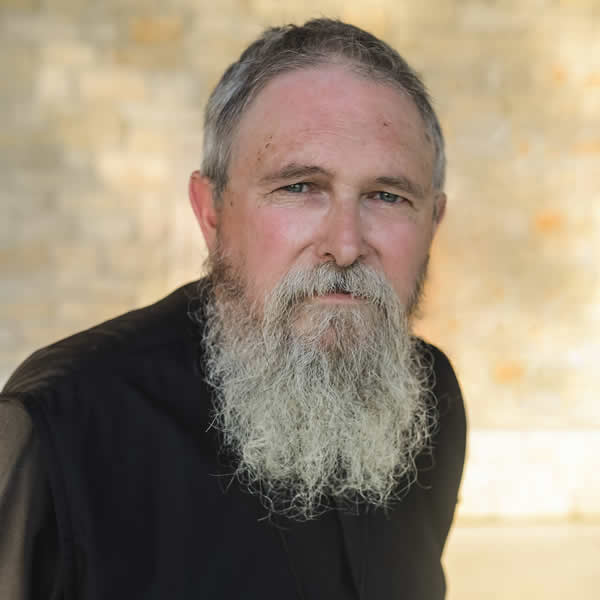
About Fr. Stephen Freeman

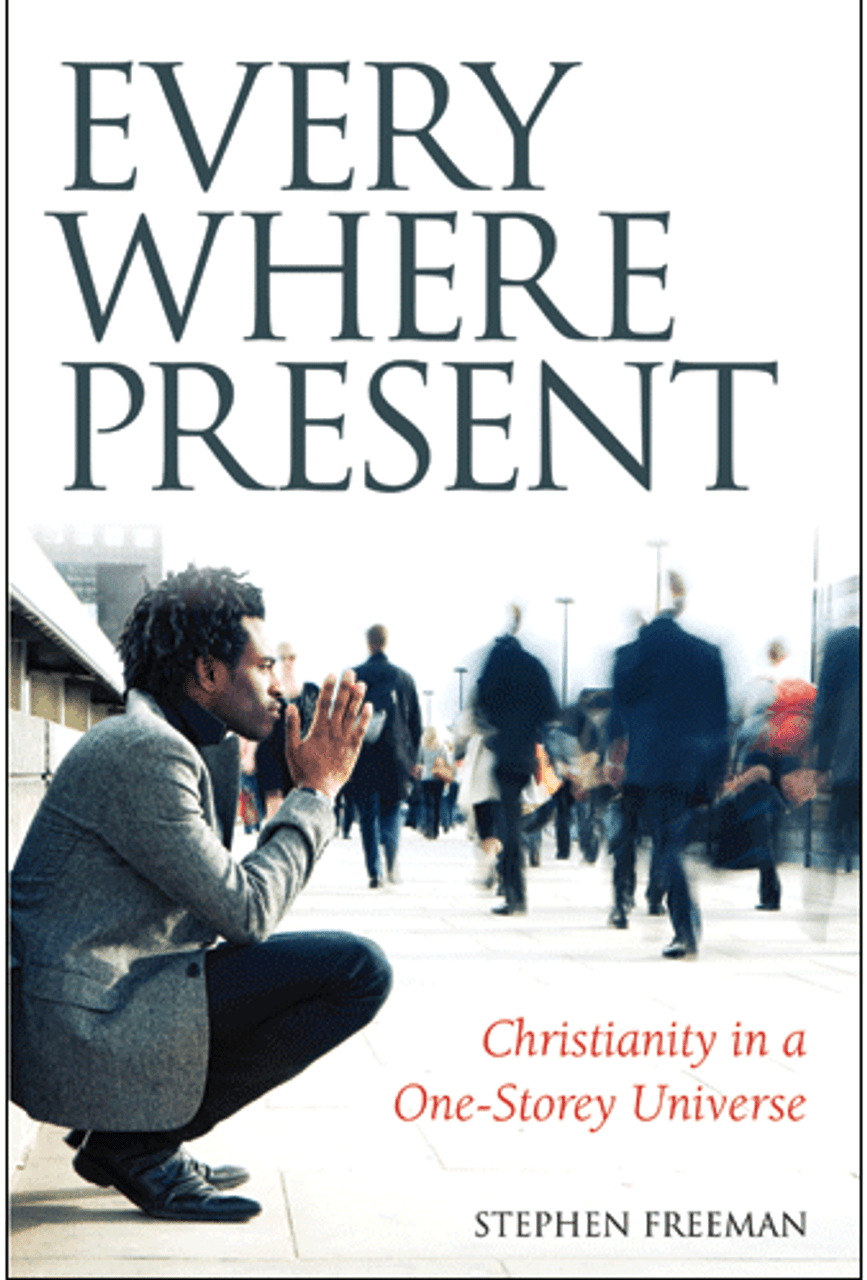
Fr. Stephen is a retired Archpriest of the Orthodox Church in America. He is also author of Everywhere Present: Christianity in a One-Storey Universe, and Face to Face: Knowing God Beyond Our Shame, as well as the Glory to God podcast series on Ancient Faith Radio.


Posted

in

by

Comments

24 responses to “What To Do With What You Know”

  1. Drewster2000 Avatar
    Drewster2000

    (and all the commenters wisely keep silent) (wink!)

  2. Scott Marckx Avatar
    Scott Marckx

    Thank you Father Stephen!

    I for one am very grateful for your writings. This one in particular is one to keep circling back to through the years. “Pay attention to your questions.” Thank you!

    I used to enjoy math! Especially when we learned how to derive from scratch those formulas we had previously been given to just memorize. It started to make sense in an empowering way. Maybe there is something similar in life experience and years of praying and understanding theology?
    Christ is Risen!
    Scott

  3. Ook Avatar
    Ook

    I’m sure I saw that Saint Maximus quote on this blog many years ago, just as I was starting to read the Philokalia. After the initial shock, I went into harumph mode for some months before reluctantly admitting to myself that perhaps the practice is there to be practiced. Perhaps I was trying to use the reading as a shortcut around the boredom.

  4. Fr. Stephen Avatar

    Ook,
    I’ve seen some good analyses that describe much of our online (and modern) behaviors as manifestations of “acedia” (the word that translates as “sloth”). Boredom is a strong part of notion as well. I’ve been pondering the difference between reading a book and reading a digital text – and that, too, has some similar aspects – when we read digitally, we tend to “hop around” in a manner that differs strikingly from when we’re reading a physical book.

    I think of the story from the Desert Fathers about the Elder who owned a volume of the Scriptures. He sold it (it would have been quite expensive) and gave the money to the poor. He said, “I sold the book that told me to ‘sell what you have and give it to the poor’.”

    I could expand this present article by adding a reflection on “seek and you shall find, etc.” Pondering questions (real questions) is good for the soul – in that it helps us find the soul. Of course, the key is “real questions.”

  5. Matthew Avatar
    Matthew

    How can we determine what are good, helpful questions and what are bad or unnecessary questions theologically and/or spiritually speaking?

    Much of my inquiry into these topics over the years has been through intense questioning about God´s love, God´s justice, the Gospel, the Church, God´s actions in the world, etc. In many ways I´m still asking some of these questions. What used to be solely a scriptural investigation into these questions has now become a Church/Tradition investigation. While I admit we cannot get every question we have answered, I think it is also O.K. to desire answers to life´s lingering big questions.

    I don´t think I would be frequenting this space if I didn´t continue to ask such questions. I would never have even considered Orthodoxy had it not been for personal theological and spiritual inquiry. That said, I also think that for years I had lots of theological information that I didn´t really know what to do with. Often I attempted to download it into the lives of both the believing and the unbelieving – with very limited success.

  6. Fr. Stephen Avatar

    Matthew,
    FWIW, I think that our questions, such as you’ve described, are ways that we disguise (from ourselves) the soul-wounds which we carry. You’ve shared a bit about your earlier background (religiously) and that it was unsatisfactory. I think that questions God’s love, God’s justice, etc., are frequently bound up in our wounds. “Does God love me? Does God love everyone?” Even questions like, “Will all be saved?” are really questions about these same things. Our wounds have made it difficult to trust God on a very fundamental level.

    It is a reason that I constantly point us back to the Cross – lest we speak about some other God and some other story that has displaced Christ crucified, dead, and risen. I have reckoned in my heart, as a sure and certain thing, that I (and the whole world) will be crucified with Christ, dead and buried, and that, with and in Him, we shall all be raised. Pascha is the story of all things. I start there and read everything from there (backwards, forwards, upwards, and down). There is no tragedy nor suffering (including the cry of ‘why have you forsaken me’?) that is not taken up into the Cross and revealed in the Cross to be the co-suffering of God. By the same token, I see resurrection within me and around me as well – again and again.

    I carry my wounds (many of them self-inflicted). Sometimes my wounds seem to swallow me and I’m tempted to despair. But Christ crucified, dead, and risen consistently whispers (and sometimes shouts), “All will be well.”

    Just some thoughts on your questions.

  7. Dee of Sts Herman and Olga Avatar
    Dee of Sts Herman and Olga

    “All will be well”
    Thank you so much for these words, Father.

  8. Matthew Avatar
    Matthew

    Thanks so much Fr. Stephen.

  9. Ook Avatar
    Ook

    Thank you, Father.
    Indeed, acedia is a major issue. The prayer of St. Ephrem is very helpful, and not just for Lent.

  10. Fr. Stephen Avatar

    Ook,

    I think I’ve referenced this book somewhere along the line. It’s by a Catholic author – and one of the best I’ve seen on the topic. Jus insightful, page after page. It’s worth the work if anyone wants to dig a bit deeper on this culture-wide problem. I have found it helpful.

    Acedia and Its Discontents: Metaphysical Boredom in an Empire of Desire

    Here’s the Amazon blurb:

    While the term acedia may be unfamiliar, the vice, usually translated as sloth, is all too common. Sloth is not mere laziness, however, but a disgust with reality, a loathing of our call to be friends with God, and a spiteful hatred of place and life itself. As described by Josef Pieper, the slothful person does not “want to be as God wants him to be, and that ultimately means he does not wish to be what he really, fundamentally is.” Sloth is a hellish despair.
    Our own culture is deeply infected, choosing a destructive freedom rather than the good work for which God created us. Acedia and Its Discontents resists despair, calling us to reconfigure our imaginations and practices in deep love of the life and work given by God. By feasting, keeping sabbath, and working well, we learn to see the world as enchanting, beautiful, and good—just as God sees it.

  11. Ook Avatar
    Ook

    Thank you Father.
    I just ordered the physical print.

  12. Dee of Sts Herman and Olga Avatar
    Dee of Sts Herman and Olga

    More good words Father! I think I should read this book.

  13. Jenny Avatar
    Jenny

    Father,
    Only the Lord knows all the things a person hasn’t written or said. In the first few years, I read and reread a book by Watchman Nee. In it, he said that there were spiritual insights that were meant only for the Lord. That was a radical thought at the time I first read it, but I never forgot it, because I found it was true.

    But there are other things that are meant to be given away- that is equally true. I used to be tied up in knots trying to find the balance. Every time I sat down to write something, I would wrestle painfully with what to share and what to withhold, not to mention the obnoxious mix of motivations that kept welling up from either choice, embarrassing me and making it difficult to see clearly.

    That’s why I would say, “cleanse the thoughts of my heart, that I might perfectly love You and worthily glorify Your great name.” Which is an impossible thing, of course. I do not think that I will ever be able to love Him perfectly or worthily glorify His name. It’s a ridiculous goal for me to think of achieving.

    But that’s what I longed to be able to do, so that when I stood before Him and the whole of my life came back to my recollection, I would not be profoundly ashamed of anything that I had dared to write about Him. Which is a prospect which is never far from my mind. The whole process was so painful, but it kept me close to the Lord at all times, because I was desperate to be sure that I wasn’t displeasing Him.

    By now, I am resigned that I am getting some things wrong and I am used to feeling that I am in over my head. My desires are the same, but I no longer feel that achieving a perfectly written piece is within reach and I don’t mind being humbled by getting something wrong. Mostly, I trust the Lord a great deal more with my imperfections. He knows the longings and fears of my heart. He knows what He is doing, and so long as I stay in His hands and give Him whatever I can give Him, He can do whatever He wills with it.

    Jesus said, “It is the Spirit who gives life. The words which I speak to you are Spirit and life.” That’s what only He can do. Otherwise, my words are all stones. Lots of times I want to drop a lot of stones, and I feel that if I just organize these stones very well, in a clear compelling pattern, it might achieve something. But it doesn’t matter what amount of work I put into it. It remains a pattern of dead stones and there won’t be any life in it.

    Even this morning, I was thinking about something that I had just read, and thinking for a moment or two how I might respond that might achieve some level of mutual understanding by intellectual explanations. Then I realized I was doing it again.

    “Stop using your mind like that, you died to it,” I told myself. Which seems like such a funny thing to say to oneself! Scandalous, even. You don’t leave your mind at the door, I have sometimes heard in sermons. Many times, in fact. But what I want to do is pray effectively, not persuade effectively.

    All I can say is, I don’t want to be trying to achieve anything that really matters simply by intellectual understanding. It just leads me to running around in tight little circles, getting nowhere except all worked up and worried.

    I never really understood the Lord through my intellect. I always thought this was a defect. I thought it was a defect arising from my earlier conditioning in the cult that I was raised in, which impaired my ability to think clearly through fear and lack of confidence in my ability to figure things out on my own.

    But I think now that it’s almost a gift, because I can’t put any confidence in myself at all. It does force me to trust the Lord completely to guide me even when I can’t figure it out.

    Sometimes I think of myself like that blind man that He met in town, and they begged him to heal him. And the Lord took him by the hand and led him out of the town. That story has always stood out to me. I feel that I am that blind man and the Lord is leading me out of the town. When I am finally in His presence, I will be able to see clearly, perhaps even then by degrees.

    Because of this, I have often thought of this verse: “I will lead the blind by ways they have not known, along unfamiliar paths I will guide them; I will turn the darkness into light before them and make the rough places smooth. These are the things I will do; I will not forsake them.” Isaiah 42:16

    Of course, now Father, I do pray each night that the Lord should make me Orthodox. If that is His will, I feel that will be a safe place to sink the rest of my life in, like a safe harbor. But I can’t get there now, because the door is still closed. I am waiting for Him to open it and I am sure He is giving me grace while I am waiting.

    But I have added my old prayer to the one I pray to the Mother of God. I say to her, Most Holy Mother of God, please for the sake of your Son, for Whom all things were created and Who is worthy of all things, and because I am a sinner, please pray that I might come to know Him more fully, perfectly love Him and worthily glorify His great name.”

    I feel quite sure that she does pray this, because He is worthy of those things. I am so glad that He is worthy! Because He is worthy, then I do not despair completely of approaching the things I ask for eventually, even if it is only after I pass from this life, like passing out of the town and seeing clearly. It will be the Lord Himself that I will see.

  14. Bonnie Avatar
    Bonnie

    Jenny, thank you for your comment. There is much to think about in Father’s article and people’s responses. That blind man was vulnerable to the confusion and hazards around him. Jesus led him “out of the town” where his healing could take place.
    I need to order that book on Acedia…and limit the time spent anxiously watching the news.
    Thank you, Father, for this article.

  15. Helen Avatar
    Helen

    There was a course taught years ago at Santa Clara University called Belief and Unbelief. Throughout the term, we read many books, by atheists, agnostics and believers. Each week, people were assigned to argue for or against the premise of each book, regardless of personal beliefs. It was challenging! I remember distinctly listening to a fellow student arguing for an atheist book and feeling panicked because his arguments were rational and logical. And I remember the thought that followed: if there really is a God, He’s bigger than all our arguments in this class. He’s bigger than our questions.

    It’s been my experience that all my deepest questions are about my wounds. The key to healing has been to wait for His answers, rather than continue to formulate my own to try to quiet my anxiety. To continue your example, Jenny, to admit my blindness and wait for Him to take my hand.

  16. Fr. Stephen Avatar

    Helen, Jenny, Bonnie, et al
    Paying attention to our wounds (which is not the same thing as “fixing” them, is very important. I sometimes think that we try to “believe” or “think” our way out of a wound, which is not the same thing as paying attention. The deepest wounds in my life are likely never going to go away (this side of the resurrection). “Paying attention” to them has several layers for me: being aware that they exist; understanding how they may skew my view of myself and the world (and God); not panicking or over-concerning myself about them. Also, it’s good, if possible, to know what sort of things (which prayers, etc.) are helpful in assuaging a wound (I like the word “assuage”).

    May God give us grace!

  17. Margaret Avatar
    Margaret

    Fr. Stephen, Thank you for your comment here dated April 27, 2026. I like the word “assuage” also. I appreciate your encouragement concerning how to “pay attention” to our wounds. My wounds are not going to “go away” in my lifetime either, but Our Lord’s love that formed His Church and brought me to His Church is helping me continually to understand and “pay attention” to my wounds. I have always found your comments about this subject helpful, thank you! I also have been encouraged through reading Fr. Joshua Makoul, especially his book: “Healing the Unresolved, Giving Humanity a Second Chance,” and recently (in the past year) have read (and re-read) Schemanun Siluana Vlad’s book “God, Where is the Wound? Healing Remedies for Today’s World”

  18. Margaret Avatar
    Margaret

    Forgive me! Concerning Fr. Joshua Makoul’s book, the title is” Healing Work, Giving Humanity a Second Chance.” His podcast is called: “Healing the Unresolved, Putting the Past in the Past”

  19. Fr. Stephen Avatar

    Margaret, thank you for the recommendations. My wife is very fond of Schemanun Siluana’s book (I’ve only read parts of it – and liked it). One thing that has been helpful to me has been “accepting” wounds – somewhat like accepting that I’m not a tall man, or that my hair is disappearing… 🙂

  20. Margaret Avatar
    Margaret

    Thank you Fr Stephen! Your words encouraging acceptance of my wounds. Because of the nature of my most severe wounds, they are bound up with my family and now with departed family. Prayers that God has given me through the Orthodox Christian Faith continue to be very much a balm, and encourage acceptance.

  21. Mallory Avatar
    Mallory

    Fr. Stephen,
    Reading that book blurb you posted I was like “oh, that’s me!” It’s such a specific, accurate description of how I internally feel about all of my responsibilities in my new role as mother. This rejection/hatred of reality. Part of this, and I’m sure I’m not alone in our culture, is having a hard time with the idea of our “reality” being what God wants of us. It’s hard for some of our egos (mine) to fathom that God wants such difficulties and struggles, especially as our culture is always giving us examples of people with outward-seeming luxurious, easeful lives. I know it’s all a trick. I think it’s all a trick. I guess I should read that book! I told my mom friend that I often wake up with “nooooo” streaming into my head, especially after a week of both daughter and dog sick and needing lots and lots of care and feeling completely drained of life and joy. She said “oh that’s normal, me too.” Part of me rages at the system: no! This isn’t normal! we need more help! We need a village! Then I read something you write or comment and I’m like “hmmm maybe it’s just my broken brain/soul and the wound” Well, whatever the case, I am always grateful for you and this space. To all our wounds being healed, somewhere, someday.

  22. Fr. Stephen Avatar

    Mallory,
    A village really does help – and it sometimes takes the difficulties of our modern-designed lives to point out why villages are shaped the way they are. I remember when my wife first found a “mother’s morning out” program in a town (back in the last century), and how relieved she was. One or two morning a week made a huge difference. Recently, she’s helped a new mom in our parish by playing with her baby for a couple of hours while the new mother gets some needed tasks done. But, there’s some very thoughtful stuff in that book about the nature of work itself (as well as the purpose of the no-work Sabbath, etc.). It’s somewhat philosophical – but I was rewarded for the various passages that I busted my way through.

    I was also struck recently by an article that described “doom-scrolling” as acedia. So, the other morning, I found myself doom-scrolling through a useless news site, and put my phone down. I went outside with my prayer rope and sat on the wall in my front yard and watched the morning traffic roll by, and did my prayers, “Lord, Jesus Christ, have mercy on us and on Thy whole world.” That was “life-scrolling.” 🙂

  23. Scott Marckx Avatar
    Scott Marckx

    Wow!
    I really appreciate that “Life scrolling” idea!
    Thank you Father Stephen!
    All the best, Scott

  24. Dee of Sts Herman and Olga Avatar
    Dee of Sts Herman and Olga

    Amen on the life scrolling!

Leave a Reply

Your email address will not be published. Required fields are marked *


Subscribe to blog via email

Support the work

Your generous support for Glory to God for All Things will help maintain and expand the work of Fr. Stephen. This ministry continues to grow and your help is important. Thank you for your prayers and encouragement!


Latest Comments

  1. For me this is a very complex topic. If the Apostolic Deposit of Faith, the Tradition, the Teaching, etc. is…

  2. These are important words Father. There is a conservative political current in US culture that seems to attract some to…

  3. Rob, I have heard some Orthodox leaders say that the Orthodox and Coptic Churches have more in common than what…


Read my books

Everywhere Present by Stephen Freeman

Listen to my podcast


Categories


Archives