The Sacrament of All Things

How many sacraments does the Orthodox Church have? This is a question that an inquiring 16th century European might have posed. The Catholics had seven, while the Lutherans (and some other Protestants) said there were only two. “Of course,” thought the Orthodox in struggling to answer a question that had never been spoken in the Orthodox world, “We surely can’t have fewer than the Catholics.” So, “Seven.” Someone else in the Orthodox world thought, “But we’re more excellent.” So, the answer came back, “Nine.” Then, in the modern world of flourishing Orthodox thought a patriarch said, “The whole world’s a sacrament.” The counting of sacraments risks reducing them to moments of ritual, the concern of priests and churchly events: “We need to get the baby done…” I once heard as an Anglican. However, to say that “the whole world is a sacrament” runs the risk of saying nothing at all.

At its core, all of these statements beg the question: what is a sacrament? In the Orthodox world of the past, the term “sacrament” is missing from its vocabulary. Instead, Orthodoxy speaks of a “mystery.” It is well spoken, in that what is described is something hidden that is being made manifest. What we find, I think, is the very life of Christ being given to us. That is the mystery hidden from before the ages. (Eph. 3:7-13)

I have often thought about how teaching developed in the early Church. There are the gospels, three of which are quite similar, and the fourth, quite unique. In Matthew, Mark, and Luke, we get historical facts and teachings. But in those teachings, there is very little that goes “beneath the surface.” For example, regarding the mystery of the Eucharist, those three gospels give us the bare words of its institution. We hear those same words from St. Paul, who described them as having been “traditioned” to him: “How that our Lord Jesus Christ, in the night in which He was betrayed, took bread…etc.” But those first three gospels tell us very little else.

St. John’s gospel makes no mention of that “Last Supper.” However, in the context of the feeding of the 5,000, Christ delivers a lengthy homily on the meaning of the Eucharist: “Whosoever eats my flesh and drinks my blood abides in me and I in him.” (6:56) He has much to say in this vein – a commentary and teaching that provids the foundation for understanding the eucharistic mystery to this day.

There are also commentaries on the mystery of Holy Baptism in St. John’s gospel, though they are hidden within a series of “water stories.” In chapter 2, Christ turns water into wine. In chapter 3, He tells Nicodemus that he must be “born of water and the Spirit.” In chapter 4, Christ has a conversation with the woman at the well, and tells her:” the water that I will give him will become in him a spring of water welling up to eternal life.” In chapter 5, Christ heals a man by the pool of Bethesda who had been paralyzed for 38 years, saying, “Take up your bed and walk.” (5:11)

These are “water stories,” each of which yields insight into the mystery of Holy Baptism. It is in chapter 6 that we hear the mystery of the Eucharist described. St. John’s is a gospel that, more than the others, reveals the mystery of the work of Christ. It is “apocalyptic” (“revelatory”) in character.

It is St. Paul who gives us clear, and perhaps greater, insight into the mystery of Baptism. He introduces it in an interesting manner:

“Do you not know that all of us who have been baptized into Christ Jesus were baptized into his death? (Romans 6:3)

He presumes that the Christians in Rome know what he knows – the mystery of Baptism is a union with Christ in His death and resurrection.

We were buried therefore with him by baptism into death, in order that, just as Christ was raised from the dead by the glory of the Father, we too might walk in newness of life. For if we have been united with him in a death like his, we shall certainly be united with him in a resurrection like his. We know that our old self was crucified with him in order that the body of sin might be brought to nothing, so that we would no longer be enslaved to sin. For one who has died has been set free from sin. Now if we have died with Christ, we believe that we will also live with him. We know that Christ, being raised from the dead, will never die again; death no longer has dominion over him. For the death he died he died to sin, once for all, but the life he lives he lives to God. So you also must consider yourselves dead to sin and alive to God in Christ Jesus.” (Rom 6:4-11)

St. Paul is making no claims for a personal teaching or a special insight. Instead, throughout this teaching he says, “We know.” This is the teaching of the primitive Church (“We”). It is a foundational understanding of Baptism itself.

There is a deep similarity between the mysteries of Baptism and the Holy Eucharist – something that is present in the Scriptures. Both mysteries explicitly link us to the death and resurrection of Christ. Baptism is described as being “buried into the death and resurrection” of Christ. The Eucharist “shows forth His death until He comes.”

In this sense, rather than saying that the “whole world is a sacrament,” it is more accurate to say that there is only one sacrament – that of union with the death and resurrection of Christ. His Pascha reveals the world to be what it truly is. The whole world (and all life in it) is a participation in the death and resurrection of Christ. Thus, the Lamb is “slain from the foundation of the world” (Rev. 13:8). And, thus, St. Maximus can say “he who knows the mystery of the Cross and the Tomb also knows the essential principle of all things.”

But sacraments are not merely theological concepts. They reveal the very nature of reality, inviting us into communion with that which is our true existence. If we can say, “the whole world is a sacrament,” it is because the whole world and our life in it is a baptism into the death and resurrection of Christ. The whole world is a communion in the Body and Blood of Him who gathered the whole of the suffering creation into Himself and raised it into the freedom of His resurrected existence.

St. Paul wrote:

“If then you were raised with Christ, seek those things which are above, where Christ is, sitting at the right hand of God. Set your mind on things above, not on things on the earth. For you died, and your life is hidden with Christ in God.” (Colossians 3:1–3)

“Those things which are above” are not abstractions. Rather this is a reference to all things in their proper use and understanding. It is a reference to our true life, “hidden with Christ in God.” It is the very heart of the mystery: “Christ within us the hope of glory.”
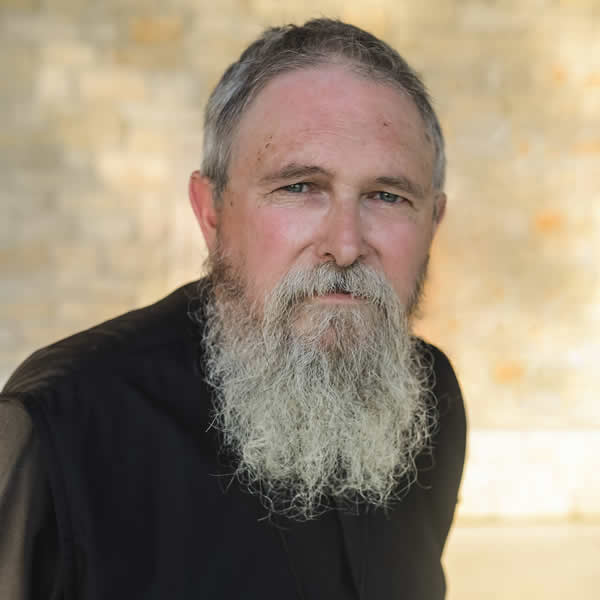
About Fr. Stephen Freeman

Fr. Stephen is a retired Archpriest of the Orthodox Church in America. He is also author of Everywhere Present: Christianity in a One-Storey Universe, and Face to Face: Knowing God Beyond Our Shame, as well as the Glory to God podcast series on Ancient Faith Radio.


Posted

in

, ,

by

Comments

29 responses to “The Sacrament of All Things”

  1. Matthew Avatar
    Matthew

    If the sacraments of the Church existed from the very beginning and were established through the handing down of Apostolic Teaching and Tradition (even before the canonization of Holy Scripture), then it seems a moot point for non-sacramental Christians to demand a “scriptural” defense of the Mysteries. No?

  2. Fr. Stephen Avatar

    Matthew,
    I’m not sure I’d call it a moot point. Think about your question: the proposition, “the sacraments existed from the very beginning and were established…etc.” is already a means and lens for the reading of Scripture (and the whole world). Christianity is not an argument (needing a defense). What all of this does say, is that “outside the Church” (as in “within various schismatic groups”) it’s not possible to read the Scriptures properly. They are by, for, with, and in the Church.

    Protestantism is a never-ending argument. So, we pray for them and try to live in a manner that is an answer to the question: “Who is Jesus Christ?”

  3. Matthew Avatar
    Matthew

    Thanks Fr. Stephen.

    You said: “Protestantism is a never-ending argument.”

    Yes

  4. Ann Dibble Avatar
    Ann Dibble

    THIS!

  5. Margaret Sarah Avatar
    Margaret Sarah

    This is a timely article for me. I’ve been ruminating particularly on the line between the visible, historical, institutional aspect of the Church and the Eucharistic, sacramental reality of the Church. I’ve found both, organically interwoven, in Orthodoxy.

    But it seems that in the current fractured state of believers, the Body of Christ has to be discerned and differentiated between traditions – and this necessity for comparison seems so antithetical to the reality of Christ’s fullness. It’s a tragedy, particularly because so many of of my devout Protestant and Catholic friends have such admirable sincerity and well-thought-out reasons to believe as they do. I’ve approached the Faith as an agnostic and unbeliever, so somehow the entire process of ‘choosing’ which ‘tradition’ was almost beside the point (there was no conversion to “mere Christianity” for me: only persuasion to the Person of Christ as found in the Orthodox life and faith).

    Is there anything particular to keep in mind moving forward, for my own peace of soul, and living in close relationship with Christians of different persuasions and communions?

  6. Dee of Sts Herman and Olga Avatar
    Dee of Sts Herman and Olga

    Margaret Sarah,
    Similar to you, I have been disturbed by both Protestants and Catholics who hold to the belief that they are entitled to the Orthodox Eucharist. Some have told me that they have even taken the cup with a subterfuge that they are visiting as an Orthodox, in rejection of the Orthodox stipulation that they were not invited to partake. I’m not sure what to say or think about this. I suppose it is a way for them to say that the Protestant and Catholic Churches are not different from the Orthodox Church. Perhaps all that we can do is pray.

  7. Fr. Stephen Avatar

    Margaret Sarah,
    With the proper understanding (nuanced), it’s possible to say that “everything and everyone is Orthodox” (cf. the previous article on The Everything of Orthodoxy). To me, it’s like saying “We’re all human beings.” Orthodoxy, rightly translated, is “right glory” or “right worship.” Everything and everyone worships God – some badly, nature does it with groaning and travail, etc. That those of us who are called “Orthodox” – can “boast” that “right worship” has been handed down to us simply demands that we remain faithful to it. There are elements, I know this from experience, of “Orthodoxy” in everything, though obscured or hidden. For example, most Protestants have a form of communion. The form is deeply degraded, quite often. And the understanding has been corrupted by bad teaching, etc. But the simple fact that communion (or Baptism), even in a degraded form, remains, points to some abiding element of Orthodoxy. Many of us, coming from other backgrounds, first found Christ in those degraded settings and forms. My late Archbishop (the first convert to become a bishop in the Western Hemishphere), used to tell us not to speak ill of where we came from, in that we very likely first met Christ in that setting.

    The Scriptures are clear that God is gathering all things together into one in Christ Jesus (Eph. 1). It’s an incredible mess at present. We must be grateful as Orthodox for the mess we have received and be faithful in the fullness of the Church. We should pray for others (rather than condemning – mostly, they don’t know what they’re doing).

    I’m here because Jesus drug me the whole way…

  8. Fr. Stephen Avatar

    Dee,
    In a culture that has so few boundaries – I’m never surprised that people are offended by the Orthodox insistence on boundaries. We guard the sacrament – and rightly so. But learning that boundaries are a blessing for both sides takes time.

    When I was an Episcopal priest, and visited an Orthodox Church, I kep the fast, and offered (in prayer) my non-participation in the Eucharist as a sacrifice, praying for my eventual reception into the Church. My “not partaking” was a means of “partaking” if it is rightly understood. But that’s way beyond the normal visitor’s understanding.

    There is also, if you will, a communion of suffering in all human beings – which is a participation in the Cross of Christ.

  9. Dee of Sts Herman and Olga Avatar
    Dee of Sts Herman and Olga

    A few more thoughts:
    My grandfather was a Quaker, but his demeanor and way of life seem in retrospect hesychastic.
    A Catholic priest laid his rosary on my broken chest after a catastrophic car accident, and my deflated lung and broken spine were healed enough to walk and run again.

    My husband is agnostic, was not brought up in any Christian tradition or church but he “digs in the dirt” (his words for farming) and calls this his prayer. He often voices biblical verses without knowing it. I have no idea how they occur to him; he doesn’t read the bible.

    In my prayers for our brothers and sisters who are not Orthodox, I remember these words of Christ:

    “Do not marvel that I said to you, ‘You must be born from above’. The wind (Spirit) blows where it wills, and you hear the sound of it, but you do not know whence it comes or whither it goes; so it is with every one who is born of the Spirit.”

    (John 3:7-8)

  10. Dee of Sts Herman and Olga Avatar
    Dee of Sts Herman and Olga

    Indeed, Father, thank you for your words:

    “There is also, if you will, a communion of suffering in all human beings – which is a participation in the Cross of Christ.”

    This is so true.

  11. Dee of Sts Herman and Olga Avatar
    Dee of Sts Herman and Olga

    Father,
    There have been times when I participated in the Orthodox Liturgy but did not partake because I had need of confession that had not yet taken place. And on those occasions, I received a blessing, a partaking of another kind. Such days make the receiving of the Eucharist all the more meaningful to the heart and soul.

  12. Matthew Avatar
    Matthew

    We attended the baptism of my niece´s son in a Greek Orthodox Church in Zürich last week or so. So very beautiful.

    Our Catholic priest knew we were going to be unable to have Holy Communion the entire weekend because of our travels away from any parish. He told us we must respect the Orthodox practice of closed communion (which Catholics also practice) and then he proceeded to give us a prayer to say in place of the actual partaking of the Eucharist.

    All that to say, I realize most people in this space don´t have an “ecumenical bone in their body”, but I still contend that for Catholics and Orthodox at least – we are not as far apart as many think. I must honestly say, in closing, that sometimes I feel a very negative vibe coming through my computer screen whenever we talk about this particular topic in the comment section … might just be me though.

    Lord have mercy.

  13. Helen Avatar
    Helen

    Jesus offered His broken body for the remission of our sins. His body, the church, is still broken. I think we are often surprised about that; but I believe He is not. And I rest in the peace that He gathers all the broken pieces to Himself, including the brokenness of myself.

  14. Matthew Avatar
    Matthew

    Thank you Helen.

  15. Margaret Sarah Avatar
    Margaret Sarah

    Father, et al,

    Thank you for your encouragement and advice. It’s one of those very difficult daily realities, and I do not see any legitimate “knock down” arguments against sacramental Protestantism or Catholicism. All I can lean on is a vague perception that there is a “wholeness” in the Orthodox approach which is what the Church would look like if Christ Jesus were really the Truth made flesh.

    But the main point of question for me is just that: is Christ the Truth? And if so, what must I do? And so I try to focus on this, and not get caught up in comparison to the faithful and inspiring Protestants and Catholics I live and work with. But neither do I find that it is all relative and subjective – the boundaries and tangibility of Orthodoxy have been vital.

    Matthew, forgive me if I bring negativity to this space. I have deeply appreciated my loving, intellectually stimulating experiences at Catholic Churches and with Catholic friends and authors. In fact, once during a discussion with my local Orthodox priest, he actually pulled a Catechism off the shelf behind him, saying, “Margaret, you should just be Catholic!” Mostly behind all this is a frustration at my own lack of belief, and a confusion as to what others are seeing that makes them so confident. I’m just an agnostic who finds herself teetering on the edge of Orthodoxy, and is trying to figure out why. Your evident faith is an inspiration.

  16. Dee of Sts Herman and Olga Avatar
    Dee of Sts Herman and Olga

    Margaret Sarah,
    For what it’s worth, my thought is that you have not brought negativity.

    If you’re teetering on becoming Orthodox, it is good to ask why Orthodoxy and not another church. My own priest who became my catechist said it is best not to come to Orthodoxy through disparaging other churches, because there is enough to disparage about the Orthodox Church. Rather it is best simply to seek Christ and go where He leads you. Such a process can take years as it did for me.

  17. Margaret Sarah Avatar
    Margaret Sarah

    Dee,

    Thank you. I think it has been good for me to ask “why Orthodoxy and not another church?”, but the answer hasn’t come in any form that my skeptical, analytical brain likes. Somehow, it’s just that the framework of epistemology and authority in Orthodoxy is honest and realistic. There is a contradiction at the heart of Christianity, and the great problem is how to hold ourselves in the presence of this contradiction without trying to explain it away or push it into the corner or set up some external authority to try to prove it.

    I am glad to hear that it took you years… it has been years for me at this point, and it feels frustratingly slow.

  18. Fr. Stephen Avatar

    Margaret Sarah,
    I was years coming to Orthodoxy, mostly for practical reasons rather than any question of belief. Indeed, the faith of the so-called “undivided Church” of the early centuries was a touchstone for me. Even as an Episcopalian, it was what I thought about and taught. Over the years, there came to be things that “sealed the deal,” such that, I could only be Orthodox. Much of it had to do with change. The Anglicans and other Protestants were caught up (and still are) in constant changes, ultimately lacking stability about many of the most fundamental, universal teachings of the early Church. It was becoming crazy.

    I had fundamental disagreements about the authority of the papacy (I still believe that it was an evolving thing, driven by politics, with many sad outcomes). But, more than that, there was the same changing dynamic at work within many elements of Catholicism. Things have been tightening up a bit, but there’s a continuing drift that seems Protestant to me.

    In Orthodoxy, there is a stability of faith and practice that has been battered by storm after storm. There are precarious places within it (mostly tensions between certain hierarchs, etc.) Nevertheless, it has, in my judgment, remained faithful to what it received, not having made changes in the substance of the faith – and with an inner compass that seems to continue to remain faithful.

    In the long run, it was a lot like getting married. You never can quite explain that one, either.

    Matthew, I’m sorry that these discussions make you uncomfortable. It’s just a conversation among friends, of whom you are one. You are loved and you are welcome.

  19. Matthew Avatar
    Matthew

    FWIW

    I often use the fullness explanation when people (mostly Protestants) ask why I became Catholic.

  20. Dee of Sts Herman and Olga Avatar
    Dee of Sts Herman and Olga

    Margaret Sarah,
    I’m reflecting on what you mentioned that the Orthodox priest said to you about the Catholic catechism.

    Orthodox theology has not had the same scholastic approach as that seen Western churches over the past several centuries. As a result, the Orthodox Church has a different ethos, and the Orthodox catechism differs and even emphasizes simply coming to and participating in the Liturgy. There isn’t really any persuasive argument or a formal way to create a logical structure for belief. The emphasis is on faith and prayer themselves, which are considered forms of theology.

    I, too, have an analytical mind and still tend that way. My attraction to Orthodoxy began with what I had learned about the theology of the icons, then about the Orthodox theological understanding of time (“Christ was slain before the world”). Then I discovered the hesychast tradition. In previous comment streams, I have described these as the ‘breadcrumbs’ that lured me to the Church. But the keyword is lured, or even better, wooed. There wasn’t a persuasion or an internal argument. It was more like, “oh I know what this is”. Like love, or like a marriage, as Father says.

    As for confidence, just be authentic to yourself and your heart. I lacked confidence in myself even up to the very last moments before I took the Chalice for the first time. I prayed to God, asking and pleading, let my mind be at rest to receive you in my heart and soul. I feared I would be analyzing everything up to and including the reception of the body and blood of Christ. Gratefully, my prayers were answered.

    Glory to God for all things! Even analytical minds!

  21. Dee of Sts Herman and Olga Avatar
    Dee of Sts Herman and Olga

    Margaret Sarah,
    You asked:
    Is there anything particular to keep in mind moving forward, for my own peace of soul, and living in close relationship with Christians of different persuasions and communions?

    Without knowing your particular circumstances, I suspect your mentioning “in close relationship” might mean that your conversion to Orthodoxy might upset others. In my case, my conversion started slowly, but in the final months prior to my Baptism, there were tensions. I almost bailed out just days before the day of my Baptism. In those final moments, the priest was counseling me, saying that I had two choices: to step up to the Cross or step down.

    I’m not going to sugarcoat the situation. Going forward felt like death to me in those moments. I don’t count myself as a strong person. Gratefully, in prayer, I received just enough grace to make that final step up to the Cross. Yet for me, this was and still is no cake walk. I am a sinner and mourn for my ineptitude as Christ’s servant.

  22. Margaret Sarah Avatar
    Margaret Sarah

    Dee,

    Exactly – Experience is necessary in any tradition, and in Orthodoxy it’s sort of “baked in” to the theology as well. For me the perennial question is truth and epistemology, and in the theology of icons and sacraments there is a participatory “answer”. Scholasticism, though very attractive, only pushes the question back farther. The way I can best describe it is that Orthodoxy is primarily an invitation into the Life of Christ – of Truth himself – not an argument or answer. I know that there are aspects of this in other traditions, but not enough to convince me.

    My immediate family and dear friends (the Christian ones, at least) are supportive of my conversion, and just want the torturous struggle to be over with. While they may not all understand why it’s Orthodoxy specifically, they know that it’s not merely a stylistic preference but truly the only viable path I’ve found to faith in Christ. I’m grateful for their acceptance of this. I wish I had something more to say than vague references to participation and history and theology.

    I so appreciate hearing your perspective: it resonates and also pushes me forward. Frankly, I’ve wondered many times if Father would give you my email to see if we can communicate directly. Over the years, I’ve always found help in your comments, even if I am not in the thread myself. Thank you.

    Father, thank you. I think I see those points – and I know there can be counterpoints to them all. After all, you have to know the faith in order to recognize it in the early church. “In the long run, it’s like getting married”. Exactly! Florensky says that “the indefinability of Orthodox ecclesiality is the best proof of its vitality”. Frustrating! 🙂

    Matthew, yes, I’ve heard this from Catholics, and seen it at play in their lives.

  23. Matthew Avatar
    Matthew

    Thanks for calling me a friend Fr. Stephen.

    “I no longer call you servants, because a servant does not know his master’s business. Instead, I have called you friends, for everything that I learned from my Father I have made known to you.” – John 15:15

  24. Justin Avatar
    Justin

    Matthew,
    As a guest here at Fr Stephen’s place, I consider you a friend as well, as much as someone from the opposite side of the planet can. We’re in this together.

  25. Matthew Avatar
    Matthew

    Thanks so much Justin.

    🙂

  26. Rob Avatar
    Rob

    Father Stephen,

    I read this post and I THINK I know what you are saying and have known this union and that it wouldn’t be a big leap to join in the sacramental life of the Church. Quite frankly, I’m tired of the burden of protestantism, even though I don’t consider myself a protestant. I don’t really care what people classify me, including myself. I care about the ontological reality and revelation. That’s all I want to trust. But I experience the effects and influence of not trusting that the Holy Spirit has lived within the Church. And I’ve felt the burden placed on the individual with the Bible and his interpretation, his trust in himself, his trust in his own understanding. I’ve experienced the effects of the disobedience to the authority that God has placed within His kingdom because of the rugged individualism baked into this culture, and worst yet the spirituality of “do what thou wilt” that can cloak itself in deceptive religious clothing. It’s exhausting and can make people neurotic. This may sound scandalous and be scandalous, but I’m almost willing to accept things that I might not even be convinced of, yet, because it might not matter as much as I’ve sometimes thought. I THINK the core is right, because it bears witness with whatever I’ve experienced of Holy Spirit. And what else do I have to go on except God and love wherever He is obeyed. Sidenote: I’d love to hear your thoughts on Dallas Willard’s definition of the kingdom of God as being “the range of God’s effective will”. I just long to be in the communion of “on the Way” saints…To become and be in the communion of those that see the “everything” that you have been writing about, because Christ is their everything, however imperfect it may all be. I just don’t think I can tolerate all the omissions and limiting theological systems that stop people short of going on with “Christ in them, the hope of glory.”

    I visited Eastern Orthodox OCA churches now. There’s some kind of respect and recognition I have for Coptic Orthodox content that I’ve seen online and want to go and visit the closest church to me this weekend. I’d like to hear your thoughts about that, Father. My wife is really plugged in at the non-denominational church we attend. I’m finishing up my commitments to the small group that meets there on Sundays, which has been the only thing that I’ve been attending. My 5-year-old son is plugged in there and has some kind of structure. But all I want to do is join in on the Ancient Faith, live the paradox of a married monk, and love God and love people. It’s all I’ve ever really wanted to do, though God knows I miss the mark.

    But at this point there seems to be a resistance on the horizon with the internal courage and desperation that’s building in me. There’s the temptation that presents itself to “keep doing what you’re doing and expect different results”. There’s external and internal pressure that tries to convince me that I’ll go the wrong way. Please pray for me and I will pray for all of you. We all need the grace of courage in these times and maybe all times. And to echo the words of Father, glory to God for all things.

  27. Dee of Sts Herman and Olga Avatar
    Dee of Sts Herman and Olga

    Rob,
    I have heard some Orthodox leaders say that the Orthodox and Coptic Churches have more in common than what the Orthodox have with other confessions.

    Perhaps Father can clarify on this point. I’m not sure, that is I don’t remember the sources for this information.

    My husband of about 40 years does not attend Church with me. We remain a happily married couple after my conversion. However there were a few bumps on the road. My advice is to go slow and gentle.

    Continue to pray as much as you can.

  28. Rob Avatar
    Rob

    Dee,
    I take your words to heart. Thank you.

  29. Fr. Stephen Avatar

    Rob,
    I will email you privately on these questions. Blessings!

Leave a Reply

Your email address will not be published. Required fields are marked *


Subscribe to blog via email

Support the work

Your generous support for Glory to God for All Things will help maintain and expand the work of Fr. Stephen. This ministry continues to grow and your help is important. Thank you for your prayers and encouragement!


Latest Comments

  1. One facet of being in Christ is the reality of rejection from “the world”, but the acceptance from God. When…

  2. Reader, You’re most welcome! I particularly enjoyed writing this most recent piece – it was the fruit of some recent…

  3. Fr. Stephen, I just want to thank you for your writing all these years. This article is very timely for…


Read my books

Everywhere Present by Stephen Freeman

Listen to my podcast


Categories


Archives