Remembering the End

Orthodox Christianity often seems inherently conservative. The unyielding place that tradition holds within its life seems ready-made for a conservative bulwark against a world all-too-ready to forget everything that is good or beautiful. There are subtle but important distinctions that make this treatment of Orthodoxy misleading and can lead to the distortion of the faith and an almost reverse image of our true salvation. Orthodox Christianity does not seek to preserve something that is now past – it is not a faith bound in history. Rather, it professes that what was once given at a moment in history is nothing other than that which shall be at the end of all things. The faith is thus only rightly lived when it is radically oriented towards that which is to come. The Kingdom of God is never anything other than the end and fulfillment of all things, that for which creation itself came into existence.

“I am the Alpha and the Omega, the Beginning and the End,” says the Lord, “who is and who was and who is to come, the Almighty.” (Rev 1:8)

Understanding the true nature of the “end of things,” or, in theological terms, “eschatology,” is a difficult task at first. It breaks many rules of space and time (yes, Dr. Who fans, it really does), and requires a certain shift in perspective. One example of this shift can be found in the Eucharistic prayer of St. John Chrysostom where the priest prays:

Do this in remembrance of Me! Remembering this saving commandment and all those things which have come to pass for us: the Cross, the Tomb, the Resurrection on the third day, the Ascension into heaven, the Sitting at the right hand, and the Second and glorious Coming.

The priest refers to the Second Coming in the past tense. This does not represent some strange doctrine in which the Second Coming is thought to have already occurred in history. Rather, it is the recognition that the Divine Liturgy stands in a mystical place from which it is correct to describe the Second Coming in that manner. For the Divine Liturgy is truly the “last” supper, the meal at the end of all things.

The Fathers held that the truth is to be identified with the end. Both St. Maximus the Confessor in the East, and St. Ambrose in the West, wrote of a three-fold scheme in which the Old Testament is “shadow,” the New Testament is “icon,” while the “truth” is the age to come. This understanding has several aspects.

First, the truth of anything is found not in the present, but in its telos, its end. A seed is not known until it is a tree. But, most importantly, this realization of the truth is not seen as a gradual progression, a building up towards the truth. Such a scheme would suggest that the truth is “not yet.” The truth, however, is already and now. We can say that the truth, which already exists in the age to come, draws everything towards itself. Or, we can say that the truth, which already exists in the age to come, manifests itself in time even now, for those who have the eyes to see.

Our most common way of viewing the world is to privilege history, to presume that the past is immutable and is the cause of all things in the present. That makes us the authors of creation, the makers of the story of the universe. That is very alluring, even though it carries the seeds of anxiety and war. But God has not so constituted creation so as to make it the maker of its own destiny, the master of its own fate.

At the creation, God observes His work and says, “It is very good.” This is not simply an observation of the work He had done, but a proclamation of the very nature of the creation itself. Its nature is revealed in its end. The end calls forth creation, always towards that for which it was created. St. Paul offers this description:

…having made known to us the mystery of His will, according to His good pleasure which He purposed in Himself, that in the dispensation of the fullness of the times He might gather together in one all things in Christ, both which are in heaven and which are on earth– in Him. (Eph 1:9-10)

This verse should also be read along with St. Paul’s statement in Romans 8:

And we know that all things work together for good to those who love God, to those who are the called according to His purpose. (Rom 8:28)

This is the “good” or the “very good” according to which all things were created. This same good, however, is hidden. It is in no way obvious to us, except as we see Christ Himself.

Consider the world, ca. 1000 B.C. An utterly obscure people, little more than a collection of tribes, is engaged in a struggle over a piece of land that is almost useless in its fertility and insignificant in its situation and size. Within the same region, however, mighty kingdoms and civilizations are rising and flourishing, producing wealth, power, and innovation. Their monuments will stand for thousands of years. But in this obscure place, a young man will face down a giant in single combat and win. In the scale of the universe, it is almost nothing, without significance. But this is the story of David and Goliath, and this David will become the ancestor of God Incarnate, Who is Himself the “good” of the world.

At this very moment, we cannot judge or measure the “good” within the world, nor can we measure the aggregate of evil. Nothing makes any sense until it is interpreted in the light of the end of all things. David only has significance in hindsight. It is his offspring who “causes” him to have meaning and significance. More than that, we must understand that the “cause” of David’s renown was already drawing all things towards itself. Christ the child was causing the rise of David and establishing his kingdom.

In the same manner, our own lives are being “caused” by the end for which they were created. Again, St. Paul says:

Brethren, I do not count myself to have apprehended; but one thing I do, forgetting those things which are behind and reaching forward to those things which are ahead, I press toward the goal for the prize of the upward call of God in Christ Jesus. (Phi 3:13-14)

We do not build on the past or seek to preserve the past. The foundations of the Kingdom of God are not in this world, nor of this world. They are “unshakeable,” in the words of Scripture. What is called “tradition” by the Church is not a dim historical memory; it is the ever-renewed life of the Spirit that is “once and for all delivered to the saints.” The continuity of the Tradition does not depend on memory. It is the same always and everywhere because it is the once-given reality that has existed from before all time and towards which we are being drawn.

This is a strange perspective for most people and runs counter to the merely human sense of conservatism. It might strike an outside observer as something conservative, but if what is maintained is only preserved in a historical manner, it is not the life nor the truth of the Tradition. There is a requirement that we must empty ourselves at every moment in every way and constantly receive the life that is being given. Jesus Christ is the same “yesterday, today and forever.” And this is the content of the Tradition. I do not know Him today because I knew Him yesterday. I may only know Him now.
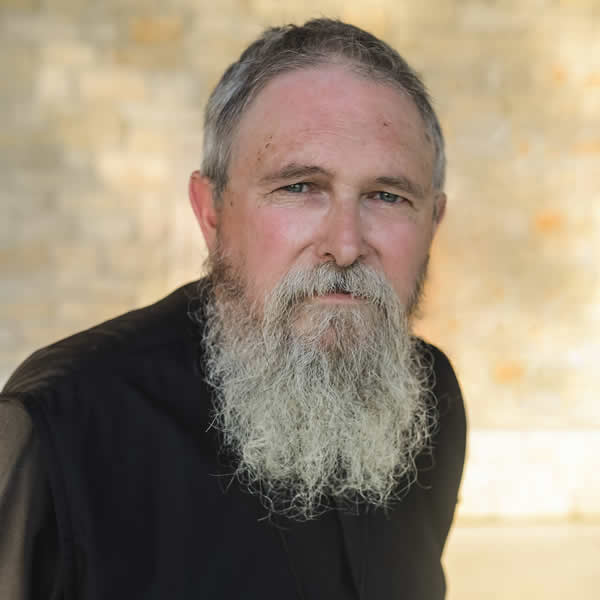
About Fr. Stephen Freeman

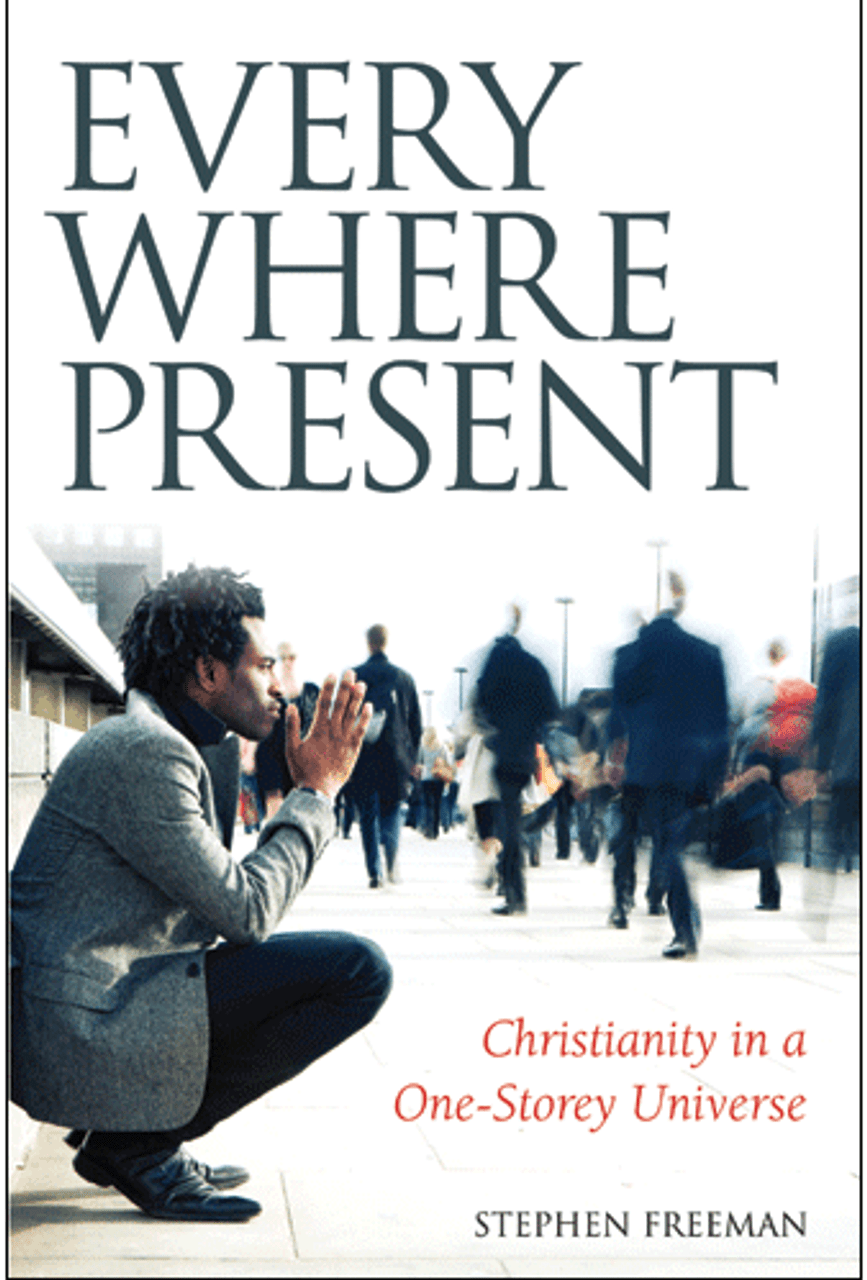
Fr. Stephen is a retired Archpriest of the Orthodox Church in America. He is also author of Everywhere Present: Christianity in a One-Storey Universe, and Face to Face: Knowing God Beyond Our Shame, as well as the Glory to God podcast series on Ancient Faith Radio.


Posted

in

by

Comments

15 responses to “Remembering the End”

  1. Dee of Sts Herman and Olga Avatar
    Dee of Sts Herman and Olga

    These are important words Father. There is a conservative political current in US culture that seems to attract some to the Orthodox Church.

    Your words help to clarify what the Tradition is and why, as it is expressed in the Orthodox Church, that it isn’t a set of laws, or conservatism, even while the commandments are based and arise from what has been traditioned to us.

    I used to think the cossacks and beards were out of place. Initially I took this to be ‘pretend’ behaviour as it is not a custom in the west. Or a show of conservatism.

    Yet now I take them to be iconic of what you have expressed here. When I see the icons showing our saints presenting the same or similar appearance, there is a kind of lifting of the heart out of our focus on linear time.

    All of us are being drawn to Christ, the Logos and Epicenter of all things. Whether we know it or not.

  2. Matthew Avatar
    Matthew

    For me this is a very complex topic.

    If the Apostolic Deposit of Faith, the Tradition, the Teaching, etc. is not something anchored in the past – but rather something that completely reveals itself anew each and every moment, why is this newness not extended into acceptable changes in doctrine, liturgical styles, etc. within Orthodoxy?

  3. Jenny Avatar
    Jenny

    Father,

    How refreshing to read this! I’ve never thought to see things this way before.

    You write: I do not know Him today because I knew Him yesterday. I may only know Him now.

    I have had to learn and relearn this, because I find myself either longing for the past or the very end. I have had to learn that I can only know Him now and to be thankful for that gift.

    But thank God we will all finally and fully see Him at the end, and see the truth there, the Truth that is drawing and shaping all things as they come: “It is the same always and everywhere because it is the once-given reality that has existed from before all time and towards which we are being drawn.”

    What a beautiful truth to remember!

  4. Andrew (Silouan) Avatar
    Andrew (Silouan)

    Profound. This will require a few readings I think. Two things that stand out:

    “Orthodox Christianity does not seek to preserve something that is now past – it is not a faith bound in history. Rather, it professes that what was once given at a moment in history is nothing other than that which shall be at the end of all things.”

    This is so key and also so often misunderstood, both by those on the outside looking in and even for us on the inside. I think this is way Vladimir Lossky’s is so insightful when he says that ‘Tradition’ is “the life of the Holy Spirit in the Church.”

    Your post also brought to mind 1 Cor. 4:5

    “Therefore judge nothing before the time, until the Lord comes, who will both bring to light the hidden things of darkness and reveal the counsels of the hearts. Then each one’s praise will come from God.”

  5. Fr. Stephen Avatar

    Matthew,
    “reveals itself anew,” is a tricky phrase. The faith is made known to us – reality is revealed – but it’s not a reality/faith that differs from that which has been made known. So, what we receive is that which we have always received. Doctrine does not change, etc. What matters in this is that what is received is not received as historical relic, but as the End made known to us.

    In fact, those who would twist such language (and there are many) into a Trojan Horse to ride modernity into the heart of the Church are false teachers. It has been a clear fact that the era of liturgical change (in whatever circles) has been an era of doctrinal apostasy. I was there. I saw it.

    The true substance of the faith is unchanging – doctrine is a “verbal icon of Christ,” in the words of Fr. Georges Florovsky. That verbal icon is also made known in the liturgical “icon” of the services. One of the great weaknesses in the West has been the notion that things such as the Liturgy can be radically reshaped without changing the substance. I know, as a point of fact, that many of those who were/are involved in the reshaping of the liturgy fully intend to reshape the doctrine. They were/are false teachers.

    Orthodoxy has its own temptations, and we struggle with them. I believe, however, that the consistency of the Liturgies has saved us repeatedly, despite the unfaithfulness of leadership, etc.

    We’re not saints. I can’t think of anyone to whom I would entrust reshaping liturgical practice in order to give something new.

    We are sheep living in an age of wolves.

  6. Fr. Stephen Avatar

    Andrew,
    Thank you! Great verse.

  7. Matthew Avatar
    Matthew

    Thanks so much Fr. Stephen for the Orthodox perspective.

    In the Catholic Church, I believe there is this understanding that the Deposit of Faith and the core truths never change, but that it takes many centuries for the Church to unpack the implications of the core truths. I suppose in their view this can mean things can look different from one epoch to the next.

    That said, I do understand the worries associated with changing things too much, if at all. I have seen things unravel in the Protestant world I once inhabited because of constant changes to liturgical style for example.

  8. David Sandborgh Avatar
    David Sandborgh

    Thank you for that Zizioulian thought Father! I have been reflecting on Zizioulas and Maximus understanding of the Eschaton giving meaning to my life presently. The Kingdom seems to be where our true freedom to be ourselves lies, not in being conservative or liberal.

  9. Fr. Stephen Avatar

    David,
    Though I don’t say it in the article, I’m generally conservative on things – in the Burkean sense – in which the Law of Unintended Consequences is given deep respect. So, things should go slow and thoughtfully, and with care.

    When it comes to us as persons, I find that when I look backwards, into the past, there is nothing that can be resolved or changed. Hope is not in the past. But if the future depends on me figuring things out and making them happen, then hope is not in the future. Hope is in the Kingdom of God which is coming (always), and drawing us forward (always).

  10. Fr. Stephen Avatar

    Matthew,
    I would say that, on the whole, that line of thought has not worked well for the Catholic Church. There was been unending turmoil since the 60’s with no particular end in sight. It’s a risky approach.

  11. Matthew Avatar
    Matthew

    Hello Fr. Stephen.

    As I get older the Law of Unintended Consequences is a law which seems best to obey.

    I must admit that Vatican II did indeed create turmoil in the Catholic Church between traditionalists and progressives. That said, I for one am glad I don´t have to hear the entire liturgy in Latin.

    🙂

  12. John Avatar
    John

    Fr. Stephen, Can an Orthodox Christian be liberal? As there are various levels of instances of being conservative, the Church is trans-generational, trans-time, trans-historical, beyond the constraints which we place on it. However, there has been an “evolving” of currents which have “modified” but not destroyed the intent nor the essence of her dogma, Tradition (with a capital T), thus Orthodox have been labeld “conservative.” We must be careful not to jettison terminology which may be political, religious, societal, or any other venue and confuse it with the essence of the teachings of the Church. In certain areas the Church is “conservative.” In other areas she can be liberal: extending her love, her teachings, her theology with a broadcasting in all directions. Certainly, her iconography is currently experiencing a familiar yet new direction. With photographs and more recent announcements of saints, the depiction is no longer hyperthetical but actual. Hence, the icon resembles what they were in “real” time, yet “trans-time” with their faith and example. The iconography has also experienced a “change” in coloration and interpretation which speaks to more current times. (I avoid the term ‘modern” as it is misleading at best. More thoughts but not for the moment.)

  13. Fr. Stephen Avatar

    John,
    If an Orthodox Christian chooses to have political opinions, then, no doubt, they can and will run the entire gamut. This has long been the case, including in Orthodox countries.

    Having said that, I’ll offer an observation or two. First modernity’s politics (particularly in America) are deeply rooted in English Civil War (when the Puritans killed the king, took over parliament, etc.). I say this in that from that time forward English-speaking politics has largely been a religious enterprise. The thing we call “liberal politics” (once called “Whigs”) is an application of a selective treatment of the gospel to the state, with the state largely seen as a religious instrument (with the guise of secularism). This is particularly true of American Progressivism.

    American Conservatism is more problematic and has been through any number of sea-changes over the past half century or more. But, it’s strongly married to a hodge-podge of religious notions.

    I only use the term “Burkean Conservatism” to describe myself in that it references an attitude of caution towards change – not an opposition to change – but a deep caution.

    Truth told, I’m a-political inasmuch as I do not see the state as an agent of the Kingdom of God. I believe it exists for a minimum number of good efforts. I am not a progressive.

    Can an Orthodox Christian be a Calvinist? No. Because it’s a heresy. I believe, along with Fr. Alexander Schmemann, that secularism is great heresy of our time (the belief that there is such a thing as anything outside of God’s control, etc.). So, basically, I think that the modern political project is an exercise in heresy. All of it. It doesn’t mean I don’t vote (but I don’t always vote). But it means I think very differently about what voting means.

    If someone thinks of themselves as a political liberal or a political conservative and they’re an Orthodox Christian – I would caution them to take care for their souls. The political project devours souls (it’s what heresies do).

    As to icons and photographs. There are some deviations from the traditional approach to icons – which I think is a mistake. The depiction of a saint in an icon is not supposed to be a faithful historical depiction. It is a presentation of the saint in an iconic, heavenly form – and that has been the teaching of the Church that will not be likely to change (except in certain corners of the internet).

  14. David S Avatar
    David S

    Thank you Father. I suppose I have dived too deep into Zizioulas and am trying to understand things from personal perspective rather than a natural. Asking “how does this bring me into communion with God and my neighbor” rather than “how does this hold to man’s nature” or “how can I overcome this nature of mine?” A silly example in seminary is the cassock/collar debate. Do we wear the cassock because “it is an old tradition and declares God in a secular society or do we wear a collar that fits the society and the cannons more?” I want to ask, “how will what i wear bring me into communion with persons in my community.” It’s a silly example but I’m trying to find something that shifts from the “nature” of a priest to the “communion” I can offer as a person in a relational role in the body. Zizioulas talks about how the person is free and nature isn’t. this can pit person against nature, but to me the End of things gives meaning to things like collars and cassocks not by their sacredness vs their secularness, but rather the End gives them meaning as they serve our neighbor, laying our life down for the other.

    I hope that makes sense, it’s a half baked thought.

  15. Fr. Stephen Avatar

    David S,
    I have to confess that I’ve become less and less enthusiastic about Zizioulas’ work as the years have gone by (I first read him back in the 1980’s). I think that there are some substantive critiques from other Orthodox. In a sense, he sort of establishes a kind of formula viz. person and nature that are not entirely accurate and can be misleading.

    When it comes to things like cassocks/collar, beards, etc., my advice is to do whatever your bishop/spiritual father advises. Most of the time, now that I’m retired, I just wear street clothes. I haven’t worn a collar since I left the Episcopalians back in 1998 – and I haven’t wanted to be mistaken for one. 🙂

    In certain segments of American Orthodoxy (GOA, etc.) the question of collar vs cassock is alive, but it’s really out-of-date in many ways. In point of fact, the collar was adapted in the mid-20th century by some in order not to look so much like immigrants (i.e. “to fit in”). In today’s world, that’s pretty much a moot point. There’s not a need to fit in – there’s no where to fit.

    But I understand how it becomes a question. The plain sense approach to the question of personhood – is simply to love others. It’s best to love them without do a metaphysical analysis (that’s really just a distraction). Love fulfills the law. Love never fails.

Leave a Reply

Your email address will not be published. Required fields are marked *


Subscribe to blog via email

Support the work

Your generous support for Glory to God for All Things will help maintain and expand the work of Fr. Stephen. This ministry continues to grow and your help is important. Thank you for your prayers and encouragement!


Latest Comments

  1. One facet of being in Christ is the reality of rejection from “the world”, but the acceptance from God. When…

  2. Reader, You’re most welcome! I particularly enjoyed writing this most recent piece – it was the fruit of some recent…

  3. Fr. Stephen, I just want to thank you for your writing all these years. This article is very timely for…


Read my books

Everywhere Present by Stephen Freeman

Listen to my podcast


Categories


Archives