Hopko on the Cross of Christ

An excerpt from a commencement address at St. Vladimir’s Seminary in 2007, given by Fr. Thomas Hopko. It is deeply worthy of conversation. I first posted this back in June, 2007, when it was “new.” That which is true is always new and timeless. 

…I can tell you that being loved by God, and loving Him in return, is the greatest joy given to creatures, and that without it there is no real and lasting happiness for humanity.

And I can also tell you, alas, that such loving is always a violent, brutal and bloody affair.

The God who is merciful and gracious, longsuffering, and abounding in steadfast love and faithfulness, who gives us his divine life and peace and joy forever, is first of all the Divine Lover who wounds His beloved, and then hides from her, hoping to be sought and found. He is the Father who chastens and disciplines His children. He is the Vinekeeper who cuts and prunes His vines so that they bear much fruit. He is the Jeweler who burns His gold in His divine fire so that it would be purged of all impurities. And He is the Potter who continually smashes and refashions and re-bakes His muddy clay so that it can be the earthen vessel that He wants it to be, capable of bearing His own transcendent grace and power and glory and peace.

…I learned that all of these terrible teachings of the Holy Scriptures and the saints are real and true. And so I became convinced that God’s Gospel in His Son Jesus is really and truly God’s final act on earth. It is the act in which God’s Word is now not simply inscribed in letters on pages of parchment, but is personally incarnate as a human being in his own human body and blood. And so I became convinced of the truth of all truths: that the ultimate revelation of God as Love and the ultimate revelation of humanity’s love for God, are to be found in the bloody corpse of a dead Jew, hanging on a cross between two criminals, outside the walls of Jerusalem, executed at the hands of Gentiles, by the instigation of his own people’s leaders, in the most painful, cursed, shameful and wretched death that a human being — and especially a Jew – can possibly die.

So to the measure that we are honest and faithful, and try to keep God’s commandments, and repent for our failures and sins, we come to know, and to know ever more clearly and deeply as time goes by, what we have learned here at St. Vladimir’s. We come to know by experience that the Word of God (ho logos tou theou) is always and necessarily the word of the Cross (ho logos tou stavrou). And — in language befitting a commencement ceremony at an Orthodox graduate school of theology — we come to see that true theologia is always stavrologia. And real orthodoxia is always paradoxia. And that there is no theosis without kenosis.

Theology is stavrology and Orthodoxy is paradoxy: the almighty God reveals Himself as an infinitely humble, totally self-emptying and absolutely ruthless and relentless lover of sinners. And men and women made in His image and likeness must be the same. Thus we come to see that as there is no resurrection without crucifixion, there is also no sanctification without suffering, no glorification without humiliation; no deification without degradation; and no life without death. We learn, in a word, the truth of the early Christian hymn recorded in Holy Scripture:

If we have died with him, we shall also live with him;
if we endure with him, we shall also reign with him;
if we deny him, he will also deny us;
if we are faithless, he remains faithful – for he cannot deny himself. (2Tim 2.11-13)

According to the Gospel, therefore, those who wish to be wise are constrained to be fools. Those who would be great become small. Those who would be first put themselves last. Those who rule, serve as slaves. Those who would be rich make themselves poor. Those who want to be strong become weak. And those who long to find and fulfill themselves as persons deny and empty themselves for the sake of the Gospel. And, finally, and most important of all, those who want really to live have really to die. They voluntarily die, in truth and in love, to everyone and everything that is not God and of God.

And so, once again, if we have learned anything at all in our theological education, spiritual formation and pastoral service, we have learned to beware, and to be wary, of all contentment, consolation and comfort before our co-crucifixion in love with Christ. We have learned that though we can know about God through formal theological education, we can only come to know God by taking up our daily crosses with patient endurance in love with Jesus. And we can only do this by faith and grace through the Holy Spirit’s abiding power.
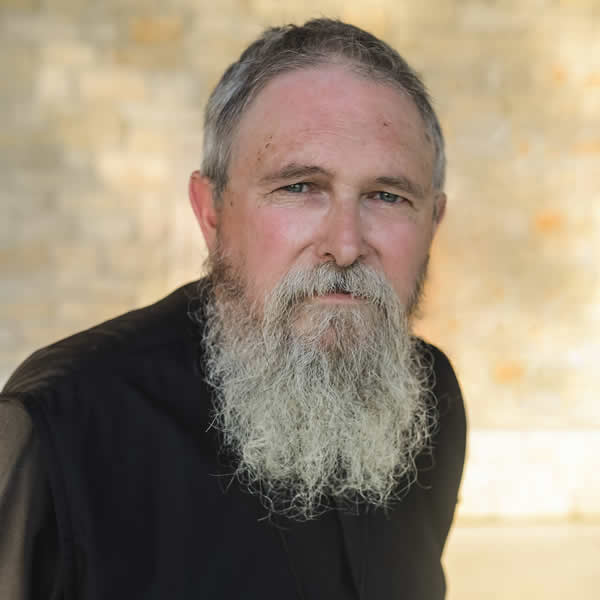
About Fr. Stephen Freeman

Fr. Stephen is a retired Archpriest of the Orthodox Church in America. He is also author of Everywhere Present: Christianity in a One-Storey Universe, and Face to Face: Knowing God Beyond Our Shame, as well as the Glory to God podcast series on Ancient Faith Radio.


Posted

in

by

Comments

88 responses to “Hopko on the Cross of Christ”

  1. Servant of God Anthony Avatar
    Servant of God Anthony

    Thank you, Father. I needed to hear this right now. Many blessings to you.

  2. Matthew Avatar
    Matthew

    Why all the suffering?

  3. Alexander Kuchta Avatar
    Alexander Kuchta

    Thank you for sharing Fr. Tom’s beautiful and powerful words!

  4. Fr. Stephen Avatar

    Matthew,
    To say it is a mystery sounds like dodging the question. It is, instead, an invitation to take a deep dive into the very heart of God. I think that the Cross reveals God – it’s not just a rescue or atonement event. In that it reveals God points towards a suffering (of some sort) that is written within God Himself. Adam is created in the image of God – but if you read Genesis in the manner of the Orthodox Church’s liturgies – then it’s clear that Adam is created in the image of the Crucified Christ (Eve is taken from his side just as the Church flows from the wounded side of Christ). I have come to believe that we do not know love in a manner that does not involve suffering. Even when there’s no obvious suffering of the sort that we tend to imagine, self-emptying for the sake of the other has an inherent element (even profound element) of suffering about it.

    Modernity, in its drive towards a “better world” has distorted the notion of “no suffering” and pressed it to a false conclusion. Modernity can give no account of suffering other than that it’s bad – and is willing to kill us in order to stop suffering.

  5. Unholy Fool Avatar
    Unholy Fool

    While I hesitate to disagree with someone who surely knows more than I, the imagery used at the beginning of this quote is deeply problematic. There is a term for a relationship in which one party “wounds” the other and then withdraws, and that term is “abusive”.

    Fortunately, the message of the cross is not that God wounds us and withdraws, but that God takes our wounds upon himself. Were God like is often depicted (and like the imagery used here) then anyone who loves him is beset with Stockholm Syndrome.

    (And yes, a parent who punishes a child and does not reach out to ensure the relationship is not damaged IS abusive. The adult has the responsibility to seek the child, not the other way around.)

  6. Fr. Stephen Avatar

    Unholy Fool,
    I think you’re misreading Hopko (or not reading deeply enough). This is always a problem when pondering the mystery of suffering or “co-suffering” (in the language of Roman 8:17). First, to suffer with Christ is voluntary (just as was His suffering for us). There is nothing abusive in God’s love for us, nor in our suffering-with Him.

    Fr. Hopko was keenly aware of abuse and spoke on the topic – and would have been clear in his mind that this is not what he is describing here (to offer a word in his defense).

    St. Maximus the Confessor said, “He who understands the mystery of the Cross understands all things.” So, this is a deeper matter than we might asume.

    Fr. Hopko was very clear, as well, that God does not punish Christ on the Cross (Penal Substitution Atonement). So, don’t read that into these words.

    Sorry that all this has been less than clear for you. Probably a problem for others as well.

  7. Mallory Avatar
    Mallory

    This feeling of God being “abusive” is why I don’t read the OT anymore, and I’ve made peace with the fact that the God that is described there is not the God Jesus talks about as his Father in the NT. It’s ok if I’m told I’m wrong or crazy, it’s fine with me, that’s my experience. I think Jesus was clear that Satan rules this world. I think it’s a bit too easy to tell people they haven’t read deeply enough—the actions of God in the OT are deeply cruel and troubling, no matter how deeply one reads it, whatever that means. Of course the truth is nobody knows. We can’t ask and get an answer. And that includes leaders in Churches, New Age gurus, scholars, etc. anyone who assumes a role of authority, of knowing. I think we’re all more in the dark than we can admit and still stay sane. It’s a bonus of having gone a bit insane ha. At least I can admit it! We simply cannot know from our limited human experience. And that causes a lot of suffering until it’s truly seen that it’s not as if some people understand and others don’t—no one here understands. Life is hard for everyone and I haven’t seen much relief of suffering telling people to suffer harder, embrace it! for Christ, essentially. I found this interesting to read but it did not resonate in my heart. I don’t know. I welcome any corrections.

  8. Matthew Avatar
    Matthew

    Thank you Fr. Stephen. This is a topic I struggle with greatly. We did the Stations of the Cross in our Catholic parish today, so this article is rather timely for me. We do the stations every Friday during lent. The Way of the Cross or the Stations of the Cross gives me an opportunity to meditate and reflect on Jesus´ Passion. Honestly though … I don´t think or feel much during the meditations. I find myself only staring at the images and listening to the liturgy. Coming from a charismatic evangelical background doesn´t help me much when I consider the topic of suffering. It seems rather paradoxical (indeed) to me that the Church does so much to alleviate suffering in the lives of people, then turns around and hammers away at how much suffering is necessary to understand and experience God´s love. I am open to correction of course.

    Thanks also, Mallory, for your comments. I mostly agree with you. My journey has finally brought me to a place where I have discovered a beautiful Gospel – I don´t want a suffering overload and/or a violent Old Testament to ruin that for me or for anyone.

  9. Matthew Avatar
    Matthew

    “Lent” should of course be capitalized.

  10. Fr. Stephen Avatar

    Mallory, Matthew, et al
    Perhaps it is my pastoral experience (on top of my own personal experience) that makes it impossible for me to shut all the presence of suffering – I hear it in every confession, every conversation. We make speak of our own sin, but I hear in that the suffering that lies beneath it. I do not read the depiction of God as seen in many places in the OT (wrathful, etc.) in a literal manner – and I’ve caught grief for that from certain quarters through the years.

    Nevertheless, there is suffering. The mystery of the “contradiction” is that I believe utterly in the good God who is revealed to us in Jesus Christ. But there is no Jesus who is not the suffering Jesus. Whatever is true about suffering, God is in the midst of it and has made it His own.

    I suspect that loyalty is a greater concern for me (or so I’m told). That God is with me in my suffering (which is unavoidable) matters more to me than the question of “why suffering.” I do not believe our suffering is some great corrective sent to us by God. It’s something deeper. Much of my thought on how suffering is bound up in love simply comes out of my life experience and not from some authoritative source. I’m a parent and a grandparent. The love I know there (and in marriage) is not free of suffering, nor can it be. “Love suffers long.” If I suggest that someone go deeper, it’s not to set up an argument – it’s simply to say that my experience says go deeper. It has been helpful to me.

    But if it’s not helpful, then let it be.

  11. Burt Noyes Avatar
    Burt Noyes

    Powerful!

  12. Mallory Avatar
    Mallory

    My experience is the same, Fr. Stephen. Love between humans is bound in suffering, life is suffering. I wish I felt God was with me, or if I even know exactly what that word means. I’m curious to know what you think the deeper reason is for the suffering sent to us from God? Or is not sent by Him? By something else? This is the part where language starts to fail me…and do you think when this life is over we will know the truth? I know these are all mysteries, as I’ve already said, and I wish I could let them be and just live moment by moment, appreciating the beautiful things here, but I am often consumed with these questions. I think it’s because I started to question everything after the pandemic, absolutely everything all of us have been taught and told I felt could easily be lies. I had a friend who was like this after 9/11 and I thought they had gone insane, now I wish I had been more empathetic. Thank you for your patience with me. And thanks Matthew for your comments, too, I always appreciate your thoughts here. May everyone find peace!

  13. Simon Avatar
    Simon

    What Christ has done is take death and suffering, the very things that would in every other way destroy us, and makes them the means of our salvation. By uniting himself entirely with human nature the Cross is revealed to be everything and everything is revealed to be the Cross. The universe was cruciform before Christ ever appeared. In fact, the cruciformity of the universe anticipates Christ and the Cross. Apart from the Cross, the cruciform universe seems cruel and indifferent. Perhaps apart from the Cross we are right to see it that way. Perhaps apart from Christ we experience the cruciform universe and we cry out “My God, my God…” But, then, Christ unites himself to all things in the Cross revealing that the cruciformity of the universe was never intended to destroy us, but was always intended as the crucible of our theosis.

    This is a universe in which saints were intended to be made. How could saints be made in any other kind of universe than this? After all the Scripture says, that ‘the Lamb was slain from the foundation of the world.’ Because of sin? Because God knew things weren’t going to go to plan? Or was the Cross the plan all along?

  14. Matthew Avatar
    Matthew

    Hello Mallory. If I may, I´d like to offer up some of my continued thoughts on this subject as I attempt to live these kinds of questions with you and others.

    While it is clear to me that suffering is tragically a part of life (I don´t agree with religious worldviews which teach that suffering is an illusion), I would hesitate to say that the suffering itself is sent by God, though I suppose it often appears this way.

    For me, I think the brokenness of human kind and the poor choices we often make in relation to one another is a major cause of suffering – and if I´m correct, then maybe we can alleviate much suffering by being more loving toward one another?

    For the longest time, though, I have pondered suffering in the animal kingdom – the kind of suffering that is not a matter of some sort of “free will”. Why must a zebra suffer so much so a lion can survive? The suffering which seems part and parcel to the evolutionary process makes no sense to me – especially if we also believe God uses biological evolution to bring life into the world.

    The New Testament states that there will be suffering in this life; that Jesus was perfected through suffering – but at the end of the day even though there is no Resurrection without suffering, I still believe what the Resurrection illustrates for us is a way forward beyond suffering. It teaches me that we should do all we can to reduce (if not attempt to eliminate) suffering in this world – not in the way the secularist attempts to do so – but through the healing process that is wrought for us in and through Jesus Christ and His Church.

    These are just my thoughts, Mallory, as I continue to live the questions herein. Like you, I am open to correction and even more discussion. As I have said numerous times, I am ever so thankful for this blog, its articles and its comment section.

  15. Fr. Stephen Avatar

    Thank you, Simon.
    I think that I hear in Mallory’s words the pain that is common to us all – and a commitment to the goodness of God. As you describe it, I can only find those two things reconciled in the Cross of Christ. I cannot find it in any rational explanation of the Old Testament or theories of history. I find it in only in the Cross.

    God have mercy on us all.

  16. Fr. Stephen Avatar

    Mallory,
    I think I was “immune” to the lies of the pandemic inasmuch as I already believed that those who govern us a frequent liars and that little they could do would surprise me. But, I am an old man and have seen many lies through the years. Interestingly, a deep part (in the heart) of my conversion to Orthodoxy was an effort to flee the lies told in many Churches. There are still “sinners” in Orthodoxy – those who would tell lies – but – miraculously, “that which was taught at the beginning” remains.

    But, to your questions, I don’t think of suffering as sent to us by God (not in a primary sense), but, rather, nothing is allowed (or sent) to us by God that hasn’t already been filtered through His goodness and His providence (which is His goodness in action). I like the phrase in Genesis, where Joseph says about his brothers’ evil actions selling him as a slave: “You meant it to me for evil. The Lord meant it to me for good.” So, our suffering is double-sided in that manner. One side means it for evil, the other means it for good. I see, in Christ Crucified, that God reveals Himself as utterly on our side and the source of all goodness.

    This passage says it well:

    “What then shall we say to these things? If God is for us, who can be against us?He who did not spare His own Son, but delivered Him up for us all, how shall He not with Him also freely give us all things?Who shall bring a charge against God’s elect? It is God who justifies.Who is he who condemns? It is Christ who died, and furthermore is also risen, who is even at the right hand of God, who also makes intercession for us.Who shall separate us from the love of Christ? Shall tribulation, or distress, or persecution, or famine, or nakedness, or peril, or sword?As it is written: “For Your sake we are killed all day long; We are accounted as sheep for the slaughter.”
    Yet in all these things we are more than conquerors through Him who loved us.For I am persuaded that neither death nor life, nor angels nor principalities nor powers, nor things present nor things to come,nor height nor depth, nor any other created thing, shall be able to separate us from the love of God which is in Christ Jesus our Lord.” (Romans 8:31–39)

    God give us grace!

  17. Margaret Sarah Avatar
    Margaret Sarah

    Father,

    Perhaps the Unholy Fool will respond, but I think the quote he was referring to was this paragraph starting with: “The God who is merciful and gracious, […] is first of all the Divine Lover who wounds His beloved, and then hides from her, hoping to be sought and found.”

    I do not think he was mis-reading penal substitutionary atonement into the excerpt, imagining “the beloved” to be Christ. You replied “there is nothing abusive in God’s love for us”, but frankly, the above quote sounds like abuse. Can you explain more about this concept? I’ve been struggling with it for a long time.

    Perhaps the Lenten readings are starting to get to me. There seems to be so many parts the refer to God’s anger with humanity, and Christ’s angry second return. I thought of you as I began to despair, and gladly found that you all were already talking about the very topic on my heart.

  18. Fr. Stephen Avatar

    Margaret Sarah,
    It is actually a reference to the Song of Songs in which there is the unfolding story of intimate love between the Lover and His Beloved. The “wounding” is a wounding by love (not an abuse). So, Hopko is enfolding the story of our lives in the imagery of the love song in the Song of Songs.

    Also, I think it is typical of Hopko to use somewhat provocative speech – he’s addressing a group of men, soon to be ordained and sent into the hurting world of parish life. They are heading into the “hospital of salvation.”

    Frankly, I think that Christ (and the New Testament) are a radical re-reading, or re-interpretation of the Old Testament, the only lens through which it can be read in a salvific manner. But, learning to read it (or hear it) in that re-interpreted manner is sort of a “spiritual skill” that is often lost on us in the modern world where we are all born as literalists.

    St. Porphyrios said that “in order to become a Christ, one must first become a poet.”

  19. French Simon Avatar
    French Simon

    Hello all,
    here in France we sing a phrase which might help, I know it helps me :

    The darkness is not darkness before You,
    The night is like the day, all is light.

    Fraternellement en Christ

  20. Fr. Stephen Avatar

    French Simon,
    Lovely! Can you give the French?

  21. French Simon Avatar
    French Simon

    With joy Father Stephen,

    La ténèbre n’est point ténèbre devant Toi,
    la nuit comme le jour est lumière.

    Many blessings, and light, to all

  22. A Reader Avatar
    A Reader

    From Psalm 138(139) verse 12—For the darkness shall not be dark to thee, and the night shall shine like the day; its darkness and its light are both alike to thee.

    Read the Psalms, over and over and over again, every day, and don’t try to figure them out with your brain, just let them speak to your heart. Perhaps I should also say that is really how all scripture works. Too much “thinking” does no good. It is “deeper” than our usual “thinking.” You have to go down into your heart, as in the Jesus Prayer, and let something that is speaking to you there rise to your consciousness… but you cannot make it happen; it is a gift given to you in a moment of time, but it is beyond time.

    “… That God is with me in my suffering (which is unavoidable) matters more to me than the question of “why suffering.” I do not believe our suffering is some great corrective sent to us by God. It’s something deeper. Much of my thought on how suffering is bound up in love simply comes out of my life experience and not from some authoritative source….” Amen, Father Stephen. I am another old person.

  23. Rob Avatar
    Rob

    My mind always goes to resurrection when considering suffering. If there is no resurrection, why would we do anything uncomfortable. As Saint Paul says:

    (1Co 15:32 NKJV) 32 If, in the manner of men, I have fought with beasts at Ephesus, what advantage is it to me? If the dead do not rise, “Let us eat and drink, for tomorrow we die!”

    But like Christ, with Christ, and in Christ, we accept whatever may come for the joy that is set before us and for the comfort of His presence in the midst of suffering. We participate in sufferings with the hope and promise of resurrection. We can enter into our own stressful Gethsemane experience where we pray with Christ, “Not my will, but Yours be done”.

    (Heb 12:2 NKJV) 2 looking unto Jesus, the author and finisher of our faith, who for the joy that was set before Him endured the cross, despising the shame, and has sat down at the right hand of the throne of God.

    The temptation to avoid suffering is the the temptation to avoid living.

  24. French Simon Avatar
    French Simon

    Dear A Reader,

    you said ” Read the Psalms, over and over and over again, every day, and don’t try to figure them out with your brain, just let them speak to your heart “.
    I think this is exactly what happens when we sing phrases from the Psalms.
    Singing helps to switch off the head and lets the spirit of the words descend into the heart.

    God bless, fraternellement, Simon.

  25. Helen Avatar
    Helen

    Father, can you recommend any book or paper or lecture that teaches how to understand the Old Testament depiction of God? If God is the same yesterday today and forever then my hope is the God revealed in the love of Jesus. But I can’t ignore my confusion and fear (terror) of what I read in the Hebrew scriptures.

  26. Kenneth Avatar
    Kenneth

    The most difficult parts of the Old Testament do not play a prominent role in Orthodox liturgy (or at least I have not heard them there). I have gradually seen how Orthodox worship is teaching me how to read Scripture, including prioritization of the Gospels (a verbal icon of Christ) and the Psalms (the Orthodox prayer book). It even teaches me how in particular to read the Psalms, as the voice of Christ himself. The comment by Reader on dwelling with the Psalms and letting them sink into your soul is great advice. Memorizing them over and over is great too.

  27. Matthew Avatar
    Matthew

    Hello Helen.

    Two books that helped me with these challenging questions about the Old Testament character of God are:

    1. A More Christlike Word – Brad Jersak
    2. Disturbing Divine Behavior – Eric A. Seibert

    Hope these help a little if you choose to read them.

  28. Fr. Stephen Avatar

    Helen,
    I wish I knew of a good book, etc., to recommend. Good examples can be found in various ways the liturgies handle the OT. But, even then, the poetic work of spiritual devotion frequently has no problem using very difficult imagery in an inner sense. The problem is our extreme modern literalism (and lack of poetic sense), often exacerbated by various spiritual figures who invoke that imagery in a literal manner.

    It was a problem in the early Church. Christ rebukes the disciples when they wanted to call down fire from heaven on a Syrian village for rejecting Him (“You don’t know what Spirit you are of!”). His own ministry and use of Scriptures was not understood (even by the disciples) until after the resurrection (as in Luke 24 and the Road to Emmaus story). There were extreme reactions later – 3rd century, the heretic Marcion declared the OT God to be the devil and rejected it. These days, there are some who accuse anyone who pushes back on a literal use of the OT as a “Marcionite” (I’ve endured this charge).

    Quite famously, St. Gregory of Nyssa and others were very clear in their critique of a literal treatment (going much further than many others).

    In our modern period, the excesses of the liberal wing of Protestant higher criticism, doubting pretty much everything as well as other abuses of Scripture and doctrine, has made many very wary of anything other than a comfortable literalism.

    I work at reading from “inside the Church.” Christ is the lens through which I understand God and I let Him correct anything I see. But, I’ll keep my eyes open for good material.

  29. Helen Avatar
    Helen

    Thank you Matthew for the book recommendations.

    Kenneth, your comments are helpful.

    Father, thank you, especially for “Christ is the lens through which I understand God and I let Him correct anything I see.”
    We “see” through the lenses of our woundedness, otherwise, or the lenses of overcorrecting for our woundedness.

  30. Simon Avatar
    Simon

    Fr. Hopko wrote: “Thus we come to see that as there is no resurrection without crucifixion, there is also no sanctification without suffering, no glorification without humiliation; no deification without degradation; and no life without death.” Since theosis was the plan from the beginning what does this mean for humans as microcosm? Hopko ties theosis to suffering as if the one CANNOT be had without the other. The one is a necessary condition of the other. What does that mean for verses like “the lamb which was slain from the beginning of the world”?

  31. A Reader Avatar
    A Reader

    French Simon,

    Yes. When do you sing this verse from Psalm 138 – is it a communion hymn or something else?

  32. Simon Avatar
    Simon

    It seems that Christians are forced to take the OT testament allegorically. If you take it literally, then you end up with a god that is mean and petulant. A god that commands the genocide of peoples. That is no god at all. So, of necessity, you either accept that the OT is to be taken literally OR in order to save it from the scrap yard of ancient gibberish, where it would otherwise belong, you take an allegorical approach.

  33. Nicole from VA Avatar
    Nicole from VA

    Simon and Mallory, a quick comment here and I hope you don’t mind my jumping in

    I think Holy Saturday is so important to remember in all this. Our Lord, the Warrior King who does battle with death, who in His Divinity could not be bound by it, goes to bring His Light and His Goodness to those bound by death. When Jesus dies on the Cross in His humanity, the veil is torn in the temple and it also says that many of the saints rushed forth from the tombs (immediately after Christ’s death on the Cross). And yet I think there are others in the graves who would have needed to see the Divine Christ enter death and dwell there and teach on Holy Saturday, reveal His love, to know Him better. It is said that St. John the Baptist had been preaching to them. In Christ’s three day burial, He gives those in the grave time to be with Him.

    Regarding death in the Old Testament, Simon you cited genocide, I have also heard it said that for some who are committed to sin it can be seen as a kindness of God for their lives on earth to end so that they sin no further and heap no greater disfigurement upon themselves. Hopefully also their deaths allowed them to see Christ Himself on Holy Saturday. Perhaps that is part of the mystery. Even those who may have died prematurely from our perspective, like the youths of Egypt. They will encounter the good news on Holy Saturday.

    Father, please correct me if I am wrong.

    I truly believe Christ suffers everything we suffer, both with us as we suffer it and before as well, as the Lamb slain from the foundation of the world. This helps me to keep going, because if He has suffered it twice as much as I have and deemed it ‘worth’ continuing, I should trust His judgment and keep going as well. He does not remove suffering but makes it a place where we can truly encounter Him. Because He went to the Cross there is no place of suffering where He is not. A capacity is given to us in involuntary suffering and over the time that follows, to somehow know Christ better and receive Him more fully than would have been possible otherwise.

  34. French Simon Avatar
    French Simon

    Dear A Reader,

    this year, for lent, we have a service every friday where we sing phrases from the psalms over and over. The words descend to the heart and then we knee down and put our foreheads on a cross laid down horizontally and pray to Christ.
    It’s an incredible expérience of lightness, communion and joy.
    Please excuse me for my english,

    Fraternellement, French Simon

  35. Simon Avatar
    Simon

    My personal reflection on Psalm 138 is that it reflects grief, and in grief we may wish horrorible things on others.

    I know have.

    What this verse tells me is that there is nothing that isnt comprehended in scripture nor taken up in the Cross. Our desires for vengeance, our violence all that is in Scripture. Our inhumanity and all the terrible things we commit in God’s name is there for all to see.

    The Bible is not a sterilized textbook. It cannot possibly be the book of human salvation and not also reflect our tragedies, the horrors we visit on one another, and our contradictions. All of that is reflected and contained in Scripture. And then Christ shows us how to find him in all of that. And when we see him there, we can find him everywhere.

  36. A Reader Avatar
    A Reader

    Thank you, French Simon. There is nothing wrong with your English. What a lovely description of encountering the Divine.

  37. A Reader Avatar
    A Reader

    Just a general comment here, meant to be helpful. It stems from something I read a long, long time ago, before I was an Orthodox Christian, possibly before I was a christian of any kind. I’m in my 72nd year – there is much I don’t remember very well if at all.

    Why? is usually the wrong question to ask. It’s very confrontational, argumentative and from a theological point of view, prideful, willful. But when you ask What? or How?— what is this that is happening or what happened, how is this happening, or how did it happen, you are approaching your question from a slightly different angle that allows more nuance, more depth, moves self-will and pride a little to the side.

    For example,
    1. Why is there life? Or, What is life? How does life happen?
    2. Why is evil allowed in the world? Or, What is evil? How does evil happen? How do we alleviate evil (instead of perpetuating it)? [What, you might be thinking, I don’t perpetuate evil – to which I say, think again. I’m pretty sure we all do just that.]
    3. Why do we need salvation? Or, What is salvation? How is salvation possible? How does one get to salvation?
    4. Why did God give us the history and words he has given us (as in I take exception to it, it isn’t fair or right, he should have done it a different way)? Or, What is it God has given us? What was man’s part in it? What do we do with it? How has he given it to us? How do we understand what he gives us?

  38. Simon Avatar
    Simon

    A Reader,

    I must disagree with your estimation of “why?” questions. Why questions are twofold. “Why?” as in, “What is the reason, purpose, or motivation?” And then there’s, “Why?”, as in, “What mechanisms or forces are work that explain what we see?” These aren’t argumentative or prideful. They are the kinds of questions children naturally ask, and we know Jesus felt about children.

    Your journey has landed you where you are and that is to be respected. Other people are on their way, too, and it could be shaming to have their questions characterized as argumentative and prideful.

    Just my two cents.

  39. Matthew Avatar
    Matthew

    I may be simplifying things way too much, but all this talk about suffering and the role it plays in our theosis/deification/salvation might lead people to believe they need to go searching for suffering in order to have true union with God.

    I think as I have already said, suffering comes and God uses it … but we shouldn´t go searching for it, nor do I think suffering is the primary way God woos people into the Kingdom or the primary way God draws humans to Himself.

    Admittedly we are all on a journey and this is where I have landed in mine.

  40. Simon Avatar
    Simon

    Matthew,

    This is my understanding. It has no authority at all.

    All kenosis, which is necessary to theosis, requires surrender and…sacrifice.

    There is a real sense in which all creation is situated within the a kenotic space created by Divine kenosis. In this kenotic space, the self-surrender and sacrifice are the fabric of our reality. In this space, suffering for us seems…inevitable.

    For beings to be free that must be able choose and that choice must be capable of creating real consequences–for good or for ill. It must be capable of bringing the entire created order tp a place where it cries out, “My God, my God…” It is in such a universe that everything that we value about being human made in the likeness of God is made to grow. As Christ says, “Unless a seed falls to the ground and dies it remains alone, but if it dies it produces much grain.” This seems to be an ontological princuple buried in the fabric of the Cosmos.

  41. A Reader Avatar
    A Reader

    Simon, May I point out that you have turned your why questions into what questions?

    To anyone I have potentially shamed, please forgive me. It was definitely not my intention. As I said, we perpetuate evil every day.

  42. Fr. Stephen Avatar

    To all,
    I am sorry to be absent from the conversation today. I am in bed and quite sick.

  43. Matthew Avatar
    Matthew

    Get well soon Fr. Stephen!

  44. Jenny Avatar
    Jenny

    Father,

    I hope you feel better soon!

  45. Helen Avatar
    Helen

    Father, may our good and loving Fathher keep you and protect you.

  46. Rob Avatar
    Rob

    Matthew,

    I don’t know if I’ve met anyone who is a true masochist and enjoys suffering. And I don’t know if I’ve met anyone that thinks suffering earns them anything. But I have met many people (and have been one myself) that avoid loving others in order to protect from suffering.

    The word compassion means “to suffer with”. If Christ’s incarnation and death isn’t compassion in action, then nothing is. We do people a disservice by talking about Christ, love, and following the Holy Spirit and yet omit the trials and sufferings that are inevitable on “the Way”. It’s something that I wish someone would have coached me on when I was younger in the faith. I was tempted to turn back when the trials started coming through people in my family and the church I was a part of. All I wanted to do was run, but how do you love an enemy if you avoid them?

    I think the omission of suffering from the conversation within Christianity has given rise to the “prosperity Gospel”. They say “Christ suffered, so you don’t have to”. But Christ says:

    “If anyone desires to come after Me, let him deny himself, and take up his cross, and follow Me. “For whoever desires to save his life will lose it, but whoever loses his life for My sake will find it.”

  47. Rob Avatar
    Rob

    Praying for you, Father Stephen.

  48. Justin Avatar
    Justin

    Following on what Rob wrote, I throw this onto the table for consideration. We all want the suffering to end, for our lives to “get better;” we want to “be happy.” But, if there is anything I am learning this Lent, and learning from reading the horrors of the Old Testament, it is this: suffering is where God is. The OT is descriptive not proscriptive. That is where God is revealed. The serious thing about this means something critical, if only to me. To spend my life fleeing suffering means to be fleeing God. That is the only way Jesus’ statement, “For whoever desires to save his life will lose it, but whoever loses his life for My sake will find it,” makes any sense to me. Then it follows that the Beatitudes are correct–“Blessed are…” those that suffer in many ways. Blessed = “happy” of a type.

    Fr Stephen, you are in my prayers, as are all of you here.

  49. Dee of Sts Herman and Olga Avatar
    Dee of Sts Herman and Olga

    Dear Father,
    You have my prayers. May our merciful God bring you healing, peace, joy, and rest.

  50. Dee of Sts Herman and Olga Avatar
    Dee of Sts Herman and Olga

    A few words about suffering, and perhaps we need no more words, but here I go. We all suffer. Some of us less and some of us more. God uses the good and the not so good for our benefit. And sometimes it is us who are unable to discern ‘the good’ in our lives. And sometimes this is because we lack the ability for gratitude when things seem ‘not good’.

  51. A Reader Avatar
    A Reader

    Well Fr Stephen, speaking of suffering, in your present suffering may you know and feel the comforting and powerful presence of God.

  52. Matthew Avatar
    Matthew

    Hello everyone.

    These are the last thoughts I´ll offer up on the topic of suffering for this blog post.

    I am not fleeing suffering nor am I denying that suffering exists in the world. Believe me, in my own way and in my own life I have experienced suffering. I believe suffering occurs and I believe God can and does use it for our good.

    That said, I also believe that while a kenotic space of sorts universally exists – and that kenosis also involves sacrifice and suffering – I am cautious when it comes to believing the notion that suffering is the essential and main way God unites Himself to us. The universe is filled with Christ´s Resurrection – a Resurrection that heals, offers hope and which touches the very fabric of our being. It´s Christ´s kindness which brings repentance and I believe it´s such kindness which also births union with the Almighty.

    Call me a prosperity Gospel Christian if you will, but there is a very fine line which connects the Cross to the Resurrection. Without the Cross there is no Resurrection – that much is true, but it´s Christ´s goodness in that very same Resurrection which has the last word in my view. It´s for these reasons that I believe the Church should focus on alleviating suffering as much as is possible – for it is in the relieving of one´s suffering that the Gospel is loudly proclaimed and hopefully joyfully accepted.

    These are simply my thoughts coming from where I have landed to date on my spiritual journey. They have no authority and they are mine, though others might share them as well. I trust God sees my heart and thoughts and has mercy on my soul.

    I wish you all a very good evening.

  53. mary benton Avatar
    mary benton

    Fr. Stephen – My love and prayers for you in your illness. May you be returned to health soon.

  54. Dee of Sts Herman and Olga Avatar
    Dee of Sts Herman and Olga

    Matthew ,
    I don’t think anyone denies the relationship between the cross and resurrection. It’s just that we’re called to take up our cross and follow Him. That’s how Christ Himself expresses what our discipleship is in this world. Our crosses will not feel good. However like Father says when we are touching the wood of the cross—our crosses, His cross, we come nearer to following Him. And joy is still ours. This is a spiritual joy. Not joy as the world knows.

    And your trust is well placed in Him. As you say He knows your heart. Love one another. Love our enemies. Stay humble as He is. That too pretty much sums up what He asks of us.

  55. French Simon Avatar
    French Simon

    Matthew, to die to this world is painful, but the Kingdom calls us to Him through the love of His cross, fraternellement, Simon

  56. Rob Avatar
    Rob

    Matthew,

    I apologize. My intention was not to accuse you of the prosperity gospel or anything else like that. I don’t know you. But as you said, God knows you to the core. And who am I, but someone who has succumbed to the very things that I was speaking on, so I can’t rightly judge others. I was just hoping to expose some stumbling blocks that prevent people from experiencing the joy and union you spoke of. Please forgive me. Peace to you.

  57. Justin Avatar
    Justin

    Matthew,
    Please forgive me.
    Lord have mercy on us all.

  58. Matthew Avatar
    Matthew

    Thanks so much Dee, French Simon, Rob and Justin for your comments.

  59. Fr. Stephen Avatar

    Thank you – all of you – for your prayers. I was hit with a bout of norovirus on Monday morning and had a pretty rough day, all in all. I’m past the worst of it, but still exhausted and slowly recovering from the dehydration. One of the least pleasant short journeys into suffering…

  60. Matthew Avatar
    Matthew

    I know I said my last comment on suffering would be it … but a question lingers:

    How do the Orthodox pray for those who are suffering?

  61. Fr. Stephen Avatar

    Matthew,
    Repeatedly, in every liturgy, in every service.

  62. Matthew Avatar
    Matthew

    But how … for their healing?

  63. Fr. Stephen Avatar

    Matthew,
    In the Great Litany at the beginning of the Liturgy, we pray, “For those who travel by land, sea, and air, for the sick, the suffering, the captives and for their salvation, let us pray to the Lord.Lord, have mercy.”

    That’s pretty typical. But there are specific services for the healing of the sick (Holy Unction) and many, many anointings and prayers for healing – and there are many stories and testimonies of those who have been healed.

    How can a Christian not pray for healing?

  64. Helen Avatar
    Helen

    Even if misfortune isn’t visited upon me at some point in time, someone somewhere is suffering. I believe as long as we are not in Eden, in the age to come, someone is suffering. And if anyone is suffering, I believe Christ suffers with them. And we suffer along as His body. I don’t feel like a masochist or a “martyr” doing this. Maybe it’s a difference between a healthy suffering vs. a toxic suffering.

  65. Matthew Avatar
    Matthew

    Thank you Fr. Stephen.

  66. Margaret Sarah Avatar
    Margaret Sarah

    Father,

    I know that this latest comment was directed to Matthew, but can you explain further:“How can a Christian not pray for healing?”

    I find it difficult – people suffer, and many people die suffering. It seems to me, though perhaps I misunderstand, that the promise of Christ is that he enters into the suffering. It is transformed from meaninglessness into the union with the God who dies yet lives. The Great Litany has generally been difficult for me to approach. It seems to say “God, make the world a happy, easy place”. But clearly that would not be best, for that’s not what happens.

    How do we understand prayers that seem to ask God for “good things”, when perhaps those “good” things would bring ruination to our souls?

  67. Matthew Avatar
    Matthew

    While I am no longer a charismatic evangelical, there is much I am thankful for about charismatic renewal. There are of course aspects which cause concern as well.

  68. Fr. Stephen Avatar

    Margaret Sarah,
    I assume when I pray for healing that it is God who defines the nature of that healing. Generally, prayers such as the Great Litany state the intention: for the sick, the suffering, etc. and then the prayer: “Lord, have mercy.” We do not seek to define or dictate the nature of God’s mercy.

    The “good thing” is the mercy of God.

  69. Hélène d. Avatar
    Hélène d.

    Father Stephen, aren’t we too “preoccupied” with ourselves and intellectually trying to understand so many things about God and divine life… “things” that are primarily revealed, ‘made visible’, to our intellect, our deepest hearts, in prayer, through certain readings, and at other surprising moments ?
    We strive, especially in prayer, not to produce a result ourselves, but essentially to know that Christ is at work within us.
    Isn’t there self-giving with all its limitations, in order to receive the full freshness of the source, the beginning of infinite divine life ?
    As a 5th-century monk said : “Ô my soul, to give oneself is not to lose oneself, but to be in fullness.”

  70. Margaret Sarah Avatar
    Margaret Sarah

    Father,

    Thank you, I see.

    But I suppose “for favorable weather, for an abundance of the fruit of the earth” is what particularly comes to mind. As a farmer, I appreciate the invocation. But it does leave me wondering and uncomfortable.

  71. Fr. Stephen Avatar

    Hélène,
    I think that what we want is God Himself – to live in communion with Him. We certainly do not desire suffering (not for its own sake), but if we refuse suffering, we’ll lose ourselves as well, it seems to me. Modernity has poisoned our minds. It is essentially utopian, or has created the myth of progress as a sort of utopian substitute. As such, we have learned to despise suffering and to desire pleasure. It corrupts us in all kinds of ways.

    It’s interesting when we look at some of the “dystopian” novels – the great ones. 1984 is a great warning about the power of the state and ideology and is frightening. But, the truly frightening one, to my mind, and the one that is the true threat of our age is Brave New World. In that vision, people have traded freedom for pleasure and are losing the most important things of their humanity.

  72. Fr. Stephen Avatar

    Margaret Sarah,
    In the Lord’s Prayer we say, “Lead us not into temptation, but deliver us from the evil one.” “Temptation” is the “time of trial.” I’m often reminded of the prayers in an Orthodox wedding. We pray for their prosperity – but that prosperity is defined as “having enough to be able to share with others.” We pray for our daily bread in the Lord’s prayer. The wheat must grow so that we have such bread – and a bit to spare so that we can share with others. That is enough, and true riches.

  73. Byron Avatar
    Byron

    My personal reflection on Psalm 138 is that it reflects grief, and in grief we may wish horrorible things on others.

    I know have.

    What this verse tells me is that there is nothing that isnt comprehended in scripture nor taken up in the Cross. Our desires for vengeance, our violence all that is in Scripture. Our inhumanity and all the terrible things we commit in God’s name is there for all to see.

    The Bible is not a sterilized textbook. It cannot possibly be the book of human salvation and not also reflect our tragedies, the horrors we visit on one another, and our contradictions. All of that is reflected and contained in Scripture. And then Christ shows us how to find him in all of that. And when we see him there, we can find him everywhere.

    Wonderfully stated, Simon! Many thanks!

  74. Byron Avatar
    Byron

    I am cautious when it comes to believing the notion that suffering is the essential and main way God unites Himself to us. The universe is filled with Christ´s Resurrection – a Resurrection that heals, offers hope and which touches the very fabric of our being. It´s Christ´s kindness which brings repentance and I believe it´s such kindness which also births union with the Almighty.

    Call me a prosperity Gospel Christian if you will, but there is a very fine line which connects the Cross to the Resurrection. Without the Cross there is no Resurrection – that much is true, but it´s Christ´s goodness in that very same Resurrection which has the last word in my view. It´s for these reasons that I believe the Church should focus on alleviating suffering as much as is possible – for it is in the relieving of one´s suffering that the Gospel is loudly proclaimed and hopefully joyfully accepted.

    I think that what is somewhat missing in this conversation (not that we haven’t touched on it) is that compassion and the relief of suffering is an act of love. When we talk about the Cross, we talk about the revealing of God’s Love, in its fullness and depth, for all of humanity. This is the same love we are to show in having compassion for and, if possible, relieving the suffering of others. We tend to talk about a “plan”–as if God has a plan for us to suffer and then prosper from it–instead of seeing how it can reshape our hearts to be like God’s heart.

    We think “…but God meant it for good” to mean that we are successful through whatever we suffer, that we become kings in Egypt (of a sort), and grow stronger in some way. But the “good” is that our hearts soften and we love our brothers and sisters, who degraded and sold us in jealousy and hate, and that we act in that love for them to be saved.

    This strikes me as very much like what my Priest told me about giving money to the poor. It is not so much for their sake that it is to be done, but it is for the shaping of my own heart. That I may learn to give freely, in love, and not withhold what God has given me. That doesn’t remove what they may receive from it, but it defines it differently for me. Just my thoughts.

  75. Simon Avatar
    Simon

    There’s an uncomfortable truth we tend to avoid: suffering is often the doorway through which we begin to understand anything real about God.

    What can someone say about life who has never suffered—never carried another’s burden, never struggled, never been brought low or broken open? Comfort can preserve a person, but it rarely forms them. Strength, wisdom, courage these are forged, not gifted.

    Of course, suffering by itself doesn’t guarantee knowledge of God. It can just as easily harden a person as refine them. But without it, our understanding often stays shallow, untested, unproven.

    The deeper question is whether we’re willing to go where Christ is found. Not just in light, but in darkness. Not just in victory, but in abandonment, shame, and anguish.

    If we refuse that, what are we really saying? Are we seeking God as He is or only as we would prefer Him to be?

  76. Dee of Sts Herman and Olga Avatar
    Dee of Sts Herman and Olga

    Byron,
    Good words!! Thank you for your comment.

  77. Matthew Avatar
    Matthew

    I´m wondering … how willing and open should we be to changing our minds about something? My concern is that people often get trapped in systems which contribute to confirmation bias. I wouldn´t be so close to Orthodoxy if I had stayed in my old mindset. That said, the truth is the truth …

  78. Fr. Stephen Avatar

    Simon,
    There is the Christologically challenging verse (Heb. 5:8), “though He was a Son, yet He learned obedience by the things which He suffered.” I think it is a verse that requires depth in its reading – but it points to the very human reality that suffering is an inherent part of knowledge. It is not unrelated to the thought that I’ve quoted and written on before that contradiction and paradox are necessary to us for knowledge.

    I have recently been thinking about the notion of an “unfallen suffering.” That there is a form of suffering that is not toxic, that is not evil.

    It’s been a very long, slow week for me – the virus that laid me low on Monday has been difficult to recover from. It reminds me of my age and the fragility of health at a certain stage of life. I appreciate the prayers of all. It’s going to be a few more days before I’m anywhere close to normal, God willing.

  79. Simon Avatar
    Simon

    Father Stephen,

    I see in your description of unfallen suffering the description of suffering from Saint Augustine’s Confessions. So, you are in good company.

    I am glad you are feeling better!

  80. Simon Avatar
    Simon

    Matthew,

    In the domain of spiritual–and even psychological–development changing someone’s mind in an act of coercion. Don’t do it to anybody and don’t yield to it. In a conversation the important thing are those moments where something clicks and our perspective is changed. We can feel it happen. It creates a chemical cascade that courses through the body. That’s the thing to hold onto. A mind can be convinced because someone is persuasive–not because they are right, but because they are good at manipulating perception. Or, it could be that facts add up to an inaccurate conclusion because the most important facts are still unknown.

    Changing someone’s mind is typically a coercive act. There is a kind of violence in it because of how it disregards the agency of the person whose mind is being changed.

    Spiritual discernment emerges with maturity in the faith. That takes time and it cannot be rushed. The person becomes more translucent, the light is more penetrating, and discernment is the fruit. In a sense, the discernment isn’t soemthing we have it is something we become.

  81. Fr. Stephen Avatar

    Simon,
    Fr. Hopko, in his 55 Maxims, says, “Never try to convince anyone of anything.”

  82. Simon Avatar
    Simon

    Father Stephen,

    That’s 110%.

    I tell my son during our homeschooling that having the right answer for the wrong reason is still a wrong answer. What matters isn’t having right answers–being persuaded this way or that. It is having the right process–time and attention.

    I see parallels between my son’s homeschool life lessons and the spiritual journey.

  83. Hélène d. Avatar
    Hélène d.

    Father Stephen, I remember these words :
    “Suffering is inherent in knowledge. This echoes the idea I have already cited and developed, that contradiction and paradox are necessary for our understanding. There is a form of suffering that is not toxic, that is not evil.”

    Thus, our capacity to truly become persons (that is, nothing less than to resemble God) finds its most powerful mystical and existential expression in suffering lived with faith. Far from a penal and expiatory conception of suffering, the patristic tradition sees suffering as the divine-human encounter.

    This is nonetheless joyful and inspiring for our lives, for our personal growth, in the footsteps of Christ…
    I will quote this passage from a highly respected theologian :

    “The bloodless sacrifice of the Eucharistic Offering is precisely the transfiguration of suffering through love and in love. The offering of the Son is the divine mode of existence : an unthinkable self-denial, an unspeakable preference for others over oneself, and the joy of compassionately sharing in what humanity experiences in order to unite humanity with His own divinity. God, by becoming flesh, makes human suffering His own. He sanctifies and deifies it on the Cross, through His Resurrection and Exaltation : and, at the same time, He does not strip it of its human reality. The human condition, in its various aspects, is the place of encounter, dialogue, and communion between God and humanity.”

    – So, it is also the place of encounter with Christ within our suffering, who transfigures it and brings it into His Light…
    Numerous witnesses confirm this undeniable divine reality through experience.

  84. Fr. Stephen Avatar

    Hèléne, Simon,
    Thank you both so much!

  85. Helen Avatar
    Helen

    Simon,

    “In a sense, the discernment isn’t something we have it is something we become.”

    That’s so good!

  86. Matthew Avatar
    Matthew

    Thank you so much Simon.

    Excellent food for thought …

  87. Timmy Avatar
    Timmy

    So well said. The irony is that you can’t really convey the mystery of the cross with words, but words are usually a necessary starting point for so many of us. There is no shortage of suffering in life (in case you haven’t noticed), and when it descends, recalling these words helps us “make sense” of the lived experience of the cross in a healthy rather an unhealthy way…the ultimate temptation/test. Truly a paradox. Thanks for posting this, Father Stephen. Memory Eternal to Father Tom Hopko!

  88. Alexandra Avatar
    Alexandra

    More from Fr. Tom on the Orthodox view of suffering: https://www.ancientfaith.com/podcasts/hopko/pain_and_suffering/

    This is something I’m struggling with deeply at the moment as well.

Leave a Reply

Your email address will not be published. Required fields are marked *


Subscribe to blog via email

Support the work

Your generous support for Glory to God for All Things will help maintain and expand the work of Fr. Stephen. This ministry continues to grow and your help is important. Thank you for your prayers and encouragement!


Latest Comments

  1. “a blind pig finds an acorn” Amen and amen! And I would go further to say that the pig who…

  2. Fr. Stephen, So true. I shall trust that you go down there to meet some of your readers and that…


Read my books

Everywhere Present by Stephen Freeman

Listen to my podcast


Categories


Archives