To See Him Face to Face


“The self resides in the face.” – Psychological Theorist, Sylvan Tompkins

+++

There is a thread running throughout the Scriptures that can be described as a “theology of the face.” In the Old Testament we hear a frequent refrain of “before Thy face,” and similar expressions. There are prayers beseeching God not to “hide His face.” Very clearly in Exodus, God tells Moses that “no one may see my face and live.” In the New Testament, there is a clear shift. The accounts of Christ’s transfiguration describe His face as shining. St. Paul speaks of seeing God “in the face of Jesus Christ.” He also speaks of us gazing steadily on Christ “with unveiled faces.” Orthodox Christianity has a very particular understanding of the face, modeled in the holy icons. It is worth some thought and reflection.

In both Latin and Greek, the word translated as “person,” actually refers to the face, or a mask (as a depiction of the face). The face is not only our primary presentation to the world, and our primary means of relationship, it is also, somehow, that which is most definitively identified with our existence as persons. Developmental psychologists say that the face-to-face gazing of mother and child in the act of nursing is an essential building block in the development of personality and the ability to relate to others.

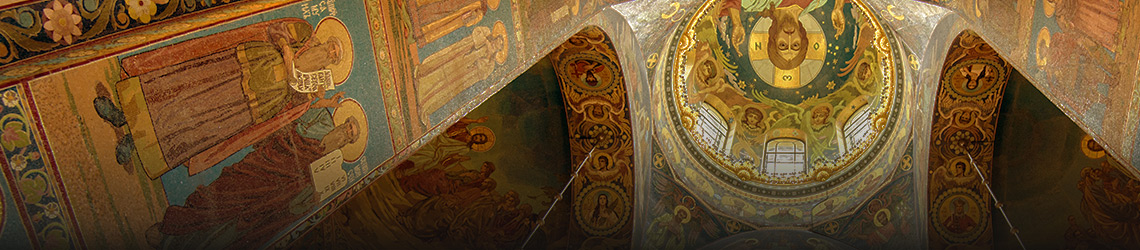
It should be of note that the Holy Icons are always depicted facing us, with some few, turned ever so slightly. Those “turned” faces are found on icons whose placement would have originally been on an iconostasis and are slightly turned so as to be acknowledging the Christ icon. The only figures portrayed in profile are Judas Iscariot and the demons (or those who are fulfilling those roles). In the art of the Renaissance, and subsequent, this treatment of the face disappears. The human figure is simply studied for itself, as art, the relational function of the icon having been forgotten.

The Orthodox understanding of salvation is reflected in its treatment of icons. St. Paul’s description of being transformed as we behold the face of Christ is an expression of true personhood. Our “face” becomes more properly what it should be as we behold the face of Christ. This “looking” is, to a degree, what we today would call a “relationship,” though, I think, it has more insight and import. “Relationship” has become a word that is almost completely vacuous, lacking in substance.

With the face, and its implications for personhood, much more can be said. I cannot see the face of another without looking at them. To see your face, I must reveal my face. That face-to-face encounter is pretty much the deepest and oldest experience we have as human beings (first experienced with our mother in nursing). For the whole of our lives, our faces are the primary points of experience and reaction. We cannot truly know the other without encountering them face-to-face.

It is probably significant that art turned away from the face and toward the figure. The language of salvation as “not going to hell” or “going to heaven,” is, strangely, impersonal. The same is true of justification and the like. It easily sounds like a medical procedure, a treatment of the body (or worse).

Similar to the face is the treatment of names. In Revelation, the image of salvation is the giving of a new name. In the Old Testament, this same thing happens to Abram (Abraham) and Jacob (Israel). In their cases, a new name signals a change in them and a change in their status before God. By the same token, it has always struck me as deeply personal and touching that Christ sometimes had nicknames for his disciples: “Peter” (“Rock”) and “Boanerges” for James and John (the “Sons of Thunder”). I suspect there were others. In the Orthodox tradition, a child is named on the eighth day after birth, or, if later, at Baptism. The giving of a name at Baptism is also a very ancient part of Baptism in the West.

In these things, we must understand that we are “known.” We are known uniquely and not by reputation or reference. We are not in a category, nor are we the “objects” of God’s love. That we are being changed by beholding the glory of God in the face of Jesus Christ suggests that we have to look at him – directly. This is very much part of the meaning of true communion.

Psychologists describe the bonding between mother and child in nursing (and face-to-face) as communion:

Identification begins as a visual process, but quickly becomes an internal imagery process, encompassing visual, auditory, and kinesthetic scenes. It is that universal scene of communion between mother and infant, accomplished through facial gazing in the midst of holding and rocking during breast or bottle feedings, that creates the infant’s sense of oceanic oneness or union. (Psychology of Shame, Kaufman, pg 31)

I was somewhat staggered to find such a theologically compatible statement in a work of technical psychology. Sometimes scientific observation is simply spot-on.

As we grow older, we never again gaze into the eyes of a person as we once did with our mothers. Lovers are often drawn to the eyes of the beloved, and find a measure of communion, but wounds and injuries eventually interrupt the initial innocence of such eyes. The same is at least as true with regard to God.

Regarding the face of God, there is this very telling passage in Revelation:

 And the kings of the earth, the great men, the rich men, the commanders, the mighty men, every slave and every free man, hid themselves in the caves and in the rocks of the mountains, and said to the mountains and rocks, “Fall on us and hide us from the face of Him who sits on the throne and from the wrath of the Lamb! (Rev. 6:16)

It is of note that Revelation does not simply speak of the wrath of the Lamb, nor merely of His presence. It is specifically a fear of His face. Our experience of the face is an experience of nakedness and vulnerability. On the positive side, the result is identification, communion and oneness. On the negative side, it is the pain of shame and the felt need to hide. I can think of nothing else in nature that so closely parallels and reveals the fundamental character of our relationship with God. Salvation is communion. Sin is an enduring shame.

It is into this existential/ontological reality of sin/shame that Christ enters in His Incarnation, suffering and death. The depths of hell are everlasting shame and yet, He doesn’t hesitate to enter there in order to rescue us. Christ’s rescue of Adam and Eve in Hades are a final echo of the encounter in the Garden. They hid in shame, but He came looking for them. Then, He covered them with the skins of animals, but now He covers them in the righteousness of the Lamb who was slain. Then they were expelled from Paradise; now they are restored. Then, they fled from before His face; now they behold Him face to face – and rejoice.

When I pray before the icon of Christ, I notice that His gaze never changes. He does not hide Himself from my shame – but He bids me return my gaze to His. Unashamed, painless. You can find paradise in those eyes!
 

About Fr. Stephen Freeman

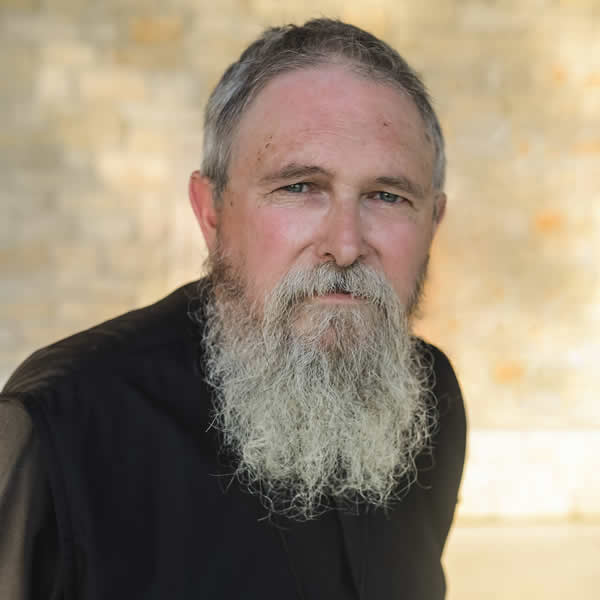
Fr. Stephen is a retired Archpriest of the Orthodox Church in America. He is also author of Everywhere Present: Christianity in a One-Storey Universe, and Face to Face: Knowing God Beyond Our Shame, as well as the Glory to God podcast series on Ancient Faith Radio.


Posted

in

, , ,

by

Comments

28 responses to “To See Him Face to Face”

  1. Margaret Avatar
    Margaret

    Thank you for this, Fr. Stephen, and thank you for your encouragement over the years to “sit quietly” with your icons and meditate upon the love of Our Lord.

  2. Matthew Avatar
    Matthew

    Panim in Hebrew literally means “faces”.

    Like shalom, which means so much more than peace = lack of war, apparently panim also alludes to presence, direction … even inner dimension suggesting it also represents true self.

    Thanks so much for this article Fr. Stephen. My late mother-in-law used to look at faces of people in the newspaper – mostly politicians – and make comments about them looking either “likeable” or “unlikeable”. I used to think … man … that´s so negatively judgmental … she has never met these people. Possibly your article may be teaching me something I need to learn? Maybe I shouldn´t have so quickly judged my mother-in-law?!? Is there truth in a face?

  3. Fr. Stephen Avatar

    Matthew,
    I think so.

  4. Matthew Avatar
    Matthew

    Wow.

    Thanks Fr. Stephen.

  5. Rob Cochran Avatar
    Rob Cochran

    A few months ago, I was at a conference for Christian creatives and heard Joshua Luke Smith recite his poem, “The Monk & The Rose”. Here are the first few lines:

    I saw a garden rose
    turn its face toward the sun
    And then it looked at me and said
    what we behold, we will become

  6. Fr. Stephen Avatar

    Rob,
    Yes! Indeed!

  7. Matthew Avatar
    Matthew

    Wonderful Rob!

  8. Rob Cochran Avatar
    Rob Cochran

    (Psalm 34:5 NKJV) They looked to Him and were radiant, And their faces were not ashamed.

    (Psalm 34:5 Brenton’s LXX) (33:6) Draw near to him, and be enlightened: and your faces shall not by any means be ashamed.

    I can’t help quoting so much when I encounter beauty in your writings, Father. It stirs my heart to overflow these truths that, hopefully, connect and agree. I just hope that I don’t become a parrot or a walking quotation as Roman Braga hints at. I hope and pray that we all live into these realities…That we won’t let accumulated knowledge or distractions be a substitute for the personal and collective experience. Peace be with you all.

  9. Simon Avatar
    Simon

    Rob,

    We become what we behold!

    SO MUCH TRUTH IN SO FEW WORDS!

  10. John L Riley Avatar
    John L Riley

    This post reminds me of a story I read about St. Marcarius the Great and his conversation with a skull he found in the desert. Following is how the skull described the torments of hell and the respite he felt when St. Marcarius prayed for him:

    “It is not possible to see anyone face to face, but the face of one is fixed to the back of another. Yet when you pray for us, each of us can see the other’s face a little. Such is our respite.”

  11. Rob Cochran Avatar
    Rob Cochran

    If you’re interested, here’s a link to the poem “the Monk and the Rose” on YouTube from which those lines came:

    https://youtu.be/jBJ5xaQ5m9Q?si=gPxpiv_sVdK8_h_A

  12. Rob Cochran Avatar
    Rob Cochran

    …the audio on this one is better: https://youtu.be/VjWxkUEJkqs?si=wPCo7-4JFT2eutwv

  13. Laila Avatar
    Laila

    Great article, congratulations. I am an iconographer, and I appreciate your words; you have described the icon wonderfully.

  14. David Toerper Avatar
    David Toerper

    Yes. Yes.

  15. Janine Avatar
    Janine

    Thank you Fr. Stephen, so much. I find it strangely helpful that you encapsulated the fundamental character of our relationship with God: Salvation is communion. Sin is an enduring shame. I am sure this is something I need to think about more. Indeed, it seems to me that repentance might be better understood as simply honestly seeking that communion again. I find a lot of people don’t seem to know this. I suppose even in our own human relationships, this is forgiveness and reconciliation. So, where there is no trust, there’s no communion.

    I have this icon at home prominently in the middle of the others (and larger), and it’s in a spot I pass all the time. Sometimes I find I’m struck that Christ’s face looks sad, the tear standing out. Sometimes calm and placid. I think this reflects things going on in my life. But there is always compassion.

  16. Janine Avatar
    Janine

    John L. Riley: Amazing

  17. Matthew Avatar
    Matthew

    “the fundamental character of our relationship with God: Salvation is communion. Sin is an enduring shame.”

    I really like this, though I´m not sure how to process it.

    In the west, as I experience it and understand it, when I sin I break communion with God and fall out of a state of grace. I then go to confession, receive counsel and absolution along with penance. At the end of it all, communion with God is restored. The process seems simple enough, but for me there is a lot of guilt and shame along the way.

    With Ash Wednesday only two days away, I find myself now thinking about this whole process and what it really means to repent. Might repentance be the need to turn away from my own shame and guilt toward the open arms of a God of complete love – rather than me saying I´m sorry for some sort of moral infraction that offends God and which causes my communion with God to be in danger; even broken?

    I was a Protestant evangelical. I am now a Catholic. I love Orthodoxy.

  18. Fr. Stephen Avatar

    Matthew,
    Language in describing these things can be so problematic! We say (in a particular Orthodox Prayer) that God is “everywhere present and filling all things.” This is simply true. When, as it done (particularly in the Latin West), we say, “I am not in a state of grace,” it can sound like grace has been taken away from me (as a result of my sin). In truth, grace is the very life of God, or, as is said in Orthodoxy, “the divine energies.” Without the divine energies, we would cease to exist. God sustains us in our very being.

    Sin disrupts our “communion” with this grace – in that we are headed in one direction (to use a metaphor) while grace is headed in another – that is – they are at odds, at cross purposes. We can, for example, sense this with a bad conscience (but that’s not infallible).

    God never leaves us nor forsakes us. We need to settle that as a given. He never laves us nor forgives us – but we can rebel against that and “push back.” That is the nature of sin. But sin does not mean that His grace is no longer with us.

    When we repent, we are turning back cooperatively with the grace given to us and we turn back to actively cooperating with God. This allows for greater healing.

    The sacraments – holy communion, confession, etc., aid this action and process and strengthen our cooperative life with God. “Whoseover eats my flesh and drinks my blood abides in my and I in him.”

  19. Janine Avatar
    Janine

    Matthew asked:
    Might repentance be the need to turn away from my own shame and guilt toward the open arms of a God of complete love – rather than me saying I´m sorry for some sort of moral infraction that offends God and which causes my communion with God to be in danger; even broken?

    Since you repeated my quotation (and I presume you were responding to my comment), I will venture in and answer with a “Yes” here for myself, because that is indeed my personal experience. I find often that sin in my life is not so much that I always do things I know are wrong (although that does happen one must admit!!), but that I do things that are in error unwittingly, to be gradually through time corrected by a loving God in an ongoing effort to find that depth of faith and communion.
    Love from me (and that’s what it is, learning love, my 2cents, and always learning and needing to learn more)

  20. Janine Avatar
    Janine

    PS Matthew, perhaps more to your point, even in times when I realized I had done something I was very embarrassed about (like being truly rude to someone), in prayer I received correction always with love. “Just go apologize” — as simple as that with the gentlest of feeling in the command. And so I did without shame to do so, and regardless of how the person might respond. To me this is everything, that love where we don’t have to just have shame but learn how to find God’s way for us.

    When we find a priest who hears confession the same way — and I have been very, very blessed to know a few! — we are blessed indeed.

  21. Matthew Avatar
    Matthew

    Thanks Janine and Fr. Stephen.

    For so long I have had such a toxic view of God.

    This blog is helping me to heal.

  22. Bonnie Avatar
    Bonnie

    I followed the link Rob gave for the poet reciting “The Monk and the Rose”. Searching for more, I found this (long) interview which was rich with things to ponder. https://www.youtube.com/watch?v=0ZHbTrM7M4w

  23. Rob Cochran Avatar
    Rob Cochran

    Matthew,

    To get to know God as He is through prayer is to know that He is trustworthy. We can have so many thoughts about God, rooted in doctrine or experiences in life, that may or may not be how He really is. To know Him is a safeguard. And I have been reassured time and time again that what (or Who) you seek, you WILL find.

    Having grown up under the Western and Protestant umbrella, I have relatively recently come to find out that what has been revealed of God to me, has mapped more with the emphasis found in the Eastern tradition (correct me if I’m wrong, Father Stephen): The Church as a hospital, Christ as Physician, Christ as Medicine, God is Love, Christus Victor atonement, knowing God is emphasized more than knowing about God, mysticism emphasized more than scholasticism, embracing mystery in humility. It’s not even that what I’ve been exposed to (in my limited experience) is wrong, but it’s a matter of what is emphasisand and, sometimes, a matter of reductionism. God is always bigger and more beautiful than what systematized understandings of Him attempt to convey in an unconscious effort to keep things neat, tidy, and “under control”.

    Again, please correct me if I’m wrong, Father Stephen. I’m not the spokesperson for anything. I just want to be helpful to you in any way I can, Matthew. I pray for you as I pray for myself: That any obstacles to healing would be resisted and that we could keep living in the reality of this:

    (John 17:3 NKJV) “And this is eternal life, that they may know You, the only true God, and Jesus Christ whom You have sent.

  24. Zac Chastain Avatar
    Zac Chastain

    Thank you, Father Stephen — your words continue to bless my life.

    I am a member of a community of actors and we have an expression: “fully seen, fully loved.” Maybe (probably) only the Lord is capable of doing both at once — fully seeing us, and fully loving us.

    Fully seen, partially loved (shame.)

    Partially seen, partially loved (what most of us experience as love.)

    And it makes me think about the Eye of Sauron — it has turned a Face into an Eye. It only sees. It only scrutinizes, scours, divides a whole into parts. There is no Face with which to love.

  25. Fr. Stephen Avatar

    Zac,
    “There is no face with which to love.” Yes.

  26. Michael Bauman Avatar
    Michael Bauman

    I do not know quite how to express the insight but leaning into fasting properly is a source of Joy and laughter inexplicable—even if I do not do it well; laughter even.

  27. Michael Bauman Avatar
    Michael Bauman

    I have to explanation for that. Can you explain?

  28. Fr. Stephen Avatar

    Michael,
    I think God has simply given you a gift of joy…and it is a wonder! Good to hear from you!

Leave a Reply

Your email address will not be published. Required fields are marked *


Subscribe to blog via email

Support the work

Your generous support for Glory to God for All Things will help maintain and expand the work of Fr. Stephen. This ministry continues to grow and your help is important. Thank you for your prayers and encouragement!


Latest Comments


Read my books

Everywhere Present by Stephen Freeman

Listen to my podcast


Categories


Archives