Healing the Soul and Unbelief

I have long been convinced that “believing” is grounded in something other than intellectual activity. I am simply unimpressed by most of the intellectual arguments that I see regarding both belief and unbelief. In both, I hear so much that is unspoken, and even much that is likely hidden from the speakers themselves. That being the case (if I am right), then conversations about belief require great patience and not a little sympathy.

We live in a world that is packed with meaning – at least – that has been the human experience for longer than recorded history. We do not know, for example, what the cave paintings left by our prehistoric ancestors mean, but we can be assured that the paintings had a meaning at the time. Indeed, their paintings are a strong reminder that we have ever-so-much in common with them despite the vast differences in civilization that separate us. We do not know what the paintings mean, but we know something of the urge to paint.

The Church describes human beings as made in the image of the Logos. On that basis, we are sometimes hymned as “rational (logikos) sheep.” Human beings think and speak. There is a relationship between the thing that we perceive (say, an Auroch) and its depiction (a wall painting). The walls of the caves are covered in logoi, “words,” if only we knew how to read them!

When human beings speak, we inadvertently offer a world-beyond-the-world. There is the experience (my vacation), and there is the telling of the tale (“you won’t believe what happened on my vacation”). Were someone to insist that only the thing-itself mattered (“therefore, I don’t want to hear about your vacation”), the world would soon collapse into a muteness that even the animals transcend.

I believe that a common element within human experience can be suggested by the word “transcendent.” It is an experience of beauty, of goodness, of wonder, that goes beyond itself. It demands poetry and art, songs and symbols. And despite our love of technology and the giftedness of our machines, it is the transcendent that speaks most fluently to our lives. We get out of bed in the morning because of transcendence (or so I believe). The loss of transcendence is something akin to death.

With the experience of transcendence comes our effort to express it. We reach for words, for images, for symbols, for anything that suggests what we want to say. And, strangely, transcendence wants expression. We can only suppose that early humans found animals to be filled with wonder. Animals live, breathe, eat, multiply, but they also supply food. Their strength and their skills provoke admiration.

Much the same could be said of the stars. Our modern experience of the night sky is greatly limited, having become but a poor hint of its natural brilliance and wonder. The first time I saw a night sky in the high desert I was almost frightened. You could have read a book by the light of the Milky Way. When the Moon appeared, it loomed with a brightness I had never imagined. The stars we group together as the signs of the Zodiac were obvious: they begged to be named and observed.

All of these early observations suggested to our ancestors a world of meaning. Creation does not just exist: it is patterned. Seasons resonate with plants and animals and suggest their own reckoning.

In our modern period we see far less of the sky and animals, much less the plants and the movement of the seasons. Our houses are much the same temperature year-round. We are, instead, observant of a meta-world, the narrative of the endless news cycle, driven by disaster, fear, speculation, and distraction. Our advertising (always present) bathes us in oil, sugar, salt, and sex while promising an endless supply of dopamine.

I am struck by the preponderance of unbelief in our day and time. Frequently, the “problem of evil” is cited as an overwhelming obstacle to belief. I think of this in particular when I consider that antiquity was dominated by far more suffering on a daily basis than our present age. Our lives would seem magical in their easy dismissal of childhood diseases, our caloric intake, and the unending variety of all things offering themselves for consumption.

If, as I believe to be the case, we are created for wonder and transcendence, then it would seem that we are malnourished and suffer from starvation in our souls. If everything that troubles us within the “problem of evil” were to miraculously disappear, or even be diminished for the greater part, it would do nothing to nourish our souls. In a certain manner, we live in a vegetative state in which our “needs” are met while our true hunger is ignored.

The “belief” that is native to the human soul is among the casualties of the modern life-style (in all its aspects). We are not particularly nurtured with awe and wonder, but by the consumption of pleasure and the avoidance of pain. Our pleasure/pain principle has created a shallow culture. In short, we do not suffer well (as in somehow becoming better, more compassionate people), nor are our pleasures remotely sublime. Two words: reality tv. We have become a people among whom the cheap-shot versions of atheism easily prosper.

I have an aside that is worthy of note. I have been particularly struck over the years of my pastoral ministry at the abiding interest in the Church within the ever-shrinking community of young couples who are starting families. My experience is anecdotal, such that I can point to no statistics. But those conversations point me in the direction of transcendence. Few things in our modern lives are as primitive as child-bearing. Indeed, there are more opportunities today for various iterations of “natural” child-birthing than there were 40 some-odd years ago when my wife and I were having our first. Equally of note is the inherent transcendence involved in the conception and birth of a child. It is risky, and involves a strong awareness of vulnerability. So much can go wrong. To raise a child attentively, is (and should be) awe-inspiring. They are examples of transcendence embodied.

The experience of belief begins, I think, with the experience of transcendence, the questions of meaning and significance. It is a conversation that struggles to find its way in a sea of commodities and mundane pleasure. We are not immune to the transcendent – but simply distracted.

In Jesus Christ, we confess, Transcendence became flesh and walked among us. He is the Gateway to seeing the fullness of all that is. To see this, of course, involves the healing of the soul. Beauty, Truth, Goodness are medicinal balms. It is a medicine that drips from every leaf, is painted across the sky, rests in the bosom of everyone we meet, and dwells secretly within our own heart.

In this day and time, we may largely be doing a ministry of “triage,” healing those souls that are given to us, and tending to our own wounds as well. Take time to breathe, to listen, to look, to look beyond, to yearn, to do something beautiful, to love, to forgive.

May God have mercy on our souls.
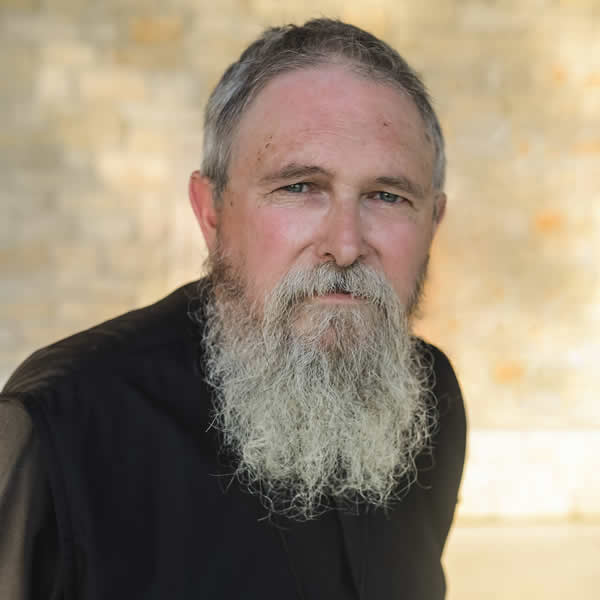


About Fr. Stephen Freeman

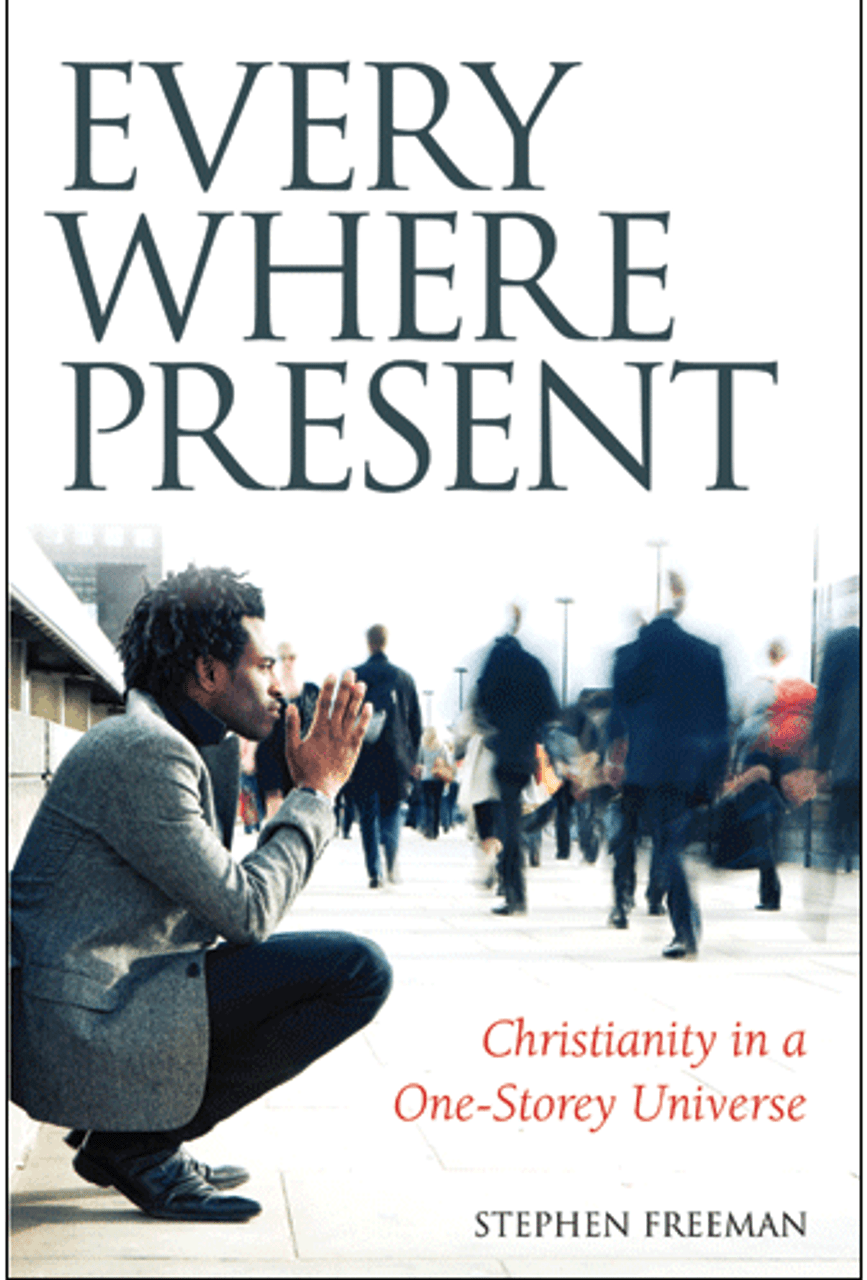
Fr. Stephen is a retired Archpriest of the Orthodox Church in America. He is also author of Everywhere Present: Christianity in a One-Storey Universe, and Face to Face: Knowing God Beyond Our Shame, as well as the Glory to God podcast series on Ancient Faith Radio.


Posted

in

by

Comments

29 responses to “Healing the Soul and Unbelief”

  1. Jenny Avatar
    Jenny

    Father,

    Thank you for another beautiful post!

    “And, strangely, transcendence wants expression.”

    What an evocative phrase that is. We would indeed be more mute than animals if we ceased to care about the expression of life amongst one another and tried to only care about the reality itself individually.

    Longing is good medicine for the soul, I’ve found. Especially if I can take away any quick fix so I can begin to understand what it is I am really longing for.

  2. Fr. Stephen Avatar

    Jenny,
    There is pretty much nothing that we can buy that heals the soul (unless it’s buying something for someone else). Finding a way to give expression to transcendence is, perhaps, the birth of art, perhaps evening the birth of writing (though, I’m told that writing evolved for keeping records on storage and sales). Just slowing down and paying attention to the soul (and its wounds, and its joys) does much towards our healing.

    Love, above all things, heals.

  3. Dino Avatar
    Dino

    This truth you have seen and express so well Father ie: that the soul does not come to faith through arguments alone, but because it is healed and awakened to the presence of God, also points -as you often imply- to the truth that transcendence is only the threshold. We must not stop at beauty, wonder or meaning, but pass through them into repentance, prayer, and union with the living Christ, so that with a renewed heart every face, every sorrow, and every joy will become a revelation of the Kingdom.

  4. Fr. Stephen Avatar

    Dino,
    This is so true. I was just thinking on that very thing…that if we stop with beauty, truth, wonder or meaning, without seeing that Christ is the Reality of those things, and begin the life of repentance and healing, then we will miss the joy that is prepared for us. Our souls are such a confused mess these days.

  5. Matthew Avatar
    Matthew

    Fr. Stephen wrote:

    “I believe that a common element within human experience can be suggested by the word “transcendent.” It is an experience of beauty, of goodness, of wonder, that goes beyond itself. It demands poetry and art, songs and symbols. And despite our love of technology and the giftedness of our machines, it is the transcendent that speaks most fluently to our lives.”

    I watched a film called Perfect Days yesterday. Admittedly I don´t watch many films. Nevertheless this film was one of the best ones I have seen in a long time. An aging and isolated Japanese toilet cleaner does his very best to see beauty and experience the transcendent everyday and as a result touches everyone around him in seemingly positive ways. I cannot recommend this film more.

    I would love to be like him in many ways.

  6. Rob Avatar
    Rob

    This is where my mind went with this. This is anecdotal, but here is my observation of most of what I’ve come across in my little world of those who would self-describe as Christian, including myself…and I mean those who I have been in conversational, face-to-face relationship with. When confronted with the question of what we desire most in the deepest part of ourselves, we are either: too distracted to even give an accurate, self-aware answer, or the answer ends up being something other than Christ, Himself. Under scrutiny, it ends up being something that He can do for us, lsu as: take us to heaven when we die, make our day go better, fix some other person or situation so that I can be okay, etc. Christ ends up being the means to some other end, rather than the end itself. This is not meant to be a judgment or accusation against myself or anybody, but to highlight the pervasiveness of the distraction, self-absorption, and narcissism of the spirit of our age.

    The good news is that God is love and God is transcendence and we can be “…partakers of the divine nature, having escaped the corruption that is in the world through lust. (2 Peter 1:4 NKJV)”

    Lord, have mercy on us.

  7. Rob Avatar
    Rob

    … I don’t think we ask each other enough, “what is it or who is it that you really want in life?”

  8. Mark Spurlock Avatar
    Mark Spurlock

    Father Stephen,

    What does it mean “to believe” in the specific sense of your post?

    That is, if we assume that one or more of the Apostles believed in God and the faith of the Old Testament, including the expectation of a Messiah to come, that this was the creed they lived by–as much as the vast majority of believing Christians *practice* Christianity today–prior to their meeting Christ, then that belief was different from their lived beliefs after that encounter.

    Discussions about the problem of evil usually come much earlier than the Apostles’ transformation as far as arguments about belief: whether someone can believe “at the beginning” in the existence of an all-powerful, benevolent God. (A belief in such a God seems requisite to moving to a belief in “repentance, prayer, and union with the living Christ, so that with a renewed heart every face, every sorrow, and every joy will become a revelation of the Kingdom.” Or is it possible to arrive at Christ first and then, through Him, come to belief in the Father?)

    Does any of that movement involve the intellect?

    I have just started “The 52-Week Orthodox Bible Study Workbook.” An activity for this week is to ask a question about God you have never had answered. My question seems to me something of the reverse of the problem of pain: “Why were we created to find sin attractive?”

    If it is because of our fallen nature, then why did Eve find the forbidden fruit alluring *before* the Fall?

    Thank you any answers!

  9. Mallory Avatar
    Mallory

    Thank you, Fr. Stephen. I’m having trouble lately thinking about God’s will and this is related to what you write about unbelief. I read today in the little book I’m reading the practice of the Presence of God:

    “Our only happiness should come from doing God’s will, whether it brings us some pain or great pleasure. After all, if we are truly devoted to doing God’s will, pain and pleasure won’t make any difference to us. We also need to be faithful, even in dry periods. It is during those dry spells that God tests our love for Him.”

    I’m struck by how sort of easeful and full of confidence this instruction is. Yet…I don’t hear God, I would be lying if I had any idea what His will is for me, or anyone else, or why. I pray, I sit in quiet, I ask for help, mostly for peace. Yet I suppose my unbelief manifests it feeling an extreme irritation if not more when I read things like the passage above. And then I want to turn back to Buddhism for its utter simplicity, and for lack of a better word inclusivity, only meaning that it does not ask to believe in anything, just instructions that this world is suffering and there is a way out of suffering that is experiential: do good, follow these precepts, don’t rely on a Higher Power, your actions create your own suffering. No one to blame or rescue you, just your own daily work sitting in silence, working, cooking, cleaning, caretaking and treating others as you would be treated, like Jesus said.

    Does this make sense? Can you offer some words of wisdom? Am I alone in these feelings here?

    Matthew, I also love that movie. I think of it often.

  10. Jenny Avatar
    Jenny

    Father,

    How sadly prosaic the birth of writing is, if it came about due to record keeping! 🙂 When I was a girl, I had to write in cursive with blue pen on lined paper, which hurt my hand and made the tiny bottle of white-out fluid a precious commodity. If it was misplaced, I had to rewrite papers due to spelling errors, even if it was made three pages in. What agony.

    Still though, a longing for transcendence caused me to use up reams of paper in that way, for no assignment at all, simply because I longed for something that I couldn’t reach any other way. I wrote for years, by hand and then by electric typewriter and then on an early laptop (three inches thin!), trying to find my way toward it.

    But all I was doing was making little idols. I realized that when the Lord came into my life in the way He did. That’s the way I feel about it, when I look back. I wasn’t trying to do that- to make idols. It was the Lord that I wanted, but I didn’t realize it, so I was reaching in the dark toward something I wouldn’t have dared to dream of receiving, had someone explained it to me at the time. So I was falling short and reaching off target.

    Now I don’t have much time to write, and besides, I know where all the longing is supposed to be going, which is quite peaceful.

    We’re trying to save on our energy bill, so we bought a drying rack. Was I ever shocked at the healing peace of hanging up the laundry! Or taking it back down again, all dry and warm from the sun. While engaged in this task, I’m not thinking about anything in particular, except what piece fits where. The sun is hot on my head, and the birds are singing everywhere and the crickets are calling. Also, shelling the peas from our garden has the same quality of immersive peace. They are excellent methods for slowing down and paying attention to one’s soul. I would never have expected it, but it’s been a delight to discover this.

  11. Fr. Stephen Avatar

    Mallory,
    My advice, for what it’s worth, is to avoid being too abstract. “God’s will” is an abstraction, for example. I’m not surprised you have difficulties with it. My suggestion is that you (me, anyone) start with Jesus. Read His teachings (such as the sermon on the mount) and follow that path. We are not saved by abstractions. The Creed, for example, reveals the guard rails of Orthodox Christianity. That is, it tells us Whom it is we are worshipping, to Whom we give loyalty. But it’s not asking for us to figure everything out and wrap our head around it.

  12. Fr. Stephen Avatar

    Jenny,
    Of course, the theories about how writing was invented is based on a few fragments from a few locations and then guess work. The earliest examples, the art-work of the caves, for example, is not “writing” (that we know of), but is brilliantly artistic.

  13. Colin Avatar
    Colin

    This is so timely. Someone has just hurt me deeply and I have been struggling to forgive, your lovely words have helped provide that final push of grace to enable me to do so with real joy. Thank you.

  14. Drewster2000 Avatar
    Drewster2000

    Jenny,

    I have found monotonous task to be a pleasantly unexpected source of refuge from our overwhelming world full of poisonous noise. Washing dishes or folding laundry or taking a walk: all those things move the hands and feet. When the body moves, the brain seems to move in parallel, processing all the thoughts that have gotten backlogged and unable to go anywhere.

    If I go outside, the benefit doubles. All of a sudden I get sunshine, fresh air, nature having a life around me – unfallen and moving as God intended. These are best kept secrets that He hides right under everyone’s noses. No one would suspect these mundane tasks of such value because they’re free and easy – something nothing usually is in this world. Just another way God works with His hidden hand.

  15. Dirk Avatar
    Dirk

    If writing was really invented or for purely mundane and utilitarian purposes then it can’t have taken long before it was transcended into art, poetry and holy scriptures.

    Maybe this is another example of how God is blessing and redeeming our fumblings here on earth.

    But who can say that it was invented only once in one single place and time and only for one purpose?

    And isn’t the separation of the mundane and the divine something alien to most cultures other than our own?

    As to Matt’s question “why we were created to find sin attractive”, I would speculate that it was the other way round, that it was sin that was created (by the adversary) so that we would be tempted by it.

    Humans were created first, sin came in later.

    God created us to desire good things and according to St Augustine (I think) sin is essentially disordered desires.
    We want things that aren’t bad in and of themselves, such as pleasure, comfort, security, knowledge etc, but we use our god given freedom to pursue these things in ways that are harmful to ourselves, others and our relationship with God.

  16. Fr. Stephen Avatar

    Colin,
    May God give you grace!

  17. Fr. Stephen Avatar

    Dirk,
    Good thoughts. Many thanks.

    Your words to Matt’s question are spot on. Thanks again.

  18. Dee of Sts Herman and Olga Avatar
    Dee of Sts Herman and Olga

    Mark,
    How did you learn about the workbook? Just curious.

  19. Dee of Sts Herman and Olga Avatar
    Dee of Sts Herman and Olga

    Father,
    These are timely words for the work I have at hand:
    It is a medicine that drips from every leaf, is painted across the sky, rests in the bosom of everyone we meet, and dwells secretly within our own heart.

    I pray that my heart sees and hears Him and His voice throughout our natural world and in the hearts of others.

    Thank you, Father.

  20. Simon Avatar
    Simon

    Mark,

    I want to say up front I am not presuming to answer your question, but offer some of my own thoughts that you may or may not find helpful.

    First, sometimes belief in Christ is a sin. I say to my son, “The right answer for the wrong reason is still a wrong answer.” We really need to divorce the idea of faith from the Western notion of merely giving intellectual assent or agreement. This is probably one of the hardest “unlearning” that must happen in the minds of catechumens today. Belief is not psychological certainty about the truthfulness of ideas.

    In my own path, it was the iconostasis that I first noticed. I remember feeling very much in the company of the saints. And the iconostasis in the parish of my baptism almost always glowed as did the smoke from the priest’s incense. My faith was very much in those few but regular moments that on the one hand impressed me, but then disturbed me because I never felt secure enough in myself to simply accept it for it was. I was always afraid.

    My faith is probably in all the proxies that Christ has given me: The Church, my priest, the icons, and the liturgy. I don’t know what it means to say that I have faith or belief in Christ apart from these things.

    Look at the symmetry Jesus creates in John 6.
    John 6:47 – “Whoever [believes in Me] has eternal life.”
    John 6:54 – “Whoever [eats My flesh and drinks My blood] has eternal life.”
    John 6:56 – “Whoever [eats My flesh and drinks My blood] abides in Me.”

    What does it means to believe in Christ? It means to eat His flesh and drink His blood. What does it mean to have eternal life? It means to abide in Him. I cannot unsee in these verses the equivalency between “believing” and “eating and drinking”.

    This is an incomplete thought, but perhaps there’s soemthing helpful in it.

  21. Mark Spurlock Avatar
    Mark Spurlock

    Hi Dee…it was in my Amazon recommended books because of past clicks and purchases.

    Simon: Thank you for your response. I think my personal experience (briefly and essentially) agrees with what you have described as your own. But I’m uncertain that everyone means belief the same way, and whether it is the only form of belief–hence, my question about the apostles before they encountered Christ in person.

    Or any Old Testament figure. You describe specifically “to believe in Christ.”

    I cannot recall a time I did not believe in the Christian God. My great aunt had me on her knee reading the Bible to me from my very earliest memories. I used to pray fervently to God when I was a pre-schooler before going to sleep each night to go to Tennessee (we lived in Chicago, but my family was from Tennessee and everyone spoke of its being a paradise in comparison).

    When I was seven, my elderly VBS teacher took me aside after class and had me confess that I was a sinner and ask Christ to save me. I understood Christ as “the Son of God.” Nevertheless, I don’t think I had any sustained *intellectual* grappling with the Trinity and all that implies before moving toward Orthodoxy and reading the works of Kallistos Ware. Consequently, what I believe is different since becoming Orthodox to before. Greater “fullness” always seems the best way to describe the difference, although true fullness would probably be theosis.

    I think the distinction I would make is between “intellectual assent” (if I understand what you mean by the phrase) and being able to state in words something approaching, at least, what one believes. We do, after all, pronounce the Nicene Creed, although, now that I think about it much of the Creed describes objective events, rather than interpretive meaning and significance.

    Nevertheless, doesn’t a phrase like “forgiveness of sins” require our intellect’s internal explication to differentiate our reciting it from merely parroting something we don’t understand?

  22. Matthew Avatar
    Matthew

    Mark: What do you we mean when you use the word “intellect”?

    Fr. Stephen: If belief in God has little or nothing to do with intellectual assent to a set of theological ideas or historical statements – then what is belief exactly? In my evangelical Protestant days, there were two main streams – non-charismatic and charismatic Christianity. Sometimes people would move from the very rational and non-experiential kind of Christianity into the charismatic stream (this is my story). Once arriving there, emphasis was placed on a much less rational understanding of God and believers were encouraged to have emotional and supernatural experiences of/with God. How are these less rational, more supernatural experiences of God different from the kind of divine experiences we talk about within Orthodoxy or even Catholicism?

    In my view, belief looks something like this:

    “But what about you?” he asked. “Who do you say I am?”

    Simon Peter answered, “You are the Messiah, the Son of the living God.”

    Jesus replied, “Blessed are you, Simon son of Jonah, for this was not revealed to you by flesh and blood, but by my Father in heaven.”

    Belief is something revealed. Something given from above. It´s not a rational calculation. It´s not an emotional experience. It´s something altogether different.

  23. Mark Spurlock Avatar
    Mark Spurlock

    Matthew: I intend a similar, standard usage to what Father Stephen means when he writes, “I have long been convinced that ‘believing’ is grounded in something other than intellectual activity.” That is, our intellect is the capacity to reason about thoughts and concepts, which we can express and thereby communicate through words and symbols. It is in contrast to the ineffable and transcendent–perhaps intuitive–of first principles, where we encounter the limits of human understanding. The intellect reconciles and synthesizes information.

    Going back to Father Stephen’s original post, the intellect alone cannot solve the problem of evil, given the premises of an all-powerful, all-benevolent deity. If we intuitively feel within us a belief that God is good, however, regardless of what our perception might observe and reason deduce, we transcend the glass darkly to seek God and meaning everywhere and in all things.

    I agree with that. Nevertheless, I can’t help but feel that, after we accept certain givens, much of what we come to believe involves the intellect. An example is Christ’s parables, which very much employ metaphors and analogies to make rational, persuasive appeals. (You are more valuable than the fowls of the air, so you can be reasonably assured that the Father will provide for you.)

    Likewise, if the intellect is of no use in arriving at our beliefs, then we would not need language/the Word. For example, we may take as a transcendent given that God desires a relationship with us. This belief begins irrationally and therefore outside the intellect; one cannot through reason alone come to believe the omnipotent, eternal creator of the universe wants a personal relationship with what St James equates to “a vapor.” The idea on its face is ludicrous. The intellect can, however, given the premise of a personal God, an understanding of scripture, and the experience of human relationships, facilitate our pursuit of that relationship.

  24. Fr. Stephen Avatar

    Mark,
    I readily agree that the intellect (reason) has its uses and we shouldn’t despise it. It is fallible (in its own ways) and there are places in our lives that it cannot go, or cannot go far enough.

    One of the first articles I wrote for the blog, back in 2006, spoke about “knowing” God. That knowing is something that intellect cannot give us – not by itself. It can take us to the very threshold – indeed, I’ve found great solace in finding my way back to the threshold any number of times. There are days that I stand there and can go no further. But that step across the threshold, into the Room beyond, is taken at the deepest level, the most existential and noetic level of our being. It is at that level that we “know” God – that we commune with Him.

    There are Sundays (so I’ve noticed), when I’m taking communion at the threshold, such is the noisiness of my soul. I tremble at that, but still I receive because I wouldn’t dare refuse. So, it becomes, “help my unbelief!”

    My writing in the manner that I do is to encourage and draw us further, to cross the threshold and to plunge into the fiery life of God. No more, no less.

  25. Simon Avatar
    Simon

    Mark,

    I have been thinking about your original question since you posted it on the 29th. I only responded after thinking about it for days. What I heard you asking was something like this this, “Given that discussions about the problem of evil occur before other considerations I wonder whether someone can believe “at the beginning” in the existence of an all-powerful, benevolent God.”

    I responded as I did because every other “logical approach” seemed trivial and superficial in comparison to the gravity of your question. My response was mostly anecdotal. Not that my anecdotes are meaningful, but I was hoping to underscore the thought that belief is communion. There is no belief apart from communion. What is communion? It is a matter of the heart.

    Find a place where the veil becomes thin and sit there quietly. Communion will emerge naturally.

    I have seen more than my fair share of people confessing belief (psychological certainty) in absurdities. I have been those people. There is no idea so absurd that absolutely no one would believe it. I have read too much, spoken to too many people, and seen too much with my own eyes. Human beings are believers and absurdities are for many if not most possibilities. And they can see them with all the vibrant certainty of a blue sky and green grass. I say this to say that I would like us as Orthodox folk to have an appropriately nuanced understanding of what we mean by belief.

    I often think to myself, if my psychological certainty (belief) in Christ is the same kind quality as the my psychological certainty as a JW who confessed Jehovah as God, then my confession of Christ is a sin. Maybe that’s harsh, but that’s where I am at.

    None of my questions have ever been resolved. They rise in intensity to the point of torments. So, in response to your original question I would say “No.” The questions regarding the problem of evil do not need to become an obstacle to entering communion with Christ–which to me is belief. In fact, it might be those very questions that turn the soil of the soul to receive the seed. The way I understand it is that one sunrise may be enough communion to last a lifetime and in that moment a person’s questions aren’t answered, but the mind will change, it will feel anchored to something real. It won’t understand it and it will be tormented by questions and doubts, but the anchor of that moment might be all one needs. Maybe all we ever truly need is one moment that we can hold onto, remember, and be faithful to. A moment in light of which we can choose to live the rest of our lives.

    No more blogging on Father Stephen’s blog. 😂

  26. Fr. Stephen Avatar

    Simon,
    Well said. I agree – except, keep on blogging… 🙂

  27. Matthew Avatar
    Matthew

    Thank you Mark. What you explain about intellect seems to be very similar to how I have heard it explained in Catholicism.

  28. Simon Avatar
    Simon

    Mark,

    With deepest affection and respect, I am compelled to disagree. You observed, “I can’t help but feel that, after we accept certain givens, much of what we come to believe involves the intellect. An example is Christ’s parables, which very much employ metaphors and analogies to make rational, persuasive appeals.” I think the parables are aimed at the heart–specifically, the noetic faculty of the heart. In Matthew 13 Jesus says, “It has been given to you to know the mysteries of the kingdom of heaven, but to them it has not been given. For whoever has, to him more will be given, and he will have abundance; but whoever does not have, even what he has will be taken away from him. Therefore I speak to them in parables, because seeing they do not see, and hearing they do not hear, nor do they understand.” This seems to argue against the intellect or rational discourse as a means of understanding the parables.

    Paul in 1 Corinthians 2 says in essence, “Instead, we speak words (logoi) given to us by the Spirit, using the Spirit’s [words] to explain spiritual truths.” I genuinely believe that there is a difference between speech impregnated by the Holy Spirit and speech that is not. It is in the pattern, I think. A “spiritual person” will recognize the pattern, it isn’t an understanding that results from rational discourse. “He who is spiritual judges (discerns) all things, yet he himself is rightly judged (discerned) by no one. For “who has known the mind of the Lord that he may instruct Him?” But we have the mind of Christ.”

    This leaves a lot of unanswered questions, but my thought is this. This “mind of Christ” and being a “spiritual person” is what enables a noetic understanding of the parables. I am not arguing against exegesis or reason. I am hoping to underscore the idea that the place where belief is properly formed is in the noetic faculty of the heart.

    I am cautious to the point of fearful to place belief anywhere else simply because the human mind–reason and intellect–is woefully susceptible to deception. Especially, self-deception.

    I would beg your forgiveness if I have misunderstood you. I am certain that belief ultimately is a matter of ‘faithfulness that preserves the sanctity of communion.’

    I believe that I had a tooth pulled earlier today.

    In that sense, I do not believe that Jesus is the Christ. However, I hope that I am faithful to my priest, my home parish, the Church, my confession, liturgy and communion. I say the words “I believe in one God the Father Almighty…” but I leave it to the Church to tell me what I mean by that.

    I have to leave that to the Church because I refuse to say The Confession of Faith with the same psychological certainty that I had when I use to say “I believe that Jehovah is the true God.” That’s just swapping out idols. I refuse to insult what I have inherited (traditioned) with my sense of certainty.

    Father Stephen, am I being too harsh? I mean that sincerely.

  29. Fr. Stephen Avatar

    Simon,
    I believe that this is well-said. No doubt, we always use reason to some extent, but, in our time and place we suffering from the near silencing of the noetic faculty and the dominance of reason. What you are saying requires the healing of the noetic faculty. I would say that without the healing of that faculty, we will remain lost to a certain extent. Not lost in an eternal sense – but lost from much that is needed.

    It’s not either/or, but reason very easily displaces the nous. It’s not a mistake to be on guard about it.

Leave a Reply

Your email address will not be published. Required fields are marked *


Subscribe to blog via email

Support the work

Your generous support for Glory to God for All Things will help maintain and expand the work of Fr. Stephen. This ministry continues to grow and your help is important. Thank you for your prayers and encouragement!


Latest Comments

  1. Yes, George MacDonald is full of gems.

  2. Connie that was a beautiful quote.

  3. Mallory, I can identify with your frustration. I have a quote on suffering that may be appropros to this discussion.…

  4. Mallory, My seven-month-old daughter suffered and died. My parents died brutally in a car accident. I suppose it would surprise…

  5. This was a beautiful reminder, thank you. I think of this often, because I need to catch myself several times…


Read my books

Everywhere Present by Stephen Freeman

Listen to my podcast


Categories


Archives