Why Mary Has Always Been Honored

August 15 is the Feast of the Dormition, the “Falling Asleep” of the Virgin Mary. I offer this article as a reflection.

The most difficult part of my Orthodox experience to discuss with the non-Orthodox is the place and role of the Mother of God in the Church and in my life. It is, on the one hand, deeply theological and even essential to a right understanding of the Orthodox faith, while, on the other hand, being intensely personal beyond the bounds of conversation. I am convinced, as well, that the Orthodox approach to Mary is part of the apostolic deposit, and not a later accretion.

When I was doing graduate studies some decades back, I decided to concentrate my historical research on the “cult of Mary” (the veneration of Mary) in the historical Church. With that decision came a semester of intensive research, combing through materials of every sort. And throughout all of that research the question, “When did this begin?” was uppermost in my mind. I came to a surprising conclusion. It began at the beginning.

The historical evidence for Mary’s veneration is so obvious that it is simply overlooked: her place in the gospel accounts. I find much of the “historical” evidence about Christ to have a similar feature. It is amusing, and annoying, to read modern historical critics of the New Testament who come away from those documents arguing that the notion of Christ’s divinity was a later development. Somehow they manage to read the New Testament and miss the most obvious thing: the writers all believe that Jesus is divine. They fail to notice that the very existence of the “Jesus material” of the New Testament exists solely because its writers believed He was God. Every line flows from that belief.

In a similar manner, Mary’s place within the gospels carries a message of veneration. Those who do not see this obvious feature of the New Testament generally get lost in the details, reading too much into sayings such as Jesus’ “Woman what have I to do with you?” and the like.

First, the stories of Mary hold an important place in the gospel narrative. St. Mark has the least mention of her, with no birth narrative. St. Luke has the most material, and St. John perhaps the most important. Biblical critics take a “least is best” approach and will say things like, “St. Mark knows nothing of a birth narrative,” a patently overstated claim.

For me, it is the seemingly “gratuitous” material that points to veneration of Mary. St. Luke’s account has the Magnificat hymn in which Mary declares, “All generations will call me blessed.” It is a phrase that can only be compared to God’s promise to Abraham:

I will make you a great nation; I will bless you And make your name great; And you shall be a blessing. I will bless those who bless you, And I will curse him who curses you; And in you all the families of the earth shall be blessed.” (Gen 12:2-3)

In Mary’s encounter with her kinswoman Elizabeth (and with the child in her womb, John), the focus is on Mary herself rather than the child in her womb.

But why is this granted to me, that the mother of my Lord should come to me? For indeed, as soon as the voice of your greeting sounded in my ears, the babe leaped in my womb for joy. (Luk 1:43-44)

Later in Luke, when the child Jesus is presented in the Temple, the elder Simeon prophesies:  

Behold, this Child is destined for the fall and rising of many in Israel, and for a sign which will be spoken against (yes, a sword will pierce through your own soul also), that the thoughts of many hearts may be revealed. (Luk 2:34-35)

Here, Mary is linked to the Cross of Christ in the piercing of her soul.

I describe these stories as “gratuitous” in that they go well beyond the simple point of the Virgin Birth. Mark and John have no mention of the conception or birth of Christ (though they both include Mary in their narrative). The abundance of Marian material in Luke can only point to her veneration in the primitive Church. She is not just the Virgin who gives birth to Christ – she is also blessed by all; she is the cause of joy to the Prophet John even in his mother’s womb; she is a unique participant in the sufferings of Christ, destined herself for a mystical sword that will pierce her very soul.

This is information that points to the unique place of Mary in the first century Christian community. How can the Church not venerate one whom John the Baptist greeted with a leap of joy when he was in the womb? How can the Christian community be rightly centered on the Crucified Christ and ignore the soul-pierced Mother? The material in Luke is prima facie evidence of the primitive veneration of the Mother of God. That veneration never ceases in the Church, but matures over time as the Church considers the meaning and depth of Christ’s Incarnation, Crucifixion and Resurrection.

It is obvious that many Christians would prefer to read only Mark’s gospel and ignore the obvious implications in Luke and John.

John’s gospel seems to me to be marked with a profound understanding of the mystery of Mary. Of special note is his first mention of her. We meet her at the Wedding in Cana. John provides no introduction to her character – he presumes a prior knowledge on the part of his readers. At the Wedding, the wine runs out. And with no explanation of a practical sort, John simply relates that Mary tells Jesus, “They have no wine.”

It is profound. His disciples have seen nothing as yet. No miracles have been performed (this Wedding will be the scene of the first miracle). And yet Mary knows who He is and what He means. She is already fully initiated into the truth of His life and ministry.

Many Protestants have made much of Christ’s reply to her: “What is this between you and me?” They have treated the statement to mean: “What business is this of yours?” In fact, it simply asks, “What is this between you and me?” But St. John puts the statement in a context: “For mine hour has not yet come.” Christ says to His mother, “It’s not time. This doesn’t have to begin yet.”

They share the bond of the coming Cross. His life will be offered, a sword will pierce her soul. And once He begins, nothing can stop the movement to Golgotha. Her response is simple: “Do whatever He tells you.” It is a repetition of her earlier, “Be it unto me according to your word.” Her complete humility and self-emptying before God is a human reflection of the self-emptying of Christ on the Cross. With this new “fiat,” the inexorable journey to the Cross begins.

The mystery of her participation in Christ does not end with historical moments – for the sharing of those moments in the gospels are in no way merely concerned with the historical record. They are primarily theological moments. She holds not just a place in the history of salvation, but in its theological understanding and existential participation as well. The gospels are written for our salvation, and not as mere information.

And it is this theological and existential reality that are missing from many contemporary accounts of the Christian faith. The question is often asked, “Why do I need to venerate Mary?”

First, the Orthodox would not say, “You need to venerate Mary.” Rather, we say, “You need to venerate Mary as the Theotokos” (birth-giver of God). This is the theological title dogmatically assigned to her by the Third Ecumenical Council. She is venerated because she is Theotokos. To venerate the Theotokos is an inherent part of rightly believing in the Incarnation of the God-Man. To ignore her as Theotokos is to hold a diminished and inadequate understanding of the Incarnation.

But this is speaking in terms of mere ideas. The Incarnation is not an idea – it is a reality – both historical and now eternal. The Incarnation is the God/Man Jesus Christ. And, more fully, the Incarnation is the God/Man Jesus Christ born of the Holy Spirit and the Theotokos. This is what is asserted in the Nicene Creed.

The reality of this statement is not an idea, but a Person, both in the case of the God/Man, and in the case of the Theotokos. The act of believing in the Incarnation of Christ is made manifest in the worship that is properly directed towards Him and in the veneration that is properly directed towards the Theotokos.

And it is this that is so difficult to explain to the non-Orthodox. For doctrines are easily perceived by them as ideas, even factoids. In Orthodoxy, these doctrines are living realities. It is of little importance to acknowledge that someone is, in fact, my mother. It is of the utmost importance that I honor my mother (by Divine command) and love her. We do not think doctrine. Doctrine is a description of the realities by which we live. We venerate the Theotokos because, knowing what we know, we cannot do otherwise.
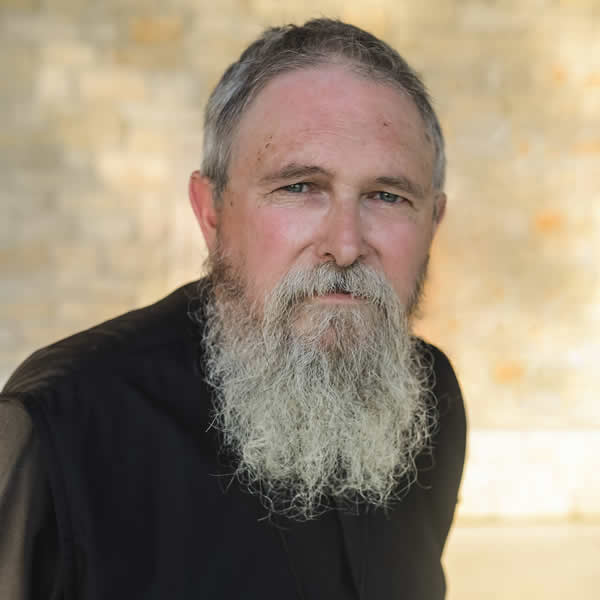
About Fr. Stephen Freeman

Fr. Stephen is a retired Archpriest of the Orthodox Church in America. He is also author of Everywhere Present: Christianity in a One-Storey Universe, and Face to Face: Knowing God Beyond Our Shame, as well as the Glory to God podcast series on Ancient Faith Radio.


Posted

in

by

Comments

22 responses to “Why Mary Has Always Been Honored”

  1. Janette Adelle Reget Avatar
    Janette Adelle Reget

    I have always wondered how Mary addressed the servants at the wedding with such authority. And how did she know they were out of wine? Did she know the couple getting married? Or did she just know? And maybe she recognized this as Jesus’ time.

  2. Deborah Engleman Avatar
    Deborah Engleman

    I love the story of the Marriage at Cana. Mary knew it was time for her Son’s mission to begin. I imagine when she told the servants to “do whatever He tells you,” that her soul was pierced through and through.

  3. Fr. Stephen Avatar

    Janette,
    Tradition holds that the wedding at Cana was the disciple Nathanial’s wedding, which is an interesting thing not widely known. But note that in John’s gospel, it specifically says that Jesus and his disciples were invited to the wedding, so it’s not surprising that it involves someone within that circle. But, I suspect that when the wine ran out, whispers spread throughout the wedding party (as such things normally do). The story is actually quite rich. Remember, as well, that it’s recorded in St. John’s gospel is was the caretaker of Mary after the resurrection and ascension of Christ. He knows her like none of the other disciples. Interesting.

  4. Fr. Stephen Avatar

    Deborah,
    Indeed.

  5. hélène dragone Avatar
    hélène dragone

    I was pleasantly surprised to read this :
    “Because she fully shares our nature, the Dormition of the Theotokos is the firstfruits of the Church.”
    And doesn’t the icon of the Holly Dormition convey, more vividly than any doctrine. Behind the funeral bier, Christ stands holding in his arms the soul of his mother, depicted as a swaddled infant. The Nativity is reversed : she who once carried the Child is now being carried. The bier is painted like an altar ; the apostles are arranged in two groups around Peter and Paul ; the angels descend with veiled hands as if to receive the Holy Gifts. The entire scene is a liturgy.
    The Church does not shy away from the death of the Mother of God ; with love, she sings of it.
    There are many wonders to discover in the Holy Dormition of the Mother of God !

  6. Matthew Avatar
    Matthew

    We celebrate Mary’s assumption into heaven today in the west. I suppose the difference has to do with both theological emphasis as well as with the calendar?

    Either way, instead of fighting against Mary as a Catholic revert Protestant, I have decided to press into her presence more intimately both when I am at church and when I am not. I want Christ to slowly reveal to me the truth and wonder of Mary and what role she is playing in my life.

    I also don’t like it when many Protestants call Mary veneration idolatry.

  7. Eric Dunn Avatar
    Eric Dunn

    Thankyou for that fuller understanding of Mary’s role. I was recently Chrismated after 45 years a Protestant. It was difficult to grasp the Church’s veneration of Mary. I find the more time I reflect upon her as presented in Divine services (and other services), the more clearly I grasp why we venerate her. Yes, much understanding does go beyond conversation. Yes, I now cannot do otherwise.

  8. Fr. Stephen Avatar

    Hélène,
    Thank you for this lovely meditation, comparing the Dormition to the Nativity. He becomes what we are so that we might become what He is. This is the very heart of the Liturgy.

    I have been considered, on a variety of levels, the mystery of the soul depicted as a child in swaddling cloths. I haven’t the words for it yet.

  9. Fr. Stephen Avatar

    Matthew,
    Orthodox practice gathers the Dormition and the Assumption into a single feast. In ancient times, I think I’ve read, they were separated by three days in some places.

  10. Fr. Stephen Avatar

    Eric,
    May God dwell richly in you! I was 44 years old when I was received into Orthodoxy. I don’t think I realized just how young I still was. Treasure each day!

  11. Buck Hatcher Avatar
    Buck Hatcher

    Growing up Protestant and becoming Orthodox, the veneration of the Theotokis has evolved over time. It’s been slow and I always find myself wanting to go deeper, a sense that my becoming more human is tied to that mystery. I found great joy and contemplation in reading your words. As always, a true gift to one of your readers. Thanks be to God.

  12. Matthew Avatar
    Matthew

    If the Church grew (and continues to grow) into a fuller understanding of Marian theology, would this not also be the case with other aspects of church doctrine and dogma?

  13. Fr. Stephen Avatar

    Matthew,
    Yes and no. A greater understanding is not the same thing as a change in doctrine or dogma. I’m cautious in that in our modern climate, “change” is really about furthering an agenda that is alien to the Orthodox faith. I trust it about as much as I would trust a demon – pretty much the same source.

  14. Ann Dibble Avatar
    Ann Dibble

    This is spectacular. I hope you post it on Substack, where our tiny audience will be exhorted to meditate on it.

  15. Matthew Avatar
    Matthew

    Thanks Fr. Stephen.

  16. Simon Avatar
    Simon

    Father Stephen,

    The Son doesn’t borrow Mary’s humanity for thirty-three years and discard it.
    The humanity received from her is crucified.
    The humanity received from her rises.
    The humanity received from her ascends.
    The humanity received from her sits at the right hand of the Father.
    And the humanity received from her is communicated sacramentally to the Church.

  17. Fr. Stephen Avatar

    Simon,
    Amen! He became (and remains) what we are that we might become what He is.

  18. Matthew Avatar
    Matthew

    Thank you Simon.

  19. Simon Avatar
    Simon

    Matthew,

    You seem very concerned about many things.

    Allow me to speak out of turn.

    Just concern yourself with one thing. Something super simple. The Jesus Prayer, the Lord’s Prayer, the Symbol of Faith, the Prayer of the Optina Elders, Psalm 23, Psalm 51, or some other part of the Liturgy and just focus on that.

    There is absolutely nothing worse than being distracted, a mind divided by concerns.

    There are entire days where my internal life is just “Lord have mercy” under my breath the entire day. It keeps my mind from spinning into confusion. Sometimes the full Jesus Prayer is just too long. Sometimes it doesn’t seem like it’s long enough.

    I am 54 and I see in my life a pattern that discipline, consistency, simplicity, and stability in really small things is almost all of the work that needs to be done.

    You ask many questions. Take just one question that is really important to you and shelve all the rest. Absolutely ignore them. But take one question that is of utmost importance to you and try to understand that one question before you look for an answer.

    Answers to questions aren’t what you really want. The truth is that there are no answers that will satisfy you. The only thing you can do is become the answer. That is the task. The answer is never the answer. It will not satisfy you, and the more you indulge the persistent questioning the more unsatisfied you will perceive yourself becoming. Does that make sense? Genuinely, I sympathize with you.

    You gotta let it all go.

    Choose one prayer and become that prayer. Choose one question and become the answer to that question through the prayer you have chosen to become.

    My prayer is this from the Optina Elders: “Direct my will and teach me to pray, to believe, to hope, to suffer, to forgive, and to love.” When I am saying the prayer I can feel myself responding to the anticipation of saying the words. So, that is my prayer. That is what I dwell on most frequently.

    FWIW.

  20. Matthew Avatar
    Matthew

    Thanks Simon. You give me a lot to consider. I know my questions seem unending and might even annoy some folks in the comment section. I am willing to stop asking questions in this space, but I must admit that the answers I have received here over the last three years or so have helped me a lot. I find life here. Truly I do. There is no space quite like this anywhere in my life either online or offline. I am grateful to all who comment.

  21. Rob Avatar
    Rob

    Father,

    This is off topic, but I remember you mentioning Archbishop Dmitri of Dallas at one point. I was looking at videos of him this morning and was wondering if you have written anything about him and/or your relationship with him that you could direct me to?

  22. Fr. Stephen Avatar

    Rob,
    This article is one that I wrote at the time of his repose. It’s very brief, all in all. He and my father both died in the same month (August of 2011), in a very difficult period in my own life. There were many who knew him better than I did, though not many have written much (yet). I think there’s a biography in the works somewhere.

    When he visited in a parish, he gravitated towards the children. His Orthodoxy was some “embodied” that it was like a suit of clothes or something that was just part of him. He brought with him a presence of love and blessing, suffused with fidelity to the faith. He was kind and generous to a fault.

    May his memory be eternal!

Leave a Reply

Your email address will not be published. Required fields are marked *


Subscribe to blog via email

Support the work

Your generous support for Glory to God for All Things will help maintain and expand the work of Fr. Stephen. This ministry continues to grow and your help is important. Thank you for your prayers and encouragement!


Latest Comments

  1. Thank you Fr. Stephen, and all for this comment section. This has given me much to think and pray about.…

  2. Fr. Stephen, Nikolas, I am thinking out loud. I have a tendency to want to place hell beyond the particulars…

  3. Nikolaos, I am not willing to say what is the case ultimately. There is enough disagreement (here and there) on…

  4. Simon Understanding that Christ is both heaven and hell, depending on how each one will perceive him in his second…


Read my books

Everywhere Present by Stephen Freeman

Listen to my podcast


Categories


Archives