The Light of Christ and the Transfiguration

My attention was drawn to the event of the Transfiguration during my college years. It was then that I first read a book on St. Seraphim of Sarov, who himself was transfigured in a famous incident in his conversation with Motivilov. There, on a snowy winter’s day, the saint shown with a brilliant light, and Motivilov felt effused with warmth and joy. It caught my attention in the most obvious way. I thought, “I wish I could see something like that!” That desire was encouraged as I began to read and discovered the Orthodox teaching on the light of the transfiguration as being the “Divine Energies,” nothing other than the uncreated light of God. The teaching holds that we can see and participate in the Divine Energies, but not the Divine Essence. I took note of that and continued my research.

In hindsight, I think I wanted to see two things. First, I wanted to “see” something that reassured me of the existence of God. “If I could see such a light,” I reasoned, “I would no longer doubt.” Second, I wanted the experience itself, to somehow be effused with that light. This, I think, is as honest as I can be about my thoughts at the time. I am probably not alone in such thinking.

The doctrine of the Divine Energies and the Uncreated Light of the Transfiguration, received a dogmatic definition in the Palamite Councils of the 14th century. The Church affirmed the teaching of St. Gregory Palamas that the experience of seeing the light of Christ, sometimes vouchsafed in prayer, was, in fact, an experience of God in His Divine Energies.

Many years have passed since my early college reading and research. It has taken most of those years to understand in a helpful way the doctrine of the Divine Energies. To a great extent, my understanding was “blinded by the light.” By that, I mean that I was focused on the experience of Transfiguration and St. Gregory’s defense of the monks to such an extent that I let it encompass the entire scope of the patristic teaching on the energies.

There is a teaching on the energies that is far more prosaic even practical to be found in the early fathers . That teaching can be understood by simply looking at the meaning of the word, “energy” or “energeia.” In Greek “energeia” simply means “doings” or “actions.” The Divine Energies thus means the divine actions, everything that God does. What does God do? He creates; He sustains; He holds all things in his goodness; He moves all things and draws all things towards union with Him. What we must understand is that this holding in goodness, this moving, this drawing, this uniting, this sustaining, this creating, is in fact God Himself as the Divine Energies. And understanding this we must see that “in Him we live and move and have our being.”

But instead of understanding and contemplating this, for years I longed for an experience of Divine Light. As such, the idea was a distraction. The Transfiguration was something of a distraction for the disciples as well. St. Peter spoke of building three tabernacles on the mountain to mark or commemorate that wonderful moment. When Christ then spoke of His coming crucifixion, Peter rebuked Him! In doing so, he revealed that he still understood nothing of Christ’s work. Every action of Christ (including the Transfiguration) was a movement towards the Cross and the work (“energy”) of undoing death by death.

This remains a key in contemplating the Divine Energies (everywhere present and filling all things). The doings and actions of God are cruciform in nature. We proclaim that “in wisdom You have made them all,” while being told that Christ crucified is the “Wisdom and Power of God” (1Cor. 1:23-24). St. Maximus tells us that whoever understands the mystery of the Cross understands all things.

St. Paul was deeply baptized into this mystery. (He cried out, “That I might know Him: the communion of His suffering and the power of His resurrection!” – Phil. 3:10). The sound of creation, sustained by the cruciform Divine Energies, was described by St. Paul as “groaning like a woman in childbirth.” The suffering creation, made manifest to us in every moment, suffers with Christ and groans with Christ.

It is interesting to me that in considering Peter, James, and John’s experience of Jesus, Moses, and Elijah on Mount Tabor, it is the light that became of interest to me. And, in reflection, I see that I somehow treated the light as distinct from Christ Himself. Instead, we are told that Christ is the Light of the world and that this Light is life.

See how St. Dionysius speaks of the Divine Energies:

[God] in His providence is present to all things and becomes all things in all for the preservation of them all, while yet remaining in Himself nor ever going forth from His own proper Identity in that one ceaseless act wherein His life consists; and thus with undeviating power He gives Himself for the Deification of those that turn to Him. (The Divine Names, IX.5)

It is simply the case that the disciples on the mount of transfiguration saw as light what we all constantly see as Divine Providence. And just as they failed to recognize what they saw, so we also fail to understand and recognize what it is we ourselves see.

Christ stood speaking with Elijah and Moses, a saint who was assumed into heaven alive in a chariot of fire, and a saint who was bodily assumed into heaven after death (according to tradition). Parenthetically, this conversation utterly refutes those who would deny the communion of saints and our conversations with them. We follow the example of Christ. These saints understood the mystery of the Cross. We are told that their conversation with Christ was concerning His “exodus” (the Crucifixion). They spoke in union with the mystery of the light itself.

To celebrate the Feast of the Transfiguration is, I think, to celebrate the mystery of the Cross at work in and through all things. The whole of creation is a shimmering garment that groans and gives voice to the Divine Energies that sustain us all – that “one ceaseless act wherein His life consists.”

The light of Christ illumines all.
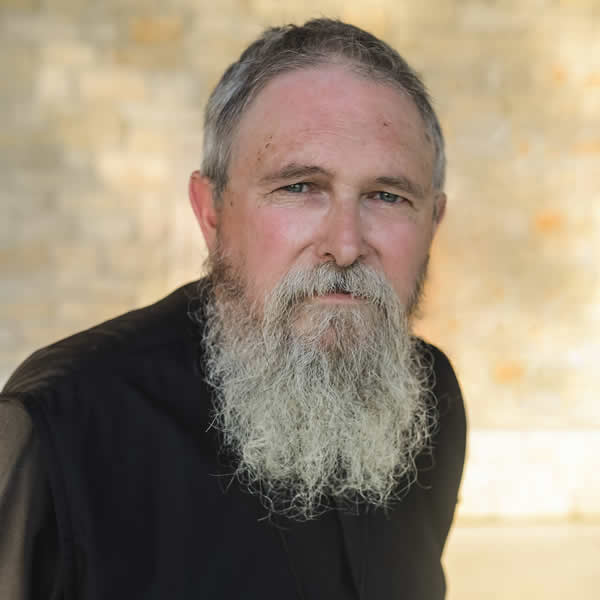
 

About Fr. Stephen Freeman

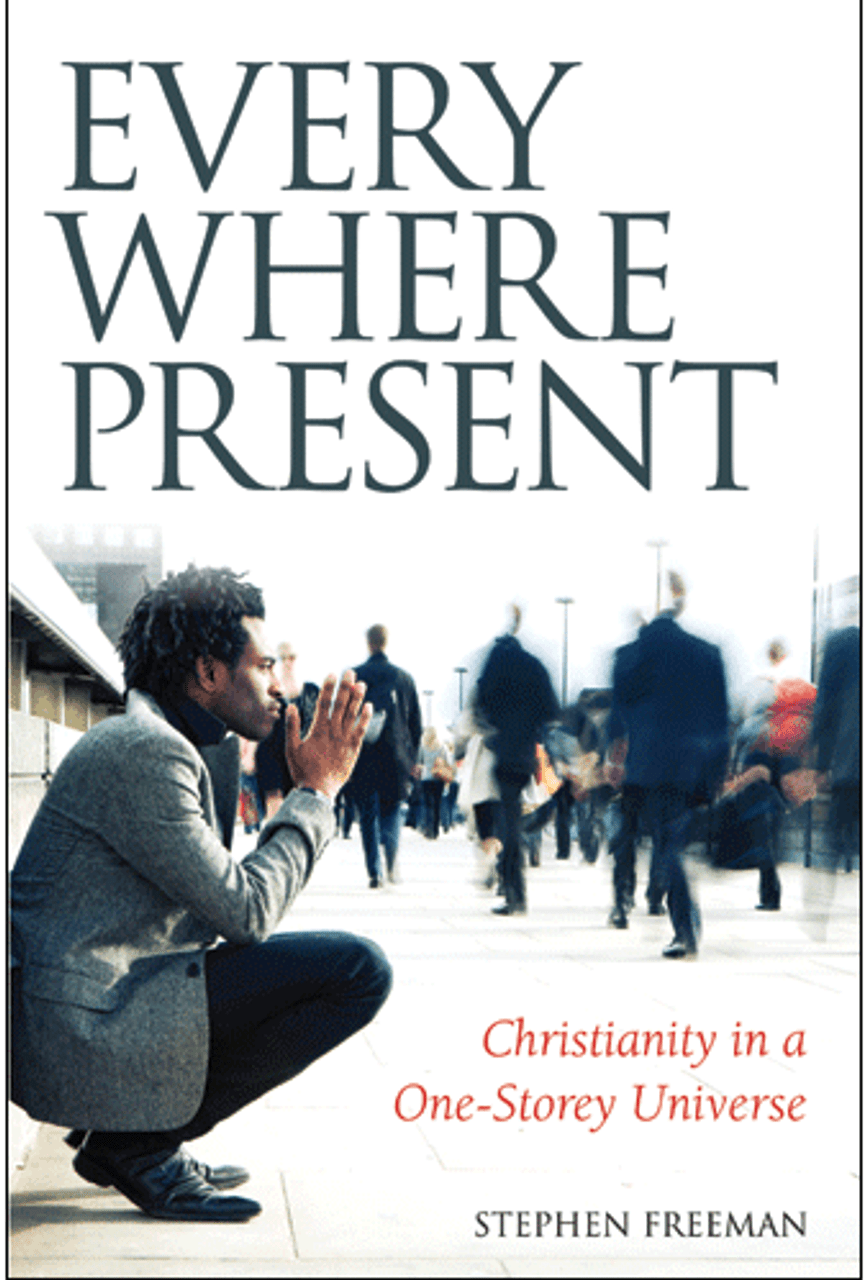
Fr. Stephen is a retired Archpriest of the Orthodox Church in America. He is also author of Everywhere Present: Christianity in a One-Storey Universe, and Face to Face: Knowing God Beyond Our Shame, as well as the Glory to God podcast series on Ancient Faith Radio.


Posted

in

by

Comments

11 responses to “The Light of Christ and the Transfiguration”

  1. Rob Avatar
    Rob

    I’ve been reading in Acts lately. I’ve been so captivated by the shape and “the Way” of Paul’s life (which may be analogous to Divine Energies). The witness of his life is participation in the sufferings, sacrifice, and self-emptying of Christ. What the world might see as descent or regression (foolishness of the Cross) is actually ascent and progression.

    I can relate with your words on the Divine Light and having our own understanding and desire as to what the experience will look like in our lives. Like many things in life, it doesn’t turn out the way you hope or think it might. I’ve wanted to be bathed in Uncreated Light at times only to realize that my underlying motivation was wanting God to prove His love for me on my terms and for Him to eliminate the options of unbelief and distrust.

    Reading Acts this time around, I get the overwhelming sense that the same Divine Energy at work in Paul was the same as in Polycarp. It’s the Spirit of the Martyrs that races toward being enveloped in Christ. It’s not masochism they’re living in…it’s union. And this is the gravity of reconciliation for all of creation.

  2. Fr. Stephen Avatar

    Rob,
    Well said! It’s interesting (in the light of your description) to read St. Paul’s heartcry: “I have suffered the loss of all things, and count them as rubbish, that I may gain Christ and be found in Him, not having my own righteousness, which is from the law, but that which is through faith in Christ, the righteousness which is from God by faith; that I may know Him and the power of His resurrection, and the fellowship of His sufferings, being conformed to His death, if, by any means, I may attain to the resurrection from the dead.”

    This is not dissimilar with the desire to be transfigured, to be suffused with the light of Christ, transformed (transfigured) into His image: “not having a righteousness which is my own…”

    Those who are more or less stuck in moralistic or juridical readings and treat this passage as referring to a juridical status, miss its true passion and power. The righteousness of Christ is tangible – we eat and drink it! It shines with a blinding light. It heals the sick and raises the dead! It gives sight to the blind!

    Glory to God.

  3. Rob Avatar
    Rob

    Absolutely! This never gets old…In fact it gets newer as we go along. Glory to God!

    A lot of these Biblical terms and realities gets hijacked by that juridical system of understanding. The word grace comes to mind. That comes to mean something closer to a kind of declaration of “not guilty” when reading with those glasses on. I’m no Bible scholar, but my reading of that word in different contexts, while checking the Greek, is much more in the camp of something like the enabling of God in one’s life and the life of Church, His energy, His activity. Most of that court room way of reading is reductive and static. And most of it seems to be oriented around some kind of one-time event of God SEEING or declaring us some kind of way, rather than a daily reality of us BEING some kind of way and of transformation and orientation.

  4. Fr. Stephen Avatar

    Rob,
    I would add to your statement that it is a daily, moment-by-moment of God-in-us being some kind of way. There’s this very interesting combination of statements in Phil. 2: “work out your own salvation with fear and trembling; for it is God who works in you both to will and to do for His good pleasure.”

    You work…for God works in you…

    μετὰ φόβου καὶ τρόμου τὴν ἑαυτῶν σωτηρίαν κατεργάζεσθε· θεὸς γάρ ἐστιν ὁ ἐνεργῶν ἐν ὑμῖν καὶ τὸ θέλειν καὶ τὸ ἐνεργεῖν ὑπὲρ τῆς εὐδοκίας·

  5. Rob Avatar
    Rob

    Indeed. Thank you, Father.

  6. Amos Avatar
    Amos

    Father bless,

    Concerning the bodily assumption of Moses, I always thought it was alluded to by Jude: “For when the Archangel Michael contended with the devil about the body of Moses ….” (or something close to that) In context it is just a passing remark while making a different point, but it is a very interesting passing remark where Jude is presumably referencing a commonly known part of the tradition.

  7. Fr. Stephen Avatar

    Amos,
    You’re correct. It’s quite interesting. The assumption of Moses was commonly believed. There is the book, The Assumption of Moses, that seems to be a first-century Jewish text.

  8. Paul Avatar
    Paul

    “What we must understand is that this holding in goodness, this moving, this drawing, this uniting, this sustaining, this creating, is in fact God Himself as the Divine Energies”

    Could we then follow that any experience of God’s wrath or judgment is simply the experience of stepping outside (for a time, until we repent) of this drawing/uniting-to-Himself activity that God ceaselessly does?

  9. Fr. Stephen Avatar

    Paul,
    There are numerous witnesses in the Fathers that the wrath or judgment of God is itself the same Divine Energies – working in us according to His will. St. Paul speaks of this in his passage on the “hay, wood, stubble,” and the “gold, silver, precious stones,” all tried by fire (1Cor. 3:12). You can see some discussion of all this in the article, The River of Fire, which I have posted a copy of on the blog. There are things in the article that one might argue with, but it’s footnotes and references are quite worthwhile.

    But, I should add, that there is not “outside” the Divine Energies. There is no existence apart from God’s sustaining work. It is His unending gift. In Acts 17:28, St. Paul quotes with approval the statement, “In Him we live, and move, and have our being.”

  10. Simon Avatar
    Simon

    Father Stephen,

    If nothing is outside the divine energies and there is no existence apart from God’s sustaining work, then what is the relationship between evil and divine energy? If all that exists continues to exist because of God’s sustaining work, then doesn’t evil continue to exist because God sustains its existence? At the very least, isn’t God’s enetgies sustaining the possibility of evil? If that is the case–and it seems to me that it is–then it isn’t enoigh to simply dosmiss evil as something that God passively allows, like we see in Job. God’s energy sustains it. Which brings me to my real question: How is it that God’s energies sustain evil without participating in evil?

  11. Fr. Stephen Avatar

    Simon,
    Good questions. When you read about these questions in the Fathers, I’m thinking particularly of Dionysius the Areopagite’s work, they treat evil as a “parasite.” They particularly locate it in the actions of the fallen powers, the demons, etc., who are, indeed, sustained in their existence by the same good God who sustains all things. Their existence (being) is as much a gift as is ours – and it is irrevocable – God does not take away the gift He has given. But they were not created as evil – and they are not evil by nature (and that’s a real surprise). They are evil by choice, by a misuse of their being, having made themselves enemies to God (to being itself).

    We’re not really given a story of any note about how all of that came about, nor are we given much of a story about how it all will end. There’s the lake of fire and such – but it’s not utterly certain that this is the utter end of the story. St. Isaac of Syria famously held that even the demons are saved in the end. That is not part of the preaching of the Church, nor is it encoded in the Church’s teaching, but it was a teaching of a saint.

    It’s one of those things that I let be – I let it be beyond my understanding and knowledge. What I take to be the case, however, is that even the evil that takes place is not somehow alien to God’s good purpose – not when all is said and done. Angels and demons are beyond my understanding. But, when I look at various evils that I have suffered, or, worse still, evils that I have done, I still see the goodness of God working within me and around me (and others) bringing to good what someone or something else intended for evil.

    I do think that freedom (in some form) plays a role in all of this – and that freedom is necessary or, at least, an inherent part of love. Creation is shaped by love and in a cruciform shape, at that.

    If there is a boundary between God and evil – a boundary such that we can say He does not participate in it – it is the boundary of a wayward will – an abuse of freedom. There is, however, another sense in which He does participate in it – in the manner in which His crucifixion takes evil into itself and in which it is overcome. “He made Him to be sin who knew no sin that we might become the righteousness of God.”

    We’re treading on difficult ground. I hope I’ve not said anything wrong in this.

Leave a Reply

Your email address will not be published. Required fields are marked *


Subscribe to blog via email

Support the work

Your generous support for Glory to God for All Things will help maintain and expand the work of Fr. Stephen. This ministry continues to grow and your help is important. Thank you for your prayers and encouragement!


Latest Comments


Read my books

Everywhere Present by Stephen Freeman

Listen to my podcast


Categories


Archives