God and the Self – Dragons and the Treasuries of Grace

Beloved, we are children of God, and it doesn’t yet appear what we shall be. But we know, that when He appears, we shall be like Him, for we shall see Him as He is. (1John 3:2)

You are dead, and your life is hid in Christ in God. (Col. 3:3)

Whoever seeks to save his life will lose it, and whoever loses his life will save it. (Lk. 17:33)

You have to live God, because God is life. – Fr. Roman Braga

+++

There is a deep connection between God and the self within Christian understanding. Obviously, they are not the same thing, but we do not know one without the other. It is possible to say that we only know God to the extent that we know ourselves and that we only know ourselves to the extent that we know God.

To know yourself is an inner activity, made particularly difficult in an outer-directed culture. Though we live in the age of the “selfie,” we are, nonetheless, an age that is distracted from the true knowledge of the self. The “selfie” has nothing to do with self-knowledge and everything to do with an objectification of the self – how I would like myself to look if I were someone else. What the selfie never shows is how we truly perceive ourselves.

There is an experience of shame that surrounds the self (everybody’s self) that is simply unavoidable. Shame is associated with the inner sense that there is something wrong with “who I am.” It is acquired from experiences, mostly unavoidable, within life. And so, we never go very far within ourselves without encountering some level of pain and discomfort. There are parts of ourselves that we do not share and prefer to remain hidden. Often enough, the discomfort surrounding such things is great enough that we avoid confronting them ourselves.  It is the primary cause for our avoidance of inner awareness.

All of this means that the journey to knowing the self will inevitably require going into and through the shame that surrounds it. The true self should not be confused with the “shame-self.” They are not the same. The shame-self is who I am, defined by how I feel about myself, or that aspect of myself. The true self is beneath that and deeper. By the same token, God is beneath even the true self.

It is of note to me that there is a great darkness associated with God in some presentations of the Christian faith, enough to drive many people away. When I read or hear such presentations, I am inclined to believe that I am encountering someone who has not gone beneath the self of shame. Reading along in social media, you’ll encounter memes and such that proclaim, “He just needs a good kick in the pants!” or words to that effect. Such sentiments seem to be applied to parenting, social policy, theology, etc., as the occasion requires. They are words without compassion or understanding, marked primarily by violence and dismissal. They are the words of someone whose “inner critic” says the same miserable words to them all the time. They are words that have not been examined. There is an assumption that, if only we worked harder, tried more, didn’t quit, paid attention, etc. (such an endless list), we would be better (and, perhaps, we would like ourselves). It is the voice of the shame-self, disguised as responsibility, morality, authority or whatever.

Within the Tradition, and the Scriptures, the knowledge of God (and thus of the self), comes as revelation. It is hidden and must be made known. That which hides God is within us, not outside of us. It is the “pure in heart” who see God. This does not necessarily imply a sinlessness or perfection. Rather, it is a stillness that can see what truly is without turning away.

Fr. Roman Braga, who is quoted above, suffered in the Pitești prison camp in Romania, perhaps the worst such regime in history. He was in solitary confinement for three years. It was in that context, he says, that he “learned to pray.” His writings constantly affirm that God is “within us,” that within us is a vast, limitless universe. In such a setting, you either find the courage to enter within and discover the life that cannot be destroyed, or go mad. Fr. Roman’s thoughts on the inner life are not unlike those of St. Macarius:

The heart itself is but a small vessel, yet dragons are there, and there are also lions; there are poisonous beasts and all the treasures of evil. But there too is God, the angels, the life and the kingdom, the light and the apostles, the heavenly cities and the treasuries of grace—all things are there. St. Macarius (H.43.7)

Fr. Roman reminds people that St. Paul taught that our bodies are a “temple of the Holy Spirit,” a saying that has been tragically reduced to a moral exhortation. Rather, we should have this Psalm in mind:

One thing I have desired of the LORD, that will I seek: That I may dwell in the house of the LORD all the days of my life, to behold the beauty of the LORD, and to inquire in His temple. (Ps 27:4)

To behold that beauty and to make such an inquiry requires that we also encounter lions and dragons, poisonous beasts and all the treasures of evil. Those who do not undertake this singular pilgrimage spend the whole of their lives without knowledge of God or the true self. They remain people of the surface, doomed to act out the puppetry dictated by the self of shame. Over time, it adds to the treasures of evil and gives birth to ever more dragons and lions. It is little wonder that we bite and devour one another in our public life.

But there, too, is God, the angels, the life and the kingdom, the light and the apostles, the heavenly cities and the treasuries of grace – all things are there.

Photo by Dmitry Ratushny on Unsplash
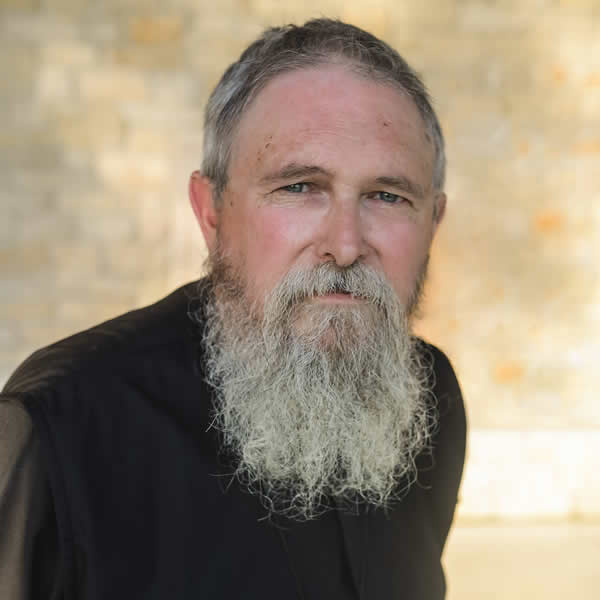
About Fr. Stephen Freeman

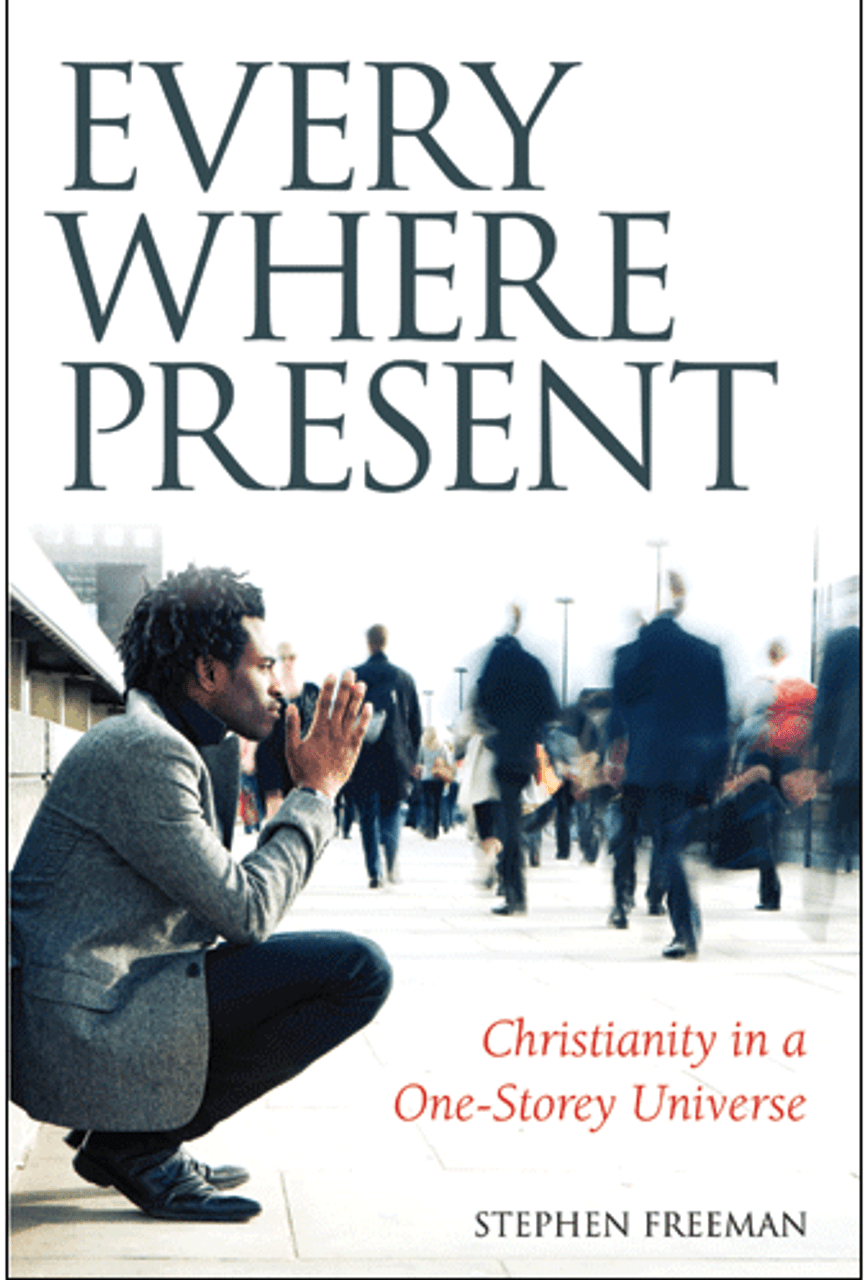
Fr. Stephen is a retired Archpriest of the Orthodox Church in America. He is also author of Everywhere Present: Christianity in a One-Storey Universe, and Face to Face: Knowing God Beyond Our Shame, as well as the Glory to God podcast series on Ancient Faith Radio.


Posted

in

by

Comments

30 responses to “God and the Self – Dragons and the Treasuries of Grace”

  1. Rob Avatar
    Rob

    This is everything to me right now. And when I look back, this has always been everything, since I first became aware of God. But I’m prone to to wonder. If I could just stay “home”. I’ve never felt condemnation from God on the matter, it’s just always an invitation to come back home and to stay home. Honor to all the saints that keep pointing us back home.

  2. Margaret Avatar
    Margaret

    Thank you Fr. Stephen

  3. Matthew Avatar
    Matthew

    What can help me as I make the journey toward God within? As I inevitably meet the dragons and the beasts of the fake self on the way toward that innermost chamber? I cannot run away, but I am afraid of what I must face. The ultimate prize is priceless, but the way is treacherous.

  4. David Anthony Avatar
    David Anthony

    The idea of humans being inhabited by ‘someone else’ in some fashion or another has been playing in my mind ever since I heard a priest say “we’re all possessed.”

    Do I understand correctly that we are intentionally created by God with a space within us? And the space is there for the purpose of being inhabited by God (or by some less friendly and loving spirits who would like to control us)?

    The idea of we all being inhabited one way or another prompts the question: is there an interim state where the space is vacant? I’m thinking of what Jesus said, that when a demon is cast out of a man, it roams to and fro seeking new lodging, then returns to the man from which it had been evicted, finds the space swept and garnished, and brings several more demons worse then himself, and the latter state of the man is worse than the first.

    Can the same be said for nations and cultures? Where once Christianity was practiced but has since faded away, is that “space” doomed to be inhabited by something worse? It’s hard not to think that we’re seeing something like that happening in various parts of the world today.

    I feel like I’m being terribly obvious here. It’s just that I can live day after day never dwelling on the seriousness of the things expressed in our Orthodox Christian faith. Even though I believe and practice the faith, I’m not often confronted with the eye-opening statement, “what if these things are really true?” The implications are truly staggering.

  5. Fr. Stephen Avatar

    Matthew,
    I don’t think we have to manage this ourselves. Pray, seek God, go to confession. Ultimately, I think God leads us forward on this path as we are able. When something “new” (insight, pain, etc.) comes up, be patient with it. Sit with it in the presence of God and listen. Don’t expect sudden leaps (though they may come). Practice thanksgiving, always.

  6. Fr. Stephen Avatar

    David,
    I would never say “we are all possessed,” nor that we are “possessed by God.” Possession is associated with the demonic. The demonic does not recognize boundaries – it seeks to devour us. God loves us – and love does not seek to possess or control. God respects the boundaries of our personhood and our freedom.

    We are created for communion with God – that is a mutual indwelling – He dwells in us and we in Him (cf. John chapter 6). But, apart from communion with God, I think there is a sort of “emptiness” that seeks to be filled with something. It can be a passion, a group, an “identity,” or, God forbid, even a demon or something similar. I believe this is true of nations as well. But, I do not spend much time thinking about heavenly battles and such, it’s above my pay-grade, and mostly just speculative. I try not to do speculation if possible.

    We are living in a very messy time, some of which feels quite dangerous. All the more reason to pay attention to what is local and at hand. We are not in control of the larger things – mostly just distracted and frightened by them. Cultivate prayer, trust in God, and persevere in giving thanks.

  7. Matthew Avatar
    Matthew

    Thank you Fr. Stephen

  8. Rob Avatar
    Rob

    Disclaimer: I am not EO, nor theologian, nor a Bible scholar. Proceed with caution.

    (1 Corinthians 6:19-20 NKJV) 19 Or do you not know that your body is the temple of the Holy Spirit who is in you, whom you have from God, and you are not your own? 20 For you were bought at a price; therefore glorify God in your body and in your spirit, which are God’s.

    There is language in this passage that those who have the Holy Spirit are God’s possession. But then in verse 20, there is an invitation and/or command to glorify God in your body and spirit. So, with God, your free will and ability to choose is still intact. You’re not being controlled or “possessed” as it is typically understood in the context of evil. But evil does seek to enslave, control, and dominate. But I don’t like to magnify the demonic, either. The passage says to “Glorify God” and that’s where I want my focus. Christ wants to abide in us all and for us to abide in him. He wants us to walk in the light as He is in the light. I believe we can be an inhabited dwelling of Christ with a no vacancy sign concerning evil.

  9. Fr. Stephen Avatar

    Rob,
    Interesting passage in this regard. Of course, to say that we were “bought with a price” is not to say that we are slaves – “possessed” by God. Rather, we are “ransomed from death” – a phrase used by St. Basil in his Liturgy. It echoes Hosea 13:14 where we are “ransomed from the power of sheol.” But in that we are ransomed from death (this does not mean that God somehow bought us from the devil – that is roundly condemned by St. Gregory the Theologian), we are “bought” but, much like you would ransom a slave from his slavery.

    The image in the same passage (1Cor. 6 a bit earlier) is that of being “joined” (as in a husband and wife), which is quite different than being “owned” (St. Paul is mixing his metaphors here).

    We belong to Christ, as you note, we are His.

  10. Rob Avatar
    Rob

    I can get with that. Thanks for clarification Father Stephen!

  11. Michael Avatar
    Michael

    Thank you Father, could you recommend a book or any further reading pertaining to what you mentioned regarding the “shame-self”, vs the true self. Thank you, again.

  12. Helen Avatar
    Helen

    What Rob said: this is everything to me. This has always been everything. I had the same reaction to this post.

    When your shame-self includes distorted spiritual instruction getting to your true self sometimes feels like you’re going against God. So scary! But the real God is beneath that and lovingly, patiently beckons. Thank you Father. Another healing balm of a post.

  13. David Anthony Avatar
    David Anthony

    Fr. Stephen, thank you for the clarification. My language was too sloppy; of course God does not “possess” us in the same way a demon would. What stands out to me is that it sounds as if we were “designed” by God with a space for Him to dwell if we choose — and that, as you say, that space could be filled with other things or (dangerously) other persons.

    It furthermore sounds like it is essential to our well-being that God dwells within that space through our invitation (which I understand we do every time we pray the Trisagion Prayer).

    So “possession,” and the “either-or” construct (you’ve either got God living in you, or a demon) both fall short of the way we should understand this in that each statement is too clumsy. Still, I’m amazed by the basic idea.

    One reason why this is a topic for me at the moment is this: of late, my adult daughter is exposing herself to some dangerous things by dabbling in tarot, crystals, readings, etc. I am very concerned that she is opening her heart to evil personages that are only interested in making her their plaything.

    As a life-long Christian (first Roman Catholic, then evangelical/charismatic, now Orthodox) it’s a little surprising that I missed the idea that God fully intends and desires to inhabit us. The idea is everywhere within Christianity; how slow can I be? This almost sounds like a way to describe eternal life.

  14. Colin Reeve Avatar
    Colin Reeve

    This is so beautiful and true it prompts me to share a recent dream:
    I was sitting in a crowded restaurant after a meal and took the dirty plates up to the counter myself and wanted to wipe the table.
    The waiter gently led me back to my seat and told me to just sit in my mess and the dirty table and let him clear it.
    He said “Live in what you lack”
    “Let me do the completion”

    I realised that so often in my anxiety to please and be righteous that I step in with my own inadequate clearing and miss the reality of his better work.

    Sorry if this comes across as obvious and twee. May it bless someone x

  15. Matthew Avatar
    Matthew

    I remember in my evangelical days there was a demon possession faction and a demonized faction. For the longest time I was part of the demonized faction – believing that once a person was “saved” it was impossible for them to be possessed by a demon. I still have a tendency to be aligned with the faction, though if exorcism remains a practice within both Catholicism and Orthodoxy – then I´m not sure what to think.

    My prayer is that those who dabble in the occult will only be demonized – not actually become demon possessed. I cannot be certain though which is why we need the Church I assume in terms of discernment help.

  16. Fr. Stephen Avatar

    Matthew,
    Forgive me, I think it’s very Western to have opinions about the mechanism of demonic activity. In Orthodoxy, the prayers for driving away a demon or driving out a demon are the same. It’s not necessary to know such things. It is for us to pray and let God do the mechanics!

  17. Rob Avatar
    Rob

    With Christ being the medicine and physician to our souls, do you perceive any danger in becoming too self-forgetful in beholding Christ and sharing in His life. I guess, what I mean is how do you become self-forgetful in a good way without having blindspots, if that makes sense? What’s been coming to me is the Holy Spirit that is in the community around a person is a safeguard.

  18. Fr. Stephen Avatar

    Rob,
    There is a saying in Orthodoxy that “no one is saved alone.” Thus our communion with the community around us (as in a parish) is essential to our well-being. I think that having a goal of a balanced Christian life – not in isolation or as individualistic is key.

  19. Matthew Avatar
    Matthew

    Thanks Fr. Stephen

  20. Rob Avatar
    Rob

    10-4, Father Stephen.

  21. Rob Avatar
    Rob

    I’ve been thinking an awful lot about Roman Braga’s 3 years of solitary confinement and his experience there ever since you first recommended that YouTube video on this blog. It is exceptional and not normative, for sure, but there seems to be some thread of seasonal solitude or “wilderness” that’s more distinct and extreme in some. But in the context of their entire life, even the solitude has everything to do with the Church. They come out of there with gifts to share with the body of Christ…when it is healthy and with God, that is. Elder Thaddeus, Fr Aimilianos, St Anthony, etc. all come to mind along with Fr Roman Braga. The western saints I read, like St Francis, awhile ago…it’s the same story. Times of sickness, being bedridden for months, thrown in prison, voluntary desert wilderness.

    I don’t think there’s a formula to this…I just think it has to do with accepting one’s identity in God and accepting Him changing “the times and the seasons” according to His wisdom.

  22. Dee of Sts Herman and Olga Avatar
    Dee of Sts Herman and Olga

    Rob,
    Father Stephen could say more about this, but in Orthodox thinking, as we grow in our relationship and love in Christ, at some point we all have a time in the desert. Perhaps a few saints don’t. But none come to mind. The services during Great Lent feature St Mary of Egypt, who spent many years in the desert and is considered a great saint.

    The desert can take many forms. Glory to God in His mercy.

  23. Rob Avatar
    Rob

    Thank you, Dee.

  24. Rob Avatar
    Rob

    …God help us to recognize the desert as such when it comes and that we don’t run or resist. I guess prayer and fasting are a type of voluntary desert. It’s the place where we are confronted with what Fr quotes of St Macarius above:

    “The heart itself is but a small vessel, yet dragons are there, and there are also lions; there are poisonous beasts and all the treasures of evil. But there too is God, the angels, the life and the kingdom, the light and the apostles, the heavenly cities and the treasuries of grace—all things are there.” St. Macarius (H.43.7)

  25. Fr. Stephen Avatar

    Rob,
    I don’t like the dragons and such that I find in my heart. However, I crave the angels, the life, the Kingdom, God Himself. It keeps me struggling to enter the heart and to dwell there. The dragons and such are the things that make us want to live on the surface and avoid the reality of the inner life. May God grant us all good guidance in our lives and, with patience, the skills to slay dragons!

  26. Matthew Avatar
    Matthew

    Help!

    How to deal with Halloween as a Christian without being a fundamentalist???

    Did you ever write an article about this Fr. Stephen?

  27. Dee of Sts Herman and Olga Avatar
    Dee of Sts Herman and Olga

    Matthew,
    FWIW: Some Orthodox are strict about Halloween, while others are less strict. Those who are less strict let their children dress up as fairy-tale or comic characters or similar fun costumes, while avoiding gore or occult-like figures. Halloween is big in the US, promoted, I guess, by consumer entities. But some autumnal festivals can be fun, provided they’re family affairs focused on the joy of community gathering rather than other motives.

    You’re likely to get a variety of answers to your question. In the end, I always defer to my parish priest and/or to Father Stephen.

  28. Fr. Stephen Avatar

    Matthew,
    I have not. I’m seeing articles out there on social media advertising themselves as “the Orthodox approach to Halloween,” etc. The Church does not have some office of official positions on such cultural matters. I prefer to stay away from occult/horror themes – that’s actually a recent marketing thing rather than the Halloween of yesteryear (when I was young).

    I would suggest that people take demons/vampires/ghosts/witches/etc. seriously rather than as entertainment. Having said that, I think we should not get crazy and try to fix everybody else. My favorite halloween costume was the year my mother dressed my older brother up as an organ grinder and me as his monkey. Somehow, it just seemed to fit.

  29. Matthew Avatar
    Matthew

    Thanks so much Fr. Stephen and Dee.

    I don´t have children, but I imagine it must be difficult for parents who have problems with the Halloween celebration to try to resist the pressure to conform with the demands of the secular/Halloween spirit. A friend in England said the kids start talking about costumes as far as 8 months before October!

    Here in my city in Germany, it is not widely celebrated though yesterday there were some young people dressed up in costumes. Some were occultic/horrific. That said, it seems what happens culturally in America always slowly spreads to other parts of the world – both the positive and negative aspects of American culture.

    I will most likely continue to wrestle with this issue. Thanks so much again.

  30. Helen Avatar
    Helen

    Years ago I worked with a young man who was preoccupied with zombies. He would participate in these flash mob-type zombie apocalypse get-togethers. The goal was to escape being captured by a zombie and turning into one. I asked him why he was so drawn to this activity. He said that it made him feel powerful to escape and overpower these things, practice for any future such attack.
    I sometimes wonder if that is the reason behind some of the Halloween decorations, making people feel powerful over death and dark things, whether they are as self-aware as my former co-worker or not.
    I live in a condo and the unit next to me has a creepy large Halloween “decoration” on the door. When it was first installed it would make me start when I walked past it. Now I say a prayer for myself and my neighbors every time I walk past.
    May God have mercy on us.

Leave a Reply

Your email address will not be published. Required fields are marked *


Subscribe to blog via email

Support the work

Your generous support for Glory to God for All Things will help maintain and expand the work of Fr. Stephen. This ministry continues to grow and your help is important. Thank you for your prayers and encouragement!


Latest Comments


Read my books

Everywhere Present by Stephen Freeman

Listen to my podcast


Categories


Archives