The Communion of Friends

You meet someone and like them. You slowly get to know them. Conversation and sharing, listening and learning, a picture or a reality begin to emerge. You think about them when they’re away. You’re aware that you matter to them as well. The thought of anything hurting them is painful. This is friendship.

We easily reduce friendship to a set of shared emotions. Why we like someone else, we can imagine, rests on a complex set of experiences, hopes, fears, and emotions. But then someone asks this question: “Is there anything between you?”

On the surface the question is innocent. It could mean nothing more than a curiosity about shared emotions. Are you going to declare a relationship on Facebook? But, taken another way, the question is much more puzzling. Is a relationship anything more than a psychological phenomenon? Are we, in fact, utterly separate in our existence, with nothing more than the experience of our own minds? What if someone said of your friendship, “It’s all in your head?”

You feel very close to this person. The friendship has now lasted several years and has been very consistent. One day, speaking to someone else, you describe the thoughts of your friend. However, your description is scrutinized: “How can you possibly know what’s going on in someone else’s mind?” You cannot think of how to answer the question, but you believe your description and your experience are true and correct.

In theory, our modern culture believes that relationships with other people are merely psychological phenomena – they are all in our head. There is occasional research to try and establish some notion of extra-psychological relationship (such as ESP), but even that is largely an extension of psychology. But there is an entire realm of human experience that such a belief ignores. And it is an experience that lies at the very heart of classical Christianity.

This experience is found in the concept of communion. It refers to a true participation and sharing in the life and actual existence of another. It is not a label for a set of feelings nor a synonym for being close with someone. It is a term that truly means what it says. The Greek is koinonia, a state of “commonality.”

The Orthodox faith teaches that we are saved by communion – in particular, communion with Christ. When a person is being baptized they are asked three times by the priest: “Do you unite yourself to Christ?” According to St. Paul, we are then baptized “into the death” of Christ and raised in the likeness of His resurrection. That is salvation. Christ’s death becomes my death and my death becomes His death. Christ’s resurrection becomes my resurrection, etc. Every sacrament of the Church is about union with Christ, or union with another human being (marriage). It is predicated on the possibility of true communion and participation.

The claim that this is true and possible distinguishes Orthodox Christianity from virtually every form of contemporary Christian believing. It is the foundation of the sacramental world of the Church. When we eat Christ’s Body and drink His Blood in the Holy Eucharist, we believe that there is a true sharing, a real communion:

Whosoever eats my flesh and drinks my blood abides in Me and I in him. (Jn 6:56)

Living in such a manner that this communion is made manifest in our lives is the entire purpose of the Orthodox Christian life.

Communion, if you will, is one of the most fundamental elements of Christian grammar. It makes sense of many things, and many things discussed in Christian teaching only make sense in its context. Wherever communion is ignored as a reality, Christianity is deformed and distorted into a caricature of its true nature.

In the Apostles’ Creed, an ancient confession of faith recited in a number of Western Churches, the phrase “the communion of saints” is offered as an element of belief, on a par with the forgiveness of sins and the resurrection of the dead. However, in the minds of most contemporary Christians who confess this Creed, the communion of saints is often left as a vague, ill-defined notion, mostly confined to some idea of fellowship with those in heaven.

In terms of the New Testament, true knowledge is ultimately only had by communion (koinonia). The sort of rational, observational collection of facts that passes for knowledge in our world, would be nothing of the sort in theirs. When John’s gospel says, “This is life eternal, that they might know Thee, and Jesus Christ whom Thou hast sent” (Jn 17:3), it is a reference to knowledge by participation, or communion. It is precisely because true knowledge is communion that knowledge of God is eternal life. That knowledge can only be had by true participation in His life.

In a similar manner, St. Paul cried out, “…that I may know Him and the power of His resurrection, and may have communion in his sufferings, becoming like him in his death, that if possible I may attain the resurrection from the dead!” (Phi 3:10-11)

Interestingly, communion lies at the center of the traditional practice of venerating the saints. Communion works by love. Indeed, true communion is perhaps the main point of love. We not only want to be with the other, we want to share in their life and existence. In the example of friendship described at the outset, there is an experience of communion for which we often have no word in our modern vocabulary (having changed the meaning of communion). We experience communion but are at a loss to describe it or defend it. When we are told that it is simply a thing of the mind, we have no response. Modernity is a lonely construct.

The veneration of the saints is simply what love for them looks like. The cultural expressions of kissing icons or burning candles before them are no different than other cultural expressions of love. But a world without cultural expressions of love quickly becomes a world without love. Human beings require touch, for example, in order to live. We are not creatures of the mind.

Years ago, I wrote my thesis at Duke on the Icon as Theology. During that time of study, I came to realize and understand that an icon can only truly be seen in the act of veneration. For seeing the icon, according to the Church’s teaching, is a relational matter, an act of communion. Many people look at an icon and see an object, perhaps a beautiful religious object. But without veneration, the love offered to the one who is present in the depiction, there is no communion. In the act (or many acts) of veneration we enter into the reality of communion.

This veneration has developed a liturgical expression in the life of the Church, but it is the same in our relationship with all persons. Through love, expressed in a variety of appropriate manners, we truly know the other by participation (communion). In some measure, we enter into and share in their life. In some measure, their life becomes ours and ours becomes theirs. This is especially true in marriage, in which a man and a woman become one flesh. St. Silouan of Mt. Athos said, “My brother is my life.”

That communion and participation in the life of the other is possible is one of the single most contradictory challenges to the modern world-view. We are not utterly individual in our existence nor in our experience. We are beings whose lives are best expressed and fulfilled through communion. When this is rightly understood, it is nothing more than the proclamation of the primacy of love.

Walk in love, as Christ loved us and gave himself up for us, a fragrant offering and sacrifice to God. (Eph 5:2)

If we walk in the light, as He is in the light, we have communion with one another, and the blood of Jesus his Son cleanses us from all sin. (1Jo 1:7)
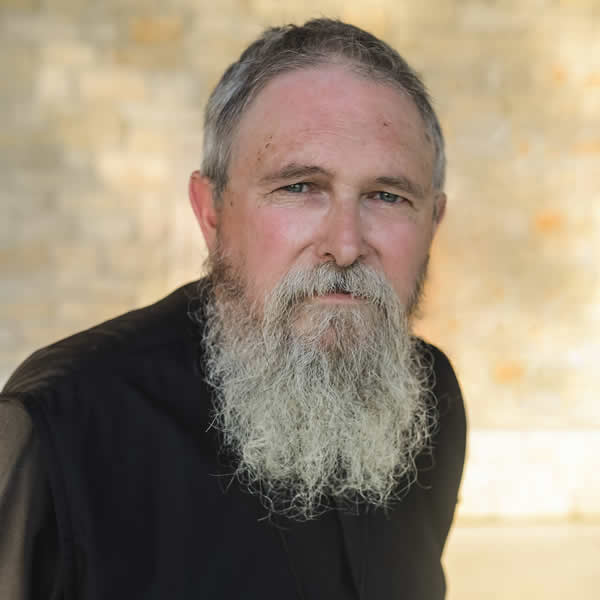
About Fr. Stephen Freeman

Fr. Stephen is a retired Archpriest of the Orthodox Church in America. He is also author of Everywhere Present: Christianity in a One-Storey Universe, and Face to Face: Knowing God Beyond Our Shame, as well as the Glory to God podcast series on Ancient Faith Radio.


Posted

in

by

Comments

23 responses to “The Communion of Friends”

  1. Ann Dibble Avatar
    Ann Dibble

    Beautiful. When you articulate something on an issue that has given me trouble and doubt, I think I fly! Many thanks.

  2. Fr. Stephen Avatar

    Ann,
    As years go by, I think that my marriage has been a primary place where the reality of communion has been most apparent for me. Communion, as I’ve described it, has been a strong reality for me since my teen years. It was at that time that I first heard the Anglican prayer called the “prayer of humble access,” prayed just before taking communion:

    We do not presume to come to this your table, O merciful Lord,
    trusting in our own righteousness, but in your abundant and great mercies.
    We are not worthy so much as to gather up the crumbs under your table;
    but you are the same Lord whose property is always to have mercy.
    Grant us, therefore, gracious Lord, so to eat the flesh of your dear Son Jesus Christ, and to drink his blood, that we may evermore dwell in him, and he in us.  Amen.

    There are any number of Orthodox communion prayers that express the same thing. But it was in this form that I first “heard” it – and it has lived with me as something to be considered and understood.

    When I’m out and about, and tempted to see people as objects (and judge them, etc.), I find this to be a refuge.

  3. Joan Moulton Avatar
    Joan Moulton

    Father Stephen, correct me if I am wrong in my thinking. Standing before the icons as I pray I have recently begun to think that not only am I looking at them, but in their spirit they are looking at me. This communion then is a two way street. I pray to and venerate them and they see me and intercede. Those eyes in the icons represent the eyes of the saints, the Theotokos and my Lord. I have been Orthodox for 53 years and still learn. God is good.

  4. Fr. Stephen Avatar

    Joan,
    You are absolutely correct. It is very much a two-way street. Indeed, communion cannot be one-way – it’s always a mutual participation, a mutual co-inherence. We dwell in them and they in us.

  5. Ook Avatar
    Ook

    Dear Father,

    I guess there is asymmetry in communion.

    As an example, I once had occasional contact with the business acquaintance of a business acquaintance. One day I got a book from her in the mail and much to my surprise the book was dedicated to me. She said she had been inspired in the subject matter by a conversation we’d had in a coffee shop in New Jersey. While I remember the coffee, I don’t remember anything about that conversation.

    I’m thinking this baffling experience is actually a metaphor for the communion of saints: they pray for us, they intercede, yet we are busy with the coffee of our lives and have no awareness of the intercessions.
    Likewise, we are instruments of profound connection and inspiration to others whether we are aware of it or not.

  6. Fr. Stephen Avatar

    Ook,
    The assymmetry is quite real. Amen.

  7. Helen Avatar
    Helen

    The idea of asymmetry is illuminating!
    With friends it’s mutual.
    With the saints and especially with Christ, the asymmetry is one-sided and knowing this puts me in the right posture to venerate the icon.
    That Christ invites us to communion and calls us friend is sometimes mind-blowing!

  8. Jenny Avatar
    Jenny

    Father

    When I first understood that the saints pray for us, one of my first thoughts was to see if it was possible to get them all to pray together towards a particular end. But as I considered this, I realized I wasn’t thinking about them as persons. I was merely thinking of them as a resource. And then I was embarrassed to have so misunderstood the dynamic and to have disrespected such persons by treating them that way.

    And tell me if I am wrong, Father, but I feel as if they also must agree- that is, they must be free even in Heaven and so one asks them to pray and they agree. I don’t think a saint would ever say no, but surely one must approach them as if they are persons who willingly respond and cooperate with us. After making that first mistake, I always keep this in mind.

    I have slowly added more saints to my prayers at night. Now I pray to three of them. Only those three, because its only with those three persons that I am right now cooperating toward a mutual end. That is the degree to which I can understand this right now. I want to carry someone in prayer, for example, and in almost every case, there is a saint who is willing to carry that person in prayer with me.

    My prayer partner and friend came for dinner about a month ago and said that she was struggling very much. I prayed for her myself, but I thought, a ha! I will ask one of the saints to pray for her too! I assumed it would be Saint Mary Magdalen, of course. She is so kind as to pray for four other ladies. Or, I put them in her keeping- that is what it feels like.

    But no, when I went to pray, my friend and prayer partner ended up going to St Anthony of the Desert. It is shocking to me that I pray to this saint at all, but I was familiar with him because I read most of “Life of St. Anthony of Egypt,” because of you had referred back to it at some point in your writing, which made me curious.

    Therefore, when something quite unsettling happened to our household, and both my husband and I felt that this event was not just an accident, but something more pointed and negative, I was able at that time to think of St. Anthony and for a while, I put our whole household in his care. The first night I managed to pray just that simple phrase, “please pray to God to deliver us,” I felt a deep weight of peace settle down over the house. I haven’t felt that since, but I was grateful to feel it then.

    But I was surprised to think that perhaps he also would pray for my dear prayer partner, who is in her seventies now and a lovely lady. But I did, and the next day I understood why, which I will not describe in detail, but it made it very clear why that saint in particular should pray for her.

    And Father, you will be happy to know that I have given my daughter into the care of the Virgin to pray for. This is a huge step for me, because my daughter is a heavy burden because of my love for her, and her vulnerability and my shame as a mother, with all the things I feel I failed at, and still fall short.

    But what a relief it is, to open up and trust the Mother of God with this precious yet heavy burden! And how grateful I am to her for being willing to do this, which she is very willing. She is a lovely person, as you know better than I do. I am just learning this. Sometimes, when I begin to pray to her, I want to say, “Thank you for Jesus!” But I can’t quite say this, because my conscious feels as though I am saying the wrong thing. How can I thank her for God? So I try to alter the prayer to, “Thank you for being willing to give birth to Jesus,” but that seems so clumsy. I haven’t resolved this yet in my understanding, but often I do end up just saying, “Thank you for Jesus!” and trust that she knows what I’m saying. Her willingness made His incarnation possible. That is what I am thanking her for.

    I have grown to love my icon of Christ very much. I do not venerate it, but sometimes I take it down from the shelf and gaze at it for a moment or two and put it back.

    When I look up at it, I see Him clearly through the frame of the icon. It’s a clear window right to Him. If my mind is cluttered with images and I want to clear them away, I can always bring the icon to mind and it centers my inner gaze. I know exactly Who I am looking at.

    I am often looking toward Him and praying without words, or looking up at Him in repentance, because I caught myself or my thoughts or my actions going in the wrong direction, and I remember He is right there, and I had better confess and alter course.

    I have lately been inundated by some of the horrible things which are happening right now in the world and trying to pray through them, to pray through all the emotions which I get caught up in, like a powerful current. It takes me days before the current ebbs, and I get off balance and must keep getting back in balance. Sometimes a particular prayer or phrase comes to me and that helps me find my way through the current of horror and grief, and I pray that phrase as long and as often as I need to pray it.

    Lately it is this verse: “And He will judge the nations…” Just that scrap of verse and what a relief it has been to remember this- that the Lord Jesus Christ will be doing this and to pray to Him to do so. But I have just looked up that phrase, and the rest of it is even better: “He shall judge the world in righteousness,
    And He shall administer judgment for the peoples in uprightness.” Psalm 9:8

    Or this one:
    “He shall judge between the nations,
    And rebuke many people;
    They shall beat their swords into plowshares,
    And their spears into pruning hooks;
    Nation shall not lift up sword against nation,
    Neither shall they learn war anymore.”
    Isaiah 2:4

  9. Lynne Avatar
    Lynne

    When I first heard about icons, many years ago, from my Protestant days, they were described as “Windows to Heaven.”
    Well OK.
    WIndows have a solid transparent cover over the opening, or a they might have a screen to let air through, but not a person. And the sill is high enough that it doesn’t really invite going to the other side.
    So I was here, and Heaven was there.
    Then, as the years passed, and I allowed the saints to break through my tough rational, independent shell, some things happened to help me realize that:

    An icon can be a person to be with.

    Later I found some books that talked about icons as an open door. I like that metaphor. There’s more opportunity for communion with a door than a window.

    And not everyone might have the experience of being with a saint. But I think it’s good to know that it happens.

  10. Dee of Sts Herman and Olga Avatar
    Dee of Sts Herman and Olga

    Lynne,
    I like the open-door metaphor, too, perhaps because many icons depict the saint’s entire body—i.e., standing at the door. It may seem odd to say, but when I pray before an icon, it sometimes seems to me that I’m stepping into their world or straddling two worlds when I am given a deeper prayer. But as Father’s book explains, we’re in a one-story universe. The feeling of straddling worlds is the remnant of the modern conception of the world, which I still struggle with.

    From Fathr’s writings, I learned a lot about the depiction of the two-story universe, a mental-spiritual world, v.s. the ‘real’ or physical world, as a modern conception. I have learned that heaven is here (as is hell), and our ability to perceive this reality noetically, as I have been taught, is grace received. And interestingly, some places in nature are called “thin” due to the nature of a place retaining holiness. Orthodox Churches, especially older ones that have housed Divine Liturgy for centuries, I am told, are such places.

    This understanding has helped me and provides more depth in meaning in the words of Christ, who says, the Kingdom of God is “at hand,” and he encourages us to receive it like a child. And yet after a decade as an Orthodox Christian, I still struggle to retain this sense in my daily life, to sense the nearness of God, His presence. For this reason, I’m grateful to Archimandrite Zachariah’s book, “Remember Your First Love”, which encourages us to be patient and humble as we learn to live in Christ. Sometimes our sense of loss of the grace of the Holy Spirit is a kind of weaning of our soul from the initial zeal and enthusiasm of a beginner to that of a long-distance runner.

    In our modern ways of thinking, we might think this to mean the Kingdom is imminent, or soon, but not yet, or maybe even only an ideation. But just as, and to the extent that, Christ is in our midst, so is His Kingdom. Glory to God for all things.

  11. Dee of Sts Herman and Olga Avatar
    Dee of Sts Herman and Olga

    “My beloved is like a gazelle or a young stag. Behold, he stands behind our wall; He is looking through the windows, Gazing through the lattice.” NKJ Song of Solomon 2:9

  12. Fr. Stephen Avatar

    Lynne,
    There’s no particular dogma of the Church that describes icons as “windows” into heaven. So, I’m not sure where that image first began to be used. It is quite likely that it is old enough that it predates glass windows – to a time when a window was open to what it saw rather than a pane of glass. I’m just wondering. There’s also the image of an icon as a mirror – St. Maximos used that in a certain place. But “door” seems quite appropriate as well.

  13. Rob Avatar
    Rob

    This had me curious about the original etymology of the word communion: Something like mutual participation or shared duties from the Latin.

    I was in the garden yesterday, and I pruned some suckers off of the tomato plants and tossed them to the side. I walked back by those suckers detached from the vine just a little while later and they were already drying and withering in the sweltering heat. Jesus’s words rushed through my mind, “My Father is the Gardener, I am the Vine, you are the branches…”.

    That Vine (Jesus) carries the life giving water and nutrients (Holy Spirit) to attached branches and seed-bearing fruit after its kind forms on the branch. In light of this article, all the branches have the shared duty or mutual participation or communion of bearing fruit by the Water and Nutrients (Spirit), the Vine (Christ), and the Gardener (God the Father).

    Unity

  14. Fr. Stephen Avatar

    Lynne,
    Thinking this morning…sometimes even a wall (when well-painted in a decorative manner) can become a window or a door – its beauty bearing a bit of heaven into our midst that opens our souls to the truth and goodness of what God is making manifest in our midst. 🙂

  15. Drewster2000 Avatar
    Drewster2000

    Jenny,

    I so appreciate your comments because you are able to share your heart in a candid, vulnerable and child-like way. They model for me how the child within me should carry himself, ask for help, think through things, and so on.

    The other model that comes to mind is Winnie the Pooh, as silly as that sounds. In both cases there is an integrity and also a sense of courage that shines through. It says, “I’m just going to be honest about how things seem, no matter what it sounds like. But also I’m quite open to not being the one who is managing all this. I am content to be the child.”

    Thank you for your example and for sharing your heart on these topics. It is inspiring and heartwarming and encourages me to also be one of those children whom Jesus said we needed to be in order to enter the Kingdom of Heaven.

  16. Fr. Stephen Avatar

    Drewster,
    Your thoughts echo in my heart as well. I often listen to reading at bedtime to quiet my brain and let me sleep. Among my favorite listens is Winnie the Pooh. He has become a simple companion for me.

  17. Lynne Avatar
    Lynne

    Father, thank you for this reflection about how even a wall that is painted in a decorative manner can open our souls to the truth and goodness of God. What an eye-opening and heart-comforting concept this is!

    As an introvert, I feel as if there’s something wrong with me, because the beauty of the handwork of an Orthodox church moves me so deeply. And I find myself thanking the workers who created this beauty as much as I venerate the saints in the icons.
    Since I began my Orthodox journey in a fairly new parish, I know the people who built the iconostasis and icon stands, and the people who sewed the altar and icon stand covers, and the people who embellished the walls with traditional border patterns. But that’s not all–when I visit or observe other Orthodox churches, I am filled with the same sense of awe and communion.

    It is a great comfort to learn that this offering of gratitude for the beauty of a church is a real participation in the communion and fellowship with Christ.

  18. Fr. Stephen Avatar

    Lynne,
    Indeed. I treasure that aspect of our life in “young” churches. The people, the stories, all woven and painted into the very fabric of the building. Here in Greenville, the iconographer who is doing frescoes in the Church lives here and is part of the congregation along with his wife and children. On March 7, our temple was struck by lightning, causing a fire in the dome – followed by 90,000 gallons of water sprayed by the fire department. We’re now worshipping in the parish hall and slowly waiting for repairs to the building. That he will have to redo the dome is very painful for him – particularly in that it is a fresco, painted in place. But, I am enjoying (yet again in my life) seeing the on-going work and the unfolding story that is woven and painted in the temple. That my parents were members of this parish adds yet another dimension.

  19. Matthew Avatar
    Matthew

    Fr. Stephen …

    Any other thoughts at all about the “why” of the lightening strike?

  20. Jenny Avatar
    Jenny

    Drewster, Father,

    That is so kind of you to say! I love Winnie the Pooh as well. I decorated Merissa’s nursery with that theme. It’s interesting that the author was a WWI vet, and from what I understand, his writing about that world was in part his attempt at therapy- to find again the innocence that had been lost during the war.

    I’ve been receiving feedback about being childlike since I was perhaps 21, so I must have always been this way. Perhaps as with Winnie the Pooh, it might have been childhood trauma of various kinds that caused this aspect of my personality initially or made it far more engrained.

    Also, I had long Covid six year ago, and that permanently altered my short- and long-term memory and my ability to speak. I frequently have a hard time finishing my sentences and/or get the words wrong. Sometimes, if the need to speak is urgent but I can’t get the words out, I can sing them. I wonder if it hasn’t affected my ability to think and write as well, though it’s harder to know that objectively.

    But as the Lord does, He has taken everything that was broken and makes it His own and redeems in only the way that He can. Glory to God for all things! 🙂

  21. Fr. Stephen Avatar

    Matthew,
    I preached on that topic last Sunday (among other things). I noted that the Orthodox have 3 feasts that commemorate earthquakes – the most prominent of which occured in the 5th century. After months of earthquakes in Constantinople, the Patriarch called for a barefoot Cross procession. During this exercise in prayer, a young boy had a vision and was told to tell the Patriarch to add the hymn, “Holy God, Holy Mighty, Holy Immortal, have mercy on us,” added to the service. This was done, and the earthquakes ceased. This hymn is always sung in the Liturgy to this day (though most have forgotten how it came to be there).

    I preached that every Liturgy is Pascha – which comes at the end of Great Lent and Holy Week, a time of fasting and prayer – a sort of voluntary suffering. I quoted from St. Mat. Olga (it was the Sunday of All Saints of North America). She is famousy quoted as saying, “God can create beauty out of complete desolation and nothingness.” That is Pascha. So, our “earthquake” was our lightning strike. The same thing happens in our lives as well. And we gather all of it up and pray, “Holy God, Holy Mighty, Holy Immortal, have mercy on us…” as He creates beauty within us and around us.

    Our temple will be repaired, and it will be a great pascha when we enter it again.

  22. Matthew Avatar
    Matthew

    Thanks for the explanation Fr. Stephen

  23. Drewster2000 Avatar
    Drewster2000

    Fr. Stephen,

    For me the world of Winnie the Pooh is a representation of broken people interacting together the best they can – but without the bitterness and other traits that cause isolation. They remain together – outwardly accomplishing nothing and yet magically creating a world where many people would love to live in order to achieve rest, healing and wholeness. The Hundred Acre Wood seems to have the ability to connect us to Heaven in a way I can’t put into words.

    Jenny,

    Isn’t that ironic? You had to go trauma and lose your ability to function well in certain adult ways – and yet that very process gifted you with the ability to excel in the one way needful: to be one of God’s children. I would say you got the better end of the deal! (grin) May the Lord continue to bless you – and others through you.

Leave a Reply

Your email address will not be published. Required fields are marked *


Subscribe to blog via email

Support the work

Your generous support for Glory to God for All Things will help maintain and expand the work of Fr. Stephen. This ministry continues to grow and your help is important. Thank you for your prayers and encouragement!


Latest Comments

  1. Dear Father, As a former musician (returning to composition in my upcoming retirement) your musical image delights me. Although, I…


Read my books

Everywhere Present by Stephen Freeman

Listen to my podcast


Categories


Archives