To Know Even As We Are Known

The Scriptures bid us to “taste and see that the Lord is good.” On its face, it is an odd statement. In a number of languages, the word for knowing is related to the word for seeing. Again, there is a sensory element (taste and see) in the acquisition of knowledge. “Adam knew his wife, and she conceived…” I will say nothing about the details of what is implied in this common biblical phrase. However, we are wrong if we imagine that it is an effort of delicacy to avoid talking about sex (as if the Scriptures were ever delicate). The mere act of sexual intercourse fails to speak rightly about the profound experience of communion that it entails. Adam knew his wife.

Knowledge, true knowledge, is communion. In some manner (or through a variety of manners) we enter into a commonality with someone or something and it becomes a part of us. We describe our culture as the “information society,” and possibly fret that the information machines (AI) present a competitive threat to our hegemony. This is not a concern driven by the power of machines – it is a revelation about how thin our own existence has become. At one time, a library was a “storehouse of knowledge.” Today, the books are reading themselves and there is no knowledge.

Every child in America (surely) has read about the Grand Canyon or watched a video. I first saw it “in person” when I was in my 50s. Nothing had prepared me for the experience. It “looked” like the pictures, but no picture can begin to communicate (communion) the actual experience of its enormity. I felt it in the pit of my stomach, and deeper. I can now only speak of it with a sort of reverence. I can say, “Have you been to the Grand Canyon?” If you have not been there, then you simply cannot know it. There is no “information” that compares to this. Taste and see that the Canyon is big.

This reality is inherent to our existence. That we have so largely departed from it is simply part of the distortion of our present culture. This becomes supremely important when we turn our attention to other human beings.

That Adam “knew” Eve and she conceived is simply the most profound and intimate form of human communion and knowledge-by-communion. It points, however, to the nature of that knowledge, even when it takes other forms. It comes with permission, with agreement, with give-and-take, with patience and attention. Our casual, and frequently noisy, conversations are not the means of communion. Often enough, our communion with other persons comes in the context of a shared meal. Of course, our drive-by, fast-food culture has diminished this experience also. We eat too quickly, and in an isolated manner.

Frequently, we avoid opportunities for communion with others by staring at our phones. The action known as “doom scrolling” is, in fact, simply the action of “akedia” (“sloth” in some translations). It is one of the passions that drag us into a state of stupor, a kind of numbing mindlessness.

To know a person, or, to truly know anything, requires that we pay attention, that we are as ready to receive as we are to give. Such knowledge-in-communion is a recognition that our lives are not self-created but are received as a gift from each person we encounter, each thing that comes into our life. Who we are is a story being told to us by God. It is a story of love: “this is my beloved.”

____

You have vouchsafed me, O Lord,
that this corruptible temple (my human flesh),
should be united to Your holy flesh,
that my blood should be mingled with yours.

Therefore I am your transparent
and translucent member
I am transported out of myself.

O Marvel!
I see myself such as I have become:
Fearful and, at the same time,
ashamed of myself;

I venerate you and I fear you,
And I know not where to shelter
now how to use these new,
dreadful and divinized members …

I who am but straw,
receive the fire and I am enflamed
without being consumed,
as of old the burning bush of Moses.

– St. Symeon the New Theologian
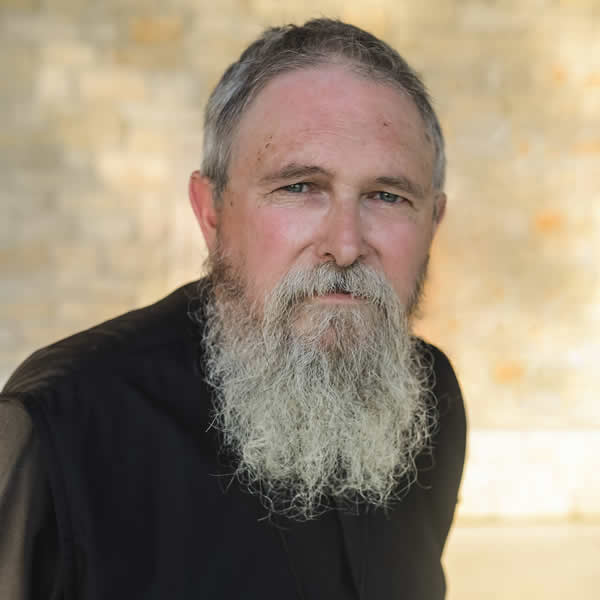


About Fr. Stephen Freeman

Fr. Stephen is a retired Archpriest of the Orthodox Church in America. He is also author of Everywhere Present: Christianity in a One-Storey Universe, and Face to Face: Knowing God Beyond Our Shame, as well as the Glory to God podcast series on Ancient Faith Radio.


Posted

in

, ,

by

Comments

34 responses to “To Know Even As We Are Known”

  1. Allen Long Avatar
    Allen Long

    Thank you, Fr. Stephen!

  2. Gretchen Joanna Avatar

    Wow – that is a powerful poem. And your words, also: The lines, “…our lives are not self-created but are received as a gift from each person we encounter, each thing that comes into our life,” articulate this reality of *relationship* being everything.

    Thank you, Father, for constantly nourishing us with these blessed reminders.

  3. David S Avatar
    David S

    Thank you Father.
    I have been trying to put into words the communion of the saints for my Protestant friends. It feels like a doomed endeavor as they try to find Bible verses to endorse or forbid asking the saint for their prayers. It seems like a misunderstanding of knowledge and communion – using scripture as a list of information of policy rather than a love letter from God. How does we communicate communion? I suppose they won’t know until they taste and see, so I pray to the Saints for them, that they might meet the saints as I have.

  4. Dee of Sts Herman and Olga Avatar
    Dee of Sts Herman and Olga

    Indeed Father,
    Knowing, Communion, is an indescribable depth of experience. We live in a culture that undermines our capacity to understand, let alone appreciate, what it is to know, to live in communion. What we see on our phones suggests that’s enough. But it is like you say, a form of akedia. And one that I fall into regularly, were it not for periods of Lent or high workload.

    God willing that I might be ignited with the fire of His love. To live in communion. This is how we are truly enlivened.

  5. Fr. Stephen Avatar

    David,
    Yes. It sort of breaks my heart…but I remember slowly learning the prayers of the saints. For me, it began around age 20, when (as an High Church Anglican) I learned to pray the rosary. It was sweet. The thought of heaven without the living presence and intercession of the saints is lonely to me now.

  6. Rob Avatar
    Rob

    Amen

  7. Matthew Avatar
    Matthew

    Davis S said:

    “It feels like a doomed endeavor as they try to find Bible verses to endorse or forbid asking the saint for their prayers. It seems like a misunderstanding of knowledge and communion – using scripture as a list of information of policy rather than a love letter from God.”

    Thanks for this comment David S. It created the following question in me for Fr. Stephen:

    As Protestants can make mistakes in their hunt for proof texts to either endorse or forbid something, I´m wondering if the Church can also make mistakes in how it understands things sometimes? I want to know the Church. I want the Church to know me. It´s in knowing that we have real communion with something, but admittedly it´s hard for me to know the Church sometimes as the Church sometimes seems to not know things I wish it did. I say these things as a fallible human who also doesn´t know many things.

  8. Rob Avatar
    Rob

    Matthew,

    May I share with you a hard learned lesson? I’ve experienced unnecessary strain in my life from living with a view of how everything ought to be, instead of accepting the reality of how everything is. I have no control over any of these external realities: God, Church, and others. I am given the opportunity for self-control.

    God knows you and loves you and you can know Him and love Him. What you seek, you will find. We can heal and overflow with love to those around us. Every other reciprocated love will just be a bonus. Commune with Him. Commune with anybody that will let you.

    I spent so much time wishing somebody would love me, choose me, know me, understand me. And all the while I could have been receiving and giving the love of God without worrying about the state of the Church and the state of the world, all while neglecting the state of myself.

    I don’t care if this is cliche. I just want you to know that I care enough to write it to you. I pray for you. Please pray for me.

  9. Fr. Stephen Avatar

    Matthew,
    My first thought is that I’m not certain what you mean by “Church” when you ask if it can make mistakes in how it understands, etc. I can sort of understand if we’re thinking about a sort of institution like the Vatican is sometimes considered, with the “magisterium” and such. When people ask me things like, “What does the Orthodox Church teach about AI?” for example, it’s as if they expect that there’s some sort of institution making official pronouncements, collecting lots of official pronouncements and filing them away to be obeyed and memorized.

    I can only speak for Orthodoxy:

    The Church is a living communion of people existing through time (and in eternity) with a visible reality (it’s not an abstract ideal). It has specific ministries given for guidance and governance – Bishops, priests and deacons – and they have structures such as Synods, etc. – which are still just a communion of persons.

    Over the course of its 2,000 years, there has been a living voice, especially expressed in its texts of worship and its life of devotion, that give voice to the lived experience of life in Jesus Christ.

    Sometimes there are opinions. Orthodoxy believes that the Church has been faithful to God across those centuries. However, there is no juridical teaching about infallibility. Priests err. Bishops err. Councils err. All that is seen and judged over time through the centuries. The Orthodox sense, however, is not one of progression or change or deviation from the “faith once delivered to the saints.”

    A lot of stuff that we deal with in our daily lives is simply the collected, inherited wisdom – the reflection of the experience of the saints/church through time.

    I’m not sure what you wish the Church knew that it doesn’t know. There’s a lot of things the Church doesn’t know because God has not made them known. Jesus gave that example to the disciples clearly saying that there were things that they were not to know (like when He was coming back).

    I would say that I want to know God. I want to know things in creation, but I’d mostly like to know them “in Christ,” which seems to be a different kind of knowledge.

    Best I can do for an answer just now.

  10. Todd Moore Avatar
    Todd Moore

    Thank you. I now see how the title of this post, “To Know Even As We Are Known” (alluding to 1Cor 13:12) encapsulates the whole theme of this essay.
    True knowledge culminates in participation, intimacy, and communion with God – that we might “know” God the same way God “knows” us.

  11. Fr. Stephen Avatar

    Todd,
    This is the very heart of our existence.

  12. Matthew Avatar
    Matthew

    Thank you Fr. Stephen.

    You said:

    “I’m not sure what you wish the Church knew that it doesn’t know.”

    I would like the Church to know apokatastasis in such a profound way that it would make it into dogma. Apokatastasis seems like the only way that the Gospel can be truly beautiful and ultimately victorious. Without it, God seems to lose and love seems to cease winning. Several of the fathers knew this as well I think and I love them for that.

    I didn´t want to take things off track, but often when someone comments I am lead into pressing things I want to address. May this comment bless others. May God give me grace. May God give me more faith.

  13. Matthew Avatar
    Matthew

    Thanks also Rob.

    Your points are well taken. Accepting the state of affairs sometimes is difficult for me so I appreciate your encouragement.

  14. Fr. Stephen Avatar

    Matthew,
    It’s interesting to me that the one time (to my knowledge) that a version of the word “apokatastasis” is used in the Scriptures is in Acts 1:8 where St. Peter asks the resurrected Christ, “Lord will you at this time restore (apokatastasis) the Kingdom to Israel?” Christ responds, “It’s not for you to know the times or seasons…” etc.

    My own take on the topic is that we’re not supposed to know (however, like you, I am deeply comforted and filled with hope at the writings of the few saints who boldly affirm such a thing). Frankly, in my experience the topic just becomes one more item for people to argue about. The hope (which I believe is important) should burn within us – burn with a love for all people and every creature. As it is, we consign so many people to a living hell on a daily basis that it undermines our hope. I believe we are meant to live small – to do the next good thing. Christ’s response to Peter points him back to the task at hand. It’s a word He speaks to us all. It’s for our health and well-being.

  15. Helen Avatar
    Helen

    Hi Matthew,
    I often want the assurance of apokatastasis and I am realizing that what I am really wanting is the assurance of God’s love, which is often my head’s attempt to deal with past emotional and spiritual abuse. It helps. The book you recommended, by the way- A More Christlike God- has been helping. Thank you for that! But this is not the same as “knowing ” God’s love. That is something that He orchestrates. I can’t will it or think it. I must wait on Him.

  16. Fr. Stephen Avatar

    Helen,
    I think you have put your finger on a primary reality. The “issues” that eat at us often have a very personal root – it’s where they get their energy. I have found in my own life that when I stop and start asking questions of myself, finding the root question, I am able to pray in a more helpful manner. I think of the book by Mother Siluana, O God, Where Is the Wound? as describing various examples. FWIW, many of our wounds (in my experience) are shame-related. That is very much the issue brought up by past abuse of various kinds. Again, I stand before the Cross (the icon of the Crucified Christ) and speak to Him about all of these things. There is such a clarity in that moment.

  17. Matthew Avatar
    Matthew

    Thanks so much as always Fr. Stephen.

    An AI summary about apokatastasis follows:

    The Greek noun apokatastasis (ἀποκατάστασις) is used only once in the New Testament. Where it appears, the single occurrence is found in Acts 3:21 during the Apostle Peter’s sermon at the Temple. In the Blue Letter Bible’s Strong’s Greek Lexicon (G605), the verse is recorded as: “…whom heaven must receive until the times of restoration [apokatastaseōs] of all things, which God has spoken by the mouth of all His holy prophets since the world began.”

    While the noun appears only once, its direct verb cognate apokathistēmi (ἀποκαθίστημι — meaning “to restore” or “reestablish”) appears 8 times across the New Testament. It is used in contexts such as:Physical healing: Jesus restoring a man’s withered hand (Matthew 12:13, Mark 3:5, Luke 6:10).Prophetic fulfillment: Jesus stating that Elijah comes to “restore all things” (Matthew 17:11, Mark 9:12).Political/Kingdom restoration: The disciples asking Jesus if he will “restore the kingdom to Israel” (Acts 1:6).

    Interesting. Nevertheless, whether we are supposed to know or not I believe that apokatastasis is a wonderful hope – some say even promise. I don´t want to argue about it of course, but I feel as though I have reached the end of the line with all this stuff. I was baptized and raised Catholic, was nearly 30 years different forms of Protestantism/evangelicalism, returned to the Catholic Church nearly 2 years ago (I think) while maintaining a very strong interest in Orthodoxy. I admit that I have wounds from my past and that I suffer from anxiety – but those are not the only things that are pointing me deeply toward apokatastasis. Apokatastasis makes the Gospel the most beautiful it can possibly be. So if hope or promise (apokatastasis) – at the end of the day I desire to believe a Beautiful Gospel.

  18. Matthew Avatar
    Matthew

    Thanks also Helen. God´s richest blessings to you.

  19. Fr. Stephen Avatar

    Matthew,
    I know of both Orthodox and Catholics in good-standing who believe it. It is not part of the received “kerygma” of the Church. I restrain myself to hope – as a priest who writes and teaches and does so under obedience. I cannot tell someone not to believe it (since they are in good company). I simply state how I understand it and how it works within me.

    I like boundaries. They save me from myself.

    Also, I should have done a deeper dive on the word’s use in the NT

  20. David S Avatar
    David S

    There is a beautiful tension between our free will and God’s salvation. Our Liturgics professor always reminds us in seminary, “God will never override our will, even in Eternity. If you don’t want to be in Eternity with everyone else, God will not force you to enjoy it, it will be hell for you.” God wants to know us freely and to be known by us freely. To freely have communion with Him and each person who shares communion with Him. apokatastasis must be free restoration, I can’t force anyone to want to be restored, I would not have true communion with them if they were forced to have communion with me.

  21. Matthew Avatar
    Matthew

    Dear Fr. Stephen, Rob and Helen.

    I really do greatly appreciate your thoughts. Theologically speaking I have reached the end of the line.

    Now maybe a real life of faith can begin for me.

    Lord have mercy.

  22. Dee of Sts Herman and Olga Avatar
    Dee of Sts Herman and Olga

    Matthew,
    Your last comment seems very similar to what we read in Psalms (72:28)… it good for me to cleave to God and put my hope in the Lord…

  23. Matthew Avatar
    Matthew

    Thanks Dee.

  24. Dee of Sts Herman and Olga Avatar
    Dee of Sts Herman and Olga

    Matthew,
    Please know that you are beloved and held as a friend here.

  25. Matthew Avatar
    Matthew

    Thank you Dee.

    Pray for me please.

  26. Rob Avatar
    Rob

    Matthew,

    You wouldn’t know it by the way I let words fly on here, but I struggle to share anything, because I’ve failed so much. I feel like a hypocrite. But I have tasted and seen the light and easy yoke of Christ in my weariness, in my weakness, and that’s what I hope can be encouraging to you.

    I’m not a theologian. I’ve found that trying to know everything hasn’t helped me much in reaching the goal of my existence. I’ve always wondered about how the failure I’ve met in that way of that way of knowledge-seeking relates to the tree of the knowledge of good and evil as being the tree we’re not to eat from. But KNOWING Christ, today, in the way Father and others writes on here is where it’s at. That’s the tree of life, if you will. Faith, trust, love, union. It’s possible for people like us. Be like a child and then God can do what He will concerning the big picture outside of ourselves. I think of the quote from Saint Seraphim of Sarov:

    “Acquire a peaceful spirit, and a thousand souls around you will be saved.”

  27. Rob Avatar
    Rob

    Correction: “Acquire the Spirit of Peace and a thousand souls around you will be saved.”

    That other translation I got quickly online didn’t quite capture it.

  28. Byron Avatar
    Byron

    I am reminded of a friend who took part in a Scooter race (125cc types) that began in Alaska and ended, I believe, in or near New Orleans. It was a test of extreme endurance and trial. The trail was mapped out beforehand and they often rode over unpaved roads. He finished (many didn’t) and noted that it produced a camaraderie among the riders; they had done and endured something, as together, that others simply couldn’t understand without taking part.

    This leaped into my mind as I read this post. Many thanks, Father.

  29. Jenny Avatar
    Jenny

    Father,

    You have written a post which is like a piece of music to which I wish I could find words. Perhaps I will find some words, but better than that, I have a favorite poem by St. Symeon the New Theologian, one which I saved in my poetry journal many years ago:

    The Light of Your Way

    Holy are you, O Lord, holy, blessed and One.
    Holy are you, and generous

    for you have flooded my heart
    with the light of your way,

    and you have raised up in me
    the Tree of Life.

    You have shown me a new heaven
    upon the earth.
    You have shown me a secret Garden,
    unseen within the seen.

    Now am I joined soul and spirit
    present in your Presence —

    your Presence that has waited long in me,
    your Presence, the true Tree of Life,
    planted in whatever this earth is,
    planted in whatever it is that men are,
    planted, and rooted in the heart,

    your Presence all at once revealing your Paradise
    alive with every good green thing:
    grasses and trees and the fruiting bounty,
    a world of flowers!
    sweet-scented lilies!

    Each little flower speaks a truth:
    humility and joy,
    peace, oh peace!
    kindness, compassion,
    the turning of the soul,

    and the flood of tears
    and the strange ecstasy
    of those bathed in your light.

    How wonderful for the rest of us that some saints are poets!

    The first blooming of the roses is dying away here, but the one that grows against my kitchen window is still full of them. Many times during this season while driving, or when looking out the windows of my home, I will feel as if the beauty around me must be very close to Paradise, and what I want to do is to share it with the Lord. Since a great deal of what I share with Him otherwise is usually something difficult in order to help me get through it, I try to find many moments of beauty and joy to share with Him as well.

    That is, the Lord created this beautiful world so that we could see Him in it and be surrounded by the beauty of it. And He created us to see Him and to see and be in the world around us that He created as a setting for us.

    So I think it must be a great joy to Him whenever we do see the beauty of it and give it back to Him. That is, I will be driving along a back road from the neighboring town, for example, and see the long sweep of cultured hills in various shades of green glowing in the sun, different textures from different crops, with the deeper of the trees and the summer clouds piling up all gold and white.

    And I will gather up the whole thing as I know it, and give it to Him, along with myself, and tell Him that all of it is His, that I give it all back to Him with all my thanksgiving and worship and adoration.

    I try to remember to do this often- when I am hugging my little boy because he is feeling cuddly and that is adorable and fleeting as he will only be three years old once. I draw Jesus into the moment with me, so that He knows that all that I love is from Him and how good it is and how much I worship and thank Him for everything which He has given.

    Sometimes when I am resting with the Lord, some piece of memory, long forgotten, will float up to remembrance- something so long ago that remembering it is like finding oneself in a foreign country that suddenly becomes familiar again. I remember all over again what the world was like when I was eight, my perception of the world and my life at that time, in that moment.

    It’s bittersweet, because that world passed away long ago and there’s no getting back to it. But on the other hand, because my whole life belongs to the Lord, it lives always in Him. He remembers it with me. Like everything else, I give it back to Him with thanksgiving and love and thank Him for all the beauty of my life, even that which I’ve forgotten.

    I know that all the days of my life are written in His book- “Your eyes saw my substance, being yet unformed. And in Your book they all were written, The days fashioned for me, When as yet there were none of them.” I feel sure that when I am with Him in Paradise, we can sometimes go over the book and remember together all those days written down, only there won’t be any hurtful thing in them anymore- that is, I won’t remember those parts.

    But the days when my children were small and when I was small, and when my parents were young, all the forgotten days of summer, all of those are kept in the book and I can always find them again with Him, because they and myself belong to Him.

    Even the hurtful days are valuable though, because through them I can also be with the Lord in His suffering. I am not quite sure how to put this into words properly, but perhaps I could say that the Lord is a Person, and as a Person He was rejected, abandoned, dismissed, maligned and belittled.

    It seems impossible that we could talk to the Lord about any of that, because He is God. How can God experience such things and how could we dare to talk about them with Him? These sorts of thoughts arise from the spiritual formation I received in my upbringing. But He was telling nothing but the truth when He said that He is meek and humble in heart, and so He does accept our company and comfort, even in the worst moments of His life.

    There could be no better reason to exist at all than to know a God like this, Who is revealed in Jesus Christ. Thank God that we do exist for that reason!

  30. Dee of Sts Herman and Olga Avatar
    Dee of Sts Herman and Olga

    Dear Matthew,
    I pray that the Theotokos, Saint Herman and Saint Olga will pray for us both. They are champions to support and love those who, in our society, people think are weak. But in fact the people they protected, the rural Alaska Native people, are strong in the Lord. And you can’t get stronger than that!

    May our Lord grant us both peace and confidence in His love.

  31. Matthew Avatar
    Matthew

    I really appreciate that Dee. Thanks so much.

  32. Lawrence Wright Avatar
    Lawrence Wright

    Jenny,
    Thank you so much for St. Symeon’s poem and for all the rest of your post. How beautiful!
    It came just when needed, as things always seem to do on Fr. Stephen’s blog!

  33. Fr. Stephen Avatar

    Jenny,
    Thank you. Glory to God for all things!

  34. Joan Moulton Avatar
    Joan Moulton

    Who we are is a story being told to us by God. It is a story of love: “this is my beloved.”
    This statement truly shook me to my core. I came to tears. Thank you, Father.

Leave a Reply

Your email address will not be published. Required fields are marked *


Subscribe to blog via email

Support the work

Your generous support for Glory to God for All Things will help maintain and expand the work of Fr. Stephen. This ministry continues to grow and your help is important. Thank you for your prayers and encouragement!


Latest Comments

  1. Thanks for your reply Fr. Stephen, That makes a lot of sense. Thank you. I suspect for myself a lot…


Read my books

Everywhere Present by Stephen Freeman

Listen to my podcast


Categories


Archives