Our Conciliar Existence – Love

We all live in an ecumenical council. We are not all bishops summoned by an Emperor, nor are we great fathers of the Church gathered to declare the deepest wisdom. Nevertheless, we live in an ecumenical council – every minute of every day – and the same test that ever faced the luminaries of the Church faces us.

That test is the struggle of love. Ecumenical Councils in the history of the Church are not summoned to demonstrate their brilliance. Such councils represent the failure of love and the Church’s response. When heresies arise, they come about as the failure of love. We do not hear, we do not listen, we do not perceive the truth in the bosom the Church. Strife gives rise to the hardening of hearts. Hearts that fail to love become the womb of schism (and worse).

As much as we celebrate the great councils of the Church (and rightly so), so we should also mourn their necessity. We are commanded to “love one another,” and are equally told that whoever does not love the brethren does not know God (1John 4:7-8). When love fails, the truth begins to escape us.

Though we do not sit in the halls of the mighty and hold forth on matters of serious doctrine, we face the challenge of love at every moment, the need to “repair the breech” that threatens every human relation. If I do not love you, I cannot know you. If I cannot know you, then my knowledge of God is diminished in just that measure.

You are my ecumenical council. The world (the oikumene) rests in your heart and mine as we jostle about and feel for the truth. In the Church we say, “Let us love one another that with one mind, and one heart, we may confess: Father, Son, and Holy Spirit, the Trinity one in essence and undivided.”

Without love, my dearest ecumenical council, neither of us can confess the Creed in truth. It is love that the Fathers have preserved for us – heart-healing love that makes it possible for us embrace each other and forgive all by the resurrection.
About Fr. Stephen Freeman

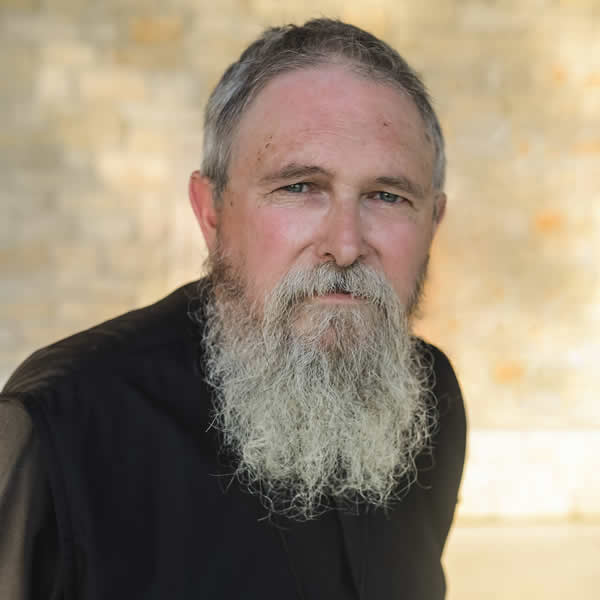
Fr. Stephen is a retired Archpriest of the Orthodox Church in America. He is also author of Everywhere Present: Christianity in a One-Storey Universe, and Face to Face: Knowing God Beyond Our Shame, as well as the Glory to God podcast series on Ancient Faith Radio.


Posted

in

,

by

Comments

35 responses to “Our Conciliar Existence – Love”

  1. Margaret Avatar
    Margaret

    Well said, dear Fr. Stephen! Thank you for saying these words! Glory to God for All Things!

  2. Janette Adelle Reget Avatar
    Janette Adelle Reget

    I have recently been reading about the conflict between the Celtic and Roman Catholic dogma. It seems so silly now.

  3. Matthew Avatar
    Matthew

    Honestly Janette … all the conflicts seem silly and they are all saddening as well. 🙁

  4. Dee of Sts Herman and Olga Avatar
    Dee of Sts Herman and Olga

    Father,
    Thank you for these words. Again, very important words to take to heart. It seems t me that to be authentically conciliatory means to have received the true humility of Christ. This task isn’t easy because of the lack of will, but because there is so much in the Western culture that points in the opposite direction of self-emptying and humility. But with God, in Christ, all things are possible.

    As I continue to reflect on your words, they remind me of St Sophrony’s words about hypostatic prayer, and Archimandrite Zacharias words about enlargement of the heart.

  5. Dee of Sts Herman and Olga Avatar
    Dee of Sts Herman and Olga

    I’m going to be the contrarian now.
    Personally, I don’t see most conflicts in Christianity as silly. Sad, yes, but not silly. When people don’t come together, when there is a drive to subsume power over others, we have schism. And the longer that lasts, the harder the push even to war and crusade against, the strong over the weak, the harder it is to knit hearts together again into communion. This is not the Way of Christ. This is the way of man.

  6. Dee of Sts Herman and Olga Avatar
    Dee of Sts Herman and Olga

    Or better put, this is the way of the adversary.

  7. Fr. Stephen Avatar

    Dee,
    Yes. Not silly.

  8. Fr. Stephen Avatar

    Janette,
    The differences between Celtic and continental (Roman) practice was really a matter of specific liturgical issues rather than dogma (doctrinal teaching). It’s actually fascinating. That the Celtic Church were “Quartodecians” (celebrating Easter on the 14th of Nissan) is an interesting historical artifact. It’s a testimony to how early their faith began. St. John (the Apostle and author of the gospel) kept Easter on the 14th of Nissan, as did his disciple, St. Polycarp of Smyrna. It was apparently the practice of the early community in Ephesus, where St. John lived with the Mother of God.

    St. Polycarp, when he was brought to Rome to be crucified, noted that he kept Easter on a different date (Rome was doing pretty much what is done now). His own decision was “when in Rome, do what the Romans do” and so he kept Easter according to their practice.

    In modern thinking, such differences are seen a insignificant. However, the early Church tended to see them as very large indeed. That tells me something about them (and about us) that is interesting. The Council of Nicaea settled the matter with a decree for a common date of Easter. However, the Celtic Church was on the fringe of the Empire and did not get that decision. Thus, when St. Augustine of Canterbury came into Britain and found the earlier Christians not practicing this common agreement of the Church, it became an issue. It was settled at the Council in Whitby (in England) and became pretty much a moot point.

    In recent years (middle of the 20th century and beyond), there has been a bit of a dither made about those differences and magnifying anything that would emphasize the independence of the Celtic Church. They did not see themselves as independent. Indeed, at Whitby, they agree to follow Roman practice (which was also the practice in the Eastern Church as well). They did not, by and large, adopt the practice of mandatory clerical celibacy that became the standard in the West just a bit later. Indeed, clerical celibacy was not enforced until after the Norman Invasion in 1066. The Normans enforced it (as well as some other things) rather strongly.

    But, all of this has been used by some to make claims that are not entirely true. They’re not silly – they’re often just a bit uninformed and malicious.

  9. Edward dene Cleland Avatar
    Edward dene Cleland

    Father,

    Based on some of his past actions, I do not trust my son-in-law. How can I love him if I don’t trust him?

  10. Fr. Stephen Avatar

    Edward,
    Trust and love can be separate issues. The lack of trust means that love will not be able to fulfill the whole of its purpose. But, to do them no harm, to pray for their well-being, the forgive them in some manner, are actions of love, even if they are muted.

    I have long offered the prayer that was first suggested by St. Sophrony for our enemies: “Lord, on the day of judgement, do not hold this (sin) against them on my account.” It recognizes that in the meantime, there is a caution, but it refuses to turn it into an eternal condemnation.

    This prayer can help begin the healing process in our own heart. It recognizes that there will come a time in which all things will be set right – and it’s not our job to make others “pay.”

    So, we make a small beginning.

  11. Rob Avatar
    Rob

    I recently purchased my first icon: Christ the Good Shepherd. And since then, I’ve been seeing everything through the lens of that image. How radical are the words and reality of Jesus when He said He lays down his life for the sheep. Shepherds are supposed to receive their livelihood from the sheep, not sacrifice their life for them! So the reverse is true here: the sheep receive their (eternal) livelihood from the Shepherd. It’s this love that draws us close and keeps us close. It’s this love by which we can truly love one another. But there’s other shepherds out there that want the sheep for slaughter. There’s wolves out there, too. They try to lure the sheep away. They prey on the curiosity and the vulnerability of the sheep when they’re wandering from the Shepherd. I think about this in terms of how God is reconciling the world. I think about this when it comes to heresy and division.

  12. Matthew Avatar
    Matthew

    I think I would agree with your sentiments, Dee.

    I must reflect more on the idea that heresy in the Church is caused by a lack of love as well on other reasons why we have schism at all.

    My comments about silliness and sadness were mainly about schism in general between all corners of the Church, but mainly between Catholics and Orthodox. I sometimes see the things that continue to separate us as silly; the results of which saddens me – though I know those committed to truth on both sides of the dogmatic isle (east and west) probably will differ with my thoughts – and that´s ok with me.

  13. Fr. Stephen Avatar

    Matthew,
    I think you do not understand what I have written (or what I’m saying). Love is not something we can separate from truth. Truth is not a proposition, something we argue about. Truth is ontological, it’s a matter of being of the very nature of reality. In our modern world we have reduced love to “just getting along.” What you are suggesting is that what stands between union is just mere opinions and that if we’d just agree to get along, we could be one.

    I prefer to pull my punches and not describe the depths of difference that exist. They are profound. That does not mean that Orthodox and Catholics do not share a lot in common – there is a lot of common history.

    I would prefer that we not press this conversation further. Rather, it does more good to ponder the failure of love and fullness of love itself. God give us grace.

  14. Jenny Avatar
    Jenny

    Father,

    When St. Simeon Metaphrastes says to the Lord in his prayer, “…so that when You enter into the home of Your communion…,” is that phrase a poetic way of referring to the Eucharist?

  15. Fr. Stephen Avatar

    Jenny,
    It is a poetic way of referring to Christ entering into us in the Eucharist. We are the “home of Your communion.”

  16. Helen Avatar
    Helen

    So much beauty in this post and the comments. From “we are the home of your communion” to without trust “love will not be able to fulfill the whole of its purpose.”

    It’s been my experience that we fail to love and compound that failure by calling it love. Is this what is meant by “failure to love?”

  17. Jenny Avatar
    Jenny

    Father,

    I thought so, but it didn’t occur to me until recently. I’ve memorized the prayer, and now I can begin to learn it by heart. It takes a long time. I only recently understood something about my morning prayer that I’ve been missing all these years. In it, we ask Christ to save us, and then it lists reasons why. The reasons are first, because He is our Creator, secondly because He is the giver and provider of every good thing- because He is generous! And also, because we have no other hope beside Him, and to Him we will send up glory both now and ever.

    I had been praying those lines a long time without realizing what it was saying about God. He doesn’t save us because we are good, for example. All the reasons why He saves us are about Who He is.

    It reminds me of this verse which I have sometimes in mind when I think of the Lord: “Call upon Me in the day of trouble; I will deliver you, and you shall glorify Me.”

    But I am only just now beginning to understand the prayer of St Simeon Metaphrastes, now that I can say it without reading it line by line. When I first read about entering the home of the Lord’s communion, my thoughts went immediately to what St. Paul writes about here:

    For this reason I bow my knees to the Father of our Lord Jesus Christ, from whom the whole family in heaven and earth is named, that He would grant you, according to the riches of His glory, to be strengthened with might through His Spirit in the inner man, that Christ may dwell in your hearts through faith; that you, being rooted and grounded in love, may be able to comprehend with all the saints what is the width and length and depth and height— to know the love of Christ which passes knowledge; that you may be filled with all the fullness of God. (Ephesians 3:14-19)

    I read even this passage differently now. This is a living prayer in the same way that St. Paul is a living person. He must still be praying it. But it’s also Scripture, so the Holy Spirit is breathing through it.

    Whenever the Lord grants that I can perceive His presence, it does seem as though as though He has come home, that I am one of the homes of His communion, and the very first thing that I long for desperately is that He will find me to be the home of His Holy Spirit only and not the home of sin.

    Of course, this does not happen. My heart is broken with repentance, and I must pour it out like water. The thing is, in His presence, what I wish I could do, what I wish I could have been doing, is to be dying to myself effortlessly and always and with great, intentional love for the Lord, day after day. In His presence, I long to have been found to be giving this to Him, and I realize how much I have not been doing that. My life falls embarrassingly short of this.

    This is a deep, abiding wound- my failure to give Him what He is worth. It’s only infrequently over the years that the Lord grants me to know His presence to this degree. The most recent was after I had the stomach flu. It’s distressing and discouraging to see in His presence that I have not progressed as I had hoped and that I still fall down over and over again.

    That was fairly recent and the impression has not left me. What I wanted very much afterward was to go on just as I always wish to do, finally to do this- dying flawlessly day after day- selfless, patient. Never getting discouraged or holding back or being resentful or any of that.

    But of course, I have not been able to do that and I have been having to come to terms with my most recent failure of living up to my hopes for myself. So I suppose I could say that the wound of my failure is aching very badly right now, and St. Simeon’s prayer is excellent medicine. The lines are powerful- burn all my iniquities like thorns, cleanse my soul, make holy my thoughts! What lines to pray!

    At that time, after the flu, I had already discovered this prayer because it was at that time that you shared it in the comment section. So I brought this prayer up to the Lord. I told Him I would be praying this to Him all the time- every day! Lots of times a day! I would be besieging Him with this prayer. But I do not think this was a prospect which He found at all daunting. The Lord Himself is so merciful. But it’s His very mercy and forgiveness and love which make me all the more long to be perfect for Him.

    But now I see that the saint who wrote this prayer had an even deeper understanding of this communion then I at first could grasp. You often speak of the fullness of Orthodoxy. In my current position, I am able to know only one facet of being the home of His communion. I am not yet at the center of the meaning, participating in it with the rest of His Church through the Eucharist- that is, in the fullness. I hope that He will grant me this.

  18. Matthew Avatar
    Matthew

    Thanks Fr. Stephen. I´ll do my best to follow your lead.

    As I ponder both the failure of love and the fullness of love, I believe that one of the greatest failures of love was the broken communion that took place all those centuries ago. 🙁

    Fullness of love … well … the healing of something broken immediately comes to mind, though I know the great challenges associated with this – both personally and ecclesiastically.

    As you say … God give us grace.

  19. susan anne webster Avatar
    susan anne webster

    Touching at the very heart of our daily lives.
    Thank you dear wise man.

  20. Robert Wallace Avatar
    Robert Wallace

    Fr. Stephen…
    Thank you for these weekly reflections that usher me into a period meditation and prayer.

    Today you present the difference between a spirit of love and one of divisiveness. At the time of Theodosius the Great two large groups — the followers of Nicene and the followers of Arius — were locked in struggle to further their theological view throughout the church. My limited understanding is that he used power, his authority, to support the followers of Nicene. Would a compromise with love have worked in this setting to bring unity within the church? — RWW, Lititz, PA

  21. Fr. Stephen Avatar

    Robert,
    I often think that we’re at the mercy of historians and how they choose to write their histories. Frequently in their writing, they moke no distinction between the “semi-Arians” and the “Arians.” The hard Arians (who truly had a problematic dismissal of Christ) became very marginal, persisting among the Goths, and spreading only with the conquest of arms that the Goths championed. As for the semi-Arians, those who opposed the “homoousios” formula, accusing it of being too Modalist, were primarily concerned with getting the language right. St. Basil the Great, who had strong relationship with a number of prominent semi-Arians, chose to tread lightly in the matter. The Cappadocians, writing and teaching through the rest of the 4th century, saw the culmination of their work in the 2nd Council, which largely saw the reconciliation of the two groups. I think of it as a successful Council. Nothing was compromised, but patience eventually did its “perfect work.”

    The emperor Theodosius famously gave a Church to the Arians in Milan – which was opposed by both St. Augustine and St. Ambrose. They refused to yield. But, no blood was spilled, as I recall.

    Emperors mostly caused more trouble than not. It’s not compromise that I suggest – love without truth is an emptiness. But love is patient, kind, faithful. It endures.

  22. David S Avatar
    David S

    Thank you Father.
    I am still wrestling with Saint Maximus when he notes that God knows us willingly, He does not force Himself to know us. If God does not know us, like to the ones He says, “Away from me I never knew you.” Does He cease to love us then?

    Kindly,
    David S

  23. Dee of Sts Herman and Olga Avatar
    Dee of Sts Herman and Olga

    David,
    “Know” in this case means communion. This is a voluntary act on the part of the created human being. Without communion with God, we step away from His life-giving Being. Such a step brings us into non-existence. This is not the will of God. He “so loved the world that He gave His own begotten Son”.

  24. Fr. Stephen Avatar

    David,
    That God knows us “willingly” primarily means that we are not “objects” to Him, things that He merely notices. Rather, this is a full giving of Himself to us, to know us and to make Himself known. As to the fearful words of judgement, “I never knew you,” they speak to our refusal to know Him, rather than His love towards us (which never ceases). As to the finality of those words, I leave that in the hands of God. All things are possible.

  25. mary benton Avatar
    mary benton

    Hi Fr. Stephen,
    An excellent post – thank you. Re: your response above to Matthew:

    “Love is not something we can separate from truth. Truth is not a proposition, something we argue about. Truth is ontological, it’s a matter of being of the very nature of reality.”

    I fully agree with you here. And yet, isn’t it so that, in our human weakness, all of us understand Truth imperfectly? The schism within the Body of Christ is there because of a lack of love – I agree. It is not just an intellectual debate in which we are unable to reach a common conclusion. If we have reduced it to that, we have indeed lost the way of Love. This losing of the way is why we need salvation. I am leery of preachers, theologians and even the dogmas of my own Church if they pretend to know the Truth definitively and without question. We live in mystery now and await the time when we will see Him face to face. In the meantime, I love – and pray to love more completely.

    (Please forgive me if I have misunderstood your point.)

  26. Fr. Stephen Avatar

    Mary,
    Thank you. It seems to me that you’re still describing truth in propositional terms. At best, a proposition can be an “icon” of the truth. But the truth is personal, ontological, a reality, not a proposition. It is why only love can “solve” such things.

    Even within the Church and its unity, we can too easily settle for a sort of propositional unity (or less) and let love begin to wane. Church can become a sort of habit, unity no more than a slogan. It’s like “believing in Christ” but not praying. The fire is allowed to go out.

    The thing I fear in ecumenical discussions is a marriage that has no fire, a union without love, a secularization and institutionalized peace marked by the emptiness of platitudes.

    Love is a fire. May it consume us.

  27. Matthew Avatar
    Matthew

    Dear Fr. Stephen,

    How will love, then, “solve” things regarding the lack of unity in the Church? Will one side have to admit that they are more (or less) personal, ontological, real, etc. than the other side?

  28. Fr. Stephen Avatar

    Matthew,
    I do not see a clear way forward on this – which is to say that historical circumstances might well stand in the way at present. It would, without any doubt, entail a profound act of repentance. If you were not thinking about Orthodox/Roman Catholic unity, but, instead Roman Catholic/Baptist unity, what do you think would be required?

    The distance between Roman Catholicism of 1054 and Roman Catholicism of today is actually quite vast. This is problematic, to say the least (from an Orthodox perspective). There are foundational differences (besides the papacy) such as the notion of the development of doctrine (which is a very modern teaching) that would require a very different understanding of Tradition, etc. If the Orthodox were to “repent” from their views – they would cease to be Orthodox (other than wearing different clothes). Roman Catholicism, particularly in the modern period, has shown a propensity, even a talent for accommodating all kinds of contradictory expressions of the faith – a sort of “unity in diversity” that is alien to Orthodoxy (at least as it’s expressed at present). From an Orthodox understanding, this is simply alien. We don’t want to be swallowed up into a sort of United Nations of Christianity or a Vatican as Brussels.

    There are some within Orthodoxy that would probably be happy with that – but they’re largely removed from the life of the Church, isolated in ecclesial bureaucracies. I cannot see that Rome is suggesting anything different than Uniatism – which has repeatedly been denounced as a path to union.

    So, essentially, true union would be miraculous. It’s hard to describe it at any time. But, I do not see that the path has been described in any substantial or healthy form. At present, I would say that the most pressing struggle is unity with the Roman Catholic Church with itself – and unity within Orthodoxy itself. I’m living small. In the meantime, we do well to love each other as best we can and do what has been given us at hand.

    Of course, if you read the Scriptures, we are warned that things will become increasingly difficult for the Church. The ecumenical movement (and Vatican II) were born in the 60s, by and large, and were riding on that crest of liberal progressivism. We were going to solve poverty, war, schism, every historical problem, etc. If you want to call something “silly” – that was, and is, the sound of silliness. Pass a law, and, like magic, the problems are solved. The same naivete infected some in the Church. I chalk it up to modernity. Progress is not the path forward.

    An article of interest: The Long Defeat and the Cross

  29. Dee of Sts Herman and Olga Avatar
    Dee of Sts Herman and Olga

    The Catholic Church historically used force to achieve unity. That to me doesn’t look like the Way of communion. But acts of love are.

    The Vatican appears to have a political agenda with their attempt to obfuscate the differences between Orthodox and Catholic. The ascribing of ‘silly’ furthers that agenda by trivialising the differences.

    We can love one another without trying to obscure the differences and boundaries.

  30. Dee of Sts Herman and Olga Avatar
    Dee of Sts Herman and Olga

    By the way, Father, I love the article you linked to. More good words about our circumstances.

  31. Dee of Sts Herman and Olga Avatar
    Dee of Sts Herman and Olga

    https://www.ancientfaith.com/podcasts/hopko/what_does_rome_need_to_do_part_1/

    I don’t know if this is helpful to answer any further questions. This is a link to a podcast by Father Thomas Hopko of memory eternal, former dean of St Vladimir Seminary. He presented a podcast talk on what he thought would need to happen to create unity between the Catholic and Orthodox Churches.

    He summarises the talk as:
    “It’s kind of like an ecclesiological fantasy of what could be imagined for the Roman Catholic Church and the Eastern Orthodox Church to be in communion with each other, in sacramental communion and in fact be in the same Church.”

  32. mary benton Avatar
    mary benton

    Fr. Stephen,
    Thank you for your response. I don’t believe that I am describing Truth in propositional terms. I am describing the weakness of humanity, our fallibility and sinfulness when it comes to trying to understand and describe the Truth. Truth doesn’t change nor does it err – it wouldn’t be Truth if it did.

    Every human being and every church (as a human institution, hence the lower case “c”) is afflicted by sin, even when they are convinced that they are not. Do I believe that Truth is preserved in the Church? Yes, absolutely. But am I talking about the Orthodox or the Catholic with that upper case “c”? I am talking about both – because I am talking about the Body of Christ which can know no divisions within itself; it is in Him that Truth resides.

    I am in no position to judge who is living in communion with the Body of Christ. But I believe that there are Orthodox, Catholic and Protestants who are; and that there are Orthodox, Catholic and Protestants who are not. Affiliating with a particular church as a human institution does not guarantee communion, but neither does it preclude it.

    True communion in the Body has Love as its foundation, nothing more – because there is nothing more.

  33. Fr. Stephen Avatar

    Mary,
    Schism has always makes speaking about the unity of the Church very difficult. I think we frequently say things that make schism to be less than it is (it’s easier that way). I trust that the love of God encompasses the whole of humanity. Nevertheless, we only know the Church in a visible form – in which communion has a prominent role. Schism is a problem that has rarely been healed over the course of our history. But it has, in fact, been healed. In the meantime, it is for us to love all.

  34. Robert Wallace Avatar
    Robert Wallace

    Thank you for the response that helped me take a deeper look into this controversy and arrive at a better understanding of how Theodosius handled the matter. Recently, I have read more of Basil’s writings receiving benefit and blessing from his guidance. Peace+
    RWW-Lititz

  35. Matthew Avatar
    Matthew

    Thanks so much Fr. Stephen and Dee for the responses.

    I find myself in agreement with some of what you both say as well as in disagreement. It seems that life is often like that between people a lot of the time.
    It´s why I am greatly encouraged by your call, Fr. Stephen, to love. Regardless of the differences between Catholics and Orthodox (for example) – we can still love one another. The healing of the Great Schism might seem impossible, but for God all things are possible. As we continue to walk together in this space, I hope we can – in love – also continue to learn from one another.

    The ontological nature of truth demands such I think.

Leave a Reply

Your email address will not be published. Required fields are marked *


Subscribe to blog via email

Support the work

Your generous support for Glory to God for All Things will help maintain and expand the work of Fr. Stephen. This ministry continues to grow and your help is important. Thank you for your prayers and encouragement!


Latest Comments

  1. Thanks for your reply Fr. Stephen, That makes a lot of sense. Thank you. I suspect for myself a lot…


Read my books

Everywhere Present by Stephen Freeman

Listen to my podcast


Categories


Archives