What’s In A Name?

I do not know its cause, but, on occasion, I hear my mother’s voice call my name. Perhaps it’s a random set of neurons going off, or something more mystical and spooky. I do not know. I know, however, that it is powerful and goes deep into my soul.

Names are like that.

There is something profound in the Biblical scene of Adam naming the animals. It is charming beyond words that we are told that God brought the animals to Adam to “see what he would name them.” What a curious image. It seems to me that the “naming” was also part of the “creating.” God spoke creation into existence. As speakers (logiki probati – rational sheep – sheep who talk) of words, we embody the image of God. There is a connection between an object and its name, a connection that has become increasingly obscure as our language becomes ever more sophisticated. We do not know what we are saying.

Naming a child is a frighteningly serious matter – to give someone a name that will become theirs for the whole of a life. There are cultures in which a person has two names: one for the public and one that is secret. That speaks of the power inherent in a name.

The Scriptures have lots of naming stories – and the names often reveal the character of a person or a place. It is deeply revelatory of Moses that, having come to the very Presence of God in the Burning Bush, his first question is, “What is your name?” Ever since, the tribes of Israel, though knowing the Name, substitute the word, “Adonai” (Lord), or “Ha Shem” (the Name) when they read or speak YHWH. The Name itself is considered too holy to be spoken.

The modern world thinks very little of names. Modern philosphies, on the whole, tell us that names are just words and have no connection to that which is named. This assumption goes far to explain how lightly we throw words around. The children’s rhyme says:

“Sticks and stones will break my bones, but words will never hurt me.”

The reality is that bones heal fairly quickly, while the pain from words can sting for a lifetime.

Something we fail to understand is the communion aspect of our names (I don’t have a better word with which to express this). Our names dwell in us and we in them. Again, I have no definitive dogmatic expression of this reality. It is, however, derived from Orthodox teaching.

In the early 20th century, there was a controversy in one of the monasteries on Mt. Athos around the teaching that “the name of God is God.” Called the Imyaslava (Имяславие) Controversy, it was a teaching condemned by the Holy Synod in Moscow. Subsequent discussion has suggested that there were misunderstandings (and poor expressions) surrounding all of this. Perhaps it will someday be re-visited.

However, the instinct expressed as “the name of God is God,” is rooted in many of the practices of the Church, including the prohibition against “using the Lord’s name in vain.” I have long thought that the originators of this teaching made a mistake in rooting it in the language of essence, instead of the language of person or hypostasis. We say that an icon is a “hypostatic representation” of the one who is pictured (cf. St. Theodore the Studite’s work On the Holy Icons).

Names matter.

We name a child with a special service in the Church (on the 8th day). We give a saint’s name to those entering the Church at whatever age. A monastic is tonsured with a new name. An icon is not considered complete until the name is written on it. Surely the name is as holy as the image itself.

We are told that in the eschaton (the end of all things) we will be given a new name (Rev. 2:17)

“He who has an ear, let him hear what the Spirit says to the churches. To the one who conquers I will give some of the hidden manna, and I will give him a white stone, with a new name written on the stone that no one knows except the one who receives it.”

It is of note that the service books for the Divine Liturgy direct that communion is to be given by name: “The servant of God (N.) partakes of the most Holy Body and Blood of our Lord, God, and Savior, Jesus Christ, for the remission of sins and unto life everlasting. ”

Our experience with our personal name can be problematic at times. I’ve known people who deeply welcomed a new name at their Chrismation or Baptism, as it replaced something that had been a point of brokenness. Over the years, we sometimes acquire “nick-names” that might be unhelpful. My own “naming” journey began as “Little Steve,” then to “Steve,” then to “Stephen” (when I was ordained). The “Little Steve” was driven by “Big Steve” who lived next door, who was bigger, and was an occasional bully. It is interesting to me, having been “Fr. Stephen” for most of my adult years, to encounter childhood friends who jarringly address me as “Steve.” It’s okay, but it sounds like the name of a stranger.

There is, as noted in Scripture, a name that we do not yet know, a name that awaits us, a name that “no one knows except the one who receives it.” That reality reminds me of St. John’s statement:

“Beloved, we are God’s children now, and what we will be has not yet appeared; but we know that when he appears we shall be like him, because we shall see him as he is.” (1Jn 3:2)

I believe that this new name already resides within us. It names the “truth of our personal existence” that is in the image of Christ. When we see Christ “as He is,” then we will see ourselves “as we truly are.” That reality is so great that it will require a new name.

Nevertheless, even the names we bear at present are sacramental in nature. We give them to one another as gifts. We give them that we may be called by them. We give them as a token and icon of the self. On the tongues and in the minds of friends, they bring joy and happy remembrance. On the tongues and in the minds of enemies, they bring fear and rage. If there is such a thing as the “evil eye,” then there is surely such a thing as the abuse of a name, and it is equally devastating.

That God accepted a human name when He took flesh of the Virgin (as the angel of the Lord spoke to Joseph in a dream, “You shall call His name Jesus, for He will save His people from their sins” Matt. 1:21) is a profound condescension, as God accepts the vulnerability which all of our names share in common.

In American Southern culture, the use of the name “Jesus” as a swear word used to be unknown. Sadly, that culture is eroding, as is so much that has been of great value. Isaiah said, “I am a man of unclean lips, and I live among a people of unclean lips.” We should take care to break ourselves of the habit of abusing the Lord’s name.

When I graduated high school, I moved into an apartment with a friend. We were “Jesus Freaks” (part of the Jesus Movement of the late 60s and early 70s). It was a small two-bedroom apartment. One of our sweetest habits was to call out to one another various names of Jesus from our beds as we fell asleep. He is now with the Lord. But I recall those sweet minutes whenever I read the beloved Orthodox prayer of the Akathist to the Sweetest Lord Jesus, a devotion to the Holy Name.

I commend it to you. May the name of Jesus always be on our lips and in our hearts!
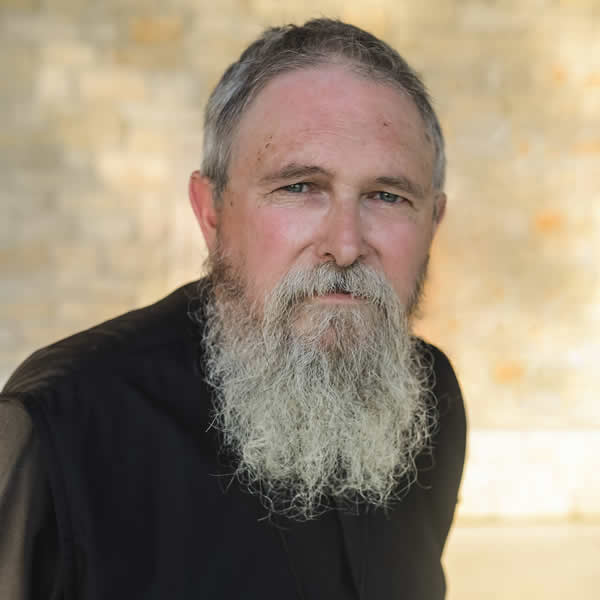
 

About Fr. Stephen Freeman

Fr. Stephen is a retired Archpriest of the Orthodox Church in America. He is also author of Everywhere Present: Christianity in a One-Storey Universe, and Face to Face: Knowing God Beyond Our Shame, as well as the Glory to God podcast series on Ancient Faith Radio.


Posted

in

, ,

by

Comments

31 responses to “What’s In A Name?”

  1. Clarence Hal Freeman Avatar
    Clarence Hal Freeman

    Great post.

  2. DAVID BOLICK Avatar
    DAVID BOLICK

    Thank you, Father Stephen, for that truly heavenly, inspiring and most fertile reflection.

    I learned a nick-name for Satan yesterday evening while watching the last episode of season 1 of the excellent production of the life of Saint Paisios, “From Farasa to Heaven.” The moniker “Tangalaki” (troublemaker) describes him and dismissively demeans him; you might say it defangs the fearsome “murderer” tag he had before death was trampled down by the death of the One whose name is Wonderful. Unlike our initiation into the Kingdom and our being given a new name by the One Who makes all things new, the troublemaker’s choice to fall is like an inverted chrismation, putting him down below with “that which decayeth and waxeth old [and] is ready to vanish away.” It rubs in the fact that “he hath but a short time” (Hebrews 8:13 and Revelation 12:12).

    Today’s reading from Saint Nikolai’s Prologue reflects yet another facet of the mystery of Our Redeemer’s many names and calls to mind the prophet’s experience: “Thy words were found, and I did eat them; and thy word was unto me the joy and rejoicing of mine heart: for I am called by thy name, O LORD God of hosts” (Jer 15:16):

    “Brethren, let us yearn for the face of Christ! His every word shows us one feature of His face. Each of His apostles shows us some characteristic of His face.
    His every deed shows us some feature of His face. Each of His saints shows us some ray of His radiant face. With yearning brethren, let us exam the face of the Lord. Let us assemble ray after ray until it reveals the entire sun. Let us enshrine that Sun in the depths of our hearts, that it illuminates our bodily courts from within. Let us plant this inexpressible sweet vineyard in our heart that we may taste of that immortal drink by which the angels become intoxicated.”

    Thanks again for your always nurturing thoughts.

    Fr. David Bolick, Guadalajara

  3. Fr. Stephen Avatar

    Fr. David,
    Thank you for your rich reflection! Christ is risen!

  4. DAVID BOLICK Avatar
    DAVID BOLICK

    Indeed He is risen!

  5. Gabriel Tolle (Kenneth Tolle) Avatar
    Gabriel Tolle (Kenneth Tolle)

    Dear Father… “Christ is risen!”

    I have friends who refer to the name of Jesus as “Yeshua”. Given the significance of names and naming in this (wonderfully written) article (no flattery meant in saying this… but truth!), is this distinction between our calling our Lord “Jesus” …or “Yeshua” an important aspect for us to consider in practice? Up until now I had never really thought of this much. But now after having read your article it would seem that a translation of languages in words and vocabulary to be different from a name.

    “Hallowed be Thy name!”

    Bless you! …. and thank you so very much for taking the time to share with us your thoughts… the Word and Mind of our Lord …and our heroes of the Faith!

    Gabriel Tolle

  6. Fr. Stephen Avatar

    Gabriel,
    I know that in some Evangelical Churches, and in some so-called Hebrew Christian groups (which is also a Protestant Church), using the name “Yeshua” is popular. I think that many imagine that in doing so, they are being more “authentic,” just as Protestants sometimes imagine themselves to be re-creating the New Testament Church. Neither are true. However, it is an authentic name for Jesus, probably even the Aramaic name that His native language group would have used.

    But, here’s something to consider. In the whole of the New Testament (in the original Greek), He is not once named as “Yeshua.” This, despite the fact that a number of the disciples’ Aramaic names are given in the original (such as “Cephas” rather than “Petros”). It’s not the Jesus was going about in His ministry using a Greek name. Rather, it is that the name Iesus (the Greek) was, very early on, being used in its Greek form across the Mediterranean Churches. St. Paul’s writings, pretty much the earliest extant, consistently use the Greek form of the name.

    As an Orthodox priest, I’ve served in lots of settings, and the Name varies according to those languages. Jesus, Iesus, etc. What I do know for sure is that the devil hates the Name in every language form.

    Here’s a question for someone. What form of the Name does your heart know? What is problematic is to practice devotion in which the heart is inactive. I’ll give an example. I’ve served in both King James English (thee, thou, etc.) and modern (you, your). The OCA has 2 versions of its liturgy books. Even though I grew up around “Thee, Thou” Churches, I noticed at a certain point in my life that when I am praying interiorly, or privately, I address God as “You and Your.” “Thee and Thou” are alien to my heart. I feel like I’m “performing” or something. When I serve in a parish where “Thee, Thou” is standard, that’s what I use. And I use the “You, Your” in parishes where that is standard. But in my heart and in private, I speak the language that my heart knows.

    I should add that in my last parish before I retired, we prayed the Lord’s Prayer in the Liturgy in English, Romanian, and Slavonic (as well as some other prayers) because we had those language groups as dominant parts of our congregation.

    The point is to connect with God in your heart. But note, my “heart” was not, and should not be the standard for the community in which I serve (the same is true for any individual member). I’ve long known English speakers who are uncomfortable addressing God in any form other than “Thee and Thou.” It’s just a cultural thing.

    I deeply appreciate being in Orthodoxy where its international character drags me beyond my own culture.

  7. Mark Avatar

    Father, I wish you didn’t stop posting links to your posts to your X account, I was hoping to keep up with them that way, as well as boost your signal so to speak.

  8. Fr. Stephen Avatar

    Mark,
    Thank you for the encouragement. I’ve had problems with the X account. I’ve I get it straightened out, I’ll begin again. In the meantime, I’m occasinally posting on Substack.

  9. sgage Avatar
    sgage

    Greetings Father Stephen,

    It has been a long time since I’ve written. Life has been strange and difficult.

    But this essay was very interesting, and as a fellow Stephen, I thought I’d add my name journey. Mine began as “Stevie,” then to “Steve,” then to “young Steve” when and older Steve moved in 2 houses down, and context required it. Rather than a bully, he became one of my dearest childhood friends. But mostly I’ve been just plain old Steve. However, one of my oldest friends (we’ve been friends since kindergarten – we’re 70 now) insists on calling me Stephen. That sounds a bit odd to me…

    Anyway, great essay. Your writing has given my thoughts so many interesting, productive, and edifying paths to explore, for years now. I thank you so much!

    All best,

    Stephen (Gage), aka sgage

  10. Simon Avatar
    Simon

    This question of identity is interesting. This goes back to your last article about what to do with what we know. What we really know in the noetic sense is inextricably linked to who we are. We are not our Wiki-level knowledge. In the noetic domain there is something of an equivalency between the knower and the known. I think it is correct to say that noetic knowledge, wisdom, and understanding aren’t things we have, they are things that we are. In other words, all noetic knowledge is ontological.

    What do we do with what we know? What do fish do with their fish knowledge? What do birds do with their bird knowledge? They swim. They fly. We pray.

    Who are we? It is a mystery. It isn’t revealed. But, as we grow hypostatically, our who exists less by construction and more by communion.

  11. Fr. Stephen Avatar

    Simon,
    An image comes to mind of that communion-as-existence spreading into and flooding the whole of who we are. Lately, mostly because of some age-related arthritis type things going on in my body, I’ve been noticing references to our joints and such in various prayers (post communion especially).

    You Who have willingly given me Your Flesh as food, Who are a burning fire to the unworthy, do not consume me. No, my Creator; rather penetrate into my members, all my joints, my organs, and my heart. Burn all my iniquities like thorns; cleanse my soul, make holy my thoughts, make firm my knees and my bones as well. Illumine my five senses and make vigilant my entire being with the fear of You. Watch over me always; shield and protect me from every deed and word which corrupts the soul. Cleanse me, purify me, and put me in order; adorn me, give me understanding, and illumine me. Show me to be the dwelling of Your Spirit alone, and not the dwelling place of sin; so that when You enter into the home of Your communion, every evil doer and every passion will flee from me as from fire. As intercessors I bring to You all the saints, the chiefs of the bodiless hosts, Your Forerunner, the wise Apostles, and moreover Your immaculate and pure Mother; accept their prayers, My compassionate Christ, and make Your servant a child of light. For in Your goodness You alone sanctify and enlighten our souls, and to You, our God and Master, as is right we send up glory every day.

    This is by St. Simeon Metaphrastes. I think he particularly likes the image of communion as a burning fire…I like it as well.

    Of course, I know that the communion you’re describing is the mutual indwelling between knower and known, but this was the imagery that leapt into my mind this morning.

  12. Jenny Avatar
    Jenny

    Father,

    Thank you so much for this, and for the prayers you shared! I printed out the Akathist to Jesus. It’s on my counter where I can go over its lines while I work. I especially love the line that asked Him to open my perplexed mind and tongue to the praise of Your most holy name that I might cry out to You… And Jesus, long suffering Master! If I can, I will try slowly to memorize it.

  13. Matthew Avatar
    Matthew

    Thanks ever so much Simon and Fr. Stephen for your thoughts about hypostatic union and communion.

    I must admit, for so long we have been discussing these things in this space and much of it all remains theoretical for me. Just words in a comment section. I have been part of the sacramental life of the Church for about 2 years now and still on most days I have no idea if I am any closer to union with God.

    How is it supposed to feel? What is noetic experience really? What are some signs we can reference on our spiritual journey that say “Hey Matthew … you are getting closer and closer!”?

  14. Fr. Stephen Avatar

    Jenny,
    I am reminded of the old phrase for memorization: “to know it by heart…” May God grant it.

  15. Fr. Stephen Avatar

    Matthew,
    I don’t think we ever sense this by looking at ourselves. If I asked you, “How are your eyes?” You couldn’t look at your eyes and tell me. You only know about your eyes by looking at something else. The nous is the “eye of the soul.”

    It is Christ we look to see.

  16. Matthew Avatar
    Matthew

    Thanks Fr. Stephen.

    Where and how can I see Christ most clearly?

  17. Simon Avatar
    Simon

    Father…I like that so much better!!

    It is the burning bush!

    The fire that purifies but doesn’t reduce.

  18. Fr. Stephen Avatar

    Matthew,
    It really varies in each of us. He is everywhere and in everything, but the focus seems to vary. I think that giving thanks opens doors of perception. Do you know this prayer? Akathist Hymn Glory to God for All Things

    It was written in the Camps of the Soviet Gulag by a priest who died there. It was found on his body.

  19. Matthew Avatar
    Matthew

    Thanks so much Fr. Stephen.

    I do not know this prayer. I need to set some quiet time aside to read it and pray through it. It is rather long, though what I have read so far is very edifying.

    While in the doctor´s office about an hour ago or so, I looked at a photo of a flower with an insect on it. I meditated on it briefly – giving thanks to God for it and in some way imagining Christ being present in it.

    Though I didn´t have an emotional response at all, I think being obedient to the call of thankfulness did something in me – something. So often so much remains a mystery …

  20. Fr. Stephen Avatar

    Matthew,
    I have found that nurturing thanksgiving within my soul has been the clearest and shortest route to noetic perception. Sometimes it’s a battle, sometimes it’s a fugue – music welling up within. Either way, it’s a balm for the soul and a salve for wounds.

  21. Matthew Avatar
    Matthew

    Thanks so much for your thoughts about thankfulness Fr. Stephen.

  22. Jenny Avatar
    Jenny

    Father,

    When St Simeon says, “As intercessors I bring to You all the saints, the chiefs of the bodiless hosts, Your Forerunner, the wise Apostles, and moreover Your immaculate and pure Mother; accept their prayers, My compassionate Christ, and make Your servant a child of light,” does that mean that he is asking all of these persons to pray for him, or is he saying that they are already praying for him? Are the chiefs of the bodiless hosts archangels? Do angels pray for us?

    I love this prayer so much, but I don’t know how to pray this part because I’m not sure what he’s saying.

  23. Fr. Stephen Avatar

    Jenny,
    Yes. On the one hand, St. Simeon is saying that all of these figures are already praying for him (us), and that he is presently asking that they pray for him (us). The “bodiless hosts” is a poetic term for the angels (of all the various sorts). Indeed, this prayer is written in a somewhat poetic form (like most of the prayers and liturgies of the Church), hence its sort of flowery form. Angels indeed pray for us!

  24. Jenny Avatar
    Jenny

    Thank you, Father. We are very blessed! What a comforting thing to consider- all these figures praying for us.

    Sometimes I think that the world is getting darker as it goes along. But then I consider also that with each passing generation, there are more saints in heaven praying for us, so the more “back up” or support that we have, and each one after us until the Lord returns.

  25. Fr. Stephen Avatar

    Jenny,
    I often contemplate that we were born precisely for this time in history – we were appointed (foreseen) for this from before creation itself. This is our time. It’s perhaps not my favorite time – but it is ours. There are predictions in the Scripture that the latter days would be the most difficult. I also remind myself that our own times in this country are far easier than what many Christians have endured any number of times and places before us. This is our furnace – and this is just the right temperature for its fires. 🙂

  26. Jenny Avatar
    Jenny

    Father,

    I have had the hardest time coming to terms with that truth- that we were appointed for this time from before creation. It’s discontent, is what it is. I’ve been trying to be grateful instead and the Lord has been giving me grace to be better at it lately. Partly it’s because I have so longed to be with the Lord during His time on earth. But I’ve had to realize that I would have failed Him then as I failed Him in this time, and it would have been worse then. I have to be where He placed me.

    But increasingly now, I am able to say, “Thank You for creating me as well!” and finding a great deal of joy in that. The Lord has so much that is glorious, one would think He would have everything that He needed, but He wanted us too. His joy was not complete without even us. It’s a very delightful thing to think that we also get to add to His happiness, that He thought of us too, and wants us with Him.

    Along those lines, I was reading His Crucifixion in St. Mark, and it said that Mary Magdalene was there, and as I read her name, I had this jolt of delightful recognition, thinking, “Oh, I know her!” It was like recognizing a family member is a picture where one wasn’t expecting it. I’ve always read her name there, but now that I talk to her in prayer, I feel as if she is someone that I know.

    Then it came over me with this sense of awe that she really was there. She was there, at the foot of His Cross. I have to admit in all humility that I couldn’t have endured watching Him die. I don’t have that calling or that grace and I saw more clearly that the Lord knows exactly what He is doing when He places us where we should be.

    So, I try to be busy about His good work just where I am. And I have often thought the same thing- about the other periods of time which must be been terrible to live through. Surely they thought they were at the end of time as well. But history is always crashing and threatening like waves way over our heads and all the while, one can make a peaceful life if one is tucked down into a quiet place with the peace of the Lord and all the good things He’s given and go about His work.

    Speaking of which, that Akathist Hymn Glory to God for All Things was one of the most beautiful things I’ve ever read. What a person he is! I was going to say “was.” I’ve often heard the phrase, “The glory of God is man fully alive,” or something like that. I haven’t understood it. But when I read that hymn, I thought a person fully alive must be like that and it does bring so much glory to God. It’s a gift to read.

  27. Dana Ames Avatar
    Dana Ames

    Dear Father,

    Is that your own translation of St Symeon’s prayer, or is it found in one of the prayer books? It’s very homey, and I like it very much – speaks to my heart 🙂

    Dana

  28. Demetrius Avatar
    Demetrius

    Dear Father Stephen,

    I also, in the morning while half-awake, sometimes hear my name called by my father’s or mother’s voice. It was good to hear that I am not alone in the experience.

  29. Dee of Sts Herman and Olga Avatar
    Dee of Sts Herman and Olga

    Father,
    I’m grateful for the Lord’s words, “and no one shall snatch them out of my hand. My Father, who has given them to me, is greater than all, and no one is able to snatch them out of the Father’s hand. I and the Father are one.”

    These words give me hope and strengthen me. Sometimes I fear so much of failure and falling away from the Lord.

  30. Dee of Sts Herman and Olga Avatar
    Dee of Sts Herman and Olga

    A few words from Archimandrite Zacharias, on Father Stephen’s theme of the Name:

    The Name of Jesus is the whip that cleanses the temple of God within us….And He Himself will keep His temple holy and pure within us.”

Leave a Reply

Your email address will not be published. Required fields are marked *


Subscribe to blog via email

Support the work

Your generous support for Glory to God for All Things will help maintain and expand the work of Fr. Stephen. This ministry continues to grow and your help is important. Thank you for your prayers and encouragement!


Latest Comments

  1. Dear Rob, I read your comment with such joy. Thank you so much for sharing as well!

  2. Dee, Around the beginning of my journey of repentance, I went back to Central Piedmont Community College to earn my…

  3. Father and Rob, I wrote what I wrote to be helpful. Sometimes people get hung up on science and believe…


Read my books

Everywhere Present by Stephen Freeman

Listen to my podcast


Categories


Archives