St. Melito and Pascha – Hell Is Not The Last Word

Among the most powerful meditations on Pascha are the writings of Melito of Sardis (ca. 190 AD). His homily, On Pascha, is both a work of genius as poetry and a powerful work of theology. Its subject is the Lord’s Pascha – particularly as an interpretation of the Old Testament. It is a common example of early Church thought on Scripture and the Lord’s Pascha. I offer a short verse, a meditation reflecting on the first-born of Egypt, who die in the Old Testament Pascha. He speaks of the darkness of death, and the grasping of Hades:

If anyone grasped the darkness
he was pulled away by death.
And one of the first born,
grasping the material darkness in his hand,
as his life was stripped away,
cried out in distress and terror:
“Whom does my hand hold?
Whom does my soul dread?
Who is the dark one enfolding my whole body?
If it is a father, help me.
If it is a mother, comfort me.
If it is a brother, speak to me.
If it is a friend, support me.
It it is an enemy, depart from me, for I am a first-born.”

Before the first-born fell silent, the long silence held
him and spoke to him:
“You are my first-born,
I am your destiny, the silence of death.”

The poetry is poignant – the words of death as horrifying as any ever spoken, “I am your destiny, the silence of death.” [shades of Darth Vader…]

When translated into existential terms, we ourselves become both the first-born of the Egyptians, and the first-born of Israel. As the first born of Egypt, we too often know our destiny, the silence of death. We know the emptiness of our lives and the hollow constructs of the ego. We know the silence of prayer – not the deep mystical silence of union with God – but the empty silence that hints that no one is listening.

Never before, it would seem to me, has the human race been more hungry for God’s true Pascha. In an over-abundance of experience, we declare ourselves to be the first-born of Egypt. We find ourselves in the grasp of a darkness we do not understand. Our lives are often removed from the immediacy of their existence and instead live and move in the context of the virtual world. We create names and roles for ourselves in a land of meta-make-believe.

Many people indeed live lives of “quiet desperation” simply because they have no hope and cannot imagine where hope would begin. The siren song of modern scientists, who find a strange comfort in the hope of ever-changing DNA, is just another form of the voice, “I am your destiny, the silence of death.” Those who stumble along with some vague hope in extra-terrestrial life (as though it would change the nature of our own existence) and the march of “progress” (the mere aggregation of technology) if they take time to notice, will see again, the “silence of death.”

In our strange, modern world, some have made peace with this silence, the last blow of the secularist hammer on the fullness of the life of faith: better the grave than the resurrection.

St. Melito obviously offers an alternative view of the world. The Christ who “trampled down death by death,” the Lord of Pascha, is foreshadowed in the world (particularly in the accounts of the Old Testament). The Christ proclaimed by St. Melito is the Christ who confronts death itself, including the meaninglessness that we know too well in our modern world. This Christ is God in the Flesh, who has condescended into the existence of man and grappled with the “destiny of the silence of death.” In the face of the death of His friend, Lazarus, Christ cries out, “Lazarus, come forth!” With that cry the Church’s observance of Holy Week begins.

This observance is not the mere recounting of history. The recounting of history (the stories of the Old Testament) has been taken up by Christ into a new and fulfilled existence. The call to Lazarus is now a call to all of humanity. The silence of death has been broken by the voice of the Son of God.

“The day is coming and now is, when those in the grave will hear the voice [of the Son of God] and come forth.”

Our “angel” has come to protect us from the devastation of the angel of death, the one who promises us only “the silence of death.” The Lamb has been slain and the Cross has been signed over our doorposts. We need not go quietly into the night.

On the night of Pascha, the priest stands before the closed doors of a darkened Church and cries, “Let God arise! Let His enemies be scattered! Let those who hate Him flee before His face!” It is the eternal cry of God over His creation. We were not created for death. We were not created for meaninglessness. We were not created for the empty imaginations of modern philosophers. We were created for God and He has come to save us!

Some years back I sat in the tomb of Lazarus. I sat and listened for an echo of the voice which shattered death. I did not hear it with my physical ears – but my heart was lifted up in hope. “All those in the graves will hear His voice.” Before that experience, and many times since, I have been in various forms of that tomb, and sat alongside others who found themselves there as well.

Whatever we may say of hell or sheol, it reflects an experience that we already know. The alienation in the phrase, “I am the silence of death,” accompanies everything that severs our communion with God, the self, and others. If you have been there, and if someone brought you out, then you already know something of the joy of Pascha. That Christ can enter such a place (and that He already has) is itself the truly great miracle. God is so big. How can He become so small? God is life. How can He have died?

St. Paul wrote:

But if the same Spirit who raised Jesus from the dead dwells in you, He who raised Christ from the dead will also give life to your mortal bodies through His Spirit who dwells in you. (Romans 8:11)

There is a “personal” Pascha within each of us, just as there is a personal hell. The hell seeks to tell us that it is our destiny. No matter its face, no matter its torment, hell is not the last word. Christ tramples down that false destiny and welcomes us to His new life.

Christ is risen!
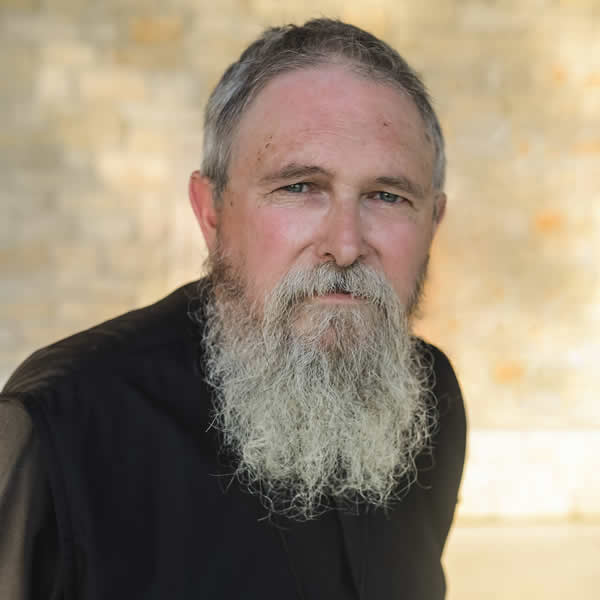
About Fr. Stephen Freeman

Fr. Stephen is a retired Archpriest of the Orthodox Church in America. He is also author of Everywhere Present: Christianity in a One-Storey Universe, and Face to Face: Knowing God Beyond Our Shame, as well as the Glory to God podcast series on Ancient Faith Radio.


Posted

in

by

Comments

44 responses to “St. Melito and Pascha – Hell Is Not The Last Word”

  1. John M. Carbone Esq. Avatar
    John M. Carbone Esq.

    Moving and meaningful … read more than once and saved John C Oblate OSB

  2. Byron Avatar
    Byron

    There is a “personal” Pascha within each of us, just as there is a personal hell.
    I tend to wonder about the Image of God in which we are all created. And how does that lean into a view of universalism? It seems we will all be resurrected; the power of Death is broken. Perhaps that is the extent of it?

  3. Fr. Stephen Avatar

    Byron,
    There is a certain sense in which “all are saved” by virtue of the Incarnation itself, when Christ unites Himself to our common human nature. But it is the question of how that redeemed nature is fully taken up and embraced by each human person. That is a mystery, I believe, to which we’ve not been given the answer. It’s not that some do not attempt to answer it (let the games begin). But, there are things, I believe, that we are not meant to know, for God’s own reasons. It is for us to lean in to the reality of our salvation and leave those last answers to God who will, in His good time, make all things known.

  4. Ron Dolynchuk Avatar
    Ron Dolynchuk

    Truly He is Risen

  5. Margaret Avatar
    Margaret

    God bless you for these words, dear Fr. Stephen! And I am sure He is blessing you and He will! Once again I am reading words that are a balm to my heart, a balm that I did not know what it would look like to a heart afraid of wounds it carries. Truly Christ is Risen!

  6. David Avatar
    David

    Fr. Stephen, do you think C.S. Lewis is articulating something close to the Orthodox idea of Theosis (and its opposite “Demonosis”) when he writes:

    “It’s not a question of God ‘sending’ us to Hell. In each of us there is something growing up which will of itself be Hell unless it is nipped in the bud. The matter is serious: let us put ourselves in His hands at once – this very day, this hour.”

    -The Trouble With “X” (from God In the Dock by C. S. Lewis)

    Which seems in line with what you are saying about how each human person (all of whom have been freely offered salvation by Christ) will have it if they take it up and embrace it. The dreadful thing is contemplating those who choose not to take up and embrace Christ’s offer of salvation.

  7. Fr. Stephen Avatar

    David,
    I think that Lewis is saying much the same as I am… I am uncertain (though hopeful) about how the outcome of all of that goes.

  8. victoria Avatar
    victoria

    Dear Father Stephen – i can not sleep, and these words could not have arrived at a more poignant time as I journey with my father through his waning time on this earth – whether that be days or months I do not know – but as i soujourn with my dad, it is very much as if we walk now through the very parched land of the Egyptians – and I feel strangely familiar with this parched path, like the back of my hand. yet as I sit with him, tend to him, try to preserve his dignity, I am very aware that Christ condescends into this parched space – that feels and wreaks exhaustingly of death to me – a tomb of Lazarus – and I am assured that He is calling my dad forth to him.

    please pray for the servant of God, Emmanuel in his journey… Christ is risen! Truly He is Risen!
    as an aside, I am not sure you if you might remotely remember that we visited your parish for Vespers & Divine Liturgy maybe 7 years ago. we were visiting his late wife’s family in Tennessee and you said to him it was never too old to become Orthodox. Well, Wolfgang was baptised Emmanuel December 26, 2020. My mom was baptised December 26, 2021. Indeed it is never too late! <3

  9. Fr. Stephen Avatar

    Victoria,
    May God continue to uphold you and your father as he makes the final journey! I’m deeply joyed to hear that your parents were received into the Church! May God preserve us all!

  10. Matthew Avatar
    Matthew

    I ask for pardon in advance because the question I am about to ask is a bit off topic. Nevertheless, it has been burning inside me as I have listened to readings from the Book of Acts this Pascha season.

    The spiritual power that gripped a group of fishermen after the Resurrection is absolutely astonishing. They were boldly preaching a resurrected Jesus Christ and that seems to have been their theological magnum opus. There was no talk of the four spiritual laws; no talk of atonement theories; no talk of union with God.

    How did we get from simple fishermen preaching resurrection to the treasure trove of all the theological knowledge we now have both in the west and in the east?

  11. Drewster2000 Avatar
    Drewster2000

    Fr. Stephen,

    As I read your chilly article, the thread which seems to run through it that we don’t fear evil or even darkness as much as silence. Give us the ghouls of Hell even, but don’t give us the barren abandonment of nothingness. We were SO made for communion and to be face to face with each other that any other deprivation is preferable. Studies have shown that it is better that infants be deprived of food or light rather than the companionship of their Caregiver.

  12. Dee of Sts Herman and Olga Avatar
    Dee of Sts Herman and Olga

    Father I also have an off topic question.

    I live and work among Alaska Native peoples who are Orthodox.

    Recently I read something that referred to Alaska Native Orthodox Christian practices as a form of “syncretism”.

    I’m inclined to think such a perspective is likely to be a Western Christian view of Orthodox Alaska Native life ways. But I could be wrong.

    Please let me know how the Orthodox Church as a whole views the Orthodox Alaska Native Christian practices, which may include traditions such as “Ellam Yua”, which I might translate as God as Creator and Holy Spirit is in all things (Trisagion Prayer)

  13. Dee of Sts Herman and Olga Avatar
    Dee of Sts Herman and Olga

    Matthew I don’t know about how to answer the first two things you mentioned, as an Orthodox person. I only know what I have been taught. I think I would use the word metanoia instead of Atonement because it might be confusing when talking amongst people of different confessions. However the Orthodox view of the Atonement of Christ is explained well in a book written by Fr. Reardon. As for union with God, I think I would refer to John 17:22-26

    BTW I always appreciate your questions. They stimulate conversation and rememberance.

  14. Fr. Stephen Avatar

    Matthew,
    We often presume too much when we read St. Lukes writing, the Acts of the Apostles. First, it’s an extremely eclipsed version of those early events – eclipsed and condensed. So, it’s right to ask the question, what is Luke’s purpose in writing it? I think it’s generally to record a very tidy version of how the gospel was given to the Gentiles and how they came to be accepted without be required to submit to circumcision.

    But, the Apostle Paul, for example, spent a couple of years or more in Ephesus, I think there was more to his work than just “preaching the resurrection.” We are already told that the simple fishermen were more interested in study than in “waiting on tables.” So, those men were going ever deeper. The Gospel of John (who eventually settled down in Ephesus) is deceptively simple (it has a vocabulary of only around 600 words). And yet, it’s probably among the most profound documents ever written. The disciples themselves are “resurrection” examples. They were changed.

    It’s interesting, by the way, that Orthodoxy has never spoken of “atonement theories” – except in our more modern period in which we speak in order to refute the errors being expounded. St. Basil’s Anaphora (prayer of consecration) employs multiple images in describing our being reconciled to God (which is the work of the atonement). That is Orthodoxy’s preferred manner of speaking.

    Of course, when you don’t throw stuff away (with “reformations” and the like) 2,000 years gathers up lots of things!

    St. John said in his gospel that all the books in the world (at that time) would not be sufficient to record all the things Jesus said and did. We don’t know what all was said and done during the 40 days, post resurrection, that Jesus taught the disciples – but there was enough to make all that we have in the gospels to be a solid “tradition” – capable of being memorized and taught.

  15. Fr. Stephen Avatar

    Dee,
    I believe, based on wider reading, that the mission to Alaska is seen as a wonderful exemplar of mission to another culture. We “baptize” what can be faithfully brought into the faith. We have a pretty thorough record of the ancient Orthodox mission to Britain, as found in the writings of the Ven. Bede. It’s interesting to see the pastor directions given to missionaries sent by St. Gregory the Great. They were directed not to destroy pagan temples and holy places, but to adapt them for Christian usage, etc.

    The Orthodox mission to Alaska has produced numerous saints: St. Innocent (Russian), St. Herman (Russian), St. Peter the Aleut (martyred), St. Juvenaly the Martyr (Russian), St. Jacob (Russian/Aleut), St. Olga (Yupik). In the OCA, these saints are very much seen as our foundation. There are a total of 19 canonized American saints. My experience has been that some of them are overlooked by the Orthodox Churches whose jurisdictions are tied to an ethnic culture outside of America. There are 2 or 3 currently under consideration for canonization.

    But, much of what was done in Alaska, which was patterned on the Russian Church’s work among the many ethnic minorities in the Russian Empire of the time, is today a model for mission in Africa and elsewhere. The recent canonization (2025) of St. Matushka Olga is, if anything, a resounding affirmation of Orthodox mission practices in Alaska.

  16. Dee of Sts Herman and Olga Avatar
    Dee of Sts Herman and Olga

    Thank you so much Father! I am indeed so grateful for our Alaska Native saints!!! You have indeed answered my question pastorally about how our Orthodox Church responds to and evangelizes her peoples. Glory to God in His Saints!

  17. Fr. Stephen Avatar

    We don’t see it because of our cultural blindness, but no version of Christianity is nearly as syncretistic as Evangelical Protestantism.

  18. Drewster2000 Avatar
    Drewster2000

    Matthew,

    I think the simplistic answer to your question is that things develop over time. Think of your own development as a human being. How did you go from learning that your hands and feet were part of your own body to the current view understanding that you have of your mind, body and spirit today?

    As with your own understanding, the truth never changed and has always been complete, but the church’s development and comprehension of it has expanded over time. Christ started with the core and kernel – the Incarnation, Crucifixion and Resurrection. The rest was added to our corporate phronema over the centuries. This is how growth works: it has to be built over time instead of being thrown onto us all at once.

  19. Matthew Avatar
    Matthew

    Thanks so much Fr. Stephen and Drewster2000.

    Drewster2000:

    The Church´s development and comprehension has expanded over time. That much is true, but how much can we trust what has developed and how it has been or is being comprehended?

    In the west, the Reformation occurred because the reformers thought the Church was in error in some areas. Then of course there were the errors of the reformers.

    I would assume the Church in the east can also fall victim to such issues although no Reformation has taken place in Orthodoxy.

  20. Fr. Stephen Avatar

    Matthew,
    I think there are helpful ways to think about this. There is an old theological “rule-of-thumb” that is very apropos to your questions: lex orandi, lex credendi. That is, “the law of praying is the law of believing.”

    In Orthodoxy, the most important reform that has largely not taken place is liturgical reform. We still pray as we have since the earliest centuries. St. Basil’s Liturgy is 4th century, as is St. John Chrysostom’s (late 4th), and both are modeled on the Liturgy of St. James from the Jerusalem Church which is far earlier. The massive collection of texts that are used in the full compass of the Church’s worship have similar ages and content. The present form of the Baptismal Liturgy is from the 6th century (by St. Sophronius) but was simply a polishing of what had gone before.

    I would suggest that the more “reforms” that have been applied to the Liturgies, the more likely they are to have strayed from what was given and used before. I lived through and experienced the so-called “liturgical renewal” that swept through Rome and 20th-century Protestantism (I’m not including Evangelicalism because it long before jettisoned any liturgy and sails on very dangerous waters). The changes wrought by that movement have been a master class in the law of unintended consequences. Most of the mainline Protestant Churches have since strayed very far from the faith. I’ll leave debate over Rome’s changes to the Romans.

    But, I remember reading my first work of Orthodox thought: Vladimir Lossky’s Mystical Theology of the Eastern Church. The footnoting wasn’t the best in the world, so that it was sometimes difficult to tell whether what I was reading was Lossky, or a passage from the early Fathers that he was quoting. It eventually began to dawn on me that one of the reasons you could tell which was which was because he was writing from the very same mind.

    Orthodoxy is formed and shaped by its Liturgies – we are – properly – immersed in them. When we speak of an Orthodox “phronema” we mean the mind that is slowly acquired by such an immersion and the daily living that flows from it.

    A good measure of an Orthodox writer is to what extent he is simply expanding on what has been received. I know of a few instances, in recent years, where Orthodox writers have expounded on topics that the Fathers pretty much never touched on. I do not value such work or recommend it.

    CS Lewis wisely observed: In theology, novelty is not a virtue.

  21. Drewster2000 Avatar
    Drewster2000

    Matthew,

    What Fr. Stephen said.

    I will emphasize his last point. Any “new to you” truth you discover should fit with and reinforce what you already know. Remember you as an infant? When you first discovered your feet, there might have been a period of time when they perplexed you because they were nothing like the rest of the body you knew, but eventually you made the necessary connections and they were no longer at odds with your understanding. In fact you eventually learned that they were indispensable and that everyone else has them too.

    Also, trust the Holy Church. Trust was has been revealed everywhere for all time. If God wants to show you something outside of that, He will. But even then, go very slow and let Him do the work of revelation. No judgement calls needed on your part.

  22. Matthew Avatar
    Matthew

    Thanks again Fr. Stephen and Drewster2000.

    I´m now wondering what kind of Orthodox “phronema” I might acquire if I simply immersed myself in the sacramental and liturgical life of the Church and never read the Bible of another theological book again.

    Maybe the fear would stop. Maybe the questions would stop. Maybe new life would finally begin.

  23. Matthew Avatar
    Matthew

    “or” another theological book …

  24. Justin Avatar
    Justin

    Matthew,

    After studying the Bible and theology my whole life, trying to find the correct way and to convince God to love me, I have come to understand (at this late hour) that Christianity is not about “correctness” but about faithfulness to the person Jesus Christ. I have had to do your “maybe,” that is, I have had to stop reading theology and read the bible differently. The Christian life is a prayer to God rather than textbooks of propositions, rules, and proscriptions. Yes, being immersed in the life of the Church, his Body, is the point, not right beliefs. Jesus himself takes the fear away.

    That’s all I got.

  25. Fr. Stephen Avatar

    Matthew,
    “I´m now wondering what kind of Orthodox “phronema” I might acquire if I simply immersed myself in the sacramental and liturgical life of the Church and never read the Bible of another theological book again.”

    You’re describing about 90 percent of my life now at age 72.

  26. Matthew Avatar
    Matthew

    Thanks Fr. Stephen and Justin. I have more to consider now …

  27. Byron Avatar
    Byron

    It may be worth noting that the sacramental life of the Church, as I understand it, mystically embodies all of Creation. It is much the same as God working “through all things” for our salvation. The Church is the tool for that work. Just my thoughts.

  28. Fr. Stephen Avatar

    Byron,
    I am of the mind that the Church is more than a tool. It is the “Body of Christ.” As such, it is that point in which “all things are being gathered together as one, in Christ.” Ephesians 1:10

  29. Matthew Avatar
    Matthew

    Fr. Stephen said:

    “You’re describing about 90 percent of my life now at age 72.”

    What are you doing with the other 10%? Sleeping?

    🙂

  30. Matthew Avatar
    Matthew

    Hello Justin.

    Can you briefly explain how your Bible reading differs now from, say, years ago?

  31. Fr. Stephen Avatar

    Matthew,
    I’ll admit that I sleep a lot (at night + 1 nap a day, generally). Most of my Bible study consists in digging deep in language questions when necessary, and otherwise staying abreast of the daily readings in the Church. I don’t have questions that I’m digging in the Scriptures to answer. Frankly, I think of that as pretty much a Protestant habit. I’ve read the Scriptures enough through the years that I’m familiar with them (no surprises much left).

    My questions are largely personal – how to rightly and faithfully live what I know. Also, to remain open to knowing more. I don’t preach very much any more…but I have the pleasure of hearing other priests preach.

    A lot of the Bible study questions are driven by things that I hear or notice in the various services. It’s enough.

  32. Justin Avatar
    Justin

    Matthew,

    “Briefly…” 😉 Ok, here goes. Previously I read the bible like a college textbook or equipment instruction manual. The OT and the Gospels outlined the background and “history” facts, Acts and the Epistles outlined the proper response to the facts. Kind of like a because of this then do that. It was a giant if-then statement. Now, I read the bible more like a story (and that really understates what I mean). Think of an old man sitting by a campfire telling stories–not being campy or silly–and I am one of the young people sitting around in rapt attention. I read the OT as those legends from the campfire. I read the Psalms as prayers. I read Paul as a grandfather teaching his grandson a craft. I read Jesus as–this may sound weird–as the Bridegroom wooing his bride [me]. The metaphors break down eventually.

    More importantly, I no longer read the bible outside of the context of the life of the Church. It is secondary, no longer primary. I’m no longer combing the textbook looking to make sure everyone [nay, myself] is doing everything correctly, or that everything is “scriptural” and justified. I now just trust Jesus and I trust my spiritual father and I trust the Church, where before I trusted no one but myself. I could go on but I won’t. I hope this helps. Forgive me if I am out of line.

  33. Matthew Avatar
    Matthew

    Thanks so much Justin. I don´t think you are out of line at all.

    I think the most important things you shared is that you no longer read the Bible outside the life of the Church. I shared with someone this past weekend that evangelicalism was too thin for me; that the Bible alone was problematic; that the Church gave us the Bible, the Bible didn´t give us the Church, etc. All that said, I still find myself falling into the traps of old paradigms and toxic ways of thinking. The comment section here has greatly helped me work through a lot of this stuff, but as you can see I´m not there yet.

    Thanks so much Fr. Stephen. I too find the need to take naps a lot more than I used to! They help me maximize my day better, especially when I have Church functions in the evening like today. Living what I know. Being open to know more. These are very good things to more fully ponder. I don´t read the Bible much anymore, but the questions still linger admittedly. I read the Lectionary readings for the day when I do pray in the morning. I used to comb pretty heavily through the Orthodox Study Bible and its footnotes, but that too has stopped and I have greatly reduced the theological books I am reading.

    I know in the Catholic Church that there are many, many people who have no real understanding of the Bible. I find this very problematic, but maybe it´s not nearly as problematic as I think it is. Maybe it is simply because I am coming from an evangelical background.

    Thanks to both of you once again.

  34. Justin Avatar
    Justin

    Matthew,

    I have to ask you to not take my comment as me having arrived or being well practiced in my bible reading. I am going there in fits and starts, and I am far from consistent. Like you, I came from a fundamentalist-adjacent evangelical background and old-habits die hard. My relapses are frequent. I only want to encourage you that it seems to me you are on the right track.

  35. Byron Avatar
    Byron

    Fr. Stephen,

    “Tool” was a poor choice of words. Thank you for stating things much more appropriately than I.

    Interestingly, I find that as I grow older I think more about how things should be said than I used to. Language matters, not so much to parse meaning but more to speak clearly and communicate well.

    And naps matter too. A lot, I think!

  36. Matthew Avatar
    Matthew

    Thanks for the clarification Justin. We are all on this journey together.

    Thanks also for your encouragement.

  37. Mark Moore Avatar
    Mark Moore

    OT
    I’m preparing for a presentation on celebration as a spiritual practice, and came across a description of the heavenly powers ” celebrating their liturgy and glorifying God” by Nikitas Stithatos in the Philokalia. The hymns of praise listed are the “sacred hymn Alleluia (cf. Rev. 19:1)”, “the Trisagion: Holy, Holy, Holy (cf. Isa. 6:3; Rev. 4:8)”, and “the godly hymn of El, as the Divinity is called in Hebrew.” This third one intrigued me because there were no scriptural references – do we know a text for this song?

  38. Dee of Sts Herman and Olga Avatar
    Dee of Sts Herman and Olga

    Mark,
    I’m searching for answers to your question. I’m not trained except for what I’ve been taught in the Orthodox Church. My best understanding is that ‘El’ refers to Lord of Sabaoth, which I believe is a reference in both OT and NT.

    Here are a few that might fit:

    Holy Holy Holy, Lord of Sabaoth, Heaven and Earth are full of Your Glory, hosanna in the highest

    or Hanna’s hymn

    Or Psalm 148 (RSV)

    Someone with training that I don’t have might help better than I.

  39. Fr. Stephen Avatar

    Mark,
    I was drawing a blank – so – I’ve sent a note to my Archbishop (Abp Alexander Golitzin) who is one of the better scholars that I know of. I’ll let you know what he says.

  40. Mark Moore Avatar
    Mark Moore

    Thanks for your suggestions and for your reaching out even further. My wife is a musician and so the musical things tend to catch my eye.

  41. Fr. Stephen Avatar

    Mark,
    I appreciate the musical angle – my wife and daughters are musicians (singing mostly). My wife having directed the choir at church for about 25 years and now sings in our present parish. A daughter also directs choir. It’s a common topic of interest in our family. Since the better part of Orthodox theology is embedded in hymns – it’s a good grounding.

    Unfortunately, my Archbishop could not solve the riddle of the “El-hymn” reference – so, I imagine that it must be fairly obscure. Dee’s suggestion seems quite plausible.

  42. Mark Spurlock Avatar
    Mark Spurlock

    I suggest Psalm 90 (91) because of these verses:

    “He who dwells in the secret place of the Most High shall abide
    under the shadow of the Almighty.”

    And:

    “Because you have made the LORD, Who is my refuge, even the Most
    High, your habitation, No evil shall befall you.”

    My understanding is that the phrase “Most High” there comes from the Hebrew “El Elyon”–the God Most High. Also, in my Orthodox prayer book Psalm 90 follows at midday after the Trisagion Prayers, which the Philokalia mentions as coming before the “godly hymn of El.”

  43. John Avatar
    John

    Hi Fr. Stephen,

    I’d just like to comment generally how much I appreciate your blog posts and insights. Over time I’ve circulated links to some of your articles, shared some of your thoughts as quotes, and even put some up on the quote board in my house! I know you’ve written at least the one book. Have you thought of compiling some or all of these posts into a book at some point?

    Thanks!

    John

  44. Mark Moore Avatar
    Mark Moore

    Thanks Fr. Stephen. My wife sings in the church choir and directs the children’s choir. She’s still teaching voice lessons, resolutely refusing to retire. She has some women in Tolkien song cycles that she has composed over the past twenty years that are available to view on the TolkienUnbound Youtube channel. My favorite church piece of music that she has composed is a simple and beautiful Magnificat from a cantata she wrote for a church choir back just after we got married.

    Thanks Mark. That is a good suggestion.

Leave a Reply

Your email address will not be published. Required fields are marked *


Subscribe to blog via email

Support the work

Your generous support for Glory to God for All Things will help maintain and expand the work of Fr. Stephen. This ministry continues to grow and your help is important. Thank you for your prayers and encouragement!


Latest Comments

  1. Dear Rob, I read your comment with such joy. Thank you so much for sharing as well!

  2. Dee, Around the beginning of my journey of repentance, I went back to Central Piedmont Community College to earn my…

  3. Father and Rob, I wrote what I wrote to be helpful. Sometimes people get hung up on science and believe…


Read my books

Everywhere Present by Stephen Freeman

Listen to my podcast


Categories


Archives