Good Friday and Unbelief

Christmas and Easter are often difficult days for those who do not believe in God. Christians are more public about their faith than at other times of the year and this brings with it an annoyance. Christmas bespeaks the birth of God as a human being. Easter bespeaks a resurrection from the dead. For those who do not believe, such miracles, spoken of so glowingly and with such assurance by Christians, only increases the rub of the whole thing. Thoughts of “how can people be so gullible?” or any number of failings of Christians easily come to mind. The more the celebration, the more prominently the fact of unbelief grows in the inner thoughts.

I do not think of unbelief as a result of reason or philosophical principle. I have spent too many years observing my own heart and listening to the thoughts of others to accept such a simplistic notion of how we behave as human beings. One person professes faith on the ground of “reasonable” arguments, while another, on similar grounds, professes unbelief. The fault is not in the reasoning. Reasoning is, in fact, something we largely do “after the fact.” Indeed, this psychological reality has itself been the subject of study and has been shown to be largely true. Reason is one of the sounds we make after the fact of the heart. It is a symptom of something else and we do one another a deep injustice when we reduce faith and unbelief to something they are not.

I believe that the death and resurrection of Christ are utterly universal in their reality. They are not isolated events, significant only within the Christian belief system. I believe they are the singular moments within space and time (and outside space and time) that reveal the truth of all things, of all people, and of the heart and nature of the God who created all things and sustains them. I believe this is true whether I or anyone else believes it. The death and resurrection of Christ are the most fundamental and foundational facts of reality.

I believe that Christians make a serious mistake when we begin to speak first about God rather than first about Christ and His death on the Cross and resurrection from the dead. It is a mistake because it presumes we know something about God that is somehow “prior” to those events. We do not, or, if we think we do, we are mistaken. The death and resurrection of Christ are the alpha and the omega of God’s self-revelation to the world. Nothing in all of creation is extraneous or irrelevant to those events.

This is to say that unbelief and faith are equally a part of the death and resurrection of Christ. The death and resurrection of Christ contain the utter and complete emptiness of hell, the threat of non-being and meaninglessness, the absurdity of suffering and of injured innocence. They also contain the fullness of paradise, the complete joy of existence and the ecstasy of transcendent love. Everything is there.

When we stand before the Cross of Christ, or kneel before it and honor it, we honor as well everything that is contained within it. We honor the unbelief of atheists, the anger and bitterness of the wounded, the shame of those who dare not look at themselves. For Christ has not distanced Himself from such things. The Cross is God’s single point of ingathering, where “all things are gathered together into one in Christ Jesus” (Eph. 1:10). Unbelief is a wound of the human heart, a disease of perception, a noetic blindness. The Cross is not a stranger to cruelty or every form of mockery and perverted delight. All such things were and are present in that single moment.

As we live in this life, we are constantly tempted towards the divisions that threaten us. We see the world as “them and us.” These believe; these don’t. These care; these don’t. These behave; these don’t, and so on. The divisions are frequently quite insignificant. These divisions are primarily the symptoms of our failure to love. The people surrounding Christ were consistently scandalized by His persistent comfort and ease with those identified as “sinners.” No doubt, many of them were “unbelievers.” Somehow, Christ embraced all and announced this as central to His life and purpose.

The appearance of the Cross is also the first appearance among us of the Judgement Seat of Christ. As such, those around it indeed begin to separate themselves. Of the two thieves, one clings to Christ and the other reviles Him. But Christ offers no condemnation from the Tree. The Centurion, responsible for His crucifixion and the lance thrusting into His side, later becomes a saint (Longinus). Our task, however, is not to assume the position of Christ. The judgment that occurs as those around Him react, is also the revelation of their own wounds and brokenness of soul.

Christ said:

And this is the judgment, that the light has come into the world, and men loved darkness rather than light, because their deeds were evil. For every one who does evil hates the light, and does not come to the light, lest his deeds should be exposed. But he who does what is true comes to the light, that it may be clearly seen that his deeds have been wrought in God. (Jn. 3:19-21)

It is for us to stand in the light, where our own deeds, of whatever character, can be revealed. I think that if we actually do “what is true,” it will not be in our heart to condemn, but to weep and to long for the healing of all.

Unbelief is a soul-wound whose location likely lies much deeper than the fiction of choice. It is often hidden deep within the hell that has formed in the pit of a soul’s shame. That wound will require Christ-in-Hades probing and questing, and perhaps fierce battles that are hidden from our knowledge. When the Church proclaims, “Christ is risen, trampling down death by death and upon those in the tombs bestowing life,” it is deeply important to remember that we have the souls of those so wounded in mind.

It is ours to celebrate, to sing and to dance, even if some, for now, refuse to join together with us. The true Christ revealed by the Cross, is a saving God, a seeking God, a knocking God, a trampling God, a healing God, a raising-from-the-dead God who refuses to be ignored (or to ignore us).

This is the good God who loves mankind.
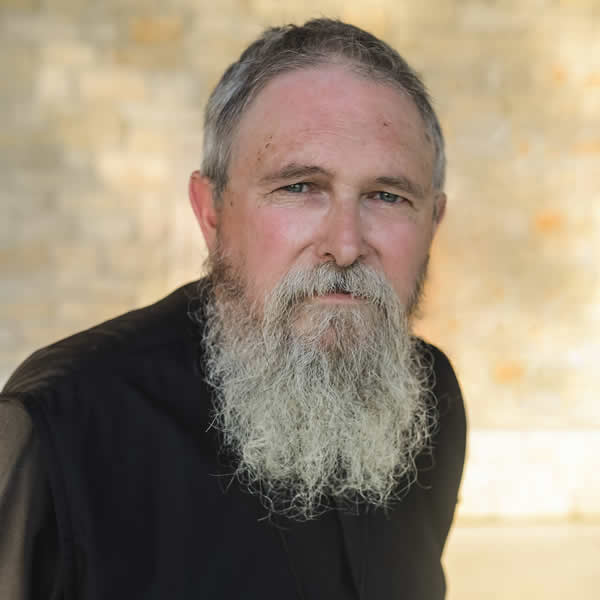
About Fr. Stephen Freeman

Fr. Stephen is a retired Archpriest of the Orthodox Church in America. He is also author of Everywhere Present: Christianity in a One-Storey Universe, and Face to Face: Knowing God Beyond Our Shame, as well as the Glory to God podcast series on Ancient Faith Radio.


Posted

in

by

Comments

19 responses to “Good Friday and Unbelief”

  1. Helen Avatar
    Helen

    This is the whole Evangelion, the good news. I think I just understood: we honor the cross because it reveals that the Truth of the universe is Love. ” Unbelief is a wound of the human heart” – so true. And all our sinning is our attempt to protect that wound. May the great Physician of our souls continue to heal and provide His balm. Thank you Father. You have given me so much healing balm in your writing.

  2. Kevin Dangler Avatar
    Kevin Dangler

    Simply magnificent!! Thank you, Father!!

  3. Fr. Stephen Avatar

    Helen,
    Thank you – the balm is mutual.

  4. Helen Avatar
    Helen

    Glory and so much gratitude to our God.

  5. Matthew Avatar
    Matthew

    Man … so good.

  6. Mark Spurlock Avatar
    Mark Spurlock

    “I believe that Christians make a serious mistake when we begin to speak first about God rather than first about Christ and His death on the Cross and resurrection from the dead…. The death and resurrection of Christ are the alpha and the omega of God’s self-revelation to the world.”

    I was reading an interview with author Thomas Ligotti in which he explained his atheism (after noting that he was fearfully religious in his childhood). He said that not even God could prove God’s existence. He then proceeded to elaborate on why this is true, and his examples made me think of Moses before Pharaoh (i.e., the magicians’ reproducing Moses’ proofs that he was sent by God).

    The response to Ligotti–and Bertrand Russell’s “Sir, why did you not give me better evidence?”–then, is contained within Father Stephen’s quotation. Moreover, self-revelation means something more than “I exist, and here’s the proof.” Why would God feel the need to prove to us He exists?

    Having a relationship with God as a human person requires knowing something of what He is like, something that we can begin to comprehend on more than a purely rational level. And that, not merely proof of His existence, God chose to provide through Christ.

  7. Fr. Stephen Avatar

    Mark,
    Well said. Perhaps another way of saying this is that God refuses to be reduced to information: “God exists.” Indeed, the statement is almost meaningless in and of itself. In God’s self-revelation in Jesus Christ, we come to know Him as, “the only truly existing God” (in the words of St. Basil). “Exists” is meaningless except as it refers to God Himself. Indeed, the whole universe is meaningless except as it refers to He-Who-Is-Meaning (the Logos). We speak as though we had some sort of independent place to stand from which we can speak of God and meaning in a significant way. But significance is the work of the One who signifies.

    This is not an argument for us to make – it is simply a Reality, Whom we have encountered in Christ, and to Whom we bear witness. “Christ is risen!” is the signification of all that is. It is hope. It is faith. It is joy. It is the whole of the suffering universe gathered into the goodness of God such that “all things shall be well, and all manner of things shall be well.”

    Good strength as we draw near to Pascha!

  8. Helen2 Avatar
    Helen2

    Thank you, Father Stephen. I have not attended a single Holy Week service this year because of illness. And Great Lent was difficult as well. Your thoughts have such power, giving me food for contemplation and comfort. Christ is Risen even so — despite everything, because of everything. Христос Воскресе!

  9. Jenny Avatar
    Jenny

    Father,

    Your posts and comments in this season keep altering my focus and the framework of my understanding in such a way that everything becomes far more beautiful, meaningful and redemptive. I pray the Lord is richly blessing you in return.

  10. Nikolaos Avatar
    Nikolaos

    Father Stephen this is a valuable piece of theology and I hope I am not “reducing” what you say about God, that it reminds me of the theology of Fr John Romanides.

    Quoting Romanides:

    “In the Patristic tradition, however, God is not a personal God. In fact, God is not even God! That is, God does not respond to anything that man can think or could think. Neither are the relationships between God and man personal. Nor are they subject-object relationships.

    Therefore, when we speak of personal relationships between God and men, we are mistaken. There are no such relationships between God and men. By extension of what we are saying now, some speak of interpersonal relationships or of a communion of persons, according to the model of the relationships of the Persons of the Trinity. These are erroneous associations. The relationships between God and men are not like the relationships between men. Why? Because God is not a colleague.

    The above was true until the Incarnation. However, after the Incarnation of God the Word, through and because of the Incarnation, we have personal relationships with God. But with God as the God-man (as the Son of God and the son of man). Because God became man.
    Which means that the Incarnation brought about a special relationship between God and men, between Christ and men, which relationship does not exist in the face of the Holy Trinity between God and men. We do not have with the Holy Trinity, with the uncreated Godhead, the relationship that we have with Christ.”….

  11. Drewster2000 Avatar
    Drewster2000

    Fr. Stephen,

    This is indeed an incredible piece you’ve written. Sometimes you tend to go down into the weeds and it feels like you’re muttering about small things and I lose the thread.

    Other times I soon get a vision of you standing with one foot on the grave of Adam and the other on that of Eve, reaching out your hand to both. It is truly the Good News – and being spoken from the mouth of one who can see the world through the heart of God. As you say…

    “It is for us to stand in the light, where our own deeds, of whatever character, can be revealed. I think that if we actually do “what is true,” it will not be in our heart to condemn, but to weep and to long for the healing of all.”

    Praise be to God for such a warmth-giving and enlightening message!

  12. Fr. Stephen Avatar

    Drewster,
    But there’s so many small things down here in the weeds!

    Christ is risen!

  13. Drewster2000 Avatar
    Drewster2000

    Fr. Stephen,

    So true. I shall trust that you go down there to meet some of your readers and that they through you feel that they have been met by the risen Christ. Just don’t forget to keep bobbing back up to the surface. (wink) As human beings we are also small and can get lost down there if we don’t maintain the umbilical cord to the Cross and the Christ writ large across the whole sky.

  14. Fr. Stephen Avatar

    Drewster,
    The truth is that I “fly blind.” I have never really known what people need/want to read – and I always make a mess of things when I start thinking about that or make the mistake of thinking that I know it. Instead, I sort of write about what interests me, or gives me joy to write. The miracle (to me) is that, all in all, sometimes “a blind pig finds an acorn.” But, I take your words to heart – the Cross above all and central to everything!

  15. Drewster2000 Avatar
    Drewster2000

    “a blind pig finds an acorn”

    Amen and amen! And I would go further to say that the pig who admits his blindness has a much better chance of stumbling onto the acorn. You sir, have had great success!

    However, I would also say that by touching upon the small things in your life and the immediate world around you, you have gotten a lot more “lucky” at striking common chords which we all wrestle with or marvel at. I’m reminded of the spiritual giants who are occasionally accused of not being in touch with the world because they don’t watch the news – and rebuffing their attackers by claiming to be a lot more in touch with it through the rich medium of prayer and by dealing with the broken universe inside themselves.

    The chord struck doesn’t necessarily resonate with everyone, but then, that’s the way of things. Not every message is meant for all listeners. Most of cannot, as Christ did, have a million layer onion of a communication that is delivered every time.

  16. Fr. Stephen Avatar

    Drewster,
    A small rule I have set in my writing is to restrict myself to “what I know,” that is, what I have come to know, not just by the Tradition of the Church, but what I have come to know in Tradition as ratified by my own experience. It severely limits me. But, I’ll have to say that I’ve never felt so stupid as when I start writing about something I don’t actually know. Those efforts generally get buried and are never published. It is also why I avoid a number of topics – as well as following my own stated guidelines for the blog. All of it seems like a great mercy to me.

  17. Simon Avatar
    Simon

    I have been thinking about one of the core principles expressed in this post: Unbelief is a wound of the human heart, a disease of perception, a noetic blindness.

    I think that deserves some unpacking.

    I was dismissive of many religions before encountering Orthodoxy and was called an “unbeliever” by many. There are many things I do not believe. Surely, it is justifiable 99.999% of the time to say “I don’t believe it.” Typically, I reserve the idea of “belief” for really trivial things. For example, I believe that Lincoln was the 16th President of the U.S. Even if it turns out wrong, who cares? It is trivial. In other words, none of my existential concerns hang on that belief, or any of the things that I say that I believe. Belief is just a word I use to describe the greater psychological certainty I feel beyond just having an opinion.

    If you are okay with that distinction, is there an alternative expression that seems right to you? I agree with you about the bedrock reality of the crucifixion. My sense is that Christ has done in time what he is doing in eternity. It is the kernel or matrix of our reality. But, when it comes to Christ, I feel like my framework is closer to loyalty. I am not saying it is belief free, but my loyalty to Christ seems like it is there first and then the Church teaches me what to believe about him.

    Does that make sense? Does it need clarification?

  18. Fr. Stephen Avatar

    Simon,
    I think that belief (pistis) is, indeed, closer to the notion of “loyalty” than the mere acceptance of facts.

    I’ve been listening some to interviews with Iain McGilchrist, British scientist/psychologist/philosopher (he’s also a Christian). He has written in very large volumes about the left brain/right brain realities of human beings. In many ways, “belief” as the mere acceptance of facts (information) is a left-brain function and does not really engage the larger self. Right-brain function would see the larger picture and would function more like loyalty – or something similar. It would see it as a “bedrock reality” and not just information.

    What you’ve written not only makes sense – I like it!

  19. Drewster2000 Avatar
    Drewster2000

    Fr. Stephen,

    Your conversation with Simon reminds me of my father. Time after time I would watch him decide whether or not he liked someone. Once that heart decision was made, then his mind would build up a case to support it. But the original act had much less to do about logic and much more to do about instinct and perhaps the nous. Complex creatures are we, a mystery even to ourselves.

Leave a Reply

Your email address will not be published. Required fields are marked *


Subscribe to blog via email

Support the work

Your generous support for Glory to God for All Things will help maintain and expand the work of Fr. Stephen. This ministry continues to grow and your help is important. Thank you for your prayers and encouragement!


Latest Comments

  1. Dear Rob, I read your comment with such joy. Thank you so much for sharing as well!

  2. Dee, Around the beginning of my journey of repentance, I went back to Central Piedmont Community College to earn my…

  3. Father and Rob, I wrote what I wrote to be helpful. Sometimes people get hung up on science and believe…


Read my books

Everywhere Present by Stephen Freeman

Listen to my podcast


Categories


Archives