The Pilgrimage We Must Learn to Make

There is a short comment in a letter by St. Gregory of Nyssa that has raised eyebrows for centuries on the topic of pilgrimages. Going to a holy place was big business in the Middle Ages (cf. The Canterbury Tales). Thus this epigrammatic thought of a Church Fathers, who carried the titled, “The Father of the Fathers,” troubled many:

When the Lord invites the blest to their inheritance in the kingdom of heaven, He does not include a pilgrimage to Jerusalem amongst their good deeds; when He announces the Beatitudes, He does not name amongst them that sort of devotion. But as to that which neither makes us blessed nor sets us in the path to the kingdom, for what reason it should be run after, let him that is wise consider.

He goes on to note the many temptations that were inherent in travel itself, as well as the moral dangers that were known to infect the Holy City. A pilgrimage was not on his recommended list of spiritual undertakings.

I will say up front that I have made a pilgrimage to the Holy Land. There were things that I expected and some that surprised me. But there is a great deal of wisdom in St. Gregory’s admonition that is worth considering.

Why do we go on pilgrimage? Is one place holier than another?

Our modern world is awash in tourism. A number of cities in Europe have begun to place limits on the number of tourists permitted at any one time lest the crush of people destroy the very thing which they came to see.

Pilgrimage is not meant to be tourism, though it is frequently reduced to such a level. Many people are surprised by the commercialism of the Holy Land, though this was already the case in the time of St. Gregory.

There is a deeper pilgrimage that the Church encourages and is available to all. It has no commercialism, nor is it fraught with temptation. It is quite simple:

The whole world is Passover in Jerusalem in 33 A.D. Everywhere we go, we are there. In the liturgical life of the Church, the details of that city, at that time, are drawn out in careful detail in the services of Holy Week. Every celebration of the Divine Liturgy is a making-present of that time and that place:

For as often as you eat this bread and drink this cup, you show forth the Lord’s death till He comes. (1Cor. 11:26)

The Liturgies of the Church are not re-enactments of a historical moment (the Church is not a religious society for creative anachronism.) The Church is the Body of Christ, the mystery hidden from all the ages. When we are Baptized, we are Baptized into the death and resurrection of Christ, and are eternally united to the fullness of those events revealed in death and resurrection of Christ.

As such, Holy Week is the revelation of our life – always and everywhere. We always sit with Christ at table and are given His Body and Blood. We are always with Him in the Garden of Gethsemane, where we watch or fall asleep. Because we are with Him in the Garden we say, “I will not betray Thee with a kiss as did Judas.” All of the characters who are gathered with Christ are revelations of our self as well.

We arrest Him. We mock Him and spit at Him. We beat Him. With Pilate we condemn Him, while meekly washing our hands of the whole thing.

There is also the deeper mystery in which, as St. Paul says, “[We] are crucified with Christ.” With Christ, we are left to pray alone. We are betrayed. We are arrested, beaten, tortured, and condemned. We carry the weight of our cross until it crushes us. With Christ we discover the joy of a stranger who bears the weight of our cross in our place.

Crucified with Christ, we find ourselves among thieves and those who simply refuse to understand. But crucified with Him, we see His Mother who stands beside us always, even at the hour of our death.

This pilgrimage is not an act of imagination. That which is truly “mystical” is not imaginary – it is real and true. It is the real and true that is hidden and noetically perceived. Seen by the heart, it is a balm for our wounded souls and a medicine for the blindness of our false pilgrimages.

St. Gregory’s hesitance regarding journeys to Jerusalem was a concern for the absence of our noetic/mystical perception. To stand at Golgotha is an interesting historical moment, something available to unbelievers as well. It does not come with an objective insistence that we perceive the truth of what we see. That perception is rooted in the heart and is revealed always and everywhere.

When Christ spoke of such things He made the nature of His presence quite clear:

“Inasmuch as you did it (or did it not) unto the least of these my brethren, you did it (or did not do it) unto me.”

The liturgical pilgrimage of Holy Week is a school of the heart. It is meant to nurture within us a depth perception that allows us to see what we all too easily overlook. Of course, it is too rich to take in over the course of a week. But, attend with the heart and allow Christ to make Himself known. The Liturgy extends throughout the year. It is the mystery everywhere present and filling all things.

Come and see.
About Fr. Stephen Freeman

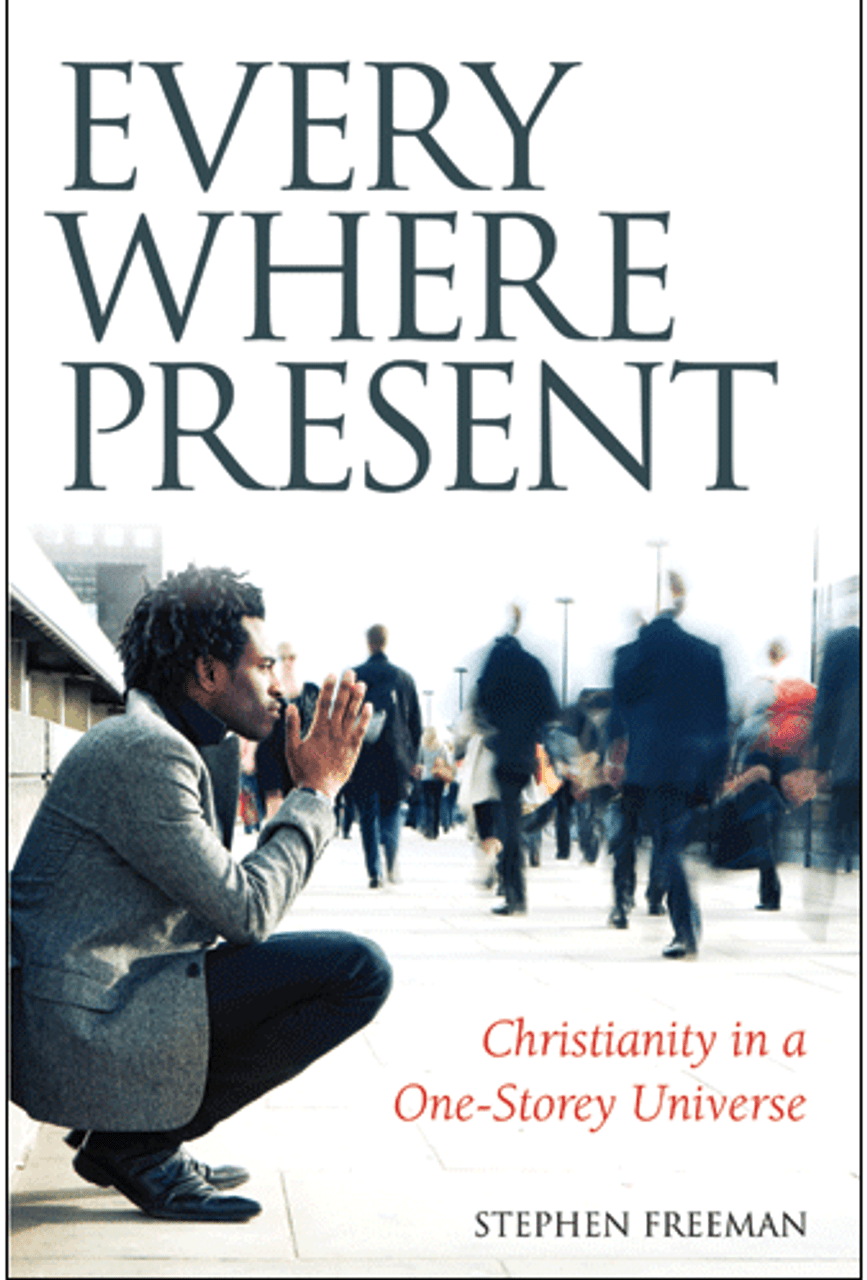
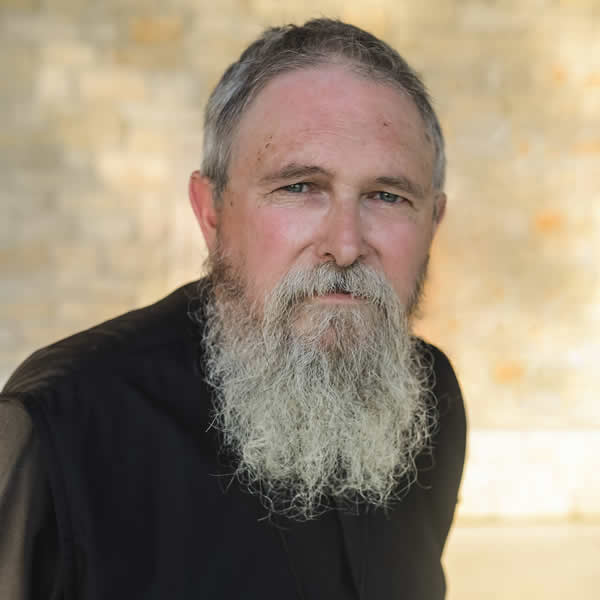
Fr. Stephen is a retired Archpriest of the Orthodox Church in America. He is also author of Everywhere Present: Christianity in a One-Storey Universe, and Face to Face: Knowing God Beyond Our Shame, as well as the Glory to God podcast series on Ancient Faith Radio.


Posted

in

, ,

by

Comments

18 responses to “The Pilgrimage We Must Learn to Make”

  1. Catherine Avatar
    Catherine

    Thank you for this. The most important pilgrimage is the internal one that we are all called to – at least that is my perspective. Please forgive me if I am over simplifying this

  2. Fr. Stephen Avatar

    Catherine,
    Well said!

  3. Simon Avatar
    Simon

    I have been reflecting on a comment that was posted to the blog several posts ago: “We become what we behold.” This simple statement contains real wisdom.

    It is why idolatry is a problem: we behold what is empty, and we become empty. This is also why the passions must be trained—not simply because they are “bad,” but because they deform what we behold and how we behold it.

    When I hear the caution regarding pilgrimages, I hear something similar to this: What do you hope to see when you get there that cannot already be seen where you already are by making the interior pilgrimage? If it is not found within, it will not be found without either.

    This interior work is reflected in the words of Psalm 51: “Create in me a clean heart [Zion], O God, and renew a steadfast spirit (Jerusalem) within me.” The rebuilding of Jerusalem is not only external, but begins in the heart. And so the Psalm implores God: “Do good in Your good pleasure to Zion; build the walls of Jerusalem.” That is, make the walls of the interior Jerusalem “clean” and “steadfast”.

  4. Eric Avatar
    Eric

    The Kingdom is Within you

  5. Fr. Stephen Avatar

    Eric,
    Indeed. If I could underline a certain aspect of the article – it is the union with Christ (and each of the others within the stories of Holy Week). The gospel resounds within us. As the whole of the story (and all its parts and characters) is resolved, it is revealed in the fullness of Pascha.

    As St. Paul says, “Christ within us – the hope of glory.”

  6. Matthew Avatar
    Matthew

    I would like to add that while I agree with the overall tone of this article, I still think it is important to take physical pilgrimages if and when possible.

    I will never forget my trip to Israel as well as to Rome. To walk where Jesus walked and to see the Pietá did something for my internal pilgrimage as well which no words can describe. My uncle said a trip to Rome renewed his faith. I am happy about that.

    There is something very worthwhile about embarking on a physical pilgrimage. It is tangible in a way that differs from the equally important mystical and inward pilgrimage we all must take.

  7. Ook Avatar
    Ook

    @Matthew: “If and when possible” indeed, and always in the context of prayer.

    In the 2010s, work took me to a nearby country, so I took the opportunity to visit Jerusalem a few times on my return journey. I went on my own, but stayed in a monastery among pilgrims, spending most of my time praying at a few sites. While being there was emotionally powerful, I think the main benefit came from the surroundings; above all, being among communities of pilgrims helped me focus on constant prayer. The tears of fellow pilgrims stay with me to this day. That, more than the stones, was the Holy Land.

  8. Fr. Stephen Avatar

    Matthew,
    I agree that a pilgrimage can be of benefit – though I think the state of the heart in that context is key. The point of the article, I think, is in its title, “The pilgrimage we must learn to make.”

    The Liturgies of the Church (particularly in Holy Week, but otherwise as well) are always “pilgrimages” of a sort. The “anamnesis” (“remembrance”) is never about something that is merely past (history), or somewhere else, but always of something that, though it may have happened in the past and elsewhere, is now made present here and in this place. The same, I think, is true of physical places which we might visit in a pilgrimage. It is never tourism – visiting somewhere that used to be important, etc. It is always an act of anamnesis, or no pilgrimage has taken place at all.

    I remember being on Mt. Athos, with a case of bronchitis. Sadly, much of my first few days there were mostly spent as a “pilgrimage” to feeling tired and sick. It was the intervention of the Mother of God (in my heart) that changed that. It did not change my bronchitis – but it changed my heart. I stopped feeling sorry for myself and began to rejoice in thanksgiving.

    As wonderful as our temples may be – none of them are greater than the temple of the heart.

  9. Dee of Sts Herman and Olga Avatar
    Dee of Sts Herman and Olga

    As wonderful as our temples may be – none of them are greater than the temple of the heart.

    Dear Father,
    These and the rest that you have written are so beautifully said and edifying as we enter Holy Week. The Lazarus hymn yesterday brought tears. This year’s Lent was particularly difficult for me, for the opening of my heart in circumstances that would normally cause a person to do the opposite. As you have said before, we walk on the Way, as our minds turn to Golgotha. May we follow Him on our pilgrimage to Jerusalem.

  10. Fr. Stephen Avatar

    Dee,
    The greatest difficulty, I think, are those things that wound our hearts. I have described atheism as a symptom of a “soul-wound.” There are many things that wound the heart (mostly relationships of various types). But they leave us with wounds. And the heart predictably tends to hide and to close itself in the face of such things. I think I worry more about the hardness of my own heart than about anything else. It is the primary source of all of my sin.

    And so we come to Holy Week. With Lazarus’ tomb, Christ says, “Take away the stone.” Then Lazarus can be raised. I think this is something of the prayer that must pray as we approach the critical days of Holy Week. We pray, “Lord, take away the stone.”

    “God, give us grace. Take away the stone. Comfort me in the woundedness of my soul. Fill me with the joy of Your Pascha.”

    All will be well.

  11. Matthew Avatar
    Matthew

    Take away the stone …

    This was the theme of two homilies I heard this year during Lent in the west.

    Thank you Fr. Stephen.

  12. Dee of Sts Herman and Olga Avatar
    Dee of Sts Herman and Olga

    Dear Father,
    Your prayers comfort me. Indeed may our Lord take away the stone of my heart.

  13. Matthew Avatar
    Matthew

    Dear Ook and Fr. Stephen,

    Well I hope my heart and soul were in synch with the physical stones and objects I was seeing and experiencing both in Israel and in Rome.

  14. Fr. Stephen Avatar

    Dearest Matthew,
    It sounds as though they were! Christ is risen!

  15. Nikolaos Avatar
    Nikolaos

    Dee this is comforting prayer to St Lazarus if you have not come across it:

    Holy Four-day Lazarus, resurrected by the weeping Leader of life and death, Lord Jesus Christ, raise up our repentance, save us from spiritual death, deliver us from corruption and sorrows, and protect us from all evil. Save, Lazarus, friend of the Lord, by your intercessions, from all harm and temptations and sorrows, those who approach your divine protection, and enable us to praise and glorify your Holy Name forever. We thank you that you magnanimously hear our supplications and requests.

  16. Matthew Avatar
    Matthew

    He is risen indeed!

  17. Dee of Sts Herman and Olga Avatar
    Dee of Sts Herman and Olga

    Dear Nikalaos!
    It is so wonderful to see your comment here again! As always, also edifying. Thank you so much for this beautiful prayer. I will indeed pray to him.
    In Christ,
    Dee

  18. Margaret Sarah Avatar
    Margaret Sarah

    Father,

    Thank you! The journey is in the heart, and in every parish. I think of CS Lewis saying that the “heart of Christianity is a myth which is also a fact” (referring to the high meaning of Myth, not the insipid modern usage). I find that Holy Week invites us into the myth again, inviting us to join it in its fact-hood.

    By the way, I think there is a spelling error in the title (an extra j).

Leave a Reply

Your email address will not be published. Required fields are marked *


Subscribe to blog via email

Support the work

Your generous support for Glory to God for All Things will help maintain and expand the work of Fr. Stephen. This ministry continues to grow and your help is important. Thank you for your prayers and encouragement!


Latest Comments

  1. “a blind pig finds an acorn” Amen and amen! And I would go further to say that the pig who…

  2. Fr. Stephen, So true. I shall trust that you go down there to meet some of your readers and that…


Read my books

Everywhere Present by Stephen Freeman

Listen to my podcast


Categories


Archives