The Ladder of Your Daily Life

Perhaps the most prominent ladder in our culture is the one associated with careers. It is an image of the American road to success. We begin at or near the bottom and, step by step, make our way towards the top. It is a metaphor that works well with our modern notions of hard work, persistence and reward. It also serves as a justification for many of the structures in our society and colors our common view of those who linger around the bottom. It is through this cultural image that the Ladder of St. John of Sinai (Climacus) comes into distorted view. I have often thought that certain images are not safe in the hands of modernity – and this is one of them.

There is something buried deep in the human soul surrounding the image of climbing and God. The story of the Tower of Babel is an account of a vast human effort to build a tower that would reach into heaven itself. One of the ancient Ziggurats built by Nebuchadnezzar was called, “The place where earth and heaven meet.” Mountains have always played a major role in the meeting place of God and humanity. Our instinct is that we “go up” to meet God.

The Tradition clearly indicates that this instinct has value. But like all human instincts, it has its dark side as well. Our culture’s notion of the “pinnacle of success” is a prime example of this darkness. By its very name, this peak experience is held out as a desirable goal. But we have the strange reality that those at the top are rarely personalities that we would want to nurture in our children. There is nothing that the pinnacle offers other than money and power, neither of which is beneficial to the soul.

This distorted “ladder” often gets translated into the moral life in what is little more than an exercise in Pelagianism [the notion that we are saved by our own efforts]. Our struggles for moral improvement frequently have more to do with our inability to bear the shame of moral failure than with any desire for goodness. As such, our struggles represent a neurosis rather than a morality. St. John gives us a “ladder” for our consideration. It is worth noting, however, that the fourth chapter in his work concentrates on shame – with the observation, “You can only heal shame by shame.” This is not a “ladder” in any modern sense of the word.

Consider the Beatitudes. Christ offers something of a “list” as He reveals the nature of His Kingdom. Who are the blessed?

The poor in spirit;
Those who mourn;
Those who are meek;
Those who hunger and thirst for righteousness;
Those who are merciful;
Those who are pure in heart;
Those who make peace;
Those who are persecuted.

The list is not a ladder, a movement from one virtue to another. It is, however, a characterization of the “virtues” that find their place within the Kingdom. Who are these people?

It would seem that there is a consistent picture of those who are best positioned regarding the Kingdom. They are poor, disadvantaged, oppressed, and sorrowful. They are also longing for things to be set right, while at the same time they are merciful and kind towards others.

This same summary can be seen throughout the gospels and in St. Paul:

For consider your calling, brothers: not many of you were wise according to worldly standards, not many were powerful, not many were of noble birth. But God chose what is foolish in the world to shame the wise; God chose what is weak in the world to shame the strong; God chose what is low and despised in the world, even things that are not, to bring to nothing things that are, (1 Cor. 1:26-28)

The ladder of the spiritual life leads downwards rather than up (or it leads us back to where we already are). The lives of the saints are replete with those who abandoned wealth in order to become poor and find God. I can think of no stories in which a saint acquired wealth in order to enter the Kingdom.

I do not think it is necessary for everyone to abandon what they have and head to the deserts. It is sufficient, in my experience, to simply practice mercy, kindness and generosity where you are, and to bear your own failings and incompetence with patience. And, though this sounds easy, it is more than most are willing to do.

I am always leery when asked about various spiritual undertakings. Whether it’s a rule of prayer or a rule of fasting, the true struggle is never found in doing what is extraordinary. It is, rather, the very difficult matter of enduring what is given to us. God, in His providence, allows us all that is necessary for our salvation. Grace is primarily found within the ordinary faithfulness of our life.

Of course, the monastic example might make many question this “ordinary” route. What is not seen by most is the exceedingly ordinary task that confronts the monastic. The greatest struggles within a monastery are not always in the prayers, vigils and fasting. Most often, they are found in the daily grind of remaining in place. It is said in the desert, “Stay in your cell and your cell will teach you everything.”

We can also know that the good God who loves mankind will never abandon us. No matter how far we may run from the mundane struggles of our existence, the struggles will follow. It is among the promises of Christ: “Sufficient for the day is its own trouble.” (Matt. 6:34)

I will add a couple of thoughts. In the icons of the Ladder of Divine Ascent that illustrate St. John Climacus’ writings, the figure of the Patriarch Jacob is often depicted as sleeping on the ground beside it. Thus, it connects the Ladder of St. John to the Ladder that Jacob saw in his dream. That Ladder, in Orthodox thought, is none other than the Theotokos, she through whom the Word became flesh and dwelt among us. She is thus depicted as one who illustrates all of the virtues. I heard in a sermon on the Ladder the small reminder, that “as soon as you place a foot on the bottom rung, you’ve have left the earth behind.”

Do the small things – the next things. There is a ladder of grace that is given to us all.

Glory to God!
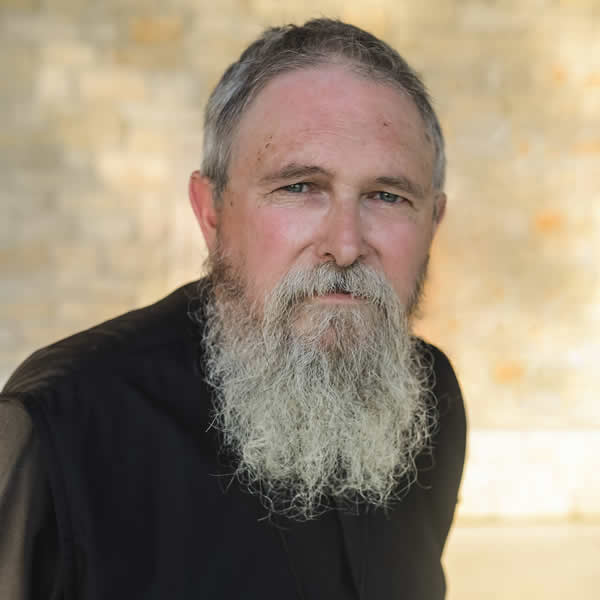
About Fr. Stephen Freeman

Fr. Stephen is a retired Archpriest of the Orthodox Church in America. He is also author of Everywhere Present: Christianity in a One-Storey Universe, and Face to Face: Knowing God Beyond Our Shame, as well as the Glory to God podcast series on Ancient Faith Radio.


Posted

in

by

Comments

24 responses to “The Ladder of Your Daily Life”

  1. Hal Freeman Avatar
    Hal Freeman

    Excellent and very timely for me personally.

  2. Servant of God Anthony Avatar
    Servant of God Anthony

    Thank you, Father. God bless you.

  3. Rob Avatar
    Rob

    This is good news, Father. Thank you!

  4. Jenny Avatar
    Jenny

    Father,

    I left my first comment on your blog on this article when you shared it last year, this same month. It was so helpful to me and got me thinking to such a degree, especially about the Mother of God, that I dared to join in and ask a question. 🙂 I’m grateful to read it again.

    I have learned so much and grown so much in Christ since then since first joining the class of your comments section. I cannot thank you enough and I hope you will be fully recovered very soon!

  5. Fr. Stephen Avatar

    Jenny,
    Thank you! I often wonder when it’s time to post an article whether I should re-post an earlier one, or work on a new one. This week, my energy made writing a pretty non-starter. But, I often find in earlier posts precisely what I want to say, and frequently read it as though written by someone else.

    God give you grace in all things!

  6. Simon Avatar
    Simon

    Love this post, too!

    Everyday life is more than enough challenge and suffering for anyone. In that sense, everyday life is a gift because we can choose nepsis, watchfulness.

    I have been thinking about this: “God chose…things that are not, to bring to nothing things that are.” It also reminds me of what St. Paul wrote, “God…calls those things which do not exist as though they did.”

    In a sense none of us really exist, or at least not in the fully hypostatic sense that God intends. God calls into existence our hypostatic fullness (things that are not) to ‘bring to nothing’ our limiting and encompassing psychological existence (the things that are).

    The struggle is real.

  7. Matthew Avatar
    Matthew

    I have never had a career and have lost many jobs mostly because of mental health issues. Soon after graduating from a university in America, although my focus was on becoming an entrepreneur of sorts, I began seeing that the way many Americans were chasing the dream was simply not healthy for the soul. On top of it all, most of the Christians I knew at the time were just as motivated for the “dream” as their non-believing, secular counterparts were. My friends were beginning to buy homes and new cars in their subdivided American world. I was being drawn elsewhere.

    I share this because as a laundry worker in a social project for psychologically ill people, when I have to answer the question that so many people love to ask “What do you do for a living?” – I am often embarassed. This article has helped me see that I should be thankful for the career (or lack thereof) choices I have made and that I never got caught up in climbing a corporate ladder. There is so much more to a person than what they do (or don´t do) for a living.

    Thanks Fr. Stephen.

  8. Fran P Avatar
    Fran P

    One additional question, Fr. Stephen…. With respect to the Divine Ascent……does the Lord come down to the first step, invite us to leave our nothingness and be open to receive and live our Divine somethingness. With the Lord’s grace may we become transfigured as followers of Christ. Am I understanding this?

  9. Fr. Stephen Avatar

    Fran,
    I think he came even below the first step and boosts us to help us make it (and so every rung, however understood). In the icon of the Divine Ladder, it’s worth noting that the monk at the top is being grasped by the wrist (not by the hand). Grasped by the wrist so there’s not even the danger that the monk might let go or that his strength will be unequal to the task. The Ladder is salvation…it is a gift…a journey…a transformation…an event of unending grace where grace itself becomes our life.

  10. Andrew Avatar
    Andrew

    Thank you Father. There’s a portion in the Akathist to the Mother of God Nurturer of Children) that caught my eye recently:

    “Teach my children to ascend the ladder of their lives everyday”.

    All that God allows in the course of our daily lives are the things we need to ascend (or descend). To borrow a line from of one the Stoics, “the obstacle is the way”.

  11. Simon Avatar
    Simon

    Matthew,

    I understand the embarrassment–I…really..do.

    The good news is that work like yours, while it may not pay much, is honest and worthy. It is saint making work. If my next grand scheme doesn’t work out, then I will likely start looking for work in one of the large warehouses that are around here. We’ll see what happens.

    Essentially, if something happens to my wife almost everything becomes uncertain. It isn’t enviable at all. However, I have many things for which I am thankful (genuinely), and that’s where I redirect my attention continuously.

  12. Fr. Stephen Avatar

    Andrew,
    I like that line!

  13. Patricia Avatar
    Patricia

    “The Ladder is salvation…it is a gift…a journey…a transformation…an event of unending grace where grace itself becomes our life.”
    I love this…so succinct and beautiful

  14. Jeanie Murphy Avatar
    Jeanie Murphy

    This Lent has been full of echoes for me, synchronicities in which I dream or hear something and then encounter it again in a reading or in the liturgies. The night before last, I dreamed of the Beatitudes and in my sleep-befuddled state worried that I couldn’t remember them all, jumbled them about, was so lacking in any of their qualities. Then I read this piece today. I figure that when these things happens that God is talking to me, that repetition matters. Part of my readings involve Emily Dickinson right now and this is what I read after I read this wonderful essay:

    #431
    Me-come! My dazzled face
    In such a shining place!
    Me-hear! My foreign Ear
    The sounds of Welcome-there!

    The Saints forget
    Our bashful feet-

    My Holiday, shall be
    That They-remember me-
    My Paradise-the fame
    That They-pronounce my name-

  15. Jeanie Murphy Avatar
    Jeanie Murphy

    Apologies for not figuring out how to format Emily’s poem!

  16. Sharon (Australia) Avatar
    Sharon (Australia)

    I love these words Father Stephen. Particularly “It is, rather, the very difficult matter of enduring what is Given to us” and “to bear your own failings and incompetence with patience”. Amen and Amen! Your words are honest and true and therefore helpful in ways hard to define. Simply a big thanks!

  17. Matthew Avatar
    Matthew

    Thanks so much Simon for the encouraging words. I love this space.

  18. Fr. Stephen Avatar

    Jeanie,
    I did not know this poem, but I love it! Thank you!

  19. Mallory Avatar
    Mallory

    Thank you so much for this, Fr. Stephen! Apologies I dropped off the last conversation, I also got very sick with a flu then strep throat, along with my little girl, so we’re just now emerging from the fog. In terms of suffering, it is a great lesson to be sick because then these seemingly small things, reading! coffee! walking my dog! swallowing without pain! are imbued with an unforced gratitude. Fr. Stephen, I’m so glad to hear you’re recovering.

    I remember this post well from last year, and boy did I need to reread it! I have it saved in my notes app, but have forgotten to look at it recently. As I’ve said before in this space, I was raised with the direct opposite of this kind of wisdom. When I was little I wanted to be a shop keeper, just pretending with my dolls, selling painted rocks, and my parents and grandparents told me in an almost-panic that shop keepers were low class and I must work “with my mind” (kind of ironic since it doesn’t seem all those academics and scholars I was raised with had much of a sound or kind mind!). When I fell in love with horses, same thing: they swooped in to tell me my life would be “ruined” if I worked with horses. I was so little that I didn’t really process these events until much, much later. Everything was oriented to how things looked to others, which if you think about it is utterly strange and backwards. I can say with actual honesty that I just want my daughter to be at peace, and who she is. I don’t want to change her! Even when she presses every button, and does all the things I wasn’t allowed or never dared to do, I just don’t have the impulse to “fix” anything. And that is a miracle. I am consciously giving her what I wanted, I guess that’s all we can do. And when I mess up, I say sorry.

    Matthew, thank you so much for sharing your thoughts and experiences, I understand what you mean about America and everyone chasing the houses and the cars. I left the corporate ladder after I had a baby after I realized I was spending time in zoom meetings pumping breast milk, which is “normal” here but in my view deranged and cruel to mothers and children. So, I quit. People told me I was making a mistake. I had and have to make a lot of sacrifices to make it work, and my job doesn’t exist anymore with AI now anyway, so there’s no going back. I wouldn’t want to go back. I don’t know what the future holds, but for now I trust being a mother is enough, no matter what they tell me 🙂

    I learn so much here! And Simon, you have a way of writing that immediately brings me into presence…hmmmm, I can’t quite describe it, I tried several times, but it’s like when you write I can hear you speak, and even if my mind can’t grasp it, it brings a calm, peaceful knowing into my heart. I hope that makes any sense. So thank you all, and bless everyone here!

  20. Fr. Stephen Avatar

    Mallory,
    Thank you for these thoughts! I’m glad you’re recovering – I had just finished saying to my wife this morning that recovery intensifies the sense of gratitude.

    I was particularly struck by your reflections on work/mothering, etc. Modernity’s myths are pretty much all about work – it’s a narrative that is mostly designed to make us more productive as workers and to imagine that a career is like winning the lottery. But the price of a ticket is often bought with the flesh of our humanity: women giving up the most natural, inherent, aspects of their biology in order to pursue a career. I heard someone (in a video) opining that the Virgin Mary “didn’t have a job” (or something to that effect). Interestingly, in icons of the Annunciation, she is always depicted with a distaff in her hands – she is spinning wool – making cloth. But the notion that motherhood is somehow not “work” is just modernity telling its lies. That modernity has so hated women (while telling them it was liberating them) tells us where the lies come from – the lips of the one who hated the first woman – and the fulfilled prophecy that the seed of a Woman would crush his head!) speaks volumes.

    Carry on! Love your daughter. Make God protect our children.

  21. Mallory Avatar
    Mallory

    Thank you so much, Fr. Stephen. I hold all you wrote dear, and wish there were more sane voices saying these things to women. Grateful as always for this place.

  22. Eric Simpson Avatar

    This was good and insightful. Thank you.

  23. Jenny Avatar
    Jenny

    Father,

    On Saturday I unexpectedly ran into one of the young women that I have been asking St Mary Magdalene to pray for. She is a young mother with very young children and had lost custody of all of them recently.

    But when I saw her, she was with the two younger ones and they all looked so well. I hope seeing them together means she is doing much better and has gotten custody back or can have unsupervised visits.

    Either way, it was encouraging and such a gift to see them in person.

  24. Cathy Avatar
    Cathy

    I will be adding this to my saved posts of yours. Can’t wait for the book you are working on of your favorites. 😉 You are truly a blessing for many of us. God Bless You today and always !

Leave a Reply

Your email address will not be published. Required fields are marked *


Subscribe to blog via email

Support the work

Your generous support for Glory to God for All Things will help maintain and expand the work of Fr. Stephen. This ministry continues to grow and your help is important. Thank you for your prayers and encouragement!


Latest Comments

  1. “a blind pig finds an acorn” Amen and amen! And I would go further to say that the pig who…

  2. Fr. Stephen, So true. I shall trust that you go down there to meet some of your readers and that…


Read my books

Everywhere Present by Stephen Freeman

Listen to my podcast


Categories


Archives