Freedom and the Self

This past Sunday on the Orthodox Church commemorated St. Gregory Palamas – perhaps the most significant theologian and teacher of the late Byzantine period. He is particularly important when considering the nature of the Christian experience of God. Orthodoxy believes that it is truly possible to know God though He remains unknowable. The mystery of this true knowledge constitutes the heart of St. Gregory’s work. I offer this small reflection on the topic of freedom in his honor.

Part of the experience of being involved in religious activities (like the Jesus Movement) in the late 60’s and early 70’s was the not infrequent encounters with members of cults (they seemed to be everywhere). I’m not certain how I would define a cult (not purely by doctrine but certainly by its destruction and control of its members as whole persons). I worked in a “coffee house” (which in that particular time period, oddly enough, was not associated with coffee) for a couple of years – playing music and being involved in the adhoc ministry that was part of that world. We encountered young people from across the country (there was hardly anywhere else to go on the weekends, unless you drank or did drugs – the coffee house had neither). But a common thread in my encounters with cult members was an absence – it was as though nobody was home.

Conversations could be attempted – but the answers came back as selected quotes. Doubt, questioning, many of the things that you would expect from most people in conversations regarding God, were part of the absence. It is little wonder that people involved in cults were often treated as though they had been “brain-washed.” Something like that seemed to be the case.

Since then I have occasionally (though not often) encountered the same phenomenon in people who were not members of what anyone would think of as a cult. However, the same sense of absence, of a rigidity replacing freedom, marked the encounter.

Several years back I came across a small book that offered an interesting insight into all of this: In Search of the Person: “True and False Self” according to Donald Winnicott and St. Gregory Palamas (Alexander Press, 2002). With a title like that, how could I resist? I was not familiar with Winnicott, though from what I read his work is pretty standard psychological fare. The author was Fr. Vasileos Thermos, who is both a practicing Psychotherapist and an Orthodox priest, living and working in Greece.

I was struck by a quote in the book from Fr. Dimitri Staniloae:

“To the extent that man does not use his freedom, he is not himself. In order to emerge from that indeterminate state, he must utilize his freedom in order to know and be known as himself.”

To summarize (hopefully without doing injustice) – our freedom, an essential part of what it means to be a person, is frequently suppressed in the name of religion (or other ideologies). Fearing immorality (or something similar), or seeking conformity at any cost, it is easy to reduce a person’s freedom, substituting a false obedience, that results in the creation of a “false self.” This “false self” is the “absence” I encountered in some cult members and others.

Freedom is a paradox. It is an utterly inherent part of our existence – a critical part of our salvation – and yet threatening in its power. Freedom of the self can seem a threat to every kind of order (religious, political, social, etc.). Nevertheless, we are told in Scripture that “where the Spirit of the Lord is, there is liberty (freedom)” (2 Corinthians 3:17). St. Paul will also warn in his letter to the Galatians (5:13) that our liberty should not be used as an excuse to sin. And thus the paradox is set. Without freedom, we will not become the whole person we were created to be and which is the proper end of our salvation. But freedom can also be directed incorrectly, leading to yet another bondage (to sin). But substituting a religious bondage for a sinful bondage is not the answer.

Of course, Scripture also speaks of our being the “slaves of Christ,” a true statement when rightly understood, but also capable of misunderstanding and misuse.

This is, for me, part of the paradox of Orthodoxy. When I converted, a number of acquaintances in my former Church, made explanations to themselves that my conversion was an effort to hide from and avoid the discomfort of freedom. There was an assumption on their part that because the Orthodox Church’s teachings are clear and “conservative” on certain points (certainly in comparison to liberal Protestantism), that the Church must therefore be rigid and controlling. This is simply not the case.

It is easy to assume that canon law, because it is canon “law,” suppresses our freedom and makes us slaves. And yet this is not at all the case. The canons and Tradition (like Scripture) point us in the proper direction and enlighten us in the path of salvation. But the Orthodox application of the canons is guided by something other than a rigid literalism. We fast, but not as though the fast were a law. Every Bishop and Priest who serves as a custodian of the canons, has to apply them with salvation in mind (this is the proper use of what is termed “economia”). Different persons, different situations, require different applications of the canons. One rule does not fit all.

This mystery extends throughout the Church. This is not a reduction of canons into mere “guidelines” but the requirement of wisdom in their application as we seek to direct souls towards a proper relationship with God. The freedom of the person has to be respected in a manner such that what is nurtured is the “true self” and not a humanly created automaton (the “false self”), or simply the ego quoting what it does not truly know.

“Where the Spirit of the Lord is, there is liberty.” The paradox of our relationship to God is that obedience in our relationship to Him does not enslave us – but sets us free. It is the same as the paradox of the Cross. Christ said of the Cross, “No man takes my life from me. I lay it down of my own self” (John 10:18). Our own salvation can be no different. No one can take our life from us – we must lay it down of our own self.

We lose our life in order to find it. We lose a false self in order to find the true. The saint is the most free of all human beings. What a strange wonder.
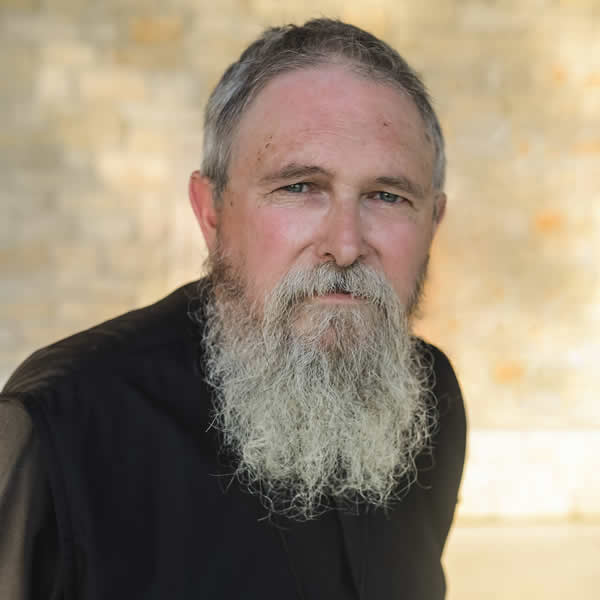
About Fr. Stephen Freeman

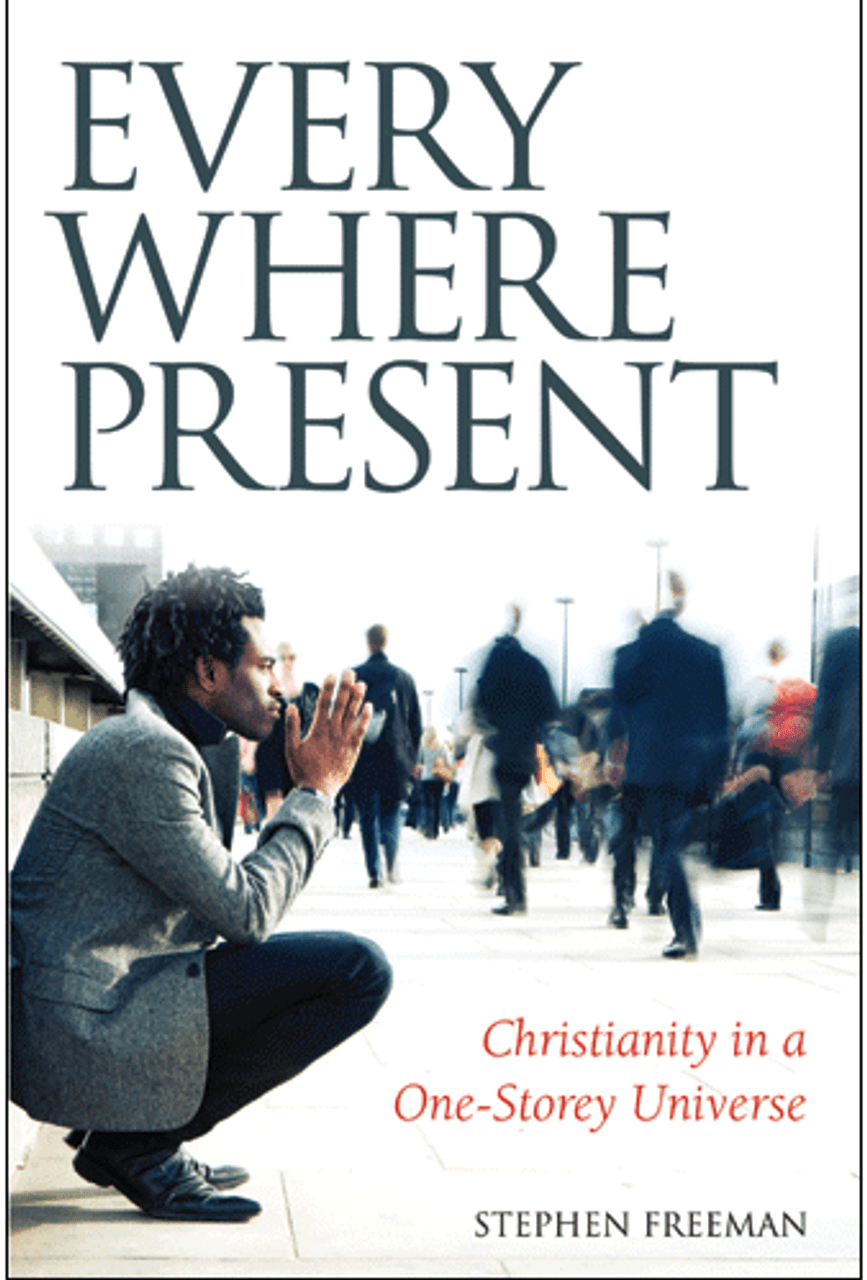
Fr. Stephen is a retired Archpriest of the Orthodox Church in America. He is also author of Everywhere Present: Christianity in a One-Storey Universe, and Face to Face: Knowing God Beyond Our Shame, as well as the Glory to God podcast series on Ancient Faith Radio.


Posted

in

by

Comments

21 responses to “Freedom and the Self”

  1. Holly Avatar
    Holly

    Hi Fr Stephen, thanks for posting this. I haven’t read it in full yet but had to comment now because I am amazed. I was talking to my fiancé earlier this evening about his reflections on a pastoral care course he is doing and I made a link to what Winnicott says about removing the ego to attend to the needs of the child (or, as I extrapolated, another adult) with love. What a remarkable thing to then see Winnicott referenced on my favourite blog! I cannot wait to read. I was wondering, do you have any new books in the works?

  2. Fr. Stephen Avatar

    Holly,
    My project this year is to do a collection of blog articles in a book (possibly 2 volumes).

  3. Matthew Avatar
    Matthew

    Freedom. Free will. Liberty.

    How are these to be rightly understood? They are essential to one´s action in the world beyond passivity; essential to one´s salvation – however – I have come to the pessimistic conclusion that no one is truly free. The battle of one´s entire life is attempting to exercise agency in a body and mind that is hindered by imperfect information, a toxic upbringing, unhealthy habits, bad religion, abuse, rebellion, etc.

    This is why I no longer believe, for example, that rejecting Christ has anything to do with free will and why God will not eternally condemn those who did not make the “right” choice. God is so much bigger than a broken will and imperfect freedom.

  4. Fr. Stephen Avatar

    Matthew,
    There is an extremely simplistic view of free-will, often put forward by those who engage in “apologetics” (the defense of the faith). It’s only useful for argumentation but bears very little resemblance to actual human experience. One of the great weaknesses of “evangelical” theology was that its crucible was largely in the area of apologetics. Once you got “saved,” the point of Christian living was to help others get “saved,” etc. So, arguments were catapulted to a place they do not hold in Orthodox life and thought. Indeed, Orthodoxy, through the years, has been accused of not engaging in evangelism. In the American sense of the term, it is not an incorrect charge. Unfortunately, there are some who are trying to change that reality and risk reducing Orthodoxy to something it is not.

    The teaching of the Church regarding what it means to be human (freedom, the will, etc.) is largely found in its teachings surrounding Christology – that is, “How is Christ fully God and fully man, and what does that even mean?”

    St. Maximus the Confessor dives deeply into all of this. His account of the human will (natural will vs. gnomic will) has a great deal of subtlety and understanding, far beyond the sort of voluntaristic reductionism of many modern treatments.

    We are free-er than we can possibly imagine, and far less free than we admit. Sin always impinges on our freedom (we are not exactly living on a level playing field). God judges according to the heart. What might appear like the greatest sinner to some may, in God’s sight, have a level of righteousness that no one else perceives. None of these things are revealed at present (or only occasionally). Thus, we refrain from judging.

    It’s hard to live not knowing everything or having all the answers.

  5. Panayiota Avatar
    Panayiota

    Father Stephen,
    I’m so excited that you’re working on compilation books!! When the books come out, then I’ll feel ok recycling the hundred(s) of your blog post that I have saved to re-read in hard copy! 🙂

  6. Matthew Avatar
    Matthew

    Thanks so much Fr. Stephen.

    I was just outside raking in the garden … thinking about all I don´t really know … and I´m OK with all that. That said, I do desire to have answers to the questions I believe to be critical to one´s life (here and hereafter) – the things of human transformation and eternity.

  7. Byron Avatar
    Byron

    My project this year is to do a collection of blog articles in a book (possibly 2 volumes).

    Second the “YAY!”.

    Matthew, I was recently asked, “Do you know where you’ll go when you die?”. My immediate thought (I was walking through a park at that time) was, “Let’s talk about how to live right here”. I’m just having enough of a time living; I will trust God with eternity. I’m finding so much of my life and “journey” is about just trusting God.

    Christianity is certainly about transformation but I’ve come to the conclusion that is only seen in hindsight. For now, live this moment. As Father likes to say, “Do the next good thing” (maybe just rake the garden and give thanks? I don’t know. Maybe. Just my thoughts).

  8. Alexandria Cels Avatar
    Alexandria Cels

    Fr. Stephen this is such a beautiful explanation. Thank you. It is very nourishing.

  9. Matthew Avatar
    Matthew

    Thanks so much for your thoughts Byron.

    Your thoughts reminded me of what I learned about Judaism. If I remember correctly, Jewish people talk about “mitzvot” (I think it means “good deeds”) and the importance on focusing on them rather than contemplating the afterlife.

    It also seems that in the Old Testament very little is spoken of about the afterlife. In the New Testament there are some hints (like the mansions of Jesus´ Father´s house or “Today you will be with me in Paradise”) – but the focus seems to be more on Resurrection in the writings of St. Paul mainly.

    All that to say, you are probably correct. Leave eternity to God and get on with doing the next good thing – like raking my deceased mother-in-law´s garden and being thankful to God.

  10. Fr. Stephen Avatar

    Matthew,
    Paying attention to what is right now (raking a garden) is a gate of paradise. Paradise is never in the future, nor the past. It is always right now. Interesting to me, in the Greek, the 2nd coming is the word, “parousia.” It means “presence.” It is the “present-ing” of Christ.

  11. Matthew Avatar
    Matthew

    Thanks so much Byron and Fr. Stephen.

  12. Rob Avatar
    Rob

    This is off topic, but here goes. I can’t say thank you enough for suggesting in one of your videos that people watch the video of Roman Braga in Franklin, TN. I recently watched his 10 year memorial service on youtube, and toward the end, the words from one of the monks that knew him for six years blew me away as they revealed so much about the man and his communion with the Holy Spirit. It’s profoundly moving.

    I am a 42 year old married man with a 5 year old boy. I’ve always had this monastic type of attraction towards a life of prayer and intercession and sharing the fruits thereof with whoever God gives me to serve. This is one of the primary ways I understand what it means for me to love, sacrifice, or to “lay my life down”. It’s part of the reason why Roman Braga’s life resonates so much. Do you have any advice for me and others on continuing to grow and mature in this integrated monasticism, if you will?

  13. Fr. Stephen Avatar

    Rob,
    The married life (especially with children) is the “equivalent” of a monastic life – or I should say that the monastic life is the equivalent of the married life. The married life is older. It is the arena of salvation – that place where, through loving others, we gradually come to know ourselves in Christ. It’s so rich, so full, that it is difficult to write about it and do it justice.

    Prayer is an essential part of it, but it is often prayer that differs from monastic prayer. St. Iakovos of Evia said: “Childcare is the most beautiful prayer.”

    The married life is properly grounded in the parish. Like the monastic life, it has its own inherent struggles, many of which are grounded in the personalities we stuggle with (our own, and others). God is the great spiritual director – His providence sets before us the elements of our inner instruction. Pray. Fast with the Church. Go to services. Learn to make a good confession. And stick it out. Especially when you think you’re failing.

  14. Kenneth Avatar
    Kenneth

    Fr. Stephen,

    Thank you for your reply to Rob, which is so helpful. You said “Learn to make a good confession.” Have you written a prior article about this, or would you consider writing one? I’ve heard you say certain things about it such as “bearing a little shame”, but I would appreciate any further practical advice on what to do or not do in confession. Or if there is another good source on this, feel free to recommend it.
    Blessed Lent!

  15. Margaret Avatar
    Margaret

    Dear Fr. Stephen, I really needed to read your words responding to Rob in the comments here. I didn’t know I needed to read them until I read them. Thank you! Glory to God for ALL Things!

  16. Jenny Avatar
    Jenny

    Father,

    (II was just finishing up this comment and read your reply to Rob and must add my thanks to you for it. I’m going to keep in mind that marriage is the older institution and has its own type of prayer.)

    Freedom does seem frightening. I don’t like thinking about the fact that I can choose something other than Christ. I like the verse which says thanks be to God, we are His captives in His triumphal procession.

    In general, I always try to think only of God’s sovereignty and hardly ever about free will, even though I know there are both at work.

    When I first began to perceive the Lord’s presence, I thought then that if He can make Himself known like this, then it must be His fault when people do not believe in Him. He could reveal Himself to them at any time.

    I held this opinion for quite a while. Eventually though, I began to see that even when people did see Him, they still choose something other than to follow Him.

    I’m in St Matthew now, but when I was in St John I read this passage:

    “If we let Him alone to go on like this, everyone will believe in Him and adhere to Him, and the Romans will come and suppress and destroy and take away our [holy] place and our nation [[b]our temple and city and our civil organization].” (John 11:48)

    Rome would come and take away! I had always before had this idea that they had rejected their Messiah because He wasn’t militant enough- because He came to be crucified instead of to conquer.

    But in this passage, Rome is the basis of their security. They were enslaved and afraid, but they still had a kind of authority, a kind of security. They murdered their own Messiah so they could maintain their alliance with the world.

    We are slaves of no one, they retort to Him, at one point. But of course they are. And they won’t come to Him to be set free, but tax collectors and sinners are, so they getting into the Kingdom of Heaven ahead of them.

    Ahead of them is a hopeful phrase, though. It doesn’t sound absolutely final, just tardy.

    I myself rejected Jesus for years- all those in between years. From my first marriage at 19 until I was in my early 30’s, I refused to turn my face to Him. That’s partly why I long so much to do anything for Him now. He was so patient with me.

    It’s true, if I think about it- the Lord does leave me free. I can’t remember ever being forced by Him into any choice. Even now, I’m free to obey or disobey.

    What is more difficult, I’m free to work out how to peacefully live with Him each day. That’s more difficult, because those boundaries aren’t laid out in exact detail anywhere. I have to work them out with Him in practice.

    A week ago or so, I woke up and then wake up my daughter so that she could move to her bed, because she had fallen asleep somewhere else.

    She didn’t want to be woken and I started to become irritated and to lose my temper and it was just as if I were a horse about to jog down the same old rough track when my bit got pulled up and I was pointed in a different direction. It was so startling.

    I had forgotten that I was trying to do everything with Him, and that is not how He disciplines children- all this came back over me in this rush of awareness. So I changed direction and spoke to her in a different way.

    But I could have ignored Him if I’d wished. I could have kept on going right down the wrong track, it just would have meant that I wouldn’t have been at peace with Him. I would have been uneasy and guilty and regretful. I know, because that happens a lot.

    I suppose the mystery comes in when I consider how many times I didn’t see the better road to take. At that time, the rough road seemed to be the only one. It was grace that showed me a better way. Because of grace, I was free to choose obedience instead of being a slave to my first, broken instincts.

    I read the article you shared on Substack, The Opposite of Tyranny, how a faith based on reason cannot be faith, because then the choice to believe would be forced. A person would be forced to see it and declare it true, and the Lord does not work like that.

    But it’s very interesting, because my atheist brothers would like God to be like that. They would like reason and sight to reveal Him beyond doubt, so they would not have to risk belief. But if it were so, they would be forced to acknowledge Him as God, perhaps before their hearts were ready to receive Him willingly.

    And that God is free! That is, to borrow a modern phrase, blowing my mind. 🙂 This comes up often in The Enlargement of the Heart, too, so I was already thinking about it.

  17. Fr. Stephen Avatar

    Kenneth,
    I will look at putting such an article together (I haven’t in the past). A parish priest is the ultimate guide for how to make confession in a parish (there’s no hard-and-fast rule involved). I would not want to provide guidance that would contradict what a local priest might be doing. But, with that in mind, I think I can still provide some general thoughts.

  18. Drewster2000 Avatar
    Drewster2000

    Fr. Stephen,

    For me your article is encapsulated well by the experience that happens when a parent raises their child with an intense desire for the child’s best to be the result. It’s an experience that is full of blessing, angst, surprise, despair, sudden joys and sleepless nights, to name a few.

    As you put it so beautifully somewhere, the child has much more freedom than they know, and yet not nearly as much as they think. Freedom is a necessary ingredient of a fully developed human life in one way, and yet in another way it’s also just a tool to allow the development of the rest of the person. In fact the teenage years can so easily be a strong overemphasis on getting one’s freedom without having a clue what they’ll do with it once gained.

    I find that the best parenting is far from a set of rules, but more like a caretaker who’s been given a blessing and a set of tools. (For some reason the image of a mule driver keeps coming to mind.) Sometimes the carrot is needed, sometimes the stick, sometimes a brake of some sort – and always a mechanism for steering right and left.

    But that’s only the driver’s part. The mule itself is really the one who is supposed to be guiding the journey, and the driver is continually negotiating the next answer. In fact eventually the driver is supposed to be out of the picture entirely, only gently calling out advice as seems essential or being there for consultation.

    In this relationship, freedom is in every inch of it: how the reins and whip are used, the language between the two, the burden placed on the mule. But again it’s not really the point; it’s a means to an end. Like breath in its lungs, freedom is essential, but it is there to get the animal where it needs to go. Speaking again of the human being, that goal is to a place where we have come to the point of working with ourselves, holding our own reigns, loving and guiding our lives to where God intended – and in the next life, the reigns disappear since they are no longer needed.

    Thanks again for the beautiful tension you have described of our relationship with freedom.

  19. David Sandborgh Avatar

    Father,

    Thank you for your article. I have been learning a lot about freedom through a class I am taking about Bishop John Zizioulas with Bishop Maxim. In our last class Bishop Maxim mentioned that Zizioulas admired Adam for excising his freedom when he ate the apple. Your Staniloae quote got me thinking about how we excercise our freedom.

    If we are truly ourselves when we exercise our freedom, is it really exercising our freedom if it has no affect on the other?

    I am thinking in terms of love. I remember and old article of your talking about “love between us and God must include equality to really be love. God became man that man might become God.” Freedom is the same as love, I need equality of freedom with God to know the fullness of love and freedom.

    Is it really equality with God if exercising my freedom to love Him has no affect on Him? In seminary I hear a lot of examples where things Christ experienced in the world only affected Christ in a pseudo way: Christ was not truly forsaken by God on the cross because the Godhead cannot be split, God was not born nor did God die, only the human side of Christ wept for Lazarus at the tomb, etc.

    Here is the crux of my question: If my humanity has no effect on God, how does God experience what I go through as a human being feeling loss, separation, birth and death? How am I healed if God only went through what I went through in a pseudo-way? How am I fully free to exercise my love for God as equal if my experiences and struggles have no effect on Him?

    I hope this makes sense. Thank you for your grace over the years Father.

  20. Fr. Stephen Avatar

    David,
    The Fathers wrestled with your question under the heading of the communicatio idiomatum (the communion of unique properties). In this, there is a participation and sharing of the Divine and the Human in Christ – What we say of Christ in His humanity we can say of Christ in His divinity, such that we can say, “God suffered in the flesh.”

  21. Fr. Stephen Avatar

    David,
    I have to say that Zizoulas is sometimes too creative for me. Over the years, I came to have much less trust in his work.

Leave a Reply

Your email address will not be published. Required fields are marked *


Subscribe to blog via email

Support the work

Your generous support for Glory to God for All Things will help maintain and expand the work of Fr. Stephen. This ministry continues to grow and your help is important. Thank you for your prayers and encouragement!


Latest Comments

  1. “a blind pig finds an acorn” Amen and amen! And I would go further to say that the pig who…

  2. Fr. Stephen, So true. I shall trust that you go down there to meet some of your readers and that…


Read my books

Everywhere Present by Stephen Freeman

Listen to my podcast


Categories


Archives