Taking My Mental Shoes Off

I approach spirituality as a social scientist who believes that whether or not God exists, spirituality is a deep part of human nature, shaped by natural selection and cultural evolution, and central to human flourishing and self-transcendence. – Jon Haidt

The above quote is a sentiment that I see more and more often these days. It is the discovery (by many) that spirituality/religion/transcendence is actually beneficial and even necessary for human well-being. On the one hand, it is a profound confession of someone who is waking up to a greater reality. On the other hand, it can also be a statement that is utterly empty and without meaning. I offer a simple observation: you cannot transcend yourself by your own bootstraps.

I recall the words of an old-timer in AA to a young man who was troubled about AA’s talk about “God” and a “Higher Power”: “Son, the only thing you need to know about God is that you’re not him.” It is, perhaps, not the only thing, but it’s certainly one of the first things.

A desire for transcendence can be quite vague. In a culture whose most fundamental drive is to commodify everything, our desire for transcendence leaves us as easy prey for those who would sell it to us. America has long been a hotbed for spiritual commodities. However, a spiritual commodity is not the same thing as God.

A fundamental question in the hunger for transcendence is fairly straightforward: Is there anything greater than myself? It is frequently the case that we settle for ourselves-with-a-compartmentalized-notion-of-transcendence. It’s not transcendence if it’s not bigger than you.

Of course, the difficult part of having a God who is other than a subset of my own head is that “I’m not Him.” It comes complete with all of the complications that normally accompany a relationship. It is little wonder that people are sometimes hesitant about such a thing.

In the course of my life, I have felt particularly blessed when that hesitancy has brought me to a full stop. Consider this wonderful paragraph from Archimandrite Maximus Constas’ The Art of Seeing:

Paradox and contradiction seem like negative values, they make us uncomfortable. But this is precisely the point: only things that contradict the mind are real, there is no contradiction in what is imaginary. The exertion of human rationality to vitiate paradox, to suppress contradiction, is ultimately an exercise in self-delusion. It is the failure of true attention, the refusal to experience a change of mind. In the classical aesthetic tradition, harmony in music and symmetry in the visual arts were considered the primary characteristics of the beautiful. But this view did not go unchallenged, and later thinkers maintained that these qualities were attractive chiefly to souls mired in sensuality, who are disturbed by and so avoid dissonance and contradiction. Freedom from the tyranny of the senses, however, does not mean that our aim is a kind of detached, distanced looking, for this would be to commit the error of Zacchaeus (Lk. 19:1-11), who wanted to see Jesus without being seen by him.

“Contradiction” is an interesting way of thinking about our hesitancy regarding God. Some have observed that there is a “bulwark of unbelief” in our contemporary world (cf. Joseph Minich in Bulwarks of Unbelief: Atheism and Divine Absence in a Secular Age, 2023). This is to say that unbelief is the default position in a secular world. But, it is more than unbelief. There is a wall (bullwark) that seems to stand between the individual and belief in God. Some of described this as the “supernatural claims” of Christianity and belief in God.

Well, of course. Transcendence inherently demands something greater than the modern rules of our understanding.

The contradiction that is bound up in our hesitancy is a signal that we have reached a significant boundary. Is there anything greater than myself? Can that which is greater than myself make demands that take me out of myself?

Moments of crisis, of brokenness even, and especially the threat of death and dying are probably the most common points of this hesitancy. These are places where the world that we have constructed is threatened with annihilation. We see that we live on a razor’s edge rather than a broad plain. That which is transcendent is, by definition, beyond us and greater than us. At such moments (particularly in death and dying), our whole existence is judged. Is this (what has been) all that is? Is there a meaning beyond the materiality of commerce?

I have been privileged in my ministry through the years to stand with hundreds of others as they encountered death (particularly in the time I served as a hospice chaplain). Conversations tended to reach beyond the trivial and the mundane. It is said that the most common topic in the last days of the dying center around family. It is in those relationships that the sacrament of the transcendent is most visible. I believe that this is true throughout every day of our lives – a truth and a reality that is obscured by our busy-ness, our distractions, and our mistaken assumption that such things can wait.

During my years as an Orthodox priest, I have had visitors to my parish who sheepishly told me that they had visited for a number of weeks but had never gotten out of their cars. They came to Church, but could not go in. When I’ve been told such a thing, I understood that I was speaking with someone who had, at last, found the courage to cross the threshold, to take a step beyond the bulwark of unbelief and to risk an encounter with God. They already understood that the consequences of such an encounter would change their lives. That this has been a not uncommon story across the years speaks volumes to me about the perception of Orthodox Christianity.

In Lewis’ The Lion, the Witch, and the Wardrobe, Mr. Beaver says this about Aslan (the Christ figure) when asked, ‘Is he safe?’:

“Who said anything about safe? ‘Course he isn’t safe. But he’s good.”

The great contradiction in Christianity is the claim that Jesus Christ was crucified, dead and buried, and has risen from the dead. It is a supernatural claim that echoes through every sentence of the New Testament. It was the contradiction voiced by every martyr standing before the flames, the sword, the lions, and every wicked form of torture. The tomb was empty. Christ rose from the dead…

“and was seen by Cephas [Peter], then by the twelve. After that He was seen by over five hundred brethren at once, of whom the greater part remain to the present, but some have fallen asleep. After that He was seen by James [the Brother of the Lord], then by all the apostles. Then last of all He was seen by me [Paul] also, as by one born out of due time.” (1 Corinthians 15:5–8)

The instinct within us that hungers for the transcendent is not a fluke nor a mistake. It is a whisper (or a shout) that calls us to stand face-to-face before the contradiction of our age. It says, “You are known. You are loved. You have purpose. You have meaning. I’ve been waiting for you.”
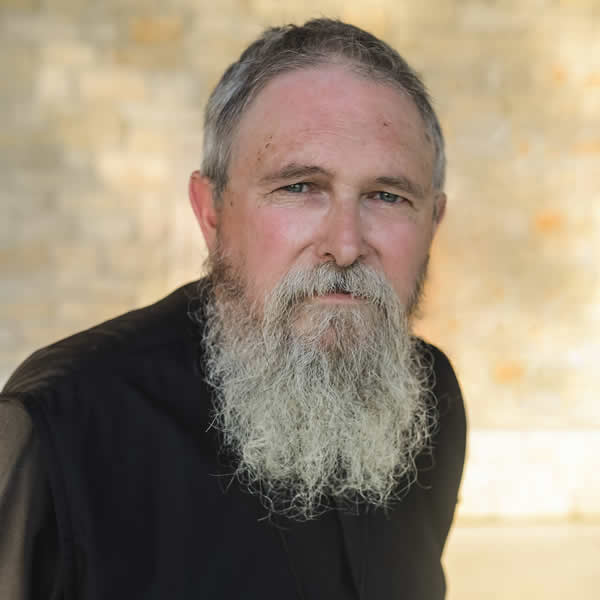
About Fr. Stephen Freeman

Fr. Stephen is a retired Archpriest of the Orthodox Church in America. He is also author of Everywhere Present: Christianity in a One-Storey Universe, and Face to Face: Knowing God Beyond Our Shame, as well as the Glory to God podcast series on Ancient Faith Radio.


Posted

in

, ,

by

Comments

38 responses to “Taking My Mental Shoes Off”

  1. Paula Wilson Avatar
    Paula Wilson

    Father, Your writings have been getting better and more relevant and perhaps, as you allude, it is because I am getting older and older (I am about your contemporary).
    My hearing gets worse but I can listen better to you. Thank you.

  2. Fr. Stephen Avatar

    Paula,
    You’re very kind. I wonder, sometimes, whether my writing is “aging” just as I am. If so, it might get better in some ways, and worse in others. Thanks for the encouragement!

  3. Cynthia Avatar
    Cynthia

    Amen and thank you!

  4. Helen Avatar
    Helen

    The quote by Jon Haidt seems like a very “safe” approach. You really have to risk collapsing alot of what you’ve built up that has kept you “safe”. So of course He isn’t safe. Thank God!

  5. Fr. Stephen Avatar

    Helen,
    I am told that Haidt is a secularist, but clearly one who is thinking about the “transcendent.” I note in my first paragraph that I’ve been running across a number of these – non-believers who are now seeing that non-belief just doesn’t work. It’s another huge “leap” from there (or just a tiny step) to surrender to God.

    I line of thought that I did not pursue in the article, but will probably work with in a later post, is the barrier created by the institution(s) of Christianity, including the Orthodox Church. It seems to me that, though unbelief is littered with all kinds of problems, we want our transcendent experience to be pristine and not sullied by the human beings who have embraced it.

    It’ll be worth an article or more.

  6. Helen Avatar
    Helen

    HI Father,

    Haidt’s book Happiness Hypothesis discussed how seeking the transcendent adds to one’s happiness. I remember thinking that in his academic circle, talking this way about this topic might actually open the door for some to explore. God can use it all!

    I look forward to future article(s) about these barriers you mention. Perhaps institutions, like people erect these to create safety, ironically.

  7. Matthew Avatar
    Matthew

    Thanks so much for this article Fr. Stephen.

    I am reminded of years past when I was a much different Christian than I am now. In those days, I proclaimed a personal relationship with Jesus Christ and could not imagine how anyone would not want such a love relationship.

    Your article has helped me to see that for many people the barrier between them and God is not really a logical one that can be overcome with brilliant apologetic arguments, but rather a relational one that maybe scares them immensely.

    I am reminded of my sister-in-law who once said to my wife that she didn´t want some personal God looking over her shoulder watching everything she does. While I don´t agree with the picture of God she has drawn, I do understand how difficult the prospect of a relationship with the Almighty can be for so many.

  8. Fr. Stephen Avatar

    Matthew,
    I knew a woman, a very proper low-country Episcopalian, who complained after having a religious “awakening” on a retreat, that she couldn’t get anything done in her kitchen with “Jesus looking at me all the time!” She kicked Him out of her kitchen so she could get on with her work. 🙂

  9. Dee of Sts Herman and Olga Avatar
    Dee of Sts Herman and Olga

    Father,
    Is the bulwark something that was built through ‘the enlightenment’?

    Also your words about being sullied struck me. When I entered the Church I had no desire to be in a Protestant version of Christianity when I entered Orthodoxy. Any whiff — of it in an Orthodox context would send me running, if not in feet, in heart and mind. This no doubt reveals my own weakness. But as a catechumen I needed protection of my wounded soul and heart. Catechumen classes are helpful. But there are still, at least for me, concerns. Nevertheless I remain and abide in Christ, God willing. What gives me hope is the love of God for His Church. He has sustained it in the many wars within it and against it from outside the Church. May He bring us peace.

  10. Fr. Stephen Avatar

    Dee,
    In the quote I was working from, “bulwark” referred to the obstacle of unbelief in the modern, secular mind. Doubtless, much of that was erected during the Enlightenment and subsequent developments in the culture.

    Within the Scriptures themselves, though, we have “the fool has said in his heart ‘there is no God’” demonstrating that unbelief was present even in antiquity. The human heart has no period in history that guarantees its openness to God.

    The present phenomenon in our culture (that I was commenting on) is the growing recognition in a number of “intellectual” circles that people don’t really do all that well without the transcendent in their lives – at least, cultures don’t do all that well.

    There have even been a number of rather “famous” conversions to “cultural Christianity,” recognizing that it is beneficial to Western Civilization for it to have a Christian grounding.

    I think that it’s too little as foundations go – even though I welcome the recognition that the transcendent is necessary in our lives. I think what we see is a slow crumbling of “modernity” itself – at least in some places. It’s an interesting phenomenon.

  11. Dee of Sts Herman and Olga Avatar
    Dee of Sts Herman and Olga

    Father,
    One more thought. Sometimes a student might ask a question like this, “How do we know how many neutrons are in an atom?” What I would prefer to say is, “this is how God revealed it to us…”.

    But I’ve never done this. Rather I teach how to interpret and use the periodic table without mentioning God. The latter satisfies a student but leaves me empty.

  12. Fr. Stephen Avatar

    Yes. Apparently, Einstein was able to get away with “God quotes.” But that sets the bar really high!

  13. Dee of Sts Herman and Olga Avatar
    Dee of Sts Herman and Olga

    Indeed Father, the cracks in modernity are showing and growing. God willing perhaps eyes will be opened.

  14. Dee of Sts Herman and Olga Avatar
    Dee of Sts Herman and Olga

    Dear Father your last comment brought a smile.

  15. Rob Avatar
    Rob

    In your experience with people as a priest, do you think that one of the most significant obstacles to submission to God in modernity is that as people approach the Light, there is some subconscious sense that they will lose their illusion of control? Is that an additional way of looking at a person sitting in the parking lot, unable to go in? Their whole empire, starts trembling in proximity to God.

  16. Matthew Avatar
    Matthew

    Funny story Fr. Stephen! 🙂 🙂

    Thanks!

  17. Matthew Avatar
    Matthew

    I think you are really onto something Rob …

  18. Fr. Stephen Avatar

    Rob,
    I think that’s part of it. The problem with having a God in your life is that He’s ever so much bigger than you! It’s interesting in that God is not interested in “running our life” – in the sense of some submission that obliterates our freedom. He calls us into the life that is lived in His love. I think of it as analogous to marriage. There have been men and women who ran away from the altar (as it were) in fear of marriage. Marriage is not a loss of self, but, ideally, it is a losing of self in order to find the self “in the other.” Christ uses similar language about our salvation.

    Had I known the good things that marrying my wife would mean in my life – any hesitancy I might have harbored at the time would have been utterly demolished. I could not have seen what good things God had prepared for me. I think the same is true in my relationship with Christ.

  19. Rob Avatar
    Rob

    I think that’s just it. Submission to Christ is like marriage and it reveals the true self and destroys the false with a refining fire. But the fire at first “feels” like it will destroy you rather than expose, save, preserve, and refine the real you. It takes trust to break on through to the other side into experience.

    My main point for my questions is that I bump up against the hesitancy to trust and “break on through” every day with people, including myself. That hesitancy regarding trust, regarding the Holy Spirit, regarding maturity, and so on. People are exhausted and burned out from trying so hard to master everything, instead of being lovingly mastered by Christ. Or to keep the other metaphor running: loving husbandry, both in the marriage sense and in gardening sense. It all has to do with submission and dependence.

  20. Simon Avatar
    Simon

    Fr. Stephen, could you offer more clarification on what your understanding is regarding contradiction and contradicting the mind?

    I assume that contradiction is a clash between statements. If someone said “The object is square” and another person said “The object is round.” That is a contradiction, of sorts. It sounds profound to say “Well, it isn’t either/or it’s both.” Okay, but that seems like a word play to make something nonsensical seem profound.

    If you don’t mind me pressing a bit, could you say more about what you mean by contradiction and what how it is different from statements of fact that are actually incongruent?

  21. Fr. Stephen Avatar

    Simon,
    I’m following Fr. Maximus Constas’ lead (as in the quote). There, he says “only things that contradict the mind are real, there is no contradiction in what is imaginary.” So, he’s not applying this to pure logic – but to experience. The world confronts us as “contradiction” – that is – something which insists (if you will) that it is there. In pure imagination, there need be no contradiction. The imaginary doesn’t insist on its being one way and not another.

    That’s how I read Constas’ use of the term. His book on perception (and art) is quite interesting. So, he’s not saying that a and not/a can agree, or any of the rules of logic being set aside. Rather, it’s the rules of perception that he’s speaking about. And, we could describe a whole range of perception – and even different ways of perceiving (sight, sound, touch, etc.).

    To some extent, we cannot have an experience of the transcendent that is merely a matter of imagination. That is not transcending – it’s just imagining. There’s no “contradiction” – nothing in it “brings me up short.”

    I think his use of contradiction would not insist that what is perceived need be undeniable (given our ability to deny stuff, I’m not sure what would ever fit such a demand). But, for example, I think the historical witness of the resurrection of Christ, though challenging various things we assume do not happen, nevertheless presents witnesses as well as the fact that so much flows from His resurrection.

    So, I think someone could be challenged (even contradicted) by the witness to the resurrection – such that they either have to accept it or reject it. Such is the import of the thing.

    But I’m sure there are lesser examples. In my own life, there have been turning points, required by faithfulness to Christ and the integrity of my soul, that were radical in nature – and cost me the larger part of everything. Those turning points – contradicted the path on which I was going. That’s another meaning or use of the term that occurs to me.

    I’m not trying to create a syllogism in this usage – but I like Constas’ use of the term. I find it helpful and descriptive of my experience. I’ve probably just done a poor job of elaborating this…

  22. Fr. Stephen Avatar

    I should add that Constas is working with a distinction used by St. Gregory the Theologian. I think in St. Gregory, much of what he deals with are under the heading of faith versus reason. That we perceive some things by faith that are not perceived by reason – and vice versa. He doesn’t think that one should run rough shod over the other.

  23. Simon Avatar
    Simon

    I started Confessions again and I found a quote I hadn’t noticed before where Augustine says, ‘It is better to have searched for you and to have found no answers than to seek for answers and to not find you.’ It reminds me of researchers who have studied the Shroud of Turin who have an advanced understanding of the physics of the image, like the different energy field theories and surface modifications at nanoscale. But, they miss the 3D image. The Shroud is silent. It makes no arguments or claims. It just is. It does offer something of a contradiction in terms of what we might assume to be the case.

    That is where my mind went with your reply.

  24. Fr. Stephen Avatar

    Simon,
    Good example. And there are plenty who dismiss it out of hand regardless of having no explanation for how the image was made, nor for its strange properties. But, it does exist as a possible “silent witness” (the “5th Gospel” as some call it).

    I’ve been involved in people and their “conversions” for over 40 years. I have no clear notion of a pattern. But there have been any number of people who had some sort of encounter that “brought them up short.” I can think of a number of those encounters in my own life – some were easier than others.

    I like your example.

  25. Simon Avatar
    Simon

    I’ve struggled with guarding against the idea of God as a subset of my own mind, as you put it. After leaving the JWs, I was crushed by the realization that much of my faith had been little more than a psychological experience of certainty: something generated within my own imagination. Jehovah felt so real to me that when I finally allowed myself to question what I believed, the disorientation was like what Descartes describes in his Meditations: lost at sea, unable to touch bottom and unable to see land. And no distinguishing features on the horizon.

    Since then, I’ve been vigilant about not letting that kind of self-deception take root again. That vigilance brings a certain honesty, but it’s also limiting. There’s a point where skepticism about one’s own thoughts becomes a way of never fully living or committing to anything. As Dostoevsky said, “Only a fool can become anything.”

    I think I may be ready to live a little more like a fool.

    I’ve recently started attending a small Romanian Orthodox parish. I’m grateful to be back in an Orthodox community, though I sometimes worry I might be a bit much for such a quiet group–think bulls in china shops. But I’m hoping that I can just learn to be present and receptive.

  26. Matthew W. Avatar
    Matthew W.

    Years ago I read an article of yours that prompted me to comment.

    I expressed the fact that I was tired of a limited, circumscribed, God – someone in our image, maybe something even smaller.

    You responded with some dissertation on how God needed to be “particular”, “contained”, and “circumscribed” in order to be understood. You gave Icons, fasting, saints, and many other things as examples.

    My comment had been a thank-you for your ministry via “Everywhere Present”, and through your blog where you really had touched on the transcendent.

    What I took from your comment was a “corrective”. That I was wrong, and I had interpreted your work incorrectly.

    While I continued to follow, I realized that my comments failed to result in productive communication.

    So, I have commented rarely since then.

    However, this article is pure gold, and captures your reflections on transcendence I was looking to elicit meditations on ten plus years ago.

    Thank-You.

  27. Fr. Stephen Avatar

    Matthew,
    It is, perhaps, unfortunate to recall that past failed conversation. It remains the case that transcendence could be a catch-all for our own projections. While there is clearly a hunger for transcendence, it is only as that experience reveals a particularity (“this God” and “not that God”) that our own projections are challenged. I take that to be part of Fr. Maximus Constas’ point about “contradiction.”

    When the media, for example, reports that someone has become a “Christian,” I’m always curious to know that they mean by the term – in that it does not really convey any content. I am aware of this in my own life – to find ways to “get around” the particularity of the God whom I serve. Fortunately, He continues to chase after me time and again.

    I glad that this article is helpful for you.

  28. Esmée Noelle Covey Avatar
    Esmée Noelle Covey

    I have also heard Jonathan Haidt say that there is “a God-shaped hole in the center of every human heart.”

    I am almost finished with Father John Strickland’s four-volume series on the history of the Church and the West. It has helped me so much to understand how we arrived where we are today. The utter loss of “transcendence” from the Christian Faith that occurred in the West after the Great Schism has been a totally catastrophe on every level for humanity. It has really brought home to me more clearly than ever just how vital it is for us to choose Christ over other deceptive thing this world throws at us.

  29. Simon Avatar
    Simon

    I have been thinking about the role of contradiction in science. There is a naive notion among non-scientists that science is in the business of proving the truth. For trivial things this is absolutely true, e.g., the Earth is neither flat nor square. But, this type of proofing follows from the definitions of “square” and “flat”. It is a tautology or ‘follows by definition’ that the Earth is spheroid not square and flat. The capacity for contradiction is what makes science useful. The word for that in science is falsifiable. Karl Popper, the “father of falsifiability”, noted that any true test of a theory is an attempt at falsification. In other words, an endless stream of results in support of some consensus doesn’t make the theory more true or increase our confidence in its truth. Truth is not an asymptote that science approaches. The real test of a scientific theory is its survival at efforts at disconfirmation. The things we know most certainly in science are those things that we learn that are absolutely NOT the case.

    This is what makes the Shroud interesting because it has survived efforts to disconfirm it. It makes no claims, but it survives disconfirmation. Surviving disconfirmation is its strength just like a solid scientific theory.

    On a slightly different note, was Thomas presented with proof or contradiction? When Thomas said, “I’ll believe when…” was he really defining what he would accept as credible proof of the resurrection? I imagine that he wasn’t expressing doubt at all (bear with me). It was probably more akin to loss. It seems like loss speaking to me than prideful resistance or scoffing (think Pilate’s “What is truth?”) or even healthy skepticism. When Christ invites Thomas to touch the holes in his hand and in his side Christ is saying to Thomas “I know what you said.” In that moment, Christ is confronting or contradicting something in Thomas, and I don’t think it’s doubt. Christ is (I think) confronting the calcifying identity forming in him around his sense of loss and he contradicts that calcification through a little shame. The kind of shame that can only be experienced in contradiction.

    That is what has happened to many of us. We have trauma, histories with bad religions, and identities calcified around loss. I think that identity must be contradicted through encounter and the experience of shame.

  30. Fr. Stephen Avatar

    Simon,
    Out of the ballpark! Really good stuff – particularly on the Shroud and St. Thomas. Thank you!

  31. Fr. Stephen Avatar

    Simon,
    On a further note…I’ve never been very happy with the “doubt” treatment in the passage on St. Thomas. Your analysis says much more to me. It echoes with my own thoughts of “unbelief” as a “wound” rather than an intellectual thing – though there are true intellectual doubts. But this seems more grounded to me.

  32. Lewis Avatar
    Lewis

    Our local Barnes and Noble has a section labeled “Self-Transformation”. When I first discovered it, I was taken aback. Why is this not apparently oxymoronic? Ironically, around the corner is a large section of “Bibles”! I can only wonder about what was in the mind of the person who arranged these two sections.

  33. Patrick Kelly Avatar
    Patrick Kelly

    An evangelical pastor I knew would often say that the beginning of faith is understanding there is a God, and I am not Him.

  34. Hélène d. Avatar
    Hélène d.

    Regarding the Shroud of Turin, in the book “The Face of Light; the Icons of Christ by Saint Sophrony”— that is, a selection of those he painted during his lifetime — there is, surprisingly, towards the end of the book, a photograph of the Shroud of Turin, only the face ; and it is very striking… The Shroud of Turin was a source of support and a model for Saint Sophrony ; he considered it a photograph sent by God in the technological age. This photograph is accompanied by a note from Saint Sophrony :

    “Since the discovery of the Shroud of Turin, iconography has changed. There is nothing Byzantine about it. It is truly a “miracle”, and there is no doubt that it is Christ. It is obvious. And this is true even if some make great efforts to prove that it is not. At the Last Judgment, everything will be clarified. ‘And you have proven that I do not exist !”

  35. Fr. Stephen Avatar

    Hélène,
    Fascinating!

  36. Matthew W. Avatar
    Matthew W.

    “A line of thought that I did not pursue in the article, but will probably work with in a later post, is the barrier created by the institution(s) of Christianity, including the Orthodox Church. It seems to me that, though unbelief is littered with all kinds of problems, we want our transcendent experience to be pristine and not sullied by the human beings who have embraced it.

    It’ll be worth an article or more.”

    Please.

  37. Eleni O. Avatar
    Eleni O.

    Hi there Father! It’s Eleni, Nicole’s friend from the Re-Creation podcast 🙂

    The idea of turning to spirituality because it’s “good for you” or as a wellness practice feels like the natural conclusion of consumerism: God becomes a product which we can purchase if we feel the product meets our needs. It’s the I-It relationship in action.

    Any I-Thou relationship will actually ask for something in return that will change us. And for most human beings, that’s scary as hell, frankly, because we have to acknowledge our smallness and lack of ultimate control. However, what is way, way scarier to me is a Universe in which I ALONE am the arbiter of all Truth, Beauty and Goodness. Humans aren’t meant to do that, and I think it leads to the disorientation and deep insecurity that we see around us today.

    Anyway, thank you again so much for our chat the other week, and your thoughts here! Blessings to you as Lent rapidly approaches!

  38. Fr. Stephen Avatar

    Eleni,
    I enjoyed the conversation immensely! Always, always, the problem with God is that “we’re not Him.” And yet, it is always true that He does not use power to coerce. The relationship can only work through love. But love does not commodify. We cannot buy God.

Leave a Reply

Your email address will not be published. Required fields are marked *


Subscribe to blog via email

Support the work

Your generous support for Glory to God for All Things will help maintain and expand the work of Fr. Stephen. This ministry continues to grow and your help is important. Thank you for your prayers and encouragement!


Latest Comments

  1. Thanks Dee. I appreciate your words.

  2. Great article, congratulations. I am an iconographer, and I appreciate your words; you have described the icon wonderfully.

  3. …the audio on this one is better: https://youtu.be/VjWxkUEJkqs?si=wPCo7-4JFT2eutwv

  4. Matthew, beloved brother, I should add that while we might not argue to proselytise, we’re notorious for arguing amongst ourselves!


Read my books

Everywhere Present by Stephen Freeman

Listen to my podcast


Categories


Archives