Rest for Your Soul

If…then…

Among the most alluring ideas in our lives are the notions of cause and effect, performance and award. Nothing seems more soothing than the simple promise that doing one thing leads to the reward of the other. It is predictable, subject to control, clearly delineates the rules of reward and punishment and makes obvious who deserves what. Nothing could be neater.

The limit to this idea comes when we encounter living, sentient beings. We are, to a certain extent, irrational. We do not behave predictably at all times. We respond in unexpected ways and initiate unexpected activities. We can add to this limit the vast amount of what we do not know. We take precautions not to get the flu – but we still do. You drive carefully and are hit by the truck you did not (and could not) see. The life of cause and effect is simply inadequate as a fundamental position.

The spiritual life is no different. God is free and cannot be expected to behave in a predictable manner (known to us). We can expect certain things according to His promise, but even those things largely remain hidden. For example, we can trust that God is always at all times and in all things working for our salvation, our true communion with Him and healing from the ravages of our brokenness. But we are creatures who dream of being gods, though entering by a false door. Rather than being raised up and conformed to God’s image by the ineffable working of His grace, we prefer to make little god-lets of ourselves, becoming masters of our lives. Cause and effect is the demon that ever waits at that very point.

We most often experience cause and effect as a sense of control. Our failures haunt us while we obsess about what might have been. Some seek to partner with God, looking for ways of praying and living that rig the game in their favor. Much of this is utterly contrary to the purposes of God in our life. We seek for success and accomplishment. We look for rewards and things we perceive to be desirable and good. Surely no one prays and asks for difficult things. And yet the difficult things are precisely the place where the refining fire of God’s grace burns brightest and best. No one is saved by success and prosperity.

Among the greatest difficulties faced by Orthodoxy in the New World has been the relative prosperity of an immigrant Church. Prosperity makes for a Church that is nicely comparable to denominational America, but it does not produce saints. Christ warned his disciples that the rich find entry into the Kingdom nearly impossible. Nothing has changed since then. There have been wealthy saints in the past, but they were often forged in the fire of radical generosity.

We are indeed saved by grace. However, the Protestant meme that interprets this as mere judicial kindness is an egregious error. Grace is the very life of God, the Divine energies, the fire by which we are transformed into the image of Christ. We do not earn it, but we can certainly shield ourselves from its action. Christ describes this in terms of a seed sown among thorns:

Now he who received seed among the thorns is he who hears the word, and the cares of this world and the deceitfulness of riches choke the word, and he becomes unfruitful. (Mat 13:22)

Prosperity (American-style) can increase our anxiety as we get caught up in the delusion of cause and effect. We imagine ourselves as the source of wealth. And though Christians pay lip-service to virtues like humility and meekness, we frequently overlook the examples that dwell among us. More often, celebrities and the successful are singled out for honor, even among the Orthodox. It fits well in American culture, but it rankles in the Kingdom of God.

It is said that humility is like a magnet with regard to grace. “God resists the proud, but gives grace to the humble” (James 4:6). And in a similar manner, “He guides the meek in judgment, and teaches the meek His ways” (Psalm 25:9).

How do we live with such realities? For one, it requires an ethos of meekness. Our culture is inherently competitive. We not only want to do well; we want to do better than others. There, however, those among us who are people of meekness and humility. I would covet their prayers note their manner of life. They alone understand that cause and effect does not belong to the Kingdom of God.

We worship the God who causelessly causes and Himself reigns in humility. He has put down the mighty from their thrones and has exalted the humble and meek.

Come to Me, all you who labor and are heavy laden, and I will give you rest. Take My yoke upon you and learn from Me, for I am meek and lowly in heart, and you will find rest for your souls. (Mat 11:28-29)
About Fr. Stephen Freeman

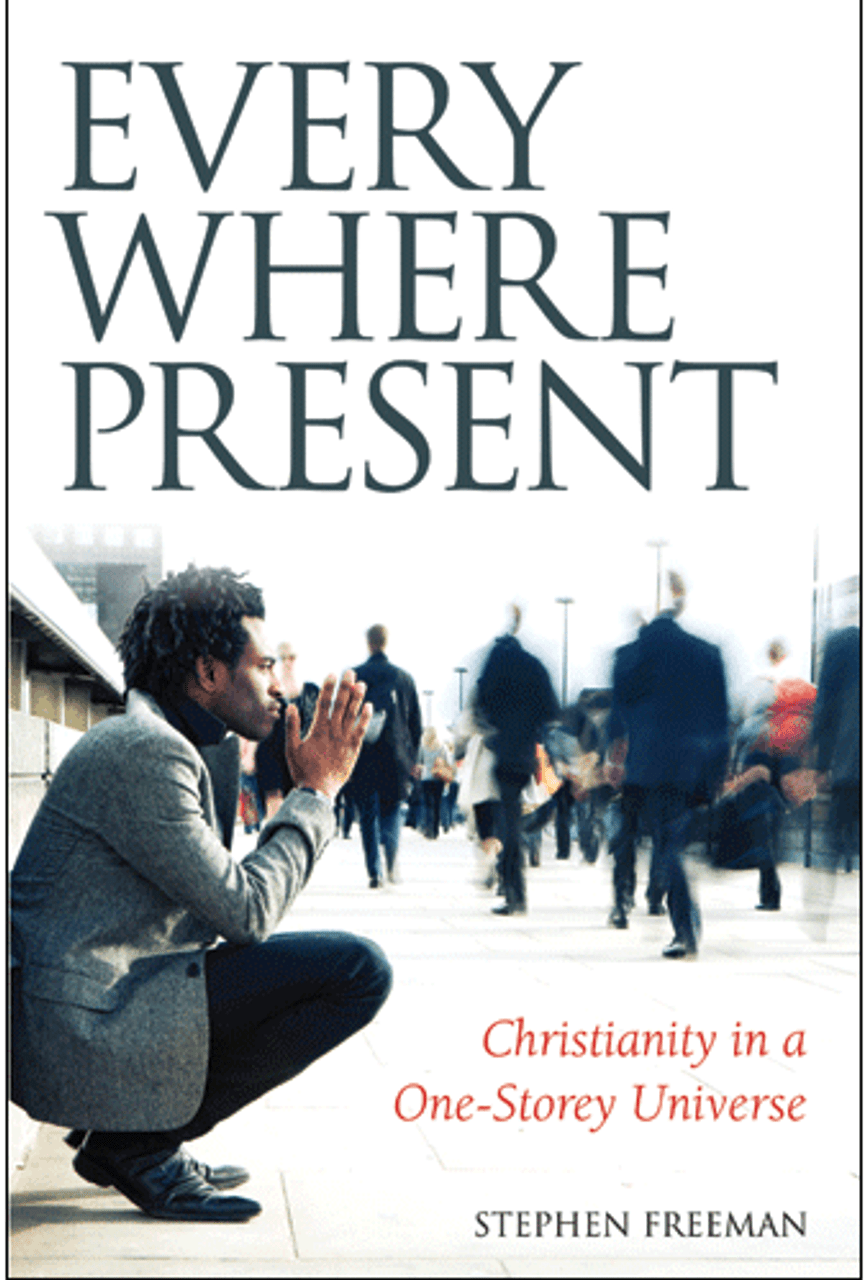
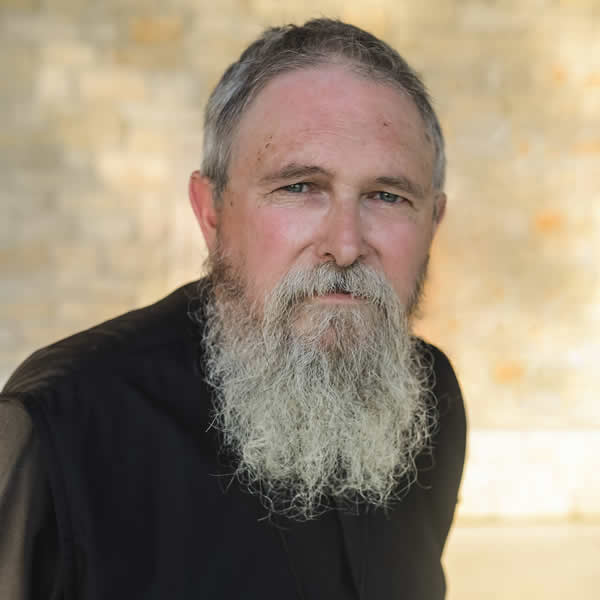
Fr. Stephen is a retired Archpriest of the Orthodox Church in America. He is also author of Everywhere Present: Christianity in a One-Storey Universe, and Face to Face: Knowing God Beyond Our Shame, as well as the Glory to God podcast series on Ancient Faith Radio.


Posted

in

by

Comments

19 responses to “Rest for Your Soul”

  1. Ken Seigneurie Avatar

    Today as always, I’m astonished and grateful at the insight into the lines of suture between faith and the world in this blog.

  2. Rob Avatar
    Rob

    (Luke 17:10 NKJV) “So likewise you, when you have done all those things which you are commanded, say, ‘We are unprofitable servants. We have done what was our duty to do.’ ”

    (1 John 3:16 NKJV) By this we know love, because He laid down His life for us. And we also ought to lay down our lives for the brethren.

  3. Fr. Stephen Avatar

    Ken,
    God is merciful!

  4. Kate Avatar
    Kate

    Thank you for this, Father Stephen. I need such continual reminders to pull me out of western culture’s worldview, which permeates everything and feels so inescapable. It’s like coming up for air only to be sucked back down by the undertow a short time later; I so quickly forget and find myself thinking and acting in terms of cause and effect. The more I am exposed to the Orthodox worldview, the better I can breathe, and hope to someday get freed from the powerful current.

    Just one question – when you say God “causelessly causes” do you mean that nothing outside of Himself causes Him to do whatever He does?

  5. Fr. Stephen Avatar

    Kate,
    What I have in mind when I write “causelessly causes,” is that God’s causation is frequently unobservable – hidden – unseen.

  6. Mallory Avatar
    Mallory

    Thank you, Fr. Stephen. I continue to read your words gratefully, but haven’t commented in awhile. I’m grappling with a crisis of faith, I suppose. Moment by moment, I can hold onto: do the next right thing. But saying the Jesus Prayer, resting on belief in this unseeable, unknowable Reality feels impossible for me these days. I find Christians around me just throw Bible quotes my way, but they feel more like a threat, like: if you don’t believe, you won’t be saved. But these are quotes from a book, beautiful, yes, but not proof of anything. And saved from what? I know many good hearts who don’t believe, who have rejected religion outright. What happened to compassion and love? Isn’t that what Jesus talks about in the NT? Reading the OT messes me up for days, so I just don’t touch it anymore.

    I’ve been thinking a lot about cause and effect these days, which is what compelled me to comment: my mother is battling cancer, and continues to drink heavily. The cancer showed up after years of her becoming a late-in-life alcoholic. Is that not cause and effect? Maybe not, it’s more mysterious than that. Maybe it would have happened no matter what she chose to drink or not drink. Still, it’s hard to watch someone keep doing something that is destroying them after hundreds of thousands of dollars in treatments. My daughter, at 4, has discovered Taylor Swift and is forever changed. She sings along, dances with abandon, with such joy and passion. I wonder: is this ok? Do I take this joy away from her? No doubt that’s what many I know would do, some of the lyrics (although not as many as you would think) are not at all holy or “good”. Yet she spins and sings and makes up her own songs to rival hers and tells me: “I am so happy when I listen to Taylor” (really, she has said these exact words) so I let her. I sometimes dance with her, I wonder about how before I started down this path of faith I wouldn’t have thought twice about this, I would have just enjoyed my silly, fun time with her. But for some reason this path combined with this time in history has brought out this cautious, seriousness in me. I don’t know why. It makes me question everything, most of all how most people live day after day in complete mystery. Basic things are unknown to me that seem to be known to others, or they just–there’s that word again–believe: where are we really? Who is in charge, really? The politicians on the stage seem like actors. I don’t believe the stage anymore, can’t after the pandemic, impossible. It’s too surreal, too designed to inflame anger at “injustices” 24/7 but I can’t buy it anymore. So: the next right thing. Make my daughter good food, turn on the music, let her dance. Thank you for your writing, and for this space.

  7. Fr. Stephen Avatar

    Mallory,
    I can remember a time in my life, when I had left the charismatic movement and returned to the Episcopal Church, that my reasoning ran: “I know if I go there, no one will try to talk to me about God after the service.” It was totally true. I needed (wanted) communion, but I did not want any theological/pastoral conversations. I was in need so healing for my soul…and a quiet communion was enough (at the time).

    Belief is such a complicated thing in our lives…and we often make it too complicated. You’re wise to give the OT a wide berth for the time being.

    I’m glad that you dance with your daughter…and that she dances with Taylor.

    My father was an alcoholic – and I loved him with all my heart. But, there were times, both as a child and as an adult, when that relationship complicated many things for me. He died sober (and Orthodox).

    Doing the next good thing is the right thing pretty much all the time. The politicians are, indeed, just actors. I don’t think we need to figure out a belief system in which they are more than that. God is working for the salvation of all – which is to say that His goodness is truly at work. But, when we get very far removed from the next good thing…the confusion sets in.

    Keep dancing. It’s good to hear from you!

  8. Mark Spurlock Avatar
    Mark Spurlock

    Hi Mallory,

    One of the aspects of Orthodoxy that helps me with questions like those you pose is no longer feeling I need to know, understand, or verbalize everything about my beliefs. Orthodoxy’s frequent comparison of the soul to the body and the church to a hospital, for example: a person may not have learned the science of respiration and digestion, but she knows to keep breathing, drinking, and eating to live. Regardless of where we are in history and how all those “people out there” live day after day, my heart keeps on fulfilling its purpose, one beat at a time, thousands of times each day (for which I am grateful). As you say, moment by moment, and that little labor is sufficient to keep me alive.

    Yesterday was the Sunday of the Pharisee and the Publican, whose prayer is akin to the Jesus Prayer: “And the publican, standing afar off, would not lift up so much as his eyes unto heaven, but smote upon his breast, saying, God be merciful to me a sinner.” Jesus says the Publican, rather than the Pharisee, went home to his house justified.

    When we are poor in spirit, rather than confident in our self-righteousness, that is when we are most receptive to the Kingdom of God. I would not, therefore, call your condition a “crisis of faith,” but rather a time when you are most in need of and focused on God. To again use the body comparison, when we hunger is when we become most conscious of our need and desire for food.

    Regarding Taylor Swift, I recently posted a video link to a favorite song of mine by Florence and the Machine. I similarly struggle with some of the artistic persona Florence Welch adopts and how her art relates to Christianity. Just sharing that as a commonality between us–I don’t have any quick answers as to how to resolve it 🙂

  9. Fr. Stephen Avatar

    Mark,
    I love your response to Mallory – particularly the example of the breathing and the heart beating – regardless of what we might be thinking. I’m gonna store this one up for use in the future. Thank you.

  10. Mark Spurlock Avatar
    Mark Spurlock

    Thank you, Father Stephen.

    You are free to use the heartbeat analogy because I likely “owe” it to you in the first place! You recently mentioned that you have read “The Way of the Pilgrim” several times, and as a consequence, I’ve read it now. The narrator’s linking of the Prayer of the Heart to the rhythm of his actual heartbeat had me thinking in that vein. (Vein…hahaha.)

  11. Andrew Avatar
    Andrew

    Thank you Father. There has seemed to me to be, at least in some loose sense, a kind of cause and effect in the lives of the Saints; even in our own lives. The one who prays, fasts, gives alms, etc. seems to experience Grace to a greater degree than the one who doesn’t. The Saints lives, in particular, are often characterized by great extremity in these and other labors. What would you say is the relationship between the extremity of labor and Sainthood? I realize it’s ultimately the Grace of God that works salvation in us, but there seems to be the level of secondary cause which we play that does have a sort of cause/effect relationship. I’d love you hear your thoughts on this or what I’m perhaps seeing incorrectly.

  12. Fr. Stephen Avatar

    Andrew,
    Because God is personal (not just a force), there is no pure cause-and-effect in our relationship with Him, strictly speaking. Cause-and-effect would be, “I do this, and I get this.” On the other hand, our actions are not useless. They do draw a response – they are relational. However, the response is also proportional – that is – it suits us – it “fits” us. In the lives of the saints – we read storied accounts (that are themselves marked by the input and understanding of the story-teller). I’ve read saints lives that are very much in the vein of cause-and-effect but I take that as the theological perspective of the author. They’re not Scripture – they are for our benefit.

    Ultimately, we pursue God for His own sake – and not for our own. It is our humility that draws grace (“He gives more grace to the humble”). The point of prayer, of prostrations, of fasting, etc., is to nurture the virtue of humility (to “bear a little shame,” in the words of St. Sophrony). As such, even failure, rightly received, can nurture humility.

    I hope that’s helpful.

  13. Andrew Avatar
    Andrew

    Thank you for the response.

    “We pursue God for His own sake – and not for our own”.

    Can you elaborate a bit on that? On the one hand, I understand the idea of seeking the Giver and not the gift. However, I also recognize internally a virtually inescapable connection between by need/desperation/longing for peace/meaning etc, and my pursuit of God. Perhaps this is just an unwitting confession of the anemic state of my soul, but I can scarcely conceive of a seeking that isn’t tied to the finding and what that means for me. Hopefully that makes sense.

  14. Fr. Stephen Avatar

    Andrew,
    I readily agree that there seems a virtually inescapable connection between our need, etc., and our pursuit of God. St. Anthony the Great (I think it was) described three kinds (stages) of discipleship: that of a slave – who serves out of fear; the hired hand who serves for pay (what he gets); and the son – who serves out of love.

    I suspect we often bounce between the hired hand and the son. Sonship is a goal towards which we grow. We are often hired hands – starved as we are.

  15. Andrew Avatar
    Andrew

    Thank you Father

  16. Fr. Stephen Avatar

    Andrew, I’m a hired hand who wants to become a son.

  17. Mallory Avatar
    Mallory

    Thank you, Fr. Stephen, your response soothed my heart and helped me shed a few tears which turns out I really needed.

    Mark, thank you for your beautiful reply, I’ve been holding onto this in particular: “When we are poor in spirit, rather than confident in our self-righteousness, that is when we are most receptive to the Kingdom of God. I would not, therefore, call your condition a “crisis of faith,” but rather a time when you are most in need of and focused on God. To again use the body comparison, when we hunger is when we become most conscious of our need and desire for food.”

    I also love some Florence songs 🙂 Music, obviously I am not alone, seems to be able to get to my heart so much faster than reading even though I am constantly reading. But sometimes, just someone’s tone of voice in a song, calling out, can break my heart open before my mind has a chance to protect/defend it from feeling too much.

    Grateful for this place.

  18. Jenny Avatar
    Jenny

    Father,

    This article helped me reach a point of clarity on a particular “homework assignment” that I’ve been struggling to finish.

    When I first began to perceive the presence of the Lord and hear His voice, I could not understand why or what He expected.

    At first, I assumed that I was going to die. But time went by and I persisted in a healthy state.

    Then I began to worry that I was losing my mind. But as time went by, I could go back and reread my journal. It didn’t sound like the manifestations of psychosis.

    When I asked the Lord what He wanted from me, His answer was simple. To love my husband, to love my children (whom we hadn’t adopted yet, but we had begun the process), and occasionally to give pieces of my testimony away in writing. That was all He required in terms of an outward ministry. Inwardly, simply to love Him.

    So nothing more than what He had already said- to love God with all our heart and mind and breath and strength and to love our neighbor as ourselves, and to freely give, because freely we’ve been given.

    Nothing exceptional. But I got lonely and I began to long to talk to other people who had similar experiences. The only place I could think to look for this in a current state was in the prophetic stream of Charismatic church.

    I did a google search and the first or second thing I read was a list of visions arranged in their spiritual significance. Never before had I considered that there might be a spiritual hierarchy of experiences with the Lord. I had assumed any interaction with Him must be exceptional.

    According to the listed criteria, mine were at the top. Immediately I was filled with excitement. I could see myself, gracious, powerful, composed, standing at the stage of a large modern church, sharing my testimony and then laying hands on people waiting in long lines and praying for them, with healing and deliverances and imparting the anointing to others.

    The whole day, whatever I was doing, I was caught up in this anticipation of my future and how much good I could do for the Lord and how much glory I could bring Him. I thought about where we might move and what church we might join.

    In the evening, I went to the Lord. As soon as I was in His presence, I saw that all my day dreams had been about gratifying my ego in His name. Only on the surface had it been about Him and others.

    It was disorienting and frightening, and I had to truly repent. It has been something I’ve never forgotten. And I suppose this is why those verses for Psalm 19 have remained so important to me:

    Keep back Your servant also from presumptuous sins;
Let them not have dominion over me.
Then I shall be blameless,
And I shall be innocent of great transgression.

    The Lord told me clearly then that He would never give me any such ministry as I had been imagining or any public ministry at all. He would keep me in obscurity the whole of my life because it was His purpose.

    But it’s so difficult to keep from thinking that such a cause as the Lord’s presence could not have a glorious effect. Surely it must!

    So for ten years I kept looking through the framework of Charismatic beliefs, hoping that maybe those beliefs could explain the Lord’s presence and therefore, it would mean something good for others.

    But the thing that I have been coming to terms with lately is that in looking in that direction, I have often been distracted from and discounting His first, simple instructions to me- to love Him, to love my neighbor and to be obedient in giving away what He asks me to give. In the last comment I shared, this distraction and discounting is what I had been repenting of so deeply.

    That grieves me, but at the same time, it grieves me deeply to think that, after all, I never can repay Him for everything He has given me- that I cannot give Him something back of equal or greater importance- an “effect” worthy of His time invested in my life. It has been a kind of dying to let go of that hope. I feel that in the last year and especially lately, I have been dying to a certain way of understanding things. It has been painful, humiliating and sad.

    But it’s a relief as well, to remember the Lord’s instructions. I can set aside both the hope and disappointment of the past season and concentrate on doing just what He said and take a great deal of joy in it. After all, I love my family very much, and I don’t know what could be higher than loving God Himself. It is the first and most important commandment.

    So when you wrote about cause and affect in the Kingdom of God this way, it further helped me put into perspective everything which I have been wrestling with lately:

    “The spiritual life is no different. God is free and cannot be expected to behave in a predictable manner (known to us). We can expect certain things according to His promise, but even those things largely remain hidden.”

    And certainly I was very tempted and fell right into this trap of which you write, and would have stayed in it, if the Lord had not illuminated my darkness:

    “But we are creatures who dream of being gods, though entering by a false door. Rather than being raised up and conformed to God’s image by the ineffable working of His grace, we prefer to make little god-lets of ourselves, becoming masters of our lives.”

    Do you think then, that if I spend the rest of my life doing just the things the Lord told me to do, and daily repenting when I fail, and trusting Him all the time with the result which I will not expect to see, that this might be one way to acquire the Spirit of Peace? Because I’m worried that just as I have been becoming clear from this past season, I have already set another goal too high- acquiring that Spirit.

    I have been learning about prayer in the book, the Enlargement of the Heart, but those ways of prayer seem far beyond my reach. That is, I am drinking a lot more tea than I am looking at the abyss, if I have been at all. 🙂 But if repentance and obedience in a quiet life is a good prayer, then I think I can pray that way.

  19. Fr. Stephen Avatar

    Jenny,
    Even our smallest prayers are of great benefit! God continue to give you grace as you follow Him!

Leave a Reply

Your email address will not be published. Required fields are marked *


Subscribe to blog via email

Support the work

Your generous support for Glory to God for All Things will help maintain and expand the work of Fr. Stephen. This ministry continues to grow and your help is important. Thank you for your prayers and encouragement!


Latest Comments

  1. Thanks Dee. I appreciate your words.

  2. Great article, congratulations. I am an iconographer, and I appreciate your words; you have described the icon wonderfully.

  3. …the audio on this one is better: https://youtu.be/VjWxkUEJkqs?si=wPCo7-4JFT2eutwv

  4. Matthew, beloved brother, I should add that while we might not argue to proselytise, we’re notorious for arguing amongst ourselves!


Read my books

Everywhere Present by Stephen Freeman

Listen to my podcast


Categories


Archives