The Good That Lies Within

There is this famous quote from Alexander Solzhenitsyn:

The line separating good and evil passes not through states, nor between classes, nor between political parties either — but right through every human heart — and through all human hearts. This line shifts. Inside us, it oscillates with the years. And even within hearts overwhelmed by evil, one small bridgehead of good is retained.

Solzhenitsyn’s statement that “even within hearts overwhelmed by evil, one small bridgehead of good is retained,” is, I think, the single most hopeful statement regarding humanity that I have ever encountered. It is, first, an axiom of Orthodox Christian belief. A notion of total depravity, of human evil so thorough that nothing good remains, is alien to Orthodoxy. Whether it is Dostoevsky’s story of the old woman saved by a rotten onion (or “potentially saved” by that single miserable act of generosity), or the last-minute salvation of the thief on the Cross, the faith celebrates the extreme mercy found in such stories.

C.S. Lewis, in The Great Divorce, offers an interesting take on the presence of this tiny bridgehead of goodness. People from what might become hell take a bus-ride to the edge of heaven, and may stay. It is an offer that reveals the innermost heart – the in’s and out’s of how someone might walk away from heaven itself. There is a woman in the story who seems to have nothing wrong with her other than the habit of grumbling about everything. Lewis wonders what is so wrong with her. He is told:

The question is whether she is a grumbler, or only a grumble. If there is a real woman—even the least trace of one—still there inside the grumbling, it can be brought to life again. If there’s one wee spark under all those ashes, we’ll blow it till the whole pile is red and clear. But if there’s nothing but ashes we’ll not go on blowing them in our own eyes forever. They must be swept up.’

‘But how can there be a grumble without a grumbler?’

‘The whole difficulty of understanding Hell is that the thing to be understood is so nearly Nothing.

I wrestle with questions of “anthropology” when I think of such matters. By that, I mean the question of exactly what it means to exist as a human being. I have written numerous times about the “ontological” versus a “juridical” approach in theology. We are not legal objects, nor is our relationship with God rightly to be understood in juridical terms. We are beings and what we have with God and from God must be understood in terms of being. Being alone is real. There are no other categories of real. If it doesn’t have being – it doesn’t exist. This is the ground on which all of the doctrines of the Church were founded. The language of the Trinity, of Christology, of sacrament and icon were (and are) propounded in terms of being.

If Solzhenitsyn is right, and there remains, even in hearts overwhelmed by evil, a bridgehead of good, then there are realities that follow. I believe that Solzhenitsyn is correct. Accepting this means thinking carefully about what we mean when we say “good” and “evil” in the human context. The Fathers of the East generally conflated goodness, truth, and beauty as aspects of authentic and true being. Evil, on the other hand, is only ever a perversion of what is good, true and beautiful – it has no existence (being) in itself.

Lewis’ suggestion of Hell as being “so nearly Nothing” conforms to this understanding. However, when “non-being” is described  in the Fathers’ writings, it is always “relative” non-being, using the negative particle μή (me) rather than οὐ (ou). “Me” indicates a direction and movement rather than an accomplished fact. This same distinction, however, clearly leaves room (and tacitly acknowledges) the “bridgehead of good.” Nothing that we describe as evil is ever utterly and completely evil (as troubling as that thought might be). They exist. We cannot say, even of a demon, that there is nothing “good” that is present. As mysterious as it remains, demons exist, because it is the gift of a good God, and their existence itself remains a good thing.

St. Paul uses the image of a race to describe the Christian life. It has much to recommend it, particularly because it describes something in motion. We are not a set of categories or static entities. We are alive and moving. Our proper direction is to move towards union with God. This is the very definition of “good.” To use the examples of the demons again, we can say that their “motion” is towards non-being, and is thus “evil.” Christ says that Satan is the “father of lies,” and a “murderer from the beginning,” both rooted in aspects of non-being (lies, murder).

So, when I consider that there is possibly some movement towards God (a bridgehead) in even the most “evil” of persons, then I maintain a hope for that small “coal” (to use Lewis’ image) to be fanned into a flame. I am very doubtful about many of the things predicated of the human will, primarily because it seems to be as much in motion as the cells in our bodies. Is the will to be measured at some moment – say, the last moment? Is it taken as an average of all moments? Or do we often die as a collection of conflicted moments, tossed about by everything around us?

The Russian theologian, Fr. Sergius Bulgakov, who was known for holding opinions that sometimes conflicted with the faith of the Church, had a very interesting take on the parable of the Sheep and the Goats. He treated those images as two things within each person rather than a distinction between different kinds of people. As such, the judgment described would be a winnowing and a purification, a saving of the Sheep, however feeble and muted its movement towards God.

That manner of reading the parable is not unlike many treatments of parables in the Fathers (internal and mystical rather than external and historical/moral). My “take-away” from these thoughts has to do with the nature of the struggle that surrounds us and is within us at all times. In the darkest of moments, even when our will is in its greatest rebellion, there remains a “bridgehead” to the good, some portion that represents a foundation for repentance. The “noise” of our sin is the fury of nothingness, raging against the reality that dwells at the bridgehead.

I’ve counseled with parents across the years who are baffled by the behavior of a teen or a young adult who is lost in the noise of sin. It is a common thing for them to speak about the essential goodness of their child and their own inability to understand what has happened. “Nothing” has no explanation. I’ve always heard in those thoughts an echo of the heart of the Father in the story of the Prodigal Son. He sees his son from far off, indicating that he had always been watching and waiting. His son returns “alive” and not “dead.” The “dead son” remained behind with the swine. “This my son was dead and now he is alive.”

The repentance of sins is never anything less than resurrection from the dead. There is not a “reform” of that which is dead. It is a “new creation” in the words of St. Paul. It is the brushing away of the ashes that are so nearly Nothing.

I have found these ideas helpful in dealing with other people (and myself). That bridgehead of goodness is often held captive, trapped in the web of near-nothingness that we call sin. When we pray for others, we pray for the truth of their being, and its triumph (in Christ) over all opposition. Most importantly, it is vital that we recognize, even in the darkest of souls, that something remains of the good. In the work of salvation, it is the discovery and nurture of that very thing that is essential. We must fan the coal and pray for the flame of God to consume us.

______

Photo: An old photo from my wedding (50 years ago). It is my wife and I dashing out the door to the getaway car. It seems a fitting image for this article in that we are in motion (and, though we’ve slowed down, we’re still moving!). We could not see the future, but, by the grace of God, we were already heading in the general direction that we’ve maintained. Everybody has to make a few course corrections in life. May God give us all grace sufficient for the journey!
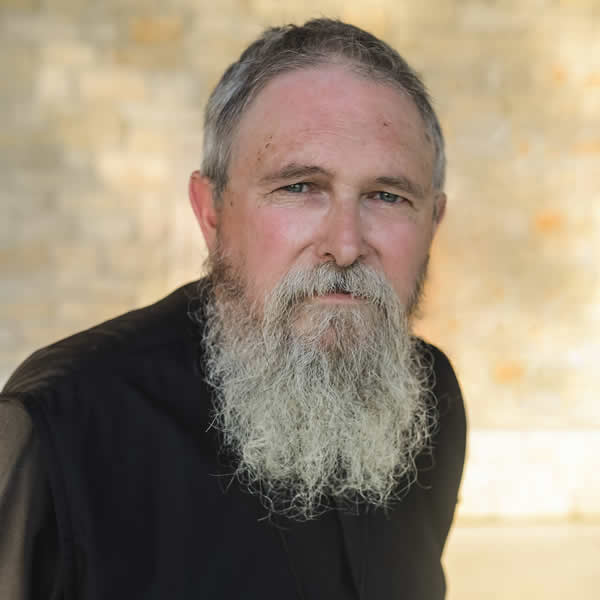
About Fr. Stephen Freeman

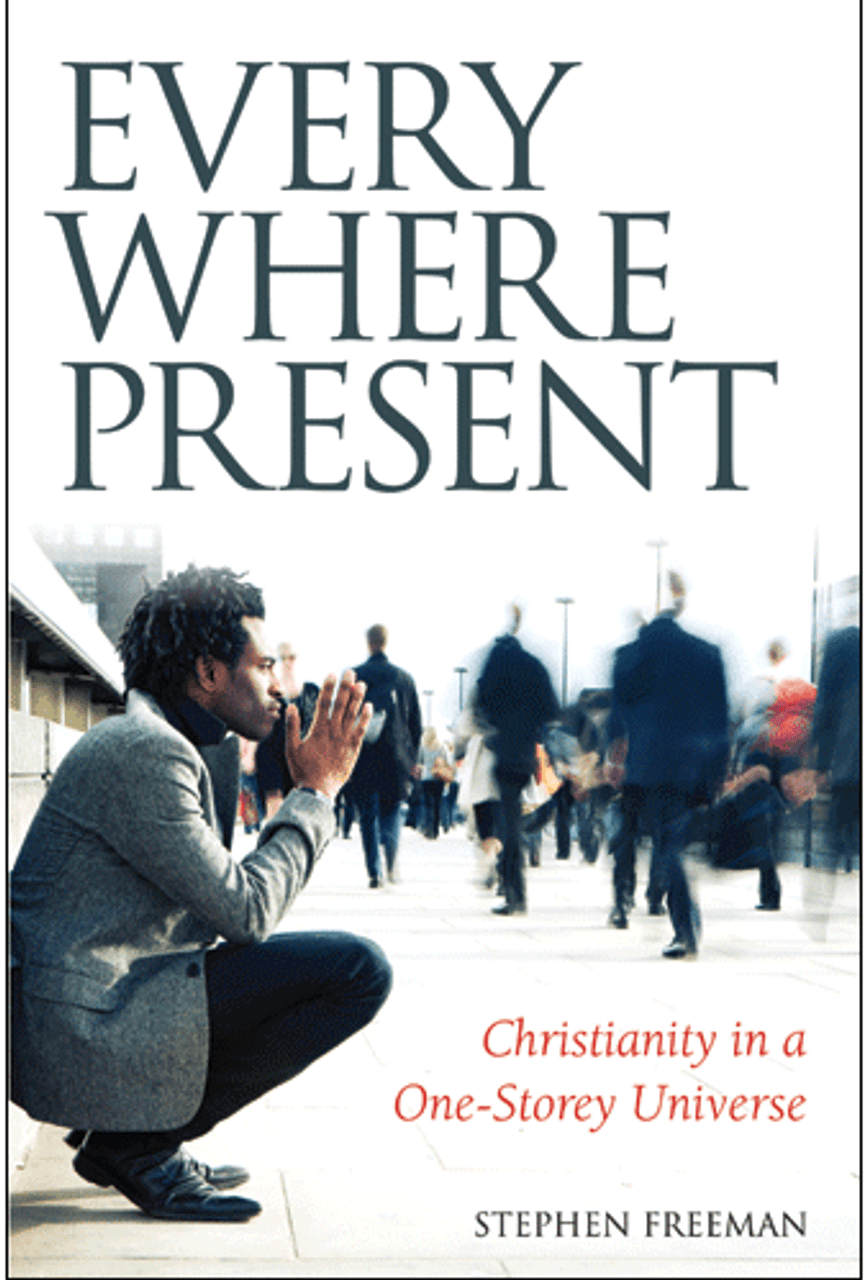
Fr. Stephen is a retired Archpriest of the Orthodox Church in America. He is also author of Everywhere Present: Christianity in a One-Storey Universe, and Face to Face: Knowing God Beyond Our Shame, as well as the Glory to God podcast series on Ancient Faith Radio.


Posted

in

,

by

Comments

40 responses to “The Good That Lies Within”

  1. Fr Mark Shillaker Avatar
    Fr Mark Shillaker

    This is beautiful Father. Thank you! I re-read The Great Divorce periodically – it always rewards.

  2. Fr. Stephen Avatar

    Fr. Mark,
    Many thanks! I did a question-post on Facebook a year or two ago in which I asked, “What books have you re-read most often?” I think the answers speak volumes. My own take on it is that those re-reads are not “information events.” We know what the books says – so why read it for the 5th time? I think it’s something like the “space” the book occupies. It is a place we visit. For myself, the books I’ve re-read most often are very much that. I’ve read the Dostoevsky canon several times. I’ve read The Way of a Pilgrim probably 10-20 times. Lewis and Tolkien – I couldn’t begin to count. The novel, Laurus, though rather new, I’ve read at least 4 times. Each of these, in some manner, is a “place” that I like to visit. They can be a place of sanity (the Way of a Pilgrim), of peace, of insight, etc. Reading such books is much like celebrating the Liturgy. I know what the Liturgy says (there’s nothing “informational” going on for the most part). But the Liturgy is a place that I visit without reserve.

    God give us grace!

  3. Ann Dibble Avatar
    Ann Dibble

    Love, love

  4. Helen Avatar
    Helen

    Rereading a book is like revisiting a place! It’s a place within me that I know I need to pay attention to and learn something in a new way, perhaps. Such a joy to do.

  5. Simon Avatar
    Simon

    Fr. Stephen.

    I really am chewing on this article. Wisdom!

    There are a couple of thoughts that struck me. First, if I might interject thoughts I have been contemplating about hypostatic presence. I now see this in John 1:1 where it says the “Word was with God” but the word for “with” is the Greek pros as opposed to sun where pros indicates a directionality “towards” and sun denotes a more static or passive adjacency. In other words hypostatic presence is always “towards” God.

    I have been thinking about presence as something hypostatic fullness is versus an attribute that hypostatic fullness has, as in the Word in John 1:1. With regard to the article, the grumble is incapable of being present to anyone or anything in any real sense at all. The behavior of the grumble appears directionless so how can it be present? The grumble is scattered. It is just a directionless, presence-less grumbling that grumbles at whatever might be in front of it.

    I have been this kind of person. Maybe to a large degree I still am.

    I have been a “bull in the china shop”–just stomping around looking for red flags to charge at. This is what unbridled passions do: They make nothing of us. They dehumanize us.

    I want to tie this in to Genesis 1 to see what you think, but only with your permission.

  6. Scott Avatar
    Scott

    Thank you for this Father Stephen!

    It gives me a lot of hope in these difficult times. I’ve been reading Father Gregory Boyle also, and this resonates with some things he keeps saying: “We are all unshakably good. No exceptions.” And: “We belong to each other. No exceptions.” Also I remember Metropolitan Herotheos Vlachos saying something like: Everyone is walking around as if they have kindling inside them. It is our job to be aflame with the Holy Spirit so we ignite that kindling in those around us.
    I personally get angry and frustrated reading the news or seeing what we do to each other and I fall away from this into trying to control things or imagine controlling things. I need to keep trying to remember and turn to Christ. I need lots of reminders.
    Thank you for another beautiful one.
    All the best, Scott Herman

  7. Gé van Gasteren Avatar
    Gé van Gasteren

    Dear Father, Teresa of Avila is even more confident, describing the human soul as layers of “mansions” around a divinely lit “jewel”. That the light doesn’t shine out more from us is because it’s obstructed by the “monsters” living in those layers. And our task, as I’ve understood it, is to live such a life as will remove, one by one, those dark creatures – which I interpret as traumas and other debris resulting from past wrong thoughts, words, and actions.

    Do you know if and how this thought model might be compatible with, or translated into, Orthodox thought?

  8. Fr. Stephen Avatar

    Simon,
    Go for it! I’ll be interested to see what you do.

  9. Fr. Stephen Avatar

    Gé,
    What you quote from Teresa of Avila is not unlike some of the thought in St. Gregory of Nyssa.

  10. S G Avatar
    S G

    “The repentance of sins is never anything less than resurrection from the dead.“

    Thank you for these words- they have touched my heart

  11. Jeff Avatar
    Jeff

    Fr. Stephen,
    ‘’ O Lord Almighty, God of hosts and of all flesh, Who dwellest on high and lookest down on things that are lowly, Who searchest the heart and innermost being, and clearly foreknowest the secrets of men…’’ St. Basil the Great

    First of all: those Eyes! I see them in the icon of Christ in the altar. They pierce right into me. I often ask Jesus, “What do you see when you look into me like that?’’

    When I have prayed this prayer in the past, I’ve always imagined God seeing all the ‘’noise’’ in my heart. I have thought about this noise/darkness/sin as being the make up of my innermost being, and that’s what God sees. With the help of your article, I am hoping/imagining God seeing not only the noise, but seeing through it, down to my innermost being, which is not the noise, but the image of Him that He created when He made me. I am hoping God is healing that image, and that some small part of me is moving back towards home.

    Is that a right way to think?

  12. Fr. Stephen Avatar

    Jeff,
    Yes. You are not the noise…you “hear” the noise, but the noise is not you. God give you grace. You are in my prayers today…and I’m giving thanks for the clarity that God is speaking to your heart.

  13. Dee of Sts Herman and Olga Avatar
    Dee of Sts Herman and Olga

    It is sensing the bridge to the good in my heart that gives me hope, though I am unworthy, when I fail over and over.

  14. Fr. Stephen Avatar

    Dee,
    I think that this “bridge to good” in the heart might sometimes appear as little more than a point of light to us – though I think this is because we too often imagine the darkness to be greater than it actually is.

    St. John says, “Every one who loves is born of God and knows God.” What we know of love might be little more than an island…but still it remains.

  15. Dee of Sts Herman and Olga Avatar
    Dee of Sts Herman and Olga

    Dear Father,
    Thank you so much for your kindness and beautiful words.

  16. Rob Cochran Avatar
    Rob Cochran

    Beautiful. For some reason, this made me think of the Quaker understanding and experience of the “Inner Light” popularized by George Fox. Do you have any thoughts on early Quaker experience, practice, and teachings and whether or not this relates to Orthodox spirituality?

  17. Fr. Stephen Avatar

    Rob,
    I think there’s a lot of inaccurate remembering about early Quaker experience. For example, Quakers were not pacifists until after the English Civil War (1640’s). But, to a large degree, the inner light was an extremely dangerous practice – it had no external control or reference and frequently became quite bizarre. The “radical Reformation” – the various groups that spun up in post-Reformation England are a special interest for me. They are the source for most of American Protestantism (in all of its vast array).

    In Orthodoxy, there is a context for inner experience, and a “control” (particularly through Confession and the guidance of a priest). Your question is a good question. The Orthodox spiritual life always requires the context of the Church and the fullness of Holy Tradition. I spent several years in the charismatic movement in my late teen’s and early 20’s. My experience was that it was madness (more in some places than others) and I ultimately “fled” it looking to return to some kind of grounding in the Tradition.

    Orthodox treasures the reality of experience – but in context.

  18. Rob Cochran Avatar
    Rob Cochran

    Got it. My reference point is more George Fox, his writings and sermons, rather than the Quaker movement as a whole through history. I just get the sense that he had an encounter with Christ and subsequent life with Christ in a way that is similar to Sadhu Sundar Singh and many others through history.

    I can’t shake my viewpoint that if you strip all of this away: “I am of Paul, I am of Apollos, I am of John Calvin, I am of John Wesley, I am of Martin Luther, I am of George Fox, I am of Protestantism, I am of Roman Catholicism, I am of Eastern Orthodoxy” and on and on and on, then the question you are left with is: “Are you of Christ?”. Christ isn’t divided. There is more or less messiness found in all traditions. This doesn’t invalidate that within all these contexts, God, from His perspective, knows who are His. And He says we can know by the Spirit and the fruit thereof.

    I’ve been contemplating this verse, as well as 1 John as a whole:

    (1 John 4:6 NKJV) We are of God. He who knows God hears us; he who is not of God does not hear us. By this we know the spirit of truth and the spirit of error.

    John has this assurance of himself and the hearer: that if anyone can “hear” him (and others with him), then that person knows God. There is unity. So simple.

    I just don’t understand what could possibly be missing in people throughout history who have clearly followed Christ by the same unifying Spirit, and them being invalidated by some other measurement.

    I don’t even know why I’m venting right now. I mean no disrespect. I have benefited greatly from your writings and seeing you on youtube. I sense the pain, joy, freedom, and the Christ formation from which your teaching springs from (as a non-Orthodox) and am grateful to have come across you, even if only in internet land.

    Peace to you,
    Rob

  19. Fr. Stephen Avatar

    Rob,
    To a certain extent, Orthodoxy does not judge whether the non-Orthodox do or do not know Christ, or precisely what that means. We certainly do not say (if you’re speaking officially and not just some Orthodox guy announcing opinions online) that they are not Christians.

    It is interesting that you quote St. John who says, “we are of God.” Who does “we” refer to? He speaks from within the Orthodox Church. Could there have been, and were there, believers who were not in the communion of the Church? Yes. And there are warnings in the Scriptures about them.

    But, the Orthodox do not say, “they are not Christians.” We can say, “They are not in communion with the Orthodox Church.” Mostly what that means is that they can be all over the map, including speaking falsely and teaching falsely and living falsely. I will also say that among the finest Christians that I have known there are any number who were not Orthodox. By and large, Protestants have very few boundaries, and sometimes, none at all. The boundaries that Orthodoxy has observed and preserved are Apostolic in origin. We’re just doing what we were taught.

    Now – in our present historical situation – we start from all kinds of places. In the Western world, very few are born into an Orthodox setting. I was first introduced to Christ as a Baptist child. I do not now know a different Jesus because I am Orthodox. However, I know Him more deeply, and am in the communion of believers that has preserved that knowledge intact, while some of the places in which I was a member have since departed very seriously from the faith.

    But God is a merciful God. He’s not trying to make our salvation difficult, or even dependent on things far beyond our control. He has, however, in His mercy, preserved the Orthodox Church for these 2000 years through many testings, trials, etc. I am grateful to have found it and been made welcome.

    What I do not think is true is that the Church has no boundaries, or that it really doesn’t matter. It does matter – and is going to matter even more as the darkness of the world grows darker. There are many, many delusions out there. The boundaries exist not to make the Orthodox feel special – but simply to preserve that which St. John referred to when he said, “We.”

    I’m glad to “meet” you here in internet land. 🙂

  20. Rob Cochran Avatar
    Rob Cochran

    I appreciate your clarifying response and for your time. There is increasing darkness and many delusions, especially in the Wild Wild West! Please pray for me and the community I’m with. I’ll pray for you, too.

  21. Fr. Stephen Avatar

    Rob,
    When I was an Episcopal priest, I looked at Orthodoxy from the “outside” – but I looked at it – at the Fathers, at the Tradition, the lives of the saints, etc. They were a touchstone for me – even though my journey to actually becoming Orthodox took about 20 years. It was a long story – but that touchstone saved me from some serious mistakes and delusions along the way (some were very close calls).

    Orthodoxy is not a denomination – one thing among many. It is what it professes to be. I think there are many people who discover that in becoming Orthodox, they only became what they already knew to be true. That was true for me. Twenty years was a long time, but it never left me or abandoned me.

    May God preserve you and your community. God give us all grace!

  22. Matthew Avatar
    Matthew

    Rob said:

    “I just don’t understand what could possibly be missing in people throughout history who have clearly followed Christ by the same unifying Spirit, and them being invalidated by some other measurement.”

    Hello Rob. I think what was missing for me as an evangelical Protestant was mainly 1) an understanding of the Bible that was linked to the Church´s tradition and history and 2) The Eucharistic celebration as well as the other sacraments.

    As Fr. Stephen already pointed out, the lack of boundaries within Protestantism had me roaming all over the place. The very black and white biblical interpretive lens of evangelicalism frustrated me. The absence of the Eucharist left me clinging to only a rational understanding of Christ.

    All that to say – I too believe there is a fullness that many Protestants lack, though I would never say they are not Christians. Peace be with you Rob.

  23. Rob Cochran Avatar
    Rob Cochran

    27 years ago, God graciously and mystically intervened in my life while I was in lost in darkness at the moment a guy had a gun to my head, threatening to kill me. This was the beginning of a conversational prayer life, miraculous transformation, and to an eventual revelation of Jesus Christ. Most people have assumed I’m delusional when I’ve shared this, but I’m to far too convinced to concede that as being a possibility. I’ve never really been interested in scholasticism, apologetics, arguments, word worship, or rational understandings. I’ve been interested in:

    (John 17:3 NKJV) “And this is eternal life, that they may know You, the only true God, and Jesus Christ whom You have sent.

    As a result of all of this, I have always felt homeless within evangelical protestantism, even within the pentecostal/charismatic circles. It’s the “water” I swim in, but I hopefully haven’t become the “water”, though I’m sure I’m shaped in some ways that I can’t even notice. For better or worse, my home has been prayer… my home has been Christ. When I came across Orthodoxy, I knew there’s treasure there and still I have an overwhelming attraction. There’s “bones” to the body, Elders that have gone before, theosis, monasticm, family, love, discipline, submission, humility, fasting, prayer, giving, practice, beauty and on and on.

    What has held me back from doing an enthusiastic cannonball dive into Orthodoxy is that I can’t seem to connect the words of Jesus on bread, water, wine and so on with a sacramental understanding. The sacraments seem to be the shadow, not the substance. The substance to me has always been the Holy Spirit. Both are necessary, but if I’m locked in a dungeon and away from the body of Christ, I have all that I need (I think of Roman Braga’s testimony. Everything in me said “Amen” when hearing his 45 minute testimony).

    (Matthew 3:11 NKJV) “I indeed baptize you with water unto repentance, but He who is coming after me is mightier than I, whose sandals I am not worthy to carry. He will baptize you with the Holy Spirit and fire.

    I wouldn’t want to be in the midst of the church and cause conflict or disunity while still not being convinced by all the teachings. I’ve been there and done that in Protestantism, and it’s not been fun for either of us. 😆 I have to laugh so as to not cry.

  24. Fr. Stephen Avatar

    Rob,
    What a powerful experience, and I bring no doubt to it at all. God is merciful and gracious! I became a believer (consciously) at age 7. I’ve had moments and up’s and down’s, but have remained a believer through the years – I’m 72 now. I did not become Orthodox until I was 45. I do not disparage what I knew and experienced prior to becoming Orthodox. What I found in the Church was a reality and living testimony of the saints and the life of her communion that ratified and protected that saving experience that had been mine all those years.

    The connection between the inner experience and the outer forms of Bread and Wine (as well as water, oil, etc.) is, on the one hand, not obvious. It’s particularly not obvious in our modern mindset which has been trained for about 500 years to disparage those outward forms and speak of an “inward grace.” There’s certainly an inward grace. But that divorce between inner and outer is a modern invention – it has helped us to become strangers to the physical world in which we live instead of seeing that we are part of it as well.

    I would say that it’s been “from the inside” that the union of the reality of Bread and Wine and the Body and Blood of Christ, for instance, is discovered. It’s not obvious – it’s not supposed to be. These are “spiritual things” and they are “spiritually discerned.” (1 Cor. 2:14) Lots of times, I simply take Christ at His word: “Whosoever eats my flesh and drinks my blood abides in me and I in him.” Other times, the connection seems so real that it’s overwhelming.

    I suspect that you are no different than others within the Church. It’s actually a very good thing to talk about – to share your own hesitancy (as you have) and hear what others’ experience might be.

    FWIW, my book, Everywhere Present, might be of interest.

  25. Rob Cochran Avatar
    Rob Cochran

    Thank you, Father Freeman (and Matthew). You’ve been very helpful in sharing with me. I’ve been eyeballing that book of yours in particular, so I’ll check it out. Maybe its high time I went to a Liturgy. I just googled churches nearby and there’s a Saint Anthony the Great Orthodox (OCA) in Rock Hill, SC. It’s funny, Saint Anthony is one of my heroes after reading St. Athanasius’s bio of him. Last year I went to Mass a few times for the first time at Belmont Abbey College and even hung around after and chanted the Psalms with the Benedictine monks afterwards. I’ve been meaning to go immerse in a Divine Liturgy at some point. Do you have any advice as I “come and see”?

    And are you taking applications for spiritual children? 🙂

  26. Fr. Stephen Avatar

    There’s a good priest at St. Athony’s. I’m not very far away (I’m in Greenville). Just relax. There’ll be many people there who share much of your background and will have thought about similar questions. If you have a chance, greet the priest for me!

  27. Rob Cochran Avatar
    Rob Cochran

    I certainly will.

  28. Matthew Avatar
    Matthew

    Fr. Stephen said:

    “I do not disparage what I knew and experienced prior to becoming Orthodox. What I found in the Church was a reality and living testimony of the saints and the life of her communion that ratified and protected that saving experience that had been mine all those years.”

    Could you unpack this a bit more Fr. Stephen please? If someone had a charismatic experience of God as an adult which brought them into a believing experience of Jesus Christ, how is that experience more fully and better understood within the realm of Orthodoxy? I ask this because I know, for example, there are evangelical Protestant missionaries working in predominately Orthodox countries who want to convert the Orthodox Christians living there. It seems to me if a lapsed or unbelieving Orthodox Christian becomes a bonified believer in Christ through Protestant missions work … then maybe that missionary should simply send the convert to an Orthodox priest with the Good News?

  29. Matthew Avatar
    Matthew

    The Good News of the conversion I mean …

  30. Fr. Stephen Avatar

    Matthew,
    Christianity, in whatever land, has not fared well in the modern period. Secularism, in its various guises, has been extremely effective at eroding faith and Church attendance. I’ve written that in the modern world, everyone is a born secularist. That’s an exaggeration of sorts, but only mildly. Secularism is the default position of modernity – so much so that it would seem like “common sense” to many or most.

    That said, modern Evangelicalism has a striking advantage over Orthodoxy when it comes to evangelism in that it itself is pretty wholly secularized. It’s “two-storey” Christianity. It markets a privatized psychologized inner experience that need not conflict with the dominant cultural narrative. The “privatized Jesus who lives in my heart” can fit very comfortably in the modern world. Indeed, it’s probably the case that modern Evangelicalism is an evolutionary adaptation to the demands of a secularized world. It doesn’t actually need a Church (or mostly just for a fellowship sort of thing – which is a secularized notion). Communion is not seen as essential. Some have gone so far as to see Baptism as non-essential. What matters is an inner experience.

    It is of note that the Nicene Creed states that “I believe…in one holy, catholic, and apostolic church…” The Church is included as an essential element of the faith – similar to…”I believe in one God…” To the extent that this is true, much of modern evangelicalism (and Protestantism in general) is a denial of that faith – professing what is virtually a “churchless Christianity.” It has substituted a “fellowship Christianity” which is not the same thing.

    Now, God is a “good God and not willing that any should perish but that all should be saved…” which is to say that He is at work in all things for our salvation. When I wrote “I do not disparage what I knew and experienced prior to becoming Orthodox…” I am describing the goodness and faithfulness of God rather than proclaiming the virtues of the protestantism in which I was born, etc. I could write books about the various false-turns and dead-ends and other dangers that surrounded me over those years. And I could equally describe my many failings when I preferred various side-trips rather than adhering to the better path that God had already shown me. It was very messy…even up to the time of my conversion. God knows my shame.

    So, I rejoice in the mercy of God and His infinite generosity. But I’m also aware that dangers are real and that every deviation from the faith of Nicaea is fraught with possibly damage to innocent souls. I’m not so extreme as to say that such innocent souls are thereby lost and going to hell. That is none of my business.

    As to what protestant missionaries should or should not do – I leave it in God’s hands. They mean many things – but, too often, they do not mean any kindness to the Orthodox Church that they find in those native situations. Unwittingly, they are often colonizers of modernity. That saddens me. But God gives joy to my heart. As St. Paisios said, “A man can come to faith by seeing a fox cross the road…”

  31. Fr. Stephen Avatar

    Matthew,
    I should add to this the caveat that Orthodoxy should not be triumphalistic. That we profess to be the “One, holy, catholic, and apostolic Church” brings judgment to our constant failings to manifest that reality. Every failing in the life of the Church is a failure to love. And it has dogged our every step since Pentecost.

  32. Matthew Avatar
    Matthew

    Thanks so much Fr Stephen.

  33. Dee of Sts Herman and Olga Avatar
    Dee of Sts Herman and Olga

    Father,
    I believe you answered well concerning Protestantism. I see the strength in your words because you had many turns in your life where you (as far as I can tell) wholeheartedly committed yourself to Protestantism.

    It upsets me to learn about the efforts to evangelize Orthodox people away from the Church. This happened in Alaska under severe circumstances, where children were taken from their Orthodox parents.

    I have loved Protestants but never so much Protestantism. That said, having loved Protestants I am taught as an Orthodox not to judge the person or their beliefs. Unless the beliefs themselves might cause illness or harm as we often see in secular beliefs. To judge others, as I am taught in the Orthodox world view, is a sin.

  34. Fr. Stephen Avatar

    Dee,
    There are times and circumstances in this that fire me with anger (proselyting as they call it). But, I’m just trying to be gentle and generous. Orthodoxy has endured much through the years, as a “weaker” brother, or immigrant, or economic dependent, etc. I could list many sins. I’ll leave it for God to judge when the time comes. But it is tragic.

    As for my own life – I am simply grateful that my sins did not prevent me from finding the Church (or vice versa).

  35. Mark Spurlock Avatar
    Mark Spurlock

    Father Stephen,

    A Protestant relative of mine has talked about her denomination’s efforts to translate the Bible into the many Ethiopian languages, and this is presented as “finally” bringing the Word of God (presumably a modern translation) to the Ethiopians in their native tongue.

    I bite my own tongue out of family harmony and not seeing it as something worth arguing with her about when it makes her happy to think her church is doing a good work, but I have read that the Ethiopian Orthodox Tewahedo Bible is one of the oldest Bibles in existence.

    Am I wrong to see this Protestant effort as misguided and perhaps even poor stewardship in that missionaries and funds go to support it? It seems to me that if contemporary Ethiopians have difficulty with the language of the Tewahedo Bible, it would still be preferable to translate from it to a more modern vernacular than taking a newer English-based translation and working backward.

    According to Web sources, Orthodox Ethiopians still use the Tewahedo Bible in their services.

    Do you have any personal knowledge or insight to offer?

  36. Matthew Avatar
    Matthew

    How important is fellowship Fr. Stephen?

    As a revert Catholic who was for many years in Protestant evangelical circles, one thing I think Catholics could learn from evangelicals is fellowship. The very center and high point of the Catholic Mass is the Eucharistic celebration. As I understand it, the Eucharistic celebration is what unifies us as brothers and sisters in Christ – not coffee and cake in the fellowship hall.

    That said, there was a real benefit to the fellowship I had in some evangelical churches from my past. I really got to know people and in some ways we were more like family than my biological family. These kinds of relationships are much more difficult to form in Catholicism simply because the understanding of fellowship is largely absent. Many just attend Mass and go home.

    How is it in Orthodoxy?

  37. Fr. Stephen Avatar

    In Orthodoxy, coffee hour is pretty standard and quite important. That’s America. In Greece, I found a similar practice (in a neighborhood Church in Thessaloniki). I suspect it depends on many things in European contexts. If it’s a village Church, I would not be surprised if there’s not a coffee hour in that the village itself is an ongoing coffee hour. I’m sure it varies.

  38. Rob Cochran Avatar
    Rob Cochran

    I listened to your book “Everywhere Present”. Yes and Amen. I haven’t matured into all of expressions and made all the connections presented, but I celebrate the heart of the teachings and was quite at home listening to it. It exposes the spirit of the age where we live. Lord, preserve us, because it is in the air and the water. But God is always mercifully revealing and inviting us all to wake up to the “one story reality”. It’s really good news!

    I can’t remember how you phrased it, but my heart jumped at the part of love of enemies. That’s really is the point isn’t it. And that really is God.

    Thank you for the labor of love in writing this book,

    Rob

  39. Fr. Stephen Avatar

    Rob,
    Thanks so much!

  40. Matthew Avatar
    Matthew

    Thanks again Fr. Stephen.

Leave a Reply

Your email address will not be published. Required fields are marked *


Subscribe to blog via email

Support the work

Your generous support for Glory to God for All Things will help maintain and expand the work of Fr. Stephen. This ministry continues to grow and your help is important. Thank you for your prayers and encouragement!


Latest Comments

  1. Thanks Dee. I appreciate your words.

  2. Great article, congratulations. I am an iconographer, and I appreciate your words; you have described the icon wonderfully.

  3. …the audio on this one is better: https://youtu.be/VjWxkUEJkqs?si=wPCo7-4JFT2eutwv

  4. Matthew, beloved brother, I should add that while we might not argue to proselytise, we’re notorious for arguing amongst ourselves!


Read my books

Everywhere Present by Stephen Freeman

Listen to my podcast


Categories


Archives