Theophany – Showing the World to be the World

I was standing beside the Jordan River, somewhere along its trek through Israel. I was with a group of pilgrims led by Met. Kallistos Ware gathered for the Great Blessing of the Waters. Somehow, it seemed that I was the only priest who had brought an epitrachelion (stole), so I loaned it to the Metropolitan for the service. As the service began, I noticed a school of fish at the edge of the water, watching the bishop as eagerly as the rest of us.

Great art Thou, O Lord, and marvelous are Thy works. There is no hymn which suffices to hymn Thy wonders!

The Metropolitan’s voice boomed out across the valley in its Oxford-accented tones, sounding like the voice of God. The area where we had gathered was also marked by small groups of Protestant pilgrims who had apparently gathered to re-baptize one another. At the sound of the Bishop’s voice, everyone stopped to listen.

The words of the prayer over the waters continued. Written by St. Sophronius of Jerusalem in the 6th century, they carried the same style as that of St. Basil: strings of appositives accompanied almost every statement, expanding, echoing, expounding and explaining each phrase with yet more lines of Scripture.

And then something caught my ear that jarred me awake from the cadence of the words:

And grant to it the grace of redemption, the blessing of Jordan.

Now, that’s a very odd statement to make while standing at the waters of the Jordan. Aren’t the waters of the Jordan always the waters of the Jordan? What is the “blessing of Jordan?” Further, the prayer said,

But show this water, O Master of all, to be the water of redemption, the water of sanctification, the purification of flesh and spirit, the loosing of bonds, the remission of sins, the illumination of the soul, the washing of regeneration, the renewal of the Spirit, the gift of adoption to sonship, the garment of incorruption, the fountain of life.

I was already puzzled that we were praying for God to make the Jordan be the Jordan, and now we were asking Him to “show” this water to be a string of marvelous wonders. Shouldn’t we ask Him to “make” it be those wonders?

The answer came with the drop of a theological coin. Fr. Alexander Schmemann taught that, in the sacraments, we are not asking God to make something to be other than it is but to reveal it to be what it truly is. Asking God to show the Jordan to be the Jordan is simply the most blatant example of this principle.

A problem associated with sacramental thought, if this principle is forgotten, is that things that are blessed somehow cease to be what they are. Instead, they become exceptional moments in which the things of this world are no longer things of this world. They change while everything around them remains the same. We go to Church, the miracle happens, but remains confined to the altar or the font, while the world around it remains unchanged. The Church becomes the locus of the extraordinary while the world is stuck in the ordinary. It is, ironically, a two-storey sacramental order. This thing is holy, that thing is not. It is a diminishment of Christ’s work. The sacraments become points of contact with the second-storey, tiny windows in which miniscule rays of sunshine peak out into an otherwise darkened world. But the world itself remains dark.

The nature of the true sacramental understanding is revealed very precisely in the words of St. Sophronius. The Jordan is the Jordan. It is we who fail to see the world as it is. We imagine the world to be self-contained and self-referential. The Jordan is not the Jordan – that’s just a name: it is just some water, hydrogen and oxygen flowing over the surface of the third rock from the sun.

On the 6th of January (19th on the Old Calendar), Orthodox priests across the world, in their many thousands, will stand beside public waters, rivers, creeks, springs, seas and oceans, in some cases hovering over holes piercing through feet of ice, and speak the words of St. Sophronius. All of them will call upon God to send the blessing of the Jordan on the Nile, the Volga, the Mississippi, the  Bering Strait, the Bermuda Triangle, the Amazon, the Antarctic, the Yenesei, the Tennessee, the Atlantic and Pacific, the Black Sea and the Aegean, the Clinch River here in Appalachia, and all the waters of the world will be shown to be the Jordan.

The Feast of Christ’s Baptism is called “Theophany.” It means the “showing forth of God.” It is so named because, in the event of Christ’s Baptism, we see Christ, the Son of God, hear the voice of the Father (“Thou art my beloved Son…”), and see the Spirit in the form of a dove. It is a “showing forth” of God as Trinity. But when the Trinity is made manifest, everything is, of necessity made manifest. The truth of all things is revealed.

This “truth of all things” is the revelation of the world as sacrament. The waters and all that is in the world is a means of communion with God because of His Divine condescension. The world was not created to be a place of an “alternative” existence, one without God. It exists as the means and focal point of our communion. The sacraments revealed to us within the life of the Church do not exist as isolated instances of a divine encounter but as examples and revelations of what God is in the world. “Heaven and earth are full of Thy glory.”

This understanding does much to explain Schmemann’s insistence that secularism is the great heresy of our age: it is the denial of the sacramental character of the world. Just as man is created in the image and likeness of God, and thus capable of bearing God’s image, so too, creation has a sacramental and iconic capability. The world is not an impregnable wall that hides us from God. It is the very means by which, and the place in which, God makes Himself known. We were created for communion with God. This takes place here and now, within this world.

St. Maximus the Confessor spoke of a number of cosmic reconciliations, or an overcoming of divisions: male/female, paradise/world, heavenly/earthly, intelligible/sensible, uncreated/created. None of these distinctions disappear, but are fulfilled in their proper role and purpose. The world as sacrament participates in this overcoming of divisions in the union of humanity to God. Our union with the created order, particularly as sacrament, describes the essential priesthood of humanity – “microcosm and mediator,” in the words of St. Maximus.

This is the showing of the world to be what it is meant to be, as well as its revelation to us of ourselves in Christ. And all of creation, like the fish, gathers at our feet to see this strange wonder!
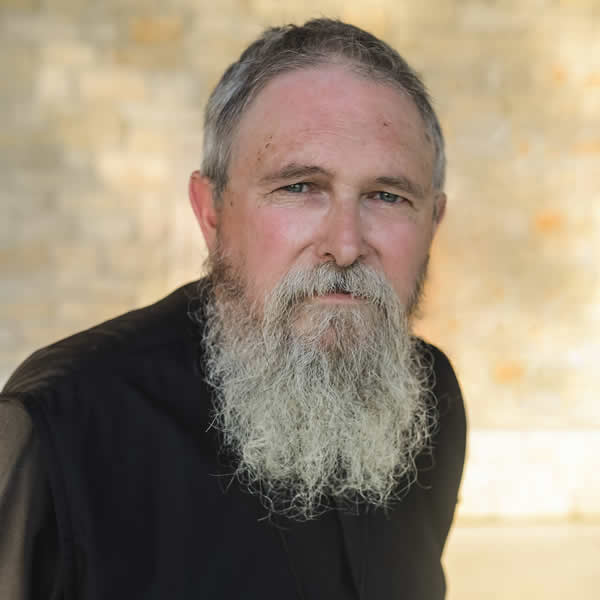
About Fr. Stephen Freeman

Fr. Stephen is a retired Archpriest of the Orthodox Church in America. He is also author of Everywhere Present: Christianity in a One-Storey Universe, and Face to Face: Knowing God Beyond Our Shame, as well as the Glory to God podcast series on Ancient Faith Radio.


Posted

in

by

Comments

40 responses to “Theophany – Showing the World to be the World”

  1. Kate Avatar
    Kate

    This is so beautiful, and yet my mind, brainwashed from many years as a Reformed Protestant and steeped in modernity, fails to grasp it! My heart yearns to understand and live in the reality of “the world as sacrament”. I have a long, long way to go. So I keep coming back to your blog every day reading reflection after reflection, letting the truth and beauty gradually seep in, in the hope that I will see and know, and be transformed.
    I am so thankful that your writing was recommended to me. You have been such a blessing in my life; thank you!

  2. Fr. Stephen Avatar

    Kate,
    Thank you for your generous comment! The sacramental character of the world in which we live “seeps” in – I love that thought! May God keep you and draw you ever closer.

  3. Matthew Avatar
    Matthew

    Are the 7 sacraments of the Church more powerful than the sacrament of the created order – like the Jordan River for example?

  4. Abigail Avatar
    Abigail

    Father, bless.
    Forgive my simpleness – I know you’ve spoken to this before but I don’t remember your thoughts on it.
    My question is, in light of the sacramental nature of all the world, why then do we need the sacraments? Why do we need Priests to bless the Jordan to be the Jordan or any of the many other blessings that Priests alone can do for us? Why do we need priests at all (vs the priesthood of all believers?)
    Perhaps your answer will be “Go listen to Everywhere Present again” or maybe “Read Schmemann’s For The Life of The Word” I’m putting both on my 2026 listening list!

    My own thought, after reading Kate’s comment above and much discussion from previous years you have posted this is that perhaps the sacraments of the church aren’t points of contact with the second-storey, tiny windows in which miniscule rays of sunshine peak out into an otherwise darkened world. But perhaps they are tiny windows through the secular/materialistic wall around own soul – points where the light comes into my own soul and if I let that light seep in perhaps in due time I will see well enough to see God everywhere present filling all things.

  5. Abigail Avatar
    Abigail

    Forgive formatting and quoting errors – I typed elsewhere and copied over and I guess the formatting didn’t copy over

  6. Fr. Stephen Avatar

    Abigail, Matthew, et al
    It’s a good question, and not unrelated to Matthew’s. But I’ll answer Matthew’s first.

    In that the world as sacrament – it is a place of communion with God. I think it is probably a mistake to think that “this communion with God is better than that communion with God.” Ideally, communion with God is communion with God. I suspect, though, that there is more to it than that. In the Eucharist, for example, we “show forth His death until He comes…” I find it interesting that our ancestors in the faith, who would have had a much clearer apprehension of the sacramentality of all things, were likely even more devoted to the Eucharist than we are. Modernity is not “anti-sacrament” – but modernity presents the nature of a sacrament to be wealth – mammon is the ontology of the modern world. Thus modern sacraments “show forth wealth and prosperity” to the world. We “dress for success” etc.

    To Abigail: It is said that the world is full of water – the air, the land, etc. But when you want a drink, you need a well or a spigot.

    The sacraments of the Church do not take us out of the world, but reveal the truth of the world, and the truth of God. In the Eucharist (and in Baptism, etc.) we perceive God as Christ Crucified. I suspect that our hearts would quickly devolve from those heights and simply want to “commune with God” in some sort of vague, generalized manner, in which He becomes just one more commodity to be consumed.

    Note that the Eucharist (and Baptism) are not just things that we receive. They require preparation: fasting, repentance, almsgiving, etc. We cannot just consume them. They presume that we change (repent) as we approach them. We are modernists. We think that things exist for us to consume them. It is the sacraments of the Church (in their fullness, including preparation) that teach us how to live sacramentally. Very few are ready for less of that. We need more of that.

  7. Matthew Avatar
    Matthew

    Thanks so much Fr. Stephen.

    As a human I stand between God and creation.

    What is my role?

  8. Abigail Avatar
    Abigail

    Thank you for your thoughts Father! I am very thankful for this blog!

  9. Ook Avatar
    Ook

    Thank you Father,

    In this article you speak of water as life, but elsewhere the church treats water as the force of chaos. For example in your article titled “Into the Maw of Chaos”, you employed a memorable turn of phrase as follows: “the Hebrews had the same attitude towards large bodies of water as your cat. The waters are death”.

    May I ask for your comment on what looks to me like a dualistic nature of sacramentality?

  10. Patricia Avatar
    Patricia

    “Note that the Eucharist (and Baptism) are not just things that we receive. They require preparation: fasting, repentance, almsgiving, etc. We cannot just consume them. They presume that we change (repent) as we approach them. We are modernists. We think that things exist for us to consume them. It is the sacraments of the Church (in their fullness, including preparation) that teach us how to live sacramentally. Very few are ready for less of that. We need more of that.”
    This is mind-blowing!!! I love your posts, Fr Freeman, but sometimes a nugget of truth like this is found in the comments . . . WOW! . . . absolutely mind blowing! Thank you!

  11. Fr. Stephen Avatar

    Patricia,
    Thank you! May God continue to “blow our minds.” His mercy is everlasting.

  12. Fr. Stephen Avatar

    Ook,
    It’s not dualistic. It’s paradoxical. Christ tramples down “death by death.” The waters of Baptism are chaos, death, and hell. But in that Christ descends in them (trampling down death by death), and we are Baptized by them “into His death,” they paradoxically are also the waters of life.

    Whey do we continue to venerate His Holy Tomb? Same thing.

  13. Simon Avatar
    Simon

    Father Stephen,

    This article elicited a number of thoughts regarding hypostatic existence, communion, and sacrament. I have noted over the course of my life how ideas get LEGO blocked together. We swap out the parts until we have something that is coherent or “feels right” or “authentic”. We are really good at taking on those LEGO ideas as identity. Over time, we see the world through that identity, we act in ways that are consistent with that identity, and in the end we have a psychological certainty that experiences that identity with the kind reflexive certainty that we have when we think “sky is blue and grass is green”–nothing seems more obvious.

    That is just one of many pitfalls of psychological existence, which, if I had to guess, would make communion all but impossible. I would imagine that the natural and reflexive orientation of hypostatic existence is to experience the world as sacrament–even ourselves. (Is it fair to say sacrament is the stuff of communion?) I would think that a person that lives solely in the reduced dimensionality of psychological existence would only experience the world as an object. Not that sacramental moments can’t break through, but it seems to me that isn’t where the mind lives, it lives almost within itself.

    It is a difficult spot to get out of.

    What I am asking is something along the lines of “Does the fullness of sacramental experience require a fullness of hypostatic being? Is one of the functions of the Liturgy to catalyze growth in that direction so that sacramental communion extends to life outside of the walls of the Church?”

  14. Ook Avatar
    Ook

    Thank you Father,
    I sometimes need reminders that Faith takes priority over philosophy. 🙂

  15. Theophanes (Jeff Moss) Avatar
    Theophanes (Jeff Moss)

    Father, thank you for again sharing these reflections that carry such a blessing!

    I read your articles frequently for almost 10 years before I finally was received into the Church, and God used them (among many other things) to bring about a renewal of my mind—a remarkable thing, such during much of that time I was an Evangelical Protestant missionary and then pastor!

    Now at this Theophany, I’m celebrating 6 years since my Chrismation.

    Theophanes

  16. Maria Chisnall Avatar
    Maria Chisnall

    Amen. Thank you for this and all your writings. Greetings from The Bahamas where you are read and loved.

  17. Fr. Stephen Avatar

    Simon,
    You asked: “Does the fullness of sacramental experience require a fullness of hypostatic being? Is one of the functions of the Liturgy to catalyze growth in that direction so that sacramental communion extends to life outside of the walls of the Church?”

    To some extent, I would say yes. Your description of psychological existence is, I think, strongly re-enforced in our modern world. Our tendency to view the world as object. I’m not sure I buy all that Iain McGilchrist writes (he’s an interesting thinker that I’ve listened to a number of times), but he is a British Neuroscientist and Philosopher, who has written extensively on the effects of Left Brain/Right Brain distinctions on our personal and cultural perceptions – arguing that modernity has majored in the Left Brain to such an extent that it has seriously distorted our perception.

    The whole brain, I suspect, is better at pursuing a wholeness of personhood – (hypostatic being). And the Liturgy certain calls us towards that direction. There is more, of course – the work of grace itself. But I’ve been thinking about some of his theses. He’s some kind of believer, but I don’t know that he’s a classical Christian of any sort. He lives on the Isle of Skye, which would, no doubt, be easier if one used their whole brain!

    I’ll think more about this.

  18. Fr. Stephen Avatar

    Theophanes, (well named!)
    May God continue to bless you in your journey!

  19. Fr. Stephen Avatar

    Maria,
    Thank you, ever so much!

  20. Simon Avatar
    Simon

    Father Stephen,

    What I was describing is actually how I have experienced myself. It is, in my opinion, a solid metaphor for how I see my past. After leaving Jehovah’s Witnesses a vacuum in my identity was left with no clear path forward in terms of how to fill. No guardrails or guidelines. What I did notice then and what I have seen in other people is that as new identities are explored the perception of the world shape shifts through the lens of that identity. I can remember thinking that as I explored Buddhism and attempted to live that identity that my perception and reception of the world conformed to that effort. Same was true of Daoism and especially true of atheism. I found that the degree to which I wanted to believe or the degree to which I committed to a possible identity to fill the vacuum, then to that degree my mind would make it “feel real” to me. That is a purely psychological phenomenon and it is what makes ideology as identity dangerous because the deeper you go and the longer you go the more enmeshed you become in the certainty of that psychological experience.

    I have been vigilant about pruning that tendency in myself.

    I am familiar with left and right brain dichotomies, and there is evidence that is consistent with that theory. I am not referencing that.

    My real question is about how escaping that rabbit hole through hypostatic wholeness/fullness.

  21. Matthew Avatar
    Matthew

    It was so enlightening learning about the left brain/right brain issue. Thanks McGilchrist, Kingsnorth and Fr. Stephen!

  22. Fr. Stephen Avatar

    Simon,
    “I have been vigilant about pruning that tendency in myself.” I think of this, in some degree, as “guarding the heart.” There are so many possible ways to create false realities – or perceptions that seem real but are simply driven by identity-issues. I think you’re right in thinking about the escape through hypostatic wholeness/fullness. You had the intense experience of the JW’s – and coming out of that has to be world-shattering. For me, it was coming out of an intense 3-year experience with the charismatic movement/house church/commune. I think that any time there is a sort of “coming out” of such intense mind-control sort of experiences, there’s an emptiness and a loneliness for an identity. It’s been a long journey and identity-traps have not been lacking. But guarding the heart means refusing the identity-ticket. Personhood and identity are very different things. It’s personhood (hypostatic wholeness) that is the heart’s true hunger.

    I believe that personhood is as much a gift as anything – particularly in that we cannot create it ourselves (which is one of the ways that it differs so strikingly from identity). It is rooted in relationship with God – and within that – it is rooted in love. It is decidedly not individualist/autonomous. The habits of the heart (in my own life) are still drawn towards an autonomous approach – forgetting to pray – getting stuck in my head and its private rabbit holes.

    God help us.

  23. Matthew Avatar
    Matthew

    Does true personhood lead to true identity?

  24. Fr. Stephen Avatar

    Matthew,
    It would. But in the conversation with Simon, I think we’re using “identity” in the sense of a self-created thing that is less than and not the same as personhood. God knows us as persons – which is a fullness against which any of our “identity-creating efforts” would simply pale in significance. Personhood would be “who I am as God knows me/loves me and as I know God/love God.” Our self-shaped identities are often efforts we cobble together, driven by various shame points, and efforts to get along, or to triumph, or merely to survive.

    When Christ speaks about “life more abundantly” – it is the true life as person that He references (which is not really at all what the “abundant life” gospel speaks about).

  25. Matthew Avatar
    Matthew

    Thanks Fr. Stephen.

  26. Simon Avatar
    Simon

    Father Stephen,

    ‘YES!’ to everything in your response to Matthew.

    I would add that “who I am as God knows me/loves me and as I know God/love God” is not the same thing as a “true self” as many might think of it, which is just an idealized notion of the self.

    This is now my operative definition of hypostasis: Who I am as God knows me/loves me and as I know God/love God.

  27. Dee of Sts Herman and Olga Avatar
    Dee of Sts Herman and Olga

    I’m referencing a general observation rather than responding to specific comments. I suspect some of our difficulties and hang-ups with identity stem in part from an ethos shaped by modernity-related cultural influences, for example, identity politics. To me, these tend to be fairly reductionist of the human person — easily signaled by factors such as economic class, gender (or gender neutral), race, religion, and ethnicity.

    The wholesomeness of the Orthodox understanding of Person is not something I had heard in Christianity until I contemplated entering the Orthodox Church.

  28. Dee of Sts Herman and Olga Avatar
    Dee of Sts Herman and Olga

    Father,
    I’m reading one of Archimandrite Zacharias’ writings (Remember your first love) that mentions stages of spiritual growth. I particularly appreciated his saying that each person has their own way to God and their relationship to Him. Therefore it’s difficult to describe a general pattern (i.e., it isn’t one size fits all). But there are certain common features due to our common human nature, and in this regard, he mentions St Sophrony’s description of three stages of spiritual growth.

    The one stage he was particularly interested in mentioning was the second stage, because within it, faithful people might fall into despondency. He describes the stage as an experience that feels like withdrawal of grace, felt as a kind of death, an ontological vacuum, or spiritual dryness.

    I found these words reassuring, partly because I suppose I often feel spiritual dryness and think there might be something wrong. Rather, the tension within it can keep us yearning and reaching for God. And then we’re encouraged to step back from the abyss and have a cup of tea.

  29. Fr. Stephen Avatar

    Dee,
    As a septuagenarian, I’m very aware of the temptations to despondency. The bodies symptoms that began to rear their head in my 60’s are much stronger now…slowing down…fatigue, etc. I’m leaning more into prayer but the result will not be a “pick me up.” It’s also clear to me that my days are growing shorter. Whatever is ahead is sooner rather than later. I like St. Paul’s Letter to the Philippians – it’s his last and he sees the end. It’s encourgement to rejoice in all things is powerful.

    God give us grace!

  30. Dee of Sts Herman and Olga Avatar
    Dee of Sts Herman and Olga

    Indeed, Father! you and I are in the same decade (and ‘boat’!). I’ll need to reread Philippians. I didn’t know it was his last letter.

  31. Fr. Stephen Avatar

    Dee,
    He still has some hope that he will be released – but he’s imprisoned – and he is beheaded fairly shortly thereafter – or that’s the consensus on his life. He is clearly taking stock and is ready. “I have finished the race…”

  32. Dee of Sts Herman and Olga Avatar
    Dee of Sts Herman and Olga

    Wow Father,
    I reread it today. He certainly shows a lot of love to his community and spiritual children. But he also shows uncertainty about whether he’ll see them again, as if he’s preparing them for his departure. He had such steadfast faith. I wish I could be like him.

  33. Matthew Avatar
    Matthew

    Would it be correct to say that most all human beings are searching for a true identity? I ask because I often speak of people being “identity lost” in our culture, but I have never spoken of “lost personhood”.

    I have always thought in terms of identity – that a person cannot find their true identity until they have found God and move toward union with God. It seems, though, that the focus should be on personhood – at least at first.

    This is all new for me.

  34. Fr. Stephen Avatar

    Matthew,
    I think that the most proper way to phrase this is that we are “looking for God.” Personhood is something that we only have in relation – and so, to have it, our eyes are turned away from ourselves and towards the Other – towards God. It is in beholding the glory of God in the face of Jesus Christ that we are changed into His image (and are thus given true personhood).

    You asked earlier: “As a human I stand between God and creation. What is my role?” We are the “priests” of creation. Our role is to offer up creation to God (through praise and thanksgiving) and to offer God to creation (through love and proper stewardship of the world).

    St. Maximus described human beings as “microcosm and mediator” – we are the cosmos in miniature (microcosm), and we are mediators (we stand as the priests of creation – mediating creation to God and God to creation).

  35. Dee of Sts Herman and Olga Avatar
    Dee of Sts Herman and Olga

    Father,
    I like very much your answer to Mathew. We are all born with the image of God and seek communion with Him whether we no it or not. We feel the absence of grace whether or not we know what or why there is emptiness within. I may be completely wrong but I suspect that the strong consumerism we have in this culture is related to this emptiness.

  36. Simon Avatar
    Simon

    Father Stephen,

    I would like to add this note in response to Matthew’s question.

    I think that identity is a crucial element to personal coherence over time. As any psychologist or therapist might tell you identity is foundational. Not a luxury, not a buzzword–it is a core psychological necessity. At least in part, that is why sports teams can be such a deal in people’s lives. How we dress reflects our identity. A guy in a Harley gang dresses in a way that not only reflects belonging but identity. A theological student in seminary who regards himself as a intellectual will dress another way communicating his sense of self. Even converts, especially in America I imagine, begin their path in Orthodoxy with a sharpened sense of identity: New crosses, icons, incense, the four volumes of the Philokalia, the Way of the Pilgrim, etc. So, perhaps everything including Orthodoxy starts in a psychological experience of identity. But, Father Stephen is correct. All of that is just how the mind adapts itself to the world. In some sense, it is like the animal skins God gives Adam and Eve to protect themselves.

    Ultimately, true identity can only be found in God.

  37. Fr. Stephen Avatar

    Well said, Simon.

  38. Matthew Avatar
    Matthew

    Thanks so much Simon. Makes so much sense to me.

    Thanks also Dee and Fr. Stephen.

  39. Matthew Avatar
    Matthew

    From identity to personhood … life´s true journey.

    Book idea Fr. Stephen? 🙂 🙂

  40. Fr. Stephen Avatar

    One book at a time…

Leave a Reply

Your email address will not be published. Required fields are marked *


Subscribe to blog via email

Support the work

Your generous support for Glory to God for All Things will help maintain and expand the work of Fr. Stephen. This ministry continues to grow and your help is important. Thank you for your prayers and encouragement!


Latest Comments

  1. Thanks for that great advice, Fr Stephen. The Fathers and others writing before 1500 would surely be the best resources.…

  2. Dear Fr Stephen Thank you for another great article. This article is interestingly timed. In just over a week, I…

  3. This is the actual quote for those who are wondering, the one that is circulating on the internet and appears…


Read my books

Everywhere Present by Stephen Freeman

Listen to my podcast


Categories


Archives