The Life of the Cosmos

This is a reprint from 2016. I ran across it this morning and found it speaking very much of where my mind and heart have been of late. May it be of use to you.

What does it mean to be alive? This is a question whose answer would seem so obvious that it is hardly worth asking. And yet. A recent comment drew attention to a different way of thinking about what is “alive.” I will offer some quotes from the comment and then some observations of my own. I give special thanks to Justin.

Everything is alive. Everything.

We encounter the trees bowing to St Irene Chrysovalantou and imagine that God has thrust His hand down from the “second story” to force down lifeless trees. We simply cannot fathom the trees wilfully bowing of their own accord (“green herb for the service of man” vespers Psalm). We cannot see that the wind and waves obey, we fantasize that God forces dead water to part (Moses), or calm down (Christ in the boat). “Even the wind and the waves obey Him.” “Wind and waves, snow and ice, things that do His word” (Psalms).

“The trees of the field clap their hands.”

“The stones cry out.”

“Ask the rocks and they will tell you.”

 Elder Porphyrios spoke of rocks communicating with him. Elder Paisios also spoke of plants speaking to him. St Gerasimos’ Lion, St Seraphim’s bear. “The heavenly intelligences praise You, sun moon, and stars” (Theophany prayer).

“The heavens declare the glory of God.”

“Moving mountains” is not in the Holy Scriptures, instead we are told of the mountains, “They will move.”

Scripture knows nothing of folks wishing in their minds that rocks would crush them; nay, they “say to the rocks, ‘fall on us.’”

The wisest people on earth risked life and limb, by the perilous travel of the day, to hear Solomon’s wisdom. Scripture identifies the content of that wisdom as, (get this) “He spoke of trees.” You can bet your arse it weren’t no botany lesson the wisest humans alive were imperiling their earthly existences for the sake of encountering.

Everything is alive because HE is alive, indeed, He IS life. The Logos has given logoi to ALL things which He has created. Earth, wind, water, fire, plants, animals, men and angels ALL are sentient, all praise the Lord, all can communicate, both with God and all creation. Every tree is the cross, every river the Jordan. All creation cries out…

 The ancient Greeks, beginning with Aristotle, differentiated between things with a soul (animate) and things without a soul (inanimate). Bear in mind, that the word “animus” means “soul.” This differentiation is commonly used within the Fathers as well, though, as our earlier quote noted, there is a recognition that trees, rocks, everything – must be seen as “alive” – in at least some manner. I am not certain that “alive” is the word that we want to use, but for the moment I will stay with it.

We say “soul” and think we know what we mean (we do not). The soul is, indeed, the life of the body. In Aristotle, it is the form and the body is the matter. But even a rock has form. Over the centuries, people have come to think of the soul as the “ghost in the machine” and assume that the soul has an appearance that would be ghost-like. As hard as it may be for us to think in a different way, it is more accurate to say that the soul is the life of the body while having no image in mind whatsoever. What we know of the soul after death is that God sustains it in existence, though an existence of a soul apart from our body is a very strange, and even unnatural thing. It is incorrect to call it a “spiritual” existence. It is simply our life, preserved in existence through the mercy of God, as we await the resurrection of the body.

The hope of resurrection is not uniquely ours, according to the Scriptures: it is the promised end of all creation (Romans 8:19-23). That creation shares in our hope of the resurrection, says that there is much more to all things than our notion of the world as a collection of “inanimate objects” would allow.

Our friend Justin rightly cites some of the numerous passages in Scripture in which creation (trees, rocks, wind, water) are described in very animate terms. They sing, clap their hands, obey and do His will. Are these mere metaphors? Are the writers of Scripture engaging in simple hyperbole? The answer takes us into the hidden world described in various forms of allegory within the Scriptures. The testimony of great saints such as the Elder Porphyrios (who is not at all alone) points to a reality reflected in the language of Scripture. Trees, rocks, wind and water, are all things that “do His will.”

We take existence far too much for granted. To describe anything that has being and existence as “inanimate” does existence and being a disservice. We speak of things existing as though it were a complete given and not extraordinary, while, in truth, everything that exists shimmers with wonder as the Divine will sustains it in existence. What our normal way of thinking does is to reckon that being and existence have nothing necessarily to do with God, while the opposite is true.

That which exists does not exist in the same manner as God. We say of God that He is the “Trinity beyond all being” (hyperousios). God alone has self-existence. Creation has a contingent existence, that is, we only exist because God sustains us.

As such, we do not rightly say that “creation has life because God is life.” But we can say that creation has existence because God sustains it in existence. And it is equally appropriate to think of existence itself more in terms of life than simple materiality. If modern physics has taught us anything, it is that simple materiality is far more complex and wonderful than we have ever imagined.

The Biblical and patristic witness that speaks of rocks and trees in very animate terms are also rightly understood to point towards the kind of existence shared by all things. The whole of creation, we are told, “groans together until now” (Romans 8). Such statements are meaningless if treated in a manner that makes them mere figures of speech. The gift of existence carries something of an animate form, such that all creation speaks, obeys and yearns for its Creator.

We should also understand that the whole of ourselves, body, soul, spirit cries out for God. To give assent with that small portion of our existence that could do otherwise is to put our life on the path of its true nature, and to join the chorus of all creation.

Bless the Lord, O my soul! And all that is within me, bless His Holy Name!
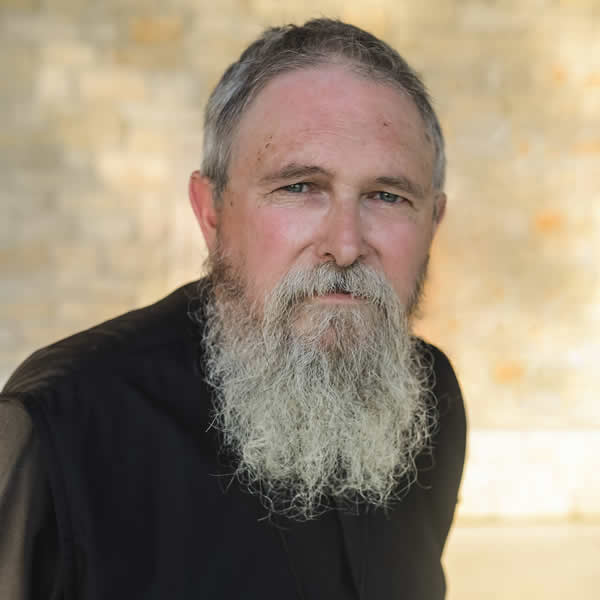


About Fr. Stephen Freeman

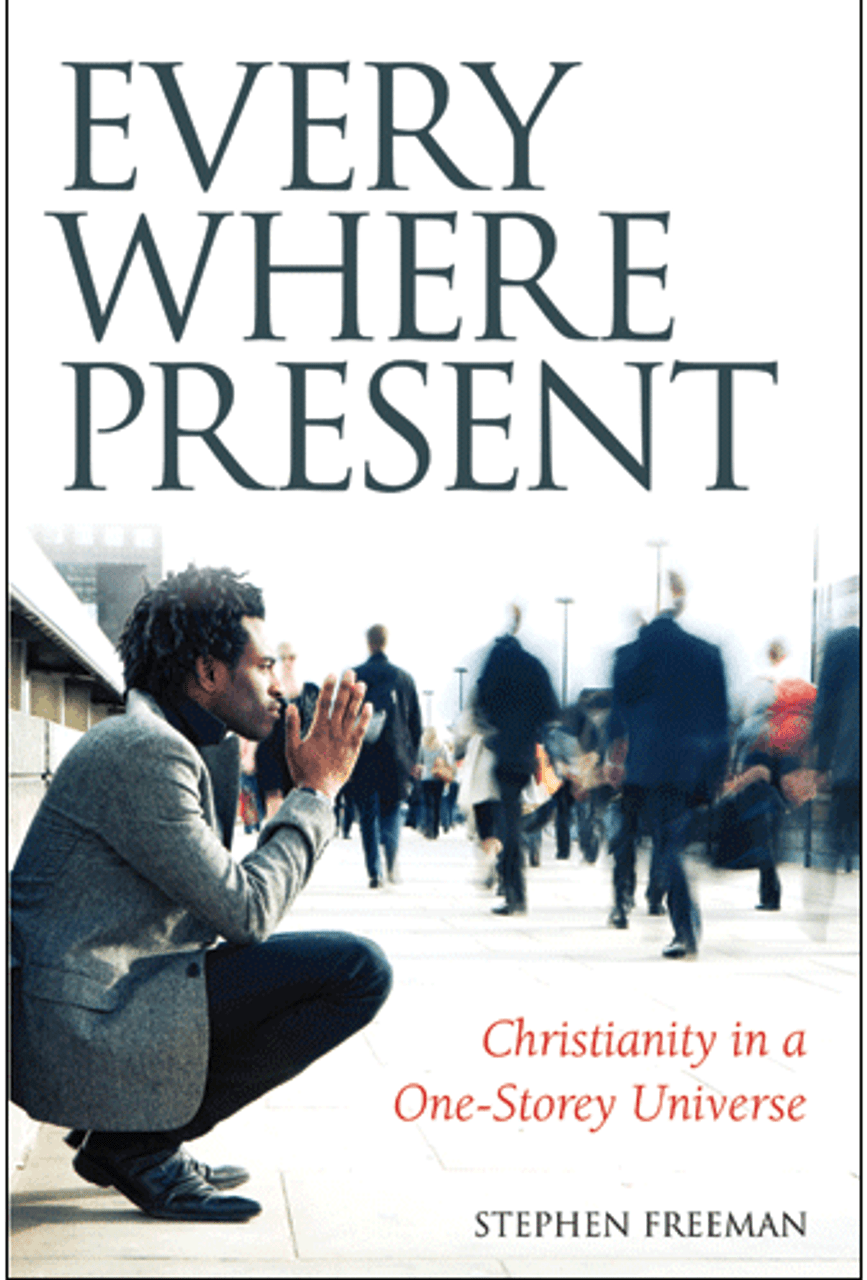
Fr. Stephen is a retired Archpriest of the Orthodox Church in America. He is also author of Everywhere Present: Christianity in a One-Storey Universe, and Face to Face: Knowing God Beyond Our Shame, as well as the Glory to God podcast series on Ancient Faith Radio.


Posted

in

,

by

Comments

65 responses to “The Life of the Cosmos”

  1. Sh. Myrna Martin Avatar
    Sh. Myrna Martin

    I believe! I believe. Glory be to God.
    🎶🙏☦️💕

  2. panayiota Avatar
    panayiota

    I can feel my entire being cry out in praise when I consider the wonders of my own being, body and soul and how it is sustained in “peaceful coexistence”.

    Thank you for this post, Father. It puts my mind and my heart at ease, especially because my morning prayers felt so dry.

  3. Matthew Avatar
    Matthew

    So a rock remains inanimate (without a soul), but that same rock also – in some way – has life and existence?

  4. Debby Zigenis-Lowery Avatar

    Thank You so much Father Freeman for repeating this wonderful post!
    I only found your blog this last year and would have missed it entirely had you not reposted.
    The words, the ideas communicated fill me with joy!
    Thank You,
    Debby Zigenis-Lowery

  5. Colin Avatar
    Colin

    Just read this after coming in from watching the sea and mountains from my house on the Isle of Skye shimmering with light and life. Praise the Lord Indeed!

  6. Helen Avatar
    Helen

    Modern physics does indeed tell us about the life of the cosmos! There is such movement and energy within atoms, which make up all things on earth! It’s an amazing creation. Of course science reveals what the faithful already know.

  7. Fr. Stephen Avatar

    Matthew,
    I think the term “inanimate” is misleading in some manner or other.

  8. Fr. Stephen Avatar

    Colin,
    What a joy it would be to stand beside you on that Isle!

  9. Laura Avatar
    Laura

    Thank you, Father. How wonderful to ponder such a thought!

    Helen- there is something very satisfying when we see science point to some “discovery “ that reveals the wonders of God!

  10. Ook Avatar
    Ook

    I am having difficulty with the “my” in “my soul”. It is not my body, not my thoughts, not my personality. We are responsible to bear one another’s burdens through love, support, and prayer, so there is a soul of all creation, no?

  11. Matthew Avatar
    Matthew

    So if a rock shouldn’t be called inanimate, then what should it be called? Is it alive? Does it have a living essence?

  12. Fr. Stephen Avatar

    Ook,
    I do not know how to speak of this.

  13. Fr. Stephen Avatar

    Matthew,
    Everything has a logos. Again, I’m lost for words.

  14. Matthew Avatar
    Matthew

    Thanks so much Fr. Stephen. If creation groans, I suppose then in some sense rocks live … but I am too at a loss for words.

  15. Fr. Stephen Avatar

    Matthew,
    I think that the loss of words comes as we try too hard to drill down and be too specific. The rocks groan, the rocks sing. To hear the groaning and to sing along is probably sufficient.

  16. Ook Avatar
    Ook

    Father,
    I guess if the soul of all creation is the Logos, the Psalmist sings about “my” as a locus of relationship within that chorus. The fundamental insubstantiality blessing the source.
    This is getting beyond me.

  17. Fr. Stephen Avatar

    Ook,
    “Beyond me” is a good place to stand…and wonder.

  18. Helen Avatar
    Helen

    Oh Father, yes! …to wonder and give praise like the rocks who cannot form words or thoughts yet know…

  19. Matthew Avatar
    Matthew

    Thanks Helen!

  20. Dee of Sts Herman and Olga Avatar
    Dee of Sts Herman and Olga

    Molecules sing.

  21. Matthew Avatar
    Matthew

    Stones sing.

  22. Jane Avatar

    The other morning, during prayer, the words of the “Gloria” came to mind, and I began to pray them. I thought to look up out the window, and sure enough! The sky and the clouds had just begun to glow gold-pink. The colors deepened and brightened – “Glory to God in the highest” indeed! And it was no surprise to me that as I finished, “Amen,” the colors subsided. This is my experience often when I pray Morning Prayer, especially when I do so outside. The trees do indeed clap their hands, the herbs wave their leaves to the psalms, and the clouds become angels. I have worked a great deal with herbs, picking the plants, discerning different remedies for people, and there are indeed times when the plants “speak” to me. Not with words, but with a sense of “leaning in.” God’s Creation is a depth of mystery. Indeed: “Bless the Lord, O my soul!”

  23. Dee of Sts Herman and Olga Avatar
    Dee of Sts Herman and Olga

    Indeed Mathew!

    Through their atomic vibrational modes. I was curious to see what might come up if I googled singing molecules and found a fun presentation on YouTube (with a real molecule’s song). Here it is:

    https://www.youtube.com/watch?v=3kCa3oHNARE

    But while a scientist might hear the melody, will he listen to their hymn?

    “As creation beheld Thee born in a cave,
    Thou whose invincible might hung the earth above the waters,
    it cried out, seized with trembling and awe:
    “None is Holy but Thee O Lord!”

  24. Dee of Sts Herman and Olga Avatar
    Dee of Sts Herman and Olga

    I should have mentioned that the hymn comes from the Compline Canon for Dec 24, the Eve of the Nativity of Our Lord.

  25. Helen Avatar
    Helen

    Dee, that’s a great video!

  26. Matthew Avatar
    Matthew

    Great video Dee!

  27. Dee of Sts Herman and Olga Avatar
    Dee of Sts Herman and Olga

    Father,
    Unclean spirits are described in the Bible in people and pigs. Is there any tradition that they enter other parts of our world? I don’t know of any biblical reference that would suggest this. Father I ask for your thoughts and any reference you might have.

  28. Dee of Sts Herman and Olga Avatar
    Dee of Sts Herman and Olga

    Father,
    I ask for your patience concerning an observation I am about to share. Yet I proceed because of the growing popularity of Orthodoxy and the effects of the wave of conversions taking place.

    Once, a little more than twenty years ago, I was visiting a relative who was a member of a Protestant megachurch. She introduced me to her preacher, who in turn asked me what I did. I said I was a chemist and he said “oh you’re one of those people, science people”. He had given a sermon about the science demon.

    When I contemplated becoming an Orthodox Christian, a priest said that Orthodoxy had no ‘beef’ with science, certain acts were considered wrong, such as abortion, or assisted suicide and similar actions, but not science itself as a whole. Now I’m hearing from Orthodox converts that science is demonized. I’m discovering once again that I’m one of “those people”.

    I ask for your prayers. I am indeed a scientist. But God willing, I’m not controlled by the adversary.

  29. Fr. Stephen Avatar

    Dee,
    I don’t know of any specific references. I do know that it’s not unusual to destroy books and amulets (and such) associated with the demonic. Acts 19:18-20 mentions this.

  30. Helen Avatar
    Helen

    Dee, I found this interview with Bishop Kallistos Ware very helpful regarding the science/religion considerations.

    http://technologyandsociety.org/religion-science-and-technology-an-interview-with-metropolitan-kallistos-ware/

  31. Fr. Stephen Avatar

    Dee,
    This is a very sad thing. Ignorance, in whatever form, brings darkness. I will indeed pray.

  32. Helen Avatar
    Helen

    Jane, what a wonderful morning of praise!

  33. Dee of Sts Herman and Olga Avatar
    Dee of Sts Herman and Olga

    Thank you so much Hellen for that article. And thank you Father for your words and prayers.

  34. Dee of Sts Herman and Olga Avatar
    Dee of Sts Herman and Olga

    Helen,
    Thank you also for drawing my attention to Jane’s comment. Very lovely words!

    Thank you Jane!

  35. Helen Avatar
    Helen

    Dee, you’re welcome! I have many times been comforted by knowing you’re a scientist. I have been in technology most of my career and have struggled with many questions about purpose and right vs. wrong…

  36. Matthew Avatar
    Matthew

    Science is an excellent tool to help us really observe and understand the natural realm and to see the wonder of God in it all. Science does become problematic, though, when it attempts to explain absolutely everything through the scientific method while at the same time denying the supernatural.

  37. Dee of Sts Herman and Olga Avatar
    Dee of Sts Herman and Olga

    Matthew,
    Speaking as a scientist, science cannot deny the supernatural. That would be “overreach” and ungrounded on scientific principles. There can be charlatans who claim magical abilities and such, that can be disproved, but that’s a different matter. Atheist scientists, who make such claims, are only claiming their beliefs and making ascriptions that they are science-founded–such can’t be done. They’re not doing science. They are making faith claims of another sort.

    I found Helen’s link a helpful read on the topic.

  38. Helen Avatar
    Helen

    Here is another resource to go deeper: Fr. Christopher C Wright, Orthodox priest and PhD in astrophysics has written the book Science and the Christian Faith. It’s not a fast read.

  39. Mark Spurlock Avatar
    Mark Spurlock

    Dee,

    It’s unlikely I could add anything that has not been said on the science versus faith argument (although the tsunami that is AI is amplifying the dread that current science is an existential threat at least comparable to the development of nuclear weapons; that’s new). In more personal terms, however, I think anyone’s profession–except for perhaps monk–can interfere in a life of faith. Many people likewise have certain opinions about the theatre (where I work) or entertainment and can make inaccurate assumptions from those opinions.

    Nevertheless, Jesus reached out to those in the most questionable of professions, like prostitution and tax collection, rather than ostracizing them. This is not to say I agree with those who think scientists should be suspect, but, even if receiving a doctorate in biology required a renunciation of all belief in God, for example, a follower of Christ ought not demonize a biologist inquirer, much less one who becomes a baptized believer. Is there a more demonic activity than war? Yet we always include the armed forces in our prayers.

    In short, one can practice law, politics, art, and science to ungodly ends, but nothing in Christ’s example indicates to me we ought ever condemn someone for being a lawyer, politician, artist, scientist, etc.

  40. Fr. Stephen Avatar

    Dee, et al
    It is ironic that some should be speaking of the “demonic” in science. First, there is nothing in the world that we should cede to the devil. That’s absurd and a hallmark of delusion. Second, I have seen far more evidence of “demonic” activity in religious circles (including within Orthodoxy) than in science. The devil likes to hide among those who are thought to be “good.” People who write about these things, or teach such delusional notions, should guard their own heart. How truly sad.

    Of course, saying “demonic” keeps someone from having to think and respond in an intelligent manner when confronted by something. Orthodoxy should never be used as a “cloak.”

  41. Dee of Sts Herman and Olga Avatar
    Dee of Sts Herman and Olga

    Helen, Mark, Father,
    Thank you all for your kind words and support. This is truly a relief.

  42. Matthew Avatar
    Matthew

    Thanks also Dee, Mark, Helen and Fr. Stephen.

  43. Helen Avatar
    Helen

    I add my thanks as well for this special community and for you Father.

  44. Simon Avatar
    Simon

    Dee, Fr. Stephen,

    Saying that a scientist cannot deny the supernatural is like saying a scientist cannot deny the existence of ghosts or unicorns. Of course they can. There is the old adage that “Absence of evidence is not evidence of absence” but if that is abused, which it can be, then we get lost in the infinite possibilities of our own imagination. Each imaginary thing becomes a hypothetical possibility. So, unobservables are dismissed–as they should be. It is the only get on with the work of science. In my opinion, it isn’t overreaching to challenge, deny, or dismiss the unobservables.

    Science is a program of making and replicating observations. One might say that science is the art of making observations. The process of making observations isn’t for later making ontological claims. It is purely phenomenalistic. The real exercise in discipline comes post-observation during the inferential reasoning stage where the observations must be interpreted: What do the data mean? What conclusions do the data support? More interestingly, what if any conclusions do these data falsify? Now that is something!

    TL;DR–In my opinion, scientists are justified in denying all supernatural claims because the burden of proof lies on the one making the claim. The imagination guarantees a endless supply of dead ends. Ergo, present the observation and go from there. No observation means no go.

  45. Fr. Stephen Avatar

    Simon, et al
    Of course scientists are justified as scientists in denying all supernatural claims. Of course, observation requires repeatable events – which rules out one-time events (such as the resurrection of Christ). Science is extremely useful. It is not the answer to all things. We make decisions all the time based on things other than observable phenomena, noting that lots of scientists are believers.

    My guess on the “demonic” claim viz science ( a silly notion), is based on the misperception that “science” is somehow the enemy of the faith. That’s little more than a sort of conspiracy theory kind of thing – something that is rampant in the culture these days.

    Of course, the invasion of science by a-priori cultural interference (gender theory, etc.) has been both a dangerous and alarming reality in the past decade. The fact that certain official organizations have suppressed information or blocked contrary studies is a betrayal of science itself. That kind of thing can undermine public trust making all scientific claims far more questionable than was once the case.

    We live in strange times.

  46. Matthew Avatar
    Matthew

    Thank you Fr. Stephen

  47. Dee of Sts Herman and Olga Avatar
    Dee of Sts Herman and Olga

    Simon,
    Of course a person who is a scientist can deny whatever they want. It doesn’t mean the denial is based on anything substantive. Science has its history of proponents who denied what was ultimately real. A good scientist grasps the limitations of his work.

    You propose an “if then” statement, which seems to be the linchpin of your argument about what a scientist can say about nature. However, my experience of nature is not so cut and dried in logical structure. That’s why our models of it often fail, though we keep trying, not so much from knowledge but through trial and error.

    I don’t know whether it would be of interest you, but a potentially interesting read for others like Helen might be Michael Polanyi’s book, The Tacit Dimension. Polanyi was a chemist. Andrew Louth referenced it in his book Discerning the Mystery.

    Helen I appreciate your reference to Fr. Wright’s book. I’ve purchased it and plan to read it.

    Generally I don’t go into arguments about what science can and cannot say. I just do it. And most of my work involves mitigating the consequences of inadvertent applications of science.

  48. Helen Avatar
    Helen

    Thanks Dee for the book suggestion. I will be reading it! To me it’s a validation of the mystery within us and around us.

  49. Owen Kelly Avatar
    Owen Kelly

    Thanks for an interesting article, Father. It seems to me (in agreement with what others have said) that this is not mainly a mystery to think about – which I probably do too often – but one in which we share, joyfully, by participation.

    The teaching of God’s infinity seems germane here (thank you, St. Gregory of Nyssa). If God is truly infinite, then there is no space, place, or matter separate from God. As the saying goes, God is like a circle whose center is everywhere and circumference is nowhere. Or, as Scripture says, “He is the all” (Sirach 43 27).

    How can we but rejoice in the utter nearness of Him who is closer than close? Yes, God is the ground of all beings and thus beyond all beings; but He is also known as Being itself. To have being, therefore, is to share in His life. Perhaps our only vocation is to realize this and allow His life to live through us.

  50. Fr. Stephen Avatar

    Owen,
    My only caution on the use of the phrase “not separate” – is that we be sure to remember that just as God is “everywhere present and filling all things” – he is not, at the same time, all things. Subtle stuff – but an important distinction.

  51. Simon Avatar
    Simon

    Hi, Dee.

    The denial by scientists is not only important, but necessary. You mention that denying the supernatural doesn’t mean the denial was based on anything substantive. In my opinion, the denial follows as a matter of necessity. For example, there are many questions for which this blog is the perfect forum. There are other questions for which this blog is NOT the right forum. That is a matter of necessity baked into the design of the blog. That is how I see a scientist’s denial of the supernatural. Science needs data and observations. It is a project based on convergent observations, i.e. objectivity. If there are no observations and there are no data that can be replicated objectively, then it just isn’t an appropriate question for science. What does that mean? That means there are an infinite number of truths that may be known experientially that cannot be replicated objectively and therefore are not appropriate for scientific consideration.

    My understanding leads me to an acceptance of science on the terms in which it presents itself.

    Orthodoxy has its rules. So does science.

    For what its worth, truth isn’t the domain of science. The only truth that science knows is truth by falsification. There are whole treatises regarding the epistemic buffer that is created between humans and truth through inferential reasoning, falsification, and technology.

  52. Holly Avatar
    Holly

    I have been reading a lovely new book: “Rivers of Living Water” by Heiromonk Nicodemus Jones. A saying of Elder Dionysius Ignat, of blessed memory, seems perfect to add to this conversation. He said:

    “The wisdom of the world is madness before God. That is to say, if you do not believe that God gave us the discoveries and faculties of the modern world, you distance yourself from Him. You believe that everything comes from humankind, with our powers.” (Page 159)

  53. Dee of Sts Herman and Olga Avatar
    Dee of Sts Herman and Olga

    Simon,
    Your understanding of what science is based soley on data and observations is relatively narrow and doesn’t represent the fields I’ve been in. Higgs Field, Black Matter, and such have been held to be real yet not seen or observed, or to have no observational data supporting the theory of their existence, for decades. On your terms, it seems, they don’t exist, and scientists would have reason to deny their existence, yet may not be correct. Other scientists would have a different opinion.

    Rules are usually broken, and necessarily are broken, when a phenomenon occurs that falls outside the bounds of our theory or prior observations. Substantiation in the science circles I’ve been in often occurs by a consensus that doesn’t always have clear boundaries of certitude. Statistics notwithstanding.

    I get you clearly disagree. And that’s ok by me.

  54. Owen Kelly Avatar
    Owen Kelly

    Father,
    I see your point. Thank you.

  55. Simon Avatar
    Simon

    Dee,

    I don’t really understand why you’re taking exception to what I wrote. My view of science isn’t narrow, and I’m not unfamiliar with scientific research or scientific environments.

    Denying supernatural claims is not the same as saying, “That’s an elegant idea, but there’s no evidence for it yet.” The latter is a provisional scientific judgment; the former is a categorical claim about what falls within the scope of scientific inquiry.

    It’s inappropriate to argue for the admission of supernatural claims on the grounds that many discoveries began as theoretical constructs. Scientific theories, even when speculative, are constrained by natural law and are, in principle, testable. Supernatural claims are not. Conflating the two collapses an essential boundary that science depends on to function.

    That said, theoretical physics is a different animal. It’s a discipline driven by physicists with an extremely advanced command of mathematics, constructing internally coherent models of what might be the case under certain assumptions. These models are valuable, but they are speculative by nature until they are constrained by experiment.

    There have been important successes—black holes and the Higgs boson being good examples—where observations eventually supported prior theoretical work. That’s a genuine achievement. But without experimental traction, theory remains just that: theory. Elegant mathematics and increasingly precise instrumentation don’t change this basic limitation.

    Science, in practice, is often mundane. Its strength lies in slow, disciplined accumulation of evidence, not in the proliferation of untested ideas.

    String theory illustrates the problem well. It aims to reconcile quantum field theory with general relativity, but at present it makes no testable predictions. As a result, it remains squarely in the theoretical domain. Moreover, there isn’t a single string theory, but many. Without experimental data to rule models out, there’s no principled way to thin the herd. Until that changes, theories are free to multiply without constraint. That’s the trouble with tribbles.

    I’m genuinely surprised that there are still scientists arguing for what amounts to substantiation by consensus. That should always be taboo in science. Replication is not consensus, and a show of hands is not evidence. An all-in-favor-say-aye approach turns inquiry into a rigged game.

    Consensus can describe where opinion currently sits; it cannot establish truth. Many good ideas in science have been delayed or temporarily buried precisely because they ran against prevailing consensus. Science advances by reproducible results and empirical constraint, not by agreement.

  56. Ryan Thomas Avatar
    Ryan Thomas

    Generally I am quite apprehensive to post on message boards, but I hope my two cents are of benefit someone

    I come from a Cree family up here in Manitoba and in the Cree language, nouns are classified as animate or inanimate, and the classifications aren’t always intuitive to a modern thinker.

    This is a culture that is so intertwined with creation that its language represents this truth and the glory of God in creation.

  57. Matthew Avatar
    Matthew

    How can we know something more than we can articulate that something?

  58. Mark Spurlock Avatar
    Mark Spurlock

    Matthew,

    Don’t we always know more than we can articulate? Articulation is trying to make that which we know clear to another. If we do not know it first ourselves, then we would have nothing to articulate.

    A witness trying to describe a suspect to an artist, for example, has an image in mind. When the witness describes the suspect, that is an articulation of the image, but it is not the complete image. Moreover, the artist does not receive via language even the exact image the witness visualizes (not to mention that the image is static, whereas the witness saw a moving person, etc.). The two may engage in a conversation to try to refine the artist’s rendition, but it will never match exactly what the witness is trying to articulate.

  59. Fr. Stephen Avatar

    Simon,
    “All-in-favor-say-aye” made me laugh out loud this morning!

  60. Fr. Stephen Avatar

    Matthew,
    I know my wife – but what I know would be hard to put into words, and any words I used in the effort would simply fall short. Indeed, I would suggest that the only things that we truly know are inexpressible. Words are, at best, like icons. They represent. They may even make present what they represent. But the icon alone is insufficient. Were it sufficient, it would be an idol. It is only as the viewer “knows” the one who is represented that the icon does what it should do. The same is true of language.

    It is why I often use the phrase, “Grammar of theology” rather than “definition” etc. We have “speaking rules” in the Church – not because the words have captured and perfectly conveyed their subject – but because the grammar rules help us to not say what we should not say, lest we misrepresent.

    There is a puerile and immature treatment of these things when people fall into certain arguments (I’ve read an incredible amount of drivel on the topic of essence/energies).

  61. Mark Spurlock Avatar
    Mark Spurlock

    Father Stephen and Matthew,

    I think Florence Welch articulates the difficulty of articulation beautifully in “All This and Heaven Too” 🙂

  62. Dee of Sts Herman and Olga Avatar
    Dee of Sts Herman and Olga

    Simon
    Originally I said science can’t deny the supernatural. At the beginning of this back and forth, you first took exception to what I said.

    I’ve don’t know how my original statement seemed so far from your own where you finally came to say something similar in the phrase:

    “….categorical claim about what falls within the scope of scientific inquiry.”

    My original point was (now using your words) that it ‘doesn’t fall within scientific inquiry’. And because of that, I say there is nothing science can claim about what falls outside it. That’s where our disagreement lied originally because you said that it can.

    Afterwards you have presented definitions about what science is that do indeed fall well within textbook descriptions about it. I reference from my experience about science is as a human activity. The all say ‘aye’ joke indicates your view on that. Obviously you’re had no such experience.

    I’ve been working in experimental physical science for about 40 years. I’m still working on the edge despite being a woman of my age. That in itself is a rarity. My work is different from iterative or didactic fields within science. Basic science is much more rare now. More activity is directed by industry.

    You want to tell me what science is from the start of this conversation. I’m telling you that you don’t need to tell me what science is or what it has been. I’ve had a successful career within it and have nothing to prove here about that. But I suppose you do.

    And that’s how you started this conversation between us.

  63. Simon Avatar
    Simon

    Ryan,

    I think the Cree language and grammar would be deeply interesting to study. I read a book by physicist David Bohm–whose work on implicate and explicate order is both fascinating and controversial–that argued that the idea of seeing the world as a complex system of dynamic processes is hindered by the highly agentic, subject-predicate construction of language in the West. A famous example is “It is raining outside.” Well, what is the “it” that is doing the raining? I have since reading that book been aware of the ways in which I see agency where there is none because of the implicit way agency perception is hardwired into the brain. It is similar to how we see faces in patterns where there is no actual face.

    I wonder how my view of the world would change if my perception was guided by an anima syntax. Is that sense of animate versus inanimate reflected in verb construction or syntax as well?

  64. Matthew Avatar
    Matthew

    What words Florence sings! Thanks so much Mark.

  65. Mark Spurlock Avatar
    Mark Spurlock

    You’re welcome, Matthew…happy you enjoyed it. I find her performance there movingly beautiful. And whereas it’s about not being able to express the language of the heart, I nevertheless understand what she means.

Leave a Reply

Your email address will not be published. Required fields are marked *


Subscribe to blog via email

Support the work

Your generous support for Glory to God for All Things will help maintain and expand the work of Fr. Stephen. This ministry continues to grow and your help is important. Thank you for your prayers and encouragement!


Latest Comments

  1. Dear Father, Teresa of Avila is even more confident, describing the human soul as layers of “mansions” around a divinely…

  2. Thank you for this Father Stephen! It gives me a lot of hope in these difficult times. I’ve been reading…


Read my books

Everywhere Present by Stephen Freeman

Listen to my podcast


Categories


Archives