A Law for All Seasons

From the screenplay of A Man for all Seasons:

William Roper: So, now you give the Devil the benefit of law!

Sir Thomas More: Yes! What would you do? Cut a great road through the law to get after the Devil?

William Roper: Yes, I’d cut down every law in England to do that!

Sir Thomas More: Oh? And when the last law was down, and the Devil turned ’round on you, where would you hide, Roper, the laws all being flat? This country is planted thick with laws, from coast to coast, Man’s laws, not God’s! And if you cut them down, and you’re just the man to do it, do you really think you could stand upright in the winds that would blow then? Yes, I’d give the Devil benefit of law, for my own safety’s sake!

+++

Thomas More was martyred by Henry VIII in England for his refusal to approve of the king’s adulterous marriage to Anne Boleyn. Like St. John the Baptist, he preferred God’s law to man’s. He died as a lawyer and a prophet. It is a lesson worth considering. The lesson is the role of law in the world.

In the Genesis account of the Expulsion from the Garden, Adam and Eve are thrust into the world. They had been naked, but we are told that God made them “garments of skin.” That phrase has a rich life in the thought of the Fathers over the centuries. It came to stand for God’s provision for our lives in our fallen state. The garments of skin are not a description of what is perfect, but of what is useful and necessary to preserve our lives.

Among the most common forms of the “garments of skin” are the mores, customs and laws of a people. None of these things can be treated as absolutes, or as perquisites for the return of Paradise. Traffic laws are not made for Paradise, but without them highways become the most dangerous places in the world.

Historically, the break-down of law is the hallmark of civilizational collapse. Apart from law, violence reigns and only the strong prevail. The upholding of law is not at all the same thing as justice itself, but without law justice becomes scarce indeed. The New Testament points to the primary role of law in a culture:

…the law is not made for a righteous person, but for the lawless and insubordinate, for the ungodly and for sinners, for the unholy and profane… (1Ti 1:9)

Everyone falls into such a description at some point. The law is not given in order to make people righteous – that is the work of God. The law is given to restrain the wicked.

Frequently in modern culture, the ideology of modernism itself has perverted the law. The modern project has as its goal the creation of a better world and better people. Everything is done, finally, in the name of a secular utopia, and this changes the very nature of law.

In CS Lewis’ fantasy novel, That Hideous Strength, he describes a town that has been given over to an organized social experiment, an image of modernity run amok. The language of sociology replaces the language of law. It is not enough to make people observe the law – the powers that be want to make the people into something different. To be incarcerated under such a regime does not serve the purpose of “doing your time.” Incarceration becomes therapeutic, such that an individual can be held indefinitely, or at least until he or she has “changed.” Of course, Lewis reveals all of this to be a demonic conspiracy.

We hear echoes of this in the Marxist-spawned movements of political correctness. The nature of the rules shifts from protection of law to efforts to make people think differently. The intrusion of law into the very hearts and minds of a nation is, indeed, demonic.

Our own utopian improvement efforts are easily perverted, and always in the name of a laudable outcome. The expulsion of Adam and Eve did not come with the exhortation to expand paradise to the entire world. It came, instead, with prohibitions against our turning the world into a living hell.

The cultural habits of progress and utility are heady stuff. Most people have been so immersed in the mists of modern delusion that they believe that progress towards paradise is both possible and essential. Our conversations and arguments constantly turn on questions of outcomes and results. How is it that, with all the resources of modernity, America has succeeded in creating one of the largest prison populations ever known? Utility has been a demonstrable failure.

But this does not mean that we can live without the law. Indeed, the Antichrist in the New Testament is described as “the lawless one” (2 Th. 8). This characterization belongs to a very interesting point in the Apostolic preaching. A common part of the Apostolic deposit includes a description of the corruption found in the “last days.”

But know this, that in the last days perilous times will come: for men will be lovers of themselves, lovers of money, boasters, proud, blasphemers, disobedient to parents, unthankful, unholy, unloving, unforgiving, slanderers, without self-control, brutal, despisers of good, traitors, headstrong, haughty, lovers of pleasure rather than lovers of God, having a form of godliness but denying its power. And from such people turn away! (2Ti 3:1-5)

And,

But you, beloved, remember the words which were spoken before by the apostles of our Lord Jesus Christ: how they told you that there would be mockers in the last time who would walk according to their own ungodly lusts. these are sensual persons, who cause divisions, not having the Spirit. (Jude 1:17-19)

This thread runs throughout the New Testament, from the preaching of Christ Himself to virtually all the Apostolic writings. The Christian reading of history is that it will end in lawlessness, a breakdown in the fundamental structures of society as well as the corruption of individuals. It is the picture of a very dangerous period.

And this takes us back to Thomas More who says, “And when the last law was down, and the Devil turned ’round on you, where would you hide, Roper, the laws all being flat?”

As we pray for nations and states, and what often seems like the perversion of law, we must not pray for the abolition of law. There is a temptation even for the righteous to “just get things done.” The Apostolic teaching does not direct our attention at a danger from the Left or from the Right, but to the direction of lawlessness itself. And it is clear from the words in Scripture, that the primary manifestation of lawlessness is to be found within individuals themselves.

Walk in wisdom toward those who are outside, redeeming the time. Let your speech always be with grace, seasoned with salt, that you may know how you ought to answer each one. (Col 4:5-6)

And may He preserve our hearts from lawlessness.
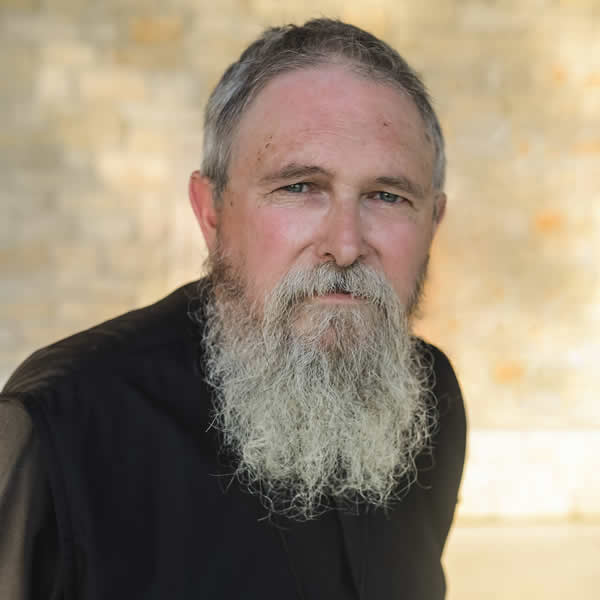
About Fr. Stephen Freeman

Fr. Stephen is a retired Archpriest of the Orthodox Church in America. He is also author of Everywhere Present: Christianity in a One-Storey Universe, and Face to Face: Knowing God Beyond Our Shame, as well as the Glory to God podcast series on Ancient Faith Radio.


Posted

in

by

Comments

62 responses to “A Law for All Seasons”

  1. Fr Jacques Smuts Avatar

    Dear Fr Stephen

    In my work as a lawyer in the increasingly lawless and corrupt South African society, I see the truth of what you say every day. I often ask myself what I should do in particular situations, when I see the products of the demonic process of the “equalising of society” actively and passively participate in the breakdown of the legal system.
    Always the answer is the same: to live according to the law of Christ’s love in each interaction with other people. And not to forget that the prayers and blood of the early Christians replaced the Roman civilisation with a Christian one in 300 short years.

  2. Fr. Stephen Avatar

    Fr. Jacques,
    So good to hear from you! No doubt, lawlessness is a danger to us all. Frequently, what we see in the modern world is the substitute of power in the place of law. We live in difficult times – as did Sir Thomas More.

  3. Todd Moore Avatar
    Todd Moore

    Not that there is anything wrong with it, but this post clearly does not reflect a post-millennial in outlook, where history is moving toward a Christianized society (such that the gates of Hades will not prevail over the church). Rather, it seems more like an a-mill perspective where civilization is moving toward moral fragmentation until Christ comes (and admittedly, this what we currently get to see daily in the news).
    Yet, even if one accepts a post-mill/partial-preterist reading of certain prophecies, we can agree that salvation is not the same as social improvement, nor should the Kingdom of God to be confused with civilization.
    Which leads me to ask, in your opinion, might those of a post-mill persuasion still apply your post something like the following:
    ‘Regardless of how the “last days” are dated, the triumph of Christ not only has come but will come – but not through cultural means (where, apart from the Spirit, the spread of lawlessness and spiritual decay will always pervade). Rather, it will come only through the agency of Christ in his church, whose roots grow deeper and whose branches grow wider as history moves forward – such that the God of peace will soon crush Satan under our feet (Romans 16:20).’

  4. Fr. Stephen Avatar

    Todd,
    As a non-evangelical Christian – I never think about whether I’m anything-mill when it comes to the last days. But I would say that your summary regarding the agency of Christ in His Church – is significant. However, based on the Scriptures, I suspect that much of it will still be quite surprising. I’m extremely leary of “agency” when speaking with/to other Christians. Modernity has brain-washed us into being fascinated with our agency in history (and it’s pretty much all a lie). Christians, including Orthodox Christians, who speak in terms of our agency regarding the world make me very uncomfortable.

    I believe it is our task to pray, repent, preach the gospel, and live out the fullness of Christ in the life of the Church. I’ll let God do the math. Thinking about the end times is mostly a distraction. In the Orthodox liturgy, St. John Chrysostom actually speaks about the Second Coming in the past tense. That’s not really a commentary on the nature of the Second Coming – it’s a commentary/revelation on the nature of the Divine Liturgy.

  5. Fr. Stephen Avatar

    Todd,
    A few more thoughts…there is in the Tradition a strain of thought that follows Christ’s observation that “And unless those days were shortened, no flesh would be saved; but for the elect’s sake those days will be shortened.” (Matt. 24:22) It is an take that suggests that the world tends towards increasingly dark situations. And that the darkness makes it hard even for the Church. It’s certainly the case that the gates of hell will not prevail – but you get the idea that it’s a close shave.

    Modern Christians have drunk so deeply at the well of progressive themes (particularly attractive to Americans) that we tend to want to read them into the Scriptures. I do not believe in progress – I think it’s a powerful myth but mostly just delusion.

    The consensus on these matters, as far as I can discern it in various Fathers and Elders of the Church, is that things gradually get worse and worse, and harder and harder for Christians. And then – you hear a word encouraging you to be merciful (because the times are hard), and to judge nothing before its time. God will save us. Simply keep our eyes on Christ. Do not despair. Keep the commandments and be patient.

  6. Cooper N Gallimore Avatar
    Cooper N Gallimore

    Fr. Stephen, I trust you are well, and so good to see you narrow in on one of my favorite passages from one of my favorite plays. I actually led a small study group with some of the men from St. Anne’s several years ago, and happened to post my group study notes to my sub stack https://publiusslayerofdragons.substack.com/p/a-man-for-all-seasons) if you are interested. These lines haunt me, as they speak to a desire which has resonance in our own day not only for the apotheosis of a chimerical earthly utopia (to intentionally name a term attributable to More) but of the desire for unmediated revelation of all things that have been hidden and constrained by law, custom, and the imposition of human limits (human law and human physicality being among them). I used to think that direct knowledge of all things was an unmediated good, and thus the wisest man would be the man who had done and experienced all things possible, both good and bad. But, of course, this is not true; there is much knowledge that is not good and is not profitable, and laws exist to protect us from the full weight of it all–to create a limited space within which humans can live, develop, and (hopefully) develop in their understanding of and relationship with God (to put it another way, to create a space in which mankind is given the space to learn repentance). Ignorance of evil can thus be viewed as a gift from God, a gift which we seem intent upon despising to our folly. We have become impatient, just as we were impatient in the Garden, and I fear (to paraphrase C.S. Lewis) we are likely to get what we think we want, and to not like it very much.

  7. Lewis Hodge Avatar
    Lewis Hodge

    In this world of expanding chaos, how remarkable it is that Scripture brings such focus and clarity to the present problem(s). Thank you, Father Stephen, for “interpreting” these passages to direct our paths.

  8. Margaret Sarah Avatar
    Margaret Sarah

    “Christians, including Orthodox Christians, who speak in terms of our agency regarding the world make me very uncomfortable.”

    Thank you for this! I find that agency often becomes equated first with “free will”, and then the “imago dei”. This leaves us with the uncomfortable language of God himself being primarily an “Agent”. Looking at the surrounding world, and what I’ve experienced of life, I have no reason to believe in a “supreme Agent”, and even less desire to worship one.

    In regards to the article, could we hope that an earthly kingdom (or even nation-state) could be an “icon” of the kingdom of God?

    I’ve been recently reflecting on “render unto Caesar what is Caesar’s”. How do we reconcile this with “all things come from God”? Christ tells Pilate that he has no authority but what has been given to him from above. I often hear that from Christians that “money is from God and we are just stewards of it”. Something about that doesn’t sit right with me. I understand the spirit behind it, but money is Caesar’s. It doesn’t fit into the kingdom of God. At best, I find money can be iconic.

  9. Fr. Stephen Avatar

    Cooper,
    Good to hear from you! “Getting what we want” is a frightening thought!

  10. Fr. Stephen Avatar

    Margaret Sarah,
    I’ve been pondering your questions. “Could we hope that an earthly kingdom (or nation-state) could be an ‘icon’ of the kingdom of God?” I think that I would say no. I think there could be iconic elements in a nation-state – but sin is an abiding problem. Saints serve as living icons. But I cannot imagine (and we have no such promises) a “saintly state.”

    Some of tried to speak of the Byzantine Empire or “Holy Rus” as just such an icon – but I think they overlook the actual history when they do. I can think of two Byzantine Emperors who have been canonized, but they cause more than a bit of consternation in the minds of many of the faithful. Both have to have something of an asterisk next to their sainthood – being canonized for one thing but not for everything. I’m thinking of St. Constantine and St. Justinian.

    We have Christ’s own words regarding money (mammon). I’m not even sure that it rises to the level of iconic (or that it can).

    We do not have a blueprint for the Kingdom of God, much less for a nation-state or government. We simply have had no such thing revealed to us. What we have been given is the Church – and, frankly, we constantly make a mess of the Church, though we theoretically have monks for bishops. Human sin is real. Power corrupts. I’ll say no more about that. I will say that one of the blessings God has allowed to be in place is that shortness of a man’s life. Power corrupts – but then we die. And there’s a chance that the next guy will be less corrupt.

    St. Nektarios of Aegina is quite popular these days. He suffered greatly and was persecuted. It’s easy to forget that he was persecuted precisely by hierarchs. They made his life hell. God made him a saint. There’s not a part of his story that describes how the powers-that-be were somehow converted or changed by all that.

    I love the Orthodox Church. She is what she claims to be. But if we ourselves claim to be more than sinners then we are living in delusion.

  11. Margaret Sarah Avatar
    Margaret Sarah

    Father,

    Your words about power – in state, kingdom, and Church – are comforting. It can feel overwhelming to see corruption and abuse, and it becomes more bearable to know that it’s part of the package. It cannot be “fixed”, except in my own heart. Also, your point about “asterisked” saints is very helpful.

    I’ve considered Christ’s warns of mammon. He also speaks of the woman who lost a coin, the servants and talents, He speaks of the woman with the two mites. He speaks to the centurion about authority.

    I’ve been told that Christ used these words and ideas because it was what the people understood as valuable and powerful. The argument is: People think that coins are valuable, so Christ uses a search for a coin to describe the Kingdom. People think that kings are powerful, so Christ uses the word “kingdom”. My concern with this explanation is that it reduces the imagery to be a rhetorical sleight-of-hand. “The kingdom of heaven is like searching for a pearl of great price, except pearls are really worthless, so maybe not.”

    I had a conversation recently where it was said that if Christ lived today, he wouldn’t have used parables of fishermen or farmers since we are not a pastoral society. I was rather horrified. I do not think that Christ uses that imagery to “connect with his audience”, but instead because that imagery has inherent truth! Our life in Christ is like a grain of wheat, which says something about Christ, but also says something about wheat.

    It is in this spirit that I’ve been pondering earthly government, money, worth. Not because I think we ought to strive for a Holy Christian Empire. You explain that the garments of skins is “God’s provision for our lives in our fallen state”. I simply have a faint hope that the nature of this provision somehow rhymes with Paradise (with greater or lesser distortion, no doubt). The rich man who stored his grain away in barns rightly saw the value of grain, but unrightly saw the grain only, severed from its true meaning. For him it became mammon.

    My thinking may be very far off the mark on this one… but it was in this way I meant the original question. I’m very suspicious of “blueprints of the Kingdom” 🙂

  12. Fr. Stephen Avatar

    Margaret Sarah,
    I very much agree with your observation about Christ’s examples – they are more than rhetorical sleight of hand. They tell us something about seeds and pearls, and even about kingdoms.

    Both Lewis and Tolkein have somewhat idealized depictions of village life (and Lewis has an idealized Kingdom in Narnia). I strongly suspect that an English village (or Italian or Irish, etc.) had something about it that was worthy of being idealized.

    Serving in my first parish in the early 1980’s, I had a VHS copy of the John Wayne film, The Quiet Man. It was a quiet village in Ireland, with a tiny Anglican parish and a larger Catholic parish. And the people were characters (including drunks and bullies). Nevertheless, at the end of an exhausting day (including emotionally-so), I had a habit of laying on the couch after all the kids were in bed and watching the movie. There was even the best fight scene ever done at the end of the movie. But it was a place where things resolved. The village had a balance and an ability to be healed. You could live there.

    I suspect that such villages were once fairly common in many places, but less so now.

    Tolkien, in his letters, seems to be something of a village anarchist – not the type that tears everything down – but the type that suggests that the planners and fixers would do well to just leave us alone.

    We’ve had several (or more) centuries of mischief that have made such villages disappear in many places. We could live better than we do and we could be governed better than we are. If, though, we so change ourselves that we no longer understand stories about fish, seeds, or coins, then I worry yet more.

    At Thanksgiving this year, two of my grandsons were visiting us. Both caught their very first fish! That’s a joy. Now for some seeds and coins…

  13. Margaret Sarah Avatar
    Margaret Sarah

    Father,

    I am from a small town – and perhaps it is still capable of faintly echoing a deeper life. It is small enough that we have to bear each other. The community here still feels the sting of displacement when the Shenandoah National Park was established a hundred years ago. The benefit of long memory is that grievances are actually grieved – and thus perhaps can be brought to forgiveness. A quick news cycle, disengaged from the consumers’ actual life, creates quick anger and quick forgetfulness! Now you’ve got me thinking about Tolkien’s letters regarding villages. I will have to hunt those down.

    On a gladder note, children seem to have a natural inclination to both coins and seeds. Maybe get your grandsons some wildflower seeds for the spring! As a young child, I was deeply concerned that society would soon collapse, and so I started a little seed bank in my dresser drawer. I also started copying nursery rhymes down for the same reason. I was fully prepared to carry on civilization with my little box of seeds and my little sheaf of nursery rhymes. In hindsight, the instinct was oddly accurate.

    Lastly, the potential iconicity of government made me think of the iconicity of marriage. If a marriage union is always an icon, still some are far less distorted than others. And some “unions” or successions of uncommitted “unions” are so unlike the prototype, that they become even less than a distortion: they are iconoclastic. Strangely, though, even an anti-icon is dependent upon its iconicity in order to be anything at all! Perhaps, as with marriage, so with governmental authority.

  14. Simon Avatar
    Simon

    I confess to holding Roperian ethics.

    We must acknowledge the complexity of human circumstances, but in the end we are reduced to binary choices. In that sense, I’ve grown in respect for the Garden myth. The choice is stark. Genesis hints toward complexity, but the story places the weight exactly where it belongs: on the weight of the decision itself. Each of us knows the strain of perceiving many dimensions at once, only to be forced–finally–into reduced dimensionality: to eat or not to eat, to be or not to be. Worse, we all know how seemingly minor choices can yield catastrophic consequences. That risk is present in the human story from the beginning.

    Law, at least in part, exists as a set of guardrails on choice. But law is always after the fact; it deals in consequences. On the one hand, this is necessary for the well-ordering of society. On the other, when taken to extremes and married to ideology, law becomes an iron maiden of conformity.

    The tension between Roper and More is not a defect–it is a gift. It would be tragic to resolve it prematurely. Leaving that tension unresolved, while genuinely seeing the merit on both sides, guards us against the temptation to collapse complexity in the name of clarity. There is a perspective that congeals from marinating in the tension. Eventually, decisions must be made, and when they are, we will act from either a Roper or a More dialectic, or some other framework. That is unavoidable. Conflict will follow. That, too, is unavoidable. And both are okay.

  15. Fr. Stephen Avatar

    Margaret Sarah,
    A blessing to live in a small town – and to be a farmer. I am so glad for the farming voices within this little place of conversation. I think the news cycle easily makes us think about governmental issues on a dark level (no matter which side we prefer). I appreciate the fact that someone paints the lines on the highway and patches my road (like last week) when a water main broke.

    I believe that marriages (the iconic ones and ones striving towards iconicity) are a very significant glue in any culture. Indeed, every good thing that we do, however small, is a significant glue – and there’s so much of it out there. The truth is that love holds all things together, ultimately rooted in God’s love for all things.

    Be well.

  16. Fr. Stephen Avatar

    Simon,
    The dark menace within the Roper/More story, of course, is Henry VIII. I confess that I do not like him – he is one of the great evil figures in history for me (together with Stalin, Hitler, etc.). It’s less about the marriage and more about the dissolution of the monasteries and taking their property for himself. And, it’s not just a property crime. Having the monks drawn and quartered is too often forgotten. Seldom in history has more damage been done to a culture. But, even that, has complexity running all through it.

    It was a very complex time. And More certainly used the complexity (the Law) to buy himself some time. In the end, after he is condemned and sentenced. He announces his binary choice and speaks clearly about Henry’s marriage, condemning it and confirming his own decision and fate.

    Perhaps it is as Solzhenitsyn said – “the line separating good and evil runs through every human heart.” The Garden is repeated over and over (which is why such an ancient story is still being told).

    The real life story of More and Roper is interesting (and very telling). Roper was More’s son-in-law, married to his daughter, Margaret (Meg). Roper had become a convinced Lutheran (hence his critique of the Law). They argued privately (More a firm Catholic – all of that was still pretty fluid at the time). Here’s a small entry from Wikipedia:

    More wrote to his daughter:

    Meg, I have borne a long time with thy husband; I have reasoned and argued with him in these points of religion, and still given to him my poor fatherly counsel, but I perceive none of all this able to call him home; and therefore, Meg, I will no longer dispute with him, but will clean give him over and get me to God and pray for him.

    To these prayers by More, Roper attributed his return to Catholicism.

    Roper became the major biographer of his Father-in-law. He remained a faithful Catholic through very trying times.

    God give us grace.

  17. Matthew Avatar
    Matthew

    I think Margaret Sarah asked whether a nation-state could potentially be an icon for the Kingdom. I think Fr. Stephen responded by saying that because of the prevalence of sin he doubted such could be possible. Please correct me if I have understood something incorrectly.

    I am wondering, though, if God hasn´t called us or nations for that matter to be agents of massive change – then are we changing nothing when we simply pray, repent, worship, partake of the sacraments, love the person in front of us, do the next good and right thing, etc.?

    The Shire is such a beautiful place indeed. “Things change there slowly, if at all” is what I think Gandalf said about it. I think The Shire is something that could be created in our world even with the prevalence of all the Saurons around us. Is it too modern, too utopian to think in such ways? Maybe small Shire Pockets scattered across a tapestry of modern philosophical nonsense is something worth loving for?

  18. Fr. Stephen Avatar

    Matthew,
    There are already shires scattered across the world. And we could certainly use more. We would do well, even as city dwellers, to learn how to “shire.” For me, I work at knowing my neighbors, speaking to people, wasting a lot of time on the human beings that I encounter. It’s a small thing, but it matters.

    I think that “agents of change” is a very modern idea and a wrong one. I think that it is good “to pray, repent, worship, partake of the sacraments, love the person in front of us, do the next good thing,” and quit doing (or thinking) about the math. Those things are good in and of themselves. Thinking about what they might be changing is a distraction and a waste of time.

  19. Dee of Sts Herman and Olga Avatar
    Dee of Sts Herman and Olga

    Matthew,
    I have heard that even in Orthodox monasteries (where we might hope for a more Christ-like community), there are complicated relationships due to our shared sins.

  20. Byron Avatar
    Byron

    I can think of two Byzantine Emperors who have been canonized, but they cause more than a bit of consternation in the minds of many of the faithful. Both have to have something of an asterisk next to their sainthood – being canonized for one thing but not for everything.

    Isn’t this true of all Saints? I know of many who have ugly backgrounds and have made disputed statements from time to time.

  21. Fr. Stephen Avatar

    Byron,
    Yes. Saints are messy. But these two emperors are messier than many others (especially Justinian). I think I’m mostly pushing back against a false nostalgia for an “Orthodox kingdom.”

  22. Matthew Avatar
    Matthew

    Thanks so much Fr. Stephen and Dee.

  23. Jenny Avatar
    Jenny

    Father,

    Last night in the Gospels, the Lord was saying, “…but he (the enemy) comes so that the world may learn that I love the Father and do exactly what my Father has commanded me.” (John 14:31)

    I’ve often thought of this verse and the way the Lord was thinking and I try to imitate Him. I try to also say, “These trials and sufferings are an opportunity to show the Lord that I love Him and am obedient to Him in every circumstance.”

    Of course, I can’t manage that. I fall down and complain and doubt and generally fail the trial, but the Lord keeps on loving and being faithful anyway.

    But it helps at the very least to be facing the same way Christ faced, because this approach takes all the focus away from the enemy and sees only an opportunity to demonstrate love and trust in Jesus. At least I remember which I should be facing.

    Last week I decided I would listen to the current chapter in the Gospels as though I had never heard Jesus’ words before, in order to try and hear those words as though for the first time.

    He came very close in the words He had spoken. I was overwhelmed with grief and shame over all my failures because I was knowing so clearly that Jesus of Nazareth, that Christ, is a real and living Person, and He is unwavering in His faithfulness and His authority and integrity are perfect. Everything is His and He always does what is right with everything.

    I was condemning myself because I was certain there was no excuse for someone to know Him and yet to fail Him as repeatedly as I have done. I was despairing of ever giving Him back anything at all in return for all that He has given me, and so His investment in my life must be a waste.

    Will you tear it all down? He asked me. It was this specific phrase, which my mind did not understand at first, but it was arresting. I obeyed instinctively, though I didn’t understand what it meant.

    It took me an hour or two of thinking about it understand. I pray that prayer by St Basil every morning and it has this line:

    “Save us, and lead us into Thine eternal Kingdom, for Thou art our Creator, and the Giver and Provider of every good thing, and all our hope is in You.”

    What I was tearing down was all my hope in Him. I was beginning to conclude that there was nothing He could do with me, that my weakness must be greater than His ability to redeem, to do His good will.

    I have a tendency to condemn myself which has never pleased the Lord, and for His sake, I try not to do so. It helps to remember that He created me and He doesn’t make bad things. For His sake then, I have to assume that He does good work.

    A few days ago, almost the same thing happened. I remembered again all the ways I’ve failed Him and I wanted so much to condemn myself. I thought it must be unforgivable.

    But swifter that words, the Lord reminded me that He not only does He forgive, but He doesn’t remember our sins after He has forgiven them. He doesn’t bring them back to mind.

    Swiftly also, I remembered a verse I had read a long time ago, something like, “But with the Lord there is forgiveness of sins, that man might…” I couldn’t remember the rest, but I thought it must be, “…that man might worship Him.”

    Light dawned, as they say. How can we dare to come close to the Lord to worship Him if He did not forgive and wipe out past sins? We couldn’t possibly. But the Lord does forgive, because He wants us to know that we can come close to Him to worship Him. Because to worship Him is our life.

    Then I looked up the verse, and it was close:

    “But there is forgiveness with You, That You may be feared and worshiped [with submissive wonder].” Psalm 130:4 AMP

    I understood further when I read this. Submissive wonder before the Lord seems almost the perfect posture, and it possible because one has no pride. No pride because one can only be there at all because of His forgiveness, not one’s own perfection. So everything belongs to Him.

    I am an ordinary person and I live an ordinary life, and there is nothing I can do about it. I cannot do great things for Jesus. I long to, but I cannot.

    But I am often remembering that maxim: be an ordinary person, a member of the human race. Apparently, that is the only one of those maxims that comes naturally to me! 🙂

    I do also remember to try and do the most difficult task first, so I have been working hard at getting the bathrooms spring cleaned, and that, I am happy to report, is within my reach.

    I fed the cardinals today, because it is cold. They come persistently when it’s cold, because I always put food out for them. I put it on the ledge of my kitchen window, and they alight there and eat not two feet away from me while I wash dishes. Song birds cling to the bare branches of my lilacs while waiting their turn, and it makes the bush look as though it were blooming with finches. I do have an ordinary life, but there is a lot of beauty in it.

  24. Margaret Sarah Avatar
    Margaret Sarah

    This conversation brought to mind the writing of Lewis in Mere Christianity:

    “It is easy to think that the Church has a lot of different objects—education, building, missions, holding services. Just as it is easy to think the State has a lot of different objects—military, political, economic, and what not. But in a way things are much simpler than that. The State exists simply to promote and to protect the ordinary happiness of human beings in this life. A husband and wife chatting over a fire, a couple of friends having a game of darts in a pub, a man reading a book in his own room or digging in his own garden—that is what the State is there for. And unless they are helping to increase and prolong and protect such moments, all the laws, parliaments, armies, courts, police, economics, etc., are simply a waste of time. In the same way the Church exists for nothing else but to draw men into Christ, to make them little Christs. If they are not doing that, all the cathedrals, clergy, missions, sermons, even the Bible itself, are simply a waste of time.”

    Also of note: the Shire is kept peaceful not only due to the easy-going temperament of Hobbits, but also due to the tireless, selfless vigilance of the “Rangers” to the east. They secretly and thanklessly protect the borders of the Shire, and the hobbits view them with suspicion and dislike. Aragorn the ranger says: “If simple folk be kept free from care and fear, simple they they will be, and we must remain secret to keep them so.”

    That said, I think Shires have to grow – they can’t be manufactured or “created” in any structured sense.

  25. Fr. Stephen Avatar

    Jenny,
    Thank you for this wonderful sharing! Splendor in the ordinary.

  26. Fr. Stephen Avatar

    A goal in life: to become “Shire seed.”

  27. Dee of Sts Herman and Olga Avatar
    Dee of Sts Herman and Olga

    What I was tearing down was all my hope in Him. I was beginning to conclude that there was nothing He could do with me, that my weakness must be greater than His ability to redeem, to do His good will.

    Jenny, thank you so much for your encouraging comment. How often I have had such thoughts as you have expressed today, in these words I quote, and regarding my weaknesses and how hopeless I feel about doing the Lord’s will. Your words are edifying and give me hope. Thank you, dear sister, in Christ.

  28. Jenny Avatar
    Jenny

    Dee,

    I’m so glad to hear it! Let’s pray for each other, that our faith in our good Lord is built up:

    “But you, dear friends, continue to build yourselves up in your most holy faith as you keep praying in the Holy Spirit. Keep yourselves in God’s love as you continue to wait for the mercy of our Lord Jesus Christ, which results in eternal life.” Jude 1:20-21

  29. Dee of Sts Herman and Olga Avatar
    Dee of Sts Herman and Olga

    On sowing “Shire seed”:
    “They that sow in tears shall reap in joy. They went forth and wept as they cast their seeds, but they shall come rejoicing, bringing in the sheaves”. Psalms 125:5-6–Orthodox Psalter—Septuagint

    May it be so O Lord. So be it. So be it.

  30. Dee of Sts Herman and Olga Avatar
    Dee of Sts Herman and Olga

    Thank you again Jenny for your sweet words!
    May our good Lord, our hope and our life, help us.

  31. Matthew Avatar
    Matthew

    Margaret Sarah said:

    “The State exists simply to promote and to protect the ordinary happiness of human beings in this life.”

    I might agree with this, Margaret Sarah, but why a state exists and how it actually acts and functions in real time seems starkly different to me. My fear is that as AI technology matures, states will become even more sinister.

    That said, isn´t it in Romans 13 where Paul talks about good Christians having to obey the God-ordained state in all matters? How are we to understand all that if states in fact are not promoting and protecting happiness – or even Kingdom values?

  32. Fr. Stephen Avatar

    Matthew,
    Romans 13 should not be read in such an extreme way (“obey in all matters”). The balance is, “we must obey God rather than man,” and the two have to be held in tension and balanced. Additionally, in modern theory of democratic states – the people are themselves part of the state. As such, it’s never just a sort of obedience as the end of the matter.

    Frustratingly, or happily, there are tensions and fluidity, give-and-take in the modern situation.

    What is taking place, I think, is that there is discussion of the “state” in political terms, whereas, most modern states are largely, or effectively governed by unelected bureaucracies and NGO’s. The bureaucracies are enormous – far beyond the ability of legislatures to manage. It’s a very different kind of state – something that has eclipsed political theory.

    I believe it is unwittingly nefarious, except when it’s wittingly nefarious.

  33. Matthew Avatar
    Matthew

    Thanks Fr. Stephen

  34. Mark Spurlock Avatar
    Mark Spurlock

    Romans 13 calls to mind Ephesians 5:22-33 (“Wives, submit to your husbands” etc.). Preparatory to that passage, however, is “Submit to one another out of reverence for Christ.”

    It seems to me that in both cases Paul describes a particular kind of relationship, rather than a dysfunctional relationship that bears little resemblance to the ideal. In the case of husbands and wives, he says, “Husbands, love your wives, just as Christ loved the church and gave himself up for her.” If a husband is giving himself up for his wife and loving her as Christ loves the church (!), then naturally a good wife would have less reason to chafe at manifesting a servant’s heart toward him.

    We are all to manifest a servant’s heart to one another *out of reverence for Christ*.

    Likewise, Romans 13 describes a beneficial ruler, who has no terror for those who do right and is “God’s servant for your good.”

    If either the husband or ruler is evil, then clearly we should not serve them and thereby serve evil. Obvious examples are Daniel and Shadrach, Meshach, and Abednego. Obeying the edicts of the Final Solution because of Romans 13 would have been perverse.

  35. Matthew Avatar
    Matthew

    Thanks so much Mark.

  36. Simon Avatar
    Simon

    I am not so sure that we should qualify Romans 13 with “a beneficial ruler.” That runs the risk of conditioning compliance based on our perceived justifications: I don’t think this ruler is benevolent, etc. In the end, the government doesn’t bear the sword in vain. I think this goes back to the original article. There is no shortage of examples where a governing agency can create a collective good and there are even more instances where the governing agency can go wrong. What to do? Unfortunately, making rules about what to do is inadequate. We have to be guided by wisdom (Prov. 4:7).

    When I was a child I knew these two old black women, Mrs Oliver and Mrs Perry. I know that Mrs. Oliver was the daughter of parents who saw the end of slavery. I would assume the same is true of Mrs. Perry. Mrs. Oliver used to tell me as a kid (I mean as a little kid in the 70s), “You do the best that you can and you hope and you pray.” What is funny is that I have had those words with me my whole life. I bet she had no idea that little white boy would be repeating her words almost 50 years later. Regardless, the point is that there are many ambiguous areas in our lives that resist collapsing to simple rules, laws, or axioms. What we need is the wisdom from above. Wisdom that emerges naturally from hypostatic growth.

    As an aside, I am wondering whether hypostatic growth becomes more identifiable as presence. When I read of people’s first person accounts of saints what they seem to describe is a sense of presence. They are in the the saint’s presence. But, maybe more like the saint is the presence that the person enters.

    Connecting that to the article perhaps we might say that rules/laws misses the point and creates a false sense of morality that becomes something of a trap for the psyche as it might become preoccupied with performance. Of course, rules/laws are necessary for the well-ordering of society. But, for spiritual growth perhaps it is better to focus on those practices that create a greater sense of presence.

  37. Fr. Stephen Avatar

    Simon,
    Veryh well said. I agree.

  38. Mark Spurlock Avatar
    Mark Spurlock

    I was sloppy in my choice of “beneficial,” whereas I intended more the sense of *beneficent*: “Doing or causing good; characterized by kindness, charity, or generosity.”

    Nevertheless, that a person of good conscience may distort such conditional compliance is of far less moral hazard than that a bad ruler will misuse unconditional obedience. As far as the government’s sword, Paul says “if you do wrong, be afraid, for rulers do not bear the sword for no reason. They are God’s servants, agents of wrath to bring punishment on the wrongdoer.” You are to be fearful *if you do wrong* (rather than merely disobeying) and a wrongdoer. (Cf. “Fear not them which kill the body, but are not able to kill the soul: but rather fear him which is able to destroy both soul and body in hell.”)

    I am not arguing that we can ignore every command of someone in authority–which is distinct from merely possessing power–once we have concluded the authority is less than perfect or even evil. Nor can we ignore authoritative commands simply because we disagree with them (in a rational, rather than a moral, sense).

    Paul, however, obeyed the religious authorities with a vengeance when he was having Christians like Stephen stoned. But rather than continuing in that lawful persecution, he–in his own words–“was not disobedient unto the heavenly vision.” Consequently, he spent much of his last years imprisoned.

    For not obeying the dictates of those in authority.

  39. Simon Avatar
    Simon

    Mark, thank you for clarifying your thoughts.

    What I see in America and in the West is a crisis of conscience. How many atrocities are committed in the name of doing the right thing? In the name of justice? In the name of conscience–‘I had to do what I believe is right!’ To me–and I mean this sincerely–more dangerous words have never been spoken.

  40. Simon Avatar
    Simon

    Mark, another thought.

    Governments can wield the sword for good or for ill. That goes without saying.

    I treat all government authority with fear and trembling.

    The sword they wield might be justified or maybe not, perhaps their use of the sword is capricious. I think that if we have a healthy fear for the powers-that-be our lives will be more peaceful. Frankly, even if the government asks me to do something my conscience is at odds with, I will likely do it just to spare my family any trouble. There are going to be plenty of reasons for conflict in life. I am not afraid of conflict. But, why pick a fight with someone you can’t beat? I am not pushing for compliance without limits. Of course not. But, we are said to be blessed if we are “peacemakers.” So, as much as it depends on us we make peace. We yield. We willingly suffer the burdens of injustice just as Father Stephen posted about just a few articles ago.

    These questions are poignant because in America we are suffering a real divide cloaked as moral outrage. Nevertheless, it raises really interesting questions. For me the question I find myself thinking about is how do we relate to chaos? How do we relate to passions running amok disguised as altruism, justice, and moral outrage? How do we actually make peace not with it, but within it?

    I think that is where I would start speculating about presence, and hypostatic being as a movement from being present to becoming presence to Being Presence. I am not sure in the end that there is much we can do about anything or anyone except to BE present.

  41. Matthew Avatar
    Matthew

    And apparently Paul was beheaded by those same authorities, Mark, … the very authorities he did not obey.

  42. Patrick Tutella Avatar
    Patrick Tutella

    This is beautiful and timely, Fr. Stephen. The prophet, King David meditated on God’s law day and night and in his heart he sought to behold the beauty of the Lord.
    “Preserve our hearts O Lord.”

  43. Dee of Sts Herman and Olga Avatar
    Dee of Sts Herman and Olga

    Father,
    I heard the story that the reason angels are often portrayed in icons with a band around their heads is that, when Satan fell with his cohort of not-so-good angels, the rest who wanted to stay the course with God, obedient to Him, asked that their minds be bound to Him. And the bands represent God granting them this mind.

    In our passions, we are not always able to discern the words of the Lord from those of the adversary. Can we not ask our Lord to bind our minds as well?

  44. Dee of Sts Herman and Olga Avatar
    Dee of Sts Herman and Olga

    Father,
    I’ll add one more thought. I pray to God with Christ’s words, “not my will but thy will be done”. But I look at my heart and wonder, do I really mean that? So I turn to God and ask, please let my mind be bound to You. But then I wonder, am I wrong to ask for such a thing? I am no angel.

  45. Fr. Stephen Avatar

    Dee,
    I am unaware of the story regarding the band around the head in the depiction of angels in icons. I have heard the head-band, and the ends that are lifted in a stylized manner described as representing the “obedience” of the angels. Obedience has within it (in Greek as well as English) the word for “hearing.” Thus, I’ve heard these bands described as representing the angelic “listening” to God.

    The lore regarding “binding” is unknown to me, and, is something that could be troubling. We could ask for such a binding, but it would be contrary to the nature of obedience itself. Obedience is an act of freedom – the gift of cooperation offered by a free person. Were it to be “bound,” it would be a renunciation of our freedom – which – I think would be a denial of our personhood. The point isn’t perfection (though we might desire it), but the turning of our heart to God, over and over. It is getting up when we fall, though we might wish never to fall.

    At least, that is my best understanding of this.

  46. Byron Avatar
    Byron

    That said, isn´t it in Romans 13 where Paul talks about good Christians having to obey the God-ordained state in all matters? How are we to understand all that if states in fact are not promoting and protecting happiness – or even Kingdom values?

    One of the things I’ point out to people who (usually manipulatively) quote this verse is that that view must be balanced with the view of worldly authority in the book of Revelation. Most people don’t know what to do with that and tend to go quiet. Many good points have been made in this discussion; thanks to all contributing!

    But I am often remembering that maxim: be an ordinary person, a member of the human race. Apparently, that is the only one of those maxims that comes naturally to me!

    Jenny, I am reminded of the wonderful movie, “A Hidden Life”.

  47. Fr. Stephen Avatar

    Byron,
    Yes! An excellent movie – a depiction of what it is like to live faithfully in such a dilemma.

  48. Dee of Sts Herman and Olga Avatar
    Dee of Sts Herman and Olga

    Father,
    Your words have come into my heart, and I hear within my heart the Lord’s affirmation. Thank you, Father, for these needful words.

  49. Fr. Stephen Avatar

    Dee,
    Christ taught us to pray, “Thy will be done on earth as it is in heaven…” It is an act of freedom. Christ’s own prayer in the Garden, “not my will but Thine…” gives voice to the natural and proper human desire not to suffer or die. Throughout our lives, that God-given desire of our nature helps preserve us and keep us safe. But, there are times (as there is a time for everything) in which something greater requires that we recognize this greater good (God Himself) lest every lesser good become our deeper destruction. So, we pray, “Thy will, not mine.”

    I was put in mind of the Orthodox prayer (from one of the daily prayer books) that says, “Save me whether I want it or not.” It is a sort of blanket statement in which we are saying, “Give me grace in spite of my unruliness, in spite of my confusion, in spite of my cowardice, or fear, etc.”

  50. Nathan Fischer Avatar
    Nathan Fischer

    Father, a question for you in these troubling times. I was thinking of the nature of law and authorities, talking about it with a friend yesterday even (and then my wife mentioned your recent article, so I had to come read your thoughts!).

    One question I had regarding the confusion of being a Christian living in the US in this period of history is related to obedience to our authorities, and the role of the Church in our life. As I often look around me in confusion, and seeing the various authorities at odds with one another, I have come to the conclusion that I lack the discernment to know how to deal with any of this. So instead, I look to what the Church has to say – especially my Bishop.

    It seems to me that when left to our own devices as “individuals” it becomes very problematic to exercise our own discernment in matters related to authority. There’s a lot of things I question as being unjust laws of men rather than laws of God. But sometimes, our Church points me in a direction of obeying our authorities in a manner that causes me discomfort. When that happens, I trust that I need to trust the Bishop or my priest.

    Similarly, if they were to tell me that certain laws and edicts are not to be followed, or to be held at arm’s length, whether I agree with such laws or not, then that’s what I’m going to do (or try to do, anyway).

    I know that our Bishops are not perfect, but it seems like, if there is to be a hierarchy to the various authorities within my life and the “laws” that they enforce and require of us, then the Bishop should be top of the list.

    Do you have any thoughts on this? Is this a good way to approach things?

  51. Fr. Stephen Avatar

    Nathan,
    I remember my days in the Episcopal Church. We frequently received instructions and commentaries from the House of Bishops on various hot-button topics. Those instructions were (certainly by the 60’s and 70’s and later) always in lockstep with whatever the Democratic party position suggested. It was ineffectual, frequently wrong, and mostly served as a sort of virtue-signaling that has never gone away.

    The Orthodox Church in the US is a hodge-podge of jurisdictions which brings a variety of views into the reality of American culture. The single most common position in the Church has been a steady opposition to abortion and a defense of traditional marriage and family teachings.

    Apart from that, in the culture climate of the present, the Church would be having to issue near daily bulletins on one thing and another. This is not going to happen, nor should it happen. Largely, the Church recognizes the conscience of believers and does not try to constant micro-manage that reality. The Church’s teaching on major social issues has been clearly stated (repeatedly in the OCA). Beyond that, I think we would simply be stepping into a cess-pool of the culture wars with little effect.

    The point of all of this is that the Church does not have the task of managing the world. We have the task of preaching the gospel of Christ and nurturing communities in which the gospel is preached and practiced and virtue is taught and nurtured.

    It strikes me as interesting that the habit of Orthodox hierarchs in the US seem quite similar even though there are strong cultural differences. For example, ROCOR is culturally known to be on the “Right.” The GOA (Greeks) have many ties to the Left, though I would not describe that as an official position. But both groups (as well as the rest of us) are largely silent, except for the agreed teaching on certain clear social issues.

    Democracy (when it’s working) is always a tumbling mess. In America, in the atmosphere of extreme polarization (which differs greatly from the time of my childhood in the 50’s and 60’s), it is interesting to hear pretty much the same quiet approach across the board in Orthodox jurisdictions.

    I will add to this observation that American politics and American religion evolved as hand-in-glove operations. They represent the same culture forces at work in history. Orthodoxy is not “American” in that sense, and would have to change its DNA in order to be any different in that regard.

    I appreciate the general silence on specific issues. I pray. I complain (mostly to my wife who puts up with me). I vote (with no particular hope of changing anything). And, above all, I don’t take myself too seriously. God’s providence is at work for good despite all of our efforts to screw things up. Mostly, I work at finding the way to live, acquiring the Spirit of peace so that I might save some tiny few around me.

  52. Nathan Fischer Avatar
    Nathan Fischer

    Thank you, Father. God bless our wives.

    Your answer is very helpful and I think answers some things I wasn’t particularly clear about in my question, too. The fact, for example, that the Hierarchs are silent on certain matters, I take to mean that I should probably also be silent. If they were not (and I know that’s rare when it comes to cultural issues), then I would take note of that, too.

    I was also thinking of the manner in which we are taught how to live in this world by our priests and hierarchs as a way of teaching us how to live within the current culture. Not responding to every little law or cultural issue, but rather providing guidance on what an Orthodox Christian life looks like within the context of our modern world (which is what it’s always looked like at any period of history, but reiterated for our times). I suppose I was thinking of this as a sort of “side-effect commentary” following or not following various laws and edicts. In other words, being taught how to rightly live our lives seems (to me) to be something of an inherent correction to what is so often expected of us from the surrounding culture and at times even our secular leaders.

    I appreciate your note on the “right” vs “left” jurisdictions, too. It’s something I also noticed, but at times wondered if I was missing something given the way people speak of them at times.

  53. Fr. Stephen Avatar

    Nathan,
    I take the silence to be guidance as well. I have conversations with hierarchs of various jurisdictions from time to time. They tend to quietly rebuke priests for becoming too political (or overly political). That said, I will note that the Orthodox presence at the national March for Life has been led by Met. Tikhon for a number of years. Abp. Iakovos, who was the head of the GOA, famously marched side-by-side with MLK back in the day. I would say that it was a presence and a march that mattered at the time (having been well-aware of what was going on at the time).

    I will add that in the formative American years of Orthodoxy, in the early 20th century, when most of its members were the working poor and fresh off the boat, there was a habit to maintain a sort of silence to avoid persecutions of various sorts. Much of that early immigration would not have been deemed “white” by those who noticed such things. They were Mediterranean types and Slavs. Those habits probably shaped many things.

  54. Dee of Sts Herman and Olga Avatar
    Dee of Sts Herman and Olga

    Father,
    Thank you again for your comment to me and to Nathan. “Not my will but thy will be done” were exactly the words I needed to hear just when I opened the blog this evening.

    Glory to God for His mercy unworthy though I am.

  55. Nathan Fischer Avatar
    Nathan Fischer

    Thank you, Father. I do think the way we frame everything in political terms is problematic, and probably confusing in its own way. The sanctity, value, and treatment of a human life is not a political matter. We can turn it into one by how we behave in regard to it and the “solutions” we propose – but at its core.m It’s not political.

  56. Fr. Stephen Avatar

    Nathan,
    I’m not sure that I’ve ever written an article to delve into how the modern nation state is a religious entity – it is, at the very least, engaged in a religious project – but it is worth thinking about.

    The English Civil War (1640’s or so) is a useful point for thinking about this. It was a religious/political upheaval caused by the unsettled issues of the English Reformation. Parliament was overthrown and effectively seized by the “Puritan” elements (quite diverse groups). The King was executed. The Bishops were removed, and the Church of England was radically reformed in a Puritan direction. The war ended, Parliament was restored and the Church returned to its “Anglican” form. But, in very short order, the Stuarts were removed from the throne with William of Orange (a decided Protestant from the Netherlands put in his place – the so-called “Glorious Revolution”). All of that is the English mix that was sending settlers into the Americas. America was an English Export.

    The American Revolution flows pretty naturally out of all of that, in various ways. At its heart, however, it inherited the great Puritan impulse – to purify the Church, the Nation, and the world. To “make the world a better place” comes to be a mantra in the 19th and 20th centuries, but it was there from the time of America’s first settling. It was how we justified everything we were doing. At it’s core – the thought is religious. “Modernity” as an intellectual movement – is religious in nature (even when it’s secular). American culture (Modernity itself) is a vast religious project to build earth into heaven. It’s a heresy…but is believed to its core by most people living today.

    We tend to think about government and politics the way people used to think about the Church. We discuss it like a doctrine. What should it do? etc.

    The CS Lewis quote that Margaret Sarah offered: “the government exists to promote and protect the ordinary happiness of human beings” is, I think, a step back from the “make the world a better place” if read in the light of Lewis’ various writings. It’s a much more modest approach.

    The culture wars that we are enduring exist because the “religious impulses” of various groups are at loggerheads. It is the English Civil War all over again. But, to my mind, the Orthodox Church, though we live surrounded by this war, should not see itself as engaged in the war. We have a different vision.

    It is a difficult time.

  57. Nathan Fischer Avatar
    Nathan Fischer

    I’m not nearly as well versed in that history as you are, Father, but I’ve had similar thoughts while reading some of the books you’ve mentioned on your blog: The Enchantments of Mammon, Stripping of the Altars, and Unintended Reformation, especially. I think part of what makes this so difficult to talk about is that there’s no coherent way to reference the religious entity you’re referring to (and still be understood by anyone else).

    When people talk about Islam, we have a rough idea of what is meant. Same with Buddhism and Hinduism, etc. We can even reference their nations and roughly understand that (at least in many cases) the divide between their nation and their religious practices are tightly intertwined. But the overarching “religious” entity of the modern nation state that views itself as something of a “bucket” capable of holding a bunch of conflicting religions and ideas is a lot harder to reference and think about.

    I even find myself thinking of these things in very nearly “schizophrenic” ways. I’m so used to the “state” as a “secular” entity (and what our culture means by secularism) that when I try to think of the state in any other way (which has become easier over time), that understanding that I’ve grown up with is always right there in the back of my head chattering away, trying to tell me something different. It’s like after you’ve been knocked in the head and someone says, “How many fingers am I holding up?” And for a moment, you can’t tell, because you’re seeing double. I can get my head around the state as a religious entity, replete with ritual and iconography, etc. But there’s always the “doubled” vision of the state as I was taught to view it most of my life.

    The only parallel I have come up with that helps me really hold onto the “religious entity” aspect is that of the Orthodox Church itself. We have boundaries and borders – limits beyond which a person will find themselves no longer members of the Church (or, in the case of a Bishop, excommunicated by his fellow Bishops). But within those boundaries and borders is a surprising degree of freedom (significantly more than I expected when I first converted).

    I guess in a way, that’s sort of what the modern nation state promises to be: a place with boundaries and borders, but also a place that preserves human freedom. But we’ve seen how that has gone.

  58. Fr. Stephen Avatar

    Nathan,
    I don’t think that there’s anything in the Constitution that requires “Modernity” as a philosophy, or a commitment to “make the world a better place” – in the progressive sense. But we should understand that “progressivism” (which is a hallmark in various forms of both the Left and the Right in America) is a religious commitment and requires religious beliefs (or “quasi-religious beliefs”) to support it. I can imagine a modern state (even America) without that religious agenda – though it’s deeply woven into the psychic fabric of our culture.

    Some of the people that I’ve been impressed with lately have written quite critically of “progress.” Mary Harrington, a British woman writer, has done an amazing job in looking at the question of “progress” and its disastrous effects in the feminist movements. Good reading.

    I think that pushing back against the “progress” notions (rather than my preferred term “Modernity”) is quite effective – perhaps more effective. Harrington says flatly, “I do not believe in progress.” Then she writes or speaks quite well on what that means.

    And, it doesn’t mean that one opposes ever improving or changing anything. It does, however, require thinking about our global assumptions (which are always religious in nature).

    Lately, my word against the progress religion is: “Let God do the math.”

  59. Nathan Fischer Avatar
    Nathan Fischer

    I’ve really enjoyed some interviews with Marry Harrington! Thank you for your thoughts – I’m noodling on them. I tend to use “modernity” over “progress” but only because in the circles I run in most often, someone will at least ask, “What does modernity mean?” Any critical thoughts shared about progress will be often met by hearty enthusiasm, but only as a sort of bashing of left-wing politics. It certainly applies to that. But it also applies (I think) to many of the views of those I’m speaking to, as well (not to mention my own that I’m learning to be increasingly aware of). I think there’s a misunderstanding around the word that is irritatingly rooted in politics at this point. As everything seems to be! Sometimes I feel like all of us are using the same words, but we so often mean something wholly different when we use them. It is indeed difficult.

  60. Bonnie Avatar
    Bonnie

    C.S. Lewis writes in “The Voyage of the Dawn Treader” of a corrupt governor who defends profiting from his slave trade during a meeting with young Prince Caspian. “Your Majesty’s tender years…hardly make it possible that you should understand the economic problem involved. I have statistics, I have graphs…Have you no idea of progress, of development?”
    The Prince replies, “I have seen them both in an egg. We call it ‘Going Bad’ in Narnia.”

  61. Fr. Stephen Avatar

    Bonnie,
    Timeless wisdom! Love it!

  62. Mark Spurlock Avatar
    Mark Spurlock

    Father Stephen,

    A friend of mine texted me a link this morning to a clip of Ian McKellen reciting a speech from the play “Sir Thomas More.” Naturally, it brought to mind this recent discussion. I won’t link it directly because of the political context, but you can find it easily by googling.

    Scholars believe Shakespeare collaborated on the Elizabethan play to write this particular speech, although its not in the canon, and the play’s authors are Anthony Munday and Henry Chettle. Social media does not lend itself to such subtleties, and I’m seeing it referenced as “by Shakespeare.”

Leave a Reply

Your email address will not be published. Required fields are marked *


Subscribe to blog via email

Support the work

Your generous support for Glory to God for All Things will help maintain and expand the work of Fr. Stephen. This ministry continues to grow and your help is important. Thank you for your prayers and encouragement!


Latest Comments

  1. Thanks Dee. I appreciate your words.

  2. Great article, congratulations. I am an iconographer, and I appreciate your words; you have described the icon wonderfully.

  3. …the audio on this one is better: https://youtu.be/VjWxkUEJkqs?si=wPCo7-4JFT2eutwv

  4. Matthew, beloved brother, I should add that while we might not argue to proselytise, we’re notorious for arguing amongst ourselves!


Read my books

Everywhere Present by Stephen Freeman

Listen to my podcast


Categories


Archives