A Faith You Can Sink Your Teeth Into

In a now-famous experiment, volunteers were fitted with inverting lenses, such that everything they saw appeared upside-down. In a few days their brains adjusted and what they saw appeared correctly. When the lenses were removed, their naked eyes now saw things inverted, though again, after a few days their vision returned to normal. We are fearfully and wonderfully made and created in such a fashion we adapt to even very strange circumstances. We were created to survive. This adaptability is both a wonderful and a dangerous gift. It allows us to survive, but it also allows us to tolerate severe distortions of reality.

This is important to bear in mind as we go through a world that boasts of its objectivity and commitment to what’s “really there.” To the average modern person, objects appear to be inert, empty and stable. They belong to a material world devoid of spirit and the like. To attribute properties to matter that go beyond such an inert notion is perceived as mere superstition. Things are just things – any value they have beyond their mere existence is wholly within the mind of the beholder.

This perception, if viewed from a classical Christian understanding, represents a distortion, the result of a set of lenses that render the world flat, devoid of any dimension other than what seems most obvious. Our language preserves the memory of a different world, a time when thing and spirit were not seen as separate.

One of the most observant scholars of this aspect of our language was Owen Barfield, close friend of CS Lewis and JRR Tolkien, one of the Inklings. Both Lewis and Tolkien were profoundly affected by Barfield’s thoughts and observations. Those who are carefully familiar with the work of all three can see Barfield ever present within Narnia and Middle Earth. But his observations were not intended for the world of fantasy, but for our own.

The word “spirit” is itself a good example. It is a borrowing from the Latin, with an early meaning of “breath” or “wind.” This meaning is also true for the Greek word “pneuma.” In English itself, the more common pre-Latinized word was “ghost,” as in “Holy Ghost.” That word is derived from the Old English “gast,” probably from the Old Saxon, “gest.”

Our modern ears hear this and only imagine metaphor. We think, “They believed that spirit is like breath.” That is inaccurate and anachronistic. It would be more proper to say that spirit, breath, wind are all one thing, without a particular distinction. The world was perceived, according to Barfield, with “original participation.”

Our modern consciousness separates from the words their meanings and that to which they refer. Indeed, we say “spirit,” and have no thought whatsoever of the wind or our breath. It is simply a word, and we’re not at all sure about its referent. Spirit is only a sound for us, a placeholder in a sentence used to discuss an abstraction. “Klaatu barada nikto” would work just as well.

This abstraction from our very words represents more than a shift in meaning: there is a shift in our very consciousness of the world itself. Barfield completely destroys the theory that primitive man invented stories and concepts to explain cause-and-effect which he did not understand. He does not call the wind “breath” because He is imagining its cause to be some giant being breathing. It is breath, just as is his own breath, the two not being particularly distinct.

God breathes into Adam, and “he becomes a living soul.” Breath/soul/life have a common meaning in a manner that modern people can barely imagine.

In the service of Holy Baptism (Orthodox), the priest breathes on the water. Modern onlookers see this activity as a ritualistic symbol of the Holy Spirit moving over the waters in the Genesis creation account. But the priest also breathes in the face of the one being baptized during the exorcisms. He also breathes over the oil of the catechumens that he blesses. The modern imagination, if it goes so far to accept the notion that objects and people are somehow “blessed” of God, then they imagine this happening in a manner that cannot be seen or described. Actions such as those of the priest are of little importance. Mostly what matters are the words he says. Man speaks, God listens. God hears, thinks about it and answers.

Such a modern imagination actually creates a distance between ourselves and the world in which we live. It is, at its very heart, a denial of the Incarnation of Christ, or a failure to fully engage the actual reality of the Incarnation. In St. John’s account, when Christ gave the Spirit to His disciples, He breathed on them and said, “Receive the Holy Spirit” (20:22). This, like the Last Supper, involves a communion between word, action, reality. They are not three separate things, but one.

This is not just an ancient way of seeing and understanding. It is also a better description of life as we actually experience it. It is our consciousness, represented in our use of language, that has changed, not reality. We are, in fact, utterly embodied creatures. The soul is the life of the body, not the “ghost in the machine.” Every thought has a chemical/biological component, and the information we receive from the world around us comes to us in physical form (I include light within this description). At every turn, God has shown Himself to us by means of the very physicality with which He had created us. St. Gregory of Nyssa says, “Man is mud whom God has commanded to become god.” This, however, does not mean that we cease to be embodied.

St. Maximus the Confessor maintains:

that the soul remains just as intrinsically oriented toward its body, even after death, as the body is toward it and that therefore the final perfection of knowledge and experience can be expected only when the whole range of sensible and intellectual capacities is restored. (from Cosmic Liturgy, Hans Urs von Balthasar)

The vision of the Church is that expressed in St. Paul in which creation is not overcome, but “set free” into the “glorious liberty of the children of God.” (Romans 8:21). It would be ironic if modernity had to await the Second Coming in order to return to a truly embodied existence.

Fortunately, there remains a truly embodied Christianity, completely consonant with the deposit of the faith once delivered to the saints. What is endangered, however, is the consciousness of that embodied faith. Orthodox Christians within the contemporary world are as likely as anyone to wear the distorting lenses of modernity and notice only a feigned sacramentality. Accepting the materiality of the faith, its full incarnate reality, is probably a greater difficulty than any other facing the Church. It is all the more difficult in that it is generally unaddressed in the writings of the fathers – they lived in a pre-modern world where human consciousness had not been robbed of its perception of reality.

My own observation of encountering an earlier consciousness is that it strikes the modern mind as superstitious. My suggestion is, therefore, to pay attention whenever something seems so, it might be a clue to reality. A Greek priest friend once commented to me that he always gets a better crowd at Church when “we’re giving away something.” What he meant was when a service involved the blessing of water for distribution, or the blessing of oil, or bread, basil, the many things that are associated with various feast days, those services draw a crowd. Protestants will turn out for an idea, or an entertaining service. The traditionally Orthodox want holy things. They understand that holiness most frequently comes in the shape of things.

When the Tikhvin Icon of the Mother of God returned to Russia in 2004, the crowds gathered in numbers that would strain credulity. It was seen as a sign of the Mother of God’s favor – “she” was coming home. I should add that I’ve never heard of great icons being described as “it.”

The abstracting of our faith, its transformation into precepts and sentiments, robs us of the power of the concrete. Human beings are not angels – they should not seek to pray like them. Embodied prayer is the tradition.

I will conclude with one of the finest examples of embodied prayer, from one of the greatest saints of the West.: The Lorica, or St. Patrick’s Breastplate:

I bind unto myself today
The strong Name of the Trinity,
By invocation of the same,
The Three in One and One in Three.

I bind this day to me for ever.
By power of faith, Christ’s incarnation;
His baptism in the Jordan river;
His death on Cross for my salvation;
His bursting from the spicèd tomb;
His riding up the heavenly way;
His coming at the day of doom;
I bind unto myself today.

I bind unto myself the power
Of the great love of the cherubim;
The sweet ‘well done’ in judgment hour,
The service of the seraphim,
Confessors’ faith, Apostles’ word,
The Patriarchs’ prayers, the Prophets’ scrolls,
All good deeds done unto the Lord,
And purity of virgin souls.

I bind unto myself today
The virtues of the starlit heaven,
The glorious sun’s life-giving ray,
The whiteness of the moon at even,
The flashing of the lightning free,
The whirling wind’s tempestuous shocks,
The stable earth, the deep salt sea,
Around the old eternal rocks.

I bind unto myself today
The power of God to hold and lead,
His eye to watch, His might to stay,
His ear to hearken to my need.
The wisdom of my God to teach,
His hand to guide, His shield to ward,
The word of God to give me speech,
His heavenly host to be my guard.

Against the demon snares of sin,
The vice that gives temptation force,
The natural lusts that war within,
The hostile men that mar my course;
Or few or many, far or nigh,
In every place and in all hours,
Against their fierce hostility,
I bind to me these holy powers.

Against all Satan’s spells and wiles,
Against false words of heresy,
Against the knowledge that defiles,
Against the heart’s idolatry,
Against the wizard’s evil craft,
Against the death wound and the burning,
The choking wave and the poisoned shaft,
Protect me, Christ, till Thy returning.

Christ be with me, Christ within me,
Christ behind me, Christ before me,
Christ beside me, Christ to win me,
Christ to comfort and restore me.
Christ beneath me, Christ above me,
Christ in quiet, Christ in danger,
Christ in hearts of all that love me,
Christ in mouth of friend and stranger.

I bind unto myself the Name,
The strong Name of the Trinity;
By invocation of the same.
The Three in One, and One in Three,
Of Whom all nature hath creation,
Eternal Father, Spirit, Word:
Praise to the Lord of my salvation,
Salvation is of Christ the Lord.
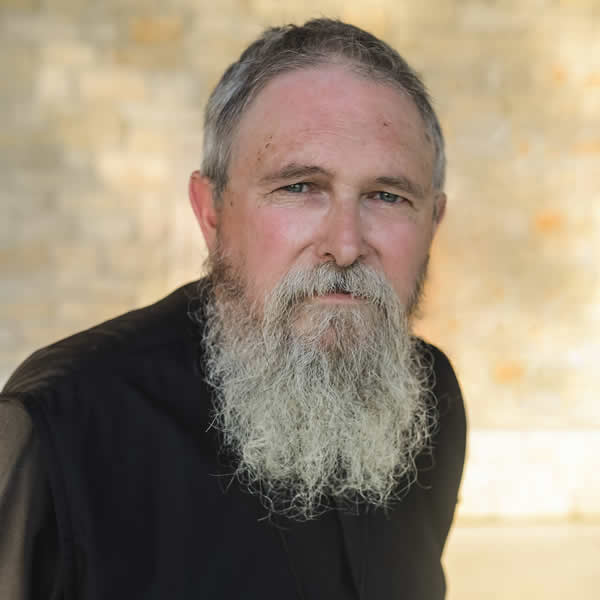
 

About Fr. Stephen Freeman

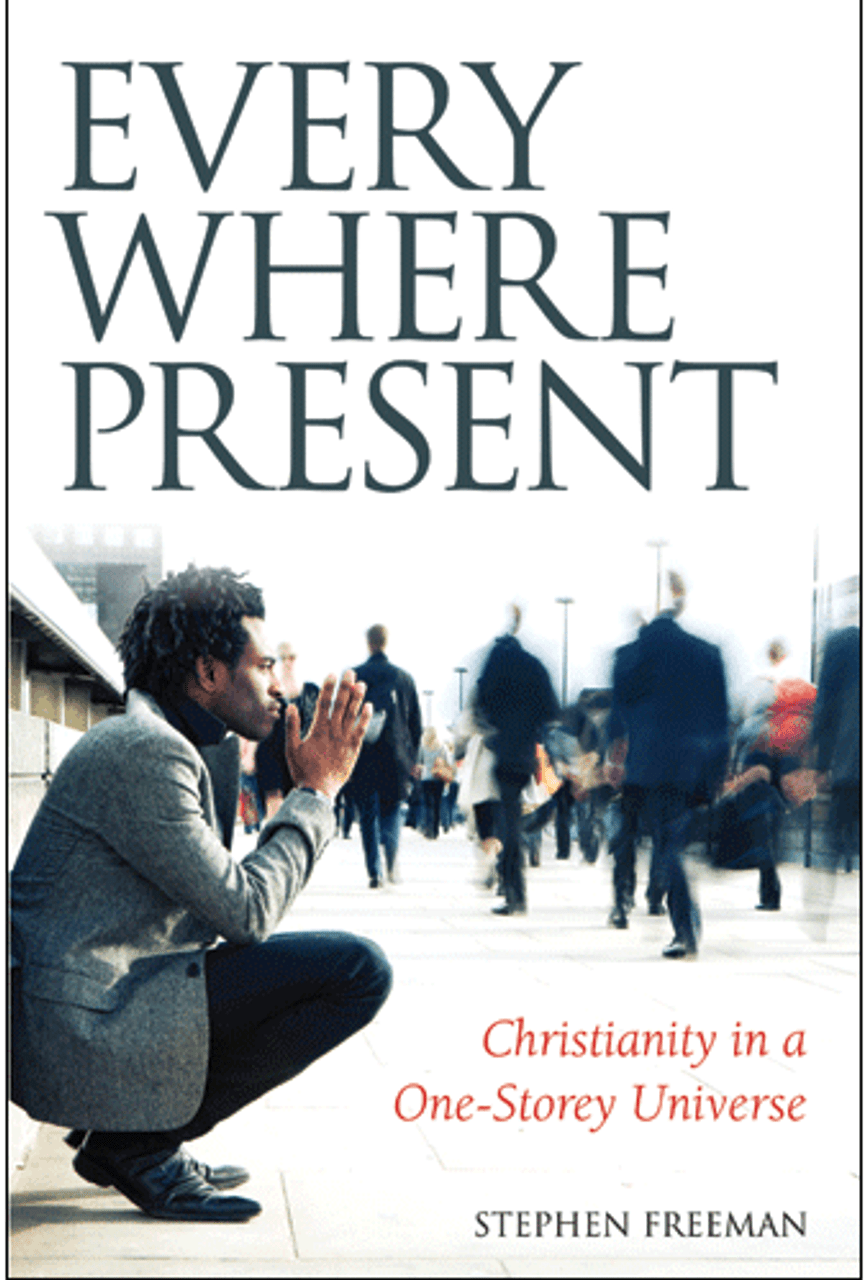
Fr. Stephen is a retired Archpriest of the Orthodox Church in America. He is also author of Everywhere Present: Christianity in a One-Storey Universe, and Face to Face: Knowing God Beyond Our Shame, as well as the Glory to God podcast series on Ancient Faith Radio.


Posted

in

, , ,

by

Comments

23 responses to “A Faith You Can Sink Your Teeth Into”

  1. Margaret Avatar
    Margaret

    Thanks so much for this Fr Stephen! I’m sharing!

  2. Matthew Avatar
    Matthew

    This talk of embodiment, materiality and sacramentality has touched me is some way. So much so that while in my hotel room over the weekend I laid in bed and observed a nearby chair. I thought about the structure and form of the chair, it’s design and maybe even its purpose. I asked myself in what way God might be present to me through the chair. Then my thoughts moved toward pantheism (which we have already discussed and clarified) and the spiritual exercise ended. Should I continue to attempt to engage the material world sacramentally, or is this simply a silly exercise?

  3. David E. Rockett Avatar

    Amen…Glory be to Thee O Christ our God.

  4. Dee of Sts Herman and Olga Avatar
    Dee of Sts Herman and Olga

    Matthew,
    I’m not sure what Father might say, however, I think the place to observe Christ is within your heart and in the heart of others. Then I think (speaking from experience) God speaks to you in many ways, in the sound of rain, on a pattern of light on a window, in bird song, in the sudden awakening of a heater for warming a room, etc. I don’t go to an analysis of an object, ie, structure and form. But on the other hand, if something made with human hands shows beauty, I could see the work of God in such beauty.

    Before I was Christian, I was in tears because of difficult circumstances, I was living in a place of my Seminole ancestors, and I humbly asked the spirit of a place to speak to me. Not in a magical way but asking the spirit (of God) to speak to my sorrowful heart. The place was a marsh within a tropical forest. Then the wind blew gently through the trees and cicadas sang. Not unusual for the place, but both the wind and the song had a circular movement around me first to the front to the side, then behind, then to the other side, and in front again. I felt like a child embraced, and these physical movements comforted me.

    I believed in God at the time. But not yet aware Christ was with me.

  5. Dee of Sts Herman and Olga Avatar
    Dee of Sts Herman and Olga

    Father,
    I was edified reading St Silouan’s words about the soul. He always referred to his (and everyone’s) soul as “she”. The translators didn’t use the word “it”.

  6. Margaret Sarah Avatar
    Margaret Sarah

    Father,

    This is a timely post – I’ve been pondering “consciousness” the past few days, and realized that I don’t really know what it is at all. You refer to consciousness a few times, and in the quote St Maximus refers to “the final perfection of knowledge and experience [which] can be expected only when the whole range of sensible and intellectual capacities is restored.”

    I know that older worldviews do not speak of consciousness in the same way that modern philosophy and neuroscience does. But St Maximus seems to be penetrating the experiential reality that the word “consciousness” is trying to describe. Can you explain more about how to understand consciousness, spirit, and soul from a more patristic framework? How does this “embodiment” change the way we live with a mind?

    Also, Matthew, I understand the impulse. Sometimes I do something similar, except for me it comes with the question “how does that chair (tree, water, cow) participate in Being in a way that I do not?” I’m curious to see what discussions ensue from your comment.

  7. Matthew Avatar
    Matthew

    Hello Dee. What you share is a beautiful story and picture! I also think you make a great point about looking for Christ’s revelation in my heart and in the heart of others.

    The chair wasn’t particularly beautiful, but I’m fairly confident it was made by human hands.

  8. Matthew Avatar
    Matthew

    Thanks Margaret Sarah.

    I love this comment section.

    How does a cow or a tree participate in Being in a way I do not?

    Man … super question to ponder!

  9. Dee of Sts Herman and Olga Avatar
    Dee of Sts Herman and Olga

    An Alaska Native Christian Elder once told me that when she feels particularly anguished by circumstances (usually university-related) in her life, she goes to a tree, puts her hands on its trunk, and prays, asking the tree to help her take poison and anguish from her. When she said this I thought of the Tree of the Cross. That Tree is in all trees, and upon the Tree we take our sorrow and find our redemption.

  10. Matthew Avatar
    Matthew

    Thank you so much Dee!

  11. Helen Avatar
    Helen

    Dee, your comments are beautiful! We seek to know within out hearts and to be known within our hearts.

  12. Andrew Avatar
    Andrew

    “I should add that I’ve never heard of great icons being described as “it.”

    I was struck by this just recently when our parish had the blessing of a relic of St. Anna coming to us. The man who brought them and was taking them to various parishes around the West Coast, referred to the relics as ‘her’ and ‘St. Anna’. “What a blessing it has been to bring St. Anna to all of these parishes!” etc. This felt right and true, though it is, admittedly, not how I so often perceive these things.

  13. Fr. Stephen Avatar

    Matthew,
    Dee’s suggestion is good.

  14. Fr. Stephen Avatar

    Margaret Sarah,
    Consciousness is a very difficult thing to define. Philosophy and science cannot always agree on what it is. I think it’s more than mental awareness (in all its forms). It is also the body’s awareness – as in – our bodies know more than we are entirely aware of and it can be quite important. It’s a very large topic. I’ll give it more thought.

  15. Fr Christodoulos Fyles Avatar
    Fr Christodoulos Fyles

    This reminded me of the Akathistos Glory to God In All Things by Metropolitan Tryphon. This is a wonderful Hymn. Had you recently prayed this, and if it is a new thing for you do you want a copy of my own version

  16. Fr. Stephen Avatar

    Fr. Christodoulos,
    The “Breastplate of St. Patrick” was written by St. Patrick in the 5th century, though I think the manuscripts with it date to around the 11th century. St. Patrick, the Patron Saint of Ireland, was/is a great Orthodox saint. I’ve not seen an Orthodox musical setting for it, but I think someone could easily set it to one of the tones, in some fashion.

    It is one of the great prayers of the Orthodox years in Ireland and Britain.

  17. Margaret Sarah Avatar
    Margaret Sarah

    Dee,
    “That Tree is in all trees” – thank you for that. I often get caught up in trying to see the “big picture”, and trees, as icons of the cross, bring me back to earth. I actually had that in mind when adding trees to the list of my previous comment! Instead of trying vainly to convince myself of some vague “ultimate Reality”, I find myself far more able to see and love the “little patterns” in life and trust that it is part of the bigger pattern.

    Matthew,
    I love this comment section, too! Often I do not comment, because someone else has precisely worded my question or thought, better that I would. 🙂

    Father,
    I think the post “The Secular Mind vs The Whole Heart” helps answer some of my question. Also, I really am glad that you included the Breastplate on this post.

  18. Matthew Avatar
    Matthew

    It´s so hard to see and experience the goodness of God on a daily basis, especially when you are feeling nervous or down.

    Any suggestions?

  19. Fr. Stephen Avatar

    Matthew,
    I think that the best path forward in this is to cultivate the practice of giving thanks always and for all things. That, more than anything I’ve found, has a way of clearing the heart and allowing it to see (perceive) the truth of what is around us. At times, that practice is easy. At times, it takes great concentration. And, at times, it is a deep struggle, particularly when we are angry, depressed, disappointed, ashamed, etc. It is, I believe, the single most powerful weapon in our spiritual armory. It is in that struggle that we remember that though the enemy has meant something for evil, God means it for good. Giving thanks is something that the enemy will not and cannot do – so its very sound is something he cannot bear.

    I have written, “Giving thanks is humility in the active voice.” Humility draws down grace from heaven (“He gives more grace to the humble”).

    I hope this is helpful.

  20. Fr. Stephen Avatar

    Margaret Sarah,
    Thanks for the heads up on the Secular Mind post. I think I’ll repost it later in the week. There are over 2500 posts on the blog. Reading them all would be a long, slow effort. I frequently dig around and repost things – knowing that they will be new for many readers and a reminder for others.

  21. Matthew Avatar
    Matthew

    It is very helpful Fr. Stephen. Thank you!

  22. Kate Avatar
    Kate

    Father Stephen,
    I’m afraid my modern mind has difficulty grasping this concept. Sometimes I have an “aha!” moment, but I soon default into thinking the same way as before. I’m hoping that as I continue to read your blog, it will sink in by osmosis!
    I found it interesting and encouraging that yesterday when I was in prayer, I prayed St. Patrick’s prayer, which I had recently rediscovered. As I prayed through it, I thought, “Father Stephen would probably agree with this prayer.” And here you were in my inbox this morning doing just that!
    I think praying through this on a regular basis might help with that osmosis I’m hoping for.
    Thank you for your writings. They are very encouraging, helpful, and sometimes challenging, which I realize is necessary.

  23. Matthew Avatar
    Matthew

    The secular mind article was good. Would love to see it reposted with a new set of comments.

Leave a Reply

Your email address will not be published. Required fields are marked *


Subscribe to blog via email

Support the work

Your generous support for Glory to God for All Things will help maintain and expand the work of Fr. Stephen. This ministry continues to grow and your help is important. Thank you for your prayers and encouragement!


Latest Comments

  1. Thank you, Father. I heard from an Orthodox priest who is an OT scholar that the “sin” that St. Paul…

  2. It’s interesting that Maximus notes a division in the earthly creation, “between paradise and the inhabited world.” I wonder if…

  3. You’re welcome, Matthew…happy you enjoyed it. I find her performance there movingly beautiful. And whereas it’s about not being able…


Read my books

Everywhere Present by Stephen Freeman

Listen to my podcast


Categories


Archives