To Sing Like a River

Article from October, 2016

We stood looking out at a river rushing past the rocks – a brisk morning in the North Carolina mountains, a rare setting for the Divine Liturgy. The tradition of the Church generally holds that services such as the Divine Liturgy are to be held indoors, in the Church. There are exceptions. In monasteries across the world, it is not unusual for a major feast to be held outdoors to accommodate the large crowds that attend. But such events are exceptional. Last Sunday morning was an exception – the occasion being a liturgy for a large crowd who were participating in an area-wide Orthodox camping retreat in the mountains of North Carolina. My parish was among them.

There is an antiphonal quality in such a liturgy – the words, music and actions of the liturgy meet a constant response from the nature that surrounds it. Indeed, nature does not “house” the liturgy so much as join into the liturgy itself.

There are numerous examples in Scripture that speak of creation giving praise to God. To treat such verses as mere metaphor or anthropomorphizing would be a profound mistake. Of course, it is not uncommon in the modern world for people to imagine themselves as the only sentient creatures while staring out into the heavens wondering if there is some other possible life-form out there. We fail to understand the creation in which we live because we do not understand ourselves.

We are thinking matter, made of the same stuff as everything around us. And though we can say much about the activities of our brain, we cannot, somehow, actually translate or even correlate that activity with the thing we experience as thought. It is thought itself that we have mythologized and mis-imagined. With this same failure of imagination, we do not understand the fundamental communion of all created things, nor the utterly cosmic nature of the statement that God “became flesh and dwelt among us.”

We hear our own voices but do not recognize their kinship to every other sound around us. The sound of my voice and the sound of the river belong to the same class of event.

Fantasy novels often do a better job of imagining. Trees speak and animals discuss among themselves. We think to ourselves, “What if trees could actually speak?” But we never seem to think, “What if we actually knew how to listen?”

Most people would be greatly surprised to know that plants have a soul. According to the traditional teaching of the Church (which draws strongly from Aristotle), plants have a “vegetative soul” that comprises their drive towards reproduction and life itself. The human soul also has this same component, also called the “vegetative soul” by some, as well as an irrational component and a rational component. None of these divisions is dogma, and they may well be a bit antique and rooted in older philosophies. However, it is worth noting that the Tradition is quite comfortable with thinking about a “soul” even in plants.

I am convinced that most modern people, and certainly modern Christians, imagine the soul to be somehow distinct from the body and somehow synonymous with “thinking.” It is consciousness that we identify as the self, despite its occasional disappearance. I am also convinced that this understanding is largely mistaken. Earlier, I described us as “thinking matter.” That such a phrase sounds like a contradiction, an oxymoron, simply says something about how we understand matter and how we understand thought. I suspect we are wrong about both.

The mystery of the Christian faith and the belief in a soul is not found in the concept of thinking matter. Rather, it is found in the concept of any sort of human thought or consciousness that is not material. The existence of the soul apart from the body (after death) is sheer miracle and beyond imagining. It is something that God alone makes possible. It is not in the nature of the soul to have an existence apart from the body. The “immortality of the soul” is a statement about what God does for us, not a statement about an inherent property of the soul.

…the souls of the righteous are in the hand of God, and no torment will ever touch them. In the eyes of the foolish they seemed to have died, and their departure was thought to be a mistreatment, and their going from us to be their destruction; but they are at peace. (Wisdom 3:1-3)

Just as a tree longs for water and sends its roots in search of it, so, too, does it long for God, in whom it lives and moves and has its being. A tree’s desire for God differs from our own desire for God in that it has no “rational” component. But the desire remains. We do not speak of rocks having a soul (a “soul” means the “life” of something and is thus only posited about “living” things). Nevertheless, the existence of all created things “tends” towards God. St. Paul describes this as a “groaning in travail” (Romans 8:22).

The Fathers often point towards human rationality as an excellence that sets us above the rest of creation. In modern thought, however, we seem to think that we are somehow distinct from the rest of creation, with little in common. In truth, though, our thoughts are not so much distinct from the the other parts of creation (particularly higher animals) as they are simply more developed.

The tendency to attribute our “higher” faculties to something transcending our materiality comes dangerously close to treating our materiality as merely incidental to our lives. There is indeed a transcendent quality within our lives, but our materiality is not dismissed in its transcendence. The materiality of our existence, so far as we know, is always involved in every thought and experience within our lives. We are not angels.

Modern attitudes towards consciousness and the human body (particularly those found among contemporary Christians) often belong to the “two-storey universe.” We assume that our thoughts and feelings are “spiritual” (not material) while our bodies are not. This is nonsense and a terrible distortion of the classical Christian worldview.

This understanding belongs to the ever-changing world of non-sacramental Christianity, whose version of humanity is largely drawn from the world of pop-psychology and self-help books. The Reformers in the 16th century dropped the earlier understanding of the tripartite soul and opted instead for a simple model in which the human soul was comprised of reason and the will. It was an abstraction ripe for distortion (but ideally suited to consumerism).

St. Maximus the Confessor described a series of polarities: male/female; civilization/paradise; earth/universe; seen/unseen; created/uncreated. It is interesting to note that he did not posit a polarity between thought and matter. Thought belongs to the world of matter.

Despite the many critiques of modern “materialism,” we believe in nothing of the sort. The modern world holds to a false sentimentality. It is insufficiently materialist. Classical Christianity is the true materialism, revealing a dignity of the created order that never enters the sentiments of the modern mind. Our modern sin and failure is not found in loving material things too much – rather, we love them too little and in the wrong manner. We love our ideas about things and how we feel about things. Nothing is therefore loved for itself, but only for the sentiments that arise from its misuse.

The worship of God is a truly cosmic event, something that is the united and harmonious voice of all created things. The song itself is a material offering. We either sing within that harmony and within its key, or we sing amiss. There are no soloists in the choir.

Glory to God for all things, and with all things!
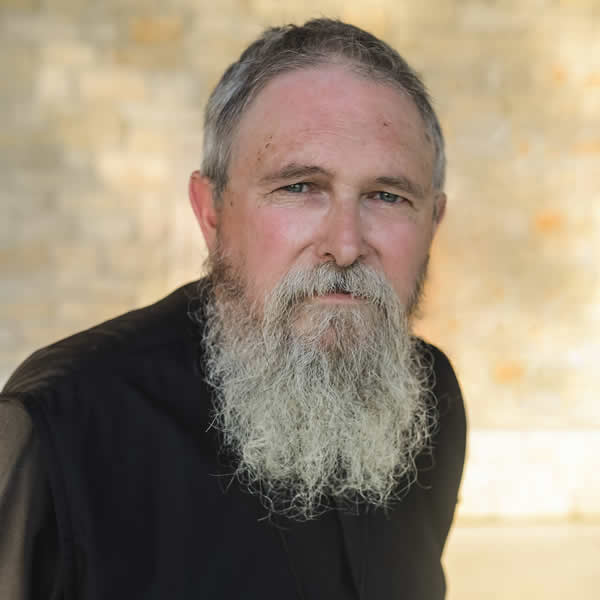
About Fr. Stephen Freeman

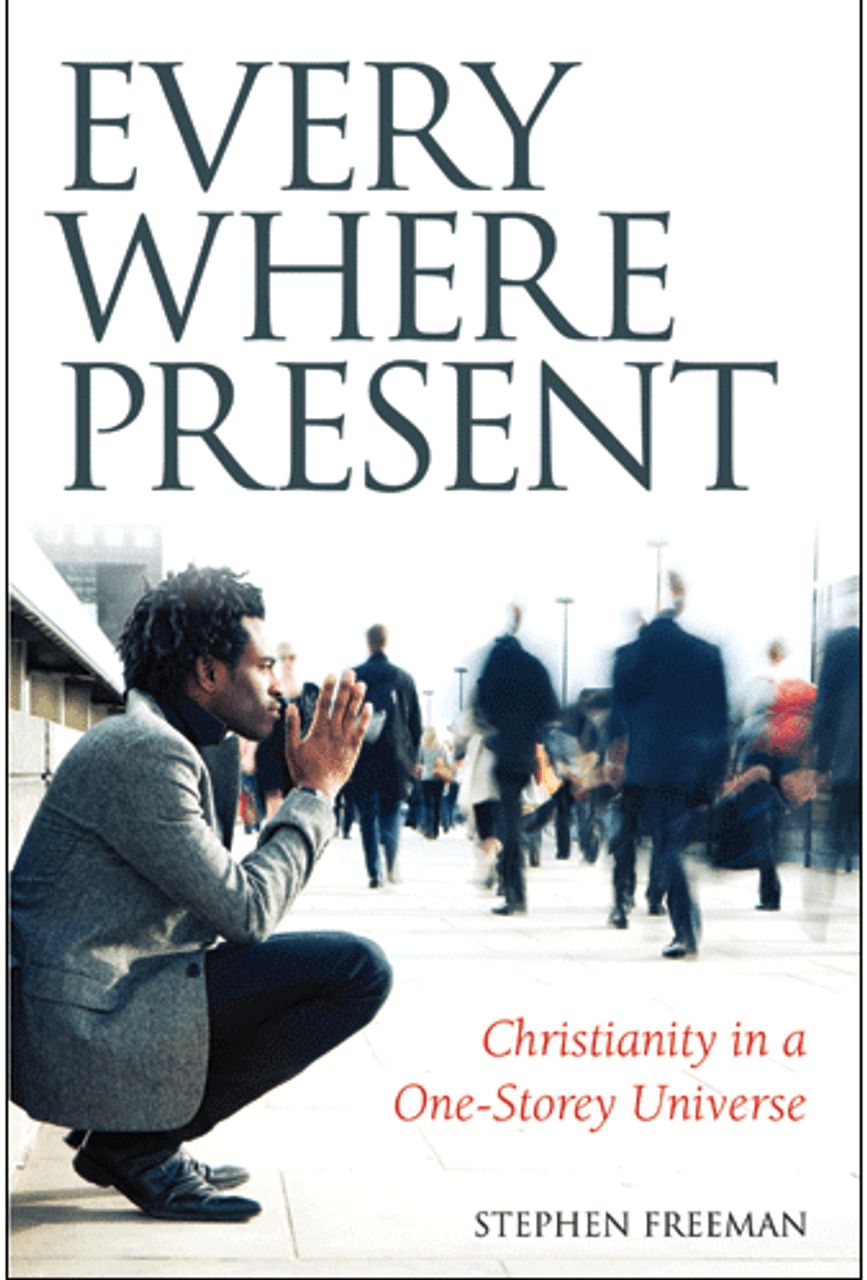
Fr. Stephen is a retired Archpriest of the Orthodox Church in America. He is also author of Everywhere Present: Christianity in a One-Storey Universe, and Face to Face: Knowing God Beyond Our Shame, as well as the Glory to God podcast series on Ancient Faith Radio.


Posted

in

, , ,

by

Comments

61 responses to “To Sing Like a River”

  1. Dino Avatar
    Dino

    Thank you Father! There is no division between spiritual and material for the one who has found God in their heart; the whole world is Liturgy. Oh those rare blessed souls! They need to be our guides.

  2. John Mark Lamb Avatar
    John Mark Lamb

    Fr. Freeman, thank you for these insightful words. You wrote, “With this same failure of imagination, we do not understand the fundamental communion of all created things, nor the utterly cosmic nature of the statement that God “became flesh and dwelt among us.” Can you say a bit more about the cosmic nature of God becoming flesh?

  3. Fr. Stephen Avatar

    John Mark,
    It is interesting to note that St. John’s gospel says, “the Word became flesh and dwelt among us,” which is saying more than, “the Word became a human being….” In the Creed we say, “And was made man…” But there is a material emphasis in the word, “flesh.” A number of early heresies had difficulty with the materiality of the Incarnation. Docetism (He only seemed to be flesh) is one that comes immediately to mind. The non-sacramentality of many forms of modern Christianity also have anti-materialist assumptions behind them (though largely unintentional). But the Reformation had something of an anti-material edge to it. Much of that was driven by the rabid anti-Catholicism that was indemic to all forms of Protestantism. There was a distrust of miracles, relics, icons, statues, etc. “Spiritual” meant “non-material.” We still think in this manner in popular culture.

    Our Orthodox faith pushes us, consistently, towards material things. Too often, we fail to understand that we should be pondering the character of materiality itself. There’s a theological notion of “capax dei” (“capable of God”). It’s generally applied to humanity – that there is something about human beings such that we were “capable” of bearing God – we have a capacity for this. And this tells us something of what it means to be human.

    By the same token, we could say that there’s a sort of capax dei with regard to creation itself. St. Maximus speaks of “three incarnations”: Creation, Scripture, and Christ. Neither creation nor scripture can be seen as equal to the Incarnation we see that is Christ. However, if we do not see God in creation, we do not truly see creation. Certainly the same is true of the Scriptures. And this is a point to pause – the Scriptures are not a “book about God” or “about the faith.” The Scriptures are writings in which we see God, in which God is revealed. The Protestant approach (a sort of longitudinal literalism – whether conservative literalism or liberal historical critical) sees the Scriptures as documents. The Orthodox approach to the Scriptures is closer to seeing them as sacrament. The Fathers of the Seventh Council said, “Icons do with color what Scripture does with words.” Icons are clearly not literalistic in their depiction – and this is intentional. The Scriptures, though having literal moments, still have a more “iconic” shape to their telling of stories, etc., than we often recognize – mostly because of bad Western treatments that have infused our culture.

    Modern people, for all of their imaginary materialism, are extremely divorced from the material world. Children do not see farms. They do not know where meat comes from. A large part of the population almost never sees the night sky, and even when they do, it’s a very dim version of the reality. I could multiply this over and over. Farmers, by contrast (who are becoming more and more scarce), necessarily have a deeper relationship and awareness of the material world. Orthodoxy has lots of nature incorporated into its feasts – fruit, flowers, herbs, water, wine, oil, scents, etc. In modernity, our city-based life tends to be like a different planet, with our food and material goods coming from some strange off-planet source that reaches us only after having been through manufacturing, packaging, marketing, etc.

    The materiality of Christ’s Body and Blood in the Eucharist should teach us as well about how to eat everything else. We eat with thanksgiving, as an act of communion, with all things. The material world is a manifestation of the goodness of God – and should be “read” just as we read the Scriptures.

    Etc.

  4. John Mark Lamb Avatar
    John Mark Lamb

    Thank you, Fr. Stephen. This is very helpful. I am also wondering about your insight into the Greek word, “sarx” which is translated “flesh” as in “the Word became “sarx”.

  5. Fr. Stephen Avatar

    John Mark,
    I think there’s a bit of trickiness in dealing with “sarx.” St. Paul uses the term, both “sarx” and “sarkikos” (“flesh” and “carnal”) in a different sense that St. John’s use (the “Word became flesh”). St. Paul treats it as a term for describing our human existence when operating out-of communion with God. It has been problematic that some make the leap from that usage to materiality itself. The body, or materiality, is not sinful (carnal) in and of itself. It is only so (as is anything) if it is operating out-of communion with God – in which case it is working against its own nature.

  6. Dee of Sts Herman and Olga Avatar
    Dee of Sts Herman and Olga

    Father,
    As it seems to happen by the grace of God, you post an article very helpful for my circumstances at this moment.

    Glory to God for His mercy and the beauty He gives and breathes into His creation.

  7. Dee of St Herman and Olga Avatar
    Dee of St Herman and Olga

    Father,
    It’s hard to guard my mind from the ethos of a two story universe when I enter my work environment. If I should reference the fusion of spirit and matter it will likely be met with accusations of an infringement of rights. Everyone is entitled to hold their own version of reality. If I should say this is the reality I’m imposing my religion into what is described as a neutral environment.

    I end up saying nothing about this in public. I wear my cross, keep icons on my desk and pray that whatever I think and do brings the love of Christ into my mind and into every act.

    I ask for prayers.

  8. Dee of Sts Herman and Olga Avatar
    Dee of Sts Herman and Olga

    Please forgive me. It seems I always have some sort of complaint. May our Lord preserve us. May my eyes see His Glory.

  9. Matthew Avatar
    Matthew

    Is pantheism contrary to Orthodoxy?

  10. Fr. Stephen Avatar

    Matthew,
    Yes. It’s contrary to Orthodoxy. St. Maximus’ language of “incarnations” with regard to creation and the Scriptures – differs from that language when speaking of Christ. It is stronger, I think, than simply saying that “God is everywhere.” It’s an answer to the question, “How is He everywhere?” My own preferred usage is something like “icon” rather than “incarnation.”

    If we get precise, we would speak of the “logoi” of created things – the image of the Logos that dwells within them. Frankly, language tends to fall short in these things – which is which it took several councils and a couple of hundred years or more for the Church to hammer out language for the incarnation – and even then had a schism.

    What the material world is not is “just stuff” or “secular.” God is there and created things reveal Him.

  11. Margaret Sarah Avatar
    Margaret Sarah

    Does panentheism get closer to the Orthodox vision of reality?

  12. Fr. Stephen Avatar

    Margaret Sarah,
    To my knowledge, it is not a term used in Orthodoxy. A problem, it would seem to me, is that it sort of begs the question while giving the impression that it said something quite clear. The question is “how?” rather than “is God present?” It is not that God is simply “in” all things, there’s a particular relationship described by the logoi of creation. It could also be described as “providence” or the “divine energies.” The logoi are the purpose, direction, etc., of all things.

  13. John Mark Lamb Avatar
    John Mark Lamb

    Father, thank you for the insights into St. Paul’s use of the word sarx. How would you say St. John is using sarx in “the word became flesh”? In other words, what does it mean for me and the human race personally?

  14. Margaret Sarah Avatar
    Margaret Sarah

    Father,

    Thank you for your reply! I’ve wondered before what you thought of panentheism.

    I’ve been interested in the term precisely because it “begs the question”. Other times you describe “providence” or “divine energies” as “God in extension”. It’s very tempting to either equate the two (all = God), obliterating any uniqueness of “all” (or “God”), or else reduce the world to “stuff” with God everywhere (or nowhere?). Pantheism does the first, and sometimes I feel that Classical Theism does the second. How can God be “all in all”?

    I see what you mean, though: it might say a little too much without saying enough. Panentheism wouldn’t mean very much with out Christ – I don’t think it would be possible. But I’m starting to think that theism, as such, doesn’t mean much without Christ, either.

  15. Fr. Stephen Avatar

    John Mark,
    I think that St. John uses the term to be roughly equivalent to “human” – but in our fullest sense. The Church teaches that Christ is “fully human.” That is to say that He has a human body and a human soul – all that it means to be human. As well, He is fully God.

    But, for us, it means that all that are has/is united with God. He became what we are that we might become what He is. Or, we say, “He became what we are, that, by grace, we might be all that He is by nature.

    He has united Himself to us – there is nothing about us that He has not taken to Himself. Boldly. St. Paul says,

    “He (the Father) made Him (Christ) to be sin, who knew no sin, that we might be made the righteousness of God” (2Cor. 5:21)

    That’s the most “outlandish” statement I can think of in the Scriptures. Even our brokenness, our sin, He has taken into Himself. It means for us that we are loved, that all will be well.

  16. Fr. Stephen Avatar

    Margaret Sarah,
    I think an important matter in all of this is that of boundaries. God is there (everywhere present) but “everywhere” is not Him. There is a boundary (of some sort). And yet, He is more than merely present – His “there” somehow constitutes something very significant for the very being of each part of creation itself.

    When I think of the Trinity – I am aware that God is One, and yet God is three. The names: Father, Son, and Holy Spirit are names that speak of relation. But we are also told that the Father is not the Son, the Son is not the Father, etc. They are God and God is One.

    This also says much to me in terms of who and how we are as persons. We are unique, and yet we do not exist without each other. We are the life of one another, just as God is our life. And we can also say this (in some appropriate manner) that our life within creation is like this as well.

  17. Nicole from VA Avatar
    Nicole from VA

    Thank you, Father. This is very beautiful and very true.

    I wanted to share with everyone:

    I looked up the prayer called St. Patrick’s Breastplate earlier today and noticed this in it:

    “I bind unto myself today the virtues of the starlit heaven

    the glorious sun’s life-giving ray, the whiteness of the moon at even,

    the flashing of the lightning free, the whirling wind’s tempestuous shocks,

    the stable earth, the deep salt sea, around the old eternal rocks.”

    (From the translation on the website of Peace Lutheran Church in Seattle)

    Sometimes I pray “Please teach me what the rocks know”

    I send a hello to you all

  18. Fr. Stephen Avatar

    Nicole,
    You’ll find it interesting that in the Russian translation edition of my book, Everywhere Present, we redid the last chapter (a light revision), but also, at the Russian editor’s suggestion, added a Russian translation of St. Patrick’s Breastplate to the book as well. I was very pleased.

  19. Simon Avatar
    Simon

    Here is an allegory of the ascetic struggle that occurred to me this morning:

    Allegory of Troy

    In this reading, Helen represents beauty (kallía) and virtue (aretē).
    Bound by law to Menelaus, she lives under the dominion of the passions.
    When she is freed by Paris—the soul’s eros for what is divine—and taken to Troy, the refuge of the heart, beauty and virtue come home to the interior life.

    Menelaus, the passions, pursues her to reclaim possession, and the war begins.
    The siege of Troy becomes the ascetic struggle: the heart defending its rediscovered union of soul with beauty and virtue.
    For a time the city holds; the passions rage but cannot conquer.
    Yet the fall comes not from without but from within. Pride opens the gate.
    A single thought—like the wooden horse—enters unexamined, and from that breach the passions pour in, overrunning the heart.

    The tale ends, as all ascetic dramas do, with the reminder that vigilance, not victory, guards the soul’s union with the beautiful and the good.

  20. Ook Avatar
    Ook

    Then can we say that because Christ became Man, not some immaterial angel, that in human theosis we are above the angels, due to our materiality? Sharing the glory of Christ in a way that angels cannot?

  21. Owen Kelly Avatar
    Owen Kelly

    Thanks for an engaging article, Fr Stephen.

    Regarding the goodness of our material form, how are we to understand St Paul’s words, “flesh and blood cannot inherit the kingdom of God” (1 Cor 15:50). This seems to mean that our current physical form is somehow unworthy of eternal life. Earlier in that section, Paul writes that our current bodily form must die to be “raised a spiritual body,” and that “the last Adam [became] a life-giving spirit” (15:44-45).

    Another question people sometimes ask is whether Christ still inhabits the flesh-and-blood form of Jesus of Nazareth? I sort of doubt Paul believed this, because in another place, he seems to say the opposite: “Now the Lord is the Spirit, and where the Spirit of the Lord is, [there] is liberty” (2 Cor 3:17). In the context, “the Lord” refers to Christ.

    Seeing that “when we see Him, we shall be like him,” is there a sense that we too – when our mortal frame is put to death – will also become life-giving spirit?

  22. Owen Kelly Avatar
    Owen Kelly

    Saint Maximus is quite radical in his strict identification of the logoi with the Logos:

    “…we affirm that the one Logos is many logoi and the many logoi are One. Because the One goes forth out of goodness into individual being, creating and preserving them, the One is many. Moreover, the many are directed toward the One and are providentially guided in that direction. It is as though they were drawn to an all-powerful center that had built into it the beginnings of the lines that go out from it and that gathers them all together. In this way the many are one.” (Ambiguum 7)

    I find his analogy of a circle’s radii, like the spokes of a wheel, to be very helpful. 🛞

  23. Owen Kelly Avatar
    Owen Kelly

    Concerning whether Christ still has a flesh and blood body, this text always strikes me: “Even though we have known Christ according to the flesh, yet now we know Him in this way no longer” (2 Cor 5:16).

  24. Deeof Sts Herman and Olga Avatar
    Deeof Sts Herman and Olga

    Ook,
    I think you may be correct. Hence the envy of the adversary. But I’m interested in what Father might say.

  25. Dee of Sts Herman and Olga Avatar
    Dee of Sts Herman and Olga

    Owen,
    I’m not sure I share the same interpretation you have on these verses.

    I would prefer to say the body inhabits the soul and are not meant to be apart. But all of creation is to come into Christ in the eschaton.

    St Paul may sound dualistic—material versus spirit—but I think this interpretation arises from our cultural view.

    Father I ask for your correction of my comment.

  26. Dee of Sts Herman and Olga Avatar
    Dee of Sts Herman and Olga

    Ook,
    I made a comment earlier that went into meditation because of a typo.

    I think you’re correct because of what we have learned about the adversary’s envy of us. We hold material and spiritual communion in Christ through the Incarnation, the Cross and the Resurrection. Theosis brings us into Him that makes us different from the Angels. Our path in itself (the Way—our lives in Him) brings us into becoming the persons we shall be in Him.

  27. Dee of Sts Herman and Olga Avatar
    Dee of Sts Herman and Olga

    Geewiz sometimes autocorrect really frustrates me.

    My last comment about theosis was for Ook.

  28. Owen Kelly Avatar
    Owen Kelly

    Dee,
    It is very good to read your thoughts on this. The Apostle’s words seem to challenge some sense of “the goodness of the created order,” a common enough statement within Christian circles today. Much of that talk stems from the work of New Testament scholar N.T. Wright, it seems to me. He sees quite a bit of continuity between this age and the age to come, whereas Paul seems to positive a greater discontinuity. As the Lord said, and the resurrection, we shall be “like the angels in heaven.” My guess is that this angelic likeness will include the spiritual body mentioned by Paul.

  29. Simon Avatar
    Simon

    Owen,

    I think if we follow your reasoning to its natural conclusion, it leads to a position that would, however unintentionally, undermine the Eucharist. The Eucharist only makes sense if Christ still possesses the humanity He assumed—flesh, blood, and all that belongs to being human.

    In the resurrection accounts, Jesus appears with His wounds; He invites Thomas to touch them. He eats with the disciples. These are not symbols of a discarded nature but signs that His humanity has been glorified, not set aside.

    The Orthodox understanding is that what Christ assumed, He never abandons. If He were to lay aside His humanity, the bridge between God and creation would collapse, and the Eucharist—our communion in His Body and Blood—would become only metaphor.

    The Fathers are actually quite clear on this point. Here are some easy to find references:

    – St. Athanasius writes that Christ “did not cast away His body, but bore it up into heaven” (On the Incarnation, §54).

    – St. Gregory of Nazianzus insists, “That which He has not assumed He has not healed” (Letter 101 to Cledonius).

    – St. Cyril of Alexandria declares, “The flesh of the Lord is life-giving because it was made the very flesh of the Word” (Third Letter to Nestorius, Anathema 10).

    – And St. John of Damascus summarizes: “After the Resurrection He has the same body, though immortal and incorruptible” (Exposition of the Orthodox Faith, III.27).

    Evidently, it’s not a new question.

    Taken together, the witness of Scripture and the Fathers leaves no room for ambiguity: the humanity Christ assumed remains eternally united to His divinity. It is that glorified humanity we receive in the Eucharist—the same Body and Blood that once hung upon the Cross and now reigns in glory.

    For this reason, I hold strongly that any reading of Scripture that has Jesus relinquishing His human nature after the Resurrection voids the very reality the Eucharist proclaims: God and man joined forever in Christ.

  30. Owen Kelly Avatar
    Owen Kelly

    I meant to write, “in the resurrection.” It may be worth noting as well that there is some discussion, based on his theology of the body, about whether Saint Paul would have even known about such a thing as the empty tomb. At the very least, it is an interesting question to consider.

  31. Fr. Stephen Avatar

    Ook,
    I think it’s rather we say that because of Christ, our materiality has been raised to be “above the angels,” which is different than saying, “due to our materiality.”

  32. Fr. Stephen Avatar

    Owen,
    St. Paul is quite clear that what is “sown” is that which is “raised” – though sown “corruptible” it is raised “incorruptible,” a statement which makes no sense unless it involves an actual change of the physical, corruptible body. Indeed, we physical beings who are alive at the coming of Christ will, “in a moment, in the twinkling of an eye – be changed.”

    When St. Paul says, “spiritual body,” it’s like an oxymoron – the way you were suggesting would eliminate the “body” and leave only “spiritual.”

  33. Fr. Stephen Avatar

    Owen,
    I do not think this text refers to the non-materiality of the resurrection. To know Christ “according to the flesh,” is to limit Christ to an historical past – when we, in fact, know Him now, in the present.

  34. Fr. Stephen Avatar

    Owen,
    I think there’s a bit of Anglican socialism (in a cultured Oxbridge sense) in NT musings about St. Paul, and I think he’s simply wrong, or, at least, not Orthodox. As to “spiritual body” – this is not the body of an angel. Christ’s statement of being “like the angels” was in reference to marriage, not to bodies.

  35. Fr. Stephen Avatar

    Simon,
    Well said, well quoted.

  36. Fr. Stephen Avatar

    Owen,
    Well, gosh – I’m glad there’s some stuff out there that I’m not reading. The Orthodox know no gospel that has no empty tomb. St. Paul clearly teaches the resurrection (change) of the Body – not ghosts with bodies in the ground. His preaching of the resurrection in Athens would have given no offense nor seemed silly had it not been a full-blown Jewish teaching on the resurrection of the body.

    A problem with historical-critical speculation is that it has no rules other than whatever can get published – and today – everything is published.

    I strongly believe, for what it’s worth, that St. Paul would have known something – at least like the Gospel of Mark, by heart, by memory. He clearly quotes the Institution narrative in the form we have in the Synoptic Gospels. He quotes Jesus (“it is more blessed to give than to receive”) demonstrating that he knew even more sayings than are recorded in the gospels. Tradition holds that St. Luke’s gospel was handed down to him from the teaching of St. Paul as well as historical sources. Forgive me, but I have little use for such speculations, and I think they can cause confusion for readers who do not have the training to recognize nonsense when they see it. I think it’s best left in the “Graduate Lounge” (as we called it back in grad school).

  37. Owen Kelly Avatar
    Owen Kelly

    Fr. Stephen and Simon,
    Thanks so much for the clear responses. I deeply respect the Orthodox frame of interpretation. And I admit that I do read those who scholarship is not bound by Orthodox tradition. I remain open to all these things. The theological reasons you have given are certainly venerable, and I thank you both kindly. May God be gracious to us all.

  38. Margaret Sarah Avatar
    Margaret Sarah

    Ook, you made me think again of one of my favorite Lewis poems:

    But Thou, Lord, surely knewest Thine own plan
    When the Angelic indifferences with no bar
    Loved universally, but Thou gav’st man
    The tether and pang of the particular;

    Which, like a chemic drop, infinitesimal,
    Plashed into pure water, changing the whole,
    Embodies and embitters and turns all
    Spirit’s sweet water to astringent soul.

    That we, though small, may quiver with fire’s same
    Substantial form as Thou – nor reflect merely,
    As lunar angel, back to thee, cold flame.
    Gods we are, Thou hast said, and we pay dearly.

  39. Simon Avatar
    Simon

    When you say you’re “not bound by the Orthodox tradition,” that removes the guardrails—and it raises an honest question: What assumptions now anchor your understanding? There have to be first principles somewhere. Most of the time, we aren’t even aware of what those are. But if they go unexamined, doesn’t the whole sense of meaning come down to, “Well, that makes sense to me”? I don’t say that dismissively—it’s a real question. How do your guiding principles prevent the theologizing process from beginning and ending with what you already assume to be true?

    You’re quoting St. Maximus, but that passage doesn’t stand in isolation. He was an Orthodox thinker, and when I read him I can’t help but hear Eucharistic language running through his thought. With a background in mathematics, I tend to picture it like a vector field whose origin is God Himself.

    Where you might see a wheel with spokes—a static geometry—I see kenosis, metanoia, and theosis as the living fabric of hypostatic existence:
    θ = fₕ(k, m, h) — theosis as a function of kenosis, metanoia, and hypostatization.

    That’s simply how I see it.

  40. Owen Kelly Avatar
    Owen Kelly

    Father,
    I agree that that which is “sewn” has continuity with that which is “raised.” I think I am more wondering about what this current, corruptible body is raised into, what it is to become. “Flesh and blood cannot inherit” seems rather stark and clear to me. If we are to exchange our “earthly tent” in order to obtain a spiritual body – what St Paul calls elsewhere, “a building from God, a house not made with hands, eternal in the heavens” (2 Cor 5:1) – then it seems that new heavenly body cannot have flesh and blood, because the latter is somehow unfit for the Kingdom. That is all I meant to say. I have no stake in the scholarship which I mentioned. Thanks again.

  41. Owen Kelly Avatar
    Owen Kelly

    Simon,
    Those are great questions. I wish I had good answers! I shared the Maximus quotation only to contribute to the general Logos/logoi discussion in the thread. It didn’t really have to do with the “spiritual body” stuff. Just fyi

    For what it’s worth, Maximus seems to have borrowed the analogy of a circle and its radii compared to God and his creative “wills” from Dionysus the Areopagite.

  42. Fr. Stephen Avatar

    Owen,
    I think the statement “flesh and blood cannot inherit the Kingdom of heaven,” is not an anti-materialist take, but a statement that this flesh and blood body must be changed – which is consistent with what St. Paul says. We have a clear reference and example in the Scriptures of what that looks like: the resurrected Christ. The stories are quite careful to demonstrate His materiality: “handle me.” “Place your finger in the print of the nails.” He ate with the disciples, etc. What Christ is, we shall become.

    But, we add to that – He appeared and disappeared. He was not always recognized at first. He is also present as the Eucharist, etc.

    I understand all of this to say of the resurrection: it has a materiality, but a materiality that is changed. It is incorruptible. It can have place and transcend place, etc. It is not either/or, but both/and. I take St. Paul’s loud statement, “flesh and blood cannot inherit…” as an affirmation of the Pharisee’s doctrine regarding the resurrection. That definitely involves the body that is buried (“the sea will give up its dead,” etc.).

    There continue to be appearances of the resurrected Christ even to this day. We have the testimony of the saints. We also have other testimony regarding heaven, etc. Those do not always have the same sense of reliability that we accord to the Scriptures, but they are consistent, I think.

    So, “flesh and blood” – but not like our present flesh and blood.

    But the witness of the resurrected Christ is the touchstone in all of this – not our speculation about what St. Paul might have meant in one verse or another. Christ is the context for the reading of such Scriptures.

  43. Owen Kelly Avatar
    Owen Kelly

    Father,
    Could you shed light on the meaning, from within an Orthodox framework, of the Pauline statements, “the Lord is the Spirit” (2 Cor 3:17) and “he became a life-giving spirit” (1 Cor 15:45).

    To me, these initially sound distinct from the tradition you describe. Could you help me understand these texts in the Orthodox view? Thanks for your patience!

  44. Jenny Avatar
    Jenny

    Simon,

    “Taken together, the witness of Scripture and the Fathers leaves no room for ambiguity: the humanity Christ assumed remains eternally united to His divinity. It is that glorified humanity we receive in the Eucharist—the same Body and Blood that once hung upon the Cross and now reigns in glory.”

    Thank you for your comment, and thank God Christ’s union with us cannot be broken- the covenant He made forever with His Blood and Body.

    I did not know that it’s His glorified humanity that makes up the Eucharist.

  45. Ook Avatar
    Ook

    Thank you Father, Dee of Sts Herman and Olga, and Margaret Sarah,
    I’m thankful for the high quality in this community, resisting modernity’s attempts to lower us to the level of angels :).

  46. Dee of Sts Herman Avatar
    Dee of Sts Herman

    Owen one of my bibles is the Orthodox study bible. The verses (2 Cor 3:17-18) you point to are noted to be speaking about one of the three persons of the Trinity. the Spirit is a Person rather than a way of existence.
    Reading further in 1Cor 15:45-49: “And as we have borne the image of the man of dust, we shall also bear (“let us also bear” Masorite text) the image of the heavenly Man.

  47. Dee of Sts Herman and Olga Avatar
    Dee of Sts Herman and Olga

    Jenny,
    The Orthodox believe that the Eucharist is the body and blood of Christ. It isn’t a symbolic gesture or analogy.

  48. Fr. Stephen Avatar

    Owen,
    Orthodox commentaries interpret the reference to “Spirit” in 2Cor. 3:17 to be referring to the Holy Spirit. The Father is sometimes described as “Lord.” Christ is “Lord,” and, just as we say in the Creed, the Spirit is the “Lord” and Giver of Life.

    As to 1Cor. 15:45, St. Paul is doing some sort of quote/commentary on Gen. 2:7. It’s a bit opaque – but it’s not a passage to be used to describe the resurrected body of Christ. The import of the verse is about “life-giving” rather than on the word “spirit.” And, indeed, Christ is “life-giving.” “Whosoever eats my flesh and drinks my blood shall never die.”

    Thanks for the opportunity to dig a little tonight.

  49. Owen Kelly Avatar
    Owen Kelly

    I appreciate your time, Father.

  50. Jenny Avatar
    Jenny

    Dee,

    I love that about Orthodoxy, and how the Eucharist is held sacred.

    But I hadn’t realized that it is Christ as He is now that is the Eucharist- Christ ascended and glorified. I always associate the Lord’s Supper with His crucifixion, when He was on the cross.

    Is this another difference between the Orthodox and Protestants?

  51. Jenny Avatar
    Jenny

    I think I know what you are saying, Dee. Are you saying that the Lamb in the Liturgy is the same Lamb seated upon the throne right now? That is almost like saying that one is already at the marriage supper. Is it meant to have that association? It’s such a holy and beautiful thought that it’s hard to wrap my mind around it.

  52. Dee of Sts Herman and Olga Avatar
    Dee of Sts Herman and Olga

    Jenny,
    Yes the same enthroned King of heaven and yet it is also His body and blood eaten here on earth. Not a metaphor, not a symbol, but His body and blood. This is a mystery and has material and spiritual reality. Just like the risen Christ ate honey and fish, had nail prints and a puncture in His side—a material risen body on earth and in heaven.

    Heaven and the Kingdom is with us. Not somewhere else.

    It’s different from Protestant theology.

  53. Dee of Sts Herman and Olga Avatar
    Dee of Sts Herman and Olga

    Father,
    Why don’t we have any story about Christ’s sense of humor? We know he had emotional responses. We don’t even hear of a smile as far as I know. But I’m assuming he laughed and smiled—at least perhaps as a child. But were the sorrows of the world upon Him even at a tender age that this never happened for Him?

  54. Fr. Stephen Avatar

    Dee,
    It’s an interesting question. First, there’s not much of that kind of description in ancient writings. Sometimes, I think this is a cultural thing. For example, in Russia (I’ve been told), smiling is not a public thing – but between friends and family. So, there’s a possible cultural prohibition of sorts regarding laughter. But, another thought, is the role that laughter plays in our emotional life. A major part of laughter (not all, for sure) is as a reaction to shame (ours or someone else’s). It relieves the muscle and emotional tension that shame creates. For example, a great deal of our modern comedy routines are based on shame stories.

    So, it’s quite possible that Christ is not responding to shame in the manner that we do. Certainly not laughing at someone else’s shame. Also, He is perhaps reacting differently to other people’s efforts to shame Him – we can see this in the interactions where questioners try to trick Him. It is, btw, one of the things I most dislike about the current TV thing on the life of Christ. It’s almost secularized in its treatment (of course, it’s got miracles). But it’s a Jesus designed for modern audiences…not Orthodox.

    I like laughter – and I like to laugh. When I pray privately, I sometimes include laughter as part of my thanksgiving (as an expression of joy). It’s not planned, but I don’t try to refrain from it. It’s not something I would do in the Church in a liturgical setting – though I use humor in my preaching and teaching (particularly if I’m teaching on shame).

    I note the verse in Luke 6:21 “Blessed are ye that weep now, for ye shall laugh.”

    Laughter is good.

  55. Matthew Avatar
    Matthew

    Hello Fr. Stephen.

    How should Jesus be portrayed in a TV series about Him?

  56. Fr. Stephen Avatar

    Matthew,
    I’m not a film maker, so I would be of little help. I prefer icons. I could imagine a far more “iconic” treatment than the present tv thing – it’s far too “just one of the guys” kind of thing – and I have serious questions about the company making it – but I think it’s quite a difficult question.

    I pretty much trust film-makers to do for Jesus what they did for Middle Earth – (on the Netflix version). At present, I don’t trust Hollywood at all.

  57. Ook Avatar
    Ook

    Dee,
    I agree with Father that the smiling an American cultural thing. Google “LDS smiling Jesus” and you’ll see plenty of it.

  58. Owen Kelly Avatar
    Owen Kelly

    Dee,
    Thank you for sharing that. If “the Lord” truly is a reference to the Holy Spirit, it is the only one of its kind in the New Testament. The context of 2 Cor 3:17 seems to imply that Christ is the referent. But I understand the impulse of dogmatic interpretation as well.

  59. Fr. Stephen Avatar

    Owen,
    There’s no other kind of interpretation. But, in truth, the verse is a bit odd – hence the question. My Orthodox references (you asked for that) point to it referring to the Holy Spirit.

  60. Fr. Stephen Avatar

    Owen,
    A last thought on the resurrection body question. We know what we see in the Gospels, and the both/and character of that witness. What we don’t know, and cannot know, are “rules” for what constitutes a resurrected existence or how that existence is constituted. We have an example, we have a promise. There’s a lot of things we do not know and will not know until we have no more questions to ask. What we cannot do, it seems to me, is create concepts from various scraps of verses. I work from within the Tradition of the Orthodox faith and generally see it as a somewhat broad path. There are many interesting questions – not all of them have answers.

  61. Dee of Sts Herman and Olga Avatar
    Dee of Sts Herman and Olga

    Ook,
    It’s very interesting after looking at some of those pictures you mentioned. They definitely look weird to me, which goes to show how much I associate the image of Christ with our iconography. Lesson learned! Thanks!

Leave a Reply

Your email address will not be published. Required fields are marked *


Subscribe to blog via email

Support the work

Your generous support for Glory to God for All Things will help maintain and expand the work of Fr. Stephen. This ministry continues to grow and your help is important. Thank you for your prayers and encouragement!


Latest Comments

  1. Thank you, Father. I heard from an Orthodox priest who is an OT scholar that the “sin” that St. Paul…

  2. It’s interesting that Maximus notes a division in the earthly creation, “between paradise and the inhabited world.” I wonder if…

  3. You’re welcome, Matthew…happy you enjoyed it. I find her performance there movingly beautiful. And whereas it’s about not being able…


Read my books

Everywhere Present by Stephen Freeman

Listen to my podcast


Categories


Archives