The Abbreviated God

When an Orthodox Christian is asked questions about the faith, there is often a hesitation. The questions that come to mind (for me) are: “Where do I begin?” and “How much do I try and tell them?” For, in many ways, the amount of information includes about 2,000 years of history and an encyclopedia’s worth of teaching, practice and customs. Sometimes, in the middle of such a conversation, the other person’s eyes become dull and a rebuke comes: “I think the Bible is enough.” The drive to simplicity has long been a temptation, and, sadly, has been the source of numerous heresies and distortions of the faith.

Perhaps the oldest such “heresy” is that of Islam. Some might protest that Islam is not a Christian heresy, but another religion entirely. However, the Christian Fathers, writing at the time of the rise of Islam, clearly understood it to be a heresy. Islam is unintelligible apart from Christianity. Indeed, the Koran mentions Jesus more times than it does Muhammed (surprise!). There are also significant passages concerning the Virgin Mary, including the teaching that she was a Virgin when she gave birth to Christ. From an Orthodox perspective, Islam is best understood as a heretical attempt at simplification rather than a new religion. It is also an understanding that puts most non-Orthodox treatments of the Christian faith in proper perspective.

This drive towards simplicity is a common hallmark within almost all deviations from traditional Orthodoxy. No one, it seems, ever wants to make things more complicated than they already are within the tradition! But there’s the rub. The nature of Orthodox tradition is its commitment to the unchanging fullness of the faith. In that sense, the faith is everything. It is not a small set of religious rules and ideas set within the greater context of the world (that is the essence of modern, secularized religion). The faith is the whole world. Rightly spoken and understood, it must account for everything.

I have little use for bumper-stickers or meme’s that proclaim, “Orthodoxy Christianity – Since 33 a.d.” It represents a failure of understanding. St. Paul describes the Church in this manner:

…having made known to us the mystery of His will, according to His good pleasure which He purposed in Himself, that in the dispensation of the fullness of the times He might gather together in one all things in Christ, both which are in heaven and which are on earth– in Him (Eph. 1:9-10)

And He put all things under His feet, and gave Him to be head over all things to the church, which is His body, the fullness of Him who fills all in all. (Eph. 1:22-23)

The Church is the “fullness.” That fullness is nothing less than “all things gathered together in one in Christ Jesus.” Indeed, the fullness is even more than “all things.” We should understand that the Church comes into existence at the words, “Let there be light!” Or, since it is the Body of Christ, it could simply be said that the Church is eternal – it has always existed.

Of course, it is difficult to speak in the manner of “all things.” We are much more comfortable speaking in reductionist terms, in a manner that reduces our concerns to something tribal and immediate. We are prone to abbreviations. A smaller, almost mechanical God can be presented with much easier suasion. Who wants to be bothered with everything?

But this is the task of being Orthodox. “Orthodox” should not be reduced to “correct teaching,” but the “teaching about everything.” This is the actual point of being “correct”; it’s about what is real and true. This is also the reason that Orthodoxy (when rightly spoken) must be silent from time to time. If we don’t know it, there’s no need to say it. Silence is sufficient. Silence should never imply that what is not spoken is unimportant. Indeed, it is so important that saying it incorrectly matters, hence the silence.

Thoughts about all of this came to me recently as we celebrated yet another feast day involving the Mother of God. She is generally found embedded in every expression within the Church. This is a matter of fullness. If our Christianity can be spoken just as well without mention of her, then we are not speaking the fullness. The same must be said of the sacraments. Any account of the Christian life and the path of salvation that omits the Holy Eucharist is simply incomplete or false. Indeed, growth in the faith must be marked by an ever-increasing sense of the all-encompassing reality that is salvation – “til we come to the fullness of the stature of Christ.” (Ephesians 4:13)

This aspect of our life is a primary reason that the ultimate expression of evangelical welcome must be, “Come and see.” In fact, you’ll have to come and see and wait patiently. As we make that patient journey, we are joining ourselves with everything, in the great in-gathering that is God’s good will for all creation.
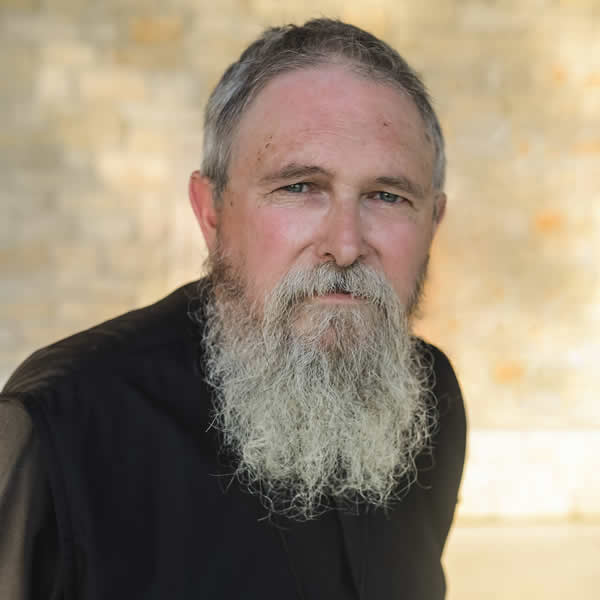
 

About Fr. Stephen Freeman

Fr. Stephen is a retired Archpriest of the Orthodox Church in America. He is also author of Everywhere Present: Christianity in a One-Storey Universe, and Face to Face: Knowing God Beyond Our Shame, as well as the Glory to God podcast series on Ancient Faith Radio.


Posted

in

by

Comments

78 responses to “The Abbreviated God”

  1. Dee of Sts Herman and Olga Avatar
    Dee of Sts Herman and Olga

    Beautiful! Thank you for these words Father. I’ve struggled lately around the lack of strength in my faith. Indeed it is everything. Glory to God for His loving mercy.

  2. Christian Shaun Hollums Avatar
    Christian Shaun Hollums

    Father,

    You said “You’ll have to come and see and wait patiently. … As we make that patient journey, we are joining ourselves with everything.”

    Does this protect fullness, or does it risk sealing it off from theological encounter?

    If fullness must empty itself (kenosis) in love, then how can this fullness be experienced outside of the church? Must is also go and be seen?

  3. Jane Szepesi Avatar
    Jane Szepesi

    This is the most wonderful, illuminating, heart-warming piece of yours that I have read – and I have read many. Thank you, dear Father Stephen!

  4. M Avatar
    M

    Thank you Fr. for your emphasis on the ultimate expression of faith; a great challenge to a common perspective. I heard Michael Heiser once say that if you can’t explain the gospel simply and succinctly, it’s a problem. It’s comforting to know that even the most gifted minds can fall into the reductionist trap.

    Off topic, I have attended divine liturgy for several now, and have considered the next steps toward chrismation. What is holding me back is that my in-laws are Spanish speaking, which seems to be a significant obstacle to their potential participation. I am curious about your thoughts and if you have encountered this challenge with individuals who do not share a common language in EO churches?

  5. Kenneth Avatar
    Kenneth

    Thank you for this wonderful piece. This “drive to simplicity” is very real and seems ubiquitous, but I wonder what is the main underlying reason for it? Is it simply because it’s easier (ie, easier to understand and to practice) than the fullness of the faith?

  6. Glennis Moriarty Avatar
    Glennis Moriarty

    Thank you very, very much. Words to live by.

  7. Fr. Stephen Avatar

    Christian,
    Well, since I’m not interested in redesigning Orthodoxy, and it has not only survived so many centuries and so many cultures, and produced saints consistently – I don’t think there’s a risk that it’s sealing the fullness off from “theological encounter?” There is no “outside of the church” – unless we mean the building. The Fathers wrote and practiced “natural contemplation” (theoria physike). What there is today is too much thinking without enough experience (theoria).

  8. Fr. Stephen Avatar

    Thank you, Jane!

  9. Fr. Stephen Avatar

    M,
    The Orthodox mission in North America is still quite young in many ways. Here in the South, there is an increasing amount of Spanish in various places (Texas, for instance). But, I would get them Spanish-language resources (Liturgy book) and let them watch videos of the services in Spanish. Since the service is largely the same thing, only in a different language, it becomes more accessible with time. Orthodox liturgies have only been available in English since the 1960’s.

  10. Fr. Stephen Avatar

    Kenneth,
    We are an amazingly lazy culture for one thing. Perhaps our reduction of the universe to something that fits on a screen plays a part as well. Turn off the screen…walk outside…breathe

  11. Margaret Sarah Avatar
    Margaret Sarah

    M,

    Here is a page from an Orthodox Church in Texas with a number of compiled links to various Spanish-language resources. I hope this can be of use!

    https://saintjonah.org/online-orthodox-liturgical-texts-in-spanish/

  12. Fr. Gary Breton Avatar
    Fr. Gary Breton

    Father Stephen,

    You have once again whacked the nail squarely. The temptation to reduce and box in the Faith is indeed great. When it’s resisted, we flourish. When it’s allowed, we die a bit. Here’s to the resistance!

    FGJB

  13. Fr. Gary Breton Avatar
    Fr. Gary Breton

    I think I should have said, “When we resist it, we flourish. When we allow it, we die a bit.” We can’t be passive about such crucial matters.

  14. Fr. Stephen Avatar

    Fr. Gary,
    Our resistance is, I think, the “enlargement of the heart.”

  15. Christian Shaun Hollums Avatar
    Christian Shaun Hollums

    Father,

    I think you may have misunderstood my question.

    I agree “There is no outside of the Church” ontologically, even if there are canonical and sacramental distinctions economically. The whole cosmos is already “ecclesial” in its orientation toward Christ. I wasn’t suggesting divine plenitude needs to be redefined. That’s impossible.

    I was trying to get clarity on what you mean by “come and see”. Are you saying the evangelism occurs when people participate in the divine liturgy? Where and how are they coming to see? Are you drawing a pastoral boundary with this language?

    I agree truth is participatory, but in what way are you suggesting we participate in this truth?

  16. Father Gary Avatar
    Father Gary

    Agreed!

  17. Helen Avatar
    Helen

    Beautiful article, Father. I am reading your first book (again). It seems trying to simplify the faith is somehow connected to separating the universe into 2 stories. Trying to control that which we cannot control. I live the sentence in this article that our faith is about “everything “!

  18. Helen Avatar
    Helen

    I meant to say I love the sentence, not live. Although I do try to live it too!

  19. Fr. Stephen Avatar

    Christian,
    Thanks for the clarification. The “invitation” of “come and see” is left intentionally ambiguous in that final paragraph. It can mean “open up your eyes and see the fullness – everywhere.” It can also mean “come to the Church and see.” Ultimately, it means both.

  20. Matthew Avatar
    Matthew

    Fr. Stephen wrote:

    “As we make that patient journey, we are joining ourselves with everything, in the great in-gathering that is God’s good will for all creation.”

    What is everything? Do we really mean everything? Everything?

  21. Fr. Stephen Avatar

    Matthew,

    “having made known to us the mystery of His will, according to His good pleasure which He purposed in Himself,that in the dispensation of the fullness of the times He might gather together in one all things in Christ, both which are in heaven and which are on earth—in Him.” (Ephesians 1:9–10)

  22. Edmund Avatar
    Edmund

    I think a lack of humility plays a role in the “drive towards simplicity”. I’ve heard of some who’ve converted to Islam because the idea of the Trinity “didn’t make sense”, as if the way God is necessarily needs to make perfect sense to one’s own intellect for it to be true.

  23. Christian Shaun Hollums Avatar
    Christian Shaun Hollums

    Father,

    Thanks for clarifying.

    How can we say ‘come and see’ unless we ourselves first go and be seen in the wounds of the world? Now that we agree on the ontological reality of the Church I still have the same question. If fullness must empty itself (kenosis) in love, then how can this fullness be experienced? Must is also go and be seen?

    St. Maria of Paris was explicitly frustrated with a form of Orthodoxy that confined itself to liturgical or contemplative beauty while ignoring the streets, prisons, and refugees. She accused that posture of turning the Church into a museum rather than a living Body.

    In her letters and essays from the 1930s, she speaks scathingly of what she called “salon Orthodoxy.” The tendency of émigré intellectuals to talk about mystical theology while neglecting the poor. She says, “At the Last Judgment I shall not be asked whether I was successful in my ascetical exercises, but whether I fed the hungry, clothed the naked, and visited the sick.” She believed that the liturgy inside the Church is proven only by the liturgy outside it what she called “the liturgy after the liturgy.”

    Do you agree with her?
    Would you agree that if what we see at the altar does not send us into the world’s Golgotha, then we have we truly seen Christ?

    I think she would say a Church that guards the treasure without pouring it out ceases to be the Body of Christ. The Church is pleroma (fullness) and the Church is kenosis (self-offering). I say all that to say I’m struggling to see how what she says renders what you have said as incomplete. Forgive me if I’ve misunderstood you.

  24. Fr. Stephen Avatar

    Christian,
    “Fullness” is fullness – it does not pick and choose among the commandments. The Church honors St. Maria of Paris as a saint for good reason. On the other hand, the moral failings of a believer does not suddenly make them “not the Church.”

    Much of my pastoral experience has been in a parish setting. I’ve seen lots of ministries to the poor, the sick, the hungry, etc. I think such things are normative in the Church’s life – and should be. Golgotha is everywhere. A very poignant example can be found in the souls of everyone around us (and often in ourselves). All of it can be difficult to attend to – and love draws us and compels us.

    I would caution against reading St. Maria’s arguments and transfering them into our own lives – as in judging the “intellectuals” around us (real or imagined). Her words should draw us towards Golgotha wherever we find it (as I repeatedly write: “Do the next good thing”).

    But, it seems to me that you’re creating an argument where none needs to be.

  25. Barbara R Avatar
    Barbara R

    Thank you,Father Stephen, for this literery jewel which illumens yet another facet of our experience of the incomprehensible. Twenty-two years ago (at the age of 60) I converted to Orthodoxy. I have been reading your books and blog for many years, and my attempt to express my gratitude for the depth, wisdom and guidance my soul has gleaned from the gifts you bestow on all of us on this side of the screen seems so feeble. Please know that you are a radiant light in a very confusing world.

    So I’ll just say, thank you from the bottom of my heart! May God Bless you and keep you for many years.

  26. Fr. Stephen Avatar

    Barbara,
    Thank you – God is truly good to us.

  27. Christian Shaun Hollums Avatar
    Christian Shaun Hollums

    Father,

    Thank you for taking the time to respond.

    With respect, I didn’t mean to make an argument so much as to explore the theological horizon behind what you were saying. My mention of St. Maria of Paris was not meant as a critique but as a way of locating my own question within a larger historical conversation inside Orthodoxy.

    As you know, many of St. Maria’s concerns were directed toward what she perceived in her time as a growing tendency to guard the Church’s fullness rather than to manifest it. Most of her critics and many whose spirit and style later shaped modern American Orthodoxy. That style came from what historians call the second generation of the Russian Religious Renaissance.

    This “neo-patristic” turn, from Florovsky to Lossky, Schmemann, and Meyendorff, rightly re-centered Orthodoxy on the Fathers, worship, and sacramental life. Yet, as some historians note, it also had the unintended effect of enclosing grace within liturgical participation. It emphasized becoming Orthodox and entering the mysteries more than manifesting those mysteries outwardly.

    St. Maria’s “liturgy after the liturgy” and her insistence on kenotic presence in the world’s suffering were often read as a move away from theological sobriety toward mere activism, but she was really naming a danger she saw within Orthodoxy itself.

    When I asked, “How can we say ‘come and see’ unless we first go and be seen in the wounds of the world?” I wasn’t judging anyone’s individual practice; I was trying to understand how the Church’s being relates to its manifestation.
    My questions weren’t moral or behavioral but ontological: if fullness by nature empties itself (kenosis), then how does this fullness act?

    I agree that “fullness is fullness,” but I also believe that fullness which does not empty itself is not truly itself. Kenosis is not a moral addition to fullness but its very mode of existence (radiant, self-disclosing love). A light that does not shine is not less light in essence, but it remains unseen.

    That’s the sense in which I’m trying to understand your use of come and see. Does it also imply, by its own logic, a Church that goes and is seen? It’s simply a question of clarification as to what you are saying here.

  28. SBM Avatar
    SBM

    Spanish prayerbook and other resources available here: https://www.stbarbaramonastery.org/category/en-espa%C3%B1ol

    Father, where can one find a Liturgy book in Spanish? I’ve been searching, but the only one I’ve found online is published by the Uniates.

  29. Fr. Stephen Avatar

    Christian,
    I think you’re asking for more precision than is interesting for me. I’m cautious about a “Church that goes and is seen” – in light of Christ’s caution that we not do our alms “befoe men.” We do the commandments as we have received them. We are not in control of how they are seen. That is a gift of grace.

    Also, I think the critique of St. Maria viz. the emigre theologians is mostly just a red herring. They were a providiential gift of God in so many ways. I give thanks for what I have received from them. And I’ll let it rest there.

  30. SBM Avatar
    SBM

    PS: Forgive me, the link got scrambled because of the tilde in ‘español’. But you can go to stbarbaramonastery.org and click on the category ‘En español’.

  31. Fr. Stephen Avatar

    Many thanks! I’m surprised (sort of) about a lack of liturgy books in Spanish…except for the fact that books are expensive to produce and the demand is still small. It’s easy to forget that Orthodoxy in America (particularly the OCA) is quite poor with little resources. I was surprised by this in the late 90’s when we converted. I was so used to the resources of a rich Protestant denomination. We had to xerox lots of things and just make do in others. It’s also surprising how little “standardization” we have in English-speaking Orthodoxy. Regardless, I assume that it’s providential.

  32. Dee of Sts Herman and Olga Avatar
    Dee of Sts Herman and Olga

    Father,
    These words are so helpful to me:

    We do the commandments as we have received them. We are not in control of how they are seen. That is a gift of grace.

    I’ve been so embattled lately. Crumbling falling under the struggle with the adversary. I am seen, the work I do is seen, but the real struggle is on a plane not seen. My mind is constantly thrown to how to minimize the impact of the next blow, taking my attention off Christ. My constant prayer is to keep my mind on Him, to abide in Him and is love.

    Lord Jesus Christ Son of God have mercy on us.

  33. Christian Shaun Hollums Avatar
    Christian Shaun Hollums

    Father,

    I think what I’m trying to get at is that spiritual growth actually begins when we stop thinking about spiritual growth. The concern for me isn’t intellectual precision but embodying the fullness you speak of by grace. To love sacrificially is to let go even of the desire for spiritual benefit. I can’t imagine any relationship surviving on hiddenness alone. If my fiancée were to say, “My love for you is real, but it will never show itself, never speak, never act,” the relationship would disintegrate. Love that refuses to appear isn’t modest. In the same way, a Church that treasures its fullness but withholds its manifestation contradicts the very nature of divine love.

    In Dee’s words I hear genuine suffering, but also the kind of suffering that can come from “coming and seeing” for too long. A constant measuring, analyzing, worrying over one’s “spiritual progress.” I think that’s exactly what St Maria of Paris warns about. She seems to be concerned with the soul that circles endlessly around its own struggle instead of losing itself in love. A spirituality that gazes too long at itself eventually stops loving.

  34. Dee of Sts Herman and Olga Avatar
    Dee of Sts Herman and Olga

    Progress is not my endeavor, Christian. It is to live in Christ. That is all.

  35. Dee of Sts Herman and Olga Avatar
    Dee of Sts Herman and Olga

    Father what is nepsis? Why do the Fathers call us to nepsis?
    Is this a constant focus on self that leaves us bereft of love?

  36. Dee of Sts Herman and Olga Avatar
    Dee of Sts Herman and Olga

    Father,
    What is meant by Christ’s words, “For the Kingdom of heaven suffers violence, and the violent take it by force?”

  37. Fr. Stephen Avatar

    Christian,
    It would be a mistake, however, to label the emigre theologians as being guilty of such self-gazing – especially the personalities whom we know were nothing like that. Again, it is not an either/or. To my understanding – the whole world is a Liturgy. In the Church, within those few hours, I draw my attention to Christ and receiving His Body and Blood. Outside the walls, the is the same continuing feast (remembering that we receive Christ’s Body “broken for you.” And we keep the feast with the self-same love, devotedly washing His feet, feeding Him, visiting Him, etc. It’s all one liturgy.

  38. Fr. Stephen Avatar

    Dee,
    Nepsis is watchfulness. I like how it is described in the teachings on the Jesus Prayer – to enter the heart and let Jesus keep watch. I think we always make a mistake when we try “not” to do something – when we should concentrate on positively doing something. Nepsis should not make us anxious (or exhausted).

  39. Fr. Stephen Avatar

    Dee,
    I think of the great ascetics who push the envelope as being those who “take the Kingdom by force.” It’s an observation, I think, rather than a commandment.

  40. Reader John Avatar

    This is the most personally emboldening thing you’ve written in quite a while, and that’s a high bar to clear.

    In my now 28 years as Orthodox, I’d lost explicit track of one of my original lodestars: “I’m here for the FULLNESS of the faith.” You reminded me of it.

    (Your perspective on Islam was bracing, too.)

  41. Christian Shaun Hollums Avatar
    Christian Shaun Hollums

    Father,

    I appreciate your time and the care in your responses. Just to be clear, I haven’t meant to accuse anyone of self-gazing, nor to frame any of this as an either/or. I completely agree that the whole world is a liturgy. My only point has been that this liturgy is reciprocal, come and see and go and be seen belong together. I’m actually suggesting a both and not an either / or. which seems to be met with some resistance and implications I’ve said things I haven’t said.

    The Church’s life gathers us into Christ so that it can also move outward as Christ’s own self-giving. When I’ve spoken of manifestation, that’s all I mean.

    Thank you for engaging the conversation and for the reminder to keep our eyes on Christ in every setting.

    Dee,

    I make no judgment on your spiritual journey. I was simply saying that sometimes our focus on the spiritual struggle is the problem and is precisely what the adversary uses to distract us from the world outside of us that suffers.

    God bless.

  42. Fr. Stephen Avatar

    Reader John,
    I was tempted to add (re:Islam), that it’s heresy was made all the worse in that it was explicitly expressed as an aggressive war machine. Christianity has been abused in this manner from time to time, but has the internal check in which it is a clear contradiction of Christ’s teachings. Islam does not have that corrective.

  43. Fr. Stephen Avatar

    Dee,
    You are daily in my prayers and my thoughts as well. When we fall, Christ falls with us, never abandoning us. I take deep comfort in that every day.

  44. Dee of Sts Herman and Olga Avatar
    Dee of Sts Herman and Olga

    Yes, Father, I too take great comfort in His presence. There is no way I could carry on without Him. Glory to God for His mercy and love.

  45. Simon Avatar
    Simon

    The problem that I see is that reality in n-dimensional but when we act or when we think we are immediately reduced to a 1d-space. There is no way for it to be otherwise. So, to make things easier on the mind we like to engage in dimensionality reduction. That’s okay, even necessary, when trying to decide which berries to pick.

    In my opinion–and it is only my opinion–if someone is incapable of accepting the trinity because it seems like a system of ‘three gods with neoplatonic gymnastics’ I can’t fault them for that. But, what do they miss out on? They miss out on glimpses of the fullness of what the Orthodox mean by communion, hypostasis, theosis, and kenosis, just to list a few.

    Here’s another one. In my opinion–and it is only my opinion–if someone is incapable of accepting the use of icons, I can be sympathetic toward that. But, what do they miss out on? Glimpses of the fullness of Christian history, theology, and tradition.

    Making the faith simpler doesn’t give it broader appeal or generalizability. It flattens it’s dimensionality. Strips it of its ability to challenge and inspire us.

  46. Fr. Stephen Avatar

    Simon,
    It was asked earlier, why do we want or settle for reduction. I think that we frequently have lost our capacity for wonder. It is, at heart, a capacity required for worship. It is also a capacity required for love.

  47. Dee of Sts Herman and Olga Avatar
    Dee of Sts Herman and Olga

    Christian,
    St Sophrony indicates that the struggles within our hearts/minds are intimately part of what lies ‘external’ as you put it. They are not separate as is often proposed. The Orthodox understanding of hypostatic prayer is one that is engaged with the world. Orthodox monks and nuns do not see themselves as escaping from the world or being uninvolved with world events or needs.

    Indeed, your initial statements did look like a critique bringing forward St Maria’s critiques. We have saints we venerate, for whom we don’t have to accept all that is said about them or by them. Of course you’re entitled to your opinion and to critique the Orthodox Church, if this is your preference. I have my own beefs with certain events/decisions. The Orthodox Church doesn’t claim to have perfection.

    I like that Simon refers to the dimensionality in our reality. His viewpoint sounds close to St Sophrony’s to me, presenting prayer life on the ontological level. Such action isn’t philosophical or selfish; it is an act of deep love to love as Christ loves.

    Meanwhile, indeed my struggles are a distraction. They are executed upon me “externally” as you would put it, because I live and work in a contentious environment, regardless that I seek peace. But I see the truth of these circumstances in a dimensional way that goes beyond surface externals.

  48. Kenneth Avatar
    Kenneth

    Sola Scriptura is inherently by definition reductionist, and Protestantism is the culturally dominant form of Christianity in America, so this may also explain part of the tendency toward reductionism in our culture.

  49. Simon Avatar
    Simon

    Fr. Stephen, that is the pivot point isn’t it: Awe, beauty, sense of Presence? In some ways, simplicity as a psychological technique reduces complexity that might seem to disturb the peace from one’s sense of “I understand”. I can say that for me frequently efforts at reduction, or simplification, have been a coping mechanism that mitigates against the stress of feeling inadequate. People do this all the time with hyperbolic rhetoric.

    I don’t blame people for struggling with complexity or conceptual richness. The problem is that efforts at simplification come with demonizing those that are willing to stand in the tension. It is really weird like that.

  50. Matthew Avatar
    Matthew

    Simon said:

    “In my opinion–and it is only my opinion–if someone is incapable of accepting the trinity because it seems like a system of ‘three gods with neoplatonic gymnastics’ I can’t fault them for that. But, what do they miss out on? They miss out on glimpses of the fullness of what the Orthodox mean by communion, hypostasis, theosis, and kenosis, just to list a few.”

    I really love this quote. Communion. Hypostasis. Theosis. Kenosis. Although I am not Orthodox, I can see and I embrace these beautiful and true … well … I have no word to describe them – words maybe? The Beautiful Gospel in all its fullness, simply stated, though not reductionist. I like to think I am experiencing this Gospel in some sense; growing into it in some real way. Please pray for me everyone. Thanks.

  51. Matthew Avatar
    Matthew

    Christian said:

    “A constant measuring, analyzing, worrying over one’s “spiritual progress.” I think that’s exactly what St Maria of Paris warns about. She seems to be concerned with the soul that circles endlessly around its own struggle instead of losing itself in love. A spirituality that gazes too long at itself eventually stops loving.“ ”

    I love this quote as well. There is a time for inner work and examining one´s inner struggles, but this quote is helping me understand there is also a time to lose one´s self in love of neighbor. I gaze at spirituality. I love theology. I want inner freedom and to be in connection with my true self and identity; to be in union with God – but I sometimes forget the most important people around me, their needs, their desires, their struggles. I have learned that building the kingdom is not something we should attempt to do. I am trying instead to simply do the next good and right thing. In order to do this, however, I am encouraged by this quote to reflect on the balance of inner contemplation and outward action.

  52. Matthew Avatar
    Matthew

    Maybe I should have said?:

    In order to do this, however, I am encouraged by this quote to reflect on the balance of inner contemplation and outward action/kenosis

  53. Fr. Stephen Avatar

    Kenneth,
    Modernity itself (the philosophical tool for interpreting the world) is reductionist rather than expansive. We say glib things like, “We’re making progress,” or “We’re making the world a better place,” without actually talking about what those phrases mean. On examination, they tend to fall apart. Modernity cannot bear the thought that anybody suffers – and any suffering, of any sort, is a justification for whatever measures might be deemed to alleviate it. This is problematic. There is no such thing as a world without suffering nor is there going to be short of the eschaton which we posit as a miraculous ending to all things. That notion should be set in parentheses and left alone. Everyone suffers, everyone is going to die. That is not an acquiescence or decision to “do nothing,” but is the beginning of a conversation that real adults should have with one another.

  54. Andrew Avatar
    Andrew

    Every time my faith comes up with my boarder Protestant family, and I try to share just a little of the fullness I’ve found in the Church, I’m invariable met with this sentiment. “Just rest in Grace!”, “Trust Jesus”, “It all seems too academic to me!” It can be very disheartening.
    I saved a quote I encountered several years ago that I’ve had trouble finding the source for, but I feel like it touches on this hyper simplification:

    “The true faith was always identified by the Church Fathers by postulating the most improbable thing. All heresies are forms of rationalization. All of them. And the true faith is a way of raising our faith to the level of the paradox, leaving aside, either to the left or to the right, the rationalization. Arius rationalizes. The Monophysites, the Monothelites, the Nestorians, rationalize. That is, they offer an interpretation either of the Trinitarian problem (the Arians), or of the Christological problem (the others), that is much more intelligible in the terms of Greek philosophy, but that doesn’t cover the content of the Christian faith. This is what I call the genius of Christianity”

    – Andrei Cornea

  55. Byron Avatar
    Byron

    St Sophrony indicates that the struggles within our hearts/minds are intimately part of what lies ‘external’ as you put it. They are not separate as is often proposed. The Orthodox understanding of hypostatic prayer is one that is engaged with the world. Orthodox monks and nuns do not see themselves as escaping from the world or being uninvolved with world events or needs.

    Dee, well said. I was trying to think of how to say this earlier; you hit the nail squarely on the head!

    I try to share just a little of the fullness I’ve found in the Church, I’m invariable met with this sentiment. “Just rest in Grace!”, “Trust Jesus”, “It all seems too academic to me!” It can be very disheartening.

    Andrew, it’s honestly meant to be disheartening. Those phrases are meant to end discussion, not enrich it. I might reply that reducing our lives to bumper-sticker theology is not what God has provided in the Church. Then again, some might find that reply ungracious.

  56. Matthew Avatar
    Matthew

    Fr. Stephen said:

    “Modernity itself (the philosophical tool for interpreting the world) is reductionist rather than expansive. We say glib things like, “We’re making progress,””

    Have I understood you over the last 2+ years correctly when I say I think you mean regarding the modernity topic:

    It´s not wrong to progress and develop as a society … like from no anesthesia to anesthesia. The problem is when we make “progress” and “making the world a better place” a religion; a way of transcendence; a complete secular philosophy for how we should manage society and ultimately save the world. Another problem is that the modern philosophical project is about eliminating all suffering by any means necessary which is very problematic given the reality of unintended (or intended?) negative consequences. Given this critique of modernity, we shouldn´t go shopping around for suffering and we should help relieve suffering, but when suffering comes accept it and embrace it in order to experience communion with the crucified Christ.
    Then ask for God´s grace to endure it.

    On the right track?

  57. Fr. Stephen Avatar

    I have long thought that it is largely a waste of time to answer questions that people are not asking. Fr. T. Hopko famously said, “Never try to convince anyone of anything.” But all of that means that a good skill to nurture in ourselves is to hear the questions people are asking. There are often more questions than are actually voiced – so, hearing what is not spoken becomes important. Everyone’s story of salvation is a mystery – sometimes we’re allowed to be part of the story.

  58. Fr. Stephen Avatar

    Matthew,
    I would say so.

  59. Matthew Avatar
    Matthew

    Wow … I guess I have learned something Fr. Stephen 🙂

    Thanks.

  60. Other Matthew Avatar
    Other Matthew

    “Everyone’s story of salvation is a mystery – sometimes we’re allowed to be part of the story.” You’ve said a lot of important things here, Father, and this is definitely one of them. I think it sums up the question of “evangelization” better than anything I’ve heard so far.

  61. Christian Shaun Hollums Avatar
    Christian Shaun Hollums

    Dee,

    In my opinion Father Stephen’s writing sits firmly within the major theological movement that shaped Orthodoxy in the 20th century what could be called the Neo-Patristic Synthesis of Florovsky, Lossky, and Schmemann (that is not a critique of Fr. Stephen). I love Fr. Stephen’s work. His writing has had a massive influence in my life for good.

    It’s a tradition that beautifully re-centered Orthodoxy on the Fathers, the sacraments, and the Church as the locus of divine life. His stress on “fullness as fullness” as far as I can tell is straight from Florovsky’s anti-organicism and anti-speculative posture. His caution against “activism” or social critique is a hallmark of both Florovsky and especially Lossky. Schmemann softened this, but still kept the default suspicion of turning the Gospel into social critique. In the Russian emigration, Florovsky and Schmemann were responding to two dangers. Reeligious philosophy that drifted into abstraction (Solovyov, Bulgakov), and secular activism disconnected from liturgy.

    They emphasized the sufficiency of sacramental life, the unity of the Church’s inner life, and the danger of critique that sounds sociological rather than ontological. But another stream in the same emigration — St Maria of Paris, Solovyov, Berdyaev, Fedotov, Bulgakov — insisted that the Church’s fullness must be manifest as radical, kenotic presence in the suffering world.

    Their point wasn’t moralistic but ontological. For them kenosis is the mode in which fullness appears.

    St Maria wasn’t critiquing Orthodoxy. She was critiquing the form of émigré Orthodoxy that became inward-looking at precisely the moment the world was burning. She was after all an exile from Russia in German occupied France and later killed in a Nazi concentration camp. I’m trying to place my questions inside a very real historical tension that shaped the Russian emigration in the 1920s–40s.

    Her critique was aimed largely at the atmosphere created by figures like Florovsky, Lossky, and others, many of whom were brilliant but, at the time, were locked in intense disputes about metaphysics, sophiology, and the nature of Orthodox identity. She lived and worked among them and saw the limitations of the “inner-only” posture that sometimes emerged in those circles. St Maria wasn’t rejecting the inner life and neither am I. Far from it. She was insisting that the inner and outer belong together, and that the Church’s fullness must be manifest kenotically, through presence among the suffering. That’s why she talked about the liturgy outside the church building as the testing ground of the liturgy inside.

    When I speak or ask the question of “going and being seen,” I’m not opposing prayer and action or criticizing Orthodoxy. I’m simply asking a theological question that actually sits in the middle of this older debate. I’m also not remotely saying we control being “seen” any more than a priest controls the consecration of the bread and wine.

    If fullness is by nature self-emptying love, then how does that fullness appear? What is its mode of manifestation? I’m trying to carry out the logic of this ontology in the same manner St. Maria of Paris did.

    I’m not raising a moral critique. I’m exploring how being and manifestation relate to each other which is something both St Sophrony and St Maria, in their own ways, cared deeply about.

    If you’re interested, there is a fascinating body of historical writing about this conflict between the “neo-patristic” thinkers of the emigration and figures like St Maria. It helped me understand why these tensions still continue in contemporary Orthodoxy. Florovsky himself was a towering figure, but also one whose intellectual style often generated conflict even among his own colleagues. Reading some of that history might illuminate why St Maria spoke as she did.

    I’m grateful for your reflections.

  62. Matthew Avatar
    Matthew

    Thanks so much for your comment Christian. I had no idea that these different schools of thought and even tensions existed in Orthodoxy. I hope we can discuss them more in this space.

    Christian asks:

    If fullness is by nature self-emptying love, then how does that fullness appear? What is its mode of manifestation?

    These are interesting and excellent questions to ponder and consider.

  63. Dee of Sts Herman and Olga Avatar
    Dee of Sts Herman and Olga

    Christian,
    I was already familiar with her history and her perspective and the history of the community in France and their circumstances.

    There are tensions I would agree with the Orthodox Church, in the US and elsewhere. You identify these currents with a historical situational condition occurring in another society when you reference St Maria.

    I have another viewpoint about the currents in the US. Specifically I see it as a problem of so many Protestant converts into the Orthodox Church that bring both a Protestant theology and Protestant -related politics. Their approach is to create a new or reformed Orthodoxy, to evangelism that promotes their politics couched as helping others. One example that I could point to is how the Liturgy itself is conducted—the very heart of Orthodox life, where there was a need expressed and delivered to change the rite.

    As a descendant of a community who received the brunt of such activism in the US, I have a different outlook relative to my fellow converts about these needful changes in the Orthodox Church. But the changes are happening and as far as I see are inevitable because of the pressures of cultural changes brought with the surge of converts.

    There was a point years ago when I wanted to see the Orthodox Church more involved with activism. At that point in my Orthodox life I would have been whole heartedly in agreement with St Maria’s stance applied to current events in the US and the political environment within it and how it should be manifested in the Orthodox Church. But I began to see the results and have reconsidered this thought.

    This doesn’t mean I would stay silent on issues but there is also so much misinformation promulgated that my voice ends up being just more noise.

    I confess sometimes I have thoughts that God has abandoned us. When these arise I feel compelled to do what I want God to do. I struggle to put down the ‘sword’ in my mind to listen to the words of Christ spoken in my heart.

    In this regard, Christian, I see myself holding a perspective about action that is closer to your own than what you may realize. But I’m doing my best to remain humble and in constant prayer.

    These last words are not a critique of your perspective or comment. I appreciate so much this blog and the variety of outlooks expressed, which includes your own.

  64. Christian Shaun Hollums Avatar
    Christian Shaun Hollums

    Dee,

    I think it may help to clarify something about the place from which I am asking my question. I am not speaking about activism as it has emerged in the American convert context, and I actually share many of your concerns there. You are absolutely right that activism, when shaped by partisan politics or a Protestant reform mentality, can distort the Church’s life. Nothing in St. Maria’s vision maps cleanly onto that, and nothing I am saying is intended to defend it.

    What I am trying to explore is something different and more basic. I am asking how the Church’s fullness manifests itself ontologically rather than politically. I am not referring to activism or social programs or reform. I am speaking about the way divine love appears as kenosis. I am thinking of St Maria’s vision precisely at the level you are speaking about, a level rooted in prayer and presence rather than public causes.

    In that sense, I actually believe you are right that you and I are closer in perspective than it might initially seem. The language you used at the end, about putting down the sword of the mind and listening for Christ in the heart, is exactly the space where I think St Maria and St Sophrony meet. I see an ontological continuity between them. Both of them saw the world’s suffering not as a political battleground but as the place where Christ’s self-emptying love makes itself known.

    When I reference the historical tensions in the Russian emigration, I am not suggesting that those tensions should be imported into modern American situations. I am instead trying to trace the intellectual and spiritual lineage behind the theological categories we use, often without realizing where they come from. This helps me understand the deeper reasons behind certain instincts in contemporary Orthodoxy. Your perspective helps me see another side of that story, a side in which those same instincts protect something fragile and precious. For that I am grateful. I am especially grateful for your honesty about the struggle to remain humble and prayerful in the midst of so much noise.

    Thank you again for engaging so generously. I am learning from you.

  65. Christian Shaun Hollums Avatar
    Christian Shaun Hollums

    Dee,

    I should also add one more thought.

    I do not have any issue with critiquing misunderstandings within Protestantism. I think those critiques can be important and sometimes necessary. At the same time, I grow weary of the broad “East versus West” generalizations that dominate so much contemporary Orthodox discourse. These distinctions can be useful at the level of historical description, but when they are treated as rigid spiritual categories I think they often obscure the complexity of real people and real communities.

    Just yesterday I had coffee with a Protestant friend who attends a church I once belonged to. Sitting with him face to face, listening to his struggles and hopes, reminded me again how difficult it is to maintain those sweeping East-versus-West narratives if we are actually engaging people in their lived context. The more I encounter others personally, the more inadequate those grand categories feel. They flatten the human reality that theology is meant to illuminate.

    This is one of the concerns I have with some of Florovsky’s influence on contemporary Orthodox thought. His East–West framework has been enormously fruitful in certain ways, but it can also encourage us to speak in abstractions and forget the nuances of real, embodied dialogue.

    I do not care about defending Protestantism or criticizing Orthodoxy, but in pointing out how our inherited categories can prevent us from seeing what is actually happening in front of us.

    I confess I am tired of people saying what “Orthodoxy” is and isn’t. As if the faith were a set of boundary markers rather than a way of seeing and participating in reality. I wish we could begin from what is real, from the truth disclosed in our actual encounter with God and one another, and let our understanding of Orthodoxy flow from that lived participation rather than the other way around.

  66. Fr. Stephen Avatar

    Christian,
    Forgive me, but I feels to me like you overthink things – or, overintellectualize them. I clearly (and unashamedly) stand within the world of the “neo-patristic synthesis” that was put forward by Florovsky and a number of the Russian emigres. In the larger history of Orthodox thought, that work is part of a larger framework that began in the 1700’s with the Kollyvades on Mt. Athos in the Greek-speaking world, and was carried from there to Romania, Moldova, and Russia by St. Paisius Velichkovsky. It played a significant role in the Hesychast movement there and elsewhere (giving figures such as St. Seraphim of Sarov, etc.). In the 20th century, quite significant was St. Dumitru Staniloae in Romania – in his writings as well as his massive translations of St. Maximus the Confessor, the Philokalia, etc.

    Florovsky was not the inventor of some new system, but worked at recovering the old (as had those whom I’ve mentioned). His critique of East and West was not a work done in order to bash the West, but a work done in order to recover the true voice of the East. The impact on both Catholic and Protestant theology from that work cannot be overestimated.

    For myself, the discernment about East and West – has focused primarily on the problems associated with Modernity (which is largely Western). That critique has been going on in the West, by Western thinkers for well over 100 years (more like 150). I only add a bit of Eastern flavor.

    But, my writing is what it is – and has a small place in the world (very small). It does whatever good it does within its own niche. I leave that in God’s hands.

    But, I don’t write in a vacuum. Having been an active pastor and writer for about 45 years, I’ve heard more stories, from more perspectives, than most. I write to the audience that I perceive – which has been slowly shifting and changing over time.

    But the tensions between St. Maria and a few of the Emigres is not, I think, a theme to be rehearsed and imported into the contemporary scene. Frankly, very few people have enough actual knowledge about what’s really going on broadly in Orthodoxy to say much that is of true significance. It’s extremely complex, with lots of layers and streams (of all sorts).

    Internet Orthodoxy gives a very skewed picture. The noisiest and loudest get the most clicks and are the least representative of the Church’s life. I have found it significant that my work enjoys a wide acceptance, including among Bishops, across the wide spectrum of American jurisdictions – which mostly tells me that my intentions to maintain a position, more or less, in the “sweet spot” of contemporary Orthodoxy has been successful.

    I simply see huge amounts of quiet work in the world of various sorts in the lives of parishes across the country. There is a very slow awakening to understanding and living into the fullness of a sacramental world-view. That world-view was once the inheritance of the Western world as well (so it’s not an Eastern thing, per se).

    But – I understand your concerns. I think, however, they become something of a distraction from the larger conversations and realities represented in the conversation on the blog. I travel the country as a speaker (as well as getting private emails from readers). My experience is that people find help when they’re looking for answers. I frequently get to hear those stories – and they’re quite varied.

    I think of the story from 2Kings. A young man runs up to Elisha complaining that something has poisoned the common stew that the community is about to eat from. “There’s death in the pot!” he kept shouting. Elisha took a small handful of grain, sprinkled in the pot, and everything was fine.

    For me, the trick is to just be patient, do the next good thing, and to daily sprinkle a little grain in the pot from which we’re all eating.

    That’s about all that can be done, I think.

  67. Dee of Sts Herman and Olga Avatar
    Dee of Sts Herman and Olga

    Christian,
    Indeed I engage in an East vs West stance on this blog. My personal context would explain this. However as strongly as I might sound on this stance, I often feel compelled to present in my comments my love and deep appreciation for my Quaker grandfather. His life also deeply influenced my own after the death of my parents.

    If I interpret your comment correctly I think you’re presenting a concern about ideology. On that point I would certainly agree. I don’t engage in conversations about East vs West within my social circles—Orthodox or otherwise. I express them here and I might discuss them in conversations about theology among those trained in theology. Generally I stay out of arguments or persuasive pursuits.

  68. Christian Shaun Hollums Avatar
    Christian Shaun Hollums

    Father,

    My questions arise from my lived experience of Christ, from encounters with real people (hence my reference to coffee with a friend yesterday), and from trying to make sense of the Church’s witness in the world. They are not abstract for me. They are simply the way I process and seek understanding.

    To be honest, the figures you named as influences, including Florovsky, arrived at their own synthesis through extremely intense intellectual labor. Florovsky’s turn against his earlier positions, his break with Solovyov and Bulgakov, and his shaping of the neo-patristic project were all the result of serious, sustained intellectual engagement and sometimes sharp polemical disputes. So, I find it a little disappointing to have my own attempt to understand these things described as over-intellectualizing. I am trying to think through the very patterns that these figures themselves were wrestling with.

    I am not trying to import the tensions of the Russian emigration into the present moment. I am not trying to rehearse old battles or manufacture new ones. What I am trying to do is understand how different streams within Orthodoxy have understood the relation between being and manifestation, fullness and kenosis, inner life and outward revelation.

    That question seems to me not only historical but also deeply pastoral.

    I am navigating those same questions as we encounter real people in difficult circumstances. I live in the South and I have close friends on opposite ends of the conservative and liberal spectrum. These aren’t academic questions for me.

    I agree with you that there is a great deal of quiet holiness and hidden faithfulness in the Church that does not appear online. I rejoice in that. My aim is not to disrupt that or to introduce suspicion or critique where it is not needed. My aim is only to understand how the Church’s fullness lives and breathes in the world today, and how that fullness appears in the concrete lives of people who are suffering, searching, or trying to heal.

    Thank you again for your guidance and for opening this space for conversations like this. I am grateful for your ministry and for your willingness to engage these questions with kindness.

  69. Dee of Sts Herman and Olga Avatar
    Dee of Sts Herman and Olga

    Father,
    I’ve been helped so much with your words on this blog. Indeed I believe you do hit the sweet spot—and sometimes it might feel like a knife edge, within our circumstances. But this is what navigating troubled waters is like.

    Thank God for our Fathers who preserved the Philokalia. I’m reading it daily with NT and Psalms.

    May we throw those grains in to sweeten the pot as you say Father.

  70. Dee of Sts Herman and Olga Avatar
    Dee of Sts Herman and Olga

    Byron,
    I’m always grateful for your kind words. I have joy when you join the conversation over these years on the blog.

  71. Fr. Stephen Avatar

    Christian,
    “Over-intellectualizing” is perhaps not the right term. Forgive me if I seem impatient – it’s because I’m impatient. There’s only so far, sometimes, that I care to think about these things – the ontology of our kenosis in the world or whatever. Just do the next good thing. More than that, just now, makes my hair hurt.

  72. Matthew Avatar
    Matthew

    Dee said:

    “Just yesterday I had coffee with a Protestant friend who attends a church I once belonged to. Sitting with him face to face, listening to his struggles and hopes, reminded me again how difficult it is to maintain those sweeping East-versus-West narratives if we are actually engaging people in their lived context. The more I encounter others personally, the more inadequate those grand categories feel. They flatten the human reality that theology is meant to illuminate.”

    Engaging people in their lived contexts. Wow.

    Most of the people I encounter and engage with in the little corner of the world God allows me to inhabit don´t give a rip about the East versus West. They don´t care the least about theology. Most of them don´t even want anything to do with the Church. Any Church.

    But they do want to be heard. They very often want to tell their story. They desire healing and understanding. I am just beginning to understand all this at 55 years old. When I finished my undergraduate work I wanted to study at a prominent evangelical seminary in the U.S. The degree of choice was the MDiv. I was told this is what many evangelical pastors had received after three years of vigorous academic study. I was told it was the preparation for pastoral ministry.

    A pastor. Me. Well …. I never finished the seminary. It would have been an absolute train wreck of a ministry! Downloaded theological knowledge from a pulpit to a group of people in a worship hall in the hopes that the information would change them spiritually. This is being a pastor? I share this bit of my own story because Dee´s comment reminded me of all this … that the more personal the encounter, the more real the need, the more inadequate the theological and philosophical stuff really becomes; the more the categories and the paradigms fail.

    Thanks so much Dee. I so appreciate your presence here. I am learning from you.

  73. Dee of Sts Herman and Olga Avatar
    Dee of Sts Herman and Olga

    Matthew,
    Perhaps you were referring to Christian’s comment?

    It’s true however, I don’t discuss East-West theological stuff in conversations in my social circles, Orthodox or otherwise.

  74. Matthew Avatar
    Matthew

    Oh my Dee … yes … it was Christian’s comment I was referencing. 😔 Sorry.

  75. Christian Hollums Avatar
    Christian Hollums

    Father,

    No forgiveness needed.

  76. Fr. Stephen Avatar

    Christian,
    It’s always needed…things done…things left undone…

  77. Christian Hollums Avatar
    Christian Hollums

    Father,

    Nothing you have said has warranted that I forgive you. But I agree. I have nothing but love for you. You have played a significant role in my life, and I can’t thank you enough that. Even if we disagree. I pray you and I may meet for coffee when I’m out your way or if you ever find yourself in the Houston, Texas area.

  78. Fr. Stephen Avatar

    Christian,
    Houston! As God wills…

Leave a Reply

Your email address will not be published. Required fields are marked *


Subscribe to blog via email

Support the work

Your generous support for Glory to God for All Things will help maintain and expand the work of Fr. Stephen. This ministry continues to grow and your help is important. Thank you for your prayers and encouragement!


Latest Comments

  1. Thank you, Father. I heard from an Orthodox priest who is an OT scholar that the “sin” that St. Paul…

  2. It’s interesting that Maximus notes a division in the earthly creation, “between paradise and the inhabited world.” I wonder if…

  3. You’re welcome, Matthew…happy you enjoyed it. I find her performance there movingly beautiful. And whereas it’s about not being able…


Read my books

Everywhere Present by Stephen Freeman

Listen to my podcast


Categories


Archives