The Secret Life

The truth of a person is always more than the person himself knows and always more than anyone else knows. Created in the image of God, human beings have an inherent transcendence. The soul is a mystery.

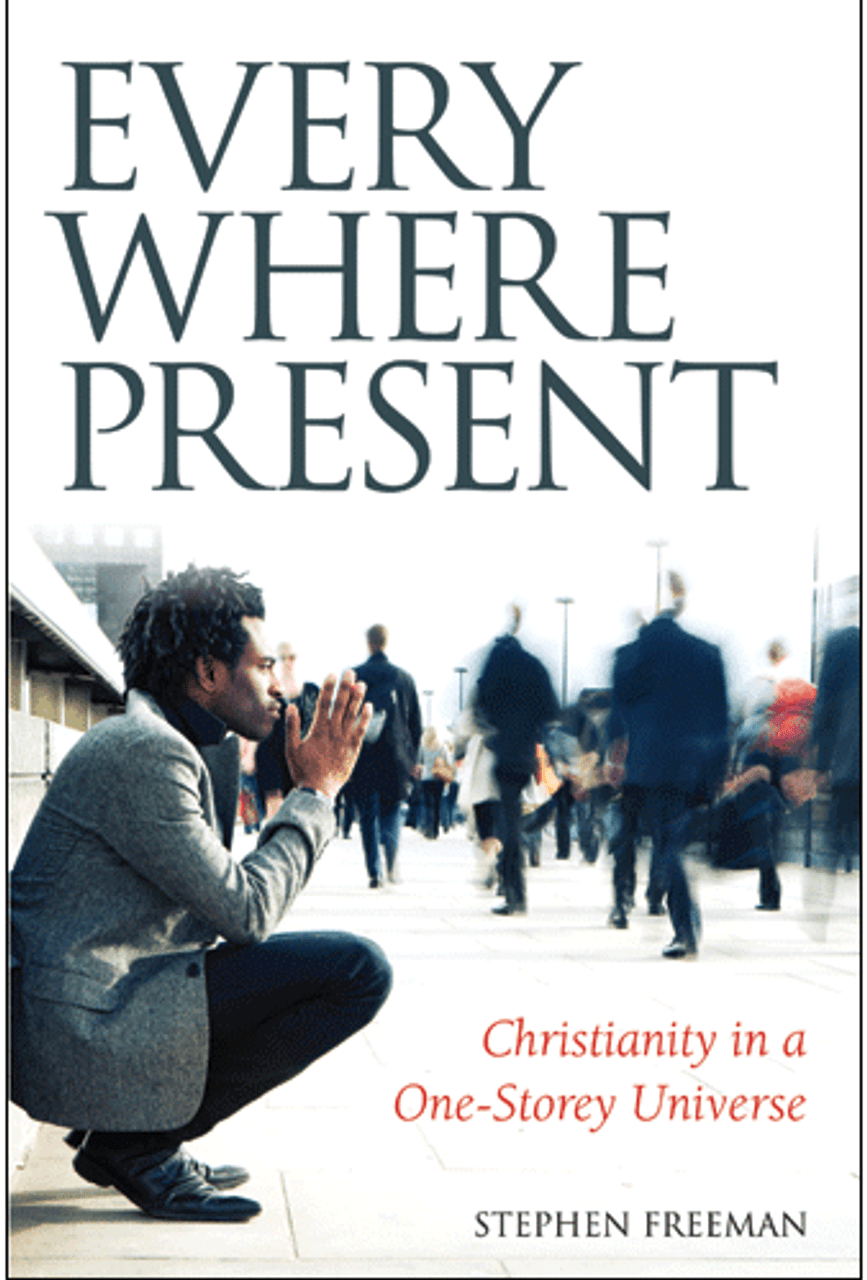
Everywhere Present: Christianity in a One-Storey Universe

What is a soul? This is the sort of question that priests dread (particularly on the lips of children). There is nothing to point to, nothing to show as an answer to the question. To believe we even have souls is an act of faith.

For myself, to speak of a soul is to confess a transcendent aspect to human beings. The soul is the something more of our existence. I am more than chemicals and proteins. The soul cannot be weighed or measured or described. Some English translations of the New Testament render the word for soul (psyche) as “life.” It is an attempt to speak the unspeakable – and is surely as useful as “soul.”

The soul is not the “ghost in the machine,” though the expression comes close to describing what many imagine the soul to be. To make matters more difficult, St. Gregory of Nyssa once said that “the soul is not in the body, but the body in the soul.”

The expression, “something more,” ultimately works best for me. What it is to be human cannot be reduced to something we can know. As the Psalmist tells us: “I will praise You, for I am fearfully and wonderfully made; marvelous are Thy works!” (139:14). What we often think of as “myself,” is not the self at all, but a feeble construct maintained feverishly in its existence with fantasy, delusion, deception, comparison and a host of other strategies. It begets anxiety and anger, criticality and envy. It is not being saved nor will it be.

For lack of a better description, there is a true self, an identity of the person that we are in Christ. There are, doubtless, elements of this identity entwined or enmeshed with the false self (Archimandrite Meletios Webber names this the “ego”). These same elements, however, are often hidden by the tireless work of the ego. We do not recognize them nor understand them. The identity upon which we lavish such energy is a source of loneliness since it is a stranger to true communion. It hungers but never eats; thirsts but never drinks; is lonely but does not love. Its needs are infinite.

The true self remains a mystery – and this is also part of its salvation. For we only come to know the true self in the same manner and at the same time we come to know the true and living God. Made in His image, it is revealed from glory to glory as we grow in the knowledge and love of God.

God is a mystery and is only known in the slow and patient work of repentance, forgiveness and illumination. The commandment to “be still and know that I am God” (Ps. 46:10), is a commandment to cease from the useless construction of the ego. We give up the project of endlessly re-inventing ourselves. Our goals and accomplishments, our endless comparisons and judgments of others, our fears and anxieties-the fantasies and delusions that we call the self are all allowed to rest.

Before the reality of God we learn to become still and to let the frenzy of our identity cease. Who I am is not known in my goals and accomplishments, comparisons and judgments, fears and anxieties, etc. Those are the busy efforts of a corpse that seeks to create the illusion of reality. Who I am is a mystery that has largely escaped my notice. It is at peace with God; forgives its enemies and loves as God loves. It is not anxious or in despair. It has no need to compare or judge but rejoices in the excellence of everyone. This is truly a great mystery.

It is for this mystery that the monk seeks solitude.

It is a secret because its existence is hid with Christ in God (Col. 3:3). Just as the Kingdom of God is like a treasure hidden in a field, so the true self is the heart’s greatest treasure. A man “sells all that he has that he may go and buy the field.” All that he has (the false self and its self-definitions) is as nothing to the man who understands the nature of the treasure. From the time of Christ until now, there have not ceased to be those who sold all that they had and followed Him. It is the only true pilgrimage.

As surely as my own life is a secret – so much more the life of another. If I do not yet know myself, how can I begin to know another? We cannot judge correctly regardless of the care we take. “Who are you who judges another man’s servant” (Romans 14:4)? The fact that the true self is a secret tells us something of the way in which it can be known: it must be revealed. I will not know the truth of who I am unless and until God tells me.

In the meantime, we watch and pray, never knowing when the master of the house will return. He will return and will bring us with him.
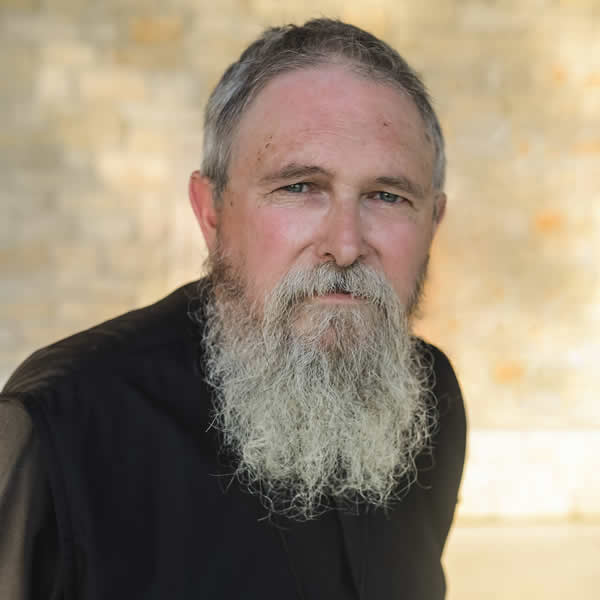
About Fr. Stephen Freeman

Fr. Stephen is a retired Archpriest of the Orthodox Church in America. He is also author of Everywhere Present: Christianity in a One-Storey Universe, and Face to Face: Knowing God Beyond Our Shame, as well as the Glory to God podcast series on Ancient Faith Radio.


Posted

in

, ,

by

Comments

54 responses to “The Secret Life”

  1. Dino Avatar
    Dino

    It has always sounded as if the mystery of who we really are is given rather than achieved, given we allow for the right circumstances as far as we are concerned.
    The mystery of the soul is probably the mystery of God’s gaze hidden within us. If true self is hidden with Christ in God, we touch the very nerve of deification: the self unfolds only when the created heart consents to become transparent to the Uncreated.
    Elder Aimilianos would probably say: when the monk seeks solitude, he is not fleeing the world but returning to his own depth, to the point where his “I” meets the eternal “Thou.” so prayer is less an act and more a state of being, existing before God. If only we could escape the onslaught if distraction that is!

  2. Fr. Stephen Avatar

    Dino,
    Indeed. Modernity imagines that the “self” is something we create – “reinvent” etc. The truth of our being is traditioned to us – “a given rather than achieved.” It is why, I think, that the giving of thanks (the active voice of “receiving”) is essential to the inner journey.

    And then…the distractions…

  3. Kevin Avatar
    Kevin

    Thank you, Father. I’m not a fan of modern Christian music but there’s a song by Mercy Me about Psalm 139 that is really good. You should take a listen if you haven’t heard it before. There’s this lyric, “You have laid Your hand upon me
    This knowledge I can’t attain; Where can I go from Your Spirit? Where can I flee from Your presence?” God’s presence in my life and who I am in His Beloved Son is such a beautiful mystery. Glory to God!

  4. Fr. Stephen Avatar

    It is one of my favorite songs…I take a risk and listen to it…Thanks!

  5. Mark Olsen Avatar
    Mark Olsen

    Well summarized Father, our mere human predicament, layer upon layer, like blankets consisting of cultural identification’s/attachments, ego, self absorption and the like separating and insulating us from the truth of ourselves in Christ. These layers in the construct provide very temporary warmth, enslaving us (me) into a habitual, repetitive, and “self” reinforcing distortion of reality. Come Lord Jesus come and boy have mercy on me!

  6. Kathleen Keating Avatar
    Kathleen Keating

    Fr. Stephen, I am only a small person in this huge universe trying to understand God and what he expects of me. I have a hard time wrapping my head around things like the soul. I had a section in my email where the ones from “Glory To God” went and I never looked at it. I deleteted the folder, which means that the emails now go directly into my regular inbox. So today, I saw your commentary on the soul. I read it twice. Of course it is still a mystery to me, and I definitely have a lot to work on, but it helped me to understand a little bit more. Thank you.

  7. Michael Avatar
    Michael

    We are God’s children now; what we shall be has not yet been revealed…

  8. Simon Avatar
    Simon

    To remove the creative dimension from human existence is, I think, a mistake.
    If the Self already exists in its fullness—unmanifested but complete—then what remains for us but the slow accumulation of scars upon the body?

    I don’t entirely reject the idea of the Self as given. Yet part of the beauty—and the terror—of being alive lies in the open possibility of what we might make of ourselves.

    Berdyaev wrote that true freedom is found in the power to create. If the Self is merely deposited in us like a secret, where is that freedom? Is it reduced to choosing not to choose? Where, then, is the space for self-driven becoming?

    Perhaps we never truly create anything ex nihilo. Still, I would rather affirm the possibility—or even the myth—of genuine creation than accept a vision of humanity that leaves us with nothing to offer but submission.

  9. Fr. Stephen Avatar

    Simon,
    I think that what I have in mind when I speak of “receiving what we have been given” is not without creativity – but it’s relational – not just ex nihilo. I think there are things about the true self that are inherited, for example, (not all of it). And that inheritance and the creativity of bringing that to God is also the healing (in some manner) of what has gone before.

    Not without freedom – but clearly not absolute freedom. We start from somewhere.

  10. Other Matthew Avatar
    Other Matthew

    Is this part of why free will is such a mystery? Because what we think of the “self” that makes “choices” is actually the false self, and the Self that is capable of freedom is hidden in Christ?

  11. Fr. Stephen Avatar

    Other Matthew,
    I think of those things as partial “wrinkles.” I think that we’ve classically tended to underthink these things, when they’re far more complex than we know or acknowledge. An interesting thought in this line is the “continuity” we have as persons. I have a distinct sense of continuity with myself as a young child, though I’ll be 72 in a week. The stretch of that time has seen a huge variety of issues and concerns, thoughts, anxieties, celebrations, failures, etc. I think there were fewer “existential” decisions than we might imagine – though some, in handsight, were very significant.

    I believe that love and the “desire of the heart” are among the truly consistent things – and we nurture them far too little.

  12. Matthew Avatar
    Matthew

    I think you are really on to something Other Matthew … I will sleep on your thoughts. I absolutely love conversations about freedom and will.

  13. TJ Avatar
    TJ

    Father, in the context of what you have written, what does it mean to repent?

  14. Fr. Stephen Avatar

    TJ,
    Above all else, it means to turn our heart (the depth of the self) towards Christ. Now, admittedly, there can be distractions from this – or times when we realize that what we’ve been doing is “half-hearted” (or less). So we come back to it and continue to direct our hearts towards Christ.

    Christ teaches us that we should “love the Lord Your God with all your heart, all your mind, and all your strength.” This is the life of repentance.

  15. Jenny Avatar
    Jenny

    Father,

    “I will not know the truth of who I am unless and until God tells me.”

    Yes, and sometimes I feel, at least for myself, that it is better that I not know the things the Lord knows about me. I had gathered a fair amount of ideas around the question over decades, but this spring, I let go of them all.

    I decided if they were true, the Lord could keep them, everything belongs to Him and comes from and returns to Him anyway. And how much more likely that my ideas about myself in the sight of the Lord are destroyed by my ego?

    If I tried to know anything like that now, it’s likely to hurt me, either because I have deceived myself or been corrupted by ego, or some mix of both. So it’s best to let go of any knowledge except that I belong to the Lord through His Pascha and He will finish His own work and my life is with Him now. What else is necessary to know?

    The Lord did not need to grasp at what was His. All that is His is always kept in His Father. So He could let it go knowing it would never be lost.

    Dino-

    “The mystery of the soul is probably the mystery of God’s gaze hidden within us. If true self is hidden with Christ in God, we touch the very nerve of deification: the self unfolds only when the created heart consents to become transparent to the Uncreated.”

    This is one of the most beautiful things I have ever read.

  16. Ann Dibble Avatar
    Ann Dibble

    This speaks to my heart today. Many thanks, as always.

  17. Matthew Avatar
    Matthew

    Other Matthew said:

    “Is this part of why free will is such a mystery? Because what we think of the “self” that makes “choices” is actually the false self, and the Self that is capable of freedom is hidden in Christ?”

    Thanks so much for this Other Matthew. I´ll begin by saying that I have come to the conclusion after a long time thinking about this issue that most people never truly acheive freedom of the will in this life. David Bentley Hart has a lot to say about will, and I have read some of his thoughts though it´s very difficult for me sometimes to understand him. That said, it appears DBH thinks an actual free choice is one that is made in accordance with our true nature. Are most of us living out of our true nature? Are most of us in contact with our true nature? Some people are on the road to the true self, but sadly many are not. As such I think you are right – so called “free choices” are made in accordance with the false self most of the time.

    As I have changed my position on free will over the years, this change in thinking has also influenced what I think about people “coming to Christ” in the evangelical sense. If our true identity(s) is hidden in Christ, and if God is the one who reveals Himself and our true-selves through the sacraments, then how on earth can someone make a rational decision for Jesus? I leave this question open because I am still working through it.

    If decision does play a role in salvation and the salvific process, then would a good and loving God hold it against a mere mortal who is not truly free; who is wrapped up in so much stuff that it is seemingly impossible for them to make a free choice in favor of God´s love?

  18. Fr. Stephen Avatar

    Matthew,
    Again, as I said earlier (to the Other, I think), we grossly oversimplify the will in much of our modern thinking. We say “will” when what we are mostly describing is “choice,” and they are not the same thing. “Choice” belongs to what is known as the “gnomic will” in Orthodox teaching (especially as found in St. Maximus the Confessor). It’s fragmented, at best, and “tossed to and fro.”

    The “will” that is an expression of our nature, the “natural will,” is something in the very deep core, deeply within the heart, but is not a matter of choosing. It is the drive of our nature towards God – towards the very source of our being. It’s the will that wants to be what we truly are.

    In the course of our salvific striving, what we see taking place is the gradual healing of the splintered gnomic will (our choices) in union with the will of our nature – it’s natural being. It is our becoming “what” we are, expressed in the unique manner that is “who” we are: ultimately seen as a saint.

    As to the judgment of God: I think we also easily become overly simplified in thinking about judgment. God is not just grading us on our choices – what a silly mess that would be. God has no interest in giving us failing grades. All things in Christ are for our healing and our wholeness. To judge is not to pass sentence – it is to “set right” – to set at liberty that which is held captive.

    How all of that is finally displayed is a mystery beyond my knowledge. What I know and see is the Goodness of God revealed in the Face of Jesus Christ.

  19. Dee of Sts Herman & Olga Avatar
    Dee of Sts Herman & Olga

    Amen Father,
    For this article and your words to Matthew. Thank you so much.

  20. dennis ferreira Avatar
    dennis ferreira

    Wow, dear father! Thank you for this wonderful talk. Many of my own thoughts that have gone undescribable for so so long.

  21. Matthew Avatar
    Matthew

    Thanks so much Fr. Stephen. You said:

    “In the course of our salvific striving, what we see taking place is the gradual healing of the splintered gnomic will (our choices) in union with the will of our nature – it’s natural being. It is our becoming “what” we are, expressed in the unique manner that is “who” we are: ultimately seen as a saint.”

    It is pleasing to know that deep inside me there exists something that is not a matter of my choosing, but rather something that is driving my nature toward God.

    You also said:

    “As to the judgment of God: I think we also easily become overly simplified in thinking about judgment. God is not just grading us on our choices – what a silly mess that would be. God has no interest in giving us failing grades. All things in Christ are for our healing and our wholeness. To judge is not to pass sentence – it is to “set right” – to set at liberty that which is held captive.”

    For healing. For wholeness. To set right. To give liberty to one held captive. For restoration.

    Judgement as it should be. Judgement rightly understood.

    Thank you again.

  22. Other Matthew Avatar
    Other Matthew

    The “gnomic will” – I had forgotten about that. “Choice” versus “will” – definitely something to ponder. I am reminded of C.S. Lewis’ description oh is choice to believe in God:

    “I was moved by no desires or fears. In a sense I was not moved by
    anything. I chose to open, to unbuckle, to loosen the rein. I say,
    “I chose,” yet it did not really seem possible to do the opposite.
    On the other hand, I was aware of no motives. You could
    argue that I was not a free agent, but I am more inclined
    to think that this came nearer to being a perfectly free act than
    most that I have ever done. ” -Surprised by Joy

  23. Fr. Stephen Avatar

    Other Matthew,
    It’s just such honest reflections (including within myself) that make me say that the will is far more complicated than what we often describe. My own conversion to Orthodoxy was, at a certain point, something I could have “chosen” not to do. However, I think I would have had to lie to myself and sacrifice a large measure of integrity. It’s not that I had never done such a thing before – I can see in hindsight more than one occasion when that was the case. But, as things went forward, it became clear that I could not continue to be myself, truly myself, and refuse the opportunity to be received into the Orthodox Church. Thus, I gave my notice (as an Episcopal Rector), served out my weeks, and bade my parish goodbye (with a lot of tears on everyone’s part). The next day I mailed a formal letter to my Episcopal Bishop (which he had been expecting) formally renouncing my orders as an Anglican priest. Before the week was out, I had a return letter in hand officially deposing me. The next Sunday, my family and I were received into Orthodoxy by confession and chrismation, at the direction of Archbishop Dmitri of Dallas (of blessed memory). My integrity was intact…it was also the single hardest thing I’ve ever done.

    Lewis’ “the most reluctant convert in all of England” had a lot of resonance for me.

  24. TJ Avatar
    TJ

    Father, thank you for your rich replies.

    It is a common idea within the vein of eastern philosophy that beneath various layers of obscurity within the person lies a more authentic “self.” A classic, yet simplified dialectic may go something like this:

    “Place your awareness on the tree in the yard. Now place it on the palms of your hands, then to your thoughts, then emotional sensations, then back down to your feet. Notice that ‘you’ did not disappear when focusing on the tree, nor when you placed your thoughts aside to observe your body. Therefore, the true ‘you’ is the consistent aspect of your being; the ‘observer’.”
    The teaching would go on to encourage the seeker to identify with the ‘raw awareness’ within himself rather than that which exists around it.

    I sense that those fellows were onto something. Albeit there are those that rejected all particularities of man and reduced physical existence or the content of mind to a nuisance, but nonetheless– something about it rings applicable.

    Any thoughts?

  25. Fr. Stephen Avatar

    TJ,
    I’m very wary of techniques that involve imagination. I don’t even care much for the Orthodox accounts that speak of picturing the heart within the chest…but if I had an experienced elder/confessor who directed me that way, I would not reject it. It’s just that I have very little trust in the imagination as a spiritual tool. I’m pretty “on the ground” when it comes to spiritual matters. I work at keeping the commandments and to say my prayers (particularly the Jesus Prayer). I contemplate (such as it is) God’s providence in all things and mostly work at giving thanks. I believe that giving thanks always and for all things to be a good and proven path towards humility – and that humility is the queen of all the virtues.

    I haven’t made it very far at all.

  26. TJ Avatar
    TJ

    Hi Father, thank you.

    I appreciate your sentiment.

    I was more curious about your thoughts regarding the philosophical point more so than any means of exercising it– regarding the idea of the self being closer to the “observer” beneath “all the other stuff”.

  27. Simon Avatar
    Simon

    Speaking of the will—I’ve been doing some things many people consider extreme for my age. I routinely fast for 36 or 72 hours. I ice-plunge in single-digit weather. Recently I trap-bar squatted 405 pounds for six clean reps.

    You might call that “exercising my will.” I don’t think it is. I’ve given myself hypothermia more than once by pushing cold exposure too far. My wife even called an ambulance once when I turned purple and my legs shriveled up. Why would I do that—again? At the time I told myself I was learning to master my body through willpower.

    I don’t believe that anymore.

    I’m no more aware of the why now than I was then. I’m not even sure what we mean when we say “will.” I’m following this discussion closely because I can’t imagine hypostatic existence apart from freedom—but at the same time, “will” is an idea I’ve come to regard less and less.

    It’s striking that in Romans 7 Paul never says the will is free. Instead, he writes two things that should shock us. First: “For what I am doing, I do not understand.” Exactly. That’s everyone. Our behavior has proximate causes, but most of them are buried deep in the subcortical dark. Second: “Now if I do what I will not to do, it is no longer I who do it, but sin that dwells in me.” What does it mean to say, “It is no longer I”?

    We may be free—we have to be, if morality and ethics are to mean anything—but the older I get, the less free I feel. Or at least, the less I trust the ego’s idea of freedom.

  28. Matthew Avatar
    Matthew

    Dear Fr. Stephen,

    Referencing TJ´s comment, when we practice the spiritual disciplines and when we participate in the sacramental and liturgical life of the Church – are we attempting to find the true self within as God reveals Himself to us? If so, is that not basically the same as what eastern philosophy prescribes – only we do it with Jesus Christ at the center?

    What is really deep within us?

  29. Fr. Stephen Avatar

    TJ,
    Philosophically,
    I’m not quite sure – oddly, it seems like a definition that too certain about the matter. It’s very difficult to dig through the clutter (as if we could tell the difference between clutter and non-clutter). Also, it perhaps seems to focus too much on point-of-view (which makes the “self” a “perceiver”). Again, this seems to possibly narrow things too much.

  30. Fr. Stephen Avatar

    Simon,
    I have come to think that we are “free enough.” I find that helpful.

  31. Fr. Stephen Avatar

    Matthew,
    Look at my latest response to TJ’s comment. I think that what we are “attempting” is to love. To love God and to love our neighbor. As simplistic as that sounds – I think it is the right place to ground these thoughts.

  32. Simon Avatar
    Simon

    Can we dump the idea of the will? I am asking this seriously. To Fr. Stephen’s point about juridical righteousness, what does the idea of the will do in practice beside add strength to juridical notions of guilt?

    When it comes to the will, the bookends of history, even suffering–I get the feeling I have spent my life asking the wrong questions.

  33. Fr. Stephen Avatar

    Simon,
    I think it’s possible to lay the question(s) aside. I respect the question inasmuch as healthier souls have written about it. But I recognize that not every question is my best question and not every answer is the right answer. I return to the “question” of love (not thinking about love – just loving).

  34. Margaret Sarah Avatar
    Margaret Sarah

    I’ve been enjoying following the discussion on will and the self. TJ’s comments on the self as the observer (or perceiver) calls to mind some of Pavel Florensky’s writings on the “law of identity”. The observer (A) only “knows its Self” to the extent which it knows or “is” the self of the observed (not-A).

    His writings are articulate and wise, and I know that I’m butchering them, but to my uneducated mind that is an urgent difference between some eastern philosophy and Christianity. Isolating the “self” as the observer can devolve into simply “A=A”, “observer=observer”, where there is no possibility for knowledge or love. But finding a “Self” in the observed opens both the Self and the Other to one another.

    Or maybe I’m totally misunderstanding both Florensky’s point and eastern philosophy. 🙂

  35. Fr. Stephen Avatar

    Margaret Sarah,
    That is most helpful!

  36. Dee of Sts Herman & Olga Avatar
    Dee of Sts Herman & Olga

    Father,
    The secret life points to the hesychastic life (for me). The Way of the Pilgrim is one literary source about such a life.

    I ask this question because of uncertainty about the Philokalia mentioned in the book. I know of and have 4 volumes of the Philokalia in English. But do any of these contain what is referred to the the Way of the Pilgrim? Has that volume been translated to English?

  37. Mark Olsen Avatar
    Mark Olsen

    This is a fabulous conversation I’m grateful for it. I have alot of ambivalence abt these issues of freedom, self and will. For me, as someone who has my share of lifelong mental and emotional “brokenness “ ( I am in my 60’s) they’ve become distractions and stumbling blocks. I simply can’t rely on my will, mySELF, and freedom isn’t in my vocabulary due to my powerlessness over my afflictions. And repentance , orienting my life to Christ is a daily struggle. I have to continually remind myself I’m just a “peon”, that much of the faith is beyond my pay grade and as my dear Fr. Hopko might say “ It’s none of your business!!” I’m not equipped ( although I delude myself otherwise) as God is to understand all these matters. Even with the help of the saints, fathers etc. I’ve spent a lot of time and energy since coming to Orthodoxy 7 yrs ago, trying to figure it out, manage it, the western man in me believing the more I put in the better “result”. Man, I’m just figuring out how to get up. Get up, to fall before Christ. A mystery is a mystery after all 🙂.

  38. Fr. Stephen Avatar

    Dee,
    The reference in the Way of the Pilgrim to selected passages from the Philokalia (which the elder marks miraculously in a dream) are the contents found in the book: Writings from the Philokalia on the Prayer of the Heart . It was actually the first volume translated in that series – and it was later that the 4 volumes were translated. Generally, I think that single volume is the most helpful one to have in your library. Note the Amazon link – the paperback price is worth it.

  39. Fr. Stephen Avatar

    Mark,
    Yes…and yes.

  40. Dee of Sts Herman & Olga Avatar
    Dee of Sts Herman & Olga

    Thanks so much Father!!

  41. TJ Avatar
    TJ

    Matthew, Margaret, and Fr. Stephen– thank you for chiming in on this matter.

    I have never heard of Florensky’s work on identity. This is most helpful.
    Hopefully I’m borrowing a term correctly– the idea of “relational ontology” seems like a valuable framework for understanding some of these things.
    We can only be, because He is.
    “He gives us life, breath, and everything.”
    God bless you all.

  42. Fr. Stephen Avatar

    TJ,
    I have heard it said, “The Father only knows Himself as He sees Himself in the Son.”

  43. Matthew Avatar
    Matthew

    If we dump will. If we cannot rely on will. If we are asking the wrong question.

    What should we retain? What can we rely on? What questions should we be asking?

  44. Dee of Sts Herman & Olga Avatar
    Dee of Sts Herman & Olga

    Because of my sins I ask Christ to increase my love. I ask the Theotokos for her intercession. I ask God to show me the Way in tears.

  45. Matthew Avatar
    Matthew

    Thanks Dee.

  46. Chris Avatar
    Chris

    Last spring I lost my wife after caring for her for weeks after a terminal diagnosis. She had a happy death, the Holy Spirit guided me well through this time, our cemetery stone will have the Ps.46:10 inscription, and I am preparing for 3 days of time at a monastery at the end of this month.

    Your writing validated all my decisions since her diagnosis that came to me in silence and not in the usual therapeutic supports offered from the secular world. My wife, even with the blessing of having the time to spend with her large family, appreciated the gift of contrition for her sins. I believe she found some of her true self those final days. I hope the same for all.

    It is hard but I am trying to let go the notion of figuring out the rest of my life. I am wanting more silence and looking forward to my time at the monastery. This month, as always, your thoughts are good. Chris

  47. Fr. Stephen Avatar

    Chris,
    May her memory be eternal!

    I cannot remember the location, but St. Basil writes somewhere about our last days and the clarity and repentance that can come with them. It is a great mercy. There are certainly very good reasons that we pray for a good death: “For a Christian ending to our lives, painless, blameless, peaceful, and for a good defense at the dread judgment-seat of Christ.” If someone has been blessed to be present at such a death, then the words of the prayer make very good sense.

    May God give you grace in your grief and in this stage in your life.

  48. Simon Avatar
    Simon

    Speaking of identity, there’s a simple rule in logic called transitivity:
    If A = C and B = C, then A = B.

    Something like this appears in Matthew 13. Jesus first says, “The kingdom of heaven is like treasure hidden in a field,” and then, “The kingdom of heaven is like a merchant seeking fine pearls.”

    If we apply the rule of transitivity, we can assign:

    C = “the kingdom of heaven,”
    A = “treasure hidden in a field,” and
    B = “a merchant seeking fine pearls.”

    Then we have:
    A is like C
    B is like C
    → A is like B.

    How, then, are the hidden treasure and the seeking merchant alike? In both, the one who seeks and the thing sought ultimately coincide. The treasure is buried in the field of one’s own being; the search itself uncovers it. As Luke 17 tells us, “The kingdom of God is within you.”

    The two parables mirror each other to reveal a single truth: the movement of the soul toward God is also God’s movement within the soul. What we seek outwardly is already hidden within, waiting to be found. The image of God in us is both the treasure and the seeker—the divine likeness awakening to itself through desire.

    Thus, the kingdom is not discovered by acquisition but by recognition; the seeker’s journey ends when he realizes he has been standing in the field all along.

  49. Margaret Avatar
    Margaret

    Chris, may your wife’s memory be eternal! Thank you for sharing this. God bless you as you make your ways through this life — and as you know, He is with you always. Your words are so encouraging.

  50. Dana Ames Avatar
    Dana Ames

    Many years to you, dear Father. Hope you had a lovely day with your family all around. Again, very grateful to God for you!!!

    Much love –
    Dana

  51. Dee of Sts Herman & Olga Avatar
    Dee of Sts Herman & Olga

    Amen Dana!!

    Many more Father!!!

  52. Fr. Stephen Avatar

    Dana, Dee,
    Thank you ever so much! I’m very fortunate. Yesterday at Church (on the birthday), a group of boys called me over during coffee hour to hang out with them (10 y/o and under). We discussed our favorite birthdays. Life is so much simpler at 10. So, they asked me…and, of course, I have 72 to choose from. So, finally, I said that my favorite was the one I was having that day…because it took me so long to get there. I think that my new motto will be, “This is my favorite day!”

  53. Dee of Sts Herman and Olga Avatar
    Dee of Sts Herman and Olga

    Dear Father,
    Good words for all of us to say to ourselves. Each day is a gift from God. Glory to God for your illuminating writing, pastoral talks, and humble loving prayers for us!

  54. Robert Avatar
    Robert

    So much obsession with identity today, especially psychological diagnoses (often self diagnosis) among women.

Leave a Reply

Your email address will not be published. Required fields are marked *


Subscribe to blog via email

Support the work

Your generous support for Glory to God for All Things will help maintain and expand the work of Fr. Stephen. This ministry continues to grow and your help is important. Thank you for your prayers and encouragement!


Latest Comments

  1. Margaret Sarah, I think an important matter in all of this is that of boundaries. God is there (everywhere present)…

  2. John Mark, I think that St. John uses the term to be roughly equivalent to “human” – but in our…

  3. Father, Thank you for your reply! I’ve wondered before what you thought of panentheism. I’ve been interested in the term…

  4. Father, thank you for the insights into St. Paul’s use of the word sarx. How would you say St. John…

  5. Margaret Sarah, To my knowledge, it is not a term used in Orthodoxy. A problem, it would seem to me,…


Read my books

Everywhere Present by Stephen Freeman

Listen to my podcast


Categories


Archives