“That Which Is Lacking” – Is Jesus Enough?

Recent questions on the blog make this article worth re-visiting. I pray you find it of interest.

The average Christian, reading his Bible in happy devotion, stumbles across this passage:

Now I rejoice in my sufferings for your sake, and in my flesh I am filling up what is lacking in Christ’s afflictions for the sake of his body, that is, the church… (Col 1:24)

The passage is particularly disturbing for a certain strain of Protestant thought that emphasizes Christ’s sufficiency for all things. Christ has accomplished all things necessary to our salvation and we are thus able to “rest” in His completed work. For many, this is at the heart of grace. God has done for us what we cannot do for ourselves. What remains is for us to trust that this is so. Christ declares, “It is finished.” There is nothing left for us but trust.

This sentiment recently came crashing into a discussion of the Russian novel, Laurus. I attended (and spoke) at the Eighth Day Symposium in Wichita, Kansas. The presenter, Jessica Hooten Wilson, had spoken on the Russian novel, Laurus, in which the lead character enters the long, arduous life of a holy fool following the death of a woman and her child, a result of his own inaction. Wilson made mention of a review by Alan Jacobs (Baylor University) that described its spirituality as “Hindu,” and castigated its approach to Christianity. He wrote:

…though I know that Eugene Vodolazkin is a Christian, I remain uncertain about just what vision of the Christian life is being held out to me in this book…. In Laurus…long, hard spiritual labor pays for sins, as it does for the world…1

Vodolazkin nowhere characterizes Laurus’ labors as a payment for sin. Indeed, the concept is foreign to Orthodox thought. It is an absence that is so profound that a Protestant professor of literature felt the need to supply it, and with it, distort a beautifully Orthodox novel. In the discussion at the conference, a Protestant participant agreed that the novel seemed strangely unable to “rest” in Christ. Inasmuch as I am often not in dialog with Protestant Christians, I was caught off-guard by these observations. I forgot how foreign all of this is. Happily, it is also foreign to the New Testament.

Whatever one might think of grace, the work of Christ on the Cross in no way removes the work of the Cross from the lives of believers. We are baptized into the death of Christ, and continue to say throughout our lives: “I am crucified with Christ, nevertheless, I live” (Gal. 2:20). It is Christ who taught that we ourselves must take up the Cross and follow Him. There is no “resting” Christianity made available by a substitutionary work of Christ. The work of Christ is a matter of participation (koinonia) – we are baptized into it, live through its presence in us, and do not cease to share in that work, ever.

It is always difficult to listen to what is actually being said and not try to hear a conversation that is not taking place. Salvation, in Latin Christianity, was made captive, rather early on, to the language of “grace” and “works.” Within what would become a dominantly juridical framework, grace and works were easily externalized, raising questions about who was doing the “saving.”

When St. Paul says that he is filling up “that which is lacking” in Christ’s afflictions, he is either subscribing to some form of Pelagianism, or he simply has no notion of a juridical salvation. No doubt, the latter is the actual case. When he says that he is crucified with Christ, St. Paul means precisely what he is saying. Indeed, it is the deepest cry of his heart:

For his sake I have suffered the loss of all things and count them as rubbish, in order that I may gain Christ and be found in him, not having a righteousness of my own that comes from the law, but that which comes through faith in Christ, the righteousness from God that depends on faith— that I may know him –  the power of his resurrection, and the communion of His sufferings, becoming like Him in his death, that by any means possible I may attain the resurrection from the dead. (Phil. 3:8-11)

This has nothing of the language of earning, much less external grace and works. It is the language of the most intimate, mystical communion.

We know a little bit about this experience, for it is common in relationships marked by intense love. The coldness of a conversation regarding who did what, or what is owed to whom, has no place in such intimacy. Love speaks in terms of union. It wants to share in the deepest manner possible the life of the beloved.

There appeared a rift in Protestantism within its first two to three centuries. That rift, to a large extent, represented a deep dissatisfaction with a cold, sterile presentation of the life of grace. Early Protestants almost universally held to a doctrine of “cessationism,” teaching that miracles ended when the New Testament was completed. What remained were the rather mechanical/intellectual doctrines that assured of salvation. Dry as dust.

The reaction to this was the birth of Pietism, in a variety of forms and places. At its worst, Pietism’s emotionalism led to extremes of belief and practice. At its best, it produced holy lives and gave heart to what would have been little more than a dry death to Western Christianity. Inasmuch as Western Christianity survives our present difficulties, it will be the heart born in Pietism that saves it (or so I think).

The transformation of the Pietist conversion experience into the doctrine of being “born-again” has tended to confuse Pietism and classical Protestantism, framing the experience of the heart in the rigid language of doctrinal necessity. Like many aspects of Protestantism(s), fragmentation in doctrine and experience has been a continuing and dominant feature.

Classical Christianity, in its Orthodox form, is very rich in its vocabulary and stories of the human experience of God. It is always “ontological” in its approach to doctrine, meaning that doctrine is always about “something-that-is” and not about a theory, or a juridical arrangement. Because “something-that-is” is capable of being experienced, it is always seen as quite natural that the work of God has a describable, experiential component. If I am being crucified with Christ, it is inherently the case that such a thing is experienced in some manner. In the case of a holy fool, it might look a lot like the Laurus character. He must be contrasted with the middle-class American who sings happy songs on Sunday, perhaps even moved to tears, satisfied and assured that Jesus has taken care of everything such that he can safely return to the banalities of his life. Isn’t Jesus wonderful!

The simple truth is that the Kingdom of God “suffers violence, and the violent bear it away.” (Matt. 11:12) The gospel engages the whole person and assumes that we will love God “with all our heart, all our soul, and all our mind.” That such an engagement might be described by some as “works righteousness” is merely indicative of a bifurcated Christianity that has placed God in a second-storey doctrinal reality, while the secular party rages here below.

Thank God for the Lauruses sprinkled across the historical landscape. The unity of faith and experience exemplified in their sometimes stormy lives whispers hope that God dwells among us and loves us, willing Himself into the messiness of our crucified existence, ever-straining Himself into the depths of our being, while we strain to respond in kind, enduring “that which is lacking in the afflictions of Christ” – our own response to His love.

Footnotes for this article

  1. “Russian Brahmin,” First Things, April 2016.
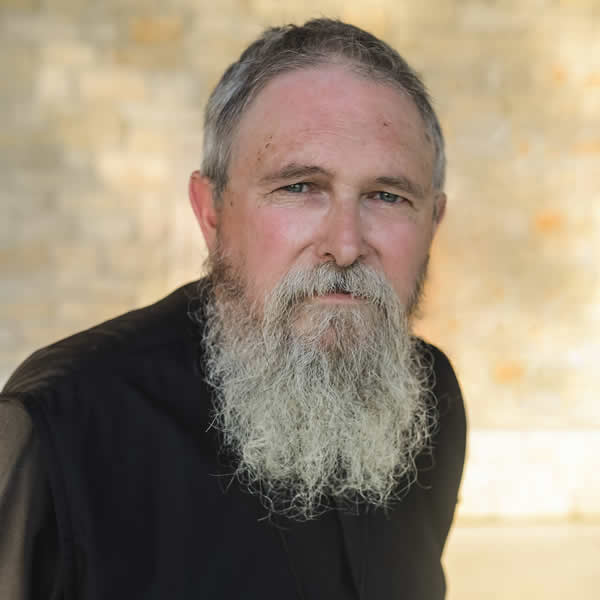
About Fr. Stephen Freeman

Fr. Stephen is a retired Archpriest of the Orthodox Church in America. He is also author of Everywhere Present: Christianity in a One-Storey Universe, and Face to Face: Knowing God Beyond Our Shame, as well as the Glory to God podcast series on Ancient Faith Radio.


Posted

in

, , ,

by

Comments

80 responses to ““That Which Is Lacking” – Is Jesus Enough?”

  1. Dee of Sts Herman and Olgs Avatar
    Dee of Sts Herman and Olgs

    Dear Father,
    Thank you so much for these words. Without explanation, I’ll just say that I face a new work day and it helps to know I’m not alone in Christ. We are not alone. Glory to God for His mercy and love.

    Also I really loved reading Laurus.

  2. Arsenios Avatar
    Arsenios

    Laurus is probably my favorite fiction ever.
    Thanks for this post.

  3. Edward Hara Avatar
    Edward Hara

    I should print this out for further study and thought because it goes very heart of a struggle I am having right now. Language conveys ideas and realities, therefore we should be exceedingly careful in the use of words, lest we convert a meaning which is not intended.

    When I hear in Orthodoxy continuous use of the words “obtain salvation” (or other similars phrases) in relation to ascetical work in our lives, I can’t help but think that this means we are in some manner earning salvation. After all, if you have been given a totally free gift, it belongs to you without any further need for payment or performance on your part to “obtain” it.

    It seems to me, and God knows I probably don’t understand correctly yet all the nuances of the issue of salvation, that Orthodoxy has managed to confuse salvation with theosis. Salvation, according to Saint Paul, is free, a monergistic act by Christ which redeemed back to God that which the devil had stolen. But the same cannot be said of our growth in Christ (theosis). Paul calls upon us to kill the “old man” living within, that the “new man” in Christ grow to maturity. This requires work, and the worse their sinner, the harder the work.

    Why does this matter so much to me? Because if I have to “obtain salvation” by my ascetic deeds, then I am entirely inclined to despair, seeing what is necessary for that obtaining. In short, I fail constantly, and as of late, I have come to realize, much to my horror and dismay, that the works I have done have not been done out of love for Christ, but rather from a desire to regard myself as a pretty darn good Christian. I think that falls under the sin of pride, that deadliest of all.

    Last of all, there is a prayer in our Orthodox Prayer book that implores God “do not look upon my deeds, but save me because of my faith in Thee.”

  4. Fr. Stephen Avatar

    Arsenios,
    Certainly one of my favorites as well.

  5. Fr. Stephen Avatar

    Edward,
    I like the prayer you quoted, though I think it’s a very “late” prayer, and possibly influenced by the language of Protestantism (which does not invalidate it). However, not so sure about the monergistic question. Orthodoxy tends to speak and think in synergistic terms. Our salvation, for example, is wrought through Christ. Nevertheless, He is not incarnate, nor crucified, etc., except that He is born of the Virgin who said “yes.” We are given His Body and Blood to eat and drink – and yet – we actually have to eat and drink them. We do not “earn” our salvation – but we participate in it. The Christ who trampled down death by death was fully God and fully man, and this is not “monergistic.” The doctrine of the Church is that there are two wills, two energies in Christ (one Person). But, that pattern holds for our salvation as well. We “co-operate” with God, or our existence wouldn’t matter at all.

    We do not “obtain” salvation through ascetic deeds – as though salvation were something to be “gotten” – a commodity or a juridical fiction. Rather, our salvation is theosis – they are one and the same thing. Orthodoxy does not make a distinction between them. Orthodoxy has not confused anything. It teaches the faith that it has received.

    Our works are often a mixed bag – “filthy rags” as St. Paul says. Nevertheless, we are not by-standers in any of this. That is not the teaching of St. Paul, the New Testament, nor the Orthodox Church. Christ healed the paralytic – but said, “Rise, take up your bed and walk.” He didn’t pick him up and move his feet for him. These distinctions – theosis vs. salvation – are late imaginings of the West and not part of the teaching that we have received.

    Be patient with it. Be slow with it. We’re in God’s hands and He is a good God.

  6. Christian Hollums Avatar
    Christian Hollums

    “The work of Christ on the Cross in no way removes the work of the Cross from the lives of believers.”

    This is GOLD!

    This is literally true on the level of being. We are not juridically “covered” by Christ; rather, our very nature is assumed into His.

    Would you agree that our suffering and dying are not merely imitations of Christ’s, but the continuation of His kenosis in history?

  7. Fr. Stephen Avatar

    Christian,
    In some nuanced fashion – yes.

  8. Andrew Avatar
    Andrew

    Excellent Father, thank you. Having been a Protestant for 30 years before becoming Orthodox and now, having ongoing conversations with family who remain Protestant, I think where the wires can sometimes get crossed is when salvation and notions of things like ‘eternal security’/’Once saved, always saved’ get lumped together. Often, it seems when Protestants read verses about salvation, they are reading through a lens of once-saved-always saved. Salvation is an absolutely free gift that we did nothing to earn or deserve. But that moment of coming to Christ isn’t the end of the journey, it’s only the beginning. Those verses from Phil. 3 from St. Paul really highlight this. These aren’t the words of someone who holds to some kind of ‘one and done’ view of salvation. All analogies fall short, but I’ve thought of it in these terms:

    Your ship has foundered in the arctic during a terrible storm. You’re drowning and succumbing to hypothermia in the dead of night, with massive waves beating down upon you and dragging you into the icy, deep dark with no hope. A great ship is passing by and, seeing your situation, the captain selflessly jumps overboard to pull you into his ship. You’ve been saved! You did nothing to contribute to it other than surrendering to the captain’s effort to pull you to safety. Now, on board the great ship, are you not still free to foolishly jump back into the water, perhaps for some trifle or personal affect you hold dear? You’re still sailing through the dangerous arctic, with winds whipping around you and no land in sight. You have to stay on the ship and participate in the ministrations of the captain and medical crew to bring you back to health. You have to eat the food and water you’re given, you have to participate in all the steps needed for your full recovery. And so, having been saved, you are continuing to be saved through this process. Should you continue in all that’s needed and finally reach the destination and step foot on land, you will be finally saved.

    Obviously, in the case of our salvation, the Grace of God is present at every step along the way. It’s not a matter of sheer will or effort on our part, but He helps us as we participate in the process.

  9. Fr. Stephen Avatar

    Andrew,
    As far as I can see, “monergistic” (“single-energy, or single action”) notions of salvation are driven by a juridical approach. When we’re thinking or speaking in ontological categories (matters having to do with our being), then “monergistic” begins to become very problematic. Why not just teach that the whole thing is monergistic – a sort of infused everything (instant theosis, etc.). Why have monergistic salvation (totally God – you had nothing to do with it) with a secondary synergistic theosis? These distinctions between salvation and theosis are simply not in the dogmatic teaching of Orthodoxy – as in – never. Ultimately, they are rooted in the West and various developments that came about in the wake of Augustinian notions that never found their way into Orthodoxy. They are very much at home in Reform thought, however.

    Indeed, Orthodox teaching would hold that theosis begins at Holy Baptism. For an adult, there is a synergism going on there – they have to choose and say yes to the sacrament. With an infant, the “synergy” is on the part of the sponsors and parents.

    I can understand that someone (as in Edward’s question) might have fear that if anything at all in the process depends on them, then they are lost and irredeemable. This, I think, is a “soul wound,” a fear that does not make for sound theology – but rather points to a need for healing and ongoing pastoral assistance. I understand it. But the problem is not actually in the ideas (Orthodox teaching). The problem is in the fear.

  10. Jason S Avatar
    Jason S

    A lovely reflection Fr. Stephen – thank you.

  11. KM Avatar
    KM

    Fr. Stephen –
    In this article, you quoted a portion of Dr. Alan Jacobs’s 2016 review of “Laurus”. You and he are the only bloggers/essayists who I read semi-regularly; I have often wanted to put each of you onto one another’s writings as I view them as, well, maybe not two sides of the same coin, but perhaps different faces of the same dodecahedron. Both of you have stretched my thinking and my reading (and thereby also unknowingly administered repeated small doses of humility) in a variety of ways.

    In his original review his take on the novel, though perhaps reflecting Protestantism (he’s ACNA Anglican like me, I believe), seems considerably more nuanced than suggested in the excerpted quotes above. His comment about the novel being Hindu in spirit is partly an observation on an apparent literary genre parallel, while his questioning the “Christian” nature of the character’s journey is in part posited in contrast to Alyosha’s in “The Brothers Karamozov”. The main thrust of the review appears to be literary, and in clear reference to other literature, with theology being secondary. The review is still up here: https://firstthings.com/russian-brahmin/

    Anyway, I hope that puts things in a different and perhaps better light. If I’m out of line or missing the mark in my well-intentioned-ness, feel free to delete the post.

  12. Eric Dunn Avatar
    Eric Dunn

    Thankyou. As a former so-called Reformed Christian, you have pointed out the reason I felt so empty and dissatisfied. Now that I’m on the Orthodox path, I’m free from the exclusions and dry transactional way of worship and living.

  13. Ook Avatar
    Ook

    Thank you Father.
    As the phrase ‘described its spirituality as “Hindu”’ was so jarring to me, I read the article by Jacobs (thank you KM for the link), only to find him removing the protagonist from the category of “Eastern Orthodox Kenotic Sanctity” (at least this is how I see it) and forcing him into the category of “Hindu Ashramas”, and later in the article he seems to admit that his eisegesis doesn’t even work that well: but the result is interpretive violence.

  14. Fr. Stephen Avatar

    KM,
    I appreciate your thoughts…and the link. I re-read Dr. Alan Jacob’s review article just to remind myself and to see if my thoughts were different these near 10 years later. I think I stand by my first reading. I think that Laurus can be a difficult novel for many American Christians (even an ACNA Anglican). And I can see how Jacobs might see in it similarities to certain Hindu ideas – though I think that is completely mistaken. It’s an extremely Russian Orthodox work (and I suspect that many American Christians, though enjoying Dostoevsky, fail to see or appreciate many of the deeper themes within him as well). Most particularly, I think the notion of ascesis is simply foreign to American sensibilities. But Vodalazkin’s Laurus draws on themes that are scattered across Orthodox writings – saints lives, etc. – that are quite common. I suspect that it might require something of an immersion (both in such stories as well as in the liturgical life of Orthodoxy) to get it.

    Russian Orthodoxy, in particular, has a penchant for suffering that, while not unknown elsewhere in Orthodoxy, is extremely strong there. What they do not have is a sense of “earning” anything. Jacobs demonstrates an American Protestant ear when he imports that idea into Laurus’ character. In the West, even in Medieval Catholic texts, the theme of “merits” (a payment system) colors everything – and carries over into Protestant thought with “no payment needed.” Laurus is not trying to atone for anything. He is synergistically living out the life and salvation of the woman whose life he cut short. What Jacobs does not see is the theme of love – love permeates the whole novel – not atonement. I would also wonder what Jacobs would make of St. Paul’s description of still straining for the prize, etc., in Philippians, one of his last letters.

    Sadly, I thought First Things would have done its readership a greater favor by having a review by an Orthodox author – of what might be one of the best Russian novels since Dostoevsky.

  15. Fr. Stephen Avatar

    Eric,
    For what it’s worth, I’ve just been digesting several hours of lectures and conversations (online) with Dr. Ian McGilchrist on the left-brain/right-brain issues of modern culture (including a wonderful conversation with Paul Kingsnorth on the topic). The left brain dominates in modern culture – according to him – in which it reduces everything to instrumentality/numbers/utility/rationality. As I listened to him, I could hear the hallmarks of many forms of Western Christianity. Absent are the strong poetic and mystical themes in Orthodoxy (clearly a much more wholistic brain approach). Have you read any of his stuff?

  16. Fr. Stephen Avatar

    Ook,
    Yes. Quite so.

    Years ago (as in the 1970’s), I was reading in JND Kelly’s Early Christian Doctrine, a standard back in the day, and I recall Kelly saying that the Eastern Church never developed a theory of the atonement. At the time I thought that was a silly thing to say – though – I came to see – it spoke volumes. The West developed “theories” of the atonement and became increasingly reductionist in its expression – such that many Protestants developed a postcard version of Christianity itself.

    But “atonement” means “at-one-ment” – that is – being made one with God. What Kelly meant is that the Eastern Church never developed a theory of how Christ’s death “paid” for anything. In truth, the whole of Orthodoxy is only about being made one with Christ. All of it. Union is everything. But not payment.

    So, the blindness that is encountered in the review of Laurus, is nothing new. Something about the forest and the trees comes to mind.

  17. Christian Hollums Avatar
    Christian Hollums

    Father,

    After reading Kingsworth’s he seems to diagnose the disease but doesn’t provide a real solution.

    I think a proper theology of beauty holds that creation (even in its mechanized, form) remains theophanic, capable of transfiguration through divine participation. I think Kingsworth asks the wrong questions and provides the wrong answers.

    The question is not whether a technology changes community life for the worse (though a wise question), it’s does it participate in divine life, or does it close itself off from it? I think this is the ultimate deeper ontological question. As you have said in this post the question is ontological.

    Kingsworth is absolutely right that technology isn’t neutral but not because the object itself is evil or good. It’s non-neutral because every human making is an extension of the logoi of creation. Technology either harmonizes with the Logos or distorts it. The neutrality question only makes sense inside a mechanistic worldview; from an ontological one, everything is already charged with moral and metaphysical direction.

    A car can be sanctified in the same sense that human art can be sanctified.
    Not because the machine itself is “holy,” but because it can become a vessel of communion rather than of domination. The steel, oil, rubber, glass, and circuitry that compose a car remain sacramental in their very being — because their existence flows from divine Logos. Even our misuse cannot unmake that. Sin doesn’t create an anti-being; it only distorts what is. That’s why even a machine that harms creation still exists through God. It continues to receive being at every instant. The car, even in its destructive form, still bears the trace of the Logos.
    It’s not damned. It’s wounded. If God withdrew his sustaining act, it would vanish.

    Nothing exists apart from the divine act of donation. So even the most desecrated artifact is still upheld by love. This is precisely why the monks on Mt Athos have no issue using cell phones and cars even though that seems to bother Kingsworth. Their relationship to these things is ascetic, not possessive. They don’t identify with the tool or the technology. They use it for a single purpose to serve prayer, hospitality, and the continuation of monastic life.

    That’s why we can make icons out of wood and paint, Eucharist out of bread and wine, and churches out of stone and steel. If matter’s holiness depended on a morally pure supply chain, the sacraments themselves would collapse under the weight of human sin. There would be no bread, no wine, no oil, no wood, no metal unstained by exploitation or environmental damage.

    But the Church doesn’t sanctify the moral process; it sanctifies the material as it exists now, within it’s misuse, and redirects it toward its true end. So even if a church is built with quarried stone that damaged an ecosystem, its consecration does not erase that history. It transfigures it. The harm remains in the empirical past, but it is now caught up into an economy of redemption.

    The same applies to the car. Its existence may arise from exploitation, but its being still participates in God. Its misuse calls for repentance, not condemnation of matter itself.

  18. Fr. Stephen Avatar

    Christian,
    “he doesn’t provide a real solution…” I think he provides a conversation. I don’t think he is suggesting that technology is evil – but that it is not neutral would seem obvious if you’re actually looking the world in which we live. In the abstract – everything would seem to be redeemable. Nuclear weapons are not neutral (to use one of his examples). A gun in the hand of a child is not neutral. Smart phones in the hands of adolescents might very well be more dangerous than guns. And so it goes.

    What is important, I think, is that the conversation is taking place. The range of his conversation (as evidenced in some of the youtube interviews he did before his book’s launch as well as he recent speaking engagements) point towards not a political solution (or “do these three things to fix the world”), but an important conversation in which we must ask the questions: “What does it mean to be human?” “Does the use of this technology serve our humanity or diminish it? etc.” He strongly recognizes that the only change that matters in the long run is the change that takes place within us. Acquire the Spirit of peace and a thousand souls around you will be saved.

    I do not think you will find anyone more committed to the sacramental nature of the material world.

  19. Christian Hollums Avatar
    Christian Hollums

    Father,

    As always thank you for pushing the conversation toward the right questions.

    Where I stumble is the framing “does this technology serve our humanity.” It risks treating “technology” as a second-nature set over against being human. If I understand our tradition, nothing created is evil by nature (these ties into the grace vs nature problem in the West). The issue is not artifact versus humanity, but whether our making and using participates in the Logos or closes itself off from it.

    What is the logos of this artifact. Can its design and use be ordered to communion, to truth, to mercy. If not, we should refuse it. If so, we should sanctify its use. That is why I do not read Athonite phones or cars as capitulation. Under obedience and restraint they are subordinated to prayer. I’m convinced that looks like askesis rather than accommodation.

    I would just say when I read his work he doesn’t seem have a coherent answer to his discontents. He can’t seem to properly discriminate between the bad ‘universalism’ of capitalism and the genuine universalism of Christianity’s properly cosmopolitan vision.

    I do not deny the harms. Supply chains for churches and for cars both wound creation. But matter remains sacramental in its being. The Church’s answer is not to go back but to convert our making: to redesign, restrain, and offer. Christianity saves the world by divinizing it, not by leaving it.

    When we freely unite our will to the divine will, we become conduits through which creation itself is lifted into glory. Our deification (theosis) is therefore also cosmic theosis. If creation’s final end is communion in God, then humanity’s transformation is inseparable from the restoration of the whole.

    “Acquire the Spirit of peace, and a thousand souls around you will be saved.”
    -St. Seraphim of Sarov

    I don’t think that is a pious hyperbole but as ontological realism. There are no isolated substances. That means when a single person grows in love, the relational field of reality itself changes.

    The Christian task is not merely to protect the world from desecration but to participate with God in drawing it toward its hidden glory. Every act of mercy, beauty, restraint, or contemplative awareness is a real increase of being, because it lets divine love show itself more fully through us. In becoming truly human, we become instruments of the world’s transfiguration—acquiring, as St. Seraphim said, the Spirit of peace so that a thousand souls, and perhaps the whole creation, might be saved—even technology.

  20. Fr. Stephen Avatar

    Christian,
    Bear in mind that AI is not “creation” in the sense of an apple, a tree, a mountain, etc. It’s a man-made tool – which means we necessarily ask different questions about it than we do with other matters of creation. Is it more like an apple, or more like a nuclear weapon? It is proper for us to ask, “Is this good for us? Is this good for our children?” It seems to me that you’re sort of suggesting a kind of mysticism of everything, including things we perhaps should not have made – just because it’s made.

    Can you sanctify a nuclear weapon? “Technology” is a word – a collective noun. We can’t sanctify technology, per se. There are particular things. If we use them well, to the glory of God, with thanksgiving, well and good. If, however, some forms of technology are too dangerous, despite any benefit, then it’s “use” is to not use it.

    That Kingsnorth, and others, are asking questions is, I think, good. I think you’re leaping to conclusions rather than having the conversation.

  21. Esmée Noelle Covey Avatar
    Esmée Noelle Covey

    Christian, you say, “Christianity saves the world by divinizing it, not by leaving it.”

    Orthodox Monastics have been “leaving the world” since the late third century in order to pursue personal theosis at the highest level because most find it an impossibility while “living in the world.” I personally find it very disturbing that it has become almost impossible to find any place on the planet where smart phones are not present and even necessary for basic survival. I completely understand and sympathize with Kingsnorth’s perspective here. It is a reasonable expectation, I think to hope that Mount Athos could have remained free of this pervasive and destructive technology

    Smart phones are like a drug addiction and have seriously compromised our ability to focus, read, think, and most importantly for Christians, pray. It would be difficult to argue that the smart phone is a neutral technology after reading The Anxious Generation by Jonathan Haidt, which I encourage everyone to do.

    I have the blessing of two very different monasteries in my area. In one, the Abbess has not allowed the introduction of even a computer. If there is no other way to communicate, she will ask a supporter of the monastery to do whatever needs to be done with their own computer in their own home. In the other, the Abbess spends a lot time online and teaches online classes which help to financially support the monastery, and most sisters have their own computers and/or smart phones. They are very involved with the local community in a variety of ways. The first monastery is cloistered and is devoted to communal and inner prayer. In the second, while they certainly have daily services and practice private prayer, they are located in the center of small town with lots of surrounding noise and it has resulted in a very different focus and ethos. The distractions of the environment, which they did not willingly choose, makes the practice of inner prayer 1000X more difficult in this second monastery than in the first. I personally feel that any monastery is better than no monastery, but I also feel that there is tremendous value in having places and spaces without invasive technologies, like the smart phone, that have been designed to exploit and hijack the natural tendencies of our God-given brains, making the pursuit of theosis virtually impossible.

    I would also argue that it is not our job to sanctify the world with our own personal theosis. Christ sanctified the world with His Incarnation and Baptism and He has invited us to participate in that sanctification by seeking and finding the Kingdom within, so beautifully articulated by Achimandrite Zacharias Zacharou of Essex. And while many of us understand that this the unique opportunity and goal that Christ has offered to all of us, it was hard to achieve even in the year 300 AD while living in the world before any of this incredibly distracting technology had yet to be invented. It is willfully myopic, in my opinion (please forgive me), to expect ourselves to be immune to temptations that act on our inborn brain chemistry weaknesses that we do not even fully understand at this point. For many of us today, it can being an arduous act of askesis to simply put our phones down without looking at them for one single hour in the day.

    May the Lord have mercy on us all.

  22. Esmée Noelle Covey Avatar
    Esmée Noelle Covey

    Additionally, while on the one hand, Paul Kingsnorth will be the first to admit that he does not know “the” answer to how to resist the Machine, on the other hand, he does offer a number of ideas – including Monasticism – for us to consider which he discusses in the talk linked below, and he further invites all of his readers and audience members to offer their own ideas.

    As Fr. Stephen says above, Paul is simply trying to identify the problem and start a discussion, and I would venture to argue that he has done a brilliant job of that. I personally consider his book to be one of the most important I have ever read. One of my priests read it three times straight through in a row, which I think speaks volumes about its value in helping us to understand our current state of affairs.

    video=1121715397

  23. Christian Hollums Avatar
    Christian Hollums

    Father Stephen, Esmée,

    Thank you both for the thoughtful responses. I share the concerns you shared, especially the obvious harm that certain technologies cause to attention, prayer, and the inner life. I’m a father practically navigating these realties with an 8-year-old son.

    Without repeating myself I want to keep pressing is at the level of ontology, not permission. AI, smartphones, or nuclear weapons are not “creations” in the way trees and apples are, but they are still made out of creation. Their very existence depends on the same divine act of donation that sustains everything else. I agree that doesn’t make them safe or good; it means their misuse is a distortion of good being, not the birth of an evil substance. Even when we make something that never should have been made, the underlying matter and energy are still gifts that have been turned against their logos. The question for me is not whether such things exist inside or outside holiness, but how I will respond to their distortion. Whether that is through repentance, redesign, or refusal.

    I’m not arguing for a “mysticism of everything,” but for what I think is a consistent sacramental realism. I think classical Christian ontology understood rightly reveals that nothing created, even when misused, lies outside the possibility of transfiguration. The right response to a harmful technology may very well be non-use or dismantling but that act of refusal itself is a form of sanctification, because it re-orders the world toward love and peace.

    I also agree that there must be spaces of silence, be it monasteries or hearts, where technological mediation is minimal. The calling remains the same for all of us. To join Christ in the ongoing sanctification of the world He already consecrated by His Incarnation. My personal theosis is not a withdrawal from that work but participation in it.

    I think, is what’s missing in Kingsnorth’s framing. He sees desecration with remarkable clarity, and with him I weep, but he stops at lament. What I’m trying to say is that I think the Christian vison goes further. I think what is entailed within its own logic is a call to cooperate with divine love in the actualization of creation’s latent glory. In becoming truly human, we become instruments of the world’s transfiguration. Granted I am drawing from a more kataphatic and teleological logic. I trust creation’s end (theosis of all) is already operative within it now.

    Father, I think where we diverge isn’t over what creation is. I think we both affirm its goodness and its distortion. Perhaps my disagreement Kingsnorth and perhaps yourself lies in what kind of logic the eschaton impresses upon us now. Does participation in divine life mean primarily withdrawal and purification until the end, or does it also mean cooperation with the transfiguring energies already at work within creation? I tend to read the eschaton as both end and beginning, the final act already echoing through every creative act of love.

    Looking forward to your response and giving me a voice in the conversation. As an aside its not my intention to derail the intention of your great blog post either. So, forgive me if I’ve overstepped.

  24. Fr. Stephen Avatar

    Christian,
    I have difficulties with the notion of transfiguring the creation prior to the eschaton. My experience with that line of thought is that it quickly just becomes language that disguises the progressive notions of modern culture. Transformation – the real deal – is not in our heads but quite literal, I think. We have no such commandment, but only a promise (Rom 8:21). Neither you nor I, nor the saints, are in the position of delivering creation from its “bondage to corruption.” We see a few such miracles – the flowers sprinkled on the coffin of St. Nektarios, for example, were still fresh years later when his relics were disinterred. There are other such stories – but if that’s not what’s going on – then it would mostly be just “talk.” It’s one of my complaints about a fair amount of Orthodox “environmentalism” in which secular political climate notions are wrapped up in Christian sacramental language and foisted off on the faithful as if something sacred is taking place – when – in fact – something quite secular and political is the hidden agenda.

    So, I’m quite cautious about that.

    I spent years among liberal Anglicans. The abuse of theological language was, and still is, rampant among them. St. Paul is describing raising things from the dead – of creation sharing in the very same manifestation that we see in the resurrected body of Christ. Words are a poor substitute.

    I think Kingsnorth is pretty grounded and not given to flights of language. He also lives what he writes and struggles with it. It’s a conversation.

  25. Christian Hollums Avatar
    Christian Hollums

    Father,

    I share your caution about confusing divine action with political activism. But when I speak of transfiguration, I’m drawing on St. Maximus’s reading of Romans 8 and 2 Corinthians 3 — that the eschaton’s light is already mystically present and working in creation through grace. It’s not progressive optimism; it’s the logic of the Incarnation and the Kingdom already within us (Luke 17). The final transfiguration belongs to God alone, but participation in its light belongs to us now (Matt 5 & 17, Jn. 8). “The one who loves God becomes a light in the world, shining with the rays of divine knowledge.” (Centuries on Love, 1.13) -St Maximus

  26. Fr. Stephen Avatar

    Christian,
    Of course that light is already among us and within us – it participates in that by which “all things consist.” What that sets befoe us is the keeping of Christ’s commandments. We see fruit of this, from time to time, in the lives of the saints. It is doubtless perceived by some elsewhere.

    I am cautious, however, of anything that draws us away from what we have been given by Christ to do. The fruit of His work, in and through us, is something for Him to make manifest in His own time. We modern Americans are an eminently practical people – just as modernity is an eminently practical time. Our utility leads us (and has led us) into very deep sin and not a few attrocities. I prefer to look towards Christ and beware of imagining much else. As I’ve noted, some have already gone astray by such things.

    The “masters” of this world are already whipping up notions of utopian dreams while we do not feed and clothe the poor, do not pay a living wage, and deny health care to the sick. But the rich get richer as they explain how they’re making the world a better place.

    I think we do well to take heed to voices that call us to a very basic repentance.

    I should add that I think the transfiguration is indeed occurring, but in places and in ways that we do not begin to imagine.

  27. Simon Avatar
    Simon

    The idea that Ustina is in hell arises, in part, because she was never given a sacramental burial or laid in consecrated ground. In Arseny’s mind, her damnation is the direct result of his own failures—his sin, his negligence, his love outside the Church’s blessing. The child that died with her only deepens the horror: he bears the guilt not of one lost soul, but of two. His entire life of repentance, pilgrimage, and self-denial becomes an attempt to free Ustina from the hell he believes he consigned her to.

    The author never confirms that she is in hell, of course. But the world of Laurus is steeped in medieval superstition and hagiographic imagination. Within that moral universe, it’s entirely natural that Arseny would believe her to be damned—and equally natural that he would devote his life to redeeming her through his own suffering.

    You’re right, Father Stephen: this story is offensive to modern sensibilities, and it should be. Not because modernity is wrong, but because this is what faith looked like before the world was disenchanted—raw, terrified, and utterly convinced that every act of love or neglect echoed into eternity.

  28. Fr. Stephen Avatar

    Simon,
    Perhaps so. Again, I tend to associate guilt with a juridical model – whereas I think he’s very much in an ontological model – where the sacrament of confession/communion would have been salvific for her – rather than her dying unshriven – not out of a legal requirement – but because sin is a real thing and a real burden. It is not his own invention (if I recall correctly) that he takes this on himself – it is laid on him by a holy elder – someone who sees things for what they are. Also, note how Vodalazkin plays with time. It is a lifetime that Laurus lives and bears the weight of his own life and Ustina’s life as well (because that’s his place in time), but her “hell” might well be but a moment (such is time, who knows).

    The Orthodox stories surrounding hell and redemption, particularly in the lives of the saints, have a number of examples of praying someone out of hell – even the notion that our prayers in the Eucharist are particularly important in that matter. But this is not because of a God legality problem – but because of the connectedness and communion of us all. Ultimately, none of us are finished until we are all finished. This is reflected in the prayers of the martyrs beneath the throne in Revelation who cry out, “How long?” Though they have “finished” and are with God, they are not finished until we’re finished as well.

    I have all of that in mind while I was reading this book. Also, the story of St. Xenia of Petersburg comes to mind (who is not medieval). Her husband died, unshriven. She took his name, wore his uniform, and did many secret good deeds. She is something of a model for that part of the novel. Also Vodalazkin’s playing with time (Auschwitz, and some of the Soviet killing fields) reaches and connects the medieval and the modern. It’s an intentionally mystical novel.

    Have you ever read the Master and Margarita? It’s a Soviet era novel with lots of supernatural stuff that’s very popular with Russians. It was over my head and I didn’t “get” much of it. But it’s also in Vodalazkin’s background as a writer.

    I don’t know that I’d make a leap to modernity’s disenchantment. We have invented our own versions of hell.

  29. Mark Spurlock Avatar
    Mark Spurlock

    It seems to me misplaced to presume a creative work does not represent the real world and yet judge its morality in the context of the real world.

    If, for example, a novel posits the existence of hell (in its world) and a character then acts according to that created moral universe, am I not missing the point by saying, “Well, hell doesn’t exist in my actual reality, so the character is misguided”? This seems akin to criticizing Geppetto’s love for Pinocchio because Pinocchio is not a real boy. In our “disenchanted” world we know puppets do not come to life, and a story in which an old man risks drowning to save a wooden carving can become “offensive.”

    A basic covenant in reading a work of fiction is the willing suspension of disbelief. That does not mean the reader cedes all logic and personal experience to the author, but the author is entitled (at the very least) to the work’s basic premise, whether its puppets come to life or “every act of love echoes into eternity.”

    If we do take a message from the book and try to contrast it to our reality, the contrapositive of believing there is no echo is our actions–against eternity–is that our actions are of no meaning. A “modern sensibility” subscribing to such a belief ought not, then, find the inconsequential action of a fiction worth taking offense. Whatever our “real” Laurus does, however he spends his life, does it matter?

    Father Stephen: I recently re-read M&M. I like it quite a bit, but then I’m around a lot of theatre folk!

  30. Fr. Stephen Avatar

    Mark, have you ever seen an annotated edition of M&M?

  31. Mark Spurlock Avatar
    Mark Spurlock

    Father Stephen: The 50th Anniversary Edition (Penguin) has about 50 pages of notes at the end. I seem to recall they were helpful.

    I’ve had a long interest in Russian literature, but otherwise I would expect your background causes you to get much more of it unaided than I do. You know Russian a bit, don’t you? And have spent time there? The Orthodox context goes without saying 🙂

    Aside from the theatre setting, I like its presenting “THE STORY” in an unconventional way. I would not argue the accuracy of the theology (which, as with Laurus, I don’t think is the reason to read a novel), but I enjoy reading how someone (besides myself) communicates their beliefs. Some of it is comedic, but some of it is beautifully poignant. The Pilate material is essential to making it a masterpiece and yet could easily have been mawkish.

  32. Matthew Avatar
    Matthew

    Thanks so much for your comment Esmèe. I thought about it some last night and I could not agree more. There are major distractions in our lives (both technological and non-technological) which keep us from really engaging with the inward salvific journey.

    In addition, this talk about transforming technology as well as politics through “divinization” seems to be a coded message. Underneath I cannot help but think its yet another call to modernity and the modern experiment cloaked in ontological language.

  33. Christian Hollums Avatar
    Christian Hollums

    Father,

    I couldn’t agree more with you diagnoses of modernity. I find the ontology of modernity false and impossible. I’m unsure what relevance it has to my comment. I’m not working from within that ontology or epistemology.

    I’m trying to honor two different ways of understanding repentance. I’m not wholly committed to the neopatristic view. I’m not choosing between repentance as preparation for glory and repentance as participation in glory. I see both as valid. Each flow from the logic of a classically Christian ontology, the lives of the saints and their mystical intuition, and my own personal experience. If I understand you rightly it seems that you understand repentance as preparation for glory as the only option available to Orthodox. Please feel free to clarify if I’m misunderstanding you.

    I appreciate you engaging with my comments as it’s always a blessing to hear your words.

    Forgive me if I’ve misspoken.

  34. Fr. Stephen Avatar

    Christian,
    I’m not following what you’re saying. I’m sorry.

  35. Fr. Stephen Avatar

    Mark,
    That’s helpful information. I may need to move it to my reading stack. I’m doing a surprising amount of reading lately…

  36. Simon Avatar
    Simon

    You wrote, “It seems to me misplaced to presume a creative work does not represent the real world and yet judge its morality in the context of the real world.”
    I never claimed that Laurus fails to represent the real world. What I said was that the novel is steeped in medieval superstition and hagiographic imagination — which is part of what makes it so powerful. I wasn’t making judgments about reality itself.

    But I will say this: anyone who reads Laurus without feeling some moral offense should look closer at their conscience. How can it not be offensive that one soul might suffer eternal damnation while another is released, not through divine grace, but because someone else lived an ascetic life on their behalf? That is precisely the unsettling paradox Vodolazkin puts before us.

    Father Stephen seems to equate any discussion of guilt with a juridical mindset — as though to speak of guilt is to have already missed the ontological point of repentance. But humans do feel guilt. It’s part of our moral texture, not merely a Western invention. When we encounter characters like Arseny in Laurus or Anatoly in The Island, it’s impossible not to see guilt at work — not as a legal category, but as an existential wound. Their repentance, their tears, their lifelong striving — all of it bears the unmistakable mark of guilt transformed into devotion.

    I’m not claiming that guilt is the essence of their repentance, but it’s dishonest to pretend it isn’t there. Perhaps guilt, rightly understood, is not opposed to ontology but a symptom of it — the soul’s recognition that something in its being has gone wrong.

  37. Dee of Sts Herman and Olga Avatar
    Dee of Sts Herman and Olga

    Father,
    It’s been a while since I’ve read such research but if my memory serves me, the left brain -right brain physiology is caused by a kind of bifurcated system of language and music. For example if a Chinese person has a stroke in a particular part of the brain they tend to not lose their language as it happens in the US. This suggests that the tonal quality of their language allows the physiology of their brain to be more bilaterally balanced or wholistic. This research goes back at least a decade or so, I may not remember it fully.

  38. Christian Hollums Avatar
    Christian Hollums

    Father,

    I think the difference between us is simply how we describe what happens when we repent. You often stress repentance as the cleansing that prepares us for the Kingdom. I would add that in the very act of turning back to Christ we already taste a little of that Kingdom’s light. The light that will one day fill all things already begins to shine in the contrite heart. The tears of repentance and the vision of glory are the same light at different stages of brightness.

    This isn’t a new idea or a modern one. This is an ontological continuity in varying symphonic existential notes. To put it more simply it’s what so many of the saints describe.

    St. Isaac the Syrian says, “Paradise is the love of God, and repentance is the discovery that we were always there.” St. Sophrony of Essex teaches that true repentance is “the vision of the uncreated light,” the very awakening of the heart to divine life. Elder Aimilianos of Simonopetra calls repentance “the mind’s turning to behold the beauty of God,” while Archimandrite Zacharias (Zacharou) writes that it is “seeing ourselves and the world in the light of Christ.” Even St. Porphyrios says that repentance is “not gloomy but joyous, for it is seeing everything in the light of God’s love.”

    If I understand them rightly, repentance is both cleansing and illumination. It’s preparation and participation in the ontological now, in God’s present.

    I say this with some caution and as a blind guide. I think the neopatristic synthesis saved Orthodoxy from modern rationalism and speculative idealism but at a cost. It so emphasized apophatic humility and moral repentance that it unintentionally flattened repentance into preparation rather than also allowing for participation.

    I’m trying to hear all the notes in the Orthodox symphony. Those notes include some of the Saints I mentioned above, and brilliant minds like Sergei Bulgakov, Vladimir Solovyov, David Bentley Hart, to name a small few.

    I also understand the hesitance many Orthodox have toward participatory or “sophiological” language. The controversies surrounding Bulgakov’s sophiology in the 1930s and the subsequent reaction of the neopatristic school made many wary of any language that seemed to blur the line between Creator and creation. I share that caution. My own comfort, however, lies in what I might call the existential slippage that belongs to every authentic encounter with the living Christ. There is an ontological continuity between God and the world. Everything exists by participation in His being.

    However, the way we experience that continuity is always existential, relational, and asymmetrical. We move in and out of awareness, from darkness into light, from preparation into participation, without ever collapsing the difference between God’s essence and His energies. That is the tension of communion itself, and repentance happens inside that tension.

    So, when I speak of repentance as both preparation and participation, I’m not dissolving the distance between Creator and creature, only recognizing that within relationship there is always a living continuity.

    Hope that makes more sense.

  39. Fr. Stephen Avatar

    Simon,
    Sorry to be so ornery about the word “guilt.” Your definition as “an existential wound” is something I readily admit and agree with. It’s just that in our Western world (the world that our readers inhabit), “guilt” almost always carries a juridical meaning. But I see your point.

    I would suggest, though, that the “eternal damnation” is not necessarily always the meaning of “hell” in an Orthodox writing (or prayer), since it’s not at all clear that it’s permanent – in Orthodox thought and practice. There’s no purgatory in Orthodox teaching – but hell (Hades) often functions like that.

    Laurus and Arseny, however, both demonstrate unmistakable signs of personal transformation over the course of their “striving.” I think that to read either story simply in terms of working out a guilt burden overlooks a lot of what’s going on.

    But that’s just how I see it.

  40. Fr. Stephen Avatar

    Christian,
    Somewhat.

  41. Simon Avatar
    Simon

    I was speaking about hell strictly within the context of Laurus. To grasp the weight of Arseny’s journey, one has to see the world as he does: a world in which hell is not a metaphor or moral device, but an unshakable reality. For him, three truths stand beyond question:

    – Hell exists.
    – It is dreadful beyond measure, to be feared and avoided at all costs.
    – It is final—unless someone intervenes, unless a mediator acts.

    Within that framework, Arseny’s actions make sense not as madness or obsession, but as the logical expression of love and belief. His penance, his healing, his pilgrimage—all are attempts to breach the boundary of damnation and restore what has been lost. I can’t claim to fully understand the novel’s theology of hell—it isn’t systematic, and Vodolazkin doesn’t spell it out—but it is clear that the intensity of Arseny’s devotion only gains meaning when set against the eternal torment he believes Ustina suffers. Without that conviction, his sacrifice would lose its moral and emotional coherence.

    Also, if hell were something one might escape on their own or be freed from after a time of purification, then Arseny’s path would not be unnecessary exactly, but rather beside the point. His whole vocation only makes sense in a world where, at death, destinies are sealed—unless God were to relent at the intercession of a saint. But then, why should God relent at all? What does that reveal about His nature? That He loves His saints so deeply that the only reason hell remains populated is that the saints have failed to stand for all? It’s a haunting possibility: that divine mercy is not absent but awaiting human cooperation—that the gates of hell are not locked from the inside, but remain unopened because too few have dared to plead for the damned.

  42. Simon Avatar
    Simon

    Further reflection on Laurus…

    Perhaps that is the quiet indictment running beneath Laurus: that redemption, in the Christian sense, is never abstract or automatic but always personal, always enacted through love that suffers for another. Is this the love that Christ commends to us? Arseny’s life suggests that salvation itself depends on this willingness to mediate—to stand in the breach between judgment and mercy. If God’s justice is unyielding, it is only so that human love might be shown to be capable of reflecting His own. In that light, Arseny’s journey ceases to be a story about guilt or madness and becomes one about divine participation—the terrifying freedom to love in a way that dares to contend with hell itself. This theme extends all the way back to the story of Abraham.

  43. Fr. Stephen Avatar

    Simon,
    Well said.

  44. Fr. Stephen Avatar

    Simon,
    Good points – grateful for this.

  45. Dee of Sts Herman and Olga Avatar
    Dee of Sts Herman and Olga

    I think I’m going to put Master and Margarita on my reading list too, because of this context and discussion about Laurus.

  46. Ook Avatar
    Ook

    Reading The Master and Margarita was one of those rare events when, after reading the book, I knew my life would never be the same.
    The footnotes were necessary because of all the punning (and I was reading a translation), and my background in Soviet institutions and personalities was not at the right level.
    I’ve always wondered what someone with a stronger background in Orthodoxy than I had would make of the story of Pontius Pilate, which the early twenties version of myself thought was the most touching thing I’d ever read.

  47. Fr. Stephen Avatar

    Simon, et al
    I woke this morning from a troubled dream…I had been lazy…so, I’m repenting and re-read a bit of Laurus this morning in my hotel room to settle my mind. I had no recollection of Laurus (Arseny) agonizing over Ustina suffering in hell. Indeed, the thoughts about the unconfessed, unburied dead were more pagan than that – mostly concerns about ghosts and not being at rest. But I’ve excerpted a passage that illustrates what was being thought:

    The holy elder comes to visit Arseny as Ustina and the child are being removed for burial.

    First I will speak about death, said the elder, and then, if things work out, about life. He sat on the bench and indicated the place next to him. After Arseny had sat down, the elder pressed his hands against the bench and lowered his head. He spoke without looking at Arseny.

    I know you are dreaming about death. You are thinking death now possesses everything you held dear. But you are wrong. Death does not possess Ustina. Death is only carrying her to Him Who will administer justice over her. And thus, even if you decide now to give yourself to Death, you will not be united with Ustina. Now, about life. You think life has nothing of consequence left for you and you see no purpose in it. But it is precisely at this time in your life that the greatest purpose has revealed itself. The elder turned to Arseny. Arseny stared straight ahead, unblinking. His palms were lying on his knees. A fly crawled along his cheek. The elder shooed away the fly, took Arseny by the chin, and turned his face toward him.

    I will not pity you: you are to blame for her bodily death. You are also to blame that her soul may perish. I should have said that beyond the grave it is already too late to save her life, but you know what, I will not say that. Because there is no already where she is now. And there is no still. And there is no time, though there is God’s eternal mercy, we trust in His mercy. But mercy should be a reward for effort. (The elder had a coughing spell. He covered his mouth with his hand and the cough puffed out his cheeks as it tried to escape.) The whole point is that the soul is helpless after leaving the body. It can only act in a bodily way. We are only saved, after all, in earthly life.

    Arseny’s eyes were dry, as before: But I took away her earthly life.

    The elder looked calmly at Arseny: So then give her your own.

    But is it really possible for me to live instead of her?

    If approached from the proper perspective, yes. Love made you and Ustina a united whole, which means a part of Ustina is still here. It is you. The other monk knocked, entered, and gave the elder a saucer with burning coals. The elder sprinkled them in the stove. He tossed some twigs on top and laid several logs on them. An instant later, fire was licking at the logs. The elder’s pale face turned pink.

    Christofer advised you to enter the monastery. I am asking myself why you did not obey him and I cannot find an answer… (He approached Arseny.)

    Well, goodbye, or something, because this is our last meeting. As circumstances would have it, my life will cease very soon. If I am not confusing things, it will occur on December 27. At midday or so. The elder embraced Arseny and headed toward the door. He turned on the threshold. You have a difficult journey, for the story of your love is only beginning. Everything, O Arseny, will now depend on the strength of your love. And, of course, on the strength of your prayers, too.

    That’s the passage that sets Arseny on his life-path of repentance and humility and abiding union with Ustina. I don’t see it as guilt, but centered in love. It’s quite hopeful in that sense. It also speaks of mercy rather than torments.

    I found it to be a refreshment this morning in my hotel room. I’m speaking at a parish retreat today and it made a good, prayerful beginning for the morning.

    I think that all of us carry within us an “Ustina” – whether it be mother, father, sibling, child, a tormentor, a benefactor, a neglected life or path. We carry them with us as a prayer. The point, I’m thinking, is to actually pray the prayer and not just carry the burden. To unite ourselves and the burden to Christ and to God’s mercy. He is saving the world – and saving it in us.

    May God give us grace!

  48. Mark Spurlock Avatar
    Mark Spurlock

    Thanks for the comment, Ook. Your experience of the book seems very similar to mine. I might have brought a little more “background in Soviet institutions and personalities” to it than you in that another interest of mine has been communist rule in the Soviet Union, particularly under Stalin, but I’m only a dabbler in the that world. I suspect it is a book that takes a Russian to understand every nuance.

    Also, I did not read it as early in life as you and was less capable of feeling changed. Nevertheless, I did recognize immediately that it was one of those books my life felt a little richer for having read 🙂

  49. Fr. Stephen Avatar

    Mark, Ook,
    I read M&M around 2000 or so – it was recommended to me by one of our Russian parishioners. I struggled with it. The thought of some annotations is very encouraging. To see a comment that “it changed my life” says that it’s due for another reading.

    There are different kinds of readings. There are those in which we acquire information – thoughts, ideas. They can be helpful, but they rarely change our lives. Other books are more like meeting people. If I think about what things have changed my life, they are mostly people I have met. Some books are among those “people.” Like people, a book comes along not as a self-contained item, but as an event at a point in your own life as well. When the disciple is ready, the teacher appears” or something like that.

    Keeping a fresh heart – a heart open to encounter seems important to me – especially as I age and memory takes up more space than the present.

  50. Mark Spurlock Avatar
    Mark Spurlock

    Father Stephen,

    Exactly so. Books are for me a way of meeting people I am not so fortunate to share the same time and space with. And they provide the writer with the opportunity to put his or her best foot forward (as well as for me to be in a receptive, listening mind).

    This communication helps me believe the interconnectedness of us all we often talk about here as a recurrent theme of Orthodoxy. Bulgakov, for example, shows how it is possible to understand and thereby come to love even Pontius Pilate.

  51. Christian Hollums Avatar
    Christian Hollums

    Father,

    When I read those lines in “Laurus” I couldn’t help but think of the parallel’s to St. Julian of Norwich’s “Revelations of Love” that I’m currently reading.

    Both begin in a landscape of loss and move toward a vision of reality suffused with mercy. When the elder in Laurus tells Arseny that “death does not possess Ustina,” I think of St. Julian’s encounter with Christ when she says that sin “has no kind of substance nor share of being.”

    In both stories, evil and death are not rival forces to God but forms of absence, shadows that expose the depth of divine presence. The elder’s statement that “there is no already and no still” shows the ontological continuity that Julian’s discovery that in God there is no before or after, only an eternal now where love holds every fragment of time.

    What feels like separation or loss inside human chronology (the existential level) is, from the divine side, a movement within the same mercy that has never ceased to embrace creation.

    Julian’s visions begin in sickness and despair, much like Arseny’s grief. What appears to be desolation becomes the site of revelation. The elder tells Arseny that “the soul is helpless after leaving the body” and therefore salvation must unfold in embodied life. Julian likewise learns that her wounds and weariness are not hindrances to grace but the very places where Christ dwells.

    Each discovers that the body is not a prison but the meeting place of heaven and earth, where love takes on form. Their experiences transform guilt and mortality from final verdicts into invitations to participate more deeply in divine life.

    The existential anguish of sin, death, and separation becomes the doorway through which one perceives the ontological truth that nothing can fall outside of divine love.

    What I find hardest, and what feels most foreign to the modern mind, is this collapse between the existential and the ontological. Modernity has trained me to treat suffering as a problem to be solved, not as a mystery that can reveal the nature of being itself. I compartmentalize pain from meaning, body from spirit, time from eternity. Julian and the elder refuse those divisions. Their world is participatory, where what we experience as anguish is often the very texture of divine love working itself through finite creatures.

    I have been trying to help my fiancée see something like this in her own pain: that the heartbreaks and disappointments she carries are not evidence of divine absence but thresholds of participation. It is difficult for both of us to live this truth rather than just admire it on the page, yet these writings keep insisting that healing does not arrive as an external rescue but as the unveiling of what has always been true.

    I’m convinced that Laurus and Revelations of Divine Love invite us into that unveiling. They suggest that the whole drama of sin, death, and redemption is not the story of a distant God intervening from above, but of creation awakening to the fact that it has never been apart from love.

  52. Matthew Avatar
    Matthew

    Can someone give me the Cliff notes version of the interaction between Arseny and the elder? I have no idea what is going on. Thanks.

  53. Ook Avatar
    Ook

    Father and Mark Spurlock,
    Your analogy of meeting people and being ready when you meet them is key.
    For my part, I’ve never been able to get through anything by Dostoyevsky, even as I recognize his genius.
    What some people on this blog might find challenging of Bulgakov is that The Master and Margarita is primarily a work of satire, and even the story of Pilate points elsewhere, to the nature of power and cowardice, and even to a universal critique of authority. So when we, as Mark Spurlock says, “come to love even Pontius Pilate”, the empathy that we develop is a result of coming to understand our own relations to power, and the eternal consequences of our own moral compromises. Note that it is the Master who forgives Pilate.

  54. Mark Spurlock Avatar
    Mark Spurlock

    Ook:

    [quote]
    [E]ven the story of Pilate points elsewhere, to the nature of power and cowardice, and even to a universal critique of authority. So when we, as Mark Spurlock says, “come to love even Pontius Pilate”, the empathy that we develop is a result of coming to understand our own relations to power, and the eternal consequences of our own moral compromises.
    [end quote]

    You have–in my opinion–expressed the connection/meaning with beautiful clarity.

  55. Fr. Stephen Avatar

    Simon,
    I’ve been speaking at a retreat earlier today, and then driving home (across Atlanta, etc.), so I apologize for getting this posted and responding so late in the day!

    I totally agree with your reading of Arseny’s “guilt” as relational rather than juridical. As to my compulsion to resist the use of the word “guilt” is because I’m writing/responding in this very public forum. There are so many out there among my/our readers whose background includes such a heavy dose of juridical guilt (cf. Calvinism, etc.) and have endured more than a little trauma – that I avoid the word simply because it carries such baggage. Thus, I try to find other ways to describe what’s going on. The notion of a “burden” is useful, and helpful. Even “grief” does a better job than the juridical notion of guilt. I clearly hear what you’re saying – and can only say that if we were corresponding privately about it I would be such a pain in the rump about the exact wording. I know you – you know me – and we would speak/write more freely.

    But on the blog, I’m always aware that conversations are public – and even be read 10 years later by a stranger who drops by. So – certain words are all but forbidden for me. Your own background was not colored by the Penal Substitutionary Atonement. Though it had lots of problematic issues – they are different. But – Calvinistic trauma is real – and I’m very attuned to it – even though I rejected it by the time I was 13.

    So, be patient with me. Again, I thought the passage I quoted from the book itself was quite helpful. I’ve only read a couple of interview that Vodalazkin gave, and it’s been a few years now.

    You said:

    “What the elder offers Arseny, then, is not freedom from guilt. As he says ‘I won’t feel sorry for you for your suffering.’ It isn’t freedom from the human experience, which includes guilt, so much as its transformation–movement from psychological torment to hypostatic participation, from remorse to redemption. That, to me, feels profoundly Orthodox.”

    I agree. It’s well said.

    It’s also the case that I might be overly sensitive about the “guilt” thing. It wouldn’t be the first such thing.

  56. Dee of Sts Herman and Olga Avatar
    Dee of Sts Herman and Olga

    Matthew,
    In a nutshell Arseny’s union and communion in His life in Christ brings Ustina into the Life because of his commitment and love and communion with her.

    This can also be described as a life-long hypostatic prayer that brings them both to Christ.

  57. Dee of Sts Herman and Olga Avatar
    Dee of Sts Herman and Olga

    Father,
    Your words to Simon et al above that includes the Laurus passage brought tears to my eyes. Especially the last paragraph mentioning ‘tormentors’.

    May God give us such grace.

  58. Simon Avatar
    Simon

    Father Stephen,

    I remember once telling you that I felt guilt was a useless emotion. Shame–yes–but guilt? Absolutely not. And in general, I’ve always tracked with your line of thought on these matters. I often redirect my son away from guilt altogether, and even with shame I prefer to see far less of it–a small signal, perhaps, but nothing more. More than a pinch becomes harmful. As you say, “Bear a little shame.”

    That said, when we turn to Laurus or The Island, I’m not sure the creators of those works share quite the same grammar. It seems to me that Vodolazkin has Arseny beginning in one grammar and ending in another. The journey from Arseny to Laurus is a movement from a psychological or proto-hypostatic existence toward a more fully hypostatic one.

    In that light, the presence of guilt at the beginning may not contradict the redirection away from guilt you emphasize; it simply reflects the moral and spiritual vocabulary of the world he inhabits. The author seems to begin with a psychology shaped by guilt and end with a person transfigured by communion. Guilt gives way to intercession.

    Your redirection away from guilt strikes me as absolutely right. I think of it constantly as a father. Do I want my son to feel guilt? Only a little–only enough to awaken conscience, never enough to crush it. Shame, too, I see as relational, never juridical; it’s a signal about how he understands himself in relation to others. Anything beyond that small measure is harmful.

    So, when I read Laurus, I see Arseny’s early guilt not as something to be excused or theologized away, but as part of the author’s portrayal of a soul still living in the old grammar of psychological experience. The story’s power, to me, lies in the movement toward a different kind of being–the transition from the psychological to the hypostatic.

    In that sense, I think we may be talking about two different registers: the theology you’re protecting–I’ll protect it with you, and the anthropology the novel dramatizes.

  59. Simon Avatar
    Simon

    Also, forgive my patience with modernity.

    On the hand, I see it has the potential to become something of an anti-Christ. I am not being hyperbolic. I mean precisely that.

    On the other hand, there were things about modernity that catalyzed my freedom from the JWs. I think that’s just a fact.

    However, given what I see today in the US, it isn’t hard to see that modernity can be deeply dehumanizing. It’s one of those things that you only need so much of and after that it’s a mad house.

  60. Matthew Avatar
    Matthew

    Thanks so much for the explanation Dee. Very helpful.

    Would you say this beautiful understanding is consistent with Orthodox teaching?

  61. Matthew Avatar
    Matthew

    Dear Fr. Stephen,

    About guilt …

    I have heard it leveled against the Catholic Church by some that the Catholic Church is all about guilt and shame. I have not experienced the Church as such, but I can understand people seeing things that way.

    I believe Simon said something like guilt cannot be imagined away … it is a feeling all humans experience (correct me if I am wrong Simon). If that is the case, then is it wrong for the Catholic Church (for example) to want to deal with the negative effects of guilt in people´s lives? Is guilt real or not?

  62. Fr. Stephen Avatar

    Matthew,
    It’s a history (Catholicism and guilt) that I only know by hearsay. If by guilt, we mean something like the felt responsibility we have regarding someone or something we’ve done – it’s quite real. What is not real is an accrued debt requiring punishment as payment. How and to what extent the latter has been used or misused is not something I know.

  63. Fr. Stephen Avatar

    Simon,
    I’ve been re-reading parts of Laurus this evening. I think your analysis is spot on. I think that depicting the movement from psychological to hypostatic is quite difficult in a novel – and Laurus does this amazingly well. Probably one of the reasons I like it so much. Reading it makes me want to move in the same direction.

  64. Matthew Avatar
    Matthew

    Thanks so much Fr. Stephen.

    PSA is something that gnashed its teeth theologically speaking for many of the years I was an evangelical. As a Catholic in my world, it hasn´t really reared its ugly head, though I cannot deny that PSA belongs to the west almost exclusively (I say almost exclusively because there are Protestant theologians dedicated to revealing PSA in the Fathers). That said, if you asked most lay Catholics I doubt they would have any idea what PSA even means. I assume most would say “Jesus died on the cross for my sins” as their attempt at articulating atonement. To what extent guilt and shame are involved in all this, I cannot really know.

    All that to ask … when a being transitions from the psychological to the hypostatic, are we saying that guilt and shame then cease to be an issue in the life of said being? If so … I´m all for it.

  65. Simon Avatar
    Simon

    Matthew,

    I take deep consolation in the image of Thomas touching the wounds of the risen Christ and exclaiming, “My Lord and my God.” That moment tells me suffering is real—it isn’t illusion—and its marks are not erased. From this I presume that whatever wounds we have born as guilt and shame will remain with us, but transfigured. I think St. Paul echoes this when he writes, “Not that we would be unclothed, but that we would be further clothed, so that what is mortal (wounds, burdens, shame, guilt) may be swallowed up by life.” The risen body doesn’t discard mortality; it transfigures it. I would assume that applies to shame and guilt as well.

    The Eucharist offers the same pattern: the bread and wine do not cease to be what they are, but are Eucharistically swallowed up by life.

    So too with our humanity. We do not set aside the body, or even the marks of suffering, but find them fulfilled in communion. I imagine that everything truly human—guilt and shame included—will have its healed, hypostatic expression within a fully realized Eucharistic ontology.

  66. Fr. Stephen Avatar

    Matthew,
    “Cease to be an issue” as such – they are transformed. “I consider that our present sufferings are not worth comparing with the glory that will be revealed in us.” Ro 8:18 And, I’m assuming that the “glory” is somehow connected with the “sufferings.”

  67. Isidora (Robin M.) Avatar
    Isidora (Robin M.)

    I took a look at Alan Jacob’s review since I had respected him in the past. It seems to me his problem is that he has a blank where an understanding the communion of saints belongs. He sees loving Christ as categorically different from loving people who have passed. As Orthodox, we see these as co-existing (for lack of better words). Thus he sees contradiction where we see coherence in Laurus.

  68. Matthew Avatar
    Matthew

    Thanks so much Simon and Fr. Stephen.

    Simon – so our wounds, our mortal bodies, our humanity will be transfigured – not discarded. To me this says so much about how Christianity views suffering. This understanding is so very much different than many other worldviews. That said:

    My thoughts move toward your St. Thomas example and the wounds of the risen Jesus which he touched. I am having a difficult time wrapping my head around the wounds and scars of Jesus still being part of Jesus`risen body. My simple mind asks: “Wouldn´t Jesus always be reminded of the horror he went through because these wounds and scars remain even in his resurrected state?” and as such – “Won´t I be eternally reminded of my guilt and shame because their wounds and scars will remain after I am resurrected?”

    I guess I am not able to really grasp transfigured as opposed to discarded. This may have something to do with my proclivity towards always wanting to avoid suffering and its debilitating effects (debilitating from my human perspective). It may also have to do with my difficulty transcending the psychological in favor of the ontological.

  69. Christian Hollums Avatar
    Christian Hollums

    Matthew,

    I just finished St. Julian of Norwich’s book “Revelation of Love”. I know she isn’t considered a saint by the East, but I highly commend her book to you. In it she describes that in the Eschaton “sin shall be no shame, but honour.”

    If I read her rightly, she is not glorifying sin but describing what happens after sin has been healed by grace. Like eastern saints she sees sin as nothing or privation. So, by no means is she suggesting sin is necessary or good. She says that “sin is behovely.” What she seems to be saying is God did not will sin, but once it occurred, His love used it for revelation. It seems for her that divine compassion is so boundless that even tragedy can become pedagogy. Love adapts, but love is never reactive.

    Sin for her is the context in which love is shown to be indestructible. In her vision, the story of human fallenness becomes a stage upon which the immensity of divine compassion is made visible. When love finally heals this blindness, the wound remains as a mark of transformation, like Christ’s risen scars. Julian lived through plague, personal sickness, and the widespread terror of divine wrath. Her revelation dismantled that fear. She saw that God never stopped loving, even when humanity moves into the nothingness that is sin. What once symbolized distance from God becomes, in the end, the very testimony of how near He was all along.

    Our sins become honours in the same way that Christ’s wounds become glory by revealing love’s infinite capacity to redeem. Eastern saints seem to speak similarly about this reality too. St. Gregory of Nyssa in On the Soul and the Resurrection said, “The end of every evil is its disappearance, and what was cleansed shines brighter than before.” And St. Symeon the Theologian says, “I have fallen, but in my fall I found You… I wept over my shame, and You clothed me in glory.” And St. Silouan says, “Where the Spirit of the Lord is, there is humility and love. The greater the sinner, the greater the right he has to expect love.”

    In the end, sin will not define us; mercy will. The evidence of that mercy will be our “honour.” Like you I had the same questions. After prayer, trials of my own, and reading St. Julian’s book God didn’t explain to me why I sin, but he did reveal this St. Julian that He will and can create out of the nothingness that is my sin just as He formed the earth out of nothingness (ex nihilo). The Crucifixion is God descending into the nothingness (the non-being of sin), so that there is no place left where love is not.

    The only real power in existence is love, and even in the places of greatest apparent nothingness, love remains.

  70. Matthew Avatar
    Matthew

    Thanks so much Christian.

    Your response brought to mind St. Paul´s words in Romans about where sin abounds grace abounds even more. I suppose one could even go so far as to say where sin abounds love abounds even more.

    Thanks for the reading suggestion. I did start the book, but I never finished it. It seems Julian of Norwich struggled with her vision(s) and Church teaching in the west at that time. I wonder how secure she felt in her visions?

  71. Christian Hollums Avatar
    Christian Hollums

    Matthew,

    Thanks for sharing that with me. She did struggle but ultimately she was convinced her visions were in alignment with the Holy Church.

    She says,

    “I am a woman, unlettered and frail, but I know well that what I saw accords with the faith of Holy Church. I am certain it is not otherwise, for the good Lord showed it to me for the same end—that His blessed Church may be strengthened.”

    In both the long and the short texts, she goes through a very careful process of testing what she saw. Early on she admits her confusion. She knew that the Church taught that “sin is the cause of all this pain,” yet Christ in her visions never speaks a word of wrath or blame.

    That tension troubles her deeply. She doesn’t resolve it by rejecting doctrine; she resolves it by pressing further into love, convinced that any genuine revelation must be consistent with the Church’s faith that God is both just and merciful.

    It is my understanding that within her own world she wasn’t condemned, investigated, or censored. Her writings were quietly copied by nuns and priests for devotional use for centuries.

    It’s worth opening up again. Maybe you will see your experience in hers as I have.

  72. Matthew Avatar
    Matthew

    Christian said:

    “That tension troubles her deeply. She doesn’t resolve it by rejecting doctrine; she resolves it by pressing further into love, convinced that any genuine revelation must be consistent with the Church’s faith that God is both just and merciful.”

    Both just and merciful … that is the conundrum for me. How are we to understand God´s justice in light of God´s mercy? I think any doctrine, and theology, anything we mere mortals can think up about God must be filtered through the mesh of God´s mercy … not wrath. I no longer see a schizophrenic God who is constantly moving between being mad and being loving. I see only a God of mercy and love. Wrath is something self-inflicted (I think) and even the most obstinate soul will eventually be won over by the love of God in Jesus Christ.

    This may not be completely consistent with the Church´s teaching (east and west?), but it´s where I find myself these days. Maybe Julian of Norwich and I are not so far apart after all …

    Thanks again Christian.

  73. Christian Hollums Avatar
    Christian Hollums

    Matthew,

    Julian writes,

    “I saw no wrath in God, but on our part only; for we are the ones who in our sin and blindness feel wrath.”

    It seems for Julian “wrath” is a description of our existential encounter with love when we are still clinging to non-being. Justice (δικαιοσύνη) means rightness or the state of being as it should be. Justice is God setting things right and restoring communion, healing disorder, reconciling creation to Himself.

    That restorative movement is mercy. It’s not that God weighs mercy against justice; it’s that His justice is mercy doing its work. St Maximus the Confessor says “God is not just as men are just. His justice is the mercy by which He restores creation to Himself.” Likewise, St. Isaac says “Mercy and justice in God are one and the same; for there is no mercy without justice, nor justice without mercy.”

    God’s justice is love’s refusal to let distortion remain unhealed. I take that include our distorted existential experiences of God as “wrath”. All true theology must be filtered through mercy, because mercy is justice seen rightly.

    One thing that has helped me is learning to discern between the existential and the ontological. When the priest in the Liturgy says, “With the fear of God, faith, and love, draw near,” the word fear (φόβος) doesn’t mean terror or anxiety before divine anger. That fear is the beginning of wisdom because it is the beginning of perception restored. It’s the moment you finally see God as He is, and yourself as you are, and you realize that both truths are held together in mercy.

    That’s why we can “draw near” at the same moment. It’s a fear that pulls us closer, not back. It’s standing in awe of the infinite generosity and love of God. It’s the awe that arises when love overwhelms us. It’s the trembling of the soul before inexhaustible beauty.

    Servile fear says, “God might reject me.” Holy fear says, “How is it possible that God will not let me go?” Holy fear says, “this seems too good to be true.”

  74. Matthew Avatar
    Matthew

    Thanks Christian.

    You really should save your last comment. Share it with all those who struggle with issues regarding God´s apparent wrath nature.

    With the years I have left, I only want to learn more about and to also share the beautiful Gospel which has been revealed to me. Anything less than that … well … would be time and effort seriously wasted.

  75. Christian Hollums Avatar
    Christian Hollums

    Thanks Matthew.

    I live in Texas, and I’m surrounded by mega churches who preach a penal view of God. It’s what I grew up with. Our God is courteous. I do try and trust He will reveal the truth of who He is to those I encounter daily in His time. St. Julian talks about the sickness of impatience. It’s something that I confess I struggle with. When I see that the same illusion that blinds me blinds those I encounter daily am I able to participate with the infinite patience of our Lord. You are in my prayers brother.

  76. Matthew Avatar
    Matthew

    You will be in my prayers as well Christian. Thank you.

  77. KS Avatar
    KS

    I very much appreciate the subtle response to a comment (Jacobs’s) that might have handcuffed my plodding mind.

  78. Alan Avatar
    Alan

    “The “masters” of this world are already whipping up notions of utopian dreams while we do not feed and clothe the poor, do not pay a living wage, and deny health care to the sick. But the rich get richer as they explain how they’re making the world a better place.”

    A Thousand times, amen!

  79. Paul Fischer Avatar
    Paul Fischer

    This reminded me of another work of Christian (or quasi-Christian) art and my changing attitude towards it over the years: Tarkovsky’s final film “The Sacrifice” (1986), made as he was dying of cancer. When I was a contented Barthian-esque Anglican, the protagonist’s wager with God to sacrifice everything he had (praying that he could become Job, in essence) to stave off the ICBMs and an imminent nuclear holocaust furrowed my protestant brow. Now, as an Orthodox catechumen, I’m unbothered by the message of the film and it’s one of my favorites.

  80. Fr. Stephen Avatar

    Paul – funny how that happens! May God continue to pour out His grace in your life!

Leave a Reply

Your email address will not be published. Required fields are marked *


Subscribe to blog via email

Support the work

Your generous support for Glory to God for All Things will help maintain and expand the work of Fr. Stephen. This ministry continues to grow and your help is important. Thank you for your prayers and encouragement!


Latest Comments

  1. Father, Thank you for your reply! I’ve wondered before what you thought of panentheism. I’ve been interested in the term…

  2. Father, thank you for the insights into St. Paul’s use of the word sarx. How would you say St. John…

  3. Margaret Sarah, To my knowledge, it is not a term used in Orthodoxy. A problem, it would seem to me,…

  4. Does panentheism get closer to the Orthodox vision of reality?

  5. Matthew, Yes. It’s contrary to Orthodoxy. St. Maximus’ language of “incarnations” with regard to creation and the Scriptures – differs…


Read my books

Everywhere Present by Stephen Freeman

Listen to my podcast


Categories


Archives