Becoming Personal

“Person” is among the most difficult words in the classical Christian vocabulary. It is difficult on the one hand because the word has a common meaning in modern parlance that is not the same meaning as its classical one. And it is difficult on the other hand even when all of its later meanings and associations are stripped away – because what it seeks to express is simply a very difficult concept.

 Most of what the world understands as “person” is either a description of the “ego” or of a legal concept. But Person (I will capitalize it for use in its classical form) is not at all the same thing as the ego. In the ego, we describe a set of feelings, choices, memory, desires, etc. that are unique. It is, in its most true form, turned in on itself. The ego is “me for myself.”

For many people, when they think of life after death, they imagine some continuation of the ego. Indeed, many of our thoughts about heaven seem problematic precisely because they seem to contradict the needs of the ego.

“Will there be golf in heaven?” The joke begins.

“Well, there’s good news and bad news,” the angel answers. “The good news is that there is indeed golf in heaven and the courses are beyond description. The bad news is that your tee time is tomorrow at two.”

Such jokes could easily be multiplied – for we imagine heaven (and life after death) to be somehow the fulfillment of our desires and wishes. An existence organized around our wishes, desires and memories is not, however, the meaning of Person.

Person is an “organizing principle,” the center around which and by which our existence is defined. But its character is strikingly contrary to the ego.

The Elder Sophrony Sakharov has been one of the most careful exponents of Personhood in our contemporary period. He notes that the “content of the Divine Hypostases [Persons] is love.” And that “Divine love is selfless; it is a fundamental characteristic of the divine life of the three Hypostases, in which ‘each Hypostasis is totally open to the others’ and thus manifests the oneness of the Holy Trinity in an absolutely perfect manner.” (Quoted from Christ, Our Way and Our Life).

Our own Personhood is no different. Our Person is the self-for-others. It is the content of St. Paul’s statement that “I am crucified with Christ, nevertheless I live; yet not I, but Christ lives in me.” The Person here is the Yet-Not-I.

This is a difficult thing both to understand and to realize in our own experience. How do we explain to someone that the Yet-Not-I is their true self while their ego is, in fact, a false self? Of course, the Yet-Not-I is insufficient as a definition. A negative statement will not serve as a proper placeholder. St. Paul adds to his Yet-Not-I, the But-Christ. This moves us closer.

When we consider the persons of the Trinity we move to more helpful ground. Their content is love, Elder Sophrony says. And this love is not some simple force, but a complete disposition towards the other. Christ says of Himself:

Most assuredly, I say to you, the Son can do nothing of Himself, but what He sees the Father do; for whatever He does, the Son also does in like manner. (Joh 5:19)

Christ’s Person is the Son-of-the-Father. He is the Nothing-of-Himself-But-What-The-Father-Does. The Father pours His being into the Son and realizes Himself as Father in the Son and in the Holy Spirit who proceeds from Him. The Persons of the Trinity are not In-Himself Persons, but For-The-Other Persons.

And Christ directs us towards the same manner of being:

I am the vine, you are the branches. He who abides in Me, and I in him, bears much fruit; for without Me you can do nothing. (Joh 15:5)

This is the true content of St. Paul’s Yet-Not-I.

This understanding is made difficult for us precisely because we insist on living for ourselves. The ego is my existence for my own ends. This is so profoundly true that we often cannot imagine any other way to exist. But we are taught of Christ that the content of our true existence is love, just as it is the content of the Divine Persons. We are created to live in His Image.

And this is the slow and patient work of the Holy Spirit in our lives. It is not simply the moral improvement of the ego. In truth, the ego will never be moral for it is always centered on itself. This existence we are told is meant to die, to be put to death. Putting the ego to death is the true aim of fasting and prayer of almsgiving and of all the commandments. Likewise the same things direct us toward our true life, the Not-I-But-Christ whose content is love. The good news embodied in the gospel is that such a life is not only possible but is the fulfillment of our true existence.

This is the Personhood that is made manifest in the lives of the saints. What we see of them is generally not the story of an ego but a life-for-others – a life that is, in fact, defined by its for-otherness.

Something that should be clear if we consider it, is that this kind of existence is something not yet realized in our lives. The legal concept of persons generally considers a living individual to be a “person” by definition. But again, this is not the meaning of Person in the Church’s language. That Personhood is a gift from God, birthed in us but not yet realized. It is the movement of our lives yet to be fulfilled.

Also worth noting is the infinite character of this true Personhood. The ego is always limited because it is turned towards itself. Its boundaries must be clearly defined, both to protect it from other egos and to protect other egos from it. But the Person whose content is love inherently reaches out and can ultimately know no limit. It includes all of creation in its embrace.

The Elder Sophrony describes this as the “hypostatic principle” and sees it as the basis of true prayer and true being. He contrasts this with a psychological mode of existence (the existence of the ego). The ego can struggle to be similar to the Person but can never reach it. The Person is charismatic, that is, gifted by the Spirit. It is God’s good gift to us.

And the teaching on the Person, particularly as made known through the writings of a saint who knows by experience what he says, carries us to a description that exceeds our imagination. Writing of this inner life, the Elder Sophrony says:

Since he has first lived the drama of cosmic desolation through the experience of kenosis, and acquired consciousness of the state of all mankind, he begins to assume a self-awareness of meta-cosmic dimensions. Enduring the sufferings of this stage, he is being crucified with Christ, and ‘he becomes receptive to the infinitely great Divine Being’. This elevated state of man’s spirit is manifest in his prayer for all the world, which he would not be able to withstand unless he had already become a partaker of ‘the universality of Christ Himself, Who bears in Himself all that exists’. Christ, Our Way and Our Life

And so is fulfilled St. Paul’s words:

Eye has not seen, nor ear heard, nor have entered into the heart of man the things which God has prepared for those who love Him. But God has revealed them to us through His Spirit. For the Spirit searches all things, yes, the deep things of God. (1Co 2:9-10)
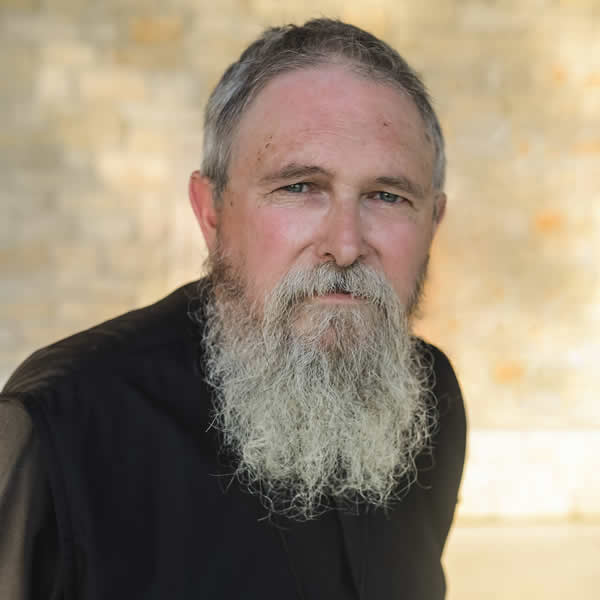
About Fr. Stephen Freeman

Fr. Stephen is a retired Archpriest of the Orthodox Church in America. He is also author of Everywhere Present: Christianity in a One-Storey Universe, and Face to Face: Knowing God Beyond Our Shame, as well as the Glory to God podcast series on Ancient Faith Radio.


Posted

in

by

Comments

44 responses to “Becoming Personal”

  1. Lenore L Wilkison Avatar
    Lenore L Wilkison

    May I have a favorite of your many great posts? If so, this is it. I learned more in the last 10 minutes than I’ve learned in 23 years since I was baptized into the Orthodox Church.

  2. Robert Mims Avatar

    Beautiful and with depth that is a profound spiritual caress of eternal boundlessly Truth. Thank you, Father.

  3. Fr. Stephen Avatar

    Lenore,
    I am honored!

  4. Fr. Stephen Avatar

    You’re most welcome, Robert.

  5. Christa Avatar
    Christa

    Thank you for the showing of what is real and of what is true. Thankful to God for granting Mercy through the beacon of Hope your word bring.

  6. Gé van Gasteren Avatar
    Gé van Gasteren

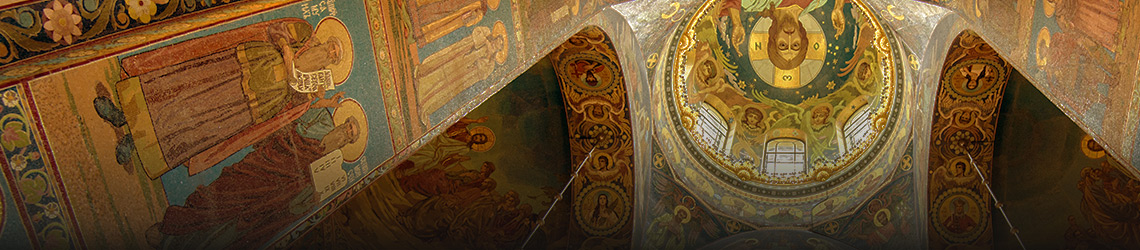
    A wonderful exposition. Your description of the Trinity immediately brought to mind Rubljov’s Troitsa painting, which made me wonder why you chose a pietà motif for this text?

  7. Ziton Avatar
    Ziton

    A truly useful piece of theological reflection. Two immediate thoughts.

    1. It gives yet anothet meaning to Christ’s very first words to the would be disciples in the rncounter in John 1:35-38. When he asks “What are you looking for?” The question is actually addressed to both the ego and the true person. And the answers that each gives, or tries to give, certainly change as we walk the path. Hopefully with the true person awakening in love.

    2. In the early part of Goethe’s Faust the frantic ego-Faust tries summoning first the macrocosm (of everything – not surprising obvious fail for the ego), then the spirit of the microcosm or Erdgeist, before finally being seduced by the devil. His interaction with the Erdgeist strikes me as being exactly how you describe the ego’s attempt, even when genuine, to grasp the divine. Faust thinks he has achieved some manifestation of the divine in himself. But the Erdgeist says to Faust “Du gleichst dem Geist, den du begreifst, nicht mir.” Which in addition to being lovely German expresses the idea perfectly that “you resemble the spirit that you conceive of, not me”. That is pretty much always what the ego does and it can do no other I suppose. In fact that whole scene feels to me like an icon of the modern mind wrestling with the divine – trying to summon it, control it by acatne means, and ending up down a dark alley.

  8. SAS Avatar
    SAS

    Dear Father,

    Apologies for the length. I understand if you deem this comment unfit for further conversation and dismiss it.

    While on one hand this article helps greatly to elucidate the reasoning behind the Crucifixion and Orthodox asceticism & what they really mean in our lives, I find myself nevertheless bewildered. I took the time to peruse the comments on the previous posting of this article from 2015, and found my anxieties echoed by David and Christopher from that comment section. It eventually became a conversation about Platonism and universalism, but I feel like David’s main point was not satisfactorily addressed.

    The way ego is described here seems to imply that nothing I experience as myself exists nor will exist in the age to come. If so, how can “I” say that God can save me? My “salvation” seems to mean that there will be someone with my body (except it will be a different, immortal body), my name (except I will have a new name anyways) who perhaps retains my memories, but otherwise all my beliefs, thoughts, opinions, preferences, desires, capacity to choose, etc. will be replaced by that of Christ. I am not really a person in any meaningful way, but just a hard drive for Christ to download his personality & will onto.

    Even if Christ and I would agree that I am not Him, and we occupy different positions in physical space and are composed of physically distinct matter, nothing about my conscious experience would be my own at all. “Yet-Not-I” sounds like I am not allowed to exist. It sounds like St. Paul doesn’t exist; there is a Paul-shaped Christ container, but otherwise anything resembling Paul was erased on the road to Damascus, and anything left of that is simply more “ego” to erase. Ultimately, I can’t help but feel that Christ does not/cannot love me, but can only love something that reminds him of himself. He only loves SAS insofar as SAS is Christ, and not SAS.

    Of course, I realize that all the qualities mentioned above are impermanent, and therefore they cannot really be me, since I predate all of them, and will likely outlast most as well. Is what you’re trying to say that the ego is a vain attempt to grant ourselves an ersatz Life by clinging to these things and attempting to ground ourselves in them? I will agree, God ought to be a more assuring ground for my existence than my thoughts, desires, and ability to choose. And the through-line of me, from baby to child to adult etc. is really more “me” than any motions of my psyche at any given point in time.

    But somehow the death of ego described in this article sounds like a death of even the capacity to have any of those things at all. It would leave me an empty husk, with no desires, feelings, choices, thoughts, ideas, no inclinations at all, not even the ability to have them, except those dictated to me from on high. Even if there is a continuous chain of consciousness from one state to the other, is that really me? If my sense-of-self was teleported into someone else’s body, into their mind, with all of their thoughts, emotions, desires, etc. would that really be me? Would that person really be themselves? Or is it me trapped in someone else’s reality? Having Christ replace all the movements of my soul & mind feels hardly different. Perhaps this only speaks to my own spiritual bankruptcy. Or I am proving myself illiterate. In either case, I have to echo David’s sentiment that I cannot speak of my salvation, because the “me” that would come out on the other side is not just a completely different person in basically every respect, but is also just a Christ-automaton, a created facsimile of Christ parroting the real one.

    I guess the real question is, where does “ego” end and my authentic self begin? How can a given person experience it and tell the difference, or is this something only a saint could ever know? Anything I can think of as being me can apparently be dismissed as ego, and what is apparently my authentic self isn’t me at all, but a Jewish man who was hung on a cross ~2000 years ago and then came back to life. I suppose that aforementioned throughline counts for something, but mere sense-of-self feels like thin gruel in terms of being-me, and I lose that every time I sleep anyway. Orthodox Christianity emphasizes that the human person is not completely swallowed up in their union with God, and remains distinct, but I fail to see what exactly here isn’t being swallowed up. What tiny fraction of what I consider “me” would carry on when 99% of “me” is wiped out?

    I am going to stop writing here, because it is terribly late at night and I fear I am rambling. Lord have mercy on my soul.

    SAS

  9. Reed Saunders Avatar
    Reed Saunders

    What a profound and soul stirring meditation. At my advanced age of 77, I realize that as my life winds down the Divine Reality called God is purposely and slowly taking “me” away physically, mentally and emotionally until all that remains is the flame of love of Christ which has always been there.

  10. Fr. Stephen Avatar

    SAS,
    When St. Paul writes, “I am crucified with Christ, nevertheless I live, yet not I, but Christ lives in me…” there is an invitation to follow him into the death/life of Christ and to the existence that is mysteriously described as “yet-not-I.” I understand your questions – but, to some degree – they seem like leaning into the anxieties that such an invitation raises for all of us (surely most of us). Perhaps it is true that only a saint would know the fullness of what he means. What I can say (as not being a saint) is that I have moments in my life when this is true for me – and it’s not the loss of what is true and real – but freedom from all that makes love impossible and false. This, I think, is the answer – it is the mystery of love. It’s the mystery of “whosoever loses his life for My sake, will save his life…”

    If I’ve failed in anything – it is my poor ability to put this into words.

  11. Fr. Stephen Avatar

    Gé,
    The Troitsa image would have been very appropriate. My mind was captured by this profound pieta motif as I see the Theotokos embodying (from a human perspective) the reality described in the article.

  12. Gé van Gasteren Avatar
    Gé van Gasteren

    Oh, I see! Thank you!

  13. Christian Hollums Avatar
    Christian Hollums

    SAS,

    I love the transparency of your comment. The tension you express is completely understandable.

    Last night I thought I was dying. It seems this is more common now that I’m 43 lol. I’ve had a fever for days, my chest was tight, pulse uneven. I stumbled in the bathroom, convinced that my heart was giving out. In that moment I became aware, not as a thought but kind of a quiet unveiling, that the life of God is within me. It’s not outside, waiting to receive me after my body fails, it was present, pulsing beneath the frailty of my aging body. In that moment I realized that even if my body were to stop, the divine life in me will not. In that moment the boundary between my weakness and God’s life dissolved. The temporality of my flesh became the very place where eternity showed itself. My death, which I had feared as ending, appeared as birth. In that moment death was no longer coercion because love had entered even what I cannot choose and somehow made it free. It’s as if in that moment I was passive still, but also actively passive, freely receiving life.

    I didn’t really have words for this experience until I read St. Gregory of Nyssa the following morning who said that I had been “trained by death.” For him, each moment of decay, each limit of the body, is a teacher leading the soul toward the life that never ceases. Death is not God’s punishment but nature’s midwife, guiding the creature into what it was made for.

    Then I read St Maximus the Confessor. He adds that when we meet death with trust, the involuntary becomes voluntary, necessity becomes freedom. He painted a portrait of Christ entering death not to abolish it but to fill it with His willing love, so that even our final breath could become consent rather than coercion. Freedom is the uncoerced realization of your nature in love.

    In that moment of fear, I felt what I think they meant: the dying of the old self is the unveiling of the divine life that was always here. It is like the apple that falls and perishes. To the eye it seems lost, its sweetness gone, its flesh dissolved. Yet within that perishing lies a seed whose nature is not destroyed but released. If it finds good soil, it grows into the tree it was always destined to be. The apple’s passing is the seed’s beginning; the loss of one form is the realization of another. Nothing essential is erased its essence is actualized.

    So too with us: what perishes is the outer flesh, the habits and fears that cannot bear eternity. What endures and grows is the divine life planted within, now freed to become what it always was in God. This is what St Gregory saw when he called death a birth, and what St. Maximus meant when he said Christ transformed the use of death into a new mode of life. Our mortality is not the negation of being but the threshold where the seed of God’s life breaks open and begins to grow.

  14. Fr. Stephen Avatar

    Christian,
    Very thoughtful and good. Glad you didn’t die.

  15. Christian Shaun Hollums Avatar
    Christian Shaun Hollums

    Fr. Stephen,

    Not going to lie I wanted to be with Christ.

  16. Fr. Stephen Avatar

    That’s not an improper response…just not the time, yet. When I had a heart attack some 12 years ago, I mostly wanted to pray. It is a sobering experience.

  17. Simon Avatar
    Simon

    Elder Sophrony’s contrast of the psychological mode of existence with the hypostatic principle is helpful. It seems that contemporary psychology prompts us to discover “who” we are without first defining “what” we are.

  18. Dee of Sts Herman and Olga Avatar
    Dee of Sts Herman and Olga

    SAS,
    What Father has written is a traditional Orthodox view given as a counterpoint to the ideas coming out of the context of modernist, Western thinking. There is a strong contrast in these views, as you already know, and point to in your comment.

    I believe any of us who grew up in Western culture, and specifically in the US, would hold a similar view to the one you have presented here. The ethos of the Orthodox Church is indeed very different, and its theology is embedded within it, thus making it hard to grasp, let alone accept, outside of that ethos.

    While we each think of ourselves as an individual “who” (there is nothing inherently wrong in thinking of ourselves as an individual who), I think Simon is on the right track to raise the question of “what” because the question of “what” is a the type of question posed in the Western world, that could lead us onto a path into the Orthodox ethos.

    Much (if not all) of what Father Stephen writes about is foundational in Orthodox theology. I have read many of the original works he refers to in his articles. And over the years of reading his blog, I know he sticks closely to the teachings of Orthodox theology.

    There are modern Orthodox theologians who also write for and teach Western audiences, whose work and teachings are very close to Father Stephen’s. One of them is Fr. Maximos Constas, who is an Orthodox monk and university professor. I don’t know if Father Maximos Constas’ description of St Maximos the Confessor’s theology would be helpful to you, but it might help. Christian’s comment above indicates that reading St Maximos was helpful for him in the context of your concern and questions. Perhaps a little dose of Fr. Constas’s discussion on St Maximos will be helpful.

    Here is a link where Fr. Constas describes the relationship between God and man that might further explain the Orthodox meaning of Personhood that Father Stephen refers to. The link is to a rather long series of talks. The area that might be helpful to your concern and questions, I believe, starts at the time stamp 3:46:46 Although listening to all of it would be especially edifying if you have the time.

    https://www.youtube.com/watch?v=tFX_IVRAcXI&t=13515s

    Meanwhile, I encourage to be patient and stick with us and Fr Stephen on this blog. This place is a wealth of good teachings in Orthodoxy.

  19. SAS Avatar
    SAS

    Dee of Sts Herman and Olga,

    I listened to the specific lecture you timestamped. There is certainly much to think about in that lecture. Regarding the particular fears I’ve described prior, it did little to assuage them. I found particularly alarming the description of what the Apostles experienced during the Transfiguration; where their senses failed in perceiving & comprehending the infinite glory of God, the Holy Spirit entered them and, effectively, “perceived” for them. To me, that sounds like the Apostles perceived nothing; they blacked out and then the Holy Spirit puppeteered their bodies somehow during that event. It makes me wonder why they were there at all. If the Kingdom of God consists of the Holy Spirit removing my subjective experience and replacing it with God’s experience (God perceives God, how are humans relevant), that sounds little different to Him destroying me.

    The way Fr. Constas described St. Paul’s “yet not I” as “Paul’s thoughts are Christ’s thoughts and Paul’s words are Christ’s words and Paul’s feelings are Christ’s feelings and so on” (4:30:29) still makes me fear for whether or not Paul is even alive anymore, or if he was assimilated into some sort of divine hive-mind. Of course, that same quote could also suggest that Paul still has thoughts, words, and feelings that are his, and that Christ simply also experiences them now in some way he wasn’t before. In that case would the union of thoughts, feelings, and desires when united with Christ go both ways (where the union is something akin to “being in agreement”)? Or is it still the wholesale replacement of my existence with that of Christ? The latter smells of Monothelitism, which is ironic, considering St. Maximos. We say Christ had a divine and human will, but what practical difference could that possibly make, especially in the age to come?

    Put in other words, where Martin Luther would describe the sanctified human as snow-covered dung, Orthodoxy would have me be a snow-filled vending machine, or perhaps a jar. It’s a step up from Luther, certainly, but in the end I cannot help but feel very dehumanized. The only permissible person is Christ, and a human’s purpose in life is to cease being a person so that Christ can possess us and replace us. That is “what” I am, that is what being an image of God entails. Does the mystery of love consist of the fact that one is capable of consenting to such a fate?

    My hope is that the state of my will would be something akin to the will of angels as Fr. Costas described. They are still free, but their minds are “bound” to God in some sense. But outside of that I find myself stumbling & despairing about a Monothelitism where humanity is completely eradicated and replaced. I still fail to understand how this isn’t true. The preservation of a distinct human person in union with God feels nominal at best. The Orthodox understanding of Personhood sounds like there are still only three People in the age to come, and the best that any of us can hope for is to be a faithful replica of one of them. I am, in fact, not a person, and I will never become one. My choice is to either accept God and be destroyed by Him in the process, or reject Him and be destroyed by demons instead. In either case, I cannot live.

    I have actually been following this blog for several years now, though I’ve commented very rarely. I want to say that these anxieties are recent, but looking back at some older comments I have apparently changed little over time. Forgive me if I am, in my anxieties, missing the point of what you, Christopher, Simon, Fr. Constas, and Fr. Stephen are trying to say. I am trying to write in good faith. At the same time, it is precisely these sorts of fears that have steadily moved me further from the Church and make me feel hesitant about returning; why would I wish to actively work & struggle towards my own doom, all while being accused of pride when I hesitate (not that I am innocent of that)? It is difficult to perceive a different angle, one where the “good news” doesn’t sound like the worst possible news. Lord have mercy.

    SAS

  20. Dee of Sts Herman and Olga Avatar
    Dee of Sts Herman and Olga

    SAS,
    I apologise for sending something not helpful. Also I sensed by your original comment you’ve been on the blog before but I didn’t want to be presumptuous. What I see of worth and meaning in this article resembles love which is voluntary and not conditional or coercive. But I appreciate that this might not be your take at all.

    There have been things I have not liked that has been presented as part of an Orthodox perspective, expressed by a priest who I will not name. It was a difficult point in time for me. But I expressed my concerns with another priest whose counsel and courageous words helped me. I stayed within the Church.

    Please forgive me for my unsuitable words.

    It is my prayer that you have peace in Christ in your life. That you know that you are loved.

  21. Gé van Gasteren Avatar
    Gé van Gasteren

    Dear SAS,

    First, let me mention that I’m in no way as knowledgeable as you about Orthodox doctrine (I’m actually a baptized Catholic but don’t feel like that anymore) and I even haven’t read all the comments in this thread.

    In this simple state of mind, I venture to doubt that God would create me with the purpose of me being destroyed in some end. I think the idea is that we grow spiritually, gather experiences in the material world, and eventually bring those home to God and somehow merge into Him when we are done with those experiences. So in a way, our individuality becomes part of the person that God is – and certainly isn’t lost, in my thinking.

    Whether this matches with Orthodox thought, I have no idea, but I’m sure there must be a provision somewhere that we with our small intellects cannot fathom the ultimate truths and have to be satisfied with partial and distorted understanding, along with faith in God’s promise. After all, He has made us in His image, which to me means: conscious and free.

    I like to think of human souls as drops of water in a pond, creation being a fountain expressing out all those drops in time, after which they happily return to the water surface, in the process making for a wonderful display and blissful splashing. In this image, God would be the quiet pond on one level, but also, on another level, the dynamics creating the fountain.

    Excuse me for my rambling; I was impressed by the depth of the exchange here and the gentle approach by all – hard to find elsewhere – and felt an urge to participate 🙂

  22. Fr. Stephen Avatar

    SAS,
    I understand your questions and concerns to some extent. I’m also certain that my writing has not succeeded in assuaging them. I think there is a misunderstanding and a disconnect. I think that what is being discussed is simply the fullness of love. I have written in the past about the “erotic language of prayer” – noting that there is an inherent difficulty in expressing the inexpressible. I also suspect that it’s why love is such a common subject for poetry – it surpasses the ability of language to express it.

    Another lens for looking at our eternal life with God would be the Theotokos. She doesn’t disappear, or become a puppet. She’s not swallowed up. Indeed, Protestants seem to be upset that we speak of her as we do. She’s a fitting image to consider – and I suggest asking her prayers in understanding all of this.

    In my own life, the most daily example of love is what I find in my marriage. It’s an image that St. Paul uses as well – and it’s present elsewhere in Scripture. It’s simply love. We do “lose” ourself, but we “find” ourselves. We do not disappear – but neither do we fully exist without the other – but this is not a diminishment but an enlargement. If my wife were somehow removed (please no!) what would remain would still be “me” – but the aching hole and emptiness in my life would point to the reality of love. It would not be a celebration of my individuality – indeed, it would point to how utterly insufficient mere indivudality is for true human existence.

    God is a good God. He has no interest in destroying us or in making us puppets. I hear the fear in your questions – and pray that God will help you find some comfort and re-assurance. May God give you grace.

  23. Christian Hollums Avatar
    Christian Hollums

    SAS,

    I understand your anxiety more than you might think. When I first began wrestling with these same questions, I felt the same haunting fear: that if the Holy Spirit truly lived in me, then somehow I would no longer exist. That if Paul could say, “It is no longer I who live, but Christ who lives in me,” then maybe the “I” was gone—dissolved into some divine consciousness that left nothing distinctly human behind.

    I recoiled at the thought. I wanted to love God, not to be erased by Him.

    My fear was simple: If God’s infinite being fills me, there’s less room for me. But that fear assumes a competitive ontology. It imagines God and creature existing side by side within the same field of being, as though divine fullness were a flood that displaces finite space.

    Classical Christian metaphysics—the analogia entis—teaches the opposite. God is not one being among many but Being itself, the inexhaustible act that gives existence to all that is finite. The difference between God and creature is not quantitative (“infinite vs. finite”) but qualitative (“source vs. gift”). The more the finite participates in the infinite, the more truly finite it becomes—fulfilled in its own mode, not overwritten.

    My fear arose from forgetting the metaphysical asymmetry between Creator and creation. God and the world do not stand over against one another as two terms in a relation; the world’s very being is its relation to God.

    The Spirit is not a second agent acting in competition with my own awareness, but the act by which awareness itself becomes possible. This is what I was trying to express in sharing my recent experience with you. I saw a reality that was already there—the divine life residing within my soul. That divine life is not foreign to who I am; it is the ground of my being. In that moment no aspect of my finitude was lost. Quite the opposite: I became awake to the truth of what I actually am. The finite and the infinite were no longer opposed but interwoven.

    To see God’s glory is to see by God’s own light—not because we are erased, but because that is what true perception always is. God’s infinity does not overwhelm the finite; it creates and sustains it. Infinity is not boundless extension but inexhaustible act: it can contain the finite wholly without ceasing to be itself, and the finite can be filled with it without ceasing to be finite.

    If the finite were annihilated, God could not love it, because love requires an other. Deification, then, is the eternal preservation of the creature as other, not its erasure.

    My mistake was imagining God and the soul as two subjects contending for one consciousness. The fear I felt was the fear of the finite before the infinite—but it rested on the wrong picture. The infinite doesn’t swallow the finite; it gives it space to exist. The Spirit doesn’t see instead of me but through me. My sight, purified, becomes divine sight. In Christ, my will and God’s will do not compete; they breathe together. The goal of salvation is not for me to disappear into God, but for God to appear perfectly through me.

  24. Fr. Stephen Avatar

    SAS,
    Forgive me for asking this – but have you ever been diagnoses with OCD? Some of your questions seem very similar to the questions that I’ve encountered from time-to-time from others who were afflicted with this. If that’s the case, then trying to find answers by thinking more about the same things will likely only produce more anxiety and fear. The problem isn’t in the answers – but in the question(s) themselves insistence and inner domination – they’re like a terrible torture. For reasons that I don’t understand, OCD famously focuses or is drawn to questions such as God – and particularly the most unsolvable questions. But – if this is true for you – then I pray you find some help – pastorally and therapeutically. It can be a terrible torment. That these questions have pushed you further from the Church would also fit that pattern.

    Let me say that you’re far from alone and you’ll not find enemies here in our comments and discussion. All of us are wounded in some way and you’d be surprised at the amount of sympathy that exists for this. It’s not an argument – it’s wrestling with something within that is very difficult.

  25. Katie Fischer Avatar
    Katie Fischer

    SAS,
    I am no theologian, I follow the blog for Fathers (and commenters) wisdom, but I wonder if something I was taught when entering the church might help with your concerns.

    God made our will good, every part of us was made good, so our will wants to be like God – be like Christ to our neighbor and love perfectly. This goodness is the essence of ourselves. But sin taint surrounds us, even strikes through our hearts, and not only can we not do the good that we will to do (romans 7:19) we can’t imagine what living perfectly in our created goodness looks like.
    We see glimpses of this in the lives of the saints, they “emptied themselves” and acted as God’s hands in the world – but that emptiness is actually a fullness of the way we were created to be. And that emptiness to fullness is overwhelming and can be scary because all I know is the me-that-struggles.

    This is one reason I love learning about the newer saints because we still have the memory of their personalities, that sainthood doesn’t mean being cookie cutter humans.

    If my words are not helpful, forgive me.
    Also, pardon my childlike vocabulary, it is not meant to be condescending, I almost exclusively talk to children and it’s hard to take that hat off.

  26. Christian Hollums Avatar
    Christian Hollums

    SAS, et al.,

    One final thought. What I’ve come to realize is that the only way to understand any of what Christ and the saints have said is to enter into it. I can speak of these mysteries, as the saints have, but comprehension comes only through participation. Through becoming what I contemplate.

    In this life I am still an embryo of the resurrection. Not yet fully human but being formed into it. To become human, in the deepest Christian sense, is to be born from above, to have my life shaped by the pattern of Christ’s own self-offering. This isn’t a metaphor but a reality: the path to life is the passage through death.

    Martyrdom (whether outward or inward) is not about destruction, but about birth. It is the letting go of every illusion that I possess life in myself so that the divine life within me may come to term. In this sense, my relationship with death reveals how close I am to becoming truly human, and therefore divine.

    As ordinary as it might sound, this is not something anyone can be argued into. It has to be lived. It has to be undergone. Only by dying do I come to know what it means to live. In Christ, death itself becomes my new mode of life. The womb through which I am born into God.

    I’m still learning to die and if I’m honest it’s still terrifying, but thankfully not as terrifying as it was 10 years ago.

  27. Dee of Sts Herman and Olga Avatar
    Dee of Sts Herman and Olga

    Christian,
    I agree with what you said with regard to experience versus philosophical arguments. And I also know from experience that if one is experiencing torment from burning questions that suggesting a resolution via experience sounds like more torture.

    Sometimes the best way is to seek help from a person, in a person to person counselling/discussion with someone who has training in such care that is needed. Over the internet isn’t as helpful in needful situations.

  28. Christian Hollums Avatar
    Christian Hollums

    Dee,

    I think what you’re describing about person-to-person care is actually very close to what I meant by experience or participation. The reality we’re talking about can’t really be grasped in abstraction; it has to be encountered.

    In that sense, the kind of dialogue or counsel you’re pointing to is itself a form of participation. It’s where the truth ceases to be a concept and becomes something shared, lived, and embodied between persons.

    Which is really all I was saying.

  29. Matthew Avatar
    Matthew

    Gé van Gasteren said:

    “I was impressed by the depth of the exchange here and the gentle approach by all – hard to find elsewhere – and felt an urge to participate 🙂”

    Depth of exchange. Gentle approach. Hard to find elsewhere.

    What a wonderful way to describe this blog and its comment section!

  30. Dee of Sts Herman and Olga Avatar
    Dee of Sts Herman and Olga

    Thanks so much Christian. Good words!

  31. Matthew Avatar
    Matthew

    Christian Hollums said:

    “The reality we’re talking about can’t really be grasped in abstraction; it has to be encountered.”

    How does one really move from abstraction to encounter? I was for years in charismatic evangelical spaces with lots of music and experiences of the Holy Spirit, but I wonder if I ever really experienced union with God. I have been partaking of the Eucharist regularly for more than a year now, but I wonder if I have ever truly experienced the kind of things we talk about so often in this space. I certainly don´t want to turn theosis into some sort of method or procedure which is focused on my individuality and felt needs, but I am struggling. Maybe what I am experiencing is a dying of sorts … a burning away of all that interferes with true union with God?

    Don´t know … so I press onward.

  32. Christian Hollums Avatar
    Christian Hollums

    Matthew,

    In my experience the movement from abstraction to encounter rarely feels like arrival. It feels more like being unmade. The abstractions die before we ever realize that it’s happening.

    Every time I think I have grasped God, what I actually encounter is the death of another illusion. The burning you mention, that sense of loss or even silence, may well be the very form of that encounter. The finite cannot receive the infinite without passing through a kind of death.

    Union with God in my experience isn’t usually something that registers as “an experience” at all. It is the slow unveiling or true vision of our dependence, the softening of our resistance, the training of our perception so that, little by little, we begin to see by God’s own light.

    I can’t say anything about the Eucharist as I still haven’t been received into the Church. I’ve been wrestling with things for about 11 years now since I first visited an Orthodox Church.

  33. Matthew Avatar
    Matthew

    Thanks so much Christian.

  34. Fr. Stephen Avatar

    Matthew, Christian, et al
    I rarely try to put a finger on my experience of God, in that it is almost the sort of thing that, when looked at directly, tends to disappear. I tend to see it more clearly (if fleetingly) in my peripheral vision – something that I notice when I’m looking at something else. I believe this has something salutary in it. To look “at” something is a behavior we learn from looking “objectively.” What we see in such moments are objects.

    I think of my encounters with other persons. There are many things about someone that can be perceived (as in a conversation) but often are not seen until later when you’re reflecting on the conversation you just had. I suspect that these observations are sort of “peripheral moments” that would have been distractions during the conversation had we mentioned them.

    I recall a conversation (of a couple hours in length) with someone whom I suspect/believe to be a living saint (and I’m not alone in that thought). There was a “largeness” in his presence that I cannot find words for, though I was aware of it throughout my time with him. I was with someone else as well during that conversation and they sensed this as well. The conversation was “normal,” however I can recall almost everything that was said verbatim – strikingly so. The words had a largeness that words don’t normally have. Interestingly, he was clearly present “to” me – focused on my questions and statements – rather than on himself. But, again, what was most significant was clear as a “colorization” of what was taking place rather than something that could have been seen on a film (I’m certain).

    With God, I’m often aware (in hindsight) of grace at work – at something becoming possible that had previously been impossible – of a goodness that I hadn’t expected. I do not look for visions or lights, or even very often at feelings (though I’m grateful for times when my heart is moved).

    But, I’m rambling.

  35. Justin Brasfield Avatar
    Justin Brasfield

    I find this post particularly moving. My questions:
    1. Is this business of becoming a person related (or the same thing really) as the sort of restoration of the likeness of God, so that we are “transformed from glory to glory” as we hold Christ?
    2. Is this post also sort of related to the Ecce Homo in the Gospel of John…i.e., we see the fully formed human person in the Christ that dies for us and is risen…and that we are called to be a mature, complete person in this sense (i.e., his great love for even enemies…not that we become the Trinity in essence).

  36. Cynthia Avatar
    Cynthia

    SAS,
    I am coming from a place where without God there would be no me. Raised in a home with a narcissistic parent, I seemed to have almost none of what could be called myself. After I left home, it took a while before I began to see how very defensive I was and how much I wanted that to change. I was even told I was not real because of all my people pleasing ways. However, I had no clue how to change. I prayed and began a journey to actually knowing God and not just mind belief. (Not that I do know Him and yet he is the very ground of my being a person).

    It has been like peeling an onion only I am the onion. Layers pulled back each covering who I was (am) created to be. For me it has taken many years to even begin to appreciate the care that God has given along the way. It seems that God himself has created each of us uniquely, to relate to him and to others. He does ask me if I must do it my way or look to him in all ways. His way is the path to who he created me to be. It is in him that I am found. I can always trusts him to be the Father that I so need. It is in the Son that I can choose love and give up myself for the sake of others.

    Without Him I know not how to love. This is probably my biggest challenge. Love. The Holy Spirit has shown (and does show me)boundaries but how to really love is a step by step growth. Part of all of the above is trusting Him to care for me in whatever way I need even to dying to what I thought I needed. Dying to who I thought I was. He is the Maker of us each.

    I don’t know if this will help you or not but I am sure that being drawn into Him makes me more me and less myself. Less concerned about my wants, fears or even my own growth and more about what is REAL – that being the Father, Son and Holy Spirit and all of the creation that has come and comes from their love and light. I am barely putting a foot into the kingdom but I am sure of its Beauty, the Christ crucified and risen.

    I pray for you to have the peace of Christ.

    Cynthia

  37. Fr. Stephen Avatar

    Justin,
    Yes to both questions.

  38. Cynthis Avatar
    Cynthis

    Fr. Stephen,

    I thank you for this blog which has brought me comfort and insight on this journey. At 78, having sought God most of my life while at times having totally ignored Him, I find He has always been leading, protecting, nurturing and in all ways loving me and all of the creation.
    I am grateful for your journey and the light that shines through to help us each.

  39. Fr. Stephen Avatar

    Cynthia,
    You are most welcome.

  40. Simon Avatar
    Simon

    I went to bed last night thinking about everything SAS has said. I had a dream about my aunt and her son (my cousin). My cousin has one of the worst abuse stories I know of, if not the worst. In the dream she was smoking and she flicked a cigarette almost spitefully at this discarded rug that was piled up next to the chair she was sitting in. It caught fire and she then took to stomping on the rug to put out the fire. As the fire started to go out, the room turned dark, and the last ember turned into a white butterfly that shined the purest white light I had ever seen. I tried to draw her attention to it, but she wouldn’t just look. She insisted on trying to see it by shining a flash light which only obscured it. When she turned the light away to look in some other direction I could see this beautiful white purest light there in the gently flitting about in the dark.

    I think that was cousin’s soul. Discarded, burned, and stomped on. The truth of it was revealed in the end. A truth she couldn’t see. Because when the eye of the heart is dark, everything is dark.

    I don’t know if any of that is true, but wouldn’t it be beautiful if it was?

  41. Fr. Stephen Avatar

    Simon,
    Indeed. Our best dreams – I hold on to them.

  42. Matthew Avatar
    Matthew

    Fr. Stephen wrote:

    “With God, I’m often aware (in hindsight) of grace at work – at something becoming possible that had previously been impossible – of a goodness that I hadn’t expected. I do not look for visions or lights, or even very often at feelings (though I’m grateful for times when my heart is moved).”

    Thanks so much for this. Maybe I need to begin looking through the rear view mirror ….

  43. Matthew Avatar
    Matthew

    or looking “in” the rear view mirror?? 🙂

  44. Fr. Stephen Avatar

    I think that St. Sophrony’s writings about hypostatic versus psychological are among the hardest to understand. And, even then, you don’t understand them. I have only ever had a “glimpse” of this – at the best of times. He wrote that many will (in this life) never know more than a psychological reality. Hypostatic existence is marked primarily by love. Thus we are taught to forgive, to love, to share, not to fear, etc. It is also an existence marked by grace – it is a participation in the very life of God – who loves, who forgives, who shares, who does not fear, etc.

Leave a Reply

Your email address will not be published. Required fields are marked *


Subscribe to blog via email

Support the work

Your generous support for Glory to God for All Things will help maintain and expand the work of Fr. Stephen. This ministry continues to grow and your help is important. Thank you for your prayers and encouragement!


Latest Comments

  1. Father, Thank you for your reply! I’ve wondered before what you thought of panentheism. I’ve been interested in the term…

  2. Father, thank you for the insights into St. Paul’s use of the word sarx. How would you say St. John…

  3. Margaret Sarah, To my knowledge, it is not a term used in Orthodoxy. A problem, it would seem to me,…

  4. Does panentheism get closer to the Orthodox vision of reality?

  5. Matthew, Yes. It’s contrary to Orthodoxy. St. Maximus’ language of “incarnations” with regard to creation and the Scriptures – differs…


Read my books

Everywhere Present by Stephen Freeman

Listen to my podcast


Categories


Archives