The Nature of Being Human

“Human nature” is a term that can have a casual meaning in any number of conversations. I recently listened to a discussion with an academic professional who made the statement that “anyone who failed to understand that human nature was evil would never understand the lessons of history.” From the perspective of Orthodox theology – he had said something profoundly untrue – and, I would argue, it skewed his reading of history.

What is human nature?

Human nature has a casual meaning: “what are people basically like?” But in the language of the Church, a “nature” is something quite specific with a theological meaning. It is a phrase that is deeply important.

A “nature” is the very “essence” (ousia) of a thing. It is the answer to the question: “What is it?” In the teaching of the Church we do not describe human nature as evil, or even sinful. Indeed, our nature was created good, and it remains so. The nature of all created things is good. Surprisingly, even the demons were created with a “good” nature. Today, they may very well hate their own nature, even as they hate their own existence (and the existence of all things). We could very well say that the demons have made themselves enemies to all created natures, including their own. But that terrible choice is a rebellion – they are in rebellion against their own angelic nature.

Of course, we speak of human beings as “fallen.” However, in Orthodox teaching, this does not refer to our nature itself. Rather, it refers to the fact that we have been made subject to death – we are mortal. It is “death at work in us” that we describe as “sin.” But the origin of sin is not found in our nature. Our nature is inherently good. Understanding this makes a huge difference when we think about human relationships and the character of our common life.

If you take the view (which is common in certain corners of Western Christianity) that human beings have a “sin nature” – that we are, in fact, essentially bad – then how we view one another and the character of our common life takes on a different caste. In an Orthodox understanding, a Bible verse such as, “Spare the rod and spoil the child,” can mean little more than “children need discipline in their lives to help them”. Whereas in a world in which human nature is held to be a “sin nature,” then “sparing the rod,” would be seen as letting evil run amok. It would hold that our nature not only needs to be restrained but requires a vigorous regime of reward and punishment. It has not been that long since the notion of “beating the evil out of a child” was common.

Human Beings are by Nature Good

When we speak of our nature as “good,” we are not declaring that human beings are born as saints. Rather, we are saying that our nature (“what we are”) tends towards the good, desires the good. We desire beauty. We desire well-being. We desire truth. Even when we engage in evil actions, they are most often grounded in a misperception of the good. Dictators do not come to power by asking people to be evil – they come to power by distorting the image of the good.

Recognizing that there is an inherent drive towards the good suggests not that the world is perfect, but that we are not “swimming against the current” when we nurture children towards the good, the true, and the beautiful. By nature, it is what they desire.

The lessons of human history are revelatory of our nature. Were we inherently sinful (evil by nature), we would have long ago destroyed ourselves in a whirlpool of madness and destruction. Though it is quite true that history has seen terrible things done (wars, persecutions, etc.), it is still the case that human beings continue to push back against these terrible things. We are not born hating and killing – it is acquired, despite our nature.

Every child born pushes against the evil and yearns for the good. The innocence of each child points to the clear teaching of the Church. Christ rails in the strongest possible terms against those who cause a child to stumble – the stumbling is not the work of our nature but of a will that has turned aside from its nature. The greater understanding which we should rightly take from all of this is that our nature is for us. The universe is not stacked against us; God is for us; the goodness of all creation is for us. We are not living in a world of moral cripples.

The Social Nature of Human Beings

Human beings also have a “social” nature. We are created to live in community, though the shape and form of that reality has changed across the ages. Beyond all else, ours is a nature that is rooted in love, reflecting the nature of God, Whose image we are. When that love is made manifest in the world we see humanity at its truly greatest. When that love is distorted, misdirected, or hidden by abuse and cruelty, we see humanity at the very abyss of evil. At such moments it is hard not to despair.

Christ gave us the Church – a communion of our common human nature united with His divine nature – commanding us to love one another even as He loves us. Only in such a social setting can the fullness of our humanity be revealed.

It is in our social nature that our greatest failures are made manifest. At its worst, the collective overwhelms and subsumes the individual and the atrocities of mass behavior take over. This phenomenon is the fuel of many of the most cruel acts in history. When the individual is subsumed, “no one is responsible,” and the truth and value of personhood are suppressed. This is why the life of the Church has many of the structures that Christ, in the Holy Spirit, has given to her. Christ’s words to the Apostles are filled with cautions to “rule” only as servants, to be “washers of feet.” The entire sacramental life of the Church, with its discipline of worship, confession, repentance, communion, and service, are given as a means of living a life that is in accord with our true nature.

I think that one answer to the question, “Why are you Orthodox?” would be, “Because anything less would be insufficient.” Or, perhaps, “I need all the help I can get.”

You are created good. You are fearfully and wonderfully made. You are loved.

Give thanks for all things.

____

Addendum (with thanks to Andrew). I is of note that the Bible verse: Jeremiah 17:9 “The heart is exceedingly wicked and deceitful above all things, who can know it?” which is commonly cited in many Western circles as support for the teaching of “original sin” as “total depravity,” reads quite different in the Septuagint (Greek translation) of the Old Testament – the version that is most commonly quoted in the New Testament and used by the Fathers of the Eastern Church. That version reads “The heart is deep beyond all things and it is a man, who can know him?” (βαθεῖα ἡ καρδία παρὰ πάντα, καὶ ἄνθρωπός ἐστιν· καὶ τίς γνώσεται αὐτόν) St. Irenaeus not only quotes the verse (from the Septuagint) but interprets as referring to Christ!
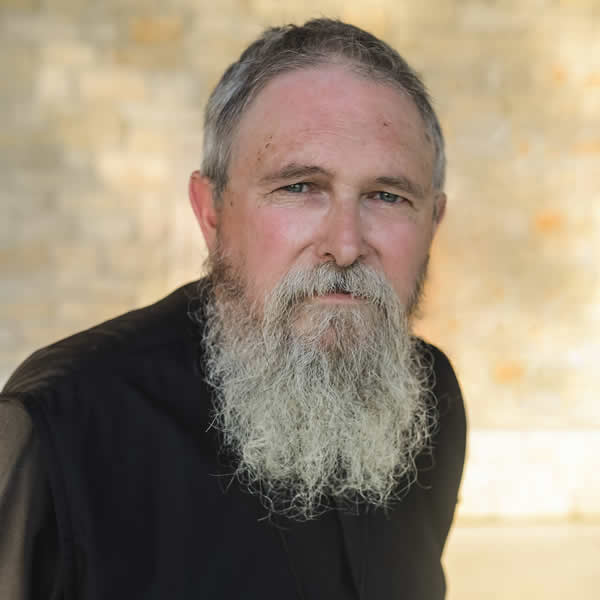
About Fr. Stephen Freeman

Fr. Stephen is a retired Archpriest of the Orthodox Church in America. He is also author of Everywhere Present: Christianity in a One-Storey Universe, and Face to Face: Knowing God Beyond Our Shame, as well as the Glory to God podcast series on Ancient Faith Radio.


Posted

in

,

by

Comments

54 responses to “The Nature of Being Human”

  1. Christine Carson Avatar

    This!! Thank you! I have been on a mission to share this truth with so many who have had a skewed view of what it means to be human-taught incorrectly-and to direct people to the truth of what Gods word says! We are created in HIS image. I love everything about this post today. Thank you!!

    For His Kingdom,
    Christine

  2. Mike N Avatar
    Mike N

    Father Stephen:

    Some good thoughts here. Difficult to get my head around. As I get older I want to finish well, I am 74 at present. I was raised Lutheran and as the church I grew up up in began to be overwhelmingly influenced by culture and no longer trusted scripture or “tradition” we left and spent over 30 years in evangelical churchs and sometimes charismatic.

    The concept of original sin was taught and is hard to see beyond. Over and over I was told that, “ the heart is deceitful above all things and desperately wicked: who can know it?” Jeremiah 17:9.

    I believe that how we see our God and father is very important if we are to love him with all my heart soul and strength. I suppose I have Augustine to blame. It appears that the Orthodox Church and the Roman Catholic Church’s (followed but the Reformers) took very different paths in understanding who we are as humans. And as time goes on it gets more confusing. Is there an age of accountability? Is it “Grace alone” or what is my responsibility.

    You gave me some things to think about. I greatly enjoy your blogs and what you reveal about Orthodox Christianity. I attended a couple Sunday worships when I lived in Washington but ethnicity seems to play a role in belonging. Is there fellowship between the various orthodox churches? Between the Antiochian and Orthodox Church in America for example.

    Thanks for your message

    Mike N

  3. Dee of Sts Herman and Olga Avatar
    Dee of Sts Herman and Olga

    Father,
    The relationship of meaning in the words ruler-servant, as far as I know is unique to Christianity in western societies. However in some of the Indigenous communities that I serve, these values are still actively taught by the elder generations. And the elders have a place in the service to the community.

    On the scientific side there has been two perspectives of characterising human nature: survival of the fittest, on the individual level, and the survival of the group requiring sacrifices and guidance within the group to maintain the survival of the group.

    And then there is the is the Life in Christ— and the fullness of being. It takes courage and faith to put on Christ.

  4. Fr. Stephen Avatar

    Mike,
    First, there is indeed communion and cooperation between the various jurisdictions of Orthodoxy (a legacy of the history of their coming to America, etc.). In places where there is a strong ethnic presence (numerically) you might feel a bit like a stranger (just as a German might feel in an Anglican Church). But, increasingly, this is changing. Somewhere over 75-80 percent of clergy in the OCA are converts, and, I suspect that the majority of Antiochian clergy in the US are as well. Even in the Greek Orthodox Archdiocese, over 25 percent of their priests are converts. This reflects how the “ethnic” makeup of Orthodoxy within America has slowly (and more quickly these days) become not ethnically defined.

    As to original sin. Orthodoxy, interestingly, does not have that idea. Some speak of “ancestral sin” – meaning that we inherit a broken world (but no personal guilt) from the past. But, in Orthodoxy, it is death rather than guilt that marks the nature of sin.

    Orthodoxy is perfectly comfortable saying, “We are saved by grace.” But what we mean by it is quite different. We do not think of salvation as juridical – that God has (by grace) changed our legal status from damned to saved. We do not think in juridical terms (when we are thinking properly). Rather, grace itself we understand to be nothing other than the very life of God, or the “divine energies,” to use a theological phrase common in Orthodoxy.

    This is to say – since “salvation” means to be changed into the image of Christ, to become a partake of the very life of God, or, stated quite boldly, to “become by grace everything that God is by nature” (that’s the teaching of the Fathers). We obviously can’t do this for ourselves. St. Gregory of Nyssa once said that “man is mud (or dust) who has been commanded to become a god”. We can’t do it ourselves.

    The “fall” interrupts that original plan for human beings (which would have still been a salvation by grace) and Christ, in His death and resurrection, and through our restored communion with Him in Baptism and Holy Communion, restores that plan and path and we continue, by grace (the very life of God), to grow “from glory to glory” being transformed into the very image of Christ.

    I’ve heard that Luther once described the Christian as a “snow covered dung hill.” Orthodoxy, would rather describe us as a “snow covered snow hill.”

    Now, none of that is meant to make light of sin and the depths of depravity that human beings are capable of – but these depths are contrary to our nature – they are an offense to our nature. If our nature were depraved, there would never be any recovery, no innocent children. The doctrine of original sin, at its worst, has left a terrible legacy – mostly because it’s just not true. It doesn’t describe what is.

    There is indeed an “age of discretion” – an age at which children begin to become adolescents and to take increasing independence and responsibility on themselves. In Orthodoxy, we begin communing a person from the moment of Baptism (so, as infants, usually). But, we do not start hearing their confessions until around age 8 or so – when that adolescence begins to be manifest. It should, at best, be a very gentle process – and not a time for scaring children about sin, etc.

    As to Jeremiah 17:9 – it’s certainly true that the heart can be deceitful and desperately wicked – but that verse need not be taken to say that it started that way, and is that way even in a child, or that the heart is only deceitful and desperately wicked. That would negate everything else that is said positively about the heart. Here’s a great quote from the desert tradition of Orthodoxy – from the Macarian Homilies:

    “The heart itself is only a small vessel, yet dragons are there, and lions, there are poisonous beasts, and all the treasures of evil, there are rough and uneven roads, there are precipices; but there too is God and the angels, life is there, and the Kingdom, there too is light, and there the apostles and heavenly cities, and treasures of grace. All things lie within that little space.”

    Protestantism has a bad habit of forcing the Scriptures to say more (or less) than they do, and then to claim that they’re just “quoting the Scripture.” Nonsense. It was always a theological revolution that meant to overturn the Catholic faith…and its legacy has been a constant overturning (even of itself) ever since.

  5. Christian Hollums Avatar
    Christian Hollums

    “The true mark of human nature is the continual stretching forth toward what lies beyond.”

    St Gregory of Nyssa

    Would you agree with this statement below in quotes?

    “Human nature = an unfinished project fulfilled in Christ’s Cross; humanity is revealed, not presumed.”

    I’m going to use the dirty word progress here, but it seems St Gregory of Nyssa defines our nature as infinite progress (epektasis).

    What I think for Gregory to be human is to participate without limit in the divine life—a becoming rather than a static essence. Evil and sin, for Gregory, it seems, are not substances corrupting nature but privations that interrupt this movement of ascent. A distorted vision if you will.

    How does this statement land for you?

    Our problem is not that our nature became evil but that our freedom and vision have turned away from the telos in which that nature finds its completion. The “fall” is not the loss of our humanity but our forgetting of what being human means.

  6. Matthew Avatar
    Matthew

    This article is proclaiming such good news. Thanks Fr. Stephen.

  7. Mike N Avatar
    Mike N

    Father Stephen

    Thanks so much for your thoughtful response. Much to think about. I am humbled by a loving God who never gives up and calling us back into relationship with him.

    Mike N.

  8. Andrew Avatar
    Andrew

    I was fascinated to read the Greek translation (often referred to as the ‘Septuagint’ – which was the version used by Christ and the Apostles and accounts for about 85% of all OT citation in the NT) of the infamous verse in Jeremiah about hearts being “deceitful” and “desperately wicked”. It reads quite differently:

    “The heart is deep beyond all things, and it is the man, and who can know him?”

  9. Fr. Stephen Avatar

    Andrew,
    I should have checked…but it points the the fact that the Western reading (the Masoretic text) wouldn’t normally even occur to the Orthodox. Now I’m going to have to go back and do a little reading myself. Thanks! I found this so fascinating that I’ve created an appendix for the article.

  10. Ook Avatar
    Ook

    The view of “sinful nature” does indeed exist in some parts of Western Christianity, and no doubt it is a view held by some who have powerful positions, but I would posit that this is a marginal view.
    My “evidence”: the song “Human Nature”, which remains popular four decades after its release by Michael Jackson, is about a hunger for communion, but being insulated by the walls we build around ourselves. I guess this is closer to the Orthodox view.

  11. Other Matthew Avatar
    Other Matthew

    I looked into the Masoretic version of Jeremiah 7:9, and it doesn’t necessarily read the same as the English translation. The word translated as “wicked”, “akov”, seems to mean something like “bent” or “crooked”, but not necessarily in a moral sense – it is only seen three times and is used literally when it appears elsewhere. The word translated as “deceitful”, “anush”, is normally used to refer to some sort of desperate illness and can mean frail, weak or incurable. The translators chose to interpret it as “incurably depraved” but all of the other uses definitely are not in a context of morality. The Septuagint translators seem to have read “anush” as “enosh”, meaning man (because Hebrew originally had no vowel markings)

  12. Sharon from Australia Avatar
    Sharon from Australia

    Father Stephen,
    Your words here are like refreshing water. I was brought up in various Evangelical Fundamentalist churches and regularly exposed to “hell fire and brimstone” preaching., and all the disapproval and angst that goes with that belief system. I can’t stand even a hint of it now. I feel like a person who has PTSD from all of that…parental disapproval etc.
    I’ve been going to the Anglican church for years now but as you’d know well, that’s not a satisfying “resting place” either. I’m like Mike, 68 and really wanting to understand the truth of God in my last years, I’m drawn to Orthodoxy even if only for these beliefs you teach here…so very human and feel right and true about God. I live in a very remote part of Australia where the only options for worship are a Charismatic group and a small Catholic church so I sit in the back of the Catholic church from time to time and look forward to retirement and a return to a more populated area and hope to be able to join a small Orthodox home church about 40 minutes from my home in Queensland.
    Anyway really I only want to say a big thanks for this article and God bless you and your work.
    Blessings
    Sharon

  13. Dee of Sts Herman and Olga Avatar
    Dee of Sts Herman and Olga

    I thought the Septuagint preceded the Masoretic text. Therefore, might it be a speculation what the Hebrew might have been before it? I mention this because I have been in scholastic Orthodox Jewish circles in my deep past, which actually used the Septuagint and not the Masoretic. Nevertheless, a closer look at the Hebrew provides insight into the Masoretic text and the various ways of translating it, which are influenced by prevailing theologies.

    I ask Father for corrections as needed.

  14. Ed Avatar
    Ed

    As always I enjoy these article immensely. I too was raised in a mixed bag of fundamentalist Protestant education and a semi-Protestant United Methodist Church (traditionally Methodists don’t consider themselves Protestants since their origin comes from Anglicanism). In both I was taught the Augustinian view on original sin and original guilt and a sinful human nature. With that said, Jeremiah 7:9 was not the go-to verse to support that conclusion. Instead, it was Romans 3:10-12 (a quote from Psalm 14, 53 and Eccl. 7). What is the proper understanding of those verses with regards to Human Nature?
    Also, John Wesley once said that democracy is a product of hell (loose quotation) meaning that human beings with sinful natures will never collectively lead themselves towards God but just the opposite. Have we not seen this general trend hold true in most democracies? If the human tendency is towards the good then why do we collectively pursue the secular? Or do we think we are pursuing good even when we are not because our perception of good has been distorted?

    – Ed S.

  15. Fr. Stephen Avatar

    Christian,
    I would agree with the statement. I’ve written before of our existence as “movement” (kinesis) which is a common theme in several of the Fathers. I think I prefer the term “movement” to the term “progress” inasmuch as it does not carry the burden of modernity’s heretical use of the term. But, yes, our nature has a telos – a model, a point, a reality towards which we move. I used the terms “desire for the good” which could also be rendered “movement towards our telos.”

    Also I would agree with your thoughts on the fall.

  16. Fr. Stephen Avatar

    Other Matthew,
    It’s also possible that the Hebrew text that the Septuagint translators used differed from the Masoretic at that point. The Dead Sea Scroll version of Jeremiah is missing at that point.

  17. Fr. Stephen Avatar

    Sharon,
    You are very much in my prayers. May God surround you with His safety and care!

  18. Fr. Stephen Avatar

    Ed,
    I’ll look at the Romans verses a bit later today. But, my point about tending towards the good is not a notion of getting better and better (as a society, for example), but that we have avoided becoming worse and worse (despite present evidence) – or certainly not to the extent you would expect if we were truly evil in our nature. There is a goodness at work in all things. The fall unleashes death in the world. And, the we are told that have been “in life-long bondage through fear of death” (Heb. 2:15)

    I’ve got more thoughts on the “collective” character of our lives…in an article yet to come.

  19. Matthew Avatar
    Matthew

    Jeremiah 17:9

    “The heart is deceitful above all things, and desperately wicked: who can know it?”

    My wife recently read in a book about the Christocentric way of reading Holy Scripture that this verse in the Septuagint should probably be translated:

    “The heart is deep beyond all things, and it is the man.”

    I have no idea if this is a correct rendering, but I thought I would offer up the thought anyway.

  20. Matthew Avatar
    Matthew

    Forgive me father if I am waxing political, but I felt the need to quickly respond to Ed. You can delete this comment if it is violating house rules. Thanks.

    Ed said:

    “John Wesley once said that democracy is a product of hell (loose quotation) meaning that human beings with sinful natures will never collectively lead themselves towards God but just the opposite. Have we not seen this general trend hold true in most democracies? If the human tendency is towards the good then why do we collectively pursue the secular? Or do we think we are pursuing good even when we are not because our perception of good has been distorted?”

    What is the alternative Ed? Authoritarianism? Christian Theocracy in a fallen world? Both of those sound hellish to me.

    I suppose all the “isms” and “ocracies” have their pros and cons, but I am waiting for Aslan: the only king I will ever trust! 🙂

  21. Fr. Stephen Avatar

    Matthew, Ed,
    The purpose of democracy has never been (classically) seen as the best way to pursue the good. Even from Athens, democracy has primarily been seen as a means to avoid tyranny. It’s very messy, untidy, and there are still ever so many tyrannies that interfere. Frequently, we do not have democracy but “ochlocracy” (mob rule). At present, with the tools of technology, tyrannies abound. But, it seems to me, it’s not what people “want.” It’s just what they keep being given.

  22. Matthew Avatar
    Matthew

    Thanks so much Fr. Stephen.

    I simply cannot get wrapped up in politics, isms and ocracies the way I used to.

    It seems the only engagement Jesus had with politics besides the famous Caesar on the coin thing was when Jesus was before Pilate and spoke the truth about Himself.

    What he said didn´t get him elected. It got him crucified. Maybe His kingdom is truly not of this world …

  23. Fr. Stephen Avatar

    Matthew,
    I have come to “not believe” in politics. I acknowledge that they exist – and I think they have a purpose. But I do not “believe” or “have faith” that they can accomplish the things that are often promised. I prefer voting to riots and hanging leaders (the old-fashioned way of dealing with tyranny). But the Kingdom of God alone, as we pursue it in repentance and love, is worth our faith.

  24. Matthew Avatar
    Matthew

    Agreed Fr. Stephen.

    Have you seen Aslan? I certainly hope so.

    🙂

  25. Fr. Stephen Avatar

    Matthew,
    Seen Him? I eat Him!

  26. Matthew Avatar
    Matthew

    🙂 🙂 🙂

    Me too!

  27. Margaret Avatar
    Margaret

    Dear Fr. Stephen, Thank you for your article and thank you for your comments here! Your comment to Matthew about your “coming to “not believe” in politics” puts into words exactly what I have been thinking for a few years now. I plan to share these words, thank you! Glory to God for All Things!

  28. KS Avatar
    KS

    Amen! Many thanks again and again, Fr Stephen, for your wisdom and eloquence.

  29. Janine Avatar
    Janine

    Father wrote,
    “I need all the help I can get.”
    The very reason I give for taking the Eucharist each week.

  30. Sharon from Australia Avatar
    Sharon from Australia

    Thank you, Father Stephen, for your prayers!

  31. Christian Hollums Avatar
    Christian Hollums

    Father Stephen,

    Trying to understand your comments on democracy and politics. What I hear you saying is that you are apophatic about politics. Would I be right in saying you refuse to grant politics the kind of faith due only to the Kingdom?

    Is your primary concern teleological not procedural or political form?

    Would you agree with me in saying every political order already rests upon a theology, even if it denies one?

    I think for me I would say I no longer believe in political promises, but I still believe in the people they fail. I would say we can act politically not because we believe in politics, but because we believe in our neighbors.

    If I understand you correctly, I think you a right to refuse the theological assumptions of modernity politically and democratically. But I do wonder if it’s possible for us to redefine politics and democracy theologically.

    Politics (redefined) is the public practice of communion —
    the way finite beings, drawn by love, organize their shared life so that each may become more human. It is an ascetic discipline, not a contest of appetites.

    Democracy (redefined) is not the rule of the people but the recognition of the person —the civic form of love’s reciprocity. It is the imperfect historical attempt to enact the equality that already exists in God.

    None of these definitions is utopian. Every form is provisional — a shadow of the Kingdom to come. It is a Politi that is porous to eternity. Perhaps this grants a way to participate in politics rightly as a practice in time what will be fully true in eternity — a society of persons transfigured by love.

    Thoughts?

  32. Matthew Avatar
    Matthew

    For me, I´d be thoroughly thankful if politicans would simply help the “polis” function in practical ways – repairing roads, fixing bridges, policing the streets – rather than getting wrapped up in partisan ideological games of empire and power.
    The culture war stuff absolutely exhausts me.

    While I really loved reading your redefinition of politics and democracy, Christian, the cynic in me never sees these definitions coming to fruition in real time – at least not in our secular society. It seems to me the Church is already doing much of what you are redefining, but I would never want to call these redefinitions political processes even in the most Kingdom sense.

    I know you directed your comments to Fr. Stephen. I hope you don´t mind my thoughts as well.

  33. Fr. Stephen Avatar

    Christian,
    My answer might seem somewhat “complex” – and in many ways I’m still thinking about it. Some recent reading has been useful to me. Some of it has pointed out the vast sea-change that culture has undergone as we have moved from books/written word to radio and television to internet and social media. How that changes the nature of democracy is interesting (and I’m still pondering it). But, for one, it has changed our public consciousness more than we realize. Democracy might be less well-suited than we imagine. Second, government has changed. Most of the decisions that affect our day-to-day lives (policies, procedures, etc.) are now governed by agencies and experts and very little by elected officials. Theoretically, the elected officials are “in charge” of all that – but the “leviathan” that is the ruling state is actually far less answerable to us that we know.

    Those things being the case, “democracy” or “politics” is largely window-dressing. At present we’ve got an executive that is trying to change various parts of all that – and receiving enormous push-back. It is quite likely, that we will see little real change and a whole lot of hand-wringing and warnings from Left and Right that we’re facing an existential threat.

    There is, however, a politi (or some such word) that exists and it matters what we do with it. I’m just not sure that the “thing” we call “politics” is what we think it is (it is not actually what’s in charge). So, my thoughts are pretty fluid. I’ve been deconstructing the political/civic rhetoric of our culture for a long time. When I say I don’t “believe” in it – I mean that I don’t believe in the stage play that passes for “politics.”

    We are probably at a cusp of history – the end of one thing and the beginning of another. Time will tell. But, to a great extent, I don’t like participating in lies and the truth of the present is very obscure.

  34. Matthew Avatar
    Matthew

    In a worldly sense:

    Who is in charge?

    Who is the leviathan?

    Who is the puppeteer?

  35. Fr. Stephen Avatar

    Christian,
    A short addendum: there are over 190,000 pages of federal regulations at present, an increase of 38% in the last 23 years. These are the things that govern and regulate our lives. Legislators generally do not read much less write the laws they pass. Again, politics is window dressing. Even the things that would be easy to do (such as changing tax law to reduce it to a post-card) is impossible, it seems. For at least the last 4 administrations, we have been governed by executive orders, not legislation. There are no budgets, just resolutions. This bears almost no resemblance to the Constitution. A couple of billion dollars gets spent on a presidential election alone. It seems to me that we need to describe things as they are and not otherwise.

  36. Mark Spurlock Avatar
    Mark Spurlock

    Hi Christian,

    You wrote both “politics (redefined)” and “democracy (redefined).” I’m skeptical that the problems with either are of language alone. As Matthew implies, believing language shapes reality is alluring–it certainly shapes our perception of it–but oftentimes this strategy changes only the vernacular. Moreover, if I use a term in an idiosyncratic manner, I may only obscure my own meaning.

    Whatever it is called, I think you are describing “immanetizing the eschaton”: a society of persons transfigured by love, but brought about in the material world by human endeavor. Such a vision is inevitably utopian (unless we also redefine utopia).

    For me, it comes back to the question of Father Stephen’s post: What is human nature? It may be that spending most of my life as a Protestant makes it difficult to believe that, if all humans lived according to their nature, the result would be a “good” society. Even within the Church, we see ever-present evidence of the difficulty of basing faith on the collective of “people.”

    Father Stephen has written often of the particular, and that is my own belief. The more we shift to abstract terms like democracy, politics, “the people,” the easier it is to fall in love with the collective abstraction. Performing the particular of loving this person at this moment in this way, that’s the task each of us can always choose.

    To be sure, I am open to indifference to the collective not being universal or true for everyone. Moses became so busy he had to delegate, for example. But I do not think every Christian should feel called to act politically to evidence a belief in their neighbors.

  37. Fr. Stephen Avatar

    Matthew,
    Largely, it’s a sub-culture of an elite intelligence class (not a conspiracy, but a sub-culture). It has a lot of roots in university cultures and the “knowledge class.” In a matter of less than 10 years, the gender-related policy regime that, until the last few months, was becoming utterly entrenched in government regulation, and HR departments and educational institutions across the country was set in place – without an election or piece of legislation being passed to make it happen. I use it as an interesting example. This was not a product of democracy – indeed, it was not a part of any political campaign until the reactions on the Right of 2024.

    I think that what has been most amazing to me is how such things can happen so quickly. It’s almost impossible to vote out of existence something that you never voted into existence.

    Ok. Enough politics…Jesus is King.

  38. Christian Hollums Avatar
    Christian Hollums

    Thank you, Father Stephen, Matthew, Mark, and everyone who joined this conversation.

    I find myself deeply aligned with much of what’s been said — the exhaustion, the disillusionment, and yet the flickering hope that refuses to die.

    When I wrote about redefining politics and democracy, I didn’t mean to suggest that a shift in vocabulary could save us. Mark is right that words alone don’t change reality. But sometimes, recovering a forgotten word — or returning it to its true horizon — can reveal a reality we’ve stopped seeing. My goal wasn’t to rebrand “politics,” but to rediscover the polis beneath the spectacle: the shared work of becoming human together.

    Father Stephen, you’ve described with clarity what many sense but can’t name — that what passes for politics today is largely theater. It performs participation without granting it. The real mechanisms of governance lie hidden beneath the stage, managed by bureaucratic leviathans and procedures that long ago ceased to be responsive to ordinary lives. To say, “I don’t believe in politics,” then, is not cynicism but discernment — a refusal to give one’s heart to a simulation. You’re distinguishing between the stage play and the real polis, between appearance and substance.

    But I don’t think the political itself is a lie. Rather, it’s been reduced to what St. Gregory of Nyssa might call a shadow of the real. The original meaning of polis was not power or ideology, but the community gathered around the question of the good. That question remains, even in exile. The lie is not that politics exists; the lie is that politics is exhausted by the state.

    Matthew, your fatigue is equally honest — that ache of one who still hopes for something better but no longer expects to see it. You’re right that the Church already embodies much of what I was describing. It is, in a real sense, the true democracy: not because it votes, but because it reveals what participation looks like when it’s ordered toward love. Perhaps what we call “politics” only recovers its meaning when it begins to look like the Church — not an institution, but a communion of persons learning how to live truthfully with one another.

    What I’m trying to get at with my redefinitions is that the mystical and the political are not opposites. The life of communion inevitably spills over into history; the Eucharist cannot stay on the altar. To call the Church “apolitical” risks letting the world define politics entirely as power. The challenge is not to baptize worldly politics, but to let the Church’s life remind the polis of what politics once meant — the public enactment of care.

    Mark, your warning against utopianism is well taken. Nothing in what I’m saying suggests that we can “immanentize the eschaton.” The Kingdom is not a human construction. But perhaps we can eschatologize the immanent — allow our life in time to become transparent to eternity. When we speak of a “society of persons transfigured by love,” we’re not describing a project we build, but a divine reality that breaks through wherever love takes flesh.

    And I share your conviction that the particular matters most. Abstractions like “the people,” “the nation,” or “humanity” too easily become idols. But the particular and the universal are not enemies. In Christian thought, the universal appears through the particular — each act of mercy, each moment of attention to a neighbor, is the world renewed in miniature. Every social order already embodies a theology, whether or not it names one. The only question is which theology it enacts — one of competition, or one of communion.

    Father Stephen’s addendum about bureaucracy drives this home: we have replaced law with procedure, and logos with mechanism. What we call “policy” now operates with the cold logic of machinery, detached from the moral order it once implied. Describing this truthfully, as you do, is an act of repentance. But repentance, is not despair over the world’s corruption — it is perceiving the light that remains. Even within the ruins of empire, we can still practice a different order of relation, however small, however local.

    So maybe the point is this: we cannot believe in politics, but we can still practice it — not as the theater of power, but as an ascetic art of attention. We cannot build the Kingdom, but we can become its signs. And we cannot fix the polis, but we can love within it so truthfully that the lie begins to tremble.

    Democracy, in this view, is not a system to perfect but a posture to inhabit — the fragile discipline of meeting one another without coercion, with genuine regard. It may never “come to fruition in real time,” as Matthew said, because eternity is not a future event. It’s the mode of presence that appears wherever love orders our life together.

    In summary……..

    I don’t believe in politics as it’s staged,
    but I believe in the polis that love still gathers.
    I don’t believe in democracy as a mechanism,
    but I believe in the equality of persons revealed in Christ.
    The rest is language — and language, when it remembers its first meaning, can still become prayer.

  39. Fr. Stephen Avatar

    Christian,
    Good summary. I recall Stanley Hauerwas whom I studied with treating the Church as a “political” entity – he was drawing, I think, largely from Mennonite thought in that strain of his thought. St. Paul says that our “politeia” is in heaven (in Colossians) usually rendered as our “citizenship is in heaven.” I like the notion of the Church as “subversive” of the worldly order – as we live properly into the Kingdom of God, keeping the commandments of Christ. What I think is interesting is how much, in our conversations, modern Christians presume that we’re somehow responsible for running the world. Most often, when Christians agree to that position they immediately begin to compromise the commandments of Christ (in the name of some sort of practicality).

    Not terribly sure about democracy, per se. I’m more attuned to monarchy (but that’s a very, very long conversation). The theory of democracy is that authority is derived from the will of the people. I believe that all authority comes from God. Again, a long conversation.

  40. Matthew Avatar
    Matthew

    Thanks so much Fr. Stephen, Christian and Mark.

    Christian said:

    “What I’m trying to get at with my redefinitions is that the mystical and the political are not opposites. The life of communion inevitably spills over into history; the Eucharist cannot stay on the altar. To call the Church “apolitical” risks letting the world define politics entirely as power. The challenge is not to baptize worldly politics, but to let the Church’s life remind the polis of what politics once meant — the public enactment of care.”

    The Church reminding the the polis is one thing, the Church becoming the polis, no matter how well intentioned is completely another thing (and a dangerous thing). The history of the Church in the west with its Constantinian embrace should be a witness to all of us how even well intentioned religious men can make a political mess of things.

    I much prefer Fr. Stephen´s take:

    “I like the notion of the Church as “subversive” of the worldly order – as we live properly into the Kingdom of God, keeping the commandments of Christ. What I think is interesting is how much, in our conversations, modern Christians presume that we’re somehow responsible for running the world. Most often, when Christians agree to that position they immediately begin to compromise the commandments of Christ (in the name of some sort of practicality).”

    As I said in an earlier comment, Christ was not elected because of His life and words, rather those things got Him crucified. I see much more disengagement with the political process (regardless of how redefined that process can become) than engagement on the part of Jesus. “Subversive of the worldy order” seems to be the operative phrase.

    I simply don´t understand what I term “political addiction”, even in a redefined form, among so many people. Aslan is on the move and he is not running for office nor looking to build a more fair, just and loving polis.

    As Fr. Stephen so wisely said … enough about politics … Jesus is King!

  41. Matthew Avatar
    Matthew

    This article has brought the novel “Lord of the Flies” to mind.

    Golding seems to have drawn a relatively permanent conclusion:

    Humans are totally depraved and the end result of any societal building experiment will end in chaos and destruction.

    This is at odds with the Orthodox view of human nature. That said, if we are truly good at our core – why does much of world history look like Golding´s world?

  42. Fr. Stephen Avatar

    Matthew,
    Mostly because “world history” is a tiny slice of “everything that has taken place.” The vast majority of time, people live lives that gain no “historical” notice. Even the stupidities of the 100 years war were mostly a bother to the peasants who were just trying to eat breakfast and get a crop in. Who was in charge of their country mattered not a whit.

  43. Matthew Avatar
    Matthew

    Fr. Stephen said:

    “Even the stupidities of the 100 years war mostly were a both to the peasants who were just trying to eat breakfast and get a crop in.”

    I´m sorry Fr. Stephen … I probably don´t understand this sentence, though I think I understand it.

  44. Mark Spurlock Avatar
    Mark Spurlock

    The “both” is likely a typo for “bother.” Hope that clarifies the meaning, Matthew!

  45. Matthew Avatar
    Matthew

    It does. Thanks Mark.

  46. Christian Hollums Avatar
    Christian Hollums

    Matthew,

    I couldn’t agree more with your warning. The Church becoming the polis — in the Constantinian sense — has always been disastrous. Every time the Church confuses the Kingdom with worldly rule, it betrays its own grammar. The moment it wields coercive power; it stops being what it proclaims.

    When I said the Church should remind the polis rather than withdraw from it, I didn’t mean that she should govern the world, or that Christians should imagine themselves responsible for “running” it. What I meant is closer to what Fr. Stephen calls subversive: a quiet revolution of faithfulness that refuses to mirror the world’s power even as it witnesses to another order of being.

    In that sense, I think our positions converge. The mystical and the political aren’t opposites — but neither are they interchangeable. The mystical is the ground from which any true politics flows, not a program the Church imposes. When I speak of the Eucharist “spilling into history,” I’m not imagining a crusade for reform but a contagion of mercy, a way of living that gently undermines the logic of empire.

    I would call it fidelity in small things; I would call it becoming human; I would call it participation in the Good. It’s not activism, and it’s certainly not addiction to politics. It’s the holiness of daily life taking on public shape — caring for neighbors, speaking truth, refusing to hate. The Church doesn’t need to seize the polis; it only needs to be what it is, and the powers of the world will feel the tremor of that difference.

    I don’t think we have been invited into a merely symbolic hope. Christians are called to live with the vision — the faith — that we can actually become who we were created to be. Christ’s command to love our enemies, to forgive, to live as sons and daughters of God, is not an impossible ideal but a revelation of what is already possible in Him. It’s not an empty promise; it’s the truth of our nature unveiled.

    So yes — enough about politics if politics means the stage play of power. But not enough about the Kingdom that quietly dismantles that play from within.

  47. Fr. Stephen Avatar

    Christian,
    Yes. Indeed. Hauerwas famously said, “The first job of the Church is to be the Church.” When we are really doing that, the world trembles.

  48. Matthew Avatar
    Matthew

    Thanks so much for the comprehensive response Christian.

    I understand your position much better now.

  49. Christian Hollums Avatar
    Christian Hollums

    Matthew,

    I can see how what I said earlier might have sounded confusing. My reframing isn’t epistemic but ontological. Sometimes those categories blur easily.

    What I’m trying to say is that the Christian vision isn’t a new set of moral instructions but a new way of seeing being itself — a polis grounded in participation rather than possession, communion rather than control. For me, to be Christian is to perceive reality as it truly is: the Kingdom is not an eventual reward or a future state but the unveiling of what has always already been.

    Christ doesn’t inaugurate a different order of power; He reveals that the only true power is love — the infinite generosity of being that creates and sustains all things. “Blessed are the poor in spirit” is not an ethical demand but the revelation of reality itself: that life, in its truth, belongs to those who hold nothing as their own because everything is already gift.

    Faith, then, is not belief in something added to the world but the awakening of sight to the world as it is — radiant, given, and free.

  50. Matthew Avatar
    Matthew

    Thanks Christian.

    Where do we find that “has always already been” reality?

  51. Christian Hollums Avatar
    Christian Hollums

    Matthew,

    I’m not sure I understand your question. Can you elaborate?

  52. Mark Spurlock Avatar
    Mark Spurlock

    Christian,

    Are you using AI to generate (or assist with) your comments? Matthew’s question is referring back to your own post: “For me, to be Christian is to perceive reality as it truly is: the Kingdom is not an eventual reward or a future state but the unveiling of what has always already been.”

    My apologies if I’m mistaken, but the rhetorical structure of “not this, but this” that your previous post consists very much of is a common mode of AI speak.

  53. Christian Hollums Avatar
    Christian Hollums

    Mark,

    Thank you for your candor. I’ve said quite a lot in the comments and the question wasn’t an exact quote of anything I’ve said thus far so I’m just unclear what’s being asked.

    “For me, to be Christian is to perceive reality as it truly is: the Kingdom is not an eventual reward or a future state but the unveiling of what has always already been.”

    This is theological syntax. The sentence doesn’t use contrast to argue about the Kingdom; it uses contrast to unveil how the Kingdom is seen. The contrast is between two ontologies of salvation.

    That “the Kingdom has always been” is apocalyptic. Rhetoric deals in persuasion; apocalypse deals in revelation.

    My intention wasn’t to persuade, but to disclose. The “not… but…” structure here functions apocalyptically, not rhetorically.

    “The Kingdom of God is in your midst.”

Leave a Reply

Your email address will not be published. Required fields are marked *


Subscribe to blog via email

Support the work

Your generous support for Glory to God for All Things will help maintain and expand the work of Fr. Stephen. This ministry continues to grow and your help is important. Thank you for your prayers and encouragement!


Latest Comments

  1. John Mark, I think that St. John uses the term to be roughly equivalent to “human” – but in our…

  2. Father, Thank you for your reply! I’ve wondered before what you thought of panentheism. I’ve been interested in the term…

  3. Father, thank you for the insights into St. Paul’s use of the word sarx. How would you say St. John…

  4. Margaret Sarah, To my knowledge, it is not a term used in Orthodoxy. A problem, it would seem to me,…

  5. Does panentheism get closer to the Orthodox vision of reality?


Read my books

Everywhere Present by Stephen Freeman

Listen to my podcast


Categories


Archives