The Eye of Evil and the Eye of Light

Throughout the film version of Tolkien’s Lord of the Rings, the image of the “Eye of Sauron,” a tower with a great fiery eye burning at its peak, is an abiding threat overhanging every moment of conflict, every chance encounter. It threatens to interrupt the quest to destroy the Ring of Power. It is an effective cinematic feature that reminds the viewer of what is at stake.

“I, too, have seen it,” Galadriel the elf-queen whispers to Frodo. No one is immune.

It is interesting that Tolkien chose an eye to express the presence of active evil in his fantasy world. It has a Biblical precedent:

“The lamp of the body is the eye. If therefore your eye is clear, your whole body will be full of light. But if your eye is evil, your whole body will be full of darkness. If therefore the light that is in you is darkness, how great is that darkness!” (Matt. 6:22–23)

In popular usage, the ancient cultures of Orthodoxy speak of the “evil eye” with various explanations attached as its meaning. Indeed, the prayers of the Church, in certain settings, include mention of the “evil eye” with specific prayers for protection. What is this that Christ Himself describes as the “eye of evil” (ὁ ὀφθαλμός πονηρὸς)?

There is such a thing – and it lives outside of us – but it also lives within us, which is the place described by Christ in His warning. The “eye of evil” is nothing other than the voice of envy, the thought that takes pleasure and satisfaction at the misfortune of another (“he had it coming to him”). It is the voice of envy that we hear taunting Christ on the Cross. The gospels tell us that Christ was handed over to the Romans “on account of envy” (Matt. 27:18; Mark 15:10).

There is an “eye of evil” outside of us – the envious looks of the demons who delight themselves in our every stumble and whose taunting can be heard in the echo of our thoughts: “Look what you did!”

However, the true danger is within our own eye. It is a darkening of thoughts, the breeding of envy, as we respond to various injuries, insults, and even injustices around us. The quiet desire that takes delight in the misfortune of others. I suspect that almost all of us would have at least a short-list of people who dwell on such a list. We find it impossible to speak well of them or to believe that anything good dwells within them. This is already a symptom of an eye of evil growing within us.

When we think of the consuming power of this indwelling darkness we can see Christ’s commandments regarding forgiveness in their very essence. We do not forgive in order to be moral or polite. We forgive lest we be consumed by the darkness.

Our culture is largely blind to envy’s eye of evil. Indeed, wishing ill to our enemies is marketed to us again and again. The passions make the best sales-bait. Our enemies are legion (yes, that reference is intentional). They are wrong, dangerous, unrelenting, and hateful. Of course, we may very well have to see the legion of our enemies face-to-face when we reach heaven.

St. Anthony the Great once wondered if there was anyone who had done greater works towards salvation than himself. God led him to a cobbler in the nearby city. Anthony observed him and, at last, asked him to describe his rule of life.

“Elder, I don’t know if I have ever done anything good. Every morning after waking up, I pray and then I start work. First, I think to myself how every person in this city, from the smallest to the greatest will be saved, and only I will be condemned due to my countless transgressions. And in the evening when I go to sleep I have the same thoughts.”

The Elder rose with wonder and embraced and kissed him and said with deep emotion:

“You, my brother, like a good merchant, have gained the priceless pearl without toil. I have grown old in the desert, sweated and toiled but have not reached your level of humility.”

In a person of such humility, the eye of evil has been extinguished.

The root of envy is found in our experience of shame. Shame (in its many forms) provokes negative feelings and thoughts about ourselves. In some cases, it is a minor thing. In others, however, it can create a cascade of emotions and passions that overwhelm. We push back with anger, sadness, and, often enough, with envy. An angry person is likely an envious person as well.

In the Scriptures, the story of the first sin is met with an experience of shame. Adam and Eve seek to hide, to cover their nakedness. The second sin recorded in the Scriptures is the product of envy – and its outcome is murder (Cain and Abel). The cycle of shame-envy-murder has been continuous ever since.

However, since the cycle begins in our own heart, it is in our own heart that the battle must be fought and won. The interior voice whispers our thoughts of envy (they frequently mask the silence of shame). “He had it coming to him…” or “It’s about time!” Living in a deeply divided culture, we swim in an ocean of envy. Indeed, envy is nurtured in everything from politics to sports. We do not wish our opponents well – and we seem to have ever so many of them.

Inasmuch as envy has become a major cultural element, the result is a darkening of the “eye” of which Jesus speaks across a wide swath of the population. This “eye” is the spiritual lens through which we see the world. Christ’s warning, “If your eye is evil, your whole body will be full of darkness,” is fulfilled as a cultural state of being.

St. John echoes the words of Christ:

“He who says he is in the light, and hates his brother, is in darkness until now. He who loves his brother abides in the light, and there is no cause for stumbling in him. But he who hates his brother is in darkness and walks in darkness, and does not know where he is going, because the darkness has blinded his eyes.” (1 John 2:9–11)

The medicine for this profound illness is a serious undertaking. Its diagnosis is quite straightforward: whenever you find yourself wishing dark outcomes for someone else, or when you take pleasure in their misfortune, the disease of envy is at work. It requires repentance on the deepest level.

Christ sounds radical when He says:

“You have heard that it was said, ‘You shall love your neighbor and hate your enemy.’ But I say to you, love your enemies, bless those who curse you, do good to those who hate you, and pray for those who spitefully use you and persecute you, that you may be sons of your Father in heaven; for He makes His sun rise on the evil and on the good, and sends rain on the just and on the unjust.” (Matt. 5:43–45)

Christ makes it clear that this is more than a “moral” teaching – it is an action that transforms (“that you may be sons of your Father in heaven…”). It is the healing of the spiritual “eye.”

To “bear a little shame” in order to find true healing of the soul is the very heart of the virtue of humility. The humility of Christ can be seen on the Cross where He not only bears a shame that was falsely thrust upon Him, but asks forgiveness for those who have done this terrible thing: “For they know not what they do.”

I recognize that this is a most difficult practice, though I also know that Christ-within-us makes it possible. Understanding the nature of the darkness that infects our souls, that creates the “eye of evil” within us should encourage us to make a beginning.

It is sometimes suggested that we pray for our enemies in this manner if we can do nothing else: “Father, on the day of judgment, do not hold this against my enemy on my account.”

May He have mercy on us all!

_____

Photo by Heather Wilde on Unsplash
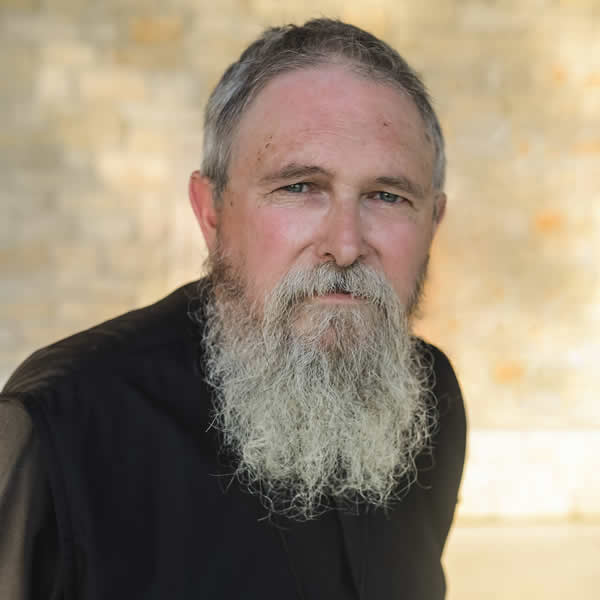
About Fr. Stephen Freeman

Fr. Stephen is a retired Archpriest of the Orthodox Church in America. He is also author of Everywhere Present: Christianity in a One-Storey Universe, and Face to Face: Knowing God Beyond Our Shame, as well as the Glory to God podcast series on Ancient Faith Radio.


Posted

in

, , ,

by

Comments

87 responses to “The Eye of Evil and the Eye of Light”

  1. Helen Avatar
    Helen

    Hi Father,
    You have previously mentioned the prayer for our enemies and I was thinking about it this morning. It was in conjunction with forgiveness. We don’t have to trust or reconcile without a change in their behavior, but only when we forgive and truly want their healing are we free.

  2. Fr. Stephen Avatar

    Helen,
    I understand that the forgiveness of enemies can be very difficult for those who have suffered trauma. But part of the damage within us from trauma can be a darkening of the soul…so it’s good for us to make some effort towards forgiveness – towards bringing light into our hearts. The prayer is a good place to start – God gives us the grace and it can be a slow process.

  3. Helen Avatar
    Helen

    That prayer is so profound. It’s full of grace. It has been healing for me in ways I didn’t realize before.

    Btw, I just returned from a trip to Europe that included London. I thought of you Father and your previous comment about your connection to the UK. I had never been and I really enjoyed my time there!

  4. Fr. Stephen Avatar

    Helen,
    If God gives me years, I would like to travel to Russia, and perhaps Italy, and Romania. We’ll see. A bit of peace in the world would help. 🙂

  5. Helen Avatar
    Helen

    May God grant you many years, Father!

  6. Matthew Avatar
    Matthew

    I have read your thoughts, Fr. Stephen, about shame and bearing a little bit of it … but I still don´t really understand it.

    How does shame lead to envy and then to violence and how does bearing a little shame solve this problematic cycle?

  7. Fr. Stephen Avatar

    Matthew,
    Perhaps I should have added an additional paragraph in there…

    But…the cycle is illustrated in the first two sins: Adam and Eve, and then Cain and Abel.

    In the case of Adam and Eve, there is the refusal to “bear a little shame.” Instead of acknowledging their shame and bearing it into the presence of God, they chose to hide. God has to go looking for them. But we see nothing further, no drive yet to envy. God, in His mercy, clothes them. They are expelled from the Garden.

    With Cain and Abel we see the cycle in its fullness. Cain is ashamed (“And Cain was very angry, and his countenance fell”) Again, Cain refuses to bear his shame. Instead of bringing it to God and asking for help or forgiveness, or understanding and explanation, he directs his shame towards Abel in the form of envy. When we wish ill towards another, the underlying condition is rooted in shame (in some form). In his envy, Cain murders Abel.

    That is the cycle.

    In my book on shame, I did a chapter on envy, noting at the beginning of the chapter that Tennessee is my favorite team as well as whoever is playing Alabama. It was a joke – but describes the envy involved in modern sports fans. People actually kill others over sporting events. When your team loses, you experience shame. Rather than bearing the shame (which is certainly “little”) people become angry – their “countenance falls” (shame-faced), and envy takes over – the eye is darkened and they think revengevul thoughts, etc.

    Shame can be healed by “bearing” it. But we bear it (a little at a time) by bringing it into the light – into the presence of God. There we pray, “O God, comfort me,” or words to that effect. “Have mercy on me.” And, instead of trying to run away, or cover it up, or turn it into anger and envy, we accept it in the presence of God – And He truly comforts us. If I can bear this shame in the presence of God (whatever it is) and see that His care for me does not turn aside, that I am loved, then the shame is bearable. We bear with Christ and in Christ who bore our shame. As we pray on the Feast of the Cross: “The Tree heals the tree.” The Tree of the Cross (where Christ bore our shame) heals the tree where we sinned (as in Adam and Eve) and where our shame first came on us.

    I hope that’s helpful.

  8. Mallory Avatar
    Mallory

    Thank you for this, Fr. Stephen. Forgiveness has been on my mind so much lately. I just finished reading a memoir about an abusive mother and the title of the book is, “I’m Glad My Mom Died”–obviously, the title is intentionally provocative but it really struck a nerve (with me and millions of others, I’m not alone).

    As I read about her horrific childhood and then her very slow healing process after her mother died, and it broke my heart open, and I felt that in many ways writing, telling one’s story, is a way of “bearing this shame in the presence of God” as you wrote to Matthew. Because, as you also write, “…and see that His care for me does not turn aside, that I am loved, then the shame is bearable”–but often when someone is crushed by shame caused by trauma (especially from trauma from another who is “supposed” to love and protect you) God often feels silent. How does one, exactly, “see that His care for me does not turn aside” when the circumstances many people are confronted with suggests God fed you to the wolves, so to speak. And then often the shame grows. It’s not so easy to just say “bear your shame, pray to God to help you, and feel how loved you are” because often the person does NOT feel the presence of God within their shame, no matter how much they pray. But then, say, you tell your story, and it moves a stranger, or a friend, and they are in some small way healed, or at least their heart softens because of that story, that’s a tangible, in-this-world way of reaching for forgiveness, for something bigger than our darkest thoughts.

    I also wonder what you think of the many abused children living with their abusers with no way out–do you really think that their guilt over wishing their abuser would die, even in their most private thoughts, is warranted? That those thoughts represent a darkness present in them? For me, I hear about people in these situations and want to hold them and tell them those thoughts are not evil, that they did not choose to live in this. But maybe I’m wrong. I guess I wonder if any thoughts like this are, perhaps, a sane response to living with insane people who hurt you? Perhaps bearing shame gets easier with time if you can hold the darkness in yourself with understanding, a little humor, grace and love.

  9. Fr. Stephen Avatar

    Mallory,
    In my book, Face to Face: Knowing God Beyond Our Shame, I look at all of this in greater detail. But, you well note the difficulty in doing this alone. Shame frequently (even mostly) requires the help of another person (therapist, confidant, priest, etc.). Shame makes us want to hide – so it’s not surprising that it’s hard to sense someone outside that inner hiding (including God when we pray). Having a trusted priest or a trusted counselor is helpful. The role of a priest is as a “sacrament,” that is, something that brings the presence of God to us.

    Fr. Zacharias of Essex is a noted priest-monk and spiritual elder. I first spoke with him on the topic of shame. He related the practice of “bearing a little shame” in confession, as taught by St. Sophrony. The “little” is important. Toxic shame, which comes from abuse and such, requires time, good therapy, lots of love and acceptance – and yet more time. There are “break through” moments, to be sure, when healing takes place in larger steps, but it’s wise to take this a little at a time.

    The cycle of shame/envy/murder (literal or metaphorical) has been going on in the human family since our beginning. Healing this is slow – but certainly at the heart of the Christian spiritual life. When there has been toxic shame (from abuse and such) it’s important to get help – professional/spiritual, etc. I will say that not every priest knows much about this. But, ideally, Confession should be a safe place to share. Nevertheless, priests can sometimes, in ignorance, do still more harm by shaming someone about their thoughts and feelings rather than forgiving and healing. It grieves me to write that – but it’s true.

    BTW, you mentioned “humor.” Laughter is deeply associated with the relief of the pain of shame. It might be it’s very origin.

  10. Dee of Sts Herman and Olga Avatar
    Dee of Sts Herman and Olga

    We have so much envy in our society. I don’t know whether we are worse than others or not.

    One story: As an undergraduate student in chemistry, we had a tough assignment involving the synthesis of a chemical and confirming the result with a Nuclear Magnetic Resonance scan of the product of the synthesis. As soon as the scan was finished, I could tell that I actually obtained what was truly hard to obtain. I squealed with joy, then put the (paper–not so digital in those years) scan down on the bench where I worked and started the clean up, and left the bench for about 3 minutes. Within those few minutes, the scan was gone.

    I think I had enough product left over to make another scan, but it was a hard lesson: when successful, keep your mouth shut!

    Now I experience success on another level. And to attract students to the work (they have opportunities) I let it be known about the opportunities. But what ends up happening (despite my attempts to control the focus of reports) is a trumpeting of ‘prestige’ rather than the expression of my hope that the work done serves the community. The envious backlash at work at this time is rough, mainly because the aim is to thwart my work (to make it unsuccessful), regardless of whether it serves the community. Sometimes I just want to quit.

    I’ve been on my knees a lot lately, asking God for help for three people actively attempting to undermine the work I’m doing, I ask God for His mercy on their behalf, prostrating and repeating the Jesus prayer, “Lord have mercy on _____”. They may yet succeed in undermining my ability to do this work. I pray to God that, whether or not this happens, I do not sink into resentment or anger — this is a tough thing for me.

    I ask for your prayers, too.

  11. Fr. Stephen Avatar

    Dee,
    It is a good thing when Abel prays for Cain. May God protect you and save their souls!

  12. Dee of Sts Herman and Olga Avatar
    Dee of Sts Herman and Olga

    Thank you dear Father!

  13. Matthew Avatar
    Matthew

    I’m still a bit lost …

    A man lies.
    He feels shame.
    He bears none of this shame.
    He becomes envious.
    He becomes violent.

    If he bears before God a little of the shame associated with his lying then this horrible cycle is avoided?

  14. Dee of Sts Herman and Olga Avatar
    Dee of Sts Herman and Olga

    Matthew,
    I came back on to mention something and not necessarily to answer your question. But in proceeding with the comment I was going to make before seeing your question, it is my hope that what I say will be helpful to readers as I believe it was helpful to me.

    If we see the dead and dying in the battlefield, our heart might respond in agony in the carnage and needless loss of life. I was taught by my Orthodox teachers to view those who are engaged in hurting others to be mutilated by the adversary and are losing their lives in a universal battle. They are succumbing to the fires of the dragon. Our role as spiritual warriors is to have the sight to see where or on what plane the war is waged.

    I was abused in my youth. I asked the abuser why they did what they did to me and their answer was so that I could not love or be loved. Despite my youth, I knew that that was the key to overcoming my abuser and the adversary. It took a very long time. (And in fact did involve the death of the abuser to escape my conditions.) I eventually learned to love this person very little at a time–the greatest challenge I’ve had in my life.

    Giving birth to innocent babies helped me to see how such delicate, vulnerable souls could be so damaged so early in life that they have no real means to cope but exact on others what scars were on their own hearts. They helped me to see how important it was to love in the face of all acts to destroy love.

    May God help us and save us.

  15. Helen Avatar
    Helen

    Hi Matthew,

    The bearing of shame was so difficult because of what I experienced growing up. I avoided making mistakes and when I did make mistakes went through all kinds of mental gymnastics to explain it away. I was so afraid of not being found worthy of love. Unfortunately this extended beyond my father to God. As I have worked on this in counseling, with a trusted priest, and with much of what Father writes, I am aware of a shift within me. Prior to this, these mental gymnastics included being judgmental (I’m not as bad as that other person), envy (why do they have what I don’t), and while I didn’t kill anyone, character assassination was another coping mechanism. I can understand that someone who was abused and did not have moral values growing up could resort to violence to be rid of a person who triggered any feelings of shame.

  16. Fr. Stephen Avatar

    Matthew,
    Possibly. The question becomes whether the man has borne enough shame – such that his soul/heart is transformed. There’s no magic in this. It’s not engineering – it’s therapeutic.

  17. Mallory Avatar
    Mallory

    Thank you for this response, Fr. Stephen! Yes, therapy and humor, for me, have been the only way I’ve been able to bear any shame. And stillness.

    Helen, thank you for this comment—it, along with this blog post, clarified something for me I’ve been working with, that the people in my life who trigger any feelings of shame, I (or at least my inner child) want to immediately get rid of. Obviously I don’t mean murder but it’s still violent—cutting people out of my life, avoidance, harsh judgement, etc etc. So what I’m working on now is instead turning that impulse inward and attempting to get to the root of the shame itself—with help of course. Reading and great drama is a great consolation in these things. Of course every time I think I have one trigger dealt with, and I’m very pleased with how peaceful and spiritual I’ve become ha it seems another trigger pops up. well at least it keeps me humble.

    God bless everyone!

  18. Fr. Stephen Avatar

    Mallory,
    I’ve had people in my life who were toxic – and I had to set some boundaries. But, over time, I’ve been able to return to some of those relationships without being set off into a storm of shame.

  19. Matthew Avatar
    Matthew

    Thanks everyone.

    It seems to me that a person who has been abused doesn’t have any shame to bear. They did nothing wrong.

    Am I right?

  20. Fr. Stephen Avatar

    Matthew,
    You’re thinking about this in juridical terms, forgive me. Shame doesn’t care whether you deserve it or not. Shame is an emotion we experience that is how we feel about ourselves – when it’s bad. Abuse creates feelings of shame that clearly are not “deserved,” but they can be so toxic that it’s crippling. There can be such a thing as “healthy shame” – that is an appropriate sense of self in the light of something.

    For example, embarrassment can be healthy – it gives us accurate information sometimes. It’s a minor form of shame but is still shame. The sense of “awe” that we experience is also a form of healthy shame – it tells us how we feel in the face of something that might be utterly magnificent.

    But what shame does not do is obey juridical rules about how we should or should not feel. Feelings don’t really work like that.

    I wish I could send you a copy of my book.

  21. Matthew Avatar
    Matthew

    I will eventually buy it Fr. Stephen.

  22. Helen Avatar
    Helen

    There’s an experience from my childhood that I am now able to see the difference between healthy and toxic shame:

    When I was 11 years old, after making my bed, not very well, my father looked at it and yelled at me about how sloppy I was and that I would never be a good wife/housekeeper,… I felt nothing but shame. It was crippling as Father says. No way could I bear that.

    I imagine what would have happened if my father hadn’t been abusive and reacted differently, maybe helped me, and taught me how to make the bed better. I probably would have felt a little embarrassed, but by staying with it (bearing it) I would have learned, and felt much better.

  23. Ben Avatar
    Ben

    Oh my, I didn’t know this was my blind spot.

    Father, I’m really happy that your book is available in the Netherlands. It takes about 30 days to deliver (at the store of my preference.) 🙂

  24. Ben Avatar
    Ben

    Helen, those are good examples. If only we (as parents) could see that we’re dealing with another precious soul instead of a “mistake” in our children… would that make it easier – or a more strongly felt obligation – to bear our own shame?

  25. Matthew Avatar
    Matthew

    Thanks so much for your thoughts Fr. Stephen, Ben and Helen.

    I think I am beginning to get it.

    My father was abusive. He had no clue how to deal with me and my hyperactive behaviour. That said, what would be an example of the shame I should have borne as a result of this dysfunction as well as the shame my father should have borne while he was still alive?

    I was sitting on a bench outside our church yesterday afternoon. There was a group of children receiving instruction from a religious educator near the church doors. Most of the children were listening intently, but there was this solo boy running around a pine tree waving his hands and talking to himself completely detatched from the other kids. I saw myself in that boy. I thought about how my father would have yelled at me had I been that boy all over again. I thought about how stupid my father was in his dealings with me.

    Shame?

  26. Ben Avatar
    Ben

    Matthew, I think it’s too much to ask of a child; to bear shame.

    It’s heartbreaking how the problems of an adult (or between adults) oftentimes have such destructive repercussions for children. Not fully knowing what is happening, they feel guilt and shame and blame themselves for grieving/angering the adults.

    Of course I don’t know, please forgive me, but it sounds as if right before the thought about your father (“how stupid my father was in his dealings with me”) there could have been a feeling of shame; that you made him angry, disappointed, or what have you. It’s very unfortunate. It was not your problem (it was his), but nonetheless it became your problem to deal with later in life.

  27. Matthew Avatar
    Matthew

    Thanks Ben.

    I´m not sure if it was a feeling of shame or simply a feeling of disappointment.

    I´m trying to figure out what shame I am supposed to bear and how much at this point in my life. I am doing much better after years of therapy as well as having finally returned to the sacraments, but whether or not I have borne a little shame before God … well … I am not certain.

  28. Matthew Avatar
    Matthew

    What does this bearing look like really?

  29. Ben Avatar
    Ben

    Matthew, my reply to you didn’t sit entirely right with me. I cannot say that shame (and envy) are my blindspot in one comment and in the next try and shine light on your thoughts and feelings. My apologies!

    I think your description of that boy struck a cord in me, I don’t know why, but I feel that we really have to love kids like him. Maybe, in a way, they show us what’s wrong with the rest of us? Anyway, consider me “the blind”, I should be more careful, because I have much to learn myself 🙂

  30. Matthew Avatar
    Matthew

    Thanks Ben. No worries. I´m still trying to figure this shame stuff out as Fr. Stephen explains it. It´s all really new to me.

    We do need to really, really love kids like that boy. My wife was with me on the bench and observed the boy´s behaviour with me. I was able to share a bit about how I saw my young boy self in that little kid. I told her now they are probably gonna´do exactly what that boy doesn´t want — they are going to shuffle him into the church and try to make him sit still and be quiet! That´s what they would have done to me in the 70´s and the 80´s … hopefully things have changed.

  31. Fr. Stephen Avatar

    Matthew, Ben,
    At its heart, shame is a feeling of vulnerability, of being exposed, and being uncomfortable with it (which is entirely natural). When someone “shames” us, such as telling a child that they are a “bad child,” or various other things, it rachets that feeling up many notches. Children easily interiorize such things and can carry them for life. Often, what we call abuse, raises this to yet another level. For a child, simply being in an emotionally dangerous home (where parents fight, etc.) creates a burden of vulnerability. But it is a function of our shame instinct. Some writers call it the “master emotion,” in that the other emotions generally “check in” with shame to see if it’s safe to come out. It’s how abuse becomes something that colors our whole experience of life. Shame is not unhealthy – an instinct of vulnerability is actually a safety measure – but, to a certain extent, our experience of shame (in a broken world) becomes safety run amok.

    Good parenting will pay attention to a child and assist them in growing emotionally. We help them learn how to comfort themselves and “bear” with difficult feelings. Parents (especially mothers early on) are a shield and protector.

    I am deeply moved, continually, by the story of the Woman taken in Adultery (John 8). Christ shields her from the literal death threats of her accusers. Christ rescues her by pointing to the sins of her accusers. But then, most importantly, He says to her, “Where are your accusers? Has no one condemned you?” She says, “No one, Lord.” And He says, “Then neither do I. Go and sin no more.” It is a radical tenderness. A kindness beyond measure. It is not a pronouncement about the nature of the sin – but a revelation of the uncompromising love of God. When we pray, “O God, comfort me!” this is the revelation that answers.

    Children cannot bear shame very well, and should not be expected to do so alone. We assist them with comfort and assurance that they are alright and that they are loved.

    St. Sophrony instructed the priest-monks in his monastery, particularly when they were hearing the confessions of the young (which would be around age 8 and up) to “teach them to bear a little shame.” How would you do this? First and foremost by being the kind of loving, gentle presence where they can discover the safety in the love of God. A harsh, judging priest will never be able to teach such a thing. The same would be true of a harsh, judging parent.

    So, when we say “bear a little shame,” it’s a learning. And it’s not walking around with a shame burden. It is bringing it into the presence of God. In confession we allow the light of Christ to see the shame by exposing it. Apart from confession (this is my experience), I mention it to God in prayer. I don’t try to run from it – but I pray – “O God, comfort me.” And I persist in the prayer until the pain begins to subside. Then, I give thanks.

    Sometimes it helps talking through this with someone else (a trusted, safe person). It’s not counsel, it’s just re-assurance and love.

  32. Matthew Avatar
    Matthew

    Thanks so much Fr. Stephen.

    So … when my father made me feel woefully inadequate for simply being the hyperactive kid that I was, this is an example of him shaming me.

    When I go to God with this shaming in confession, it´s not that I need to confess the “shame” of being a bad hyperactive boy, but rather I need to bear a bit of the shame my father heaped on me in order to hear from God that it wasn´t my fault and to ultimately receive therapeutic healing?

  33. Fr. Stephen Avatar

    Matthew,
    Yes, I think that describes it. One of my favorite verses is from the Psalms (131:2) “Surely I have calmed and quieted my soul, Like a weaned child with his mother; Like a weaned child is my soul within me.”

    The “weaned child” is, more or less, about 3-4 years old. Too old to nurse, but not yet without a need for the comfort his mother gives. The Psalmist, interestingly, compares his soul to just such a child.

    In my experience, whatever age we were when the trauma was experienced, it still lives on, sort of stuck. So, in this case of the Psalmist, he brings that child into the arms of God, like the arms of a Mother. And, sometimes, I simply bring my soul into the arms of the Mother of God.

    I think of Christ, the boy of 3-4, in his mother’s arms. How can we not be comforted? Most Holy Theotokos save us!

    My grandfather (my Dad’s father) died in his mid-80’s. I had never heard him speak of his mother (my dad had a few tales). She died young, back in 1928. He died in the 1980’s. But on his death bed, he called for his mother, and he prayed, “Lord, have mercy,” repeatedly. It is little wonder that the traditional prayer says, “Holy Mother of God, pray for us sinners now and in the hour of our death…”

  34. Ben Avatar
    Ben

    Father, thank you! The imagery of the child in the arms of God is most beautiful!

    To help children bear a little shame by being a loving gentle presence – I have to make a daily reminder of that. It goes so much further than just shielding children from harms way. (There’s more to life than that.)

  35. Matthew Avatar
    Matthew

    I’m not sure why, but I am beginning to think bearing a little shame is like taking a little responsibility for what happened. When I think of it in those terms, I begin having problems again. Why should I shoulder any of the shame? My father caused the shame and Jesus died for that shame. Shouldn’t that be enough healing and freedom?

  36. Helen Avatar
    Helen

    Father, you wrote: Shame is not unhealthy – an instinct of vulnerability is actually a safety measure.

    The word shame been a difficult word for me to accept as “healthy” over the years, especially since the word itself has been used to described toxic shame in many books. However, as I was writing about my experience with my father and the bed-making, I realized that what my father did was take my healthy shame (natural embarrassment at not having done a task very well) and use it to assault me. By doing so, not only did I want to avoid the horrible feelings that came with his treatment, but it prevented me from having the experience of the healthy shame and consequently learning how to bear it in a healthy way. I then remembered the Bradshaw book you referenced in your book : Healing the Shame That Binds Us. He doesn’t say “Eliminating” the shame, but “Healing” the shame. That helps too in understanding this emotion. Shame seems to be another gift from God that our culture has distorted.

  37. Helen Avatar
    Helen

    Matthew, I think taking responsibility for what happened is only about what you do/did, not for what another person does/did.

  38. Matthew Avatar
    Matthew

    Thanks Helen. Why do we have to say that when a child makes their bed incorrectly, they need to feel anything … they did nothing wrong. They simply tried to make a bed.

  39. Helen Avatar
    Helen

    Matthew, yeah, I thought about that. I didn’t do anything wrong, but I still felt something (prior to my father’s reaction). I thought about a different scenario: going to a party, dressed casually, realizing that the dress code was a bit fancier. I would feel something – embarrassment probably- though I didn’t do anything wrong. But shame isn’t necessarily about doing something wrong. I like what Father said, an indication of vulnerability.

  40. Fr. Stephen Avatar

    Helen,
    When I was writing my book, I wrestled with the question of using the same word to describe “healthy” shame and “toxic” shame. Some researchers choose differently – for example – one well known writer calls healthy shame, “vulnerability,” and uses the word “shame” to only mean toxic shame. However, the classic, clinical language, as well as the traditional language of the Fathers, uses “shame” to describe both – leaving only the context for us to decide whether they mean “healthy” or “toxic” shame. But, the actual mechanism (biological/psychological) is the same and it is external factors that make the difference. This convinced me that it was important to use the same word in order to understand what is actually going on.

    I am fascinated by how God handles shame in the Scriptures. He confronts Adam and Eve with what they’ve done – but still He covers them. The Church names them as saints. This is so unlike the West’s treatment of them.

  41. Matthew Avatar
    Matthew

    How does the west treat them?

  42. Fr. Stephen Avatar

    Matthew,
    At best, they are not treated as saints. At worst, (particularly in those who teach that we have a “sin-nature”) they are seen as the authors of sin, etc.

    The East (and in this I’m looking at the Liturgical tradition) treats them pretty much as “victims.” St. Irenaeus held that they were “adolescents.” St. Maximus the Confessor sees the fall as something that happened not instaneously, but so close to that as to matter very little. That’s to say, and I was surprised by this years ago, the East has a very generous treatment of Adam and Eve. They are commemorated on the Sundays before Christmas. The name, “Zoe,” which is quite popular in Orthodoxy, is the Greek version of “Eve.”

  43. Drewster2000 Avatar
    Drewster2000

    Matthew,

    I wanted to present some mental imagery that might help make the necessary connections. Toxic shame is like an acid. When someone is being verbally abusive, imagine acid spluttering from their lips as they spit out their violent words upon everyone within hearing.

    It leaves deep burns and wounds on the recipients, causing grief among other things. In this scenario, no one is around to heal their wounds. They know of no remedies. In this state of mind they look around and begin to envy those yet untouched by the acid burns and trauma. Since no help has come, they would at least like to visit some tragedy on others. The next logical step is violence.

    But when God enters the picture, He is the Healer. He draws the heat and poison from the wound. We cooperate with Him through repentance, confession, prayer. The mental imagery for this is turning to Him as the wounded child. It is often a progression. First we look towards Him, then extend our arms in His direction, and finally run to Him and collapse on His bosom.

    He heals over time. At some point, part of the healing process – as we are able – is to forgive our offender. To not do so would be to hold onto our wound and keep God from tending to it. This takes time. It is difficult. But ultimately it is essential.

    Instead of acid, God uses love, a healing balm that not only neutralizes but actually transforms the wound into something good and beautiful. Part of our healing process is to turn and love those around us, so that His love becomes a river flowing through us – which continues our healing at the same time that it spreads His light to the world we live in.

    This is a clumsy metaphor, but it might help make sense of how shame works.

  44. Matthew Avatar
    Matthew

    Thanks so much for the metaphorical imagery Drewster. I found it to be helpful.

    You seem to be focused on toxic shame in your imagery. I´m wondering what you think about health shame?

  45. Matthew Avatar
    Matthew

    I meant “healthy” shame, Drewster. Type-o.

  46. Mark Spurlock Avatar
    Mark Spurlock

    Matthew,

    It seems to me that healthy shame relates to gratitude.

    For example, someone in poverty or physical distress receives help. Unhealthy shame of this need can make them envious and (oddly enough) resent those who help them. Healthy shame is acceptance of need and suffuses instead with gratitude toward those who help. If you have ever experienced that form of gratitude, you likely know how difficult it is to describe the wonderful discomfort it can cause. I can only guess at why I experience so much conflict in moments of enormous gratitude between love for my benefactor and a sort of inner pain, which certainly seems related to shame.

    If we recall that Jesus describes helping and serving others as helping and serving the unrecognized Him, it follows, then, that we should not view ourselves as most Christ-like only when we give of ourselves, but also when we are in need. When we are hungry, when we are in prison, when we are the least of the brothers and sisters–and experience gratitude–that also is Christ.

  47. Justin Avatar
    Justin

    Matthew,

    The image of healthy shame I have is this: to accept the judgement, criticism, and embarrassment from others for showing love to the one who needs it; to accept not being well thought of for whatever reason.

    My own pride is repulsed at this. Your mileage may vary, but I hope this is helpful.

    I will just say from my own experience that bearing a little [healthy] shame has been one of the hardest experiences of my life. Bearing the toxic stuff is much easier (even if it’s more destructive). So, I say that if you are having a hard time “getting it,” that is to be expected and I’m quite sure God knows your heart and your attempt.

    St Sophrony also said, “when it is too much to bear, step back and have a cup of tea.”

  48. Fr. Stephen Avatar

    Justin, Matthew, et al
    A key to “healthy” shame is simply the fact that it’s an emotion reacting to something that is true (toxic shame is inherently false). At its heart, healthy shame is a matter of coming face-to-face with the truth. That’s what makes it healthy.

    Toxic shame tends to exaggerate and to destroy. Often, though, if we’re carrying a burden of toxic shame, it is easily triggered by moments of healthy shame, such that “bearing a little” is quite difficult. That’s why the “little” is key – we don’t want to spend our entire life hiding from the truth. That would make it impossible to know ourselves, God, or other people. It’s therapeutic to bear a little of the truth of ourselves. In many ways, that’s the essence of good therapy.

    In my experience (which my be colored by my own struggles), the most important aspect of bearing a little shame is having a safe place in which to do it. Often, our own mind is itself not a safe place. Having someone who is supportive, honest, and loving can be very instrumental.

    If someone’s experience of Christ is other than supportive, honest, and loving – then they have likely been taught incorrectly about Christ. If the Church or a priest is not a “safe” place (in terms of bearing a little shame) then it is possibly a toxic place – and that is tragic when true.

    Confession, for example, is an utterly vulnerable moment. We are pulling back the curtain to share difficult truths about our actions and inner thoughts. Despite the fact that the content might be “repulsive” – it is actually an inherently holy moment. Light is shining in the darkness – grace is deeply at work. The virtue of courage and humility are shining. Gentleness, kindness, understanding, and encouragement are important. It is a time for healing and forgiveness, not for haranging, blaming, much less employing additional shame.

    May God give us grace always!

  49. Drewster2000 Avatar
    Drewster2000

    Matthew,

    Over the years Fr. Stephen has spoken about healthy shame being the important and necessary respecting of boundaries. My space stops right here and I respect yours by not crossing that line without your permission.

    So if I was to continue the same analogy, instead of vitriolic acid, healthy shame would look like a raised hand stopping me from going further in a particular direction. There are several different situations where this might happen:

    –As referenced above, you go too far into someone’s personal space, or ask prying questions into areas that they see as too private. Embarrassment would be the raised hand as you approach that boundary.

    –You speak on a subject above your paygrade and out of our depth. Healthy shame warns you to pull back and stop talking, perhaps even admit to your listeners that you actually lack that expertise. Fr. Stephen’s advice of saying simply “I don’t know much about that” in the very beginning comes to mind.

    –In Mark’s example, the hand reminds the beggar of the line where their material resources end. This feels cold without the simultaneous understanding that God and others provide that lack, but the shame experience itself is not a bad thing; it is helping them accept and live within the limits of reality.

    –When you receive constructive criticism, the raised hand is doing something similar to the beggar’s situation. It is providing one side of the conversation that will happen when you contemplate the criticism and lay it before the Lord to work through the process of discerning what is from Him and what is not – in other words, what it true and not.

    I think it’s important to see the raised hand as being your friend. Since it is healthy shame, its intention is always to help and never to harm you.

    Hopefully that helps.

  50. Matthew Avatar
    Matthew

    Thanks so much Mark, Justin, Drewster and Fr. Stephen!

  51. Matthew Avatar
    Matthew

    So … if I am short with my wife, the associated shame with his would be considered healthy shame?

    If I feel shame because of the dysfuntion my deceased father brought into my life, this would be considered toxic shame?

  52. Helen Avatar
    Helen

    Hi Matthew,
    From my experience the answer to your question is:
    Theoretically, maybe
    Practically, not so simple to differentiate, especially since part of what I learned/assumed (incorrectly) is that my father’s anger was my fault and therefore my responsibility to fix.
    I’m rereading Father’s book on shame, currently on the chapter on confession. From pages 91 and 92:
    “The goal is to both see ourselves as we truly are and to see God as He truly is….Our vision of ourselves is often distorted and inaccurate, as is our vision of God.” And
    “In our imaginations, we hide our sin and the selves we imagine ourselves to be, lest we face what we believe to be condemnation from Christ….We do not find Christ condemning us or despising us.”
    I am trying to bring myself to Christ and trust in His love. He in time will disentangle the healthy from the toxic shame; I have experienced some of that. The bad news is that it’s a long process. The good news is that it reminds me to keep going to Him.
    May our good God hold us all and sooth our weary souls.

  53. Matthew Avatar
    Matthew

    Thanks so much Helen.

  54. Fr. Stephen Avatar

    Matthew,
    When we do something wrong, and there is an accompanying shame, that’s generally healthy – it tells us something true. Shame that we acquired through a parent’s dysfunction is generally toxic…which is why it’s a problem years later. You can easily repent of something you’ve done wrong. But the toxic stuff doesn’t really leave us free to repent – it stings deeper. There, what we need is healing.

  55. Janine Avatar
    Janine

    Dee, I’m married to an academic, and I know what you’re talking about. Praying for your protection, especially spiritually. Peace.

  56. Matthew Avatar
    Matthew

    Thanks Fr. Stephen.

    What truth does healthy shame tell us? That we are unworthy and need to repent?

    What about those times where we realize we have done something wrong, and we are sorry, but we don´t feel shame?

    Is the feeling of unworthiness something that should be overcome or is it a necessary part of our salvific journey?

  57. Fr. Stephen Avatar

    Matthew,
    Good questions…worthy of whole book chapters… 🙂

    But, healthy shame is, at its core, an emotional signal of vulnerability. We instinctively lower our eyes, or want to shield or hide ourselves. You can see it in an infant when a stranger approaches, speaks, and the baby turns its head and buries it in its mother’s chest. So, it’s hard-wired in our bodies and is useful and protective. So – that’s its most basic function. As such, it also signals boundaries. So that, in some settings, we enter a room or a setting cautiously – heightened awareness. It is also the primary emotion involved in the sense of awe and wonder (so that’s quite essential in our approach to God).

    But, it acquires lots of emotional baggage over the years and, especially through events and settings of toxic shaming, can become very hard to bear. Indeed, some theorists call it the “unbearable emotion.” It is so unbearable for most that we morph it into anger of depression almost instantaneously rather than experience it. With toxic shame, we adopt any number of subconscious strategies to hide and manage an unbearable world (perfectionism, extreme shyness, are two very classic forms).

    “Unworthiness” is a couple of interpretive steps downstream from the specific emotion of shame – probably rooted in a toxic experience (though not always). Unworthiness can be part of awe and wonder. When it becomes too painful, it’s usually because we’re consumed by the unworthiness and unable to focus on the “object” of wonder. In that sense, we’re consumed by our sense of self and don’t like it…that really becomes quite toxic.

    Think of Isaiah’s vision (chapter 6). There is wonder, a sense of unworthiness, but also the burning coal touched to his lips…That experience is transformative rather than being destructive.

    I think that in the relationship between husband and wife, there is an appropriate level of “shame” and “embarrassment” as they draw near in intimacy (emotional and otherwise) with wonder and awe, treading carefully, allowing themselves to see and be seen. This, I fear, is not always present in some marriages. Shame can be abused in those settings as well. There needs to be a deep level of trust and emotional safety for us to be able to endure the true presence of the other. Love requires it.

  58. Matthew Avatar
    Matthew

    Thanks again Fr. Stephen. Some words and phrases come to mind:

    Unworthiness
    Shame
    Repentance
    Fear of God
    Reverence
    Humility
    Holiness
    Submission
    Death to self

    All of these words and phrases strike different chords in those who hear them. For much of the secular modern world, the list represents things to run away from and reasons to keep believing that the Church is ever so problematic. For others who have toxic backgrounds to deal with (Christian and non-Christian alike), the list can evoke strong feelings of anger and possibly even fear.

    What might we say of the list, though, when read by a healthy person who is being transformed by the grace of God in and through Jesus Christ? For some reason my thoughts veer toward Mary …

  59. Dee of Sts Herman and Olga Avatar
    Dee of Sts Herman and Olga

    Dear Janine,
    Thank you so much for your prayers. Indeed I’m sure you know. I need all the help in this journey that our Lord and sisters and brothers in Christ might provide. Hanging on is tough and often seems pointless. I take it to be the cross the Lord wants me to endure and yet I complain to Him. I pray that my faith might be strengthened and that my heart never fails to love. Indeed in some of this journey is the obvious fact (and shame) that a 70 year old woman isn’t supposed to do what I do. My work doesn’t elevate me, rather my age diminishes the value of the work…among other things…like belonging to the wrong culture and values. I make money for my institution. That’s my only value.

  60. Fr. Stephen Avatar

    Dee,
    “I make money for my institution. That’s my only value.”

    This, you probably know, is a whisper of the enemy. Your value is in Christ and your work is to please Him. No money could possibly afford such a thing. That your co-workers and bosses might not know this is born of their own poverty of soul. It’s difficult to bear – but Babylon never knows or understands the value of those who sing hymns of praise to God while standing in the fire, or who stop the mouths of lions.

    God give you strength!

  61. Fr. Stephen Avatar

    Matthew,
    Because, for so many reasons, shame is the “unbearable emotion,” it has collected all kinds of condemnation. I believe that, with understanding, it is the “narrow path.” Bearing a little shame is the actual meaning of humility – which, according to the Fathers, is the queen of virtues – they all flow from that point. We actually practice this from time to time without knowing or recognizing it. But with understanding, a little at a time, it can grow. Your observation regarding the Mother of God is very much to the point. I suspect it’s only when we struggle with this very difficult narrow path that we begin to understand just how great was the grace that was given to her (who is “full of grace”).

  62. Holly Avatar
    Holly

    Dee,
    There was an article about Schemanun Ignatia on OrthoChristian.com a few days ago that made me think of you. She was a scientist and secret nun during the Soviet regime, and helped a lot of people.
    https://orthochristian.com/172774.html
    May God grant you grace!

  63. Dee of Sts Herman and Olga Avatar
    Dee of Sts Herman and Olga

    It’s hard to say “my brother is my life” concerning particular people who actively attempt to undermine my work, which is to serve the community. That they don’t care or see beyond their own political motives, which looms large in their minds, is part of the problem. My circumstances, without intention on my part and through the actions of others, upstages them. So they try to ‘steal’ to control process and outcomes and tear the work down. And what happens here in microcosm is part of our culture at large and lauded.

  64. Fr. Stephen Avatar

    Dee,
    It’s a difficult battle. God give you grace!

  65. Matthew Avatar
    Matthew

    I am so pleased by your presence here Dee. You have ever so much value.

  66. Dee of Sts Herman and Olga Avatar
    Dee of Sts Herman and Olga

    Dear Father and Hellen,
    Thank you so much for your words. May our Lord clear my eyes and soul.

  67. Dee of Sts Herman and Olga Avatar
    Dee of Sts Herman and Olga

    Dear Holly I apologize. I had tears in my eyes and misread your name. Thank you so much.

  68. Helen Avatar
    Helen

    This community is so uplifting for me! It means so much.
    Dee i appreciate your bringing your work challenges into this. I.struggle to find meaning in my career in science, in a corporation where profit is the god that’s served. But I can’t imagine my work being stolen!
    Holly thank you for the article.
    Matthew your questions are so good for me to hear and of course Father’s responses.

  69. Matthew Avatar
    Matthew

    Thanks Helen.

    Even when I have disagreed with certain points brought up in this space, the value of this community and the fruit it bears is something I always treasure. It´s why I keep coming back!

    I have never found a space like this on the internet. We can discuss in harmony and peace. We can learn together. We can continue the journey as one.

  70. Jenny Avatar
    Jenny

    I have been following this conversation, empathizing with so much, and learning so much.

    Helen, my father also said something that cut me to the quick, which was crippling in its effect. I was in third or fourth grade and had made cookies. They turned out very hard, but my father’s step mother was visiting, and I offered them to her and my father and went back to the kitchen.

    I was in the next room, so I heard clearly my grandmother make a sharp, negative comment about the cookies. She was a strict, negative person in general, but I expected my father to say something nice in return.

    Instead, he agreed and made a kind of laughing, sarcastic joke about how bad they were. I was hiding behind the door, awash in shame and trying not to cry, because I had no where to hide, and trying desperately to think how I could hide my pain. In a few moments, I came out and insulted the cookies myself, agreeing that they were horrible.

    Isn’t it strange how something like that can strike to the heart and stay with one all one’s life.

    Matthew, I’m so glad you ask so many questions. I admire your perseverance. I would not learn so much if you were not so determined to figure things out.

    I have intrusive thoughts. I don’t know how often, perhaps daily and usually several times a day. I won’t repeat them word for word, but they are centered around self hatred, they occur with volition or warning, and are frequently repeated three times rapidly, or for as long as it takes me to realize what is happening and to say the Lord’s name, when they stop.

    Each time this happens, sharp, unbearable shame washes through my whole self and I cringe physically away or down. Each time, it only takes a moment for me to remember my Lord and call out to Him and I’m released.

    Since the Lord does not cause this to cease, I assume that He has some good purpose in allowing it, and I learned to think of this almost as a gift, because by it, I am reaching out to the Lord again and again throughout the day.

    The worst experience I ever had with toxic shame was when Keith and I lived in a housing community called Doe Valley in KY when he was serving at Ft. Knox.

    We were trying to get pregnant and it wasn’t working and the doctors could find no reason, so the diagnosis was “infertility, unknown.”

    I became so depressed I could barely make the bed, and I knew that I needed help, so I went back to therapy. This therapist was a little old lady with bright eyes and mind, and I liked her right away.

    As therapy progressed, however, my anxiety, depression and shame worsened. I began to realize that there was something buried in my subconscious that I could not keep repressed for much longer.

    I tried with all my strength to hold this thought away, but one morning as I was out walking the dogs, I couldn’t hold the thoughts back.

    Inside of me, I believed that because I had been abused, I would abuse my children- because abused people become abusers- and that was why God wasn’t letting me have any. It was because I was a monster.

    This thought burst on my consciousness like the burst of an infected sore, and I was drowning in such awfulness that I knew instinctively I could not survive it. My self of self would be crushed under the weight of this horror.

    I cried out for Jesus with the mindless desperation of a drowning person, and immediately I saw His hand holding up a coin. I understand a whole concept with layers of meaning. I understood the whole thing immediately, but it will take time to write it out.

    The first layer of meaning was the original text. “Whose is image is this?” Jesus had asked. “Caesar’s,” they had replied. “Then render unto Caesar what is Caesars and to God what is God’s,” Jesus had replied.

    The second layer I understood was that Caesar was a violent man who got authority by force, just as his face had been forced into the gold. It had been mercilessly pressed in.

    The next layer was that the person who had abused me had also violently, mercilessly compressed my self through his actions.

    But that image was his image, not mine. I had been made in the image of God, and God called His creation good.

    I had to render into my abuser was what his- everything that was the result of his own actions, including my fear of turning into him, which was a fear I would never have had if it hadn’t been for him in the first place.

    And I had to render unto God what was His- which is simple my true and original self, made by a good God in His good image.

    The chocking horror that had overwhelmed me receded as I attempted to do just what Jesus had shown me to do.

    After this, I was able to confess to my therapist my worst fear of becoming like my abuser. I thought she would grill me to see if such a thing were remotely possible, but she just smiled at me.

    Her face was full of comprehension, peace and compassion. Then she told me all about how those fears were so unlikely and how worrying about this was very common. She gave me a booklet about it to take home so I could read it as often as necessary.

    Sometimes I wonder if the things were suffer in this life are like weights that athletes wear sometimes when they work out. They run or ski with weights on their ankles or a weighted vest, for instance. When they finally take it off, they are filled with wonder and joy at the speed and freedom with which they move.

    I sometimes think it will be like that when we get to Heaven- all the things that weighed us down in our mortal lives are preparing us for strength and joy in heaven that we can only glimpse now.

    I have known, in the presence of the Lord, something like an exquisite shyness, an unbearable kind of joy and so much light that I could not look up at Him. It is unbearable because He is God Himself, and yet it is joy, because He loves us fully and personally. How can God know is personally? But He does.

    And I have known such peace that there was nothing to break it- no sin, no temptation, no shame, no distortion, nothing hurt or marred, nothing but effortless harmony with the heart of God.

    Just a taste of that, but enough to know that what we suffer down here is only temporary and it will be completely swallowed up by the goodness of God, and we’ll remember the former things no more.

  71. Mark Spurlock Avatar
    Mark Spurlock

    Jenny wrote: “Isn’t it strange how something like that can strike to the heart and stay with one all one’s life.”

    I think it’s because of two reasons. One, which is the more conventional observation, is that children are impressionable and have not developed perspective. They are defenseless and easily wounded by something whereas adults (typically) have developed thicker skins.

    In discussing shame, however, I believe that a second reason comes into play. We are ashamed *for* our parents. That is why forgiveness is so important in such transgressions, yet why we also find forgiveness so difficult. When a parent hurts a child, the second injury comes from how the parent is wrapped up the child’s own identity. We can’t forgive ourselves (completely) without forgiving our parents.

    The dynamic in the Karamazov family captures what I’m trying to express. Although to varying degrees the sons all know their father is a buffoon, he still manages to cause them tremendous feelings of humiliation–ultimately, because they are humiliated by having such a man for a father. Children can likewise develop that feeling of “unworthiness” Father Stephen and others describe because on a psychological level they come to believe they must be unworthy to “deserve” such a father.

    When I was growing up, one of the most hurtful things my mother could (and sometimes did) say to me was “You’re just like your father.”

    As we (hopefully) acquire the wisdom of age, we come to see our parents not only in their relation to us, but as persons with their own stories. This can make forgiveness possible in that we see the context of what they did was not “all about us.”

    When my wife was ill and dying and later when it was just me and my two children of 10 and 8, I’m sure I many times said words born of stress that they have carried with them since that really had very little to do with them. Likewise, I better understand the frustrations of her life my mother expressed–raising six children with an absent father–and that I happened to be on the receiving end of.

  72. Fr. Stephen Avatar

    Jenny,
    I really like your insight regarding the image and the coin. What a gift from God!

  73. Helen Avatar
    Helen

    Hi Jenny,
    I like your metaphors! It occurred to me when thinking about the image of the weights of an athlete that these weights we “bear” are like the shame, the healthy shame and yes, they train us to know ourselves and our place – humility. The weight of toxic shame is something that is put on us by others who cannot bear their own. But this latter weight is not ours to carry or “train” with. “Come all who are heavy laden and I will give you rest.”

  74. Jenny Avatar
    Jenny

    Mark,

    I agree- with age and becoming a parent oneself one learns to see one’s own parents in a new light, to forgive them and have mercy for them.

    My father’s childhood was really a nightmare, so it especially easy to forgive him. My mother as well. Considering everything, I’m sometimes amazed they did so well with so much unresolved trauma.

    I think there is some shame that comes from first realizing the short comings of one’s parents. I wasn’t conscious of this until later in life. As a child, I was always daddy’s girl and I forgave him everything easily. It was different for my brothers. It is to this day.

    I haven’t been able to be the parent I so hoped I would be. For me, sometimes the fear is paralyzing, thinking about my childhood and wondering where as a parent I’ve gone wrong. But I keep praying and getting up and trying again, and using everything that I have learned as I’ve healed.

    The rest that I don’t know I have to trust to God. It helps to remember that He gave Keith and I these children on purpose, and He must know what He is doing, that even in our imperfections, we are the parents He chose for them.

  75. Jenny Avatar
    Jenny

    Helen,

    I agree! We should never continue to wear or hold on to toxic shame. That would be the wrong kind of weight.

    I’m not quite sure myself what the metaphor means. It just occurs to me from time to time. Maybe it’s something like the weight of what isn’t or can’t be healed in this lifetime. That is, God does does heal and restore and renew, but some scars remain, like a limp maybe, after a broken leg.

    I feel like that within myself- a kind of weight of being through suffering and failure. It’s not the shame of those things so much as the natural consequences of trauma that remain.

    I prefer to frame things in a redemptive way, so if I frame that kind of weight not as something that takes away from me, but as something that serves a redemptive purpose in eternity, then I can give thanks for it and be at peace with the givenness of my life, in a manner of speaking.

  76. Matthew Avatar
    Matthew

    Thanks so much Jenny and Mark for your thoughts. Jenny … I don’t have any children so maybe what I am going to say will be misplaced, but I think all parents will make mistakes raising their kids … even the really good ones.

    Some months ago Mark shared some very valuable thoughts about raising kids and what is involved.

    Do you remember what you shared Mark?

  77. Mark Spurlock Avatar
    Mark Spurlock

    Matthew,

    I’m not sure, but probably what I say was the best parenting advice anyone gave me: Try to be the kind of adult you wish you had in your life when you were a child. The “adult” part is important because it’s not the same as trying to be a friend (peer) to your child.

  78. Jenny Avatar
    Jenny

    Mark,

    That’s very good advice.

  79. Jenny Avatar
    Jenny

    Father,

    You can guess maybe how difficult it was to believe what Jesus had told me about being created in His good image, after having been raised with the doctrine of original sin. It’s quite reassuring to know that’s not a part of Orthodoxy.

  80. Matthew Avatar
    Matthew

    Good advice Mark. Thanks. I remember you saying something like good parents live what they believe and try to be good examples for their children. If they are raising Christian children, then their actions as parents can play a large role in whether or not the kids embrace the faith as adults. There are no guarantees though. I think what you shared went something like that.

  81. Fr. Stephen Avatar

    Jenny,
    Bad theology is a lot like bad parenting. It’s why, historically, the Church has labeled certain things as “heresy.”

  82. Matthew Avatar
    Matthew

    Jenny … I too have some problems with the doctrine of original sin, but as far as I know the doctrine doesn’t suggest a Calvinistic total depravity. That said, the inherited guilt from Adam which it teaches is what troubles me.

  83. Jenny Avatar
    Jenny

    Father,

    I read your latest article and I see that you do know just exactly what I was talking about. I thought you might. 🙂

    Matthew,

    I don’t think I hear before about a doctrine of total depravity, but it sounds horrible! Whatever the first Adam did, I’m very glad we bear the image of the Second Adam now.

  84. Matthew Avatar
    Matthew

    Amen Jenny!

  85. Janine Avatar
    Janine

    Jenny wrote:
    Whatever the first Adam did, I’m very glad we bear the image of the Second Adam now.

    Beautifully put. I think you’re a poet, Jenny.

  86. Janine Avatar
    Janine

    Dee, I always feel we have so much in common, at least in our perspectives. Now I learn we are the same age.

    May God give you strength! And love always.

  87. Dee of Sts Herman and Olga Avatar
    Dee of Sts Herman and Olga

    Dear Janine,
    Thank you for your comment and yes we do share perspectives! I’m grateful for your continuing presence here, for your perspectives, your questions and your sharing your life in Christ.

    It’s fun to discover we’re the same age! That might help to explain our mutual perspectives.😄
    Love in Christ,
    Dee

Leave a Reply

Your email address will not be published. Required fields are marked *


Subscribe to blog via email

Support the work

Your generous support for Glory to God for All Things will help maintain and expand the work of Fr. Stephen. This ministry continues to grow and your help is important. Thank you for your prayers and encouragement!


Latest Comments

  1. Thank you, Father. I do think the way we frame everything in political terms is problematic, and probably confusing in…

  2. Father, Thank you again for your comment to me and to Nathan. “Not my will but thy will be done”…

  3. Nathan, I take the silence to be guidance as well. I have conversations with hierarchs of various jurisdictions from time…

  4. Thank you, Father. God bless our wives. Your answer is very helpful and I think answers some things I wasn’t…

  5. Nathan, I remember my days in the Episcopal Church. We frequently received instructions and commentaries from the House of Bishops…


Read my books

Everywhere Present by Stephen Freeman

Listen to my podcast


Categories


Archives