The Meekness of God

When Cecil B. DeMille cast Charlton Heston in the role of Moses in the 1956 film, The Ten Commandments, he had in mind a very American version of the central story of the Old Testament. The 50’s were deep in the heart of the Cold War with Communism. The film became a vehicle for America’s own cultural mythology. The Ten Commandments turned on the theme of freedom. As such, Hollywood was following a well-worn American path, reading its own history into the Scriptures and the Scriptures into its own history. Moses could thus become the Abraham Lincoln of Israel. Heston’s larger-than-life personality was perfectly suited for this re-telling. Here was courage, strength, steadfastness of purpose, and a personality that could stare down even Yul Brynner (Pharaoh of Egypt). The film became iconic for many, fixing in their minds the personalities within the Scriptures. However, God (and Moses) do not resemble these Hollywood imaginings. Far from being Charlton Heston-like, Moses is described in Scripture as the “meekest man on the face of the earth.” And, like it or not, God is meeker still.

Jesus said:

“Come to Me, all you who labor and are heavy laden, and I will give you rest. Take My yoke upon you and learn from Me, for I am meek and lowly in heart, and you will find rest for your souls. For My yoke is easy and My burden is light.”(Matt. 11:28-30)

What does it mean to be meek? An alternate translation of the term is “gentle.” In some contexts, “gentle” is the best way to render the word, but, in this verse, I prefer “meek.” It reminds us of the meekness of the Mother of God in her humility and acceptance of the will of God. It takes on a more universal appeal in the Sermon on the Mount, where Christ tells us that the “meek shall inherit the earth.”

Meekness is not a modern virtue. Our noisy world tends to notice the loudest and brashest voices, those whose demands are accompanied by whatever power can be leveraged. We value champions and winners, and, at best, offer pity to those who cannot overcome their meekness. I suspect that most people do not believe that God is meek. No doubt, some who are reading this are already preparing their challenges, citing the cleansing of the Temple or the plagues of Egypt. Such challenges are mere intellectual toys, not rooted in our actual experience of God.

As I stepped outside of my house this morning, I was braced by the cold. A light wind was blowing and the sky was a clear blue, a refreshing change from the rains of the past two days. God was (and is) everywhere present and filling all things, and, in this, He is meek. He provides the opportunity to ignore Him and imagine the world to be inert and to declare Him absent (or non-existent). By the same token, we see suffering in the world and wonder where God is, refusing to see His co-crucifixion in the suffering of every human being (and every created thing).

St. Theophilus of Antioch wrote:

“God has given to the earth the breath which feeds it. It is his breath that gives life to all things. And if he were to hold his breath, everything would be annihilated. His breath vibrates in yours, in your voice. It is the breath of God that you breathe – and you are unaware of it.” Three Books to Autolycus, I,7

It is clear that the presence of God seems obvious to some, while remaining “hidden” to others. What seems clear to me is that God seeks to draw us to Him through (first) our desire. Though He has utterly poured Himself out for us on the altar of the Cross (and continues to do so), He nevertheless waits patiently for us to seek Him in return.

More than this, in His patience, He invites us into a life of meekness as well. It is His good pleasure that we should inherit the earth. The inheritance does not come as an external award -it is a gift that can only be received by the hands of the meek. This aspect of meekness is constantly overlooked. The Scriptures tell us that: “God resists the proud, but gives grace to the humble” (Proverbs 3:34).

I believe this reality or principle reveals something about the nature of grace itself, rather than an arbitrary decision on the part of God. Such grace, in the life of the proud, would work for their destruction rather than their salvation. The meekness of God is like the fire of hell on the souls of the proud. If we would know God, then we must be like Him.

When I have written on the character of modernity, I have frequently noted that it lures everyone into imagining themselves in the position of management. With this comes an arrogance that assumes a knowledge it does not have or a skill it never acquired. It speaks of power in a way that clearly reveals little awareness of its dangers. We become noisy people, whose opinions would destroy the earth were they ever to be naively implemented. The present use of power by those who wield it is clearly destructive in many cases, often met with yet more power in an effort to “fix” the last mistake. We have become a civilization built on its own collected errors whose “bills” are certain to come due sometime in the future.

The Way of the Cross is more than a slogan representing how one might value an isolated event in history. The Cross reveals who God is, as well as His wisdom and power. The meekness of the Cross is revealed in the death and resurrection of Christ as the fullness of Divine favor, both the means of our salvation and marker of the path we are to follow. The hiddenness of God primarily obscures Him to those who seek the world’s path of power and wisdom. They see only weakness and folly and taunt those who accept God’s obscurity as a welcome companion in their own humility.

When Christ cautioned the people not to make Him known (Matt. 12:17) it was, the gospel writer said, to fulfill the prophecy of Isaiah (42:1-3):

“Behold! My Servant whom I have chosen,
My Beloved in whom My soul is well pleased!
I will put My Spirit upon Him,
And He will declare justice to the Gentiles.
He will not quarrel nor cry out,
Nor will anyone hear His voice in the streets.
A bruised reed He will not break,
And a dimly burning wick He will not quench,
Till He sends forth justice to victory;
And in His name Gentiles will trust.” (Matt. 12:18-21)

 He is still “not known” by the mighty – and the rich He sends away empty – until they find Him among the meek.
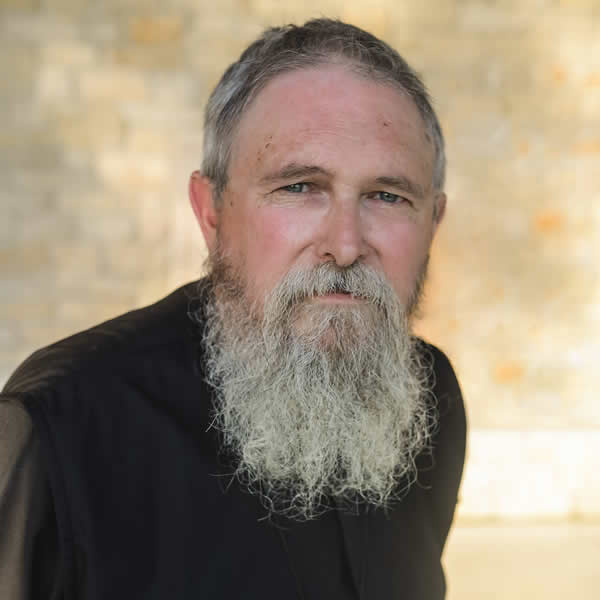
 

About Fr. Stephen Freeman

Fr. Stephen is a retired Archpriest of the Orthodox Church in America. He is also author of Everywhere Present: Christianity in a One-Storey Universe, and Face to Face: Knowing God Beyond Our Shame, as well as the Glory to God podcast series on Ancient Faith Radio.


Posted

in

by

Comments

19 responses to “The Meekness of God”

  1. Sterling Owen Avatar
    Sterling Owen

    What do you make of the meekness of God in light OA the awe-inspiring images that our Orthodox prayers use to protray Christ’s Judgement?

  2. Fr. Stephen Avatar

    Sterling,
    It’s good to pay attention to the whole of Orthodox liturgical imagery. First off, I understand Holy Week/Pascha to be primary (every Sunday is Pascha). St. Paul says, “I’ve determined to know nothing among you except the Christ Crucified.” (1Cor. 2:2). Further, in the hymnography of Holy Week (and elsewhere), we understand that the Cross itself is the Judgment Seat of Christ. There is no competition of images – Judging Christ on the one hand, and meek Christ on the other. That, I think, is ultimately a Protestant notion. There’s no “balance” to be had (that’s Hegelianism).

    The disciples were surprised when they wanted to call down fire from heaven to punish a village that rejected Christ – and Jesus rebuked them. Nothing has changed – except that we imagine the passage of time to its End to somehow create a license for the judging fire to consume them. Christ did not say to the disciples, “It’s not time for the fire.” He said, “You do not know what Spirit you are of.”

    Further, the tradition teaches us that the fire of God is His love – cf. St. Isaac of Syria.

    How all of that will be displayed when we stand before Him is made known to us only as we truly come to know Him now. We cannot know God now until and unless we love our enemies. “He who loves not knows not God,” St. John tells us. I assume that as I stand before the altar of God (which is also called the Judgment Seat), that I am already standing before the Seat of Judgment. The fire of God consumes me. I am judged. My anger, hatred, envy, greed, etc., are consumed. The Service Book tells a priest that before he can serve the Liturgy he must be at peace with all men. It’s fearful.

    But it’s fearful in the sense that I might prefer my sins to the love of God. It is not fearful in the sense that God is my enemy. He is never our enemy. At the foot of the Cross, we hear His voice, “Father. Forgive them. They know not what they do.” The judgment begins when we refuse to hear that love and seek to make God into our own image.

    The most serious word of judgment is the one Christ describes in the parable, “I never knew you.” May we never hear such words.

  3. Luke Nieuwsma Avatar
    Luke Nieuwsma

    Fr, bless!

    “ When I have written on the character of modernity, I have frequently noted that it lures everyone into imagining themselves in the position of management. With this comes an arrogance that assumes a knowledge it does not have or a skill it never acquired. It speaks of power in a way that clearly reveals little awareness of its dangers.”

    I work at a power engineering company, where we have been encouraged to start using AI extensively to solve our problems and write our code for us. It seems to me to be an exact manifestation of the problem you mentioned above – just in the tech world instead of the social world. We’ve been promised that AI will free us from the redundant, hands-on engineering work so that we can focus on ‘solving the bigger problems.’
    ‘Come be the creator of new (digital) universes,’ AI beckons. ‘We will create worlds no one else has even imagined. And we will leave in our dust everyone who cannot keep up – the ignorant, unwashed masses. Come now, or they’ll pass us up! We must do more, faster, bigger, better.’ All the while it takes most of the actual thinking and problem-solving out of our hands, putting results into our hands that we hardly have the knowledge to critique. And for students who use it in college to solve their technical assignments, it is stealing the struggle of learning right out of their hands. They graduate without the most valuable treasure of education – the ability to think and persist through a painfully hard problem until their own mind has figured out a working solution.
    This isn’t entirely connected to your post, and I don’t reject all its uses, but I think AI is in some ways a culmination of the modern: relentless pressure to improve, fear of the competition, an endless march of progress… that slowly sacrifices the minds and degrades the skills of those required to participate in The Machine. All so we can expand our digital existence in the artificial world of the Internet in all its glory.
    What about a real cup of coffee by the wood stove with a good book with paper pages (gasp) instead of searching ChatGPT or scrolling through YouTube?
    Or a real, in-person conversation with a friend at coffee hour instead of a text thread chatting with a funny bot?
    Or spending the morning physically at the Liturgy instead of watching the streamed service in pajamas from the living room?
    We’re being pulled out of our physical existence by modernity into a mind-only existence filled with false promises.
    Forgive the ramble, but it all seems connected somehow.

  4. Fr. Stephen Avatar

    Luke,
    And, like almost everything in modernity, it’s really about someone making more money (and that does not include you). Trillions of dollars are being poured into AI, a matter about which none of us were asked. We’ve simply been told that it’s for our good.

    I believe it will lead to difficulties we’ve yet to imagine.

    Be well. Do the next good thing, and trust in God. Despite whatever terrible things come about, God is in charge of history, including this new chapter.

  5. Eric Avatar
    Eric

    Thank you for this Father Stephen
    I wonder if this learning is harder for some nationalities? As an Englishman, I am acutely aware of this! I was preaching on the Beatitudes yesterday and couldn’t help but note – well let’s say a Modern Western writer – who spent an entire chapter of a VERY popular book, explaining why the meaning of the Beatitudes was that Jesus was explaining that those who in the world’s eyes belonged to God, ALSO included the meek, merciful, poor, etc. Each category required him to turn contortions and give tortuous and tortured examples of why such folk were intolerable, which of course might be the fire of God’s Love for him :- )For Obviously, given the way he had received and taught the faith – His sort of successful person was top of the line . . . Sobering

  6. Dee of Sts Herman and Olga Avatar
    Dee of Sts Herman and Olga

    A timely reflection relating well to our scripture reading for today’s (Sunday November 1) Liturgy.

    Important words given our society’s proclivity for lust of power and to ‘war against evil’.

    Thank you so much for these edifying words.

  7. Fr. Stephen Avatar

    Eric,
    I have spent my life in a variety of situations. I grew up among the lower class (in English terms). Was educated and served among the upper-middle class. I’ve also served, particularly during my time as a hospice chaplain, among some of the poorest in America. My years in Orthodoxy have been a mix – a greater variety of people and situations. There are many difficult circumstances among the poor – but they serve as a fairly clear lens into Christ’s teaching. It’s fascinating to me that Count Leo Tolstoy, born into the upper class of Tsarist Russia, preferred to live among the poor. He was a champion of the Beatitudes.

    Modernity has created untold wealth and distributed it in a fairly stingy manner, often attaching moral judgments to its practices. God give us grace – and have mercy on us.

  8. Rob Avatar
    Rob

    I looked up meek “greek: praus” in Blue Letter Bible app and it said, “Meekness toward God is that disposition of spirit in which we accept His dealings with us as good, and therefore without disputing or resisting.” With the title of this blog being what it is, I thought it would be fitting to mention this.

    In another place, it mentioned that it can mean calm temper… I’m still needing formation with God on that one.

  9. Fr. Stephen Avatar

    Rob,
    In my book on shame, I wrote: “Giving thanks for all things is humility in the active voice.” That sentence was a result of me “doing the math” on “bearing a little shame” (the heart of humility), and the root of giving thanks. There is a fundamental orientation towards life and the world and God involved in actively giving thanks. It is, as the definition you give, accepting the goodness of God in all things. One ideal expression of this is in the Three Young Men in the fiery furnace. In the longer version of Daniel, as found in the Orthodox version, they offer a song while in the flames. It is very prominent in Orthodox liturgical usage (it is sung regularly in Matins), and has a place as well in other traditions. It pretty well covers everything. I think it is difficult to live this out (requiring a change in our heart), but is the single greatest spiritual weapon that I can think of:

    “Blessed art thou, O Lord, God of our fathers,
    and to be praised and highly exalted for ever;
    And blessed is thy glorious, holy name
    and to be highly praised and highly exalted for ever;
    Blessed art thou in the temple of thy holy glory
    and to be extolled and highly glorified for ever.
    Blessed art thou, who sittest upon cherubim and lookest upon the deeps,
    and to be praised and highly exalted for ever.
    Blessed art thou upon the throne of thy kingdom
    and to be extolled and highly exalted for ever.
    Blessed art thou in the firmament of heaven
    and to be sung and glorified for ever.
    “Bless the Lord, all works of the Lord,
    sing praise to him and highly exalt him for ever.
    Bless the Lord, you heavens,
    sing praise to him and highly exalt him for ever.
    Bless the Lord, you angels of the Lord,
    sing praise to him and highly exalt him for ever.
    Bless the Lord, all waters above the heaven,
    sing praise to him and highly exalt him for ever.
    Bless the Lord, all powers,
    sing praise to him and highly exalt him for ever.
    Bless the Lord, sun and moon,
    sing praise to him and highly exalt him for ever.
    Bless the Lord, stars of heaven,
    sing praise to him and highly exalt him for ever.
    Bless the Lord, all rain and dew,
    sing praise to him and highly exalt him for ever.
    Bless the Lord, all winds,
    sing praise to him and highly exalt him for ever.
    Bless the Lord, fire and heat,
    sing praise to him and highly exalt him for ever.
    Bless the Lord, winter cold and summer heat,
    sing praise to him and highly exalt him for ever.
    Bless the Lord, dews and snows,
    sing praise to him and highly exalt him for ever.
    Bless the Lord, nights and days,
    sing praise to him and highly exalt him for ever.
    Bless the Lord, light and darkness,
    sing praise to him and highly exalt him for ever.
    Bless the Lord, ice and cold,
    sing praise to him and highly exalt him for ever.
    Bless the Lord, frosts and snows,
    sing praise to him and highly exalt him for ever.
    Bless the Lord, lightnings and clouds,
    sing praise to him and highly exalt him for ever.
    Let the earth bless the Lord;
    let it sing praise to him and highly exalt him for ever.
    Bless the Lord, mountains and hills,
    sing praise to him and highly exalt him for ever.
    Bless the Lord, all things that grow on the earth,
    sing praise to him and highly exalt him for ever.
    Bless the Lord, you springs,
    sing praise to him and highly exalt him for ever.
    Bless the Lord, seas and rivers,
    sing praise to him and highly exalt him for ever.
    Bless the Lord, you whales and all creatures that move in the waters,
    sing praise to him and highly exalt him for ever.
    Bless the Lord, all birds of the air,
    sing praise to him and highly exalt him for ever.
    Bless the Lord, all beasts and cattle,
    sing praise to him and highly exalt him for ever.
    Bless the Lord, you sons of men,
    sing praise to him and highly exalt him for ever.
    Bless the Lord, O Israel,
    sing praise to him and highly exalt him for ever.
    Bless the Lord, you priests of the Lord,
    sing praise to him and highly exalt him for ever.
    Bless the Lord, you servants of the Lord,
    sing praise to him and highly exalt him for ever.
    Bless the Lord, spirits and souls of the righteous,
    sing praise to him and highly exalt him for ever.
    Bless the Lord, you who are holy and humble in heart,
    sing praise to him and highly exalt him for ever.
    Bless the Lord, Hanani′ah, Azari′ah, and Mish′ael,
    sing praise to him and highly exalt him for ever;
    for he has rescued us from Hades and saved us from the hand of death,
    and delivered us from the midst of the burning fiery furnace;
    from the midst of the fire he has delivered us.
    Give thanks to the Lord, for he is good,
    for his mercy endures for ever.
    Bless him, all who worship the Lord, the God of gods,
    sing praise to him and give thanks to him,
    for his mercy endures for ever.”

  10. Matthew Avatar
    Matthew

    I once heard a story about a prominent Protestant theologian who was sitting next to an Orthodox Church leader in the Sistine Chapel. They were looking at the judgment scene on the altar wall together. Apparently the Orthodox leader leaned over to the theologian and said something like:

    “I don´t understand this. This has no place in Orthodoxy. We don´t see things this way.”

    Is this true? I find myself once again drawn to the theme of God´s judgment after having read Sterling´s comment. I looked at the Orthodox icon of The Last Judgment and even it has a section that is arguably reminiscent of something Michelangelo might have painted.

    Are we to conclude that even if the final judgment is wrought with the fire of divine love, and even if the depictions of the final judgment (both western and eastern) can seem at first glance to be scary and grim – the actual judgment will be merciful and meek?

  11. Fr. Stephen Avatar

    Matthew,
    I think that we fail to understand meekness. If we understood meekness, we would tremble before it. We understand violence and brute force and punishment in those terms. Indeed, we understand it all to well. Admittedly, things such as the icon of the Last Judgment can be “misleading” if we do not understand God’s meekness. It is a call into the depth of the love of God – to allow His love to burn away our violence, our desire to brutally “fix” everybody else.

    Ultimately, we can see the Apostles having learned this deep lesson. They were all martyred (St. John alone surviving being boiled in oil). Their martyrdoms were the triumph of meekness over the powers of this world.

    If meekness seems an easy thing to understand, then none of us have pierced into its depths. Give thanks for all things. The agony that comes with that exercise will begin to teach the heart about meekness.

  12. Matthew Avatar
    Matthew

    Thanks Fr. Stephen.

    Trembling before meekness. Interesting really. I suppose a very hard and unrepentant soul might tremble before the meekness of God. I suppose also even a righteous soul might tremble before the meekness of God. I think all this is showing me just how much I want to hold onto that which keeps me from God´s love – and that makes even the meekness of God a fearful thought.

    I cannot be sure though.

  13. Rob Avatar
    Rob

    So powerful, Fr Stephen. 🥲

  14. Fr. Stephen Avatar

    Rob, et al
    I had a conversation earlier this week with an Orthodox woman (a writer), about the Theotokos. She said that most people, including women, fail to see the power in the meekness of the Mother of God. Our modern feminist models often use distorted “male” patterns of power as an example of what women need and want, etc., giving us yet one more distortion of human being and relationships. The meekness of the Theotokos is enormously powerful. The hymns of the Church use titles for her such as, “O Champion Leader of the Heavenly Hosts!” The power of God is nothing like the secular power of human beings with its violence and brutality. The Cross is called the “Weapon of Peace.”

  15. Rob Avatar
    Rob

    What I appreciate so much from having been exposed to Orthodoxy and your words, Fr, is the centrality of the reality that eternity is here and now. I was at Holy Apostles OCA in Columbia last year, and it was (almost wordlessly) communicated to me that eternity is now.

    He has made a way for folks to stand in the fire, and sing that song, by the mercy, grace, and meekness of Him who is not ashamed to associate with the humble.

    I recently learned that “glory to God for all things” was St John Chrysostom’s last words on his deathbed, while he was standing in the “fire”.

  16. Rob Avatar
    Rob

    So it’s the inversion and redifining of worldly power to the true power in the kingdom of God that was embodied in the meekness and humility of the Theotokos?

  17. Fr. Stephen Avatar

    Yes, indeed! Orthodoxy tends not to issue doctrinal statements when nothing is required (as in a Creed). Rather, its faith is expressed in its liturgies – which is also the right place for expressing the Creed. I would even say, regarding the Theotokos, that she should be understood from the heart, over time. She is the “silent treasure” of Orthodoxy. She is there, but shining primarily from icons and hymnography.

    The rejection of devotion to Mary by Protestantism – which I think came about in a flurry of anti-Roman Catholicism – has probably done more lasting damage than almost any other aspect of the Reformation. There are things about Catholic Marian devotion that do not entirely sit well with Orthodoxy, but that is a conversation to be had in a quiet space rather than in public arguments, I think.

  18. Margaret Avatar
    Margaret

    Thank you for this article and for your comments and responses to the questions and comments flowing from the article. I totally agree with this that you say in your comments here: “If meekness seems an easy thing to understand, then none of us have pierced into its depths. Give thanks for all things. The agony that comes with that exercise will begin to teach the heart about meekness.” I do not understand meekness very well at all, and I realize that several times daily (and I consider that a gift from Our Lord in helping me grow in love in Him). Your advice to give thanks for all things is advice I will take to heart and I appreciate your recommendation. (Your advice is advice that I am receiving from several sources, gently but firmly, so I believe Our Lord is involved in this instruction to my heart.) Glory to God for All Things!

  19. Fr. Stephen Avatar

    Margaret,
    I sincerely mean it when I say that it is difficult. The difficulty especially comes when we want or wanted some other outcome, or when it seems that God doesn’t know what He’s doing. And if our heart is deeply involved in the matter it is compounded yet again. It forced me to come to terms with His Providence in a way that I postponed for years. I love the fact that the 3 Young Men in the furnace said, “Our God is able to save us, O King, but if He doesn’t, nevertheless, we will not bow down to your image.” That “nevertheless” was the cry of faith. “Though He slay me, yet will I trust in Him,” (Job 15:13) is similar. And only the heart can say such a thing – it frustrates our reasoning. It is the voice of love.

    May God give you grace – I think all of this is something He works within us. The voice of thanksgiving is, after all, the voice of Christ speaking in us through the Holy Spirit. It is the life of God.

Leave a Reply

Your email address will not be published. Required fields are marked *


Subscribe to blog via email

Support the work

Your generous support for Glory to God for All Things will help maintain and expand the work of Fr. Stephen. This ministry continues to grow and your help is important. Thank you for your prayers and encouragement!


Latest Comments


Read my books

Everywhere Present by Stephen Freeman

Listen to my podcast


Categories


Archives