How Powerless Are You Willing to Be?

First published in March, 2022

“My spiritual efforts don’t do anything, they merely bring me to the place where I know I can’t do anything, to the place where I am utterly naked before God!” -Fr. Silviu Bunta

Sometimes I run across a quote that strikes my heart so deeply that it takes my breath. The quote above is from Fr. Silviu Bunta, Associate Professor of Old Testament at St. Vladimir’s Seminary, in a retreat talk he was giving at St. Athanasius Orthodox Church in Nicholasville, KY. During the same weekend, I was in Loveland, CO, doing a series of talks on the place of shame in the spiritual life. The nakedness that comes with our shame (from Genesis forward) is a theme that is accompanied by God’s continuing efforts to “clothe” us (from Genesis forward). Our nakedness does not reveal us as “evil.” It reveals us to be who and what we are. Strangely, the mere fact of our being is something that is accompanied by shame. Much of what we name as “civilization” is little more than our collective efforts to clothe ourselves in the various masks that disguise reality, giving us, instead, a culture of make-believe, including a culture of make-believe spirituality.

Several years ago, I wrote an article in which I suggested that moral improvement is largely make-believe. Nothing has changed my mind on the topic. Instead, I am ever more deeply convinced that the path described by Fr. Silviu is quite accurate. It is our moral failings, faced honestly and with humility, that allow us to see the truth of our helplessness and of our utter dependence on God. St. Sophrony described this as “bearing a little shame.” Among the greatest errors of modernity’s false ideas, is the notion of our self-sufficiency and our moral competence. Those same errors convince us that we are able to do for the world what it refuses to do for itself. Every new crisis brings a chorus of voices that demand action while ignoring the fact that each new crisis is a recurring indictment of our own incompetence and moral failure.

Attending to the evil within my own heart (as well as attending to the good) is castigated by some as “Quietism.” There are, instead, impassioned proposals that call us to action (write your congressman and save the world). Moral sentiments and moral actions come to us with the promise of their effectiveness. If enough of us act, we will change the world. This is not true now nor has it ever been. To say this, I know, runs counter to the religion of modernity. To believe that moral sentiment and actions will, in fact, change the world is to subscribe to the secular imagination. It suggests (repeatedly) that politics can save us.

Nothing can be more dangerous in this world than a “moralized” state. When the political project is to make the world moral, then there are no limits to the exercise of power. (How can there be too much good?) In our moralized modern states, we see increasing pressure to silence dissenting voices as threats to the moral order. That state which sees itself as holding a “moral” role has begun to see itself in the place of God. God alone is good (not the state).

The tradition of the faith reminds us, as is espoused by Dostoevsky’s Elder Zossima, that each of us is responsible for the sins of all. Solzhenitsyn said the same thing by noting that the line between good and evil runs in each individual heart rather than between groups of people. There are no “moral” people and “immoral” people. We are each of us guilty for everyone and everything (so says Elder Zossima).

This reality creates a deep burden for the human soul. There is a certain freedom (though it be false) found in being able to shift the blame to others and put them forward as scapegoats. We imagine that making the world a better place can be achieved by fixing the goats (or getting rid of them). At its deepest level, such thinking is nothing more than envy, the “evil eye,” and it is the source of every murder, both individually and collectively.

What about evil in the world? What should we do?

Turn the question around and place it before Christ. Ask Him the question. Is Jesus a Quietist? Did He refuse to make a difference in the world? A common evil of His day could be found quite nearby – that of a Roman Soldier forcing local citizens (including women and children) to carry his military pack. This was a practice loathed by Jewish zealots. Christ’s commandment(!) was, “If someone forces you to go a mile with them, go two miles with them.” (Matt. 5:41) The “extra mile” is not a bit of extra effort we do for a friend, it is a radical act of non-violence in the face of unjust oppression.

Why would Jesus have said such a thing? Is Jesus a pacifist? I think that would be the wrong conclusion. There is no acceptance of evil in His teaching, nor is there a command of non-violence that trumps all others. Christ does not enjoin us to be passive in the face of the unjust demand. Rather, the command to go the “extra mile” is the radical application of the Cross in a situation of practical injustice.

The Cross should not be seen as an event of divine payment, an arrangement that clears the way for us go to heaven. Nor should the Cross be reduced to a mere willingness to suffer patiently. The Cross is the way of life and is constantly set forth to us throughout the New Testament. It is the singular mark of a Christian: “Those who would be my disciples must take up their cross and follow me.”

What is the Cross? The Cross is ironically described as the “Weapon of Peace,” in Orthodox hymns. Though it may appear passive to outside observers, it is the most singularly “offensive” action of power available to us. The Cross triumphs even over death. The Cross is our self-emptying union with the Crucified Christ in which we offer ourselves “on behalf of all and for all.” It is both prayer as well as the inner shaping of our outward responses. When cursed, we bless. When struck, we turn the cheek. These are not symbolic actions, but actions of supreme spiritual power that diffuse the poison begotten in the evil actions of others. These are actions that “atone,” in that they cause an “at-one-ment,” a “union,” between a situation and God. Goodness in anything can only come about through union with God, in that He alone is the source of goodness.

Hesychasm (the way of silence and prayer), is not Western Quietism (just do nothing). It is, however, the very heart of the Orthodox spiritual life in that it is the interior union with the active life of the Cross. Those who imagine (or accuse) such a thing to be a passive way of life only demonstrate that it is a stranger to them. It was a commonplace in the desert fathers to observe that God preserved the world through the life and prayers of but a few righteous ones. They served as the “righteous in the midst of Sodom.” Today’s anti-Hesychasts imagine that the world is preserved by those with armies, social workers, and nuclear weapons married to their “moral” commitments.

O God, save Thy people!
And bless Thine inheritance.
Grant victories to the Orthodox people
Over their adversaries.
And by virtue of Thy Cross,
Preserve Thy habitation.

At the end of the day, we learn that “we can do nothing.” However, in union with Christ, we can do all things. By His Cross, through which we gather into ourselves the whole world, good and evil, righteous and unrighteous, offering ourselves “on behalf of all and for all,” we take refuge in the only life that gives life. No moral project, no matter how well intended, can do the same. God give us the grace to embrace such weakness.
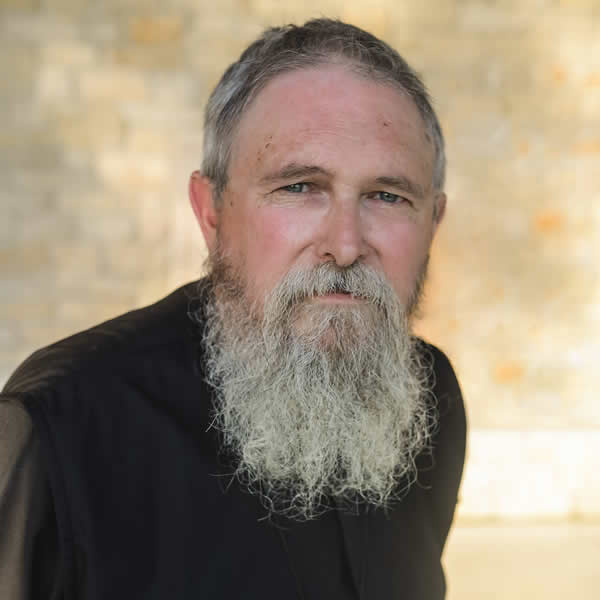
About Fr. Stephen Freeman

Fr. Stephen is a retired Archpriest of the Orthodox Church in America. He is also author of Everywhere Present: Christianity in a One-Storey Universe, and Face to Face: Knowing God Beyond Our Shame, as well as the Glory to God podcast series on Ancient Faith Radio.


Posted

in

by

Comments

52 responses to “How Powerless Are You Willing to Be?”

  1. Simon Avatar
    Simon

    Fr. Stephen,

    I will probably end up commenting a lot on this article.

    First, I don’t remember this article. I must not have been ready for it.

    Second, this quote is dead on: “My spiritual efforts don’t do anything, they merely bring me to the place where I know I can’t do anything, to the place where I am utterly naked before God!” That resonates so much with my experience. It is the place where the Jesus prayer makes the most sense. I think that is the purpose of this life, to bring us to that place in hope.

    There is so much here. You asserted “moral improvement is largely make-believe.” YEP. As you say it is just one more way to clothe the nakedness. It is interesting that God gave the clothes to hide the nakedness. So, it isn’t as if there is no room for things that clothe our shame, but eventually little by little we have to drop the facade of our ego’s sense of self-sufficiency.

  2. William Gall Avatar

    I agree, we can’t trust the secular world to have proper morals. Some of them think it is only right that a male transgender should be allowed to compete in sports with females.
    But what you write can be interpreted that focusing on works, such as almsgiving, relief work, and evangelism are not our priority; facing our sins and our helplessness to correct them on our own (preferably, I might add, by focusing on the goal of unceasing prayer, by means of the Jesus Prayer) is THE priority. But the two great commandments, loving God with all that is within us, and loving one another and our neighbor, for don’t align with the picture you are painting, Father.

  3. Fr. Stephen Avatar

    William,
    To love (whether God or our neighbor) with “all our heart, with all that is within us,” certainly requires digging beneath the surface. It certainly requires actions – and so we act. But, as we go deeper into the heart (all of it), we discover that we do not love God and we do not love our neighbor. We discover that we stand naked and empty. It was said by St. Silouan that we only know God to the extent that we love our enemy. And, of course, our enemy is also our neighbor.

    Perhaps I have not painted enough of the picture in the article…but I have endeavored to push past the surface. Ultimately, we love God when we lay our life down for Him. We love our neighbor when we lay our life down for them. That kind of self-emptying (the whole heart), presses us beneath the surface.

    Perhaps I have failed to indicate this. Thank you.

  4. Simon Avatar
    Simon

    William,

    It aligns perfectly.

    I am not seeing the contradiction. Can you, please, elaborate?

    In my understanding the effort for moral improvement could entail a subtle trap of working against love of God and neighbor: self-righteousness. There is a fallacy that is often committed in discussions like these. The fallacy of affirming the consequent. We think that by moral improvement we have done the thing that makes us better. We haven’t. We do not become “better” by conforming to “better” expectations. We of course have responsibilities that must be done whether we like it or not, and if someone places alms giving in that basket I wouldn’t protest.

    As I understand it, moral improvement misses the point entirely. In fact, I don’t think we can improve. We just become better house trained. That’s the Law. Behaving “better” does not make us “better.”

    Jesus says that a good tree produces good fruit. So, we shouldn’t force the issue with doing “good” things. We focus on those things that allow us to become more pliable in the hands of a loving God that can make the tree “good” so that the fruit follows the from ontological well-being. The things we do should have the quality of Mary’s “I am the servant of the Lord; let it be to me according to your word.”

    Our praxis should be one of ” Let it be to me according to your word.” If it isn’t that, then it is nothing–or at least so it it seems to me.

    Having said that hungry people need to eat and where we can help we should.

    I am not treating this with a lot of nuance, but those are just my thoughts.

  5. William Gall Avatar
    William Gall

    I do realize we are called to cleanse the inside of the cup, or at least trust that God will do it. And I realize that I don’t know how proud and selfish I am. and that I don’t love the Lord with all that is within me. Laziness! When I read St. Aemillianos that unless I’m thinking about God all the time, I don’t love Him, I became indignant. But love is more than I’m making it to be.
    Because of my 4 years in an abusive cult (50 years ago) the words of those hymns and counsels that call us to condemn ourselves bring back bad memories. But I do prepare for my confessions, and call myself to account in our evening prayers (silently). Was your main point, Fr. Stephen, that to prioritize social injustice warfare is a detour from our Way of the Cross, and that self-emptying and forgiveness on an individual basis is more to the point? I can understand that, having come to see the futility of working for societal change.

  6. Fr. Stephen Avatar

    First off – thanks for sharing about the cult abuse experience. It deeply colors much that we hear in the texts of the Church, making it hard for us to hear them without reacting. I have an article, The Erotic Language of Prayer, that you might find of interest.

    I will say that, for whatever reasons, a number of our regular visitors on the blog have had some abusive religious backgrounds – I work to be sensitive about that.

    You’re close to describing my point – that works (such as social justice warfare and the like) can simply be a way of not dealing with the healing and transformation of the heart – even when trying to do good. America has been famous for this sort of thing. The Orthodox tradition points us towards the inner life – not to avoid the outer – but recognizing that we all need healing. The disciples, in their zeal, were ready to call down fire on those who resisted Christ at one point. He rebuked them. They weren’t ready yet.

    But – you did well to push back on something that was a question for you. It’s welcome here, as are you!

  7. Rob Avatar
    Rob

    Am I rightly understanding this in these terms?

    It isn’t about trying harder to be good or to master anything whether myself or society. It’s about becoming good through dependence and becoming partakers of Christ’s goodness. And that it always takes the energies of God to produce true righteousness, true goodness.

    I’ve not been able to ever manufacturer goodness for myself or those around me. But I have been “moved with compassion” and had a choice to offer my body as a living sacrifice.

    I think this is at the heart of my conflicts within religion at times even to the point of giving up and dropping out of Christian communities. It seems the true essence of worship is offering your body as a living sacrifice every moment, but worship can get redefined to be all sorts of things depending on what stream of Christianity your swimming in. It’s like there’s always a mold cast and if you don’t fit it or conform, then your considered illegitimate. But the mold that is cast may or may not pertain to true righteousness: namely self-emptying love in union with Christ.

    It’s like it can all become words on our mouths but our hearts be far from Him.

  8. Fr. Stephen Avatar

    Rob,
    I think you’ve said it well. May our hearts be His!

  9. Angie Dicken Avatar
    Angie Dicken

    Father Stephen,

    I appreciate your blog and truly glean from your thoughts. I hesitate to comment because I probably don’t completely understand, and I have a difficult time being completely vulnerable in these spaces where I feel like the dumbest in the room!

    I confess, my inner life is affected by the secular too often. I am struggling greatly with how my gut responds to current affairs—and I understand that my initial response goes much deeper than a civil duty (but I do feel strongly about civil duty since we are living in this world and are raising our children in it too). Your words remind me that I am out of balance—I allow my spiritual well-being to be knocked off kilter by the secular—the fear, anger, and frustration are aroused far too frequently these days, and it is only in my inner life that I can repent this and find a better way.

    But I wonder, do we still act? Do we still use our intellect and understanding of society to allow us to be part of the process? It is not for spiritual health or ushering in a moral regime, but appropriate civil action to maintain a decent societal structure for our neighbors and fellow humans…

    Maybe I fail to completely tease my spiritual from the modern mindset when I allow the secular to affect my spiritual health. But, sometimes, because of my understanding of Orthodoxy, I feel led to act for the common good (not with the delusion that I am going to save the world, but just contribute in a positive way). So, my morals do affect my engagement with the secular, however, I never expect the world to be moral because of my effort. It just seems the right thing to do (do I sound American yet?;))

    Forgive me if I have completely missed the mark on this, but I have struggled for a very long time, and this was in my inbox during a particular low.

    Thank you so much for reading,
    Angie

  10. Fr. Stephen Avatar

    Angie,
    I frequently feel that the secular world is a “rigged game.” The words used and the institutions invoked are often little more than a smoke screen and the real actions are behind the curtain. I’m an old man and I’ve watched many cycles across the years…with something of a steady decline into various forms of madness – to be honest. Not that I do not see bright islands now and again.

    That describes my view of the secular landscape. Secularism is a false flag and quite misleading. It can never deliver on its promises.

    That said, there is our “real” life. People waking up and going about their days – working, raising families, etc. There is a great deal of sanity across the board. Normalcy is sort of built into things – a default position – which is why it remains despite the crazy efforts of those who want to revolutionize it out of existence.

    The most “political” act any of us can perform is to love. Love God, love our neighbor, love our children. Do the good that is at hand. Political action in the secular sense is about “influence.” Influencing others to do one thing or another. Sometimes it is moderately effective – but you never actually can be sure.

    What my heart has come to rest is prayer, and doing good in whatever ways I can. I vote, but I have no trust in the system to do good. There are institutionalized forms of evil in our culture. I rejoice when I see good things come about. But over all of that, I trust in the providence of God. “You meant it to me for evil, but the Lord meant it to me for good,” Joseph said to his brothers who had sold him into slavery in Egypt. Though various forces seek to do us harm, God constantly works to do good for us all. And I trust in that. He preserves us. That faith prevents despair.

    In my daily life, I work to give thanks always and for all things. This is a great spiritual weapon that drives away despair. We spend far too much time watching the news and reacting in our guts. Again, it has very little to do with what is really going on. Do the next good thing – the thing is at hand. God is in charge of history and its outcome. We are not inventing this ourselves.

  11. Helen Avatar
    Helen

    In his book Journey to Reality, Zachary Porcu uses the analogy of an electrical power strip plugged into the wall. “The power strip has power because it draws that power from the source, in the same way that Adam has life because he receives it from [God]. Trying to become one’s own God is like unplugging the power strip from the wall and plugging its cord back into itself.” He goes on to acknowledge that a cell phone can stay powered for awhile but it too eventually runs out. I have felt like a cell phone, thinking that I can get a boost when needed but ultimately thinking it was my own power. Continuing with this electrical metaphor, I think the political machine (or any other social “machine”) seems to run on some power and can be compelling but unless it’s plugged into the true source, it will eventually run out.

  12. Kim Avatar
    Kim

    Fr. Stephen,

    A variation on questions others are asking here: Are we commanded to feed the poor, the hungry and the widow? If so, how are we to think of these actions without making them a moral project to save the world?

  13. Kim Avatar
    Kim

    Fr. Stephen, I sent my question before reading your article, The Erotic Language of Prayer, in which you answer my question quite beautifully:

    <>

  14. Rob Avatar
    Rob

    Thank you for those images, Helen. Very helpful.

  15. Hélène d. Avatar
    Hélène d.

    Thank you, P. Stephen, for your article ; I had read it before, yet today I discover it with the freshness of a first encounter and great enthusiasm, for it is truly rich !
    In one of his lectures, Fr. Silviu Bunta (blessed be his important work !) speaks words that lead to a profound stripping-away — something that might seem difficult to some. Yet ‘experience’ confirms it, and life and joy can flow into the very heart of this ‘powerlessness’.
    “Without an existential ‘crisis’, without a spiritual experience, we cannot access true Scripture or a true relationship with Christ ; God knows that we humans have the capacity to turn even the Gospels into an idol — even Christ Himself into an idol — and to relate to Him as if He were not real, but merely a sum of beliefs, ideas, and practices. Yet the closer God draws to me, the more diminished I feel, to the point where I eventually pass through the ‘eye of the needle’; and therein lies my fulfillment and my salvation. One might say that the spiritual life even tends toward death ; faith seeks to die ; thus, God alone lives.”

    One is reminded of St. Sophrony, who uttered this remarkable statement : “To live as a Christian is impossible; one can only die as a Christian.”
    Who can hear this — and, above all, live it to the full ? There is much to ponder in these words…

  16. Fr. Stephen Avatar

    Helen,
    Political structures are, to a certain extent, “necessary evils” allowed by God to protect us from chaos. Historically, they have rarely done good. Governments that have done “good” are mostly those who did less evil than others. There are reasons. Political structures work through force, regardless of how it is described, it is still force. And you can only do so much with force. Mostly, you can prevent someone from doing evil, but you cannot really compel them to do good.

    Modern governments, starting with America, have been built on modern rhetoric which was drawn from the Enlightenment project which was never more than a secularized version of Protestant Utopianism. That is, it has always been built on false, heretical ideas. It could have been a lot worse. But it woefully falls short of its own rhetoric.

    That, for me, is the danger inherent in “make the world a better place” rhetoric. We haven’t even been able to manage it as a decent place to raise a child. And there is very little repentance – just blame and more rhetoric.

    At the time of the rise of the secular state, we began to speak about the state with the same language that had been used to speak about the Church prior to that. The religion of secularism is the state. The Church is tolerated, at best. But, make no mistake, the state is the religion of secularism.

  17. Fr. Stephen Avatar

    Kim,
    I’m glad you found the article helpful! There is no commandment that tells us to save the world. Take care of widows, the poor, the hungry – and let God do the math. But the building of these “better world” structures is just modern versions of the Tower of Babel. They are structures that will someday support the antichrist (and frequently do so already).

    We must learn humility. Goodness is never “over there” or “someday.” It is always right at hand and now.

  18. Matthew Avatar
    Matthew

    How powerless am I willing to be?

    This article seems to be suggesting that the call to carry the Cross; to be in solidarity with the Crucified Christ is the path to true union with God. It seems the only real way to defuse a violent situation or any violence in general is to be willing to allow the violence to have a perceived victory.

    I still fear death. To lay down my own life in a violent situation seems utterly impossible. I have built walls and boundaries around myself. I still care for the protection of my personal rights. I love the idea of pacifism, but am too scared to become one myself. If actions of big sacrifice actually are atoning in nature, then I am missing out on great opportunities for reconciliation.

    It all seems futile really, but I still love Jesus.

    Lord have mercy.

  19. Fr. Stephen Avatar

    Matthew,
    In the Lord’s Prayer we ask, “Lead us not into temptation.” It carries the meaning of “save us from the time of trial.” Across the stories of the martyrs there were those who were afraid and yet found grace to face what was coming. We don’t walk around with such in our minds all the time. It is not good to imagine these things and imagine what we could or could not do. Grace is not imaginary. That’s something I’ve learned the hard way.

    But, we will all die. I do not imagine for myself what that will look like, though aging has a way of whispering suggestions every day.

    Love Jesus. Ask for grace for each day. It’s enough.

  20. Matthew Avatar
    Matthew

    Thank you Fr. Stephen.

    What do you mean you found out the hard way that grace is not imaginary?

  21. Fr. Stephen Avatar

    Matthew,
    I’ve had situations over the years in which I was “stretched” beyond what I would have imagined I could bear. With prayer, I discovered there was a grace to do what I could not have imagined. But I’ve also wasted many hours dreading and anticipating things that never took place, in which the “suffering” was simply my imagination.

    Observing this, it has helped me tone down the imaginary and focus on the real. I’m not perfect by any means at doing this – but the lesson that grace is real and for the real has held up.

  22. Matthew Avatar
    Matthew

    Thanks again Fr. Stephen.

    Seems like wise counsel.

  23. Dee of Sts Herman and Olga Avatar
    Dee of Sts Herman and Olga

    “Love Jesus. Ask for grace for each day. It’s enough.”

    I need to remember this too!

  24. Norman Coppola Avatar
    Norman Coppola

    Father, our weakness and our vanity is plain, but we can “change the world” (not “save” it) for the better in many, many ways, and we should work for that. It is not about “moral improvement” but love and mercy, some relief from suffering, a chance to enjoy life’s blessings. What came across to me in your article is that our efforts to make the world better are useless. You can’t mean that. To the contrary, whether by one desert father praying, or a young person’s active resistance to authoritarian cruelty, or a health worker bathing an invalid, or any other effort to make peace on earth, is the way of Christ. Our efforts are vital.

  25. James Bell Avatar
    James Bell

    Your quotation of Dostoevsky, “There are no “moral” people and “immoral” people. We are each of us guilty for everyone and everything (so says Elder Zossima).” Was particularly meaningful to me. This morning in my prayer time, I was considering how often as a believer I am complicit in the sins of the world, even though I truly don’t want to be. In an urbanized world, with specialized labour, we often have no control. As your title suggests, we are often powerless. At the same time, I can only truly turn to God and tell Him that I do not wish to be complicit. Thankfully, He sent Jesus to bring us forgiveness.

  26. Fr. Stephen Avatar

    Norman,
    I very much mean to say that “we cannot make the world a better place.” It is, however, quite true that we can “change” the world. Our actions have an effect. If I feed a hungry person, they are no longer hungry (for that time) and that is a good thing.

    However the narrative of the “better world” is strictly modern, based on nothing in the Scriptures, and is misleading, rooted, as it is, in various Utopian ideas that flowed from the Reformation (particularly in its radical forms).

    Our speech matters and our words matter. We keep the commandments of Christ – which includes being a “peacemaker.” But we’re not working on an improvement model, by an stretch of language. That is not the character of the teachings of Christ. Feed the hungry and “abolish hunger” are two very different things. Modernity majors in the latter and has taught us to think it such utopian notions, doing much damage in the process.

    I wholeheartedly subscribe to the not uncommon belief among many of the Fathers that God sustains the world through the prayers of a few. We are to be Abraham, interceding for God to spare Sodom and Gomorrah (cf. this article). But, I think it is misleading to think about all these things in cumulative terms. Do the next good thing, keep the commandments, and let God do the math. He alone knows and judges the outcome of our efforts. We do not.

  27. Fr. Stephen Avatar

    Norman,
    A quick addendum. I am deeply opposed to the philosophy of Utilitarianism (“doing the greatest good for the greatest number”). It dominates modern thought and is opposed to the gospel, despite how kind it sounds. I have now written for years on this point and why, as Christians, our focus is on Christ and His commandments, not on secular notions of improving the world. The worst regimes in human history all described themselves in utilitarian terms.

  28. Dee of Sts Herman and Olga Avatar
    Dee of Sts Herman and Olga

    Father,
    My first degree was in philosophy. I was required to study “ancient Greek” philosophy as well as “modern” (post-Kant). Anything in the medieval period was excluded as “non-philosophical” and non-applicable. That stance removed modern philosophy from important cultural contexts and history.

    Even though I was quite young during these studies (18-21 years old), it was apparent to me, given the different culture I originally grew up in, how much utilitarianism dominated American philosophy and, based on personal experience, seemed very Protestant and, at the same time, disingenuous. It had seemed to me, even in my youth, that the ‘greatest good’ always worked for a select group of people—the ones who had, or had the means to wrangle for, power.

    Needless to say, I ended up focusing my degree on “ancient” Greek philosophy. Providence at work again!

  29. Fr. Stephen Avatar

    Dee,
    Utilitarianism is a purely modern concoction. However, it has moved from philosophy to just sound like “common sense.” I suspect that my writings are one of the few places anyone ever hears the notion of a better world and improvement questioned, much less opposed as contrary to the gospel. So, I’m not surprised that I get push back on the topic. I have to confess that it’s not original with me – it was something that came out of my graduate studies when I was confronted with the first serious critique of modernity that I’d ever heard. That was nearly 40 years ago and I’ve seen nothing that suggests that Utilitarian ideas are other than I have described them.

    I think that most people are stuck with the notion that if we are not working to change things or make things better, then we won’t work at all. It is modernity that invented the idea of measuring society and suggesting there was progress or failure. The saints through the ages never thought in those terms in that there were no attempts to measure such things or to view the world as an object of measurement.

    The saints simply did things because they were obeying the commandments of Christ. They did the “good” thing because it was “good.” And, I ask, is that not enough? We take ourselves far too seriously – and get caught up in pride over our efforts. Christ taught us to say, “At the end of the day we are unprofitable servants. We have only done what was asked of us.”

    The reality of the world is actually only manifested in the heart – and the heart cannot be measured. God alone knows it. I do not know, as a writer and speaker, what the effects of my work might be. Sometimes, I get notes and words of thanks from people who describe its help, etc., in their life. For that I’m grateful (to have been of help), but I know that God is capable of using anything at all to save us and help us. I know that I have a blessing to do what I do and that is enough. Anything else, I am convinced, would lead me astray – into pride or into error.

    Do what the saints did. It’s enough. 🙂

  30. Dee of Sts Herman and Olga Avatar
    Dee of Sts Herman and Olga

    Thank you Father for your edifying response! Indeed it’s hard for us ‘fish’ to see the water we swim in. It’s helpful to consider what is important to the saints. More often than not in my readings, it is how to pray or to acquire the Holy Spirit through a humble heart.

    I’m ever grateful for your experience and blessing to guide us in this blog!

  31. Rob Avatar
    Rob

    As you said, it’s the temptation to attend to controlling external outcomes rather than attending to self-control, which is a fruit of the Holy Spirit. That’s where accepting our limitation and powerlessness comes in. We need the Holy Spirit to be self-controlled.

    I worked for an evangelistic organization that veered into attempting to blend politics with Christianity with hopes of legislating true righteousness to America. There was only a few people there that saw anything wrong with it. The scripture that helped me at the time was:

    (Acts 1:6-8 NKJV) Therefore, when they had come together, they asked Him, saying, “Lord, will You at this time restore the kingdom to Israel?” And He said to them, “It is not for you to know times or seasons which the Father has put in His own authority. “But you shall receive power when the Holy Spirit has come upon you; and you shall be witnesses to Me in Jerusalem, and in all Judea and Samaria, and to the end of the earth.”

    I’ve always heard this as “what God chooses to do with the “big picture” isn’t your business. Your business is to be full of the Holy Spirit and be a witness and let God do what He will with it.”

  32. Rob Avatar
    Rob

    …And it’s in this context that the quote from Saint Seraphim of Sarov is so perfect to me:

    “Acquire the Spirit of peace, and thousands around you will be saved”.

  33. Rob Avatar
    Rob

    … Sorry I’m so wordy, but this really hits a nerve.

    I’ve also been a part of Christian communities that have a “vision” for how they want to change the world and they said about to work at it. What I’ve seen is that it ends up being manipulative and pressuring people to do what they really don’t want to do because it bypasses repentance and internal transformation of the heart.

    Dallas Willard would frequently say that in his time as a pastor, he used to think it was his job to pressure people to do things that they really don’t want to do instead of helping people become the kind of people that naturally want to do good.

  34. Fr. Stephen Avatar

    Willard’s statement is spot on.

    God is in charge of the outcome of history. Modernity has sown terrible seeds in the hearts of Christians. But it was Christians who invented secular modernity. It’s why it is so easy to just slip into it.

    The witness of Orthodoxy and the lives of the saints are deeply helpful, I think. But, the thoughts of secularism (and our control of history) are very subtle and creep back into us. I think that when we stop such thoughts, we hear the whispers, “But then everything will be out of control and evil will be everywhere…aren’t we supposed to resist evil?” Actually Christ said, “Resist not evil,” (Matt. 5:39) We should read the Sermon on the Mount at least once a week or so. It will convert the soul.

  35. Rob Avatar
    Rob

    😁 That’s funny and oh so true!

  36. Matthew Avatar
    Matthew

    I am taking a short course now entitled “Empire and Exile”. In short, the course discusses the empire we all live in and how the church should exist in such a context. Most of the people are Protestant in the group but it is an ecumenical undertaking.

    Some of the discussion over the first week has been about how do we live the “kingdom” and its values from a place of exile in a world dominated by empire. I am thankful, Fr. Stephen, for what I have learned here over the years. It is helping me present a side of the coin many in this group I assume have not considered or even seen.

  37. Fr. Stephen Avatar

    Rob,
    Sorry, the joke you saw (I deleted). But it is true, indeed.

  38. Fr. Stephen Avatar

    Matthew,
    I first encountered a serious critique of modernity when studying under Stanley Hauerwas at Duke. At the time I thought, “Why have I never heard this before? It would have been so welcome and so helpful years ago!” It’s not really “new” – it’s just the Sermon on the Mount and a critical examination of the origins and workings of modernity. But most Christians, including most Orthodox, have not been exposed to that critique. There are certainly more now. When Kingsnorth’s book (Against the Machine) shot up the NY Times best-seller list, I was amazed. But the critique only works (I think) from inside the Church. It is within the hope of the true Kingdom of God (which cannot be built by anyone – that’s a theological mistake) that we can live the gospel and trust that God is in charge of the outcome.

    The notion that we know how history is “supposed” to turn out is nonsense. Perhaps tomorrow, someone mashes the Button and history comes to an end. Only grace has prevented that from happening already. We have actual commandments to “take no thought for the morrow.” But people think Jesus surely cannot have meant what He actually said. Surely…

    And so we anxiously think and plan about a tomorrow as if we were doing a good thing.

    I will add to this that the world’s poor never ask these questions – they live day-to-day by necessity. Only the Middle Class think such things. The Rich think that they themselves are the outcome of history.

  39. Matthew Avatar
    Matthew

    Best book you read by Stanley Hauerwas on the topic of modernity?

  40. Fr. Stephen Avatar

    Matthew,
    Perhaps, A Hauerwas Reader. He never wrote a systematic presentation of his thought. He is something of an odd bird – eclectic in his influences. He was very pro-life (and vocal about it) – which was a rare thing in a liberal academic setting. Mostly, it was the day-to-day conversation with him and others in that context that made me aware of the topic of modernity and its importance. It’s still too neglected.

    This is an interesting article: https://firstthings.com/preaching-as-though-we-had-enemies/

  41. Byron Avatar
    Byron

    The Orthodox tradition points us towards the inner life – not to avoid the outer – but recognizing that we all need healing.

    So helpful! Thank you (everyone) for this and the excellent discussion!

    Jesus says that a good tree produces good fruit. So, we shouldn’t force the issue with doing “good” things. We focus on those things that allow us to become more pliable in the hands of a loving God that can make the tree “good” so that the fruit follows from ontological well-being. The things we do should have the quality of Mary’s “I am the servant of the Lord; let it be to me according to your word.”

    Our praxis should be one of ” Let it be to me according to your word.”

    Simon, these are excellent thoughts! Thank you.

  42. Matthew Avatar
    Matthew

    Dear Fr. Stephen,

    It was an interesting article indeed. The story modernity is telling itself and teaching to its children is a lie.

    We are created by God and we belong to God. Moderns do not want to hear this by and large.

  43. Matthew Avatar
    Matthew

    What is the real difference between modernity and postmodernity – Fr. Stephen?

  44. Fr. Stephen Avatar

    Matthew,
    I think it’s just modernity talking about itself as if it was making progress.

  45. Matthew Avatar
    Matthew

    Thanks Fr. Stephen

  46. Simon Avatar
    Simon

    Helene d.

    For three days I have been thinking about “One might say that the spiritual life even tends toward death ; faith seeks to die ; thus, God alone lives” and “To live as a Christian is impossible; one can only die as a Christian.”

    This encapsulates something, I think, we all understand, but probably struggle to articulate. Of course we cannot live as Christ lived–of course not! It is actually such a relief to say the words. We are baptized into Christ’s death so of course what we seek is a Christian ending to our lives. We live new lives, but they are lives that are lived in communion with the death and resurrection of Christ.

    This is what it means to pick up your cross. This what it means to become a living sacrifice. This might be going too far, but I am going to say that we were never intended to live as Christ lived, but to die as Christ died.

    It has brought considerable comfort to me in my present powerlessness.

  47. Carmelita Lindner Avatar
    Carmelita Lindner

    Dear Father Freeman, I lost my Facebook page about 6 Months ago. I continue to be blessed reading your writings here. Than God, it is possible.

    Carmelita Lindner.

  48. Fr. Stephen Avatar

    You’re most welcome!

  49. Hélène d. Avatar
    Hélène d.

    Simon,
    Thank you for your reflections, as well as for those previously shared by Byron — they are entirely pertinent.
    Discussing death — within ourselves, within our faith, and throughout our journey of life in Christ our Lord — is a delicate matter. The words you cite could easily be misunderstood, misapplied, or distorted — or even perceived in a negative light, which is certainly not the intention ; quite the contrary. As we move forward, step by step, through the reality of our lived experience, our intuition transforms into an unshakable certainty regarding the Life to come — a Life that inevitably emerges from a redemptive death. A profound trust in the Lord takes root and grows stronger.
    I am aware that there are things here that are so delicate to express — and who am I to speak about them ?

    You write : “We were never meant to live as Christ lived, but rather to die as Christ died.” I would venture to suggest that we are, in fact, called to draw deep inspiration from the life of Christ — as He lived it, in His humanity, as described in the Gospels — so that, being strengthened ourselves, we may follow Him even unto His death ?

    (I hope the English translation isn’t too incorrect…)

  50. Angie Dicken Avatar
    Angie Dicken

    Thank you, Father Stephen.
    I appreciate your response. There is so much messaging out there (probably one of the biggest downfalls of our society these days), it’s difficult to know how to respond–both literally and inwardly. The battle is ever present.
    Angie

  51. Fr. Stephen Avatar

    Hélène, Simon,
    I think of St. Paul’s words, “I die daily.” The life of Christ, when examined closely, is the Cross at every turn. The iconography of His Nativity, artistically rhymnes with the Descent into Hades. The whole of His life is the Cross. But, we must remember that the Cross is also life – the true Life. The Cross is a graphic display of love. “The weakness of God is stronger than death.” That is the paradox of our existence.

  52. Hélène d. Avatar
    Hélène d.

    Thank you, Fr. Stephen – “The Cross is a striking manifestation of love”!
    We live out our faith amidst constant and fortifying paradoxes that keep us awake — we die, and yet behold, we live — for there is nothing upon which we can truly lean apart from Christ our Savior ; “for behold, through the Cross, joy has come to the whole world” ! (Ikos from the Paschal Canon) — “the holy and life-giving Cross of the Lord” !

Leave a Reply

Your email address will not be published. Required fields are marked *


Subscribe to blog via email

Support the work

Your generous support for Glory to God for All Things will help maintain and expand the work of Fr. Stephen. This ministry continues to grow and your help is important. Thank you for your prayers and encouragement!


Latest Comments

  1. Thanks Fr. Stephen, but I don’t consider non-violence/pacifism to be an emotionally driven abstraction. It seems rooted in the person…


Read my books

Everywhere Present by Stephen Freeman

Listen to my podcast


Categories


Archives