Beauty – And the Face of God

Everything is beautiful in a person when he turns toward God, and everything is ugly when it is turned away from God.

Fr. Pavel Florensky

+++

In thinking about darkness and light – and their role in our apprehension of the truth – I cannot but think about Beauty, which is a primary place in which the light of God is made manifest among us (if rightly perceived). The heart that is full of darkness cannot truly perceive beauty: the heart which is full of light, cannot help but perceive it. Perhaps a measure of our heart can be found in how we perceive the world around us: is it primarily a place of beauty or darkness? It is difficult in the fallen world to maintain a witness to beauty. And yet those places where it is made manifest to us are so poignant, so piercing, that I think we cannot and should not remain silent about them. Perhaps they should be shouted from the rooftops! 

The quote from Pavel Florensky contains a world of truth, indeed, from a certain perspective it contains the whole of the Gospel. It is both commentary on how we see the world (as beautiful or ugly) or how we are within ourselves. The ugliness of sin is one of its most important components – and the inability to distinguish between the truly beautiful and the false beauty of so much of contemporary life offers a profound diagnosis of our lives and culture.

To say that God is beautiful carries insights into what we mean by knowledge of God. “How do we know God?”  is one question. But if we ask the question, “How do we recognize Beauty?” then we have also shifted the ground from questions of intellect or pure rationality and onto grounds of aesthetics and relationship (communion). The recognition of beauty is a universal experience (as is the misperception of beauty). But the capacity to recognize beauty points as well to a capacity within us to know God (if Florensky is right). I would offer that this capacity is itself a gift of grace – particularly when we admit that the recognition of beauty is subject to delusion.

In a famous passage from The Brothers Karamazov, Dostoevsky’s Dmitri Karamazov has this to say on beauty as well as delusion:

Beauty is a terrible and awful thing! It is terrible because it has not been fathomed and never can be fathomed, for God sets us nothing but an enigma. Here the boundaries meet and all contradictions exist side by side. I am not a cultivated man, brother, but I’ve thought a lot about this. It’s terrible what mysteries there are! Too many mysteries weigh men down on earth. We must solve them as we can, and try to keep a dry skin in the water. Beauty! I can’t endure the thought that a man of lofty mind and heart begins with the ideal of the Theotokos (Madonna) and ends with the ideal of Sodom. What’s still more awful is that a man with the ideal of Sodom in his soul does not renounce the ideal of the Theotokos (Madonna), and his heart may be on fire with that ideal, genuinely on fire, just as in his days of youth and innocence. Yes, man is broad, too broad, indeed. I’d have him narrower. The devil only knows what to make of it! What to the mind is shameful is beauty and nothing else to the heart. Is there beauty in Sodom? Believe me, that for the immense mass of mankind beauty is found in Sodom. Did you know that secret? The awful thing is that beauty is mysterious as well as terrible. God and the devil are fighting there and the battlefield is the heart of man.”

Dostoevsky’s paradox, that “beauty,” for the mass of mankind, is found in Sodom, is a paradox that can hold two meanings. Either it can mean that even the corrupted “beauty” of Sodom can be redeemed (this is not Dostoevsky’s own intention) or that our heart can be so corrupted that we perceive the things of Sodom to be beautiful (closer to Dostoevsky’s point). We can also bring in a third – that of Florensky quoted above – that the “beauty” found in Sodom is corrupted precisely because it is turned away from God. It’s repentance can also be its restoration of true beauty.

I prefer this third thought (which is more or less the same as the first) in that it carries within it the reminder that when God created the world He said, “It is good  or beautiful”  – both the Hebrew and the Greek of Genesis carry this double meaning.

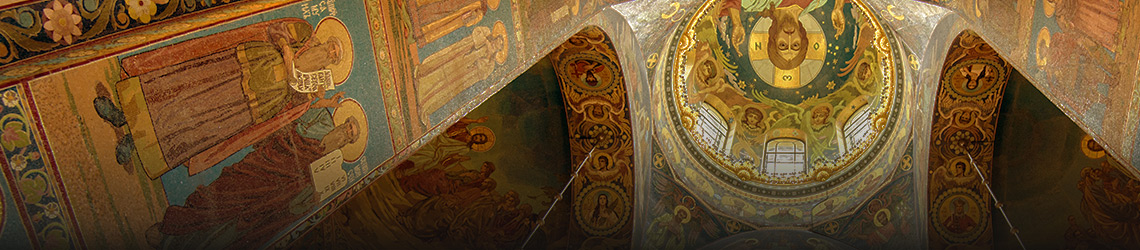
We were created to perceive the Beautiful, even to pursue it. This is also to say that we were created to know God and to have the capacity, by grace, to know Him. Consider the evangelical imperative: “Go and make disciples.” What would it mean in our proclamation of the gospel were we to have within it an understanding that we are calling people to Beauty? The report of St. Vladimir’s emissaries to Constantinople that when they attended worship among the Orthodox they “did not know whether we were on earth or in heaven. We only know that of a truth, God is with them,” is history’s most profound confirmation of this proclamation.

St. Paul confirms the same when he describes the progressive work of our salvation as “the knowledge of God in the face of Jesus Christ.” If we would have our hearts cured of the illness that mistakes Sodom for the Kingdom of God, then we should turn our eyes to the face of Christ. There the heart’s battle will find its Champion and beauty will find its Prototype.
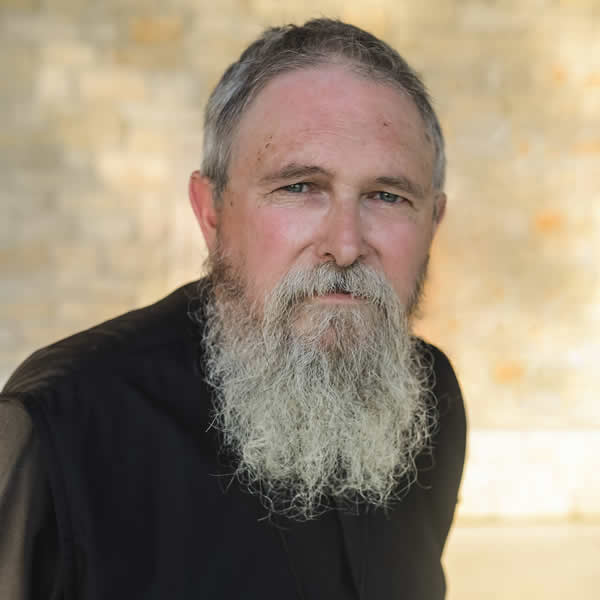
About Fr. Stephen Freeman

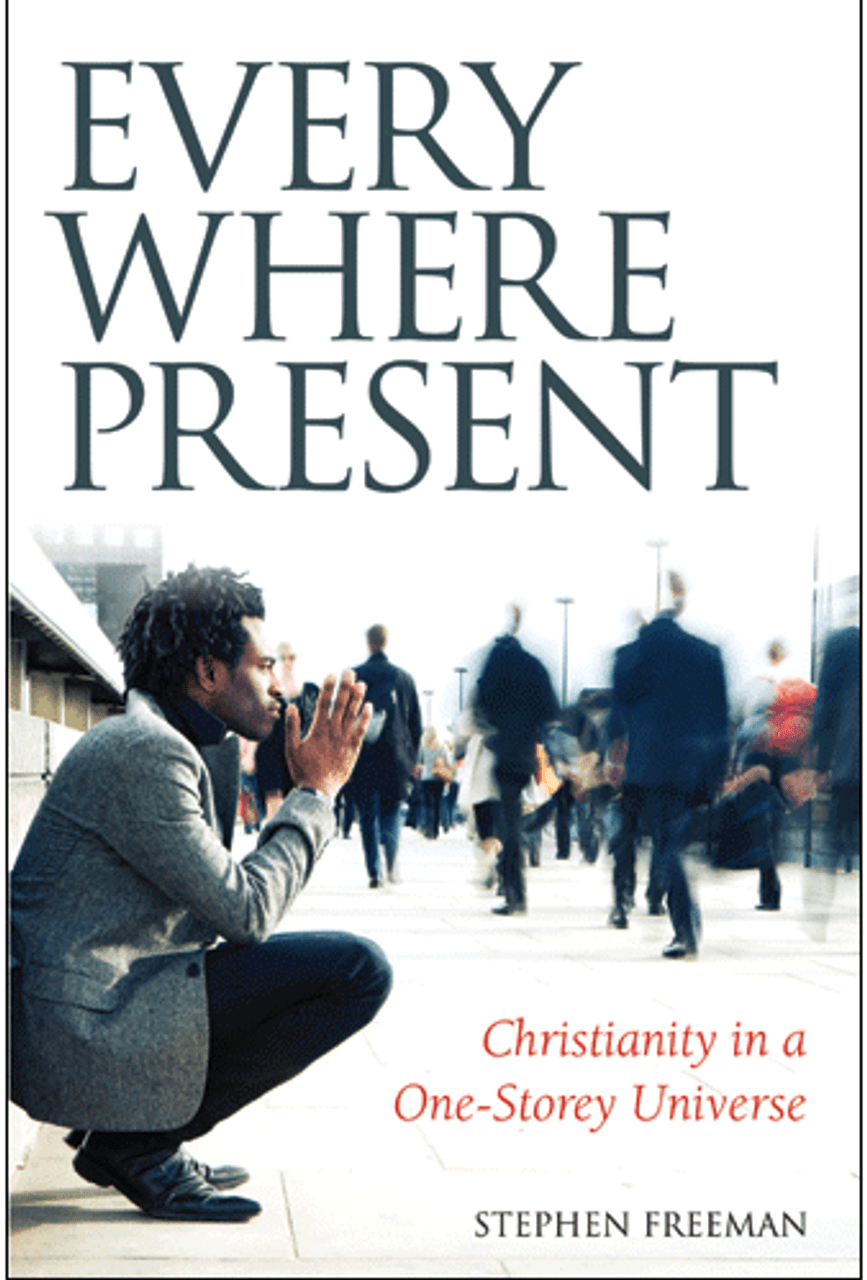
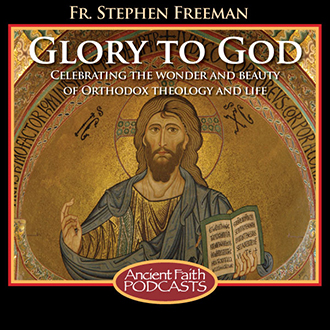
Fr. Stephen is a retired Archpriest of the Orthodox Church in America. He is also author of Everywhere Present: Christianity in a One-Storey Universe, and Face to Face: Knowing God Beyond Our Shame, as well as the Glory to God podcast series on Ancient Faith Radio.


Posted

in

,

by

Comments

23 responses to “Beauty – And the Face of God”

  1. Xenia Avatar
    Xenia

    I don’t know where I read this recently, it was some Orthodox writer. But he said that in the Trinity, God the Father is true Goodness, Jesus the son is true Truth, and the Holy Spirit is true Beauty and is “responsible” for all the the beauty we see in the natural world and in humanity. I don’t know if you would agree with that, but the idea that the Holy Spirit is responsible for the gorgeous blue skies, sunrises and sunsets, and the glorious trees, flowers, and array of animals for us to enjoy is very appealing! Truly God has thought of everything that will draw us to the worship of the Trinity.

  2. Fr. Stephen Avatar

    Xenia,
    That’s an interesting use of imagery.

  3. Scott Marckx Avatar
    Scott Marckx

    Thank you Father Stephen!

    I heard someone say “Everyone is unshakably good” and I’ve been trying to wrap my head around that saying. This piece on beauty helps me with that. Maybe, as people become closer to God and filled with the Holy Spirit, they are able to perceive the unshakable goodness in others more and more? The unshakable beauty in others.
    Thank you!
    Scott

  4. Fr. Stephen Avatar

    Scott,
    Human beings are by nature “good” (there are no “evil natures.”) But we do not live in accordance with our nature (we sin – which is a matter of “personal freedom” – as in “person” rather than “nature”). But it is true that at the deepest core, that of our nature, we are unshakeably good. I suspect it haunts us many times. 🙂

  5. James Keys Avatar
    James Keys

    A lovely and profound reflection. I find it disconcerting that in a few days of this writing that anathemas will be said at the annual Sunday of Orthodoxy service. This practice seems out of place with the tone of your blog.

  6. Fr. Stephen Avatar

    James,
    I have never attended an anathema service. I am told that they are normally only conducted in a cathedral by the Bishop (and even then I’ve never heard of one being done). If asked why, I would say because it is difficult for those attending to pray it in the proper spirit. So, I understand your observation.

  7. Matthew Avatar
    Matthew

    Who gets to decide what is beautiful? The educated elite? The simple peasant? Is beauty really only in the eye of the beholder?

    It seems to me if we are equating the very truth of the Gospel with beauty, we need to get this right somehow.

    I suppose there are even people who have gazed upon the artistic wonder of the Pietá in Rome and walked away saying it is not a beautiful piece of art at all.

  8. Simon Avatar
    Simon

    There is a movie Collateral Beauty where a father loses his daughter. His loss is devastating. But what is more is that he refuses any and all consolation. He is inconsolable and refuses cheap platitudes. The father suffers immensely. However, there is something beautiful in the father’s suffering, and in his refusal to anesthetize himself to the pain of his daughter’s death.

    In a sense, beauty is such that it may blossom or emerge in the worst of circumstances and ways least expectef.

    Perhaps in our own lives we are the last to see it.

  9. Fr. Stephen Avatar

    Matthew,
    There is no “who gets to decide,” unless we would say that God is its basis. Beauty participates in God in some manner. We’re not in charge of beauty and so don’t have to be anxious about someone getting it wrong. Cultures get it wrong a lot. It is for us to pursue God (who pursues us first) and, in Him, we come to know true beauty.

  10. Fr. Stephen Avatar

    Simon,
    I suspect there are things of beauty that we do not see, or are not able to see, or are not ready to see, etc.

  11. Kenneth Avatar
    Kenneth

    Thank you for this beautiful post with so much to ponder. I have found beauty to be transformative. I’ve experienced moments of intense beauty in Orthodox worship and then realized that I will never be the same again. Like the emissaries to Constantinople, I can never forget it or forsake it. The Orthodox Church is deeply beautiful like Christ himself and the Theotokos.

  12. Matthew Avatar
    Matthew

    Thanks Fr. Stephen,

    So as I grow in closer union with God, real beauty will be revealed to me?

  13. Fr. Stephen Avatar

    Matthew,
    Yes.

  14. Dana Ames Avatar
    Dana Ames

    Father,

    One thing I appreciate about Martin Shaw’s writing and talks is the way he always turns to beauty somehow. I think his book “Liturgies of the Wild” is a good follow-on to Kingsnorth’s, so that we are helped to seek and see the antidote to the Machine.

    Dana

  15. Rob Cochran Avatar
    Rob Cochran

    A poem based on your post:

    Beauty in the face of a child
    Beauty in enemies reconciled

    Beauty in the repentant tears
    Beauty in advancing years

    Beauty in sin-sickness healed
    Beauty in those Spirit sealed

    Beauty in the sleep of the saints
    Beauty in the lives God paints

    Beauty in the sacrifice
    Beauty has a name: Jesus Christ

  16. Matthew Avatar
    Matthew

    Thanks so much Fr. Stephen.

    I look forward to eventually reading the book you mention Dana.

  17. Simon Avatar
    Simon

    I am struggling with the idea of beauty being corrupted.

    In the Philokalia (love of beauty), beauty is so closely identified with God that you could almost say “God is beauty.” I understand that the collection of works was written in Greek, in a monastery, in very domain specific circumstances and so perhaps there are limitations when reading from the English translations.

    Do you mean that beauty itself is corrupted or that our perception of beauty is corrupted?

    My understanding is that our sense of coherence, unity, and right relationship within reality as we experience and participate in it becomes corrupted and in that sense we can speak of beauty as corrupted?

  18. Fr. Stephen Avatar

    Simon,
    I agree – Beauty itself cannot be corrupted, and for the very reasons that you state. I mean that our perception of beauty is corrupted. I just re-read the post to see if I had said otherwise, and I think I stayed away from saying that Beauty itself is corrupted. I should have made it more clear.

    There is the question of how “sin” corrupts creation – that it distorts beauty. Mostly, I’m thinking about that action in terms of “evil as a parasite” – the language of several of the Fathers. It is not an ontological corruption, but a parasitic corruption.

    Your description of our sense of coherence, unity, and right relationship within reality being corrupted also works.

  19. Fr. Stephen Avatar

    Rob,
    Well done! Thank you! It reminds me of St. Patrick’s Breastplate, a hymn written by the saint himself. Particularly, there is this passage:

    Christ be with me, Christ within me,
    Christ behind me, Christ before me,
    Christ beside me, Christ to win me,
    Christ to comfort and restore me.
    Christ beneath me, Christ above me,
    Christ in quiet, Christ in danger,
    Christ in hearts of all that love me,
    Christ in mouth of friend and stranger.

  20. Fr. Stephen Avatar

    Dana,
    I haven’t read Shaw, yet. It’s on my list.

    I think the “Machine” is a parasite – not the true stuff of life. The true stuff is all around us, everywhere. St. David of Wales (March 1) said, ‘Gwnewch y pethau bychain mewn bywyd’ or “Do the little things in life.”

  21. Rob Cochran Avatar
    Rob Cochran

    I love Saint Patrick’s writings and witness: the Confession, the letter to Coroticus…but especially the Breastplate. Thank you Fr Stephen.

  22. Simon Avatar
    Simon

    I have been making effort to think in more ontological terms which raised the question for me.

    The idea of turning toward or turning away from God makes sense in turns of corruption as a fracture in perception. Also, in an earlier post someone wrote that ‘What we behold we become.’ Turning toward God would heal the perception of beauty. Turning away would certainly fracture or disorder that perception.

  23. Dana Ames Avatar
    Dana Ames

    Father, it’s so important to remember that, and sometimes it’s so hard. Thanks.

    Dana

Leave a Reply

Your email address will not be published. Required fields are marked *


Subscribe to blog via email

Support the work

Your generous support for Glory to God for All Things will help maintain and expand the work of Fr. Stephen. This ministry continues to grow and your help is important. Thank you for your prayers and encouragement!


Latest Comments


Read my books

Everywhere Present by Stephen Freeman

Listen to my podcast


Categories


Archives