A Modern Lent

Few things are as difficult in the modern world as fasting. It is not simply the action of changing our eating habits that we find problematic – it’s the whole concept of fasting and what it truly entails. It comes from another world.

We understand dieting – changing how we eat in order to improve how we look or how we feel. But changing how we eat in order to know God or to rightly keep a feast of the Church – this is foreign. Our first question is often, “How does that work?” For we live in a culture of utility – we want to know the use of things. Underneath the question of utility is the demand that something make sense to me, and that I be able to ultimately take charge of it, use it as I see fit and shape it according to my own desires. Perhaps the fast could be improved?

Our modern self-understanding sees people primarily as individual centers of choice and decision. A person is seen as the product of their choices and decisions – our lives are self-authenticated. As such, we are managers.

Of course there are many problems with this world-view from the perspective of Classical Christianity. Though we are free to make choices and decisions, our freedom is not unlimited. The largest part of our lives is not self-determined. Much of the rhetoric of modernity is aimed towards those with wealth and power. It privileges their stories and mocks the weakness of those without power with promises that are rarely, if ever, fulfilled.

Our lives are a gift from God and not of our own making. The Classical Christian spiritual life is not marked by choice and self-determination: it is characterized by self-emptying and the way of the Cross.

When a modern Christian confronts the season of Lent – the question often becomes: “What do I want to give up for Lent?” The intention is good, but the question is wrong. Lent quickly becomes yet another life-choice, a consumer’s fast.

The practice of the traditional fast has been greatly diminished over the past few centuries. The Catholic Church has modified its requirements and streamlined Lenten fasting (today it includes only abstaining from meat on the Fridays of Lent – which makes them similar to all the other Fridays of the year). The Protestant Churches that observe the season of Lent offer no formal guidelines for Lenten practice. The individual is left on their own.

Orthodoxy continues to have in place the full traditional fast, which is frequently modified in its application (the “rules” themselves are generally recognized as written for monastics). It is essentially a vegan diet (no meat, fish, wine, dairy). Some limit the number of meals and their manner of cooking. Of course, having the fast in place and “keeping the fast” are two very different things. I know of no study on how Orthodox in the modern world actually fast. My pastoral experience tells me that people generally make a good effort.

Does any of this matter? Why should Christians in the modern world concern themselves with a traditional practice?

What is at stake in the modern world is our humanity. The notion that we are self-authenticating individuals is simply false. We obviously do not bring ourselves into existence – it is a gift. And the larger part of what constitutes our lives is simply a given – a gift. It is not always a gift that someone is happy with – we would like ourselves to be other than we are. But the myth of the modern world is that we, in fact, do create ourselves and our lives – our identities are imagined to be of our own making. We are only who we choose to be. It is a myth that is extremely well-suited for undergirding a culture built on consumption. Identity can be had at a price. The wealthy have a far greater range of identities available to them – the poor are largely stuck with being who they really are.

But the only truly authentic human life is the one we receive as a gift from God. The spirituality of choice and consumption under the guise of freedom is an emptiness. The identity we create is an ephemera, a product of imagination and the market. The habits of the marketplace serve to enslave us – Lent is a call to freedom.

 A Modern Lent

Thus, a beginning for a modern Lent is to repent from the modern world itself. By this, I mean renouncing the notion that you are a self-generated, self-authenticating individual. You are not defined by your choices and decisions, much less by your career and your shopping. You begin by acknowledging that God alone is Lord (and you are not). Your life has meaning and purpose only in relation to God. The most fundamental practice of such God-centered living is the giving of thanks.

  • Renounce trying to improve yourself and become something. You are not a work in progress. If you are a work – then you are God’s work. “For we are His workmanship, created in Christ Jesus for good works, which God prepared beforehand that we should walk in” (Eph 2:10).
  • Do not plan to have a “good Lent” or imagine what a “good Lent” would be. Give up judging – especially judging yourself. Get out of the center of your world. Lent is not about you. It is about Christ and His Pascha.
  • Fast according to the Tradition instead of according to your own ideas and designs. This might be hard for some if they are not part of the traditional Church and thus have no fasting tradition. Most Catholics have differing rules for fasting than the Orthodox. If you’re Catholic, fast like a Catholic. Don’t admire other people’s fasting.

If you’re Protestant but would like to live more traditionally, think about becoming Orthodox. Short of that, covenant with others (family, friends) to keep the traditional fast. Don’t be too strict or too lenient, and if possible keep the fast in a manner that is mutually agreed rather than privately designed. Be accountable but not guilty.

  • Pray. Fasting without praying is called “the Fast of Demons,” because demons never eat, but they never pray. We fast as a means of drawing closer to God. Your fasting and your prayer should be balanced as much as possible. If you fast in a strict manner, then you should pray for extended periods. If you fast lightly, then your prayers may be lighter as well. The point is to be single – for prayer and fasting to be a single thing.
  • To our prayer and fasting should be added mercy (giving stuff away, especially money). You cannot be too generous. Your mercy should be as invisible as possible to others, except in your kindness to all. Spend less, give away more.

Eating, drinking, praying and generosity are very natural activities. Look at your life. How natural is your eating? Is your diet driven by manufactured, processed foods (especially as served in restaurants and fast food places)? These can be very inhuman ways of eating. Eating should take time. It is not a waste of time to spend as much as six hours in twenty-four preparing, sharing, eating and cleaning up. Even animals take time to eat.

  • Go to Church a lot more (if your Church has additional Lenten services, go to them). This can be problematic for Protestants, in that most Protestant worship is quite modern, i.e. focused on the individual rather than directed to God, well-meant but antithetical to worship. If your Church isn’t boring, it’s probably modern. This is not to say that Classical Christianity is inherently boring – it’s just experienced as such by people trained to be consumers. Classical Christianity worships according to Tradition and focuses its attention on God. It is not there for you to “get something out of it.”
  • Entertain yourself less. In traditional Orthodox lands, amusements are often given up during the Lenten period. This can be very difficult for modern people in that we live to consume and are thus caught in a cycle of pain and pleasure. Normal pleasures such as exercise or walking are not what I have in mind – although it strikes me as altogether modern that there should be businesses dedicated to helping us do something normal (like walking or exercising), such that even our normal activities become a commodity to consume.
  • Fast from watching/reading the news and having/expressing opinions. The news is not presented in order to keep you informed. It is often inaccurate and serves the primary purpose of political propaganda and consumer frenzy. Neither are good for the soul. Opinions can be deeply destructive to the soul’s health. Most opinions are not properly considered, necessary beliefs. They are passions that pass themselves off as thoughts or beliefs. The need to express them reveals their passionate nature. Though opinions are a necessary part of life – they easily come to dominate us. Reducing the need to express how we feel about everything that comes our way (as opposed to silently weighing and considering and patiently speaking what we know to be true) is an important part of ascesis and self-control.

I could well imagine that a modern person, reading through such a list, might feel overwhelmed and wonder what is left. What is left is being human. That so much in our lives is not particularly human but an ephemeral distraction goes far to explain much of our exhaustion and anxiety. There is no food  for us in what is not human.

And so the words of Isaiah come to mind:

Ho! Everyone who thirsts, Come to the waters; And you who have no money, Come, buy and eat. Yes, come, buy wine and milk Without money and without price. Why do you spend money for what is not bread, And your wages for what does not satisfy? Listen carefully to Me, and eat what is good, And let your soul delight itself in fatness (Isa 55:1-2).

“Let your soul delight itself in fatness…” the irony of Lent.
About Fr. Stephen Freeman

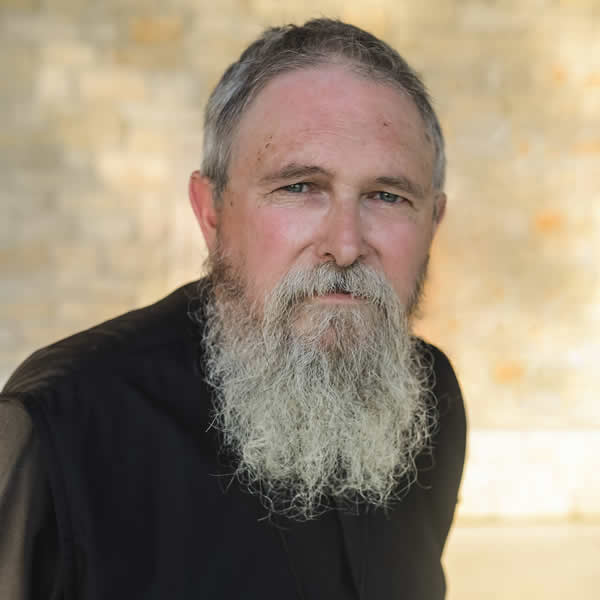
Fr. Stephen is a retired Archpriest of the Orthodox Church in America. He is also author of Everywhere Present: Christianity in a One-Storey Universe, and Face to Face: Knowing God Beyond Our Shame, as well as the Glory to God podcast series on Ancient Faith Radio.


Posted

in

, ,

by

Comments

34 responses to “A Modern Lent”

  1. April Avatar
    April

    Thank you, Father.

  2. Susan Cushman Avatar

    Excellent post, Father. Helpful as I begin (again) to approach Lent and the fast with a better understanding.

  3. Rebekah Brown Avatar
    Rebekah Brown

    I always appreciate reading whatever you write Fr. Thank you for this one!

  4. Ann Dibble Avatar
    Ann Dibble

    I wish I had run into your thoughts thirty years ago. As it is, all I can say is that for me, you are one of the blessings of the internet age.
    Amen.

  5. Margaret Avatar
    Margaret

    Thank you Fr. Stephen

  6. Esmée Noelle Covey Avatar
    Esmée Noelle Covey

    This article remains timeless. Thank you resharing.

  7. Byron Avatar
    Byron

    A very good reminder, Father. Many thanks! I was recently calmed by my Priest during confession. I told him I was worn “thin” and not ready for the Fast, which seemed to loom over me, just ahead. He replied that, if I ate occasional meat during the Fast, to say “thanks be to God” when I ate it. To pray with thanksgiving when I was weak. Let need for Him and His Grace define my Fasting and to not focus on my weakness and failure (“me”). Just this last week, I became very ill and I ate whatever was in the house. But I was thankful for it all and I think that has been good for my recovery than anything else. I will begin the Fast shortly, as best I can. I pray that I remain thankful throughout.

  8. Byron Avatar
    Byron

    “better” for my recovery….

  9. Fr. Stephen Avatar

    Byron,
    You have a wise priest. I have said, across the years, that a “good fast” during Great Lent includes some “failures.” Every athlete stumbles a bit. We learn as much from our stumbles as we do from our “success” – such is the nature of grace. If we understood the truth and depth of giving thanks, I think we would everything would be open to us. God give you strength as you recover from your illness!

  10. Ook Avatar
    Ook

    Thank you Father,
    For a person who is, for unrelated reasons (such as health, politics, or whatever), already on a vegan diet, would the Lent be to continue as normal but focus on worshiping more, praying more, and entertaining oneself/others less?

  11. Dee of Sts Herman and Olga Avatar
    Dee of Sts Herman and Olga

    Father thank you. These are good words for guidance and help us see how much we consume without even to have to put something in our mouths.

  12. Fr. Stephen Avatar

    Ook,
    That would be one approach. There’s so many variables. Some would eat less of whatever, increase prayers, give generously.

    I can’t help but think that eating/not eating anything because of politics is a bad idea. It cannot help but increase self-righteousness. Better to eat with thanksgiving and prayers for all. 🙂

  13. Hélène d. Avatar
    Hélène d.

    I am reminded of this saying by St. John Chrysostom : “What good is it to abstain from birds and fish, but to bite and devour our brothers ? He who slanders devours the body of his brother, he bites the flesh of his neighbor.” St. John does not abolish physical fasting, not at all, but rather demonstrates that without spiritual fasting, it is futile. Physical fasting nevertheless remains a necessary foundation. Each in their own way, knowing that our approach may sometimes remain within a “comfort zone” so as not to be too “deprived” of physical nourishment… but I have observed that an effort, a self-sacrifice, is a source of invisible benefits, and fasting becomes, not a deprivation but a preference… a preference for what is best…
    There is a real lightening that works throughout our being ; we become more “transparent” in our presence to the world, the taste for prayer deepens, and from the very beginning of Lent, we can have an intuition, admittedly very subtle, of the Light that calls us… and this is strengthened throughout the days, with the effort of keeping our Lenten commitment, our fidelity, being aware that we are truly unworthy servants because we have done what we were supposed to do… I remember that a priest who loved to go to Romania to see his spiritual father (St. Sofian Boghiu, recently canonized) told us that during a major Lenten celebration, in a village, during a Divine Liturgy, a very devout and prayerful woman approached the Holy Chalice for communion, and suddenly, before its very eyes, tears welled up like a fountain. The priest barely had time to move the Chalice aside so that the tears wouldn’t fall into it ! She received Holy Communion, and her face was bathed in tears and joy. He was deeply moved by this woman, so simple, fasting, and praying…
    Envoyer des commentaires

  14. Fr. Stephen Avatar

    Hélène,
    Wonderful and helpful thoughts! I was recently serving communion and saw someone approaching the Chalice with tears. I almost started crying myself!

  15. Katia Avatar
    Katia

    Father, how can we distinguish between repentance and the modern concept of self-improvement that you mentioned? I know the latter is probably a perversion of the former, but sometimes I have a hard time distinguishing them on an emotional and practical level. Would it be fair to say that self-improvement is focused on the ego while repentance and the transformation that follows is more about serving God and our fellow man? Or that the desire for self-imprivement often stems from guilt/shame/social pressure, while repentance comes from a more positive desire (to emulate the good, be free, etc)? I’m trying not see the ascetical practices the Church asks of us as just another challenge to check off a list that includes diet, exercise, hard work, academic/professional achievement, etc.

  16. Fr. Stephen Avatar

    Katia,
    I understand the difficulty you’re describing. I think that the key can be found in love. The goal of repentance is to love God. The goal of self-improvement would not need to even reference God (just some sort of “standard”). I’ve found that many times we struggle against certain sins that seem to come up again and again. We get frustrated and wonder why we don’t get better (despite our efforts). We fail to see that our failure itself can move the heart to cry out to God and to need Him in a way that mere improvement might even prevent! Repentance is measured in the heart (though it doesn’t need to be measured at all).

    Our greatest sin is that we do not love God.

  17. Dana Ames Avatar
    Dana Ames

    Father, apropos your response to Katia, I simply want to say that the Vasnetsov illustrating the last post made me want to be able love our Lord that desperately. I saved the image, but I can’t look at it too much; I’m sure you know what I mean.

    Dana

  18. John Mueller Avatar
    John Mueller

    Thank you for the continued education and direction of sight through the modern maze.

  19. Matthew Avatar
    Matthew

    Fr. Stephen said:

    “Our greatest sin is that we do not love God.”

    Could we not also add that many people think they do not need God, Fr. Stephen?

    Someone was having what appeared to be a really bad day this past weekend. Another person went to them and attempted in some way to find out what was wrong and to offer consolation. The troubled person responded to the offer of consolation by saying something like “I don´t need your consolation – I am a self-sufficient human being.” I know this troubled person for nearly 20 years and they are extremely accomplished in a worldly sense. They are also almost entirely secular and humanist in their outlook. Self-sufficient human being … is there really such a thing?

    Barbra Streisand sang a song with the following text:

    “People who need people
    Are the luckiest people in the world”

    Then in an interview I heard where she was talking about the song she said:

    “I thought people who didn´t need people were the luckiest people.”

    Self-sufficient human beings, needing no one – not even God.

    Is this not the kind of humans Adam and Eve were tempted to also be, Fr. Stephen?

  20. Kenneth Avatar
    Kenneth

    Adding to Matthew’s question, doesn’t it also take time and guidance to nurture love for God, or even to know what this is? Coming from a Protestant background, I think my last 2 years of attending Orthodox services as much as I can has helped me understand this ever so slightly better by experiencing it. I’ve heard it said that the Orthodox go to church not to learn about God but to kiss God. One could add to this also to kiss the Mother of God, and the friends of God. It becomes quite personal.

  21. Ivona Avatar
    Ivona

    Thank you!

  22. Fr. Stephen Avatar

    Matthew,
    I think it’s just another version of not loving God. To believe in God is to understand that you’re not the center of the universe – that you have a Source – that you exist (at best) in His image. To love God is the renunciation of narcissism. Modernity is (and is increasingly becoming) the great era of narcisism.

  23. Fr. Stephen Avatar

    Kenneth,
    Well said.

  24. Mark Moore Avatar
    Mark Moore

    in re: “Fasting without praying is called “the Fast of Demons,” because demons never eat, but they never pray. ”

    how does that fit with this?

    In the first week of Great Lent, the Church prays the Great Canon of St. Andrew. In a certain place it reads:

    Brief is my lifetime and full of pain and wickedness, but accept me in penitence and recall me to awareness of Thee. May I never be the possession or food of the enemy. O Savior, have compassion on me.

    This is how evil sees us: as food. Nothing more.

    Screwtape and the Wisdom of a Four-Year-Old Boy 1.8.2026

    They just occurred in such close proximity that I am a bit confused on this. Very much appreciate your reflections, and I got your books so that I can read them too. Was also just sharing your “God alone is Lord (and you are not)” thought with Fr. Alex at the Episcopal church we attend, because his homily had a similar theme to this yesterday.

  25. Fr. Stephen Avatar

    Mark,
    Demons do not “eat” in the manner that you and I eat. The “devouring” described in the New Testament is the notion of destroying a person (almost like absorbing). But the phrase “demons never eat but they never pray” is a common sentiment among a number of the early Fathers.

    These are meditational notions rather than hard-fact descriptions of the demons (about which few of us know much at all). So, forgive the seeming inconsistency.

  26. Jenny Avatar
    Jenny

    Father,

    I have been having a miserable Lent. I have not been able to successfully add anything to my prayer rule or to my usual fast. Consequently, I have been dealing with shame, frustration and misery.

    I cannot understand how it is that I cannot will myself to be good all through. I want desperately to be good all the way through, and I can’t make myself. How absurd! Surely it’s possible!

    Oh well, I cannot do great things. I will be ordinary. But surely for Him I can be patient and self controlled! It’s not anything great. It’s just my reasonable service.

    I have been almost as angry with the Lord as I was frustrated with myself. He knows I can do nothing good by myself. He knows it. So why doesn’t He give me the grace I want from Him, that I want from Him so that I can please Him and not be an embarrassment?

    Well, just like that verse:

    “I love the Lord, for he heard my voice;
    he heard my cry for mercy.
    Because he turned his ear to me,
    I will call on him as long as I live.”

    He did answer me and helped me find a way forward. He said instead of trying to fast so that I could advance in sanctification, which is basically for myself, I should fast for someone else. He reminded me that I was able to fast for that reason before.

    So every time I am hungry, it reminds me to pray for this person, and so I am able to pray and fast as one thing, and have more self control over what and when I am eating.

    Also, any time I fast, I’m always more motivated by how much weight I might lose than by anything else, so I had pretty much given up on trying, because what is the point with that motive? I can’t stop myself from having that motive. It’s always in the back of my mind.

    The Lord told me I must bear with the fact that there is always some tares in with the good seed, and I must endure until the harvest, so that there can be a harvest. Then He can separate them. Until then, I must confess all my sins and trust Him with myself as I am.

    That helped and I was able to go along praying and fasting for this girl who has already been in my prayers a long time now.

    Well, last night something unexpected and awful occurred. I had no defenses against it because it had not occurred before, and it was sickening because it woke all the trauma from the layers of abuse which I have suffered earlier in my life. The pain went all the way through.

    I went down under it, metaphorically speaking. It was quite dark. Then I remembered that Jesus is vulnerable to pain through us because of His love for us. I had learned that before. I never want to be a cause of additional suffering on His part, because He suffers so much already.

    So by faith I turned to Jesus and refused to look at anything else, though the darkness was thick. But you know the Light shines in the darkness and the darkness can never and will never put it out.

    I remembered that verse- though I walk through the valley of the shadow of death, I will fear no evil, because Jesus is with me and He sets me a table in the presence of my enemies.

    I was able also to remember that this was not a test of my faith, but that my suffering is also His suffering, and visa versa. We are sharing it. Because we are His own flesh and blood.

    A lot of the suffering was shame that seemed unbearable. And you will be happy to hear, Father, that I also remembered that the Lord’s Most Holy Mother had to deal with shame when she said yes to being His Mother. Usually the thought of her does not occur to me in such moments, but it did last night and it was so comforting that she knows what that is like.

    Lastly, the Lord reminded me that sometimes when I pray, I suffer and that means something good is actually happening- that the Lord is truly answering the prayer.

    That has been my experience in the past. If, when I pray, the Lord moves to answer it, something like a kickback occurs. (I’m not sure about this theologically, so please add a caveat to this if needed.)

    Either way, whether or how the Lord moves, if I suffer it just means I will be the more conformed to His image, which I always want. I am going on praying and fasting for that girl and trust that the Lord does all things well, which He does.

    Sometimes things happen like this, and it takes me by surprise and I realize that evil is real and malicious. But at the same time, I realize to the same degree that Jesus is the Living God and He truly is at work in this life, and He wins.

    This is quite a heavy comment already, but I will add two more things which are encouraging. When I was struggling with the tares in my field of wheat, so to speak, the Lord pointed out that I was thinking about myself incorrectly. I was thinking that trying to be like Him was as difficult a task as changing baling wire into a bird. But it’s not like that, because He already created us in His image.

    All He has to do is restore and heal what He already made. So it’s more like making a glove, and then the glove is lost and gets torn and misshapen outdoors somewhere. But even then, all one has to do is wash it and repair it, and it will fit right back on the hand, because it was made specifically for that all along.

    Lastly then, when I cried out to Him and He answered me, He came very close to me and I was aware of how carnal I actually am. It shows up in His presence. I am very far from being like Him. Of course, His love is tenderly merciful and without measure and patient and kind.

    But I couldn’t help but think if I, who have been trying to love and obey Him for these many years, still has so much that must be sanctified, how much more so others who have never turned to Him, or keep Him at an arm’s length?

    I could understand why some say in Revelation, let the rocks fall on us to hide us from the face of the Lamb. For us who belong to Him, when we appear before Him and all that is not of Him is burned off, it will be such a joy and relief. But for others, I can see how it would be very different.

    I begged the Lord to have mercy on us and to forgive us and to come close enough to know that He is God- like the sun in the sky bending closer so we should be unable to ignore it. That way, we could have a chance to rethink our choices, to recalibrate our lives and change direction if necessary before we are face to face with the Lamb and all this life, for better or for worse, is behind us.

    I hope He does this, but He is merciful all the time and He knows best what do to. Sometimes I worry that I am telling the Lord what to do when I pray insistently like that. More than once lately I have confessed to Him that I am not sure if I am praying correctly. Sometimes I feel that I am asking Christ to do things He is already doing, or wants more than I do, so why should I plead with Him? But I suppose it is not so much pleading with Him, but learning to pray like Him and with Him.

    Thank you for keeping me in your prayers. I do keep praying, Lord, please make me Orthodox. I understand what you mean now when you said, the Lord will have to make me. Yes, He will have to for me as well, because I have been a long time in the wilderness, so to speak, and I am not in the right shape yet. But- With man this is not possible, He has said. But with God all things are possible.

  27. Fr. Stephen Avatar

    Jenny,
    I have no idea if I am making any “progress” in the spiritual life. I think such things are largely hidden from us. St. Paul says this:

    “But with me it is a very small thing that I should be judged by you or by a human court. In fact, I do not even judge myself.For I know of nothing against myself, yet I am not justified by this; but He who judges me is the Lord.Therefore judge nothing before the time, until the Lord comes, who will both bring to light the hidden things of darkness and reveal the counsels of the hearts. Then each one’s praise will come from God.”
    (1Cor 4:3–5)

    God give us grace for each moment.

    https://accordance.bible/link/read/NKJVS#1Cor._4:3

  28. Jenny Avatar
    Jenny

    Thank you, Father! I had forgotten that passage.

  29. Simon Avatar
    Simon

    Just my two cents. I am only volunteering this comment as a first-person anecdote. Take it for what it’s worth. Over the last year I have practiced 36,72, and 84 hour fasts. Fasting has a salutary effect apart the spiritual discipline. When done with compassion toward oneself, I have found it to be well-ordering to the mind.

    I am assuming that the notion of ‘demons fasting without praying’ isn’t intended as a knock on fasting in general, but to warn against ascetic fasting apart from seeking communion–self-righteous fasting.

  30. Fr. Stephen Avatar

    Simon,
    No knock on fasting in general – but as you say – the Church’s fast seeks communion with Christ.

  31. Kelly Bangos Avatar
    Kelly Bangos

    Fr Freeman PLEASE make this into a book!!!

  32. David Brent Avatar
    David Brent

    Father,

    I read above where you mentioned seeing someone approaching the chalice with tears in their eyes and it almost made you cry. It made me think of someone; myself.

    I do not consider myself emotional. But I weep often in worship. Not outword crying. Just tears. When I approach the Father or Christ, my eyes water and my face is covered with tears. I have to wipe my face four or five times throughout the service. It is simply the presence of God and my need for mercy. These tears started about 20 years ago, around the time of my life when I realized that I cannot beat sin. I always thought I would get “better”. Nope it’s not going to happen. I realized I am the chief sinner and always will be. I have come to accept the tears as a reminder of my true self.

  33. Fr. Stephen Avatar

    David,
    I think such prayers are a sweet gift!

Leave a Reply

Your email address will not be published. Required fields are marked *


Subscribe to blog via email

Support the work

Your generous support for Glory to God for All Things will help maintain and expand the work of Fr. Stephen. This ministry continues to grow and your help is important. Thank you for your prayers and encouragement!


Latest Comments

  1. The timing of this post addresses questions that I have have been pondering for the last three days. I thank…

  2. Father, I read above where you mentioned seeing someone approaching the chalice with tears in their eyes and it almost…

  3. Dear Nikalaos! It is so wonderful to see your comment here again! As always, also edifying. Thank you so much…


Read my books

Everywhere Present by Stephen Freeman

Listen to my podcast


Categories


Archives