
Human beings carry within them a burden of time. We are not “fresh starts” as we come into existence. There is an inheritance that seems to carry even more than our genes. Some few years ago, I visited with my father’s oldest surviving cousin. She had known both of my parents across the years, and had known my father since childhood. In the course of our conversation she said, “Talking with you is just like talking with your mother!” I knew what she meant and blushed. My mother was the Queen of ADHD and could talk non-stop. Having gotten past that awkward recognition, we wrapped up the visit. As I was walking out to my car, she called to me from the door, “But you walk like your Daddy!” The burden of my inheritance was written into my being: “the body keeps the score.”
This is not normally a theme associated with Christmas – unless you are an Orthodox Christian.
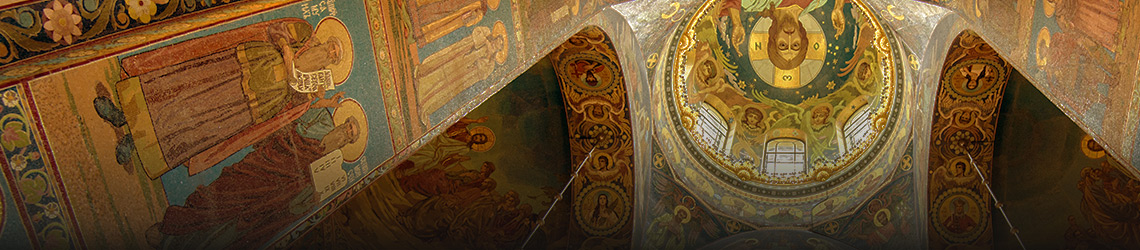
In the Eastern Church, the two Sundays before Christmas are marked for the remembrance of the “ancestors of Christ.” One of the Sundays, for example, has as its gospel reading the chapter of the “begats” (Matthew 1). It’s a pretty bumpy list. There are notable figures: great kings and such. There are also references to sad tales: “…and David was the father of Solomon by the wife of Uriah…” It is not an effort to clean-up a history or to white-wash it. Indeed, whatever critiques one might make regarding the Scriptures, it cannot be said that they seek to hide the bad stuff.
We teach that, in Christ, “God became man,” or “the Word became flesh.” Christ does not become a history-free version of humanity. In Him, the whole human story is gathered. “We know His people.” In Second Corinthians the matter is stated in a manner that troubles some: “For He made Him who knew no sin to be sin for us, that we might become the righteousness of God in Him.” (2 Corinthians 5:21)
I recall being grilled on this verse by a woman when I was in a speaking engagement. She had never heard the verse (not surprising). It was the phrase, “made Him to be sin…” that drew her reaction – as well it should. Thinking about this, I returned this morning to the Greek text to see precisely how St. Paul wrote the phrase. I think his hand must have trembled as he wrote. I will suggest a different translation to see how the Apostle took care with his words:
“the-One-who-knew-no-sin was made sin on our behalf, in order that we might become the righteousness of God in Him.” ( τὸν μὴ γνόντα ἁμαρτίαν ὑπὲρ ἡμῶν ἁμαρτίαν ἐποίησεν, ἵνα ἡμεῖς γενώμεθα δικαιοσύνη θεοῦ ἐν αὐτῷ.)
It states a mystery – that the one-who-knew-no-sin somehow became sin. This is a stronger statement than the better-known phrase in Hebrews: “For we do not have a High Priest who cannot sympathize with our weaknesses, but was in all points tempted as we are, yet without sin.” (4:15)
There are various “tensions” within Orthodox theology. The Trinity is stated in such terms: three, yet one; person vs. essence. Also with Christ: Fully God, fully man; one person, two natures. These speak not only of the holy grammar of theology, but also of tensions within the human experience, or even the experience of all creation.
St. Maximus once pondered certain “divisions”:
– the division of created nature from the uncreated God;
– within creation, the division between visible and invisible;
– within the visible creation, that between heaven and earth;
– within the earthly creation, that between paradise and the inhabited world;
– within the inhabited world, that between male and female.
Our lives are filled with tensions – dynamic oppositions that are reconciled in love (and likely only through love). These tensions are presented with full display in the Incarnation of Christ. The stories of His ancestry are marked with conflicts unresolved yet taken up into the greater story that is reconciliation.
This greater story dwells among us in the life of the Church – humanity gathered into Christ.
“Now all things are of God, who has reconciled us to Himself through Jesus Christ, and has given us the ministry of reconciliation, that is, that God was in Christ reconciling the world to Himself, not imputing their trespasses to them, and has committed to us the word of reconciliation.
Now then, we are ambassadors for Christ, as though God were pleading through us: we implore you on Christ’s behalf, be reconciled to God.” (2 Corinthians 5:18–20)
A large part of our life is marked by tensions, both outside ourselves and within. On the Sundays of the Ancestors, we remember that generations of tension have been met in Christ in the single act of reconciliation. Forgive one another. Be reconciled.


Leave a Reply