The Ascetic Imperative – A Matter of Communion

Among the more interesting experiences in my life was the two years spent in a Christian commune. It was not West Coast fancy, much less connected to anything historic such as the Bruderhof. It started with two very zealous Jesus freaks (myself and a friend), an apartment, and something of a necessity thrust on us by accident. The accident was a housefire where two other young Christian friends were living. The fire claimed the life of one and left the other injured as he jumped from a window to survive. We took him in (first, as something like a border). Somewhere, in the course of prayer, we decided to live communally. At the time, immersed in the daily study of Scripture, it seemed the most obvious way to live.

I was working 40 hours a week in various jobs (they seemed to come and go – well, actually, I got fired more than once, but that’s another story). My friend was working part-time and doing college courses the rest of the time. Turning my money over for the common good simplified my life.

The communal life didn’t stop at money. We began to explore what it meant to share a common life. Our questions were framed in the only language we knew: what does the Bible say? The questions and answers of that dialog were informative. With those questions in mind, we became aware of a steady stream of admonitions in the New Testament urging believers towards a life of asceticism. Fasting, vigils (praying through the whole of a night), sacrificial giving, radical forgiveness are all considered commonplace and normative. We had no tradition to draw on, and thus we practiced such things without guidance. We learned many things the hard way. There is now a long string of decades that separate me from those fervent years.

No one told us to do the things we did, and no one told us to read the Scriptures in the manner we undertook. What we did was to read the Scriptures with the question in mind, “What should we do?” That stands in stark contrast to the typical question, “What should we believe?” Had our study been primarily directed to matters of doctrine, I think we would have lost our way. Strangely, our instincts were correct.

The teachings of Christ are not, primarily, metaphysical pronouncements about the nature of things. Instead, they are commandments regarding what we should do – based on who God is. “Love your enemies – because God is kind to both the good and the evil.” This pattern holds throughout Christ’s teachings. It is a directive that intends to shape our lives such that our lives themselves become a “living theology,” a revelation of the nature of God made known in the shape of our actions.

In our secularized world, most people behave in the same way: as consumers bound by the passions and commands of their economic masters. The “good life” is described in terms of money and pleasure. If you have enough of both, then you are living the “good life.”

I can see, in hindsight, that many of the things of my youthful fervency were less than perfect. We had no ear for holy tradition and the experience of the Church through the ages. Nonetheless, we were struggling to become deaf to the demands of the culture. There is a gap in my culture memory, for instance. My awareness of popular music stops with the year 1971 (the year that we began the commune). I simply quit listening. I’ve never re-entered that marketplace. I’m not interested.

I could wish that this same deafness extended to much else (news cycles, etc.). With those things, I struggle as much as others.

St. Paul wrote to the Corinthians saying:

You are our epistle written in our hearts, known and read by all men; clearly you are an epistle of Christ, ministered by us, written not with ink but by the Spirit of the living God, not on tablets of stone but on tablets of flesh, that is, of the heart.” (3:2-3)

If we do not “become the Scriptures,” then reading them will have been in vain.

Christ says the same thing in a different manner:

If you keep my commandments, you will abide in my love, just as I have kept my Father’s commandments and abide in his love. (John 15:10)

In this saying, Christ reveals that the keeping of His commandments is a means of communion. It is not a legal or moral matter. Rather, keeping His commandments is a means of embodying Christ Himself. This is theosis in its most immediate form.

Understanding the commandments and the discipline of putting them into practice is a matter of communion

For what partnership has righteousness with lawlessness? Or what communion has light with darkness? What accord has Christ with Belial? Or what portion does a believer share with an unbeliever? What agreement has the temple of God with idols? For we are the temple of the living God; as God said,

“I will make my dwelling among them and walk among them, and I will be their God, and they shall be my people. Therefore go out from their midst, and be separate from them, says the Lord, and touch no unclean thing; then I will welcome you, and I will be a father to you, and you shall be sons and daughters to me, says the Lord Almighty.”(2 Cor. 6:14–18)

God “walks among us” as we walk “in His commandments.”

This last passage also points to the contradiction that such a practice brings about with the secularized world. Living in the world, we often fail to see that our lives are always an act of communion. To live mindlessly in this culture is inevitably an act of “channeling” the culture, of living as an expression of the culture in human form. We shop because the culture shops. We “care about stuff” because the culture “cares.” We worry because the culture worries. We weep when it weeps and become angry as it rages. We unconsciously live as “epistles” of the culture (the Scriptures would name it as “Mammon”) even as the culture whispers to us that these are our own thoughts. We imagine ourselves to be willing individuals, centers of consciousness defined by our choices. In point of fact, we are often little more than mouthpieces of the culture-mind, our “consciousness” created elsewhere and marketed to us. If you feel no tension with the culture around you, then you have been swallowed alive and are being digested.

There is an ascetic imperative, an utter necessity to enter into the struggle that is Christ’s own struggle. We fast because Christ in us fasts. We pray because Christ in us prays. We forgive because Christ in us forgives. We love because Christ in us loves. We give because Christ in us gives. Such a life is a sign of contradiction, a repudiation of the world’s claims to be “normal” or “just the way things are.” The life of Christ is the true life of the world, the purpose of all things.

People came to Christ with this question: “What must we do to be saved?” Ultimately, the answer is, “Do Christ.” We walk in Him and He walks in us. This is the ascetic imperative. This is the crucified life of grace, the salvation of the world.
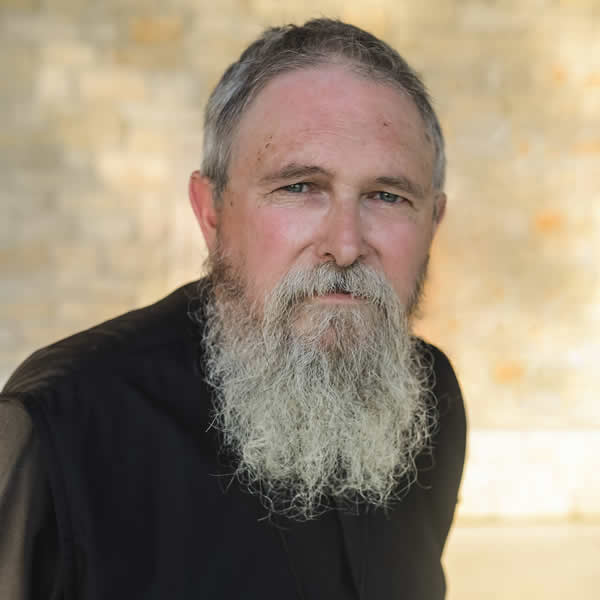
About Fr. Stephen Freeman

Fr. Stephen is a retired Archpriest of the Orthodox Church in America. He is also author of Everywhere Present: Christianity in a One-Storey Universe, and Face to Face: Knowing God Beyond Our Shame, as well as the Glory to God podcast series on Ancient Faith Radio.


Posted

in

, ,

by

Comments

30 responses to “The Ascetic Imperative – A Matter of Communion”

  1. Susan Cushman Avatar

    “The crucified life of grace” . . . an interesting phrase I don’t think I’ve heard before. I’m going to think on that today . . . . Are you saying that asceticism is what makes our life of grace a “crucified” one?

  2. Fr. Stephen Avatar

    Susan,
    I think that grace itself is “cruciform.” It reveals itself in us in a crucified manner. Asceticism (which can be multifaceted) is an attempt to voluntarily embrace a cruciform life. And it varies somewhat from person to person. How a young, healthy person fasts, for example, will differ from how an older, infirm person will fast. I have taught before that old age is itself a form of asceticism – embraced through the giving of thanks for all things (this morning, I think it’s mostly my hips and my knees).

    The most important acts of asceticism are those acts in which we and through which we extend ourselves in love for the other. Love is the perfection of the Cross.

  3. Katherine Avatar
    Katherine

    Thank hou for this, Father. The ascetic imperative is what the culture works endlessly to wrest us away from. The news cycle, the violence, the cycle of paying attention to material things we want and then moving on to other things … and the thing not given time and attention is our ascetic life in Christ. This is a daily struggle, and it’s very helpful to read your discussion of it.

    Of course it gives rise to the questions: how much do we separate ourselves from the culture? What is right to do within the Tradition given us? We all have short lives here and our focus should not be wasted on the culture. That’s about as far as I have gotten, sadly.

  4. Matthew Avatar
    Matthew

    I am glad you mentioned that to “Do Christ” is not a legal or moral matter, but rather something communal. That said, it´s interesing how many people want to turn “Doing Christ” into general morality. One unbelieving man I know likes to say “That is very Christian of you” or “I live the values of Christianity”. A woman said to us the other day: “My husband left the Church but he is more “Christian” than I am (she was a Christian apparently). Christianity has become – both inside and outside the Church – a system of living “the good life”.

    When I talk to people about the inner life, about issues of being, about “what” we are rather than “who” we are, about spiritual transformation, about union with God, etc. – few seem to understand. Many people seem to be looking for a right way to live rather than a beautiful way of being – simply being. In my Protestant past, lots of us were trying to find the right way to live, the right way to be church, the right way to be counter-cultural, etc. – but not the right way to “be”.

  5. Fr. Stephen Avatar

    Katherine,
    There are a few things that get the name “culture” that are actually just tiny slices of reality: news, entertainment, politics. It would be quite possible to cut oneself off from these things and be none the poorer – and a bit richer!

    Today, I was at a local museum for an interview session. As I was going in, there were two “homeless” men sitting on the steps, both of them glued to their smart phones (doom scrolling). It was interesting to me that even with that level of poverty – there’s still smart phones (not universal, of course). It’s a deep addiction in our culture and less than 2 decades old!

    Many suggest moving back to an un-smart phone and creating some boundaries with the internet (that’s an act of asceticism).

    I would say that reading is fine – but give thought to what you read: “garbage in – garbage out” is still true.

  6. Dr. Warren D Culwell Avatar
    Dr. Warren D Culwell

    This is some GREAT food to chew on. Thank you. Keep it coming

  7. terence Avatar
    terence

    Thankyou Father,
    I find everything you write incredibly enlightening. This piece fits beautifully with and grants me greater understanding of the Letters St Paul wrote (and which I find more challenging than the earlier parts of the new Testament)

  8. Mary Lowell Avatar
    Mary Lowell

    “If you feel no tension with the culture around you, then you have been swallowed alive and are being digested.”

  9. Fr. Stephen Avatar

    Mary,
    At certain times through the years I’ve had younger members (often converts) who have said that they’re exhausted – exhausted by the struggle with the culture. It’s like an undertow – drawing us into itself – towards a drowning in shark-infested waters. I think the simple ascesis of backing off from the many culture-messengers is essential. Also, a deep part of ascesis is to lean into the soul’s desire for the Good. We fast in order to know Christ more fully (Who fasted for us), etc.

  10. Jenny Avatar
    Jenny

    Father,

    On the weekend that my icon arrived, I was coming to terms with the fact that the Lord had not answered some of my most desperate prayers as a mother. I was already in the trial and there would be no deliverance. He was requiring me to walk through it.

    And because this ordeal came through the suffering of my children, I judged God. I found Him lacking in mercy and wrong in His judgment about what I could endure and I could not believe that He was doing this again to me.

    I’m sorry to say that I forgot everything I had ever learned about suffering and how to walk through it. I was at square one.

    I could not forgive Him for not delivering my children in the way I had so desperately, repeatedly begged Him to do. I felt that it was true that He was the kind of god who visited the sins of the parents on their children, that He was merciless in this.

    My anger at the Lord was intense, and I had so much shame at my failure to overcome this trial- to rise above it by faith, and shame over my imperfections as a person and a mother, that I did not pray to Him for about seventy two hours. I could not talk to Him.

    During that time, I saw myself as a complete and embarrassing failure in every aspect of my life- a mundane, muddling nonentity of a person who could do nothing good and was lost in ridiculous self serving delusions about God, but it was just cover for my ego, because I was a failure and my life had no meaning outside this embarrassing delusion.

    Normally I would have taken shelter in the Lord when inundated by such thoughts, but I couldn’t take shelter there because of my burning anger at Him and I felt that it was true- that I was nothing but an aging, overweight, meaningless middle aged failure, my Christian witness impotent even to convert my own brothers, who are still atheists, failing even to run the children’s ministry at church after only three years and nothing happened like I hoped it would.

    I couldn’t sleep because of this so I stayed up very late on Saturday, slowly cleaning various parts of my kitchen, staring face to face, one might say, at futility and embarrassment of my life. No shelter, because I couldn’t hide in the Lord, and nothing to say, because it all seemed true.

    On Sunday we did not go to church. I could not take communion. I was not at peace with the Lord. If I cannot even pray to Him, how would communion be possible? It was not possible.

    That was the day the icon arrived. It was more beautiful than I had thought, and as soon as I saw it, my heart was praying to the Lord just as trustingly and full of love as if nothing had happened. It was a great relief to me to know that prayer was still flowing in my heart, that I still loved the Lord, down beyond words. It was the first relief that came. So I took the icon with me so I could always look at it.

    From that point, the Lord began to show me how He was answering the prayers I thought He had denied. I can’t be specific, but to use a metaphor, it was like watching an ice bound river begin to buckle, to crack, to begin to see water appear among the ice and then to watch the heavy chunks of ice washed down river until the whole thing is nothing but moving water.

    Seeing this, I was even more ashamed and miserable than before, because of how I had failed the test and I didn’t deserve the Lord’s answer. When I could finally put myself before the Lord to pray, the only thing I could manage to say was, “Are You angry?”

    Of course He was not, and He began instead to help me understand. I remembered way back when I had had the same thought when falling at the pool- that it had been a test and I had failed. But that way of thinking had been all wrong.

    What was it instead? I remembered what you had said, Father Stephen, about how Christ abides in our failures and weakness and shame, how He is united to us in them- and then I remembered- because we are suffering with Christ.

    Then I understood. The Lord reminded me of how He was mocked on the cross- that His life was futile, that He couldn’t do anything He had said and that God was leaving Him there to die; He could not even get down from the cross.

    He reminded me of what He had cried out- “My God, My God, why have You forsaken Me?” Similarly, I had felt forsaken by Him when I thought He was going to leave me and my family in our suffering.

    I was filled with wonder that He had taken me much deeper into His suffering than before, but I was ashamed that I had failed badly while moving through it.

    I saw how my faith has a long way to mature when it comes to my children and their suffering. I want them never to suffer, but that is not possible. I must trust the Lord to watch over them in the reality of their lives. I cannot see the end from the beginning like He does.

    So I was not able to say, Not my will, but Yours be done and trust Him. My faith hadn’t risen to meet the challenge.

    But the Lord pointed out that it was almost arrogant of me to think that I could pick up His cross and die on it flawlessly like He had. Of course I couldn’t!

    I saw it like a narrow cliff path. Christ is going ahead, because He made the path. If we out of love for Him, want to walk up the path to be with Him and to stay with Him, His heart melts with love and mercy just to see us try.

    Similarly, a mother when her small child stumbles when running after her would not scold. She will instead gather the child up in her loving arms and comfort them and maybe say, stay close and hold my hand because the way is rough here. Stay close to me.

    Which is perhaps like the Lord saying to His disciples: Fear not, little flock, for it is your Father’s good pleasure to give you the kingdom.

  11. Dean Avatar
    Dean

    Father Stephen
    It did my 79 year old bones good to hear you say that old age is itself a form of asceticism. 😏 Getting up early in the morning, my favorite part of the day, is now a struggle. But that’s okay…part of the landscape of growing older. Glory to God!

  12. Fr. Stephen Avatar

    Jenny,
    The goodness of God!

  13. Fr. Stephen Avatar

    Dean,
    I like to take naps…which means I’m incredibly courageous…getting out of bed more than once in a day!

  14. Dee of Sts Herman and Olga Avatar
    Dee of Sts Herman and Olga

    Dear Father,
    So true about the ‘undertow’ in this culture. It is hard to avoid, and by association, in work or other places, we’re in the undertow. People are glued to their phones and the internet and get caught up in clickbait politics. Then there is the side-whacking politics in the workplace. There is no common ground or reference point (to Christ) for personal interactions or community relationships.

    I visited my ‘home ground’ recently (southern Florida), for a required work-related meeting that took place over a week. My mother’s people (Florida Seminole) lived by the ocean—not just for food, but also for its many physical and spiritual connections to their lives. While there I was compelled to walk into the Atlantic Ocean, to feel the waves hit my body, to immerse my head under the water—a heart-warming immersion into a past life that remains in my heart and memory. The scent and feel of the warm water felt like a familial embrace.

    Before I walked into the ocean, I noticed a sign that warned of the undertow. And I could feel the pull at my legs outward to the ocean. The sign read, “If caught in an undertow, don’t swim against it; swim at right angles to it to get out of the way of the undertow”.

    I thought this might be a good lesson about our lives in this culture. There are many pleasant things we might do to feel relief or satisfaction (or feed an addiction) to escape our mental and physical hardships. But our ascetism, our prayers, our fasts, following the commandments (as you say, Father), our doings in the life in Christ, is our way out of the undertow.

    Thank you so much for this article and your helpful lessons.

  15. Margaret Avatar
    Margaret

    Thank you for sharing this Dee.

  16. Mary Avatar
    Mary

    Jenny
    Thank you so much for your post. Today my son failed a crucial exam, my feelings and thoughts were unbelievably similar to yours when it comes to unanswered prayers and lost salvation of my close family. My initial response was not to ask Him for anything just to avoid the disappointment.
    It’s very rarely that I post but I just wanted to tell you that your reflection was exceptionally helpful for me. God bless.

  17. Jenny Avatar
    Jenny

    Mary,

    I recently put another verse up in my kitchen:

    “My flesh and my heart may fail, but God is the strength of my heart and my portion forever.” Psalm 73:26-28

    I fully expect my flesh to fail, but when my heart fails- when I cannot pray or feel numb within, that is another level of suffering altogether. So this verse is wonderful to remember, because when even our hearts fail us, God continues to uphold our hearts in His strength through those times.

    May God bless you, your son and your family. 💝

  18. Andrew Avatar
    Andrew

    Thank you for this reflection Father. It brings to mind something I heard Jonathan Pageau say a while back. It was something along the lines of the commandments of Christ not just being some kind of arbitrary law, but rather they are descriptions of reality. He touches on it here: https://x.com/PageauJonathan/status/1881716516007354616

  19. Fr. Stephen Avatar

    Andrew,
    Indeed, I believe this to be the case. And, even the OT commandments that seem arbitrary or merely ritualistic have, I believe, a deeper meaning that would have to be discerned. There are some among the Fathers who sought to see beneath the letter in such cases. 2Cor. 4:15 says, “All things are for your sakes.”

  20. CJM Avatar
    CJM

    “People came to Christ with this question: ‘What must we do to be saved?’ Ultimately, the answer is, ‘Do Christ.’”

    I recently read the parable of the rich man. It is familiar to me from a Scripture-steeped Protestant upbringing, for which I am grateful. I had never before noticed, though, that Abraham and the rich man discourse in the story about repentence, not belief.

    That transformed the passage from comfortable to decidedly not so. If about belief, the story simply forecasts the refusal of some Jewish religious leaders to believe Jesus despite evidence of his resurrection. My role is as onlooker–I accept what the leaders refused, so Jesus’ warning about salvation has little to do with me. If the story is about repentence, though, I’m one with the rich man’s brothers: urgently needing to avoid unthinking acquiesence to the sumptuous life that consumed the rich man, urgently needing to strive to follow Jesus’ commands by his grace.

  21. Matthew Avatar
    Matthew

    Hello CJM.

    I must admit, when I consider my understanding of salvation (one of a process rather than a one time event) it is more difficult for me to understand the parable of the rich man and Lazarus (that is the parable you are referencing … correct?).

    Maybe Fr. Stephen can shed some Orthodox light on the situation ….

  22. Dee of Sts Herman and Olga Avatar
    Dee of Sts Herman and Olga

    If we’re living our lives in Christ, should we expect (because according to some Protestant thinking that we are saved as the elect) that our lives should be comfortable and prosperous? Should it be that reading the scriptures make us have a feeling certainty about our good progress in Christ?

    Winter is coming and the first snowfall warnings have been published in my area.

    I’m grateful that the Lord brought me into the Orthodox Church. I admit, however that doing so at the time felt like death.
    My baptism was a death.

    We’re approaching the Winter Lent. Glory to God for all things.

  23. Dee of Sts Herman and Olga Avatar
    Dee of Sts Herman and Olga

    And after Baptism a New Life. A life that doesn’t match up to well with our culture’s norms.

  24. Matthew Avatar
    Matthew

    Interesting how experiences can differ Dee. When I became a Christian, although I died with Christ in baptism, the whole experience was new life for me. I was very happy. I’ll admit though, I became a believing Christian as an evangelical charismatic Protestant. Maybe the entrance into Christianity through Orthodoxy is more of a feeling of death than I experienced. The experience might also have to do with backgrounds and personality as well. I am not sure.

  25. Dee of Sts Herman and Olga Avatar
    Dee of Sts Herman and Olga

    Matthew,
    It’s true what you say. I haven’t met too many people from my background and experiences going into the Orthodox Church. Raised by a Florida Seminole mother and in her spirituality a mixture of Christian and Seminole beliefs, my dad from an old school Quaker background, and me ditching Christianity altogether sometime between 8 and 10 years old and solidified philosophically against Christianity in late teens. I was no atheist, I believed in God of the Judaic tradition, but Christianity was (I’m trying to soften my words here) very difficult for me to relate to on any level.

    I stayed in that mindset for about 50 years. I certainly did encounter a few real Christians, two of whom were Catholic priests, but by and large, that was a rarity. Of all things, it wasn’t Christianity that first drew me into the Church, but science. Even then, I felt such repulsion about becoming a Christian that it took about 3 years of studying theology for me to have enough gumption to enter an Orthodox Church for a peek and experience of Divine Liturgy.

    When I finally realized that I was going to become Christian, that decision was a heavy decision in many respects. I still didn’t like Christianity very much at all. But I began to love Christ, I knew that life in Him was what I had yearned for. Nevertheless, I had become so secularized in many respects that the future life that lay ahead looked very much (I suspect) like what a new soldier might feel as they are transported to another land for war. This would be a war within and a war without. Life as I had known it was coming to an end. All relationships I had will be affected and many of them likely coming to and end. It was with fear and trembling and fervent prayer that it wouldn’t end my marriage of many years.

    I almost backed out of baptism just days before I would be baptized. Such was my fear of the ending of my life as I knew it. I cried as I was counseled by and Orthodox priest, whose key words were quite frank, “You have two choices, either you step up to the cross, or you step down.” Those words galvanized me. I stepped up to the cross.

    Am I a true soldier for Christ? I don’t know. I ask for your prayers that I am.

  26. Fr. Stephen Avatar

    Dee,
    So glad you “stepped up.” God preserve us all – by His grace!

  27. Matthew Avatar
    Matthew

    Thank you so much for what you shared Dee. I appreciate it.

    Stepping up. Yes.

    Stepping up to the Cross. Stepping out of the secular world. Stepping into the Kingdom.

    Everything changes. Nothing is ever the same again.

  28. Steven Sinclair Avatar
    Steven Sinclair

    Thank you, Fr Stephen. Another reminder of the purpose of life is to commune with God moment by moment. God does not first or primarily in the business of making bad men good, but rather making dead men live! Rejoice. Christ is alive! +Steven

  29. Vicki Irene Avatar
    Vicki Irene

    Jenny,
    I took screen shots of your heartrending comment for my future reference when I return to that same place! You have a writing and communication talent. I would encourage you to keep writing and sharing, especially to help parents of adult children. I feel that there isn’t enough written help available but there seems to be a lot of confused, limited-faith suffering by the parents. Thank you! Love in Christ, Vicki Irene

  30. Jenny Avatar
    Jenny

    Vicki,

    I’m so glad the comment was of value to you. Parenting can be heartrending. I saw a picture of our Lady of Sorrows with her heart surrounded by swords and instead of looking strange to me as it would have before, I felt that I could begin to understand it. It was not just the one sword, but many. She bears a lot of grief for her children, young or old, but I am quite sure she never loses faith in her Son. It was comforting to see a pathway to follow in that.

    May God bless you and your family! 💝

Leave a Reply

Your email address will not be published. Required fields are marked *


Subscribe to blog via email

Support the work

Your generous support for Glory to God for All Things will help maintain and expand the work of Fr. Stephen. This ministry continues to grow and your help is important. Thank you for your prayers and encouragement!


Latest Comments

  1. Margaret Sarah, I think an important matter in all of this is that of boundaries. God is there (everywhere present)…

  2. John Mark, I think that St. John uses the term to be roughly equivalent to “human” – but in our…

  3. Father, Thank you for your reply! I’ve wondered before what you thought of panentheism. I’ve been interested in the term…

  4. Father, thank you for the insights into St. Paul’s use of the word sarx. How would you say St. John…

  5. Margaret Sarah, To my knowledge, it is not a term used in Orthodoxy. A problem, it would seem to me,…


Read my books

Everywhere Present by Stephen Freeman

Listen to my podcast


Categories


Archives