Truth, Lies, and Icons

As verbal beings, we live in a world of icons. We experience the world in an iconic fashion. A major difficulty for us is that we have lost the vocabulary of iconic reality. We have substituted the language of photography. The dissonance between reality and our photographic assumptions has led us to doubt both. Man is an iconographer and needs to re-learn what that means.

+++

Franz Kafka famously wrote: “The Lie has become the World Order.” It was a sobering estimate (by an unbeliever) of the nature of human reality. Lying, simply not telling the truth, can seem a minor thing. But Jesus and the New Testament seem to pay a great deal of attention to lying, and treat it quite seriously. There is more here than the mere abrogation of a moral tenet. It is a concern with something more “Kafkesque.”

The nature of truth and lies becomes clear if they are thought of in terms of being. The Church describes God as the “Author of our being.” In the writings of the Fathers, being itself, simple existence, is seen as a good thing, the first of all created good things. God brings us into existence saying, “It is good.” More than that, the Fathers teach that it is God’s will that we grow towards “well-being,” with the ultimately goal of “eternal being.” This, in terms of existence, is the path of salvation.

And this understanding reveals the nature of a lie: it has no true existence. That which is not true not only has no existence, but its very purpose is to obscure or destroy that which indeed has true existence. Fantasy and imagination, even though they have no true existence, are by no means inherently false. Only those forms which seek to distort, deny or destroy that which truly exists can be called “lies” rather than “fantasy” or “imagination.”

But this makes speech about reality (that which truly exists) very significant. The most obvious thing we can say is that reality itself and speech about reality are not the same thing.

In classical philosophy, the school of thought that describes words as only “in our heads” is called Nominalism. The names (nomina) of things are described as “nothing more than thoughts.” Those who argued otherwise (there are various types of such arguments) are called Realists. Orthodoxy, in its classical form, has always espoused some form of Realism. There is a relationship between words and thoughts and that to which they refer that is greater than simply being something “in our heads.”

One of the places where this debate took shape was in the debate over the veneration of icons. It is clear that images had played a role in the life of the Church from very early times. But that role was not questioned or explored until the 7th and 8th centuries. The debate was about more than the mere making of images. A greater and more pressing question was the veneration (giving honor) to the images themselves. St. Basil the Great stated a clear connection between the image and the subject of the image: “Honor given to the image is referred to its prototype.” Thus the honor given to an icon of Christ was, in fact, honor given to Christ Himself.

St. Basil’s statement was something of a simple assertion, without elaboration. But in the 8th and 9th centuries, St. Theodore the Studite developed a much more careful treatment of the question. He described an icon as a “hypostatic representation,” that is, a representation of the personal or particular characteristics of its subject (the personal is always considered particular rather than general or abstract). He further taught that what is represented is “hypostatically” present in the image. The image does not become what is represented – that would be a presentation of its essence. Instead, it makes present what is represented, i.e., the Person. St. Theodore’s treatment used the language that the Church had developed for speaking about the Holy Trinity, as well as the Person and Nature of Christ to speak about the Holy Icons. It is a treatment that is often forgotten or neglected.

St. Theodore’s teaching on this question manages to avoid Nominalist solutions. He does not say, “It’s just a picture.” He does not say, “It’s only connection to what is depicted is in the mind.” Like all of the Fathers, he is a Realist. There is a true, even ontological, relationship between the icon and its subject. But he avoids charges of “magic” by maintaining that what is represented is only hypostatically present.

His explanation makes it possible to say, “The man in the picture is Peter.”

Turning back to language, the same understanding says that words matter. They have an actual relationship with the reality of which they speak and it matters. Fr. Georges Florovsky once said that “doctrine is a verbal icon of Christ.” Or, as the Seventh Council said, “Icons do with color what Scripture does with words.”

Of course, the palette of language is far richer than the palette of the artist. Words have “shades” of meaning and subtle hues that an artist should envy. But, in the teaching of the Orthodox faith, words have a grounding in reality beyond psychology.

Some have said that the modern world is inherently Nominalist. We believe that our words are only words, and only have meaning because we say or think they do. The “reality” they describe is, therefore, in our minds. There was a school of thought (Idealism) that held that there is no objective reality outside the mind, or certainly that it cannot be proved. That extreme position has never gained acceptance. However, the modern sociology of knowledge, in which perceptions, prejudice, etc. are given a dominant and controlling position, yields something of the same effect. Conversation begins to falter in the face of withering doubts about the reality or trust-worthiness of anything in our heads.

Words have something of a sacramental relationship with the reality they represent. Or, to be more precise, they have an iconic relationship with reality. Icons are not photographs, nor can words ever serve as a photographic or holographic substitute. But icons also carry more information than photographs and are able to make associations and connections that reveal the truth of reality (its foundational reality) far more profoundly than is possible in a photograph. Words have that same ability. Take the poetic sentence:

What rough beast, its hour come round at last, slouches towards Bethlehem to be born?

No photograph (and perhaps no icon) could carry as much information as this combination of words from Yeats’ “The Second Coming.” The many associations of “beast” (including the Beast of Revelation) do not “approach” – they “slouch.” It carries overtones of “slither” (and the serpent of the Garden) as well as other emotional content. And so the analysis would continue. It is a phrase that lives in my mind, capturing a reality both present and yet to come.

And this brings us back to lying. The struggle to speak the truth transcends mere morality. At its most fundamental level, it is a struggle to rightly relate to and participate in reality itself. To “live a lie” borders on not living at all – and is a synonym for hell.

To claim that the reality of our words lives only in the mind is itself a “lie” (not an intentional one, but simply not true). And even the photographic presentation of reality (as in all literalisms) fails to rise to the status of truth.

The Fathers held that the world-to-come (the Eschaton) was the truth. The Old Testament, they said, was a shadow, while the New Testament was an icon.

As verbal beings, we live in a world of icons. We experience the world in an iconic fashion. A major difficulty for us is that we have lost the vocabulary of iconic reality. We have substituted the language of photography. The dissonance between reality and our photographic assumptions has led us to doubt both. Man is an iconographer and needs to re-learn what that means. The result can be a movement towards the truth and a renewed confidence in our speech.
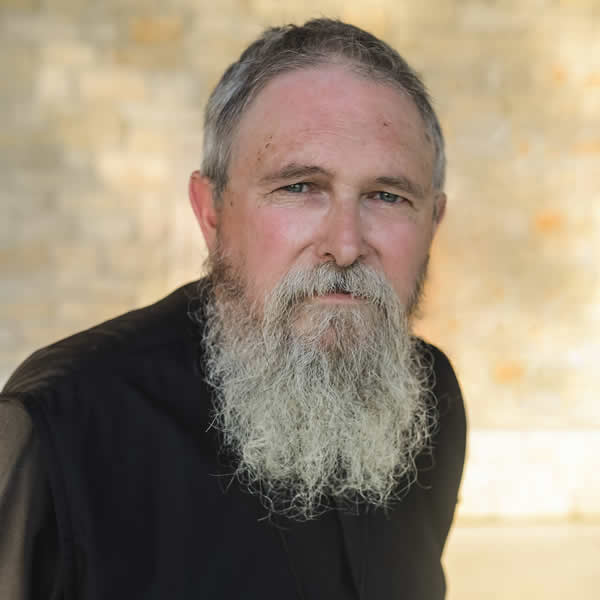
About Fr. Stephen Freeman

Fr. Stephen is a retired Archpriest of the Orthodox Church in America. He is also author of Everywhere Present: Christianity in a One-Storey Universe, and Face to Face: Knowing God Beyond Our Shame, as well as the Glory to God podcast series on Ancient Faith Radio.


Posted

in

by

Comments

29 responses to “Truth, Lies, and Icons”

  1. Matthew Avatar
    Matthew

    Fr. Stephen wrote:

    “Some have said that the modern world is inherently Nominalist. We believe that our words are only words, and only have meaning because we say or think they do. The “reality” they describe is, therefore, in our minds.”

    So are nominalists saying that the material world is simply an illusion? That the material world is a world which our words create, but which is not “real” in a real sense? Sounds very Buddhist to me, though I may be wrong.

  2. Simon from France Avatar
    Simon from France

    Father Stephen,

    is the real hypostatic presence of icons due to the fact of the deep symbolism present in them, which is completely lacking from a flat and factual photo ?
    Thank you for your presence, pray for me, a sinner, fraternellement, Simon.

  3. Todd Moore Avatar
    Todd Moore

    I hope this is a fair (AI assisted) summary: to lie is not just to break a rule but to deny reality itself, while to speak truthfully is to participate in being. Words and icons are not mere symbols or labels but sacramental presences of the realities they reference. Modern society’s turn toward Nominalism and literalism has damaged our relationship to truth. Learning again to see words, icons, and the world as sacramental and iconic is a path back to truth—and ultimately to God.

  4. Margaret Avatar
    Margaret

    Thank you for this, Fr. Stephen!

  5. Ben Avatar
    Ben

    Father, thank you!
    I’m starting to think that Tradition is important in this – to relearn to be an iconographer. Being educated in the modern dialectic, I feel that there’s a lot of garbage to wade through to get to reality. Tradition may prove to be a life line to not drown in the wrong words. A life line to The Word.

  6. Fr. Stephen Avatar

    Matthew,
    Nominalism is not referring to the material world – but rather to the nature of language – that words only have meaning in our heads. It’s a denial of “Realism” in which ideas have an existence in themselves. Nominalism is an easy gateway to relativism – to the notion that meaning is only a concept and not a reality – thus it is whatever I say it is.

  7. Fr. Stephen Avatar

    Simon from France,
    The hypostatic presence of icons is due to the fact that what indwells them (a saint, etc.) is true and real – not just a thought. Photographs could be seen in an iconic manner (lots of icons in our homes are pictures of icons – and they are truly icons). But, photographs, taken literally, can be a way of seeing in which a “thing is a thing is a thing” – just materialism.

  8. Fr. Stephen Avatar

    Whatever AI program you’re using did a good and accurate job. I prefer to stay away from such things…

  9. Fr. Stephen Avatar

    Ben,
    I agree. Tradition, healthy tradition, is a remembrance among us of a way of seeing and understanding that becomes increasingly important as we re-invent our world into madness.

  10. Dee of Sts Herman and Olga Avatar
    Dee of Sts Herman and Olga

    When I met my husband (a farmer) he was reading a book of classic literature that was a rather thick tome. By coincidence I was also reading the Coles Notes version of the same book. I preferred to have the summary rather than put the time in to read and experience the story deeply. It might be telling that I can’t even remember the title of the book.

    Much later in life I started reading Dostoevsky’s Crime and Punishment. At one point I ended up in tears such that I had to put it down for a while. That experience is quite different.

    Before I became a Christian through the Orthodox Church, I remember looking at icons and seeing them through the eyes of our western culture, I critiqued them on the basis of painterly ‘rules of perspective’. Later through catechism and marination in the Divine Liturgy, my life in Christ revealed the world under the veil. Fr. Maximos Constas describes much in his book “The Art of Seeing”.

    Father thank you for your edifying words.

  11. Fr. Stephen Avatar

    Dee,
    Fr. Maximus book, The Art of Seeing, is one of my favorites.

  12. Fr. Stephen Avatar

    Dee, Matthew, et al
    I recently listened to a program/interview on the question of “Is Math discovered or Invented?” The reason this is a question is that math (in its various forms) coincides rather accurately with “what is.” If it were merely “invented” (made up), then how could it manage to match the universe? The primary person in the conversation was a Mathematician/Philosopher, who generally holds to the notion that math is discovered – that is – that it has a true existence. She described this as a “Platonic” position (following the Realism of Plato where “ideas” have a real existence that is reflected in our world).

    It is an example similar to the Nominalism/Realism debate regarding language/ideas. The debate regarding words is not about any particular word (say, in English). Obviously, words vary from language to language. But rather that words refer to something – for example – “beauty” is not just a thing in our heads, but is real. We “perceive” beauty, just as we “perceive” that 1+1=2. It was an interesting conversation.

  13. Dee of Sts Herman and Olga Avatar
    Dee of Sts Herman and Olga

    Father,
    Thank you for your last response. Again very good examples of the difference between Nominalism and Realism. Your description is very helpful.

    For the longest time I had a Realist perspective of our models of molecules, which was similar to me of our iconography. I had a ‘discovery’ approach. Wanting molecules to speak to me and hoping that I could listen carefully and well. This is what I would call science. But it certainly wasn’t the way I was taught in academia (except for one glorious exceptional person who was brought up in a traditional Chinese family).

    Today as far as I can tell, chemistry as a science is dying out. We have now ‘material science’ which is really technology driven by industry, which is itself driven by the wheels of financial and military domination.

    Please forgive me for my lacking positivity in my expression. But I mention this because we are missing something essential in our selves and in our science pedagogy.

  14. Dee of Sts Herman and Olga Avatar
    Dee of Sts Herman and Olga

    One last thought. We have thousands of years long history of practice in chemistry. Essentially once upon a time it was seen as a practice of learning the spiritual ways of transformation.

    Mendeleev saw relationships in chemistry that others did not see, partly due to, I believe, his Orthodox upbringing. He was described to have had a ‘romantic deism”. But I take this to be a westernised view of his approach, since at the time of his later life, the Russian Church was experiencing what was later called “Western captivity”.

  15. Matthew Avatar
    Matthew

    Thanks so much Fr. Stephen and Dee.

  16. Ben Avatar
    Ben

    Father, I’ve been thinking about your reflection for a while now… (and I have to admit that probably it’s a bit over my head. 🙂 ) But here’s my attempt at a question: personally I sometimes find the lie more comfortable than the truth. I’m not talking about lying to other people, but more about e.g. shielding myself from an inconvenient truth. The truth can be very painful, and hard to look at, even though at such a time it is reality! I was wondering whether an icon (in color, or in words) is a way to open our hearts to the reality that where there is suffering and pain there also is (or, can be) beauty, truth and goodness? A way, of sorts, to invite us to look at reality, no matter how hard that can be?

  17. Fr. Stephen Avatar

    Ben,
    Sorry about my article – I probably could have done a better job! However, your question is quite good. No doubt, the world in which we live (and that lives inside of us) is marked by pain and suffering – even though they are not the whole of the story. Christ is how God has revealed Himself to us – and, we must see, Christ Himself was no stranger to suffering and pain. He has entered into the deepest parts of our lives and our world.

    Icons, rightly painted or depicted, point us beyond themselves to the very things or persons that they depict. But they are not historical photographs – they are always “pictures of heaven,” or “heavenly realities.” In truth, everything around us is an icon – pointing to itself, but also pointing to a Reality that is unchanging and eternal. The icons in our homes or in the Churches slowly teach our hearts to see in an “iconic” fashion – to understand that the eternal is in our midst. Our pain and suffering have, in a mysterious manner, a participation in the pain and suffering of Christ Himself – though, I think this is difficult to understand at first and something we have to be patient with.

    I think that your description is good and a good place to start.

  18. Ben Avatar
    Ben

    Father, thank you these edifying words and encouragement!

  19. Jenny Avatar
    Jenny

    Father,

    I have a little grouping of pictures on the shelf of my desk, all of which remind me of some aspect of Christ which I particularly love. The picture of Mary and Jesus from my grandmother in law’s jug is now there.

    A few days ago, my Facebook feed presented me with a computer generated image of Christ’s face from the Shroud of Turin.

    I had seen something like that before, some time ago. At that time, seeing this image caused a strong upwelling and conflicted reaction in me.

    I was stunned by how similar that image is to the face I have always seen of Christ inwardly. Instinctively I began to worship and adore Christ through that image- as though it were truly Jesus of Nazareth and I were finally seeing His face clearly and not through a glass darkly.

    However, I stopped myself from doing this, because I was very worried that it might not be His face at all, and if so, it is the face of another person, another real person.

    If so, it seemed that I would be committing straight idolatry, not to mention deeply embarrassing, because I know always that the Lord knows always what I am doing.

    How awkward and embarrassing it would be if in the spiritual presence of Christ Himself, I should be worshiping the face of some other person, just as real and human as I am. So I deleted the image from my phone, where I had saved it.

    My long habit is to worship Christ by faith which is directed not by images, but by His words. Because I love and worship only Christ, His words orient me towards Himself and then I worship with with joy because I know that my life is hidden with Him in God. There is no distance. Then I feel peaceful because my worship and adoration is completely going where it belongs.

    That being said, a few days ago, I saw another image of Christ from the shroud, slightly different, and again, all the emotions and worship welled up in me as swiftly and instinctively as before.

    In fact, even more so, because this face of Christ shows visually all the aspects of Him that most move me to worship and adore Him- which are His grief and sorrow, His long suffering, and yet His gentleness and steadfast love and peace that passes understanding.

    Most of all, His humility. It just shook me to the core, to see and understand in a profound, undeniable way just how human Christ is. And that image of Him has no outward charm, no beauty that we should follow Him, as that verse says in one translation in Isaiah. He is humble and patient like a Lamb.

    So now I cannot help cherishing this picture of Christ. I gaze at it lovingly every night before I pray. But I still ask the Lord over and over again, “Is this You? Is this really You? Should I keep this picture? Am I offending You? What should I do?”

    You see, I am a deeply conscientious person in general, but more so when it comes to my Lord. And sometimes, like St John said, my heart condemns me. But as he went on to say, but God is greater than our hearts and He knows all things.

    I cannot tell if this is my Protestant upbringing or scrupulosity or if I truly shouldn’t worship Christ through the image and return only to His words and faith.

    I did read that Catholics consider it an icon and that helped me feel more peace about it.

    The thing I keep returning to is that I love that picture because it shows me so powerfully what I love about Christ in a visual way. Therefore, I can’t help loving it for the sake of the One it reveals so deeply,

  20. Drewster2000 Avatar
    Drewster2000

    Fr. Stephen,

    “A major difficulty for us is that we have lost the vocabulary of iconic reality. We have substituted the language of photography.”

    I would go even further. We started with the photography substitution and then moved on to blatant lies. Pictures got photoshopped, distorted and now are often made up of total fabrications.

    In fact one could make a case that the same has happened with words. They were initially delivered verbally from a human being, but with the printing press, got consigned to writing – and now AI is able to often successfully mimic intelligent thoughts, partly due to the fact that words have been so tortured for so long (think elves tortured in the dark until they became orcs) that now they can be made to serve any master or meaning.

  21. Fr. Stephen Avatar

    Drewster,
    I agree. It’s alarming, to say the least.

  22. Jenny Avatar
    Jenny

    Father,

    I did not realize, as I was writing out my last comment, that in the light of Orthodoxy, its subject matter is almost entirely private spirituality, or at best, Catholic spirituality.

    One of the aspects of your life that I respect and admire is your faithful adherence to Orthodoxy, through suffering and a leap of faith and even to the putting away of other, earlier forms of spiritual formation which you had valued. But you gave those up to be faithful to your calling as an Orthodox priest.

    Though my question was outside of the bounds of what you might be able to discern, I want you to know that it is due to your gentleness and wisdom that I, almost without any hesitation, poured out to you aspects of my inner life with which I am currently wrestling. It is rare that I ever feel comfortable doing so.

    I hope you will take the sincere compliment that it is, and forgive me my thoughtlessness in not considering how it would sound from your point of view.

    When I began leaving comments here, I was anxious and would always ask the Lord how I could write a comment that might be a blessing to you. But I am not anxious anymore and I forgot to frame it that way.

    Thinking things through in a purely doctrinal way is difficult for me, due to my upbringing where unquestioning acceptance and obedience was demanded. We were taught that we were the only ones who had the full truth of the Scriptures because of direct revelation from God to the prophet.

    That is why, when I began to try and learn again how to be a Christian, I could not discern which church or denomination I should join. They all sincerely stated that they were Bible based. But that meant little to me, as my childhood church had stated the exact same thing.

    Therefore, I began to try and listen to the Lord and follow Him. The first thing I understood well was what He said to the crowds who had followed Him after He had fed them the day before. He told them that the work they had to be doing was to believe in Him, as the One His Father had sent, and that believing was more like complete trust in Him.

    So then I knew that my primary work is always to entrust myself to Him.

    Then I read this that He had said: “Whoever has my commandments and keeps them, he it is who loves me. And he who loves me will be loved by my Father, and I will love him and manifest myself to him.” (John 14:21)

    Then I knew that obedience to His words was the very best way that I could express my love for Him, and the promise He gave as a result of this loving obedience seemed to good to be true and beyond my reach. But I begged Him day after day to enable me by grace to keep His words that, if possible, I might see Him.

    When I would despair about this, I learned to remember that blessed are those who hunger and thirst for righteousness, because they will be filled.

    Further, I found in Psalm 32 the promise that He will lead me in the paths of righteousness for His own name’s sake. This is the best reason-for His name’s sake.

    Sometimes in the psalm there will be line that goes, “because of my righteousness before You…” And I give up on that promise for me, because I don’t have any. But when God promises to do something for His own sake, for the sake of His name, I feel secure. That is a rock solid promise. That way I know that even when I don’t know what it the best way, He does, and He will lead me in it.

    But He doesn’t always show me right away what to do, so I have learned to test in order to know what is His good and perfect will- which means I must step out a little way, all the whole looking to Him in expectant trust and submission, and then walk a little way in another direction in the same way. He lets me learn by experience.

    This is the way that I learned to follow Christ at the beginning, and I still follow Him this way. so that is also how I am approaching this picture of Him. In time, I will know which way to go.

    Even though I am not orthodox and my spiritual formation is unusual, I hope very much that you do not mind if I continue to comment here from time to time. It is like coming into the light, and I like to do that.

    Also, almost all my growth in the grace and knowledge of Jesus and His holy family is coming from your blog at this time- as well as my home church. But I’m often serving in the nursery, so I’m frequently missing the sermons.

    But if anything that I write is too much of a stumbling block, I hope Father, that you will not allow it to be posted.

    That will be a relief because I would be deeply sorry and ashamed if I had caused a brother or sister in Christ to stumble within the frame of their convictions and spiritual formation given them by the Lord, and within which they serve, trust and obey Him.

  23. Fr. Stephen Avatar

    Jenny,
    It’s not a problem. God give us all grace.

  24. Janine Avatar
    Janine

    This is a fascinating discussion. Thank you Father for the article. Dee, your explanations of science and your approach is really intriguing. In the discussion of mathematics, it reminds me that as far as I understand it, Pythagoras also was a leader of a spiritual school with disciples; he had quite a belief in spiritual significance of numbers. In fact he seemed to treat them as icons, that different numbers had specific significance.

    Father, your article reminds me of the Sermon on the Mount, and Christ’s statements likening name-calling to murder. He also said that it’s not what goes in, but what comes out of our mouths can defile us. That connection of word and heart I suppose is there?

    Also, Jesus says of Satan that he was a murderer “from the beginning” and is the father of lies. I have been very confused lately about something that might be totally off-topic here, and i hope you will forgive me for asking. But why is he called the prince or ruler of this world, and how did he become that?

    Thank you in advance and please forgive me if my comment is too off-topic.
    Thank you everyone for this discussion.

  25. Janine Avatar
    Janine

    Jenny, may I echo Father’s words to you? May God bless you with illumination

  26. Fr. Stephen Avatar

    Janine,
    Thank you. Your questions are good – and I’ll answer them as best I can.

    Satan’s role as the “Prince” and “Ruler” of this world is never truly explained in the pages of Scripture. In the New Testament, it is simply stated as fact. In Luke 4:6-7, during the temptation of Christ in the wilderness, we have this:

    “To you I will give all this authority and their glory, for it has been delivered to me, and I give it to whom I will. 7 If you, then, will worship me, it will all be yours.”

    There’s no argument with the statement that this world has been “delivered” to him, and that he can give it to whom he will. One theory is that he had always been the “ruler” of this planet – in the sense that all the planets have an angelic ruler whose task (subject to God) is to care for it. In that theory, when Satan (Lucifer) fell, he did not lose his job. However, it is still subject to the providence of God and is thus, limited.

    Another theory is that Adam and Eve should have had “dominion” over everything, but lost it when they fell, and Satan somehow came into it. Again, sort of speculation.

    So, we don’t have a final, authoritative back-story on the matter – but are presented with the accepted fact (also accepted in St. Paul’s writings).

    Someone out there with more depth in extra-canonical Jewish lore might have a better answer to what Pharisaic Judaism taught about this at the time of the New Testament. But – that’s pretty much what I understand.

    As to the “murderer from the beginning” – I take it to be similar to the title, “father of lies.” Satan has existence itself – God’s first great gift. He wants to destroy it. One of the bibilical names for him is “the destroyer.” Lies are an effort to destroy the truth – which – because it is true – has existence. The Scriptures are very keen to admonish us to speak the truth – this, I think, is why.

  27. Janine Avatar
    Janine

    Thank you so much, Father Stephen. The questions came up for me because at my church in my hometown (Oriental Orthodox: Armenian Apostolic), someone wants to show a film about the “Gap” theory. I was trying to find a way to respond. (But that’s another topic.)

    I really appreciate your answer tying in the power of truth as opposed to the “father of lies” and how important that makes telling the truth. It is indeed, in that perspective, a form of spiritual warfare, and I suppose (if you would agree) almost a way of creation, resurrection, supporting life. Certainly Solzhenitsyn’s famous words echo here.

    I had a strange experience once. A neighbor with mental health issues was very hostile; I could almost feel it through the walls. I was praying, reading psalms; but suddenly my impulse was just to speak them out loud. I honestly believe it made a difference; there was a power to that spoken word.

    Thank you so much again, as always

  28. Jenny Avatar
    Jenny

    Thank you, Janine! There is a lot of grace in Father Stephen’s comment section. May God bless you and protect you. 🌿

  29. Jenny Avatar
    Jenny

    Father,

    I wanted to let you know that I have ended up purchasing an icon. It shows the same qualities about Christ that cause me to worship and love Him, but the icon is made for prayer and worship, so I thought, it’s best to try that, and I will just have to go back to waiting to know exactly what Jesus looks like.

    I do seriously think sometimes that faith sees farther and more clearly than sight can. Sight only sees the outside, but faith can see what is within. There were lots of people that saw Jesus just as He was on the outside, but they didn’t know Him at all. I would much rather know His heart than His face.

    That said, I have been reading some of your other blogs about icons, and how, in Orthodoxy, the face is often used to mean the person themselves- to see God’s face, to gaze into His eyes is to know Him, and to be known in return, because you cannot look someone in the eyes without revealing your own.

    But in the icon I chose, He is not looking straight ahead. He is turned slightly aside and looking down and He is full of grief. But I feel as if He is putting His heart open like the pages of a book.

    Also, congratulations on your 50th wedding anniversary! I hope you and your wife have a wonderful celebration with friends and family this weekend. ✨

Leave a Reply

Your email address will not be published. Required fields are marked *


Subscribe to blog via email

Support the work

Your generous support for Glory to God for All Things will help maintain and expand the work of Fr. Stephen. This ministry continues to grow and your help is important. Thank you for your prayers and encouragement!


Latest Comments

  1. Thank you, Father. I do think the way we frame everything in political terms is problematic, and probably confusing in…

  2. Father, Thank you again for your comment to me and to Nathan. “Not my will but thy will be done”…

  3. Nathan, I take the silence to be guidance as well. I have conversations with hierarchs of various jurisdictions from time…

  4. Thank you, Father. God bless our wives. Your answer is very helpful and I think answers some things I wasn’t…

  5. Nathan, I remember my days in the Episcopal Church. We frequently received instructions and commentaries from the House of Bishops…


Read my books

Everywhere Present by Stephen Freeman

Listen to my podcast


Categories


Archives