Glory to God for All Things

On the Foundation of the Apostles and Prophets

Now therefore, you are no longer strangers and foreigners, but fellow citizens with the saints and members of the household of God, having been built on the foundation of the apostles and prophets, Jesus Christ Himself being the chief cornerstone, in whom the whole building, being fitted together, grows into a holy temple in the Lord, in whom you also are being built together for a dwelling place of God in the Spirit (Eph. 2:19-22).

+++

There are a number of statements in the New Testament that deeply contradict the near “fetish” that some attach to the Bible. One of these is found in an admonition St. Paul offers to the young Timothy. He describes the Church as “the house of God, which is the church of the living God, the pillar and ground of the truth.” Were most people in the Protestant South in which I live asked what is the “pillar and ground of the truth,” they would answer, “the Bible.” And they would be wrong.

Another example is the quote from Ephesians offered above. Though St. Paul describes Christ Himself as the foundation of the Church (in 1 Corinthians), here he expands that metaphor, describing Christ as the “cornerstone,” with the Apostles and Prophets being the Church’s foundation. In neither case does he describe the Bible as a foundation, though, in popular Evangelical culture, it would not be unusual to hear the Scripture described as our foundation.

What would be lacking in these misperceptions of the Scripture, is proper regard for the Church as a “living” temple. Christ did not come into the world to deliver a book. Such notions, sometimes enshrined in the concept that once the New Testament was complete, the task of the early Church was complete as well, are but Christianized versions of Islam. Christians are not a “people of the Book.” Such a thought is deeply distorting of the Christian gospel.

St. Paul’s vision (and the reality given by God) is of a Church that is composed of a living community of persons (the whole communion of saints). That whole living community of persons is the pillar and ground of truth. Its foundation is composed of a living body of persons (the apostles and the prophets) just as Christ himself, its cornerstone, is alive. This is the Church that reads the Scriptures and is itself “our epistle written in the fleshy tables of the heart” (2 Cor. 3:3).

Those who make a sharp contrast between the Scriptures and the fathers, as though everything was simply a text and the fathers a very inferior text, fail to understand the character of a Church that is truly alive. Were someone to ask if I believe the fathers are “inspired,” I would answer, “Of course.” How can the fathers be fathers and not be inspired? If what they wrote and said is not by the Holy Spirit then it is useless. Is their writing to be held as equal to the Scriptures? They themselves would immediately cry, “No!” Just as the mouth of a river cannot be compared to the source of a river – though they be the same river. But if someone cannot discern that the waters are the same, then something is deeply lacking.

Oddly, the Apostles themselves very likely did not regard their own writings to be comparable to the writings of what they called the “Scriptures” (grammata). But without the writings of the Apostles and the Gospels given to us, we would not know how to read the Scriptures of the Old Testament. When the Old is read through the New, then the Old itself becomes the New. Those who continue to read the Old Testament as though it were somehow not the New Testament, do not know how to read the Scriptures. They are drinking from a foreign river.

But even as we have to learn to read the Scriptures, so we have to learn to read the fathers. Not all fathers are of equal importance, and not everything written by a single father is as important as everything else he wrote. The nightmare of a loose canon!

The simple fact is that we are indeed built on the foundation of the Apostles and Prophets as a living temple. There is no substitute for the life of that temple. Only in the context and community of the living Church of God can we learn how to read, whether Apostles or Prophets or the fathers. Those who have wrenched the Scriptures out of the context of the living, Orthodox Church, have only wrested for themselves error and delusion. They are like the sorcerer’s apprentice – able to read the words of the spells but knowing nothing of their magic. They conjure up a wrathful God and fearful visions of the world’s end. The results of their faulty readings are all around us.

Oddly (not really) most of the content of the Apostles’ writings, deal with how to be the true and living Church of God. It is full of admonitions towards humility and forgiveness, patience and forbearance. It warns about those who do not obey their leaders and of the many false prophets and leaders to arise. There is no instant key to understanding the Scriptures, but whoever begins to read them in their proper and living context begins the journey on the path for which they were written.

And truly Jesus did many other signs in the presence of His disciples, which are not written in this book; but these are written that you may believe that Jesus is the christ, the Son of God, and that believing you may have life in His name (John 20:30-31).

57 Responses to “On the Foundation of the Apostles and Prophets”

Author comments have a tan color background for you to easily identify the posts author in the comments

  1. fatherstephen says:

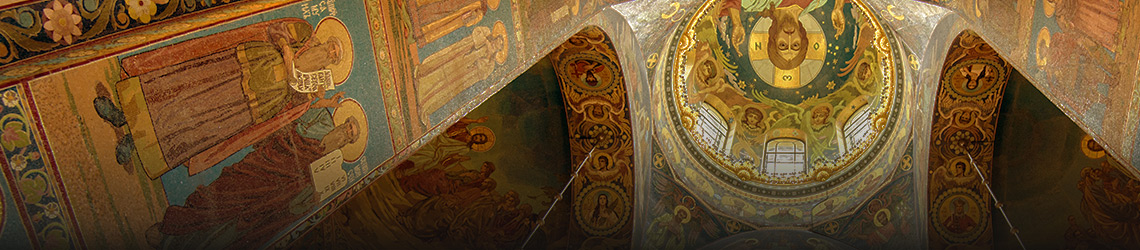
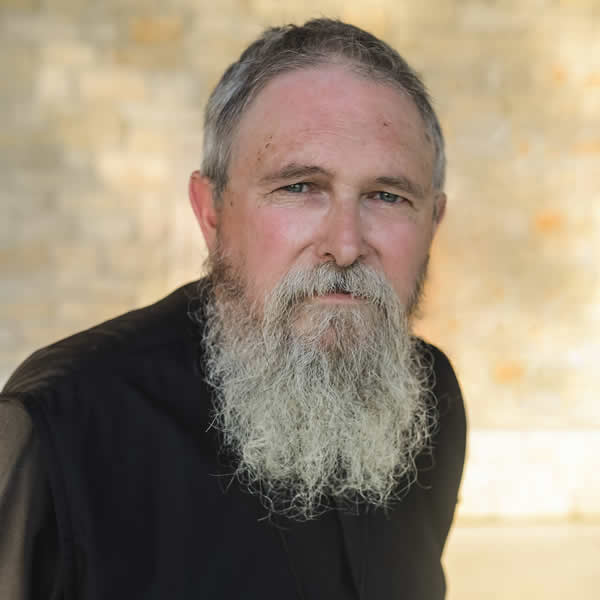
    The photo is of the late Archbishop of Dmitri of Dallas, my father in God. Today is the anniversary of his falling asleep. He was a great scholar of Scripture and author of many commentaries.

  2. Brett says:

    thank you

  3. R. Warren says:

    Father,

    Could you explain the Orthodox understanding of ‘inspiration’ a little more? To Protestants like me, inspiration is deeply and inextricably connected to inerrancy and infallibility. That means to call the Fathers inspired requires a sort of verbal plenary authority. This would make the original Nicene Creed, with its anathema against those who attribute more than one hypostasis to God (since hypostasis and ousia were more synonymous at that time than not), problematic as it directly denies later (more well defined) understandings of that word. There are also some semi-anti-Semitic statements in certain Fathers; plus some possibly misogynist ones. This is why I ask: I want to read the Fathers in the true spirit of how they are to be read.

    Thanks for your time.

    Russ

  4. mary benton says:

    Father Stephen,

    As always, your postings given much cause for reflection. I very much agree with your concept of the church as living. How could it not be? If the Holy Spirit stopped speaking after the apostles passed from this life, we are all rather foolish for believing.

    It seems that many people like things to be black and white, presumably to avoid error. The Bible has unfortunately been used by some as a rule book with absolute authority (the rules often being selectively chosen). In an effort to avoid error, a new error is born.

    Yet it is indeed challenging to be part of this living church because we can so easily slip into ascribing “inspiration” to the things we might prefer to believe. I guess I am asking, like Russ, for more of your perspective on inspiration… Thank you again.

  5. David Brent says:

    Father, bless.

    Congratulations on the new format for your blog site. It is so much easier to read! Thank you for all the effort you put into this work.

    My interest in Orthodoxy is continuing. I’m still digging and learning. I hear what you are saying in this post about the church being the living temple. I like the dynamic of the church being the pillar and ground of truth . . . instead of a book. It is making sense . . . more and more.

    I have read that the Orthodox do not consider the age of Church Fathers to be over and includes later influential writers other than the Apostolic, Greek, Latin, and Desert Fathers. However, I cannot recall that I have every noted one of these “other” Fathers being referenced in anything I have every read or listened to.

    Who are the later influential writers that are included in the category of Fathers by the Orthodox churches?

    Also, how is it decided who is added to this special group?
    Is there an established process?

    Your humble servant.

  6. Scott says:

    Fr. Stephen and all,

    Forgive me for asking a technical question about the new blog but whenever I go the this blog I don’t get the beautiful masthead at the top of the articles but only an ugly text-oriented listing of the articles. What am I doing wrong?

  7. PJ says:

    A few Protestant scholars actually came out with a two-volume defense of sola Scriptura entitled, ridiculously enough, “Holy Scripture: The Ground and Pillar of Our Faith.”

    http://www.amazon.com/Holy-Scripture-Reformation-Principle-Scriptura/dp/1893531023/ref=pd_sim_b_2/186-5755086-2933020

    The irony is unbearable.

  8. PJ says:

    “Such notions, sometimes enshrined in the concept that once the New Testament was complete, the task of the early Church was complete as well, are but Christianized versions of Islam. ”

    I’ve begun to formulate a theory concerning the Islamization of Christianity during the Middle Ages. While Protestants claim that the Church was infected by Greek thought, and specifically Greek philosophy, during this period, it seems rather that it was infected by Islamic thought. Voluntarism, biblicism, inquisition, forced conversion, holy war, iconoclasm, nominalism, Scriptural fundamentalism: these are all essential to the Muslim faith. By thinking has been significantly influenced by “Charlemagne and Muhammad Revisited” by Emmet Scott, which seeks to prove that classic antique society was destroyed by Islam rather than the Germanic peoples, whom he argues were quick to adopt Roman law and customs and willing to ingratiate themselves to Constantinople (going so far as to use the emperor’s bust on their coinage and send their children to his court for learning and marriage).

  9. R. Warren says:

    PJ,

    Could it be both? When Islam really came into contact with the West, it was through the sharing of Aristotelian thought.

    Russ

  10. Lewis says:

    Surely, the preceding questions and comments reflect concerns that we have in common. The book most helpful to me in how to understand what I am supposed to understand is “The Arena” by Bishop Ignatius. I cannot say whether or not that book is inspired, but the Holy Spirit has worked through it in my life.

  11. fatherstephen says:

    Scott,
    Checked with my IT guy. I’ve deactivated a plugin temporarily (it makes the wordpress theme work for Touch applications – like phones – it may be the trouble). Let me know if this helps. Please…need feedback on this!

  12. fatherstephen says:

    PJ,
    The irony is indeed unbearable. I think I will go sit in a cave today and say, “Argghhh” all day long.

  13. fatherstephen says:

    PJ,
    Yes, I think this is a fruitful historical direction for thought. Like Byzantium itself, Islam gets overlooked. It’s like people think that Western Europe happened in a vacuum. There are some (in the most common accounts) who think the Renaissance happened on account of archaeology. As if!

  14. fatherstephen says:

    Warren,
    Interestingly, it was the press of Islam, using Aristotelean thought that provided the impetus for the West to take up Aristotelean thought in defense of the faith. But you have to be careful when you use the dark side of the force. :)

  15. PJ says:

    R. Warren,

    Muslim Aristotelians were few and far between after the Ash’arite overthrew the Mu’tazilites. Robert Reilly makes a convincing case that Islam was not nearly as Hellenized as people commonly believe. Greek influence was waning by the eleventh century and suffered irreversible defeat at the hands of al-Ghazali (died AD 1111), the Augustine of orthodox Islam.

    Muslims undeniably preserved aspects of Greek culture, but it is increasingly clear that they were not avid, careful caretakers. Given their control of the very heartland of Hellenistic art and learning, it is actually quite shocking how little they preserved. For instance, as late as the 7th century there existed in Egypt detailed histories of that country, detailing the reigns of pharaohs from many centuries before. By the year 1000, the “Muslim Herodotus” speculated that the pyramids were Joseph’s granaries, or perhaps the tombs of the prophets. The cultural devastation is unsurprising, given their contempt for paganism.

    But this is neither here nor there.

  16. fatherstephen says:

    Russ,
    Very good question. The notion of various theories of inspiration is really a kind of Protestant anxiety. Having set aside the Church (as a theological reality) and the hierarchy, Protestantism was left with Scripture for its sole authority. Thus the nature of that authority has to be defined (for many of them). I find almost none of their theories to be interesting or useful. For the authority of Scripture means nothing by itself. The question always lies in the matter of interpretation. For it is not the “Scripture” that has to be inspired – it’s the reading of Scripture. And that brings us back squarely to the Church. The notion of “soul competency” of the individual seems rather nonsensical to me, both in the light of the absurdities that individuals come to as a result of their delusional treatment of Scripture, and in its inherent denial of the Church – which is the “Pillar and Ground of the Truth.”

    The Scriptures are authoritative, when rightly read in and by the Church. There is no particular definition of inspiration that Orthodoxy has ever needed to state. The authority of Scripture is an “organic” matter. It cannot be separated from the authority of the Church, nor the present authority of Christ Himself, nor the life lived by those who hear its words. The point is not an abstracted authority, but the authority that rests in a “life lived.” If the Scripture is not rightly lived, then it is not rightly interpreted. The very life and existence of the Church, lived rightly in its members, is the interpretation of Scripture. The purpose of the word is its incarnation, not its literalization (to coin a word).

    And so the Church points to its life, to the lives of its saints, to the lives of the faithful through the ages. Those things certainly are not “without error,” in some kind of mechanical sense, but when we live in right communion with them, they lead us to salvation. The “inspiration” of Scripture is its ability to direct us towards salvation. Salvation, true union with God in Christ, is the point of the whole economy of God with us.

    The writings of the fathers are able to lead us to salvation, when rightly read in the Church and by the Church. They are no more useful without the Church than the Scriptures are without the Church. They are one organic life. There are certainly instances of anti-semitism, misogyny, etc. within some of the fathers, just as there is polygamy and a few other odd notions in the canon of Scripture. The point is dwelling rightly in the life of the Church and knowing how to read these things.

    I recall a conversation with my late Archbishop, of blessed memory. I was trying to finesse matters and exonerate St. John Chrysostom of anti-semitism. The Archbishop said, “Well, I think he was anti-semitic.” It didn’t bother him. There’s no need to exonerate his writings. If something’s wrong it’s wrong. It doesn’t make everything he ever said wrong. But in the life of the Church, one archbishop says of another, “He was anti-semitic.” St. Cyril said far worse things about St. John C. until the Theotokos rebuked him in a dream.

    There is an anxiety about “authority” in Protestantism because their theories are unworkable. Takes a lot of work to defend the indefensible.

    I do not mean to be harsh, but to read the fathers in the “true spirit of how they are to be read” is to read them in the bosom of the Church. “What has the Church taken this to mean in its life and liturgies, etc., over the centuries?” is a good question to ask. Also to approach their writings as something of a “mystery” into which we are lead rather than a text that we master is helpful.

  17. PJ says:

    “I would not believe in the Gospel myself if the authority of the Catholic Church did not influence me to do so.” –St. Augustine

  18. fatherstephen says:

    Mary,
    I think I am intending to turn the perspective on inspiration back towards ourselves. If my heart is impure, all things will be impure (Tit. 1:15), including the Scriptures and the writings of the fathers. If I am looking for Christ, and struggling to do so with humility and honesty, I have a better chance of encountering inspiration. As the Elder Paisios noted, “A man can be saved by seeing a fox cross the road.” Apparently everything is inspired to the pure.

  19. fatherstephen says:

    David,
    The Orthodox have never had any process by which we declare someone or their writings to be “of the fathers.” It’s more a general consensus of the Church (and therefore terribly frustrating for those who want more formal assurance for their religious anxieties). When a writer is also canonized as a saint (such as St. Ignatius Brianchaninov, or St. Silouan of Mt. Athos, etc.) there writings are certainly granted a certain weight. But saints can be wrong about things, too. So their writings are read in the light of the larger life of the Church. The life of the saint who wrote them, and the context in which they were written cannot be ignored. Thus, for me, there are a number of writings by saints during the period some call the “Western Captivity” of the Church that help me understand why their works seem so un-Orthodox-like in many ways.

    There are contemporary figures whose writings enjoy a great deal of authority – though very few whose work is not challenged by others within the Orthodox world. I like the works of Fr. Alexander Schmemann, though I’m aware of some of their limits and flaws. I do not much care for the work of Fr. Seraphim Rose, though others regard them quite highly. Such varied reactions tell me that time is required to “sift” some things. But, things written by either Schmemann or Rose that echo and illumine things that have been said by others before them – do not require much, if any, sifting.

    Orthodox life is primarily lived in worship and in prayer. If we are firmly grounded in that part of our life, then we will be able to read things with more clarity. If this part of our life is weak, everything else will be weak. “A theologian is one who prays, and one who prays is a theologian.”

  20. PJ says:

    ” I do not much care for the work of Fr. Seraphim Rose, though others regard them quite highly”

    I’ve suspected as much for a long time now. Why is this? His tendency toward Biblical literalism?

    I have to admit that I enjoy his critical letters to Merton.

  21. drewster2000 says:

    Fr. Stephen,

    Great post as always. One thing I wanted to emphasize is that Protestants unconsciously equate “inspired” with “perfect” when they’re talking about the Bible. Anything inspired can’t be questioned.

    Your comments on the Fathers sheds light on the fact that this just isn’t so. Saying their writing was inspired of the Holy Spirit doesn’t mean absolutely everything they said was true, perfect and unquestionable.

    When it comes to the Bible itself, it’s not a matter of questioning its truth and rightness. The fact is, if the Good Book is ripped out of its context – the Church – it can be as murky to comprehend as if there were no light to read by.

    In that same vein, I believe the Protestants highly prefer the Bible over the living body called the Church because it’s much more manageable. I can take this book with me wherever I go and make it say what I want to – though I would never admit that’s what’s happening, even with the best of intentions.

    Let’s face it: human beings are messy and unpredictable. Tell me, a Westerner who likes things black and white, that I can get the whole truth of the world in a book for $24.99, and that might just be too tempting for me to resist.

  22. PJ says:

    Drewster,

    Let’s not go to the other extreme and speak lightly about the Holy Scriptures. The Bible is not just “a book for $24.99.” It is invaluable. The Church has always held the Divine Writings in the utmost respect, adoring their wisdom and truth. It’s not without reason that the Bible is worthy of a kiss.

  23. drewster2000 says:

    PJ,

    I was taking the stance of the Protestant world I came out of. It does not reflect my current position. I’m simply explaining why Sola Scritpura seems to have such a strong hold on them.

    But thanks for the reminder, Philip Jude.

  24. John says:

    Father, simply “thank you” for this post and comments. I was steeped in the confusion of Protestant Biblical inerrancy from birth, and I suspect it will take years to fully live into/become united with the Orthodox understanding of inspiration and interpretation (despite being a convert of five years now).

    May the Lord bless you and your work.

  25. Devin says:

    “Those who have wrenched the Scriptures out of the context of the living, Orthodox Church, have only wrested for themselves error and delusion. They are like the sorcerer’s apprentice – able to read the words of the spells but knowing nothing of their magic. They conjure up a wrathful God and fearful visions of the world’s end. The results of their faulty readings are all around us”

    Oy!…the truth hurts.I’ve been this person. What an apt analogy.

    Also, great work on the new site. Very user friendly. As one soon to become a catechumen I’ve found this site invaluable. A sincere thanks to you (and the great comments) for helping to cast some light on my path.

  26. dinoship says:

    Father,
    I did not receive this latest -splendid- post in my e-mails as usual. I was wondering if this is a known issue.

    The “Islamic” notions of Sola Scriptura do quite some harm, the early Church did not have the New Testament and all the saints from Adam to Moses had no scripture at all.

  27. Dinoship,
    Not a known issue until you just reported it. I think the email’s are sent out to subscribers. I suspect that I’ve got to check to be sure that the list for the previous site has been carried to the new. Thanks ever so much. Bugs, bugs, bugs,

  28. Scott says:

    Fr. Stephen,

    You said -

    “Checked with my IT guy. I’ve deactivated a plugin temporarily (it makes the wordpress theme work for Touch applications – like phones – it may be the trouble). Let me know if this helps. Please…need feedback on this!”

    The web page now comes up correctly. I don’t know if this deactivation is what caused this, but all looks good.

    Scott

  29. Scott says:

    Fr. Stephen,

    Perhaps you need a technical thread going somewhere so these sort of details don’t litter up the far more important theological threads. Just a thought. Keep up the great work.

    Scott

  30. dinoship says:

    “everything is inspired to the pure.”
    Another wonderful truth!
    Elder Ephraim of Katounakia used to say that, concerning both written and spoken word, a person always takes away with him what his internal predisposition allows for. The speaker (or written word) might, for example, be speaking words with a the “measure” of 50 (as an arbitrary example). One person with a predisposition of 20 will take with him only 20. The person with 30, takes 30. The person with a predisposition of 90 however, will take 90!

  31. Andrew says:

    Love this site. It’s become a real home from home for us orientalists & logisticians. :)

  32. David Kontur says:

    Dear Father Stephen –
    Nice job on the new format for the website. Let everyone know that worked on this that this is very nice!! Thanks again for being a voice crying the in the Wilderness.

    Blessings!
    Dave

  33. fatherstephen says:

    The rather “mechanical” versions and explanations of inspiration (some fundamentalists seem to compete as to who can say “infallible” in the most absolute sense) are all quite misleading. They have created a very false impression of the Bible and made of it something it is not. In many ways, the Protestant groups who engage in this have no sense whatsoever of the nature of Scripture. In particular, they have a tendency to treat the Bible as a “stand alone” concept. It is the “Word of God,” etc., and authoritative over everyone and in every way.

    What is lacking is to see the Bible properly as an organic element of the life of the One Church. It does not “change” outside of that context, but it is no longer what it is intended to be. An icon in a museum exhibit is still an icon, but it has been turned into “art” and no longer has the proper context of veneration,etc. Those who use the Scriptures to “beat people over the head” who are not even Christians, have brought the Scriptures into ill repute. They have become despised by significant segments of the population (and misunderstood by most). I rarely meet anyone, including so-called “Bible-believers” who has the faintest clue about the Scriptures.

    St. Irenaeus believed there was an unbroken line of tradition from the apostles, to those they mentored, and eventually down to himself and other Christian leaders. The Gnostics interpreted the Scriptures according to their own tradition. “In doing so, however,” Irenaeus warned, “they disregard the order and connection of the Scriptures and … dismember and destroy the truth.” So while their biblical theology may at first appear to be the precious jewel of orthodoxy, it was actually an imitation in glass. Put together properly, Irenaeus said, the parts of Scripture were like a mosaic in which the gems or tiles form the portrait of a king. But the Gnostics rearranged the tiles into the form of a dog or fox.

    from an earlier article.

  34. Marie Stoltz says:

    So much of this reminds me of a quote I recently read. “”He cannot have God for his father who refuses to have the church for his mother.” St. Augustine

  35. Andrew says:

    The problem is less to do with Scripture than with the reader. The heart and soul of the bible is contained in a few verses in Matthew Chapter 25. Everything is turned on it’s head. This is the beauty of God. It is everywhere, but it is hidden.

  36. Michael Bauman says:

    I have profited by the writings of both Fr. Schmemann and Fr. Seraphim but for different reasons. In general (very general) Fr. Schmemann’s works make me think deeply while Fr. Seraphim’s make me want to pray.

    Fr. Seraphim’s body of work is quite uneven, IMO. Fr. Schmemann’s much more consistent. In part, I think, this is due to Fr. Seraphim’s rather ad hoc approach to and entry into the Church and the fact that he was a convert from a deep darkness rather than having the advantage of being raised in and formed by the Church

    Another reason I like Fr. Seraphim is that he is an American of my generation (a little bit ahead) and dealt with many of the same exestential challenges with which I dealt. His struggle illumines mine on a level that is not particularly theological in the formal sense. He understands the darkness and its allure better than Fr. Schmemann. But it is really good to have both.

    Two quotes, one from each, sick in my mind:

    Fr. Seraphim: “Truth is not just an abstract idea, sought and known with the mind, but something personal—even a Person—sought and loved with the heart, Jesus Christ”

    Fr. Schmemann: (this is more of a paraphrase) The Church is not meant to help, but to declare the truth.

  37. drewster2000 says:

    Dinoship,

    Thanks for the example of disposition as expressed in numbers. I found that to be extremely true. With regards to the present discussion about the Bible, how many times different people have read a scripture and gotten something totally different from it than the last person!

    The guidance of the Holy Spirit is needed, and though the Spirit blows where it wills, Christ has called us to be one body and speaks in the midst of it clearest and best.

  38. drewster2000 says:

    Fr. Stephen,

    More blog troubleshooting/feedback for you:

    From “Is Anybody There? Speaking to the Heart” posted 28JUN2012 to “Life in a Sacramental World” posted 21AUG2012, the comments are closed. Before and after that are open. I now assume this was not intentional on your part.

    FYI, drewster

  39. Mark says:

    Christ is in our midst!

    Hello Fr Stephen;
    I am really enjoying the layout and aesthetic of your new blog space. Thanks for putting the mind-numbing work into it. :)

    One question I have to offer (since I cannot resolve my own preference) is whether it’s worth allowing the most recent few posts show up in full, rather than *only* the one most recent post?
    I am torn, b/c I like the aesthetic of just one post showing with the rest ‘clickable’, however I’ve noticed that I am less willing to click and check a ‘closed’ post, than to just scroll down and read what’s available.
    I’ve also noticed there are less comments on previous posts.

    Just food for thought. :)
    Love;
    -Mark

  40. fatherstephen says:

    I’m working on the comments thing, but haven’t quite found the trouble yet. I think we fixed the email’s problem

  41. fatherstephen says:

    Mark,
    Thanks for the reflection. Those are the kinds of questions I’ve wondered about as well. I am probably going to try a headline with a short part of the beginning paragraph on the other articles. That “teaser” might be more interesting than the mere headline – and give more information.

    In general, the views are up, though that fluctuates.

  42. dinoship says:

    Father,
    I sincerely think that a well organised “Table of Contents”, would be more than welcome. I hope this does not require too much work. Even a non-organised list of all ‘Titles’ would still be most welcome addition to the sights navigation. I hope this is possible…

  43. dinoship says:

    I obviously meant “this site’s navigation” – sorry

  44. dinoship says:

    I see that most of the tabs at the top are now working properly, so I must take back a portion of my earlier suggestion regarding the site’s navigation. It would still be great to have a way to peruse the whole content (all titles) in a Table of Contents dedicated page though

  45. BV says:

    The irony: relying on the text as an authority for your argument that the Church is not “a people of the book.”

  46. Yes. I thought of the irony as I wrote. Of course, the book didn’t say anything – I did – as the Church reading. To anyone outside of Christ it would carry no weight.

  47. dinoship says:

    Saint Nicholas’ (Velimirovich) saying that, “he who does not believe in God or does not know Him is inevitably forced to worship objects” even holds true regarding those who worship scripture instead of God.
    And God can only be worshipped once you become a member of His Body.
    Early Church had the Liturgy, not the New Testament …

  48. fatherstephen says:

    Thanks dinoship. These suggestions and observations are very helpful as I keep “tweaking” things.

  49. I did not realize that Vladyka had fallen asleep on my birthday, or if I did I pushed it out of my mind. Meeting him was a highlight in my life. Memory Eternal Vladyka!

  50. + Michael says:

    Dear Father, I have gained new insites in your posting and look forward to continued readings. Blessings to you and your readers.

Leave a Reply

© 2006-2013 Glory to God for All Things. All Rights Reserved.
Orthodox Christianity, Culture and Religion, Making the Journey of Faith
Powered by WordPress & Made by Guerrilla