Mary as the “Secret Joy” of the Church

Fr. Alexander Schmemann wrote:

…When investigating the history of Mariological piety, one discovers that it is rooted not in any special revelation but, primarily, in the experience of liturgical worship. In other terms, it is not a theological reflection on Mary that gave birth to her veneration: it is the liturgy as the experience of “heaven on earth,” as communion with and the knowledge of heavenly realities, as an act of love and adoration, that little by little revealed the unique place of Christ’s Mother in both the economy of salvation and the mystery of the “world to come.” Mary is not part of the Church’s kerygma [public preaching], whose only content is Christ. She is the inner secret of the Church as communion with Christ. The Church preaches Christ, not Mary. But communion with Christ reveals Mary as the secret joy within the Church. “In her,” says a hymn, “rejoices all creation.”(Celebration of Faith, Vol 3, pg 89)

Recent conversations regarding the Theotokos sent me reading and reflecting about this mystery in the Church’s life. Not surprisingly, Schmemann’s reflections went to the heart of the matter. One of the points in his small book is that Orthodox Christianity has traditionally said very little about Mary. Unlike the Catholic West, there are no traditional treatises on “Mariology.” She is not the subject of theological reflection. Instead, her presence in the life of the Church is found spread throughout its liturgical life – a repeated refrain within the greater chorus of our worship. She is the “secret joy” within the Church.

When I read that phrase in Schmemann’s work, my heart leaped. And it is just that leaping that I find so hard to express when speaking with others, particularly those who are not Orthodox. At the same time, it is just that leaping that I find utterly intrinsic to the whole of my Orthodox experience. The first time I sensed this, interestingly, was not in a reference to Mary at all.

In college, my best friend approached me in the library and handed me Vladimir Lossky’s Mystical Theology of the Eastern Church. “Here, Steve,” he said. “Read this.” Lossky’s work was the most dense piece of theology I had ever attempted. I’m sure that I did not understand the larger part of what I read. However, it was my first exposure to the classical patristic teaching, “God became man so that man could become god.” It is a thought that is expressed in a variety of ways. St. Paul boldly said, “For He [God] made Him [Christ] who knew no sin to be sin for us, that we might become the righteousness of God in Him.” (2Cor. 5:21) There are numerous other expressions that describe this “exchange.” God became what we are that we might become what He is.

This can easily become an abstraction. When I first read it in Lossky, my heart raced. My best friend and I had been having conversations about the topic (in vague and hesitant ways) for some time. In Lossky, everything was confirmed. In truth, my heart probably became “Orthodox” in that moment, though it would be another 23 years or so before I entered the Church. By the same token, I would say that it came as a surprise when, after my arrival in the Church, that heart, once touched by the word of God’s great exchange (“He became what we are that we might become what He is”), was touched in precisely the same manner in the Church’s veneration of Mary. Schmemann’s “secret joy” describes it to a “T.”

The Theotokos is probably the first and prime example of this great exchange. St. Paul said, “Eye has not seen, ear has not heard, nor has it entered into the mind of man, the good things God has prepared for those who love Him” (1Cor. 2:9). The young virgin correctly (and by inspiration of the Holy Spirit) said, “All generations will call me blessed!” (Lk 1:48) However, she is only the first example of that which awaits us all. As Christ says:

“Here are My mother and My brothers! For whoever does the will of My Father in heaven is My brother and sister and mother.” (Matt. 12:49-50)

This is that sweet secret! That it is such an intimate part of Orthodox worship is clear evidence that the Liturgy is heaven on earth. We say out loud on earth what we have seen in heaven – and then – only the smallest part of it.
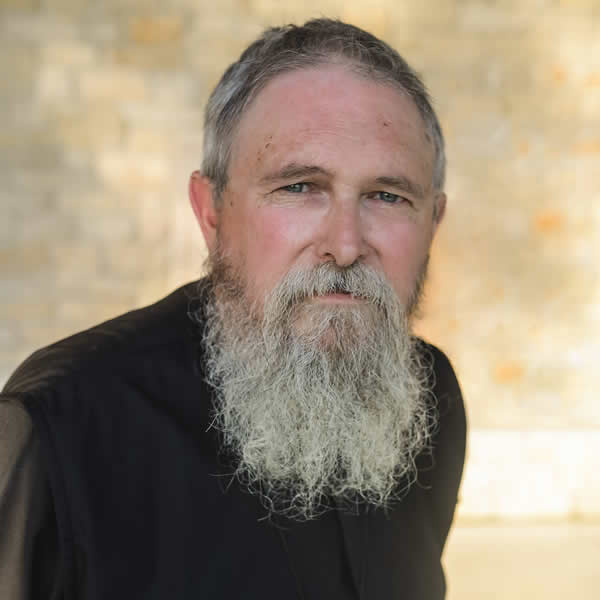
About Fr. Stephen Freeman

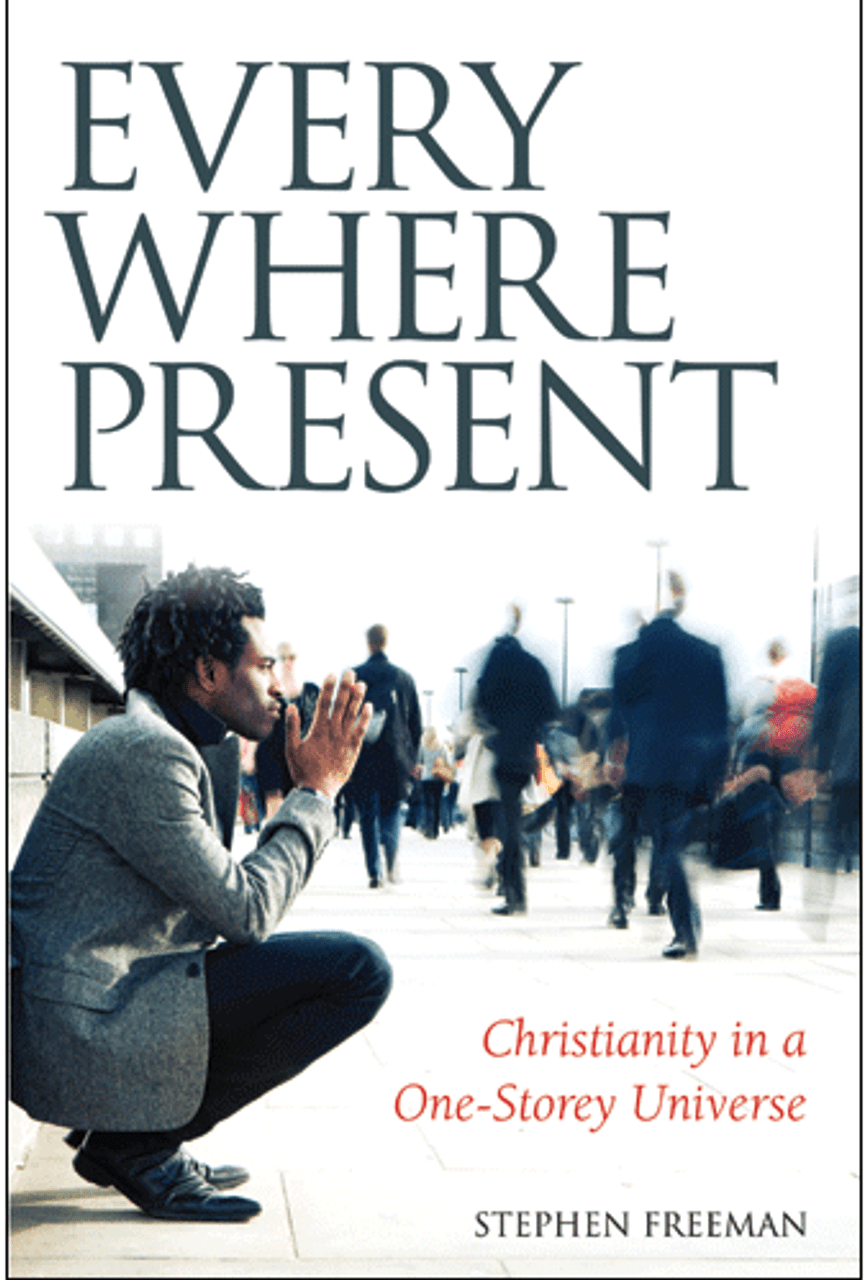
Fr. Stephen is a retired Archpriest of the Orthodox Church in America. He is also author of Everywhere Present: Christianity in a One-Storey Universe, and Face to Face: Knowing God Beyond Our Shame, as well as the Glory to God podcast series on Ancient Faith Radio.


Posted

in

by

Comments

30 responses to “Mary as the “Secret Joy” of the Church”

  1. Steve Kellar Avatar
    Steve Kellar

    Thank you, Father, for sharing this. But when I hear these words by Paul, my mind reverts to my Protestant upbringing and I hear a penal, substitutionary definition of the Crucifixion. That Jesus was “made” to be sin in a forensic transaction. Justice had to be satisfied in the form of punishment imposed upon an innocent, and willing, third party. NT Wright makes the argument that sin (“hamartia”) is the culprit, and personified as such. In that context I have imagined Jesus, like the hero in a story I cannot recall by name, clasps him to himself and leaps to his death in order to rid the world of an otherwise invulnerable villain. Is this a fair representation of Christ’s sacrifice?

  2. Fr. Stephen Avatar

    Steve,
    There is no definitive picture of Christ’s sacrifice. The early Church (as in 1Cor. 15) says that He died “for our sins.” There’s a rich history of expression in various forms that give a structure to that. The sense of sin as the enemy – personified – who is put to death, similar to the image you invoke, is certainly possible. But, it’s interesting in St. Paul (2Cor. 5:21) that he says, “He made Him to be sin,” which is quite strong. I like to work in “ontological” imagery, the imagery of “being,” because it has possibilities that many other images do not have, and because it was a favorite among many of the Eastern Fathers. Obviously, it cannot mean that Christ sinned. However, it treats sin as something like a “substance,” another “personified” image (St. Paul likes to use these).

    In various places the Fathers say that Christ became what we are that we might become what He is.

    I do not have any sense from Scripture that “justice had to be satisfied.” What is this justice? That is, I think, a medieval invention rather than a Biblical image. I’ve seen it used to translate “dike” – the root in the word “dikaiosyne” (translated as “righteousness,” most often). I saw a medieval English translation of it as “rightfulness” which is quite interesting.

    But the whole “punishment” system is simply a Western invention. The OT sacrificial system of the Jews is not at all about punishment. One reason I tend to emphasize this is that a “punishment” notion of righteousness and justice says things about God that are not true. It has caused a lot of damage and delusion in the lives of the faithful. It is not part of Orthodox teaching.

  3. Matthew Avatar
    Matthew

    Fr. Alexander Schmemann wrote:

    “…When investigating the history of Mariological piety, one discovers that it is rooted not in any special revelation but, primarily, in the experience of liturgical worship.”

    This is profound. Shouldn´t this be how all things we know to be true in the Church come to pass? Not via a doctrinal or pedagogical download, but rather truth revealed over time as it slow cooks within the Spirit-filled pot of liturgy and Tradition?

    I have slowly been warming up to Mary in new ways over the past few years since returning to the Catholic Church. Mary as the inner secret of the Church as communion with Christ is a beautiful picture really. Mary is becoming not a substitute for Christ, not a competitor to Christ as my views once held – but rather a gift to us all revealed through Christ as the premier example of what perfect union with God truly is. What a wonderful source of grace for us all!

  4. Fr. Stephen Avatar

    Matthew,
    I think you are right – this is how all things we know to be true in the Church should be like this. We say, “Come and see,” not “Let’s think about this.” I know there’s the over-used verse, “Come let us reason together,” but it is, frankly, taken out of context. We need to see Christ in order to know Him. There is a fullness in the Liturgy that is Christ’s own chosen means of dwelling in His Church. Slowly, with time, our lives become an extension of the Liturgy. Heaven is nothing but.

  5. Matthew Avatar
    Matthew

    Thanks Fr. Stephen.

    Fr. Stephen wrote:

    “But the whole “punishment” system is simply a Western invention.”

    As a western Christian myself, but one who leans heavily Orthodox, I cannot argue with this statement. I tend to think it´s what drove Martin Luther up a theological wall so to speak! More could of course be said, but the Reformation could have been avoided had the west not gotten off the classical theological track during medieval times. I´m not really sure what caused the shift. Fr. Stephen?

  6. Steve Kellar Avatar
    Steve Kellar

    Dear Fr. Stephen and Matthew,

    Is it helpful to seek context for Paul’s teachings on sin and redemption through Christ in the Genesis account of human disobedience and its consequences? How do the Eastern and Western traditions differ in their interpretation of this event? (The word “punishment” creeps back into my mind again….)

    Steve

  7. Fr. Stephen Avatar

    Steve,
    I think that when the punishment imagery is in our head, we see it everywhere. First, God has no need to punish us or anyone. There is no divine justice that must be satisfied. That’s a very late notion and is read into Scripture instead of being read from Scripture. That said, Adam and Eve are expelled from the Garden (Paradise) “into this world” (as St. Basil phrases it). But it’s not “punishment” in the juridical sense. It’s not “you did this and now you must pay.” Rather, it is a consequence. They broke communion with God and the consequence is death. “This world” is a world that has been made subject to death and decay. It is now the arena of our salvation. But we’re not paying for our sins. We are held captive by our sins, by death itself.

    The world is not a penal colony, a zone of punishment. Indeed, creation itself is in bondage (“made subject to bondage” in Ro. 8). The world is a realm of bondage. Consistently, in the gospels, Christ sets free those who are in bondage (to debt, to disease, to blindness, to death itself).

  8. Steve Kellar Avatar
    Steve Kellar

    Thank you, Fr. Stephen.
    “God has no need to punish us or anyone. There is no divine justice that must be satisfied.” I had never thought about God in those terms.

    So then, did Adam and Eve by their rebellion effectively recreate the world in their own fallen image, and so lived in a world of their choosing? A world in which sin co-habitated?

  9. Fr. Stephen Avatar

    Steve,
    Romans 8 says that God made the world (the one we live in) to be “subject to bondage and decay”:

    For the creation was subjected to futility, not willingly, but because of him who subjected it, in hope

    There is no particular time assigned to this “subjection.” It is even suggested by some that the creation in which live was created “subject to futility” in anticipation of the expulsion from the Garden. Note that the Garden does not become subject to decay – they were expelled from it into this world.

    But, if you will, this subjected, frustrated world, was a fitting and proper place for humankind who had made themselves subject to death by their breaking of communion with God (in their disobedience). Adam and Eve do not cause creation to fall, rather, it is God who “subjected it.” But, He subjected it “in hope.” That hope is that it is married to the condition of humanity. When we are set free, creation will be set free as well and share in our resurrection:

    “For we know that the whole creation has been groaning together in the pains of childbirth until now. And not only the creation, but we ourselves, who have the firstfruits of the Spirit, groan inwardly as we wait eagerly for adoption as sons, the redemption of our bodies. For in this hope we were saved.” (Ro. 8:22-24)

    This world is not evil. Human beings are not evil. Everything that God created is good. However, we are not living in proper freedom – we are in bondage to sin and death. Creation is in bondage to death and decay. But, the world in which we live is also the arena of our salvation – the place where we struggle and gain our salvation, through Christ.

    The penal imagery has a tendency to set up a division in the Trinity that is heretical – that the Father punished the Son (poured out His wrath on Him). That is fanciful medieval make-believe that does not understand the mystery of the Trinity. God is for us – He, Father, Son, and Holy Spirit, have always and only willed our salvation. Everything, including our suffering and death are for our salvation – not as a payment of a penalty – but as the consequence of not living in communion with God Who is the “Lord and Giver of Life.”

    But, as St. Paul reminds us in Ro. 8:28, “All things work together for good…” even our suffering. It teaches us and encourages us to turn towards Life, to repent by turning back to communion with God. Christ gives Himself for our food: “Whosoever eats my flesh and drinks my blood has eternal life.”

    You might find of interest my small book, Everywhere Present: Christianity in a One-Storey Universe. It takes up many of these themes.

    These are very core teachings in Orthodox Christianity. I very much understand the questions that come up when you think about this when coming from a Protestant direction. I was surprised when I first began reading the Eastern Church fathers to find that the penal substitution model of the atonement was simply absent. At the time, I thought, “How is that possible?” It actually only began to be taught in any form around the year 1000 A.D., and only found its mature formulation a few hundred years after that. It’s not part of the early teaching of the Church. As I began to see that, I had to start thinking as I read through Scripture, particularly those verses that I thought were teaching it, only to see that I had only assumed (or been told) that this is what they were doing. They were not.

    If you google “payment for sin in the Bible” – you’ll find a list of Scriptures (or I did just this morning). The only one that has a hint of payment is the verse that the “wages of sin is death,” and even that verse is not teaching a payment for sin. It is followed by “but the free gift of God is eternal life.” (Romans 6:23). Earlier, St. Paul says that the “end of those things” (the sinful manner of living) “is death.” “Wages” is a restating of “end.” It means, it’s the natural outcome. He is not referring to some sort of cosmic payment/punishment system. But that’s the single verse that mentions payment. The rest of the verses that are listed (drawn from Protestant sources) the notion of payment is only inferred, but not stated.

    Frankly, I was surprised by all this and had to think about it over the course of a few years. This was back in the 70’s when I was in seminary (Protestant). Pretty much no one was converting to Orthodoxy at the time, and there were very few books to be had on the topic. Thank God that has changed.

  10. Cainnech Avatar
    Cainnech

    “Slowly, with time, our lives become an extension of the Liturgy.”

    Yes! This is my prayer! How beautiful and true.

    Starting only a few years ago, I was finally able to attend the full cycle of services in an Orthodox church for the first time. I regard immersion in the beauty and depth of Orthodox worship as the biggest opportunity of my entire life. So far I don’t think my family menders are able to understand or relate to this, but hopefully in time.

  11. Steve Kellar Avatar
    Steve Kellar

    Thank you, Fr. Stephen.

    Roman’s 8 is to me the most intriguing chapter of all Paul’s writings. I’m in the midst of reading N.T. Wright’s most recent book which focuses on it, “Into the Heart of Romans”. And I have read your book, “Everywhere Present; Christianity in a One-Story Universe”. I have recommended and gifted it to several fellow Orthodox believers and Orthodox-seekers. I think it’s time I pick it up again.
    The verse you mention I have thought about many times. I think it means that because of the Fall, the Creation itself was subjected to futility as a consequence and, perhaps, as a part of the redemptive solution. Not “willingly” in that such futility (decay and corruption) was not natural to it or to God’s original intention. Creation – the physical universe which is our home – now waits upon the final chapter of Redemption in Christ. The “revealing of the sons of God” and a new (renewed?) heaven and earth. This is my understanding. But you are well-read in the Scriptures and the Church Fathers. Am I missing something important? What I would not give for an in-person chat with you over coffee or tea. :-). PS: I have not been lacking in good teachers. Fr. Patrick Reardon, now retired, was my priest for many years; and still teaches the Adult Sunday School class at All Saints in Chicago, where I attend.

  12. Mallory Avatar
    Mallory

    “It’s not “you did this and now you must pay.” Rather, it is a consequence. They broke communion with God and the consequence is death. “This world” is a world that has been made subject to death and decay. It is now the arena of our salvation. But we’re not paying for our sins. We are held captive by our sins, by death itself.

    The world is not a penal colony, a zone of punishment. Indeed, creation itself is in bondage (“made subject to bondage” in Ro. 8). The world is a realm of bondage. Consistently, in the gospels, Christ sets free those who are in bondage (to debt, to disease, to blindness, to death itself).”

    Thank you for this, Fr. Stephen. I’m trying to understand, I wonder if you could illuminate this for me–what is the difference between paying for our sins and being held captive for our sins? And what about those who don’t find Christ, which I’m not sure I know exactly what that means, are they not set free? What if you just learn to love and forgive, but are not Christian, isn’t that finding Christ in essence? And do you know when you are set free, or is that not until the body is finished living this life out? And what about those who wonder about why we can’t remember how we came to be here? In other words, babies are innocent, but they are born into this world of bondage, how and why?

    Does this reasoning make it so we simply don’t remember what happened to our souls before God created us inside our mother’s womb to be born into bondage? I have the sense we “existed” before we were born into this world and will exist after, am I wrong? Adam and Eve were aware of what they did to be expelled from the garden, but many human beings would say they have no idea what they did, does that make sense? But we are carrying their guilt? I remember hearing when I was little someone saying they think that they did something wrong in the “real world” and that separated them from God but they don’t remember it, and that’s why they’re here now in a false/decaying world, but with no real direction, a bit blindfolded, to find their way back to God. It always stuck with me. I hope I’m making any sense. I have so many questions, in so many ways I feel like a child which is odd, I had so much more certainty when I was younger. I would love to hear any thoughts/corrections/clarity you may offer.

  13. Fr. Stephen Avatar

    Steve,
    Fr. Patrick is a giant – a great teacher! I’m not a fan of NT Wright, primarily in that he works from assumptions that are not the same as Orthodoxy. He’s a good scholar – but – well – here’s the problem. The truth is that no Scriptural scholar derives his theology from Scripture. Our theology tends to come first and forms the basis and lens through which we read the Scriptures. Frequently in our modern, Protestant, world, Scriptural “scholars” are either blind to this fact, or hide it, even from themselves. It is unexamined, while it is secretly guiding their reading. It is this that I find fault with in Wright. In that sense, it is not a trustworthy source for the Orthodox.

    I would say that creation was “subjected to futility” in light of the fall – but I do not think we can say that it was as a consequence of the fall. That is not actually in the text. It is something that I like to leave as an open question. It’s good to recognize that there are things that we do not fully know, and it’s good to take care not to “fill in the blanks” with our own theories. There are a variety of treatments of this question in the Fathers, which is to say, it’s an open question.

    BTW, Fr. Patrick’s book on the atonement is a go-to source for me. He’s such a giant.

  14. Fr. Stephen Avatar

    Mallory,
    Orthodox Christianity holds that our existence begins at the moment of conception. Prior to that we did not exist. However, it is also true that prior to our existence, God already knew us. That is to say, we had an “existence” within the heart of God. But this is slowly made known to us not by trying to imagine such a thing, but by the slow work of “pulling back the veils” that hide our true heart and true self where we are united to God. It is a movement forward rather than a movement backward.

    The difference between “paying” for our sins and “being held captive” by our sins. The first (payment) stresses that it’s our fault. This, to me, is just not very descriptive of how we live as human beings. Being held captive happens to me, not because of me. A child, in Orthodox teaching, is not born sinful. They are, however, born mortal – subject to sickness and death. Hebrews 2:15 says that Christ came to “deliver all those who lthrough fear of death were subject to lifelong bondage.” We “learn” to sin, to cooperate with our bondage (sort of a spiritual “Stockholm Syndrome”) through various experiences. But, we are not born evil – we’re simply born mortal – subject to death.

    In the Church we pray to be forgiven (set free) from sins “both voluntary and involuntary.” It’s not all about what we choose. It is not all “our fault.”

    As to those who do not find Christ in this life – they are still in the same struggle that we are in – and Christ is pouring out grace on them for their healing and freedom as well. How all of that works out is in the hands of God. Some of them seem to be better than we ourselves. Grace is interesting.

    God is for us – He is on our side – on the side of all creation and not just the Christians. That we have been blessed to be brought into the Way of Life is something for which we give thanks. But for all others and for all creation, we pray, we hope, we love, we forgive, and we trust that God works good for us all.

  15. Matthew Avatar
    Matthew

    Fr. Stephen said:

    “As to those who do not find Christ in this life – they are still in the same struggle that we are in – and Christ is pouring out grace on them for their healing and freedom as well. How all of that works out is in the hands of God. Some of them seem to be better than we ourselves. Grace is interesting.”

    Thanks for this Fr. Stephen, especially for the part that reads how it works out in the end is entirely in God´s hands. Some of them do seem to be morally superior to me and seem to be doing better than me in many areas of life, but at the end of the day I don´t think that´s the main issue(s).

    I think the core issue is theosis (communion with God). Do you want to know the meaning of life and to be united to that very meaning? Do you desire something fuller and more complete than that which morality and law keeping can offer up? If yes, only the Church and the sacraments; only the Church and its Tradition; only the Church and the living Spirit of Christ in its liturgy and life can offer all that most fully.

    If there is any difference between this world and the Body of Christ, I think this is it – but as you say Fr. Stephen it´s ultimately in God´s hands. I would add in God´s merciful hands.

  16. Fr. Stephen Avatar

    Matthew,
    God is Life. Were there absolutely no communion with God in someone, they would simply cease to exist. He is the “Lord and Giver of Life,” and “in Him, we live and move and have our being.” This latter quote is in Acts, where St. Paul is intentionally quoting a pagan Greek poet. The point is important.

    One possible illustration: there is water in the air we breathe. However, to get a proper drink of water requires a better source (like a spigot – which is the channeling of rivers and lakes). The grace within the Church does not differ from the grace outside the Church. But the grace within the Church is a greater concentration, with teaching and guidance.

    I think sometimes there’s a paranoia among some believers that somehow, someone might be saved who is not doing things “right.” It’s a sickness of the soul. On the other hand, there’s a sickness of the soul that fears suggesting that there is any sort of problem associated with being outside the Church. As I’ve many times, we should not mistake our neurosis for God.

    I did not know creation until I found it in Christ within the Church (and I’m still learning how to truly see it).

  17. Dee of Sts. Herman and Olga Avatar
    Dee of Sts. Herman and Olga

    Father,
    Your words,

    “I did not know creation until I found it in Christ within the Church (and I’m still learning how to truly see it)”.

    are important and point to a distinguishing orientation within Orthodox theology and the Life within the Church. There is not the same dichotomy between creation and human being as found in other confessions or in Western culture in general.

    You refer to a greater concentration of grace within the Orthodox Church. I agree. Also, I don’t think this is due to better behavior of parishioners within the Orthodox Church. Rather, it has more to do with something very physical-spiritual— of the Baptism and Eucharist into and of the Orthodox Church.

    Baptism and receiving the Eucharist are not acts of ‘going through the motion’ or symbolic of something else. The physical-spiritual dimension is the ‘real deal’ that brings us, physically and spiritually (I sincerely wish I had better English words to use), into the very real (not hypothetical) Body of Christ. The very physicality of this Life is not what is encountered elsewhere. Please forgive me if I seem “off” in these words and correct me as needed.

    Even saying “the Orthodox Church,” with the modifier “Orthodox” meaning “right worship,” sounds to others in other confessions like the same thing they are saying about their own respective churches. When speaking with people of other confessions, the lines can blur because of this misunderstanding.

    The Church is not a Club. Nor is it a club among clubs. Communion isn’t an entry into the club. It’s something else, not created by human beings, but an act of grace of a loving God.

  18. Matthew Avatar
    Matthew

    Thanks Fr. Stephen. Understood.

    That´s why I said “fuller” or “more fully”. I realize that all of humankind is in communion with God in a creative sense – but much of humankind is not availing itself of the greater “spigot” (Church, Sacraments, Tradition, Liturgy, etc.). That is what concerns me – but God´s hands are indeed merciful.

  19. Mallory Avatar
    Mallory

    Thank you, Fr. Stephen! This answer has warmed my heart and stilled my mind. I will contemplate being known to God yet not existing before conception, a wonderful mystical idea I’ve never thought of. I used to go to a Buddhist meditation group and the loving kindness prayer at the end was my favorite part “may all beings be happy safe and freed from suffering”

    Thank you, again.

  20. Dee of Sts Herman and Olga Avatar
    Dee of Sts Herman and Olga

    Father,
    Because of the Life I pray to live (God willing) in the Orthodox Church, to the best of my ability, and, needless to say, generated by the grace of God, I’m applying an Orthodox, physical-spiritual approach to the science I conduct. For the purpose of explaining what I’m doing to people with a secularist orientation, I describe my approach as “One Health”. There is a secularist understanding of such an approach. However, for the first time, I’m mentoring an Orthodox student in this science orientation. We’re taking it one small step at a time with prayer.

  21. Matthew Avatar
    Matthew

    Hello Dee.

    Do you think this physical-spiritual approach belongs solely to Orthodoxy?

  22. Dee of Sts. Herman and Olga Avatar
    Dee of Sts. Herman and Olga

    Matthew,
    The approach has its foundations in the theology developed historically by theologians such as Saint Maximus the Confessor. This history is shared by both Roman Catholicism and Orthodoxy. Historically, the Western Church at the time of St. Maximus, protected him, while the Eastern Church executed him. However, today, the way the West and the East express and teach such understandings is quite different.

    I’ll add an important point from my personal physical-spiritual experience. When lying in a hospital with a broken body, crushed ribcage, and deflated lung, a Catholic Priest asked permission and, with my consent, placed his rosary on the broken bones of my chest and prayed for my healing. Miraculously, beyond medical expectations, I was healed within a week and was released from the hospital. I do not say the Catholic Church healed me. I do not say I have no scars, yet I do remain amazingly functional. I say and believe that it was the faith and the prayers of a priest who lived in communion with Christ, and the grace of Christ Himself, who healed me.

  23. Dee of Sts Herman and Olga Avatar
    Dee of Sts Herman and Olga

    I left out an important part of history: after the death of St. Maximus, the Orthodox Church proclaimed him a saint and incorporated his theological understandings then and to this day.

  24. Matthew Avatar
    Matthew

    Thanks so much Dee.

  25. Rob Avatar
    Rob

    Speaking of Mary, Fr. said “However, she is only the first example of that which awaits us all. As Christ says:

    “Here are My mother and My brothers! For whoever does the will of My Father in heaven is My brother and sister and mother.” (Matt. 12:49-50).

    I’ve been coming back to different passaged in Scripture where the “you” is plural instead of singular, but by mistake gets read as singular because they don’t want to tarnish their polished English Bible translation with a good ol’ southern “y’all” 🙂 For example: “The kingdom of God is within you”. That’s a plural “y’all”. He’s speaking to the family…to the Church.

    There’s potential for every individual to be in the family, the potential for all of us to be saints. That’s the invitation I sense concerning Mary and the saints. This reality is the antidote to every teaching and influence out there that attacks the inherent human dignity that we were made in His image that He calls His creation good, and the whole narrative inside and outside of time centers on communion with Immanuel, “God with us”.

  26. Fr. Stephen Avatar

    Rob,
    It’s interesting that the first time we see God say that anything is “not good,” is when He says that “it is not good for the man to be alone.” Many people fail to understand the truth of what Christ is doing in establishing us as Church. We are “good” in relation to others – as the work of love. We cannot know “the good” as a matter of individual goodness. Glory to His name!

  27. Rob Avatar
    Rob

    It is a beautiful design by the beautiful Designer.

  28. Steve Kellar Avatar
    Steve Kellar

    Your point is well taken, Father. The Scriptures are not a puzzle to be deciphered and “unveiled” by any one individual; no matter how gifted.
    I confess that I have aspired to this. But I do not possess these writings to examine or judge. I am subject to them, as I am to Christ and His Church. I am saying this clumsily.

  29. Fr. Stephen Avatar

    Steve,
    At best, we stumble towards paradise.

  30. Paul Fischer Avatar
    Paul Fischer

    Father Stephen,

    Since you mentioned Vladimir Lossky, in case you haven’t come across this incredible anecdote (recounted by Metropolitan Anthony, in his biography This Holy Man – a book every American or British Orthodox should read eventually):

    ‘I called for [the Losskys] one Sunday – I was living across the street from them at the time on the Isle St Louis – on the way to the Liturgy. When I went into the house I found the parents kneeling in front of their children asking their forgiveness for any wrong they had done them during the week. I have no doubt that action had more impact on their faith than any theological teaching Lossky might have given them.”

Leave a Reply

Your email address will not be published. Required fields are marked *


Subscribe to blog via email

Support the work

Your generous support for Glory to God for All Things will help maintain and expand the work of Fr. Stephen. This ministry continues to grow and your help is important. Thank you for your prayers and encouragement!


Latest Comments

  1. After reading your article again, I think I was thinking out loud with my comment and that it was redundant…

  2. Rob, In the article, I speak of the “ancients” and the “Fathers,” not meaning everybody in the ancient world. I…

  3. I imagine, at the time Christ was walking the earth, that the people who could already recognize God in the…


Read my books

Everywhere Present by Stephen Freeman

Listen to my podcast


Categories


Archives