Tradition as Communion

That which was from the beginning, which we have heard, which we have seen with our eyes, which we have looked upon, and our hands have handled, concerning the Word of life—the life was manifested, and we have seen, and bear witness, and declare to you that eternal life which was with the Father and was manifested to us—that which we have seen and heard we declare to you, that you also may have communion (koinonia) with us; and truly our communion (koinonia) is with the Father and with His Son Jesus Christ. And these things we write to you that your joy may be full. (1 John 1:1–4)

Typical of St. John’s writings, a vast reality is packed into a single sentence. In but a few phrases, he describes the full life of the Church and its place in the world. He does this under the heading of communion (koinonia). Later centuries would search for adequate language to express what St. John says here.

The Councils used the language of nature and person to express our union with Christ. Christ assumed our human nature in the Incarnation, uniting Himself to us, and us to Him. We say that “He became what we are that we might become what He is.”

But St. John’s language has a dynamic quality to it unmatched in later centuries. He begins by speaking of Christ as “the life which was with the Father.” He places that dynamic quality into a context that is extremely vivid: “that which we have heard, which we have seen with our eyes, which we have looked upon, and our hands have handled…” What he expresses and declares to his readers is a completely “immersive” and “participatory” experience. It encompassed the whole being of those who were there.

The startling reality of this testimony of St. John is that he relates something beyond what “happened,” or what he “saw.” The “life” which was with the Father continues with him in what he describes as “communion” (koinonia). The life which was with the Father is now also with him. And, at the very heart of his message: this “life” of communion is available to all. It is this “life” itself that he declares to us.

There is yet another aspect of St. John’s words, utterly essential to their meaning and import: he writes in the plural. What he describes is not a private matter, but relates what “we” have experienced and known. Who is the “we”? Some scholars describe this as the “Johannine Community,” the Church surrounding the noted Apostle. It is clearly the Church, but, I think it describes that first Apostolic generation, the eyewitnesses who became “communicants” of eternal life in Christ. Additionally, I think we could and should identify this experience described by St. John as what Orthodoxy means when it says, “Tradition.”

For a variety of reasons, most people confuse “tradition” with the notion of “the way we have always done things.” This is neither its meaning nor does it express its importance. “Tradition” means that which has been “handed down,” or “delivered” to someone. It can refer to any number of things: beliefs, practices, authority, etc. However, here in St. John, we clearly have a reference to something being handed down which is itself “living.” What has been given is the “communion” with the Father and the Son, as well as a communion with the living community of the Church. And this communion is “life.”

Orthodoxy is often characterized as a “way of life.” I suspect that many imagine that phrase to describe a “way of doing things” exemplified by certain beliefs and practicies. Though there are beliefs and practices that are an intimate part of Orthodoxy, it should be rightly understood as a way of “life,” that is, of an abiding in the the living communion of the Godhead.

For example, though Orthodox Christians offer up morning and evening prayers (often as prescribed in various prayerbooks), the most prevalent teaching on prayer is that of the “unceasing remembrance of the Name of God.” This practice of the Jesus Prayer has its roots in the depths of the monastic life and unites the whole of Orthodox daily life, both monastics and non-monastics. It is said that monastics do not live a different life from those in the world, but a more intense form of the same life. This is fully in accord with the “tradition” of communion invoked by St. John.

I have had a rich experience in the work of nurturing the Orthodox way of life with converts. There are aspects that include teaching and nurturing a way of understanding and seeing – “traditioning” Orthodox doctrine. Of far greater and more lasting import, however, is something that only comes with time. I have seen this in myself as well as in others. I would best describe it as the movement of external forms into internal reality. St. Paul says this when speaking to a young Galatian community:

My little children, I labor in birth again until Christ be formed in you,” (Gal. 4:19).

He can write to them, repeating the arguments and teachings that they have heard before, but nothing is settled until that life (which is Christ) is actually formed within them. St. John, strikingly, describes this under the heading of love. For St. John, it is love (particularly the love of the brethren) that is the mark of true spiritual formation. It is in his epistle that he famously declares that “God is love.” From that, he says that anyone claiming to know God but who does not love is a “liar” and the “truth does not dwell in him.” 

The love of which St. John speaks is no mere moral action – it is nothing less than the actual life and love of God dwelling in us.

Do not marvel, my brethren, if the world hates you. We know that we have passed from death to life, because we love the brethren. He who does not love his brother abides in death. Whoever hates his brother is a murderer, and you know that no murderer has eternal life abiding in him.

By this we know love, because He laid down His life for us. And we also ought to lay down our lives for the brethren. But whoever has this world’s goods, and sees his brother in need, and shuts up his heart from him, how does the love of God abide in him?(1 John 3:13–17)

This is the most fundamental form of the tradition – that which has been delivered to us. Just as the life of Christ is given in the sacrament of His Body and Blood (“As the living Father sent Me, and I live because of the Father, so he who feeds on Me will live because of Me.John 6:57), so His life is given as well in the fullness of the Church. This is the true “content” of all that we receive in the Church. It is not a particular activity or pattern, but the content (the life and love) that has been vouchsafed to us in the whole of our life together. However, we do not abstract that life from the activity and pattern of the Church. These patterns and actions are the vehicles that nurture the life within us. Nevertheless, if we do not see the love of the Father and the Son in the life that we are given, then we are missing the very heart of the faith.

This is our communion – the very life of God – the God who is love.
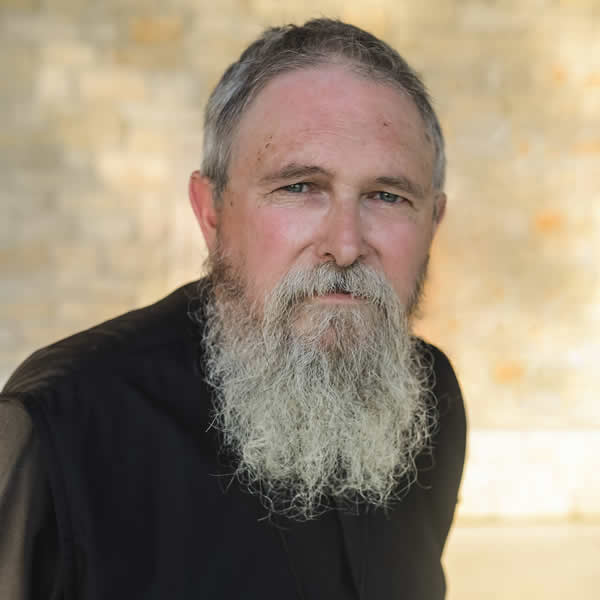
About Fr. Stephen Freeman

Fr. Stephen is a retired Archpriest of the Orthodox Church in America. He is also author of Everywhere Present: Christianity in a One-Storey Universe, and Face to Face: Knowing God Beyond Our Shame, as well as the Glory to God podcast series on Ancient Faith Radio.


Posted

in

by

Comments

11 responses to “Tradition as Communion”

  1. Kyriaki Avatar
    Kyriaki

    I thank God for you, Father Stephen. This spiritually fills and nourishes even as we begin the Dormition Fast!

  2. Fr. Stephen Avatar

    Many thanks! Good strength in the fast!

  3. Rob Avatar
    Rob

    Father,

    Does it break your heart that a lot of Christian religion misses the point of what you discuss here? Do you have any advice other than prayer and hopefully being a participant in the grace of God myself?

    I’m still connected to a Pentecostal church and a small group in a non-denominational church. What makes it hard to leave behind my Pentecostal roots is that I believe that they pull on the thread through history of what you are relaying here, despite all the excesses, the craziness, wrong emphasis, lack of structure, the traditions that have been left out, and whatever other valid criticisms. It’s hard for me to leave or deny the authenticity of the experience of the communion and the participatory nature with the best I’ve seen in Pentecostalism. Hungry and thirsty people have been satisfied with the living God, with the resurrected Christ. I’ve seen agape love working like leaven in the dough.

    I feel so undecided about how to move forward, and isolated by the way I see the world, the Church, and the Trinity. It just turns into tears. Sometimes I’m tempted with just wondering off into the woods to be a hermit, but I know that I’m supposed to engage in the messiness of it all, including my own heart.

  4. Fr. Stephen Avatar

    Rob,
    In my experience and observations, Pentecostalism sort of came about within Protestantism precisely as a sort of instinct for something like what I have described in the article. I have said, more than once, that Pentecostals may be the most open to Orthodoxy of all among the Protestants. At least, I frequently see that they “get it” in a way that takes more time for other Protestants.

    I do think that it’s helpful to be guided by the fullness of Tradition (in a lived manner) that is present in Orthodoxy. A healthy Pentecostalism is still always quite vulnerable to running off the rails – it has happened so many times throughout its history.

    But each of us has to walk with integrity before God. I saw Orthodoxy for many years before I could see it as a possiblity in my life, and then as a necessity in my life. That process lasted for over 20 years.

    Orthodoxy is far more accessible now than it was 50 years ago when my journey began. But, as God wills. May He give you grace!

  5. Rob Avatar
    Rob

    Sorry, I didn’t want my question to be a redundancy for things that you’ve answered and covered already. Nor did I want to highlight or make an apology for Pentecostalism. I’m just not the best at communication and am sleep deprived. I guess a better question is what practical advice would you give an Orthodox person who struggled in the life of the parish or in the world, because the context they find themselves in missed the point of what you posted in this article. How do they struggle well and not become bitter? How can they not be overcome with hopelessness in their desire for the best for everyone? Does that make sense?

  6. Jenny Avatar
    Jenny

    Father,

    The passage from St John truly is “…a vast reality packed into a single sentence,” as you say. It often evokes in me the same feeling as this one:

    “In this you greatly rejoice, though now for a little while, if need be, you have been grieved by various trials, that the genuineness of your faith, being much more precious than gold that perishes, though it is tested by fire, may be found to praise, honor, and glory at the revelation of Jesus Christ, Whom having not seen you love.”

    I remember first reading that, when I was first trying to read through the Scriptures again, being somewhat stunned to realize that this was written, of course, by St. Peter, who had certainly seen Jesus. And here he is now become a fisher of men, and these persons love the Lord as well, though they never were able to see Him in the same way St. Peter had.

    And of course, I longed very much to have been born then and to also been one that had seen the Lord and having to learn to be thankful and faithful where the Lord put me. And now I long to enter the Orthodox Church and I am learning to be thankful and patient until the Lord opens the door, as I am not free to go through it now.

    I am beginning to understand that the Lord is making me Orthodox in advance, slowly and from within- the slow transformation of the heart. I’m sure in His timing He will put everything together. But I do wish that I could know these things from within the Tradition- to share in the communion within it.

    I just learned a few days ago that a massive road project planned for this town is inevitable. It’s a billion-dollar project- probably far more. It’s going to cut mercilessly right through farm after farm that have been there for generations, through woodlands and hills, obliterating houses and exposing others to the endless lines of headlights and noise as traffic rushes up and down past them, when once they were hidden deep in the green heart of this rural area.

    Consequently, I find myself crying at odd moments- this morning I was shopping and I found a package of wooden laundry pins. So there I was, crying in the dry goods isle, thinking of the cotton bag of clothespins my mom always had stored away somewhere and would sit on the grass at her feet while she hung the laundry up.

    There’s nothing these poor people can do. The entire area hates this project- 81%, to be exact, since they did the polling. But it doesn’t matter. Their hearts will be broken anyway. There’s too much money in it for certain people.

    So I was praying about it last night. I genuinely wrestle with my praying, Father. I go back and forth between two lines of thinking. One is that my prayers matter, therefore the more I pray, the better and the holier I can be, the better my prayers. So I must be as holy as possible and pray always, and this line of thinking leads to despair.

    Because as you know, I have trying to learn to serenely bear the trial of myself and my faults because I can’t be as holy as I want to be. But if my prayers depend upon my holiness or my righteousness, then not only am I letting down the Lord, but I am letting down anyone that I might be praying for.

    The other line of thinking is that the Lord is sovereign, and He is bringing everything together in His own way and in His own time and He isn’t relying on me. He does it Himself and everything is providential. In which case, why am I praying?

    I get caught up in this, sometimes even when I am in the middle of praying. I will be begging the Lord for something and then I remember and I feel that I am insulting Him by praying for something He already wants and is bringing about in His own way. What do I know about how He is doing it or what the big picture is? I know nothing in that sense.

    So what I have found to be helpful whenever my heart is deeply moved toward something and I am confused about how to pray, is that I pray the Lord’s prayer. Those are the Lord’s own words. That way, I am praying with Him, in the direction in which He is going. He knows what He means.

    That works well, except when I get to the line that says, “…forgive us our trespasses as we forgive those who trespass against us…” I get stuck there because I wonder how it is possible for someone to forgive an injustice, a grievous wound. What if they can’t?

    When I get stuck there, the Lord reminds me of what He said to His disciples when the rich younger ruler went away sad, because it is so difficult for the rich to enter the Kingdom of Heaven. The Lord said, “With men this is impossible, but with God, all things are possible.”

    The other thing is that the Lord often reminds me when it comes to prayer that He likes us to be with Him doing the things that He is doing. So truly He doesn’t need my prayers. But if I were to stop praying, I wouldn’t be giving Him that gift of love which means a great deal to Him.

    And I have to pray according to the merits of the Lord Himself and not mine. In one of the Orthodox prayers I say, it concludes with, “…. through the merits of Thy Son, Jesus Christ…” There is nothing lacking with the Lord’s merits, there is nothing lacking in His Body and Blood on the cross. Nothing that I myself do or say and practice could hold any weight, if I tried to place the prayers on them. But the Lord’s work on the cross is a perfect work.

    You would think I would remember this, Father. But it’s almost like I must remember all these things all over again each time. Each time I am blundering through the lessons, bumping up against the problem and being bewildered and remembering again. It would be embarrassing, but I’m almost immune to this feeling now, I feel it so often.

    But I do want to tell you, Father, since it is true, that when I pray to St. Cuthbert, almost every time I feel how much and how well and how faithfully he loves Fr. Barnabus and yourself. It’s like opening the door to a room and the people in there all know each other and love each other and you are stranger coming at the tail end of the story, but they are happy to see you because they are like that.

  7. Fr. Stephen Avatar

    Rob,
    I see what you mean – sorry for my own obtuseness. The world, in its many guises, misses the point of Christ (and that includes lots of Christians – even the Orthodox at times). I grieve over it – but seek to grieve in Christ (“blessed are those who mourn, for they shall be comforted”). It’s better than being angry (which is always a temptation). Another aspect, more hopeful, is the “hidden” nature of Christ’s work. The work of the Cross – in its communion – continually works in and through all things – particularly all of the suffering within the world. It “works” as the Cross of Christ because Christ has united all these things to Himself in His Cross.

    So, if you will, everyone continues to suffer, and, strangely, in that, there is hope. All of the various schemes that misunderstand or ignore the communion of the Cross – of the death and resurrection of Christ at work in all things – all of those things consistently fail.

    I’ve started working on a sermon that I’m preaching next Sunday. In it (Matt. 17) the disciples fail in an exorcism. And they are told again about the coming crucifixion on Christ. It says, “and they were exceedingly sorrowful.” They don’t yet know what is going on. On the night in which He was betrayed, as He took bread and broke it, they failed to understand, even though it has started happening right in front of them.

    Each in his own time. The way that helps, for me, is to trust in God’s providence. I didn’t find my way here by accident, much less by hard work. It found me. We ourselves are the Lost Coin. We are the Treasure Buried in a Field. So, we wait with patience, and do whatever it is that Christ gives us – it will have its place in His providential work.

    There is so much more that has happened to the good than I imagined when I was received into the Church in 1998. We had to travel 6 hours to the Church where we were chrismated. Years went by. Over time, I had opportunity to help start 5 different parishes and received hundreds into the faith, as well as the various writing and speaking ministries that came about. I saw none of that coming.

    What God has given you is a gift – and a gift that will not be wasted. Think of how frustrated and grieved St. Paul was about his fellow Jews and their rejection of Christ.

    Christ tells us, “Be of good cheer.” My paraphrase is “hang in there,” God’s very much at work.

  8. Fr. Stephen Avatar

    Sweetest Jenny,
    Thanks you, especially for your words concerning St. Cuthbert, Fr. Barnabas and others. St. Paul described himself as a “drink offering” (Phil. 2:17 and 2Tim 4:6). Our prayers are indeed poured out before Him.

  9. Rob Avatar
    Rob

    Thank you for your example, your story, and your encouraging words. Glory to Christ.

    (1 Corinthians 13:12 NKJV) For now we see in a mirror, dimly, but then face to face. Now I know in part, but then I shall know just as I also am known.

  10. KS Avatar

    Precious connections are woven here between tradition, life, communion, and the Church. Many thanks!

  11. Byron Avatar
    Byron

    We are the Treasure Buried in a Field. So, we wait with patience, and do whatever it is that Christ gives us – it will have its place in His providential work.

    This encouragement reminds me of a country song lyric (how odd?):

    “I’m just a part of the greater plan.
    It doesn’t matter which part I am.”

    A bit “protestant” I suppose, but there’s a humility in it that I try to remember.

Leave a Reply

Your email address will not be published. Required fields are marked *


Subscribe to blog via email

Support the work

Your generous support for Glory to God for All Things will help maintain and expand the work of Fr. Stephen. This ministry continues to grow and your help is important. Thank you for your prayers and encouragement!


Latest Comments

  1. Dee of Sts Herman and Olga on Come Home

    Andrew, I think you’re correct about the need for vigilance. In this culture, it is so easy to be distracted…

  2. I’ve been thinking about St. Augustine’s famous line about rest in God in a new light recently. I’ve typically thought…

  3. Reader John, My 7 year-old experience was almost a one-off. My family was not particularly pious (there was no prayer…


Read my books

Everywhere Present by Stephen Freeman

Listen to my podcast


Categories


Archives